
Getting Cold Feet About Marriage Itself, Not Just the Wedding
Your cold feet are not about the venue, the dress, or the guest list. They are about the idea of marriage. That is a different conversation, and this guide is here to help you have it.
Anxiety about the event, the logistics, being in front of people, the cost, the planning. "I want to be married, I just do not want to do the wedding."
Anxiety about the commitment itself, the permanence, the legal bond, the concept of "forever." "I love my partner, but the word 'marriage' makes me feel uneasy."
What Marriage Actually Changes (and What It Does Not)
A marriage certificate changes your tax filing status and your medical decision rights. It does not change whether you still get to play in your weekly softball league, keep your own bank account, or spend a Saturday alone with a book. Six concrete comparisons below show exactly where the line sits.
5 Common Fears About Marriage (and the Reality)
Fear of losing independence
Marriage does not require you to merge into one person. Healthy marriages thrive when both partners maintain their own interests, friendships, and alone time. The best marriages add to your life without subtracting from who you are.
Fear of making the wrong choice
This fear assumes there is one "perfect" person out there and you might have the wrong one. In reality, successful marriage is not about finding the perfect person. It is about choosing someone and building something together, day after day.
Fear of repeating your parents' mistakes
Your parents' marriage is not your blueprint. You are a different person, in a different relationship, at a different time. Awareness of what went wrong in their marriage actually gives you an advantage in avoiding those patterns.
Fear that things will change for the worse
Many couples report that marriage made their relationship stronger because it removed the lingering "exit option" mindset. When both people are fully committed, they invest more deeply in working through challenges instead of walking away.
Fear of being trapped
Marriage is not a prison. It is a choice you renew every day. The legal aspect of marriage can actually provide more security and clarity, not less. And if things truly do not work, options exist. Marriage does not remove your agency.
Couples Who Felt Exactly Like You
“I was terrified of marriage because my parents had an awful one. I thought marriage was a trap. Turns out, my marriage looks nothing like theirs because I chose a completely different person and we communicate in completely different ways.”
“I told my fiance I was scared of losing my independence. He said he was too. That conversation was the moment I knew we would be okay. We built a marriage where we both have our own space, and it works beautifully.”
“The cold feet were terrible. I almost called it off. My therapist helped me see that I was not afraid of my partner. I was afraid of vulnerability. Marriage forced me to be fully seen, and that was the scariest and best thing that ever happened to me.”
What the Research Says About Marriage Cold Feet
of husbands-to-be (and 38% of wives-to-be) reported real doubts before their wedding, per a UCLA study of newlyweds
doubters who talk openly through their concerns report high marital satisfaction years later
engaged adults specifically fear losing personal identity after marriage
people are likely to seek pre-marital counseling when doubts are acknowledged openly rather than hidden
couples who complete pre-marital therapy report their doubts diminished significantly
Normal Doubts vs. Doubts Worth Exploring
A Tuesday-night worry about whether you remembered to book the caterer is not the same as lying awake at 2am wondering if you actually know this person. One is logistics anxiety wearing a marriage costume. The other deserves a real conversation, possibly with a therapist. Twelve specific examples below sort into each camp.
Wondering if you are ready for the responsibility of marriage
Occasional "what if" thoughts about past relationships
Grieving some aspects of single life while still wanting this
Fear of the unknown future, not of your partner specifically
Anxiety that peaks during stressful planning moments
Worrying about financial or logistical changes
Persistent dread that does not ease even in good moments
Specific, concrete concerns about your partner's core values
Feeling relieved rather than sad at the thought of canceling
Doubts about whether you are actually in love, not just anxious
A pattern of unresolved conflict that never gets addressed
Feeling pressured into the engagement rather than choosing it freely
10 Reflection Prompts for Marriage Cold Feet
Set aside 20 minutes with a notebook. Answer whichever questions feel most relevant. Honest writing often reveals what conversation alone cannot.
What specifically does "marriage" mean to me, beyond the legal status?
Explore your mental image of what being married looks like day to day.
Where did my picture of marriage come from, and is that picture accurate?
Think about the marriages you observed growing up and how they shaped your beliefs.
What part of myself am I afraid I will lose after the wedding?
Name the specific freedom, identity, or habit you worry about.
If marriage were not a legal institution, would I still want a lifelong partnership with this person?
Separates the fear of marriage as a concept from your feelings about your partner.
What do I wish I could tell my partner about these fears but have not yet?
Often the unspoken thing is the source of the anxiety.
In 10 years, what do I think I will regret more: marrying, or not marrying, this person?
The regret test cuts through short-term anxiety.
Is my doubt about my partner or about myself?
This distinction determines the most helpful next step.
Have I discussed the things that scare me about marriage with my partner? Why or why not?
Avoidance often signals where the real work needs to happen.
What do I genuinely admire about my partner that I have not said out loud recently?
Reconnecting with appreciation can quiet anxiety.
If a close friend told me exactly what I am feeling right now, what advice would I give them?
We are often kinder and wiser with others than with ourselves.
Deeper Questions, Longer Answers
These go further than the FAQ section. They are the questions people search for at midnight when they need more than a quick answer.
Can cold feet about marriage mean I am not in love?
Cold feet and love are not mutually exclusive. In fact, cold feet often occurs precisely because you love someone deeply. The deeper the feeling, the higher the stakes, and the more your brain raises alarm signals. Love can coexist with fear of commitment, fear of change, and fear of vulnerability. The relevant question is not "do I love them?" but rather "is this fear pointing to something real about the relationship, or is it pointing to something about me?" People who fall out of love before a wedding typically feel a numbing or a fading. Cold feet feels more like electricity. It is anxious, not absent.
My cold feet are specifically about values differences. How serious is that?
Values alignment is one of the most meaningful predictors of long-term marital satisfaction. Differences in core values, such as views on children, religion, financial priorities, career ambitions, and family involvement, are genuinely worth addressing before marriage rather than hoping they resolve themselves later. If your cold feet are rooted in a specific values mismatch you have identified, that is not anxiety. That is wisdom. It is worth having a direct, unhurried conversation about the specific values in question. Many couples navigate real differences successfully through compromise and honest communication. Others realize the gap is a dealbreaker. Neither outcome is wrong. What matters is that you examine it with clear eyes rather than suppressing it.
I keep comparing my relationship to other couples. Is that why I have cold feet?
Comparison is one of the most common drivers of pre-marriage cold feet, and it almost always makes things worse. When you compare the inside of your relationship, which includes all the tensions, compromises, and quiet moments, to the curated outside of another couple, you are comparing apples to fiction. Other couples are also fighting about in-laws, navigating different sleep schedules, and wondering if they made the right choice. They are just not posting that version. A useful exercise: write down three things you genuinely value in your relationship that you would not trade. Then notice that comparison rarely starts with the question "what is good here?" It starts with "what do they have that I do not?" Shifting the question reframes the whole picture.
My partner does not seem nervous at all. Does that mean something is wrong with me?
It means your partner either processes emotions differently, is further in their own acceptance of the commitment, or is feeling equally nervous but not showing it. People express and suppress anxiety in very different ways. Some people intellectualize it, some express it physically, some shove it down. Your partner's apparent calmness is not a measuring stick for how you should feel. It is also worth considering that some of the most certain-seeming people are the ones doing the most internal work. If it bothers you, a simple conversation, "I have been feeling nervous, have you had any moments like that?" often opens the door to a much richer exchange than you might expect.
Is it possible to truly resolve cold feet before the wedding?
For most people, yes, and the resolution comes from engagement with the feelings rather than avoidance of them. Working through cold feet typically involves three things: naming the specific fear underneath the general anxiety, having an honest conversation with your partner about it, and getting outside perspective from a therapist or trusted mentor. When people do these three things, they consistently report that the fear either dissolves once spoken aloud or transforms into a productive conversation that actually strengthens the relationship. The cold feet that linger and grow are almost always the ones that were never given space to be examined.
Four Couples, Four Very Different Cold Feet
Marcus feared losing himself. Priya feared repeating her parents' divorce. Tom's cold feet turned out to be a real financial disagreement. Sofia's turned out to be a red flag she almost ignored. Four different root causes, four different outcomes, all starting from the exact same symptom: a knot in the stomach a few months before the wedding.
Marcus, 34
The Independence Fear
Marcus had lived alone for eight years before meeting Claire. He loved her deeply but could not shake the image of himself disappearing into a "we." He spent two months quietly dreading the engagement. A therapist helped him realize his fear was about identity, not Claire. He and Claire designed a marriage with intentional solo time built in. Four years later, he says the structured independence they built actually made him closer to her than he ever expected.
Worked through it with therapy. Married. Thriving.
Priya, 29
The Parents' Divorce Shadow
Priya's parents had a brutal divorce when she was twelve. She said yes to Dev's proposal with genuine joy, then spent the next six months waiting for the relationship to fall apart. Every small argument felt like evidence that they were doomed. A single session with a couples therapist who helped her name the pattern changed everything. She realized she had been looking for reasons to confirm the story that marriage ends in pain. Once she saw the pattern, she could choose differently.
Named the root cause. Married. Reports the marriage feels nothing like her parents' did.
Tom, 38
The Values Mismatch That Was Real
Tom and Alicia had been together for three years when he proposed. The cold feet came when they started discussing finances in detail. He was a saver; she was a spender. He wanted to retire early; she thought life was for living now. What began as wedding nerves became a genuine, productive conversation about financial values. They worked with a financial advisor before the wedding and built a system both could live with. The cold feet, in this case, pointed to something real, and addressing it made the marriage stronger.
Cold feet pointed to a real issue. Addressed it. Married with a solid plan.
Sofia, 31
The Doubt That Was Actually a Red Flag
Sofia almost went through with a marriage to a man who was kind but fundamentally incompatible with her. Her cold feet were not about the concept of marriage. They were about him specifically. She repeatedly minimized her feelings as nerves. A close friend finally asked her directly: would you be relieved if it was called off? The honest answer was yes. She broke the engagement. Two years later, she says it was the hardest and most self-respecting decision she ever made.
Doubts were legitimate. Chose not to proceed. No regrets.
Marriage Cold Feet: Myths vs. What Is Actually True
Several widely repeated ideas about marriage anxiety are flat-out wrong, and believing them makes things significantly harder.
Myth
Feeling this way means you are not ready for marriage.
Reality
Readiness and certainty are different things. Many deeply ready people feel profound anxiety. Anxiety signals that you are taking the commitment seriously, not that you are unprepared for it.
Myth
If you loved them enough, you would not have doubts.
Reality
The depth of love often correlates with the depth of fear. A casual commitment carries little anxiety. A lifelong one carries more. Doubt and love are not opposites.
Myth
Other couples do not feel this way.
Reality
Research consistently puts pre-marriage doubt at close to half of all engaged people. It is under-reported because of stigma, not because it is rare.
Myth
The doubt will disappear on its own after the wedding.
Reality
Sometimes it does. But doubt that is rooted in an unexamined issue tends to resurface. The most reliable resolution comes from engaging with the doubt directly, not waiting for it to pass.
Myth
Telling anyone about these feelings would be a betrayal of your partner.
Reality
Telling a therapist, a trusted mentor, or even your partner is an act of integrity, not betrayal. Suppressing doubt creates more distance than voicing it does.
Myth
Marriage is a trap you cannot escape if things go wrong.
Reality
Marriages do end, and modern divorce law is far more accessible than many people imagine. But more relevantly: the vast majority of people who were scared before marriage report that the marriage itself was nothing like the fear predicted.
A Practical 4-Step Plan for Working Through Marriage Cold Feet
This is not a "just relax" framework. These are specific, sequential actions that consistently help people move from anxious ambivalence to grounded clarity.
Name the exact fear, not the general anxiety
Write down this sentence and complete it: "The specific thing that scares me about marriage is..." Do not stop at "the commitment" or "losing my freedom." Go deeper. Is it losing your sense of self? Repeating your parents' marriage? Making an irreversible decision? The more specific you can get, the more addressable the fear becomes. Vague anxiety is almost impossible to work through. Named fear can be examined, challenged, and often dissolved.
Distinguish fear of marriage the concept from doubt about your partner
This is the most important distinction in this entire guide. Ask yourself: "If marriage as an institution did not exist and I could make a lifelong commitment to this person informally, would I still want to?" If yes, your fear is about the institution, not the person. If you are uncertain even then, explore the specific concerns about the relationship itself in a safe space, with a therapist or trusted mentor, rather than trying to resolve it alone.
Have one honest conversation with your partner
Most cold feet about marriage is held alone, in silence, because people fear hurting their partner or derailing the engagement. In reality, couples who discuss pre-marriage fears almost universally report that it brought them closer. Start with: "I want to share something with you because I trust you with it. I have been feeling afraid about [the specific fear]. I am not questioning us. I just need to be honest about what I am carrying." Most partners respond with empathy and often share their own fears in return.
Get outside perspective from a therapist, counselor, or mentor
Pre-marital counseling is one of the most underused resources available to engaged couples. Studies show it reduces divorce rates by approximately 30 percent. Even two or three sessions provides a structured space to examine fears, improve communication, and build a shared understanding of what your marriage will look like. If therapy feels like too much, even one conversation with a mentor who has a strong marriage can provide perspective that months of solo worry cannot.
If you need to talk to someone now
If your cold feet about marriage is escalating into panic or sustained distress that is affecting your daily life, speaking with a professional therapist is a sign of strength, not weakness. The following resources connect you with support quickly.
Psychology Today Therapist Finder
Find pre-marital counselors in your area filtered by specialty.
BetterHelp or Talkspace
Online therapy with licensed therapists. Accessible within days.
Your primary care doctor
Can refer you to a mental health professional and rule out anxiety disorders.
A pre-marital counseling program
Programs like PREPARE/ENRICH are structured specifically for engaged couples and have strong research support.
Related reading

First dance
You guys!!
All the memories, none of the logistics.
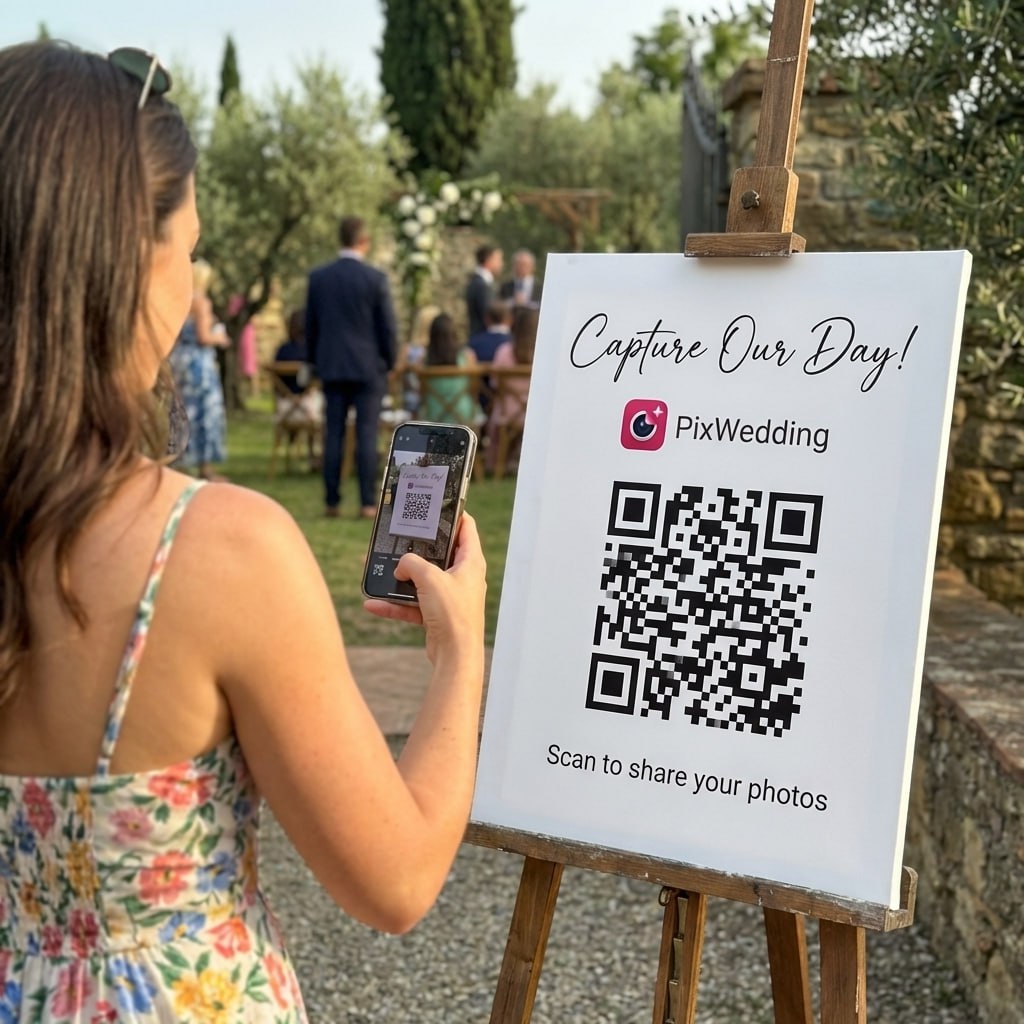
Guests tap a QR code at each table and every photo they take lands in your shared album automatically. You committed to each other, not to chasing pictures.
From Mom
Scan to join the album
No app, no account
UPLOADING
Saving your moment
THE ALBUM
Emma & Jack
June 21, 2026
647 photos · 95 guests


SCAN TO TRY
pix.wedding/
your-wedding
Marriage Cold Feet vs. Wedding Cold Feet: Why the Distinction Matters
When someone says they are getting cold feet before marriage, it is important to understand whether they mean the wedding or the marriage. These are fundamentally different things. Wedding cold feet is about logistics, performance anxiety, and the stress of a big event. Marriage cold feet is about the concept of lifelong commitment, legal binding, and what 'forever' means.
If your anxiety disappears when you imagine skipping the wedding and being quietly married, your issue is with the event. If the anxiety persists even in that scenario, you are grappling with something deeper about marriage itself. Both are valid. Both are common. But they require different approaches.
- •Wedding cold feet is about the event. Marriage cold feet is about the commitment.
- •The 'skip the wedding' test quickly reveals which type you are experiencing
- •Marriage cold feet often has roots in childhood experiences or past relationships
- •Fear of marriage does not mean you do not love your partner deeply
- •Working through commitment fear strengthens the foundation of your relationship
How Modern Marriage Differs From What You Might Fear
Many commitment fears are based on an outdated model of marriage. The traditional 'two become one' narrative implied losing your individual identity. Modern marriage looks very different. Today, healthy marriages prioritize both togetherness and individuality.
Couples maintain separate friendships, pursue different hobbies, and even keep some financial independence. The legal bond of marriage provides security and practical benefits without requiring you to stop being who you are. Understanding this modern reality can dissolve fears that are based on a version of marriage that no longer applies.
Practical Steps to Work Through Marriage Anxiety With Your Partner
The most productive way to handle cold feet about marriage is to involve your partner. Start by sharing a version of this guide with them. Then, have a conversation where you each complete this sentence: 'The thing that scares me most about marriage is...' Hearing each other's fears creates intimacy and often reveals that you share the same concerns.
From there, work together to define what your marriage will look like. Will you maintain separate hobbies? How will you handle finances? What does personal space look like? Creating a shared vision replaces the vague, scary 'forever' with a concrete, manageable picture of your life together.
Explore more free wedding tools
Everything you need to make your wedding day stress-free and unforgettable.
Seating Chart Planner
Plan your reception seating visually.
Guest List Manager
Track RSVPs and dietary needs.
Timeline Builder
Plan your entire wedding day.
Venues by State
Explore venues across all 50 states.
Countdown Timer
Count down the days to your big day.
Bachelorette Party Games
15+ games with rules, supplies, and timing.
Alternative to Wedding Guest Book
15 creative alternatives guests actually enjoy.
Wedding Menu Builder
Design and print your reception menu.
Frequently Asked Questions
Everything you need to know about our free tools and how they help your wedding day.
Absolutely. Marriage cold feet is about the weight of lifelong commitment, and it is experienced by a significant number of engaged people. It does not mean you are with the wrong person. It means you are taking the commitment seriously, which is actually a healthy sign.
It means you are a human being processing one of life's biggest decisions. Love and fear can coexist. The fear is often about the concept of permanence, not about your partner. Many people who felt exactly this way went on to have deeply fulfilling marriages once they worked through the fear.
For most people, yes. Research and anecdotal evidence consistently show that the abstract fear of commitment often dissolves once you are actually in the marriage. The reality of married life is usually far less scary than the anticipation. Many couples say the first year of marriage felt surprisingly normal and comfortable.
This is one of the most common roots of marriage anxiety. Seeing a marriage fail up close, especially as a child, can create deep associations between marriage and pain. Therapy can be incredibly helpful here, as it allows you to separate your story from your parents' story and build your own definition of what marriage looks like.
Postponement should be a last resort, not a first response. Before making that decision, try talking honestly with your partner, attending a few sessions of couples counseling, and working through the specific fears outlined in this guide. Most cold feet about marriage can be resolved with honest conversation and self-reflection.
Cold feet involves anxiety and fear around a decision you fundamentally want to make. Not wanting to get married is a clear, consistent feeling that the institution is not right for you. If you genuinely do not want to be married at all, that is a valid position, but it is different from being scared of something you actually desire.