
Scared to Get Married? You Are Not Broken. Here Is What Is Happening.
Being scared of marriage does not mean you should not get married. It means your brain is processing one of the biggest commitments of your life. Let us name the fear, sort it into a category, and work through it.
The Short Answer
Feeling scared to get married, even when you love your partner and want a future with them, is common and does not by itself mean the relationship is wrong. It usually means one or more specific fears, commitment, divorce, losing freedom, money, or family history, are activating your brain's normal threat-detection system in response to a genuinely huge decision.
The clinical term for an intense, persistent fear of marriage or commitment is gamophobia, according to Cleveland Clinic. Most engaged people who feel scared do not have that clinical picture. They have ordinary, workable pre-commitment anxiety. This guide covers the landscape: the five common categories of fear, how to name yours, illustrative examples, and a supportive framework for when the fear is worth bringing to a licensed therapist rather than working through alone.
Worried the fear points at the lifelong commitment itself rather than the wedding? Our guide on having doubts before marriage is a self-check for telling ordinary cold feet apart from a real relationship red flag, and cold feet before marriage helps you name what the fear is actually pointing at. This page is the wider map both of those sit inside.
Where the Fear Usually Comes From
Marriage fear rarely appears out of nowhere. According to a psychologist writing for Forbes, it typically has roots in one or more of these broad areas.
Childhood experiences
Growing up in a household with an unhappy marriage, divorce, or parental conflict can create unconscious associations between marriage and pain.
Past relationships
Betrayal, heartbreak, or toxic dynamics in previous relationships can make the idea of trusting someone "forever" feel unsafe.
Personality and attachment style
People with avoidant attachment tendencies naturally pull away when closeness increases, and marriage represents maximum closeness.
Cultural and societal messaging
Jokes about "the ball and chain," cynical portrayals of marriage in media, and casually repeated divorce statistics all feed subconscious fear.
Practical Steps You Can Take This Week
You do not need to solve the whole fear at once. These are small, concrete actions that move most people from "stuck and scared" to "scared but moving forward."
- 1Write the fear down in one sentence, as specifically as you can, instead of leaving it as a vague feeling
- 2Match it to one of the five categories above so you know what kind of fear you are actually dealing with
- 3Separate what is about the concept of marriage from what is about this specific partner
- 4Pick one trusted person, a partner, friend, or sibling, and say the fear out loud rather than carrying it alone
- 5If money is part of it, schedule one direct conversation about debt, spending, and shared goals rather than avoiding the topic
- 6If family history is part of it, notice which specific pattern you are afraid of repeating, then ask whether your relationship actually shows that pattern
- 7Give yourself a real deadline to revisit the fear, a week or two, rather than deciding anything permanent while it is loudest
- 8If the fear has not moved in a month despite doing the above, treat that as useful information and consider a licensed therapist
The Five Categories of Marriage Fear
Most people who feel "scared to get married" are actually feeling one, or a mix, of these five specific fears. Finding yours here is the first real step.
Fear of commitment
This one is rarely about your partner. It is about the size and permanence of the word "forever." It tends to show up as a vague dread that spikes the moment the wedding comes up and eases the moment you are simply spending calm time together.
- A tight feeling in your chest whenever someone asks about wedding planning
- Wanting to change the subject when marriage comes up in conversation
- Feeling calmer about the relationship itself than about the idea of marriage
Fear of divorce
This fear usually comes from watching a marriage end, a parent's, a friend's, or your own past relationship, and treating that ending as a preview of your own future rather than as one data point among many.
- Frequently thinking "what if this ends the way theirs did"
- Researching divorce statistics or horror stories late at night
- Hesitating to fully invest emotionally "just in case"
Fear of losing freedom
Some people spend years building independence: travel, hobbies, solo decision-making, a life that answers to no one. Marriage can feel like it formally closes those doors, even when nothing about the relationship actually requires that.
- Worrying that marriage means giving up solo time or personal goals
- Feeling boxed in by the idea of always checking in with someone else
- Associating "wife" or "husband" with a loss of identity rather than an addition to it
Financial fear
Combining finances, debt, and long-term money decisions is one of the few parts of marriage that feels concrete and quantifiable, which paradoxically makes it easier to worry about than the more abstract emotional fears.
- Avoiding conversations about debt, spending habits, or shared accounts
- Worrying about being financially responsible for a partner's decisions
- Feeling anxious about a joint budget or losing financial independence
Family or past-trauma fear
If you grew up in a high-conflict household, watched a parent's marriage collapse, or were hurt badly in a past relationship, marriage itself can reactivate that old alarm system, even with a completely different, trustworthy partner standing in front of you now.
- Comparing your relationship to your parents' marriage without meaning to
- Feeling triggered by conflict that resembles a past relationship
- Worrying you are "destined" to repeat a pattern you witnessed growing up

First dance
You guys!!
Name the fear. Let the photos take care of themselves.
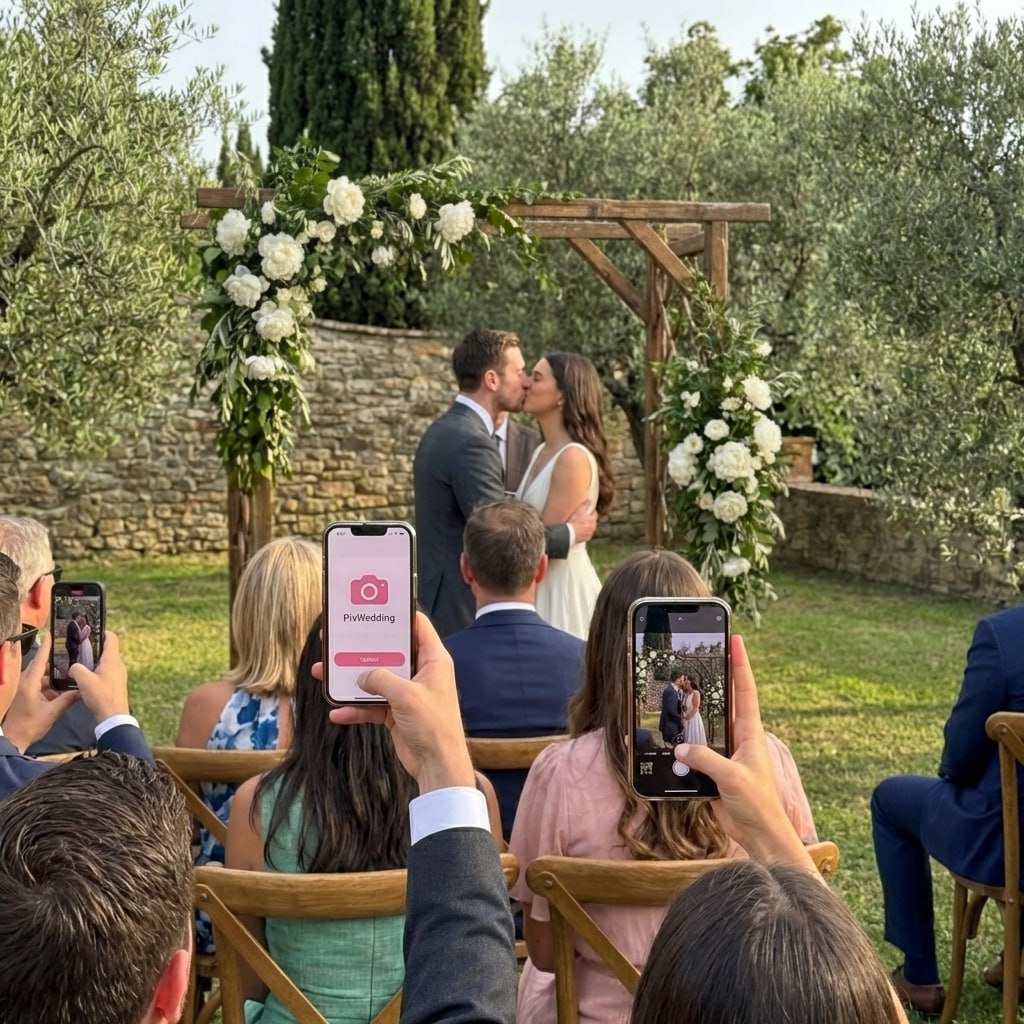
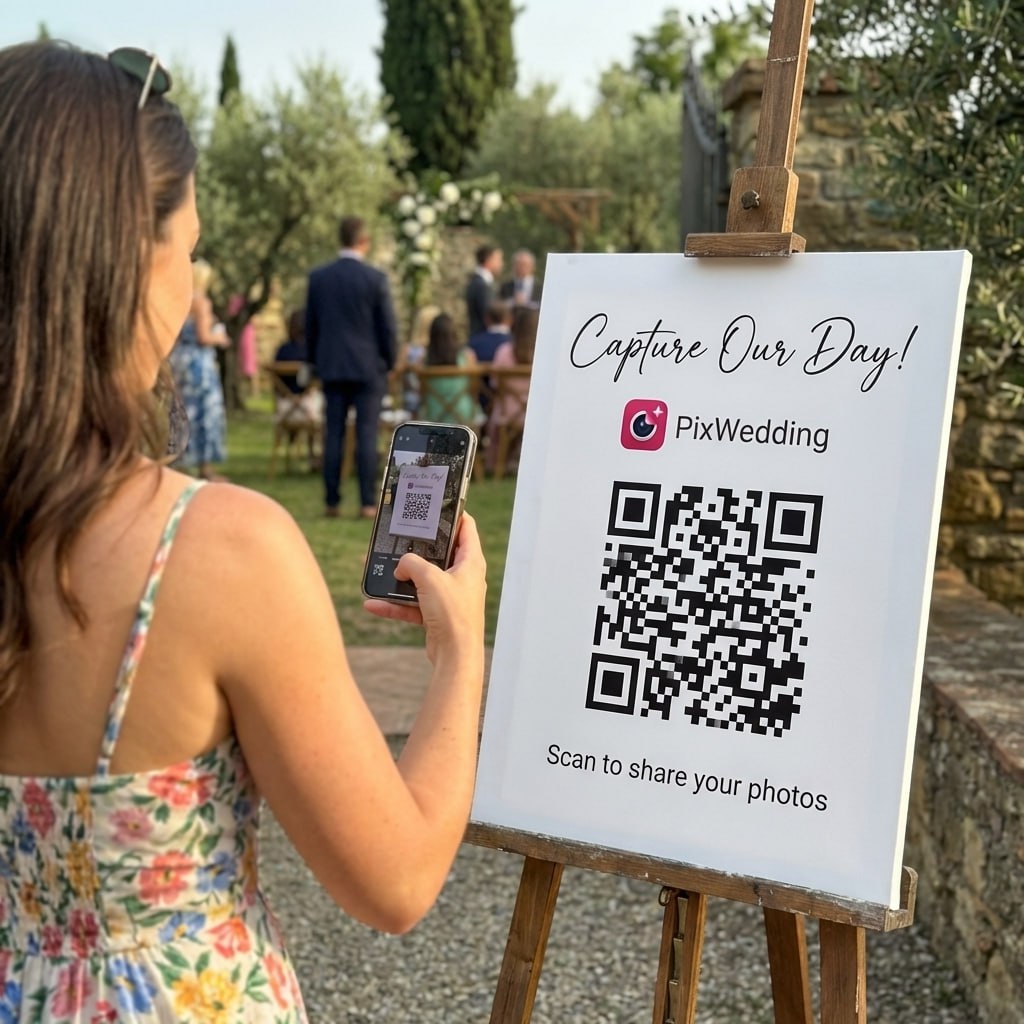
Place a Pix Wedding QR at each table and every guest photo lands in your shared album automatically. One less thing to manage on the day you are already working hard to be present for.
From Mom
Scan to join the album
No app, no account
UPLOADING
Saving your moment
THE ALBUM
Emma & Jack
June 21, 2026
647 photos · 95 guests

SCAN TO TRY
pix.wedding/
your-wedding
Reflection Prompts: Name Your Specific Fear
Vague dread feels enormous. A named, specific fear is something you can actually work on. Sit with these one at a time, alone or with your partner.
When I picture the wedding day itself, is the dread about the event, or about being married to this specific person?
Event-dread and person-dread point to very different next steps.
If my fear disappeared overnight, would I still want to marry my partner?
If the answer is a clear yes, the fear is the obstacle, not the relationship.
Which of the five categories above feels closest to what I am actually feeling: commitment, divorce, freedom, money, or family history?
Naming the category turns a shapeless feeling into something you can actually work on.
Is there a specific incident behind this, or is it a general, free-floating anxiety about the size of the decision?
A specific incident deserves a specific conversation. Free-floating anxiety usually responds to time and reassurance.
What would I tell a close friend who described this exact fear to me about their own relationship?
We are almost always kinder and clearer with other people's fears than with our own.
Who do I trust enough to say this fear out loud to, before the wedding gets closer?
Fear named out loud to one safe person almost always shrinks. Fear kept private tends to grow.
One Less Thing to Manage While You Work Through This
Working through marriage fear takes real mental bandwidth, whether that means a conversation with your partner, a session with a therapist, or just quiet time with the reflection prompts above. Whatever else is competing for your attention on the wedding day itself is worth trimming down. Pix Wedding is one of the small logistics that couples routinely worry about: guests take photos on personal phones, and those photos scatter across group chats and camera rolls, never making it back to the couple. A simple table-side QR code sends every guest photo straight into one shared album automatically, so it is not one more thing sitting on your mental list while you are focused on the parts of this that actually matter.
When It Is Worth Talking to a Licensed Therapist
For most people, marriage fear is uncomfortable but manageable, and it eases with time, conversation, and self-reflection. It is not something that needs to be diagnosed or fixed. That said, Cleveland Clinic's clinical guidance on gamophobia notes specific signs worth bringing to a professional rather than working through alone. Consider reaching out to a licensed counselor or therapist if you experience:
- Panic attacks connected to the idea of marriage or the wedding itself
- Persistent anxiety that interferes with your daily life or your sleep
- Signs of depression, or a reliance on substances to cope with the fear
- Physical symptoms (a racing heart, chronic stomach issues, trembling) that keep recurring around the topic
- A fear that has stayed the same or intensified for months, rather than settling with time and conversation
This list is general information from Cleveland Clinic, not a diagnosis. Only a licensed professional can assess your specific situation. Look for a therapist who lists premarital counseling, attachment, or relationship anxiety among their specialties, many offer virtual sessions that fit around a wedding planning schedule.
Three Illustrative Examples
These are hypothetical composites written to make the categories above concrete, not real case studies or testimonials.
Imagine someone whose parents divorced acrimoniously when they were twelve. Years later, engaged to a partner they genuinely love, they notice a wave of panic every time the wedding is mentioned, even though nothing about their own relationship resembles their parents'. Naming the fear as inherited rather than predictive, and saying it out loud to their partner, is usually the turning point in this kind of pattern.
Imagine someone who built a fiercely independent life after years of being single by choice: their own apartment, their own schedule, trips planned on a whim. The idea of merging finances and decisions with another person feels like erasure at first. Writing down what specifically would change, and what would not, tends to shrink this fear from "everything" down to a short, workable list.
Imagine a couple who has never had a full, honest conversation about debt, spending habits, or long-term money goals. The fear here is not really about marriage. It is about the unknown. One direct conversation, sometimes uncomfortable, usually does more to reduce this fear than months of quiet worrying ever could.
Is Being Scared a Reason to Call Off the Wedding?
Usually not, but it depends what the fear is actually pointing at. Here is a quick way to sort it.
Usually just fear, not a red flag
- The dread is about the size of the event or the decision, not about your partner's behavior
- It eases when you spend calm, uninterrupted time together
- You cannot point to a specific incident that triggered it
- You still feel safe, respected, and loved day to day
Worth slowing down and looking closer
- The fear gets worse, not better, the more you think about this specific partner
- You can name a repeated pattern: dishonesty, disrespect, or control
- A concern you raised before was dismissed or nothing changed
- You picture life without this person and feel relief rather than only sadness
For a full step-by-step self-check on this exact distinction, see our guide on having doubts before marriage.
A Few Terms Worth Knowing
Gamophobia
The clinical term, per Cleveland Clinic, for an intense, persistent fear of marriage or commitment, distinct from ordinary pre-wedding nerves.
Cold feet
Short-term nervousness or doubt in the days or weeks before a wedding, usually about the magnitude of the event rather than the relationship itself.
Attachment style
A pattern of relating to closeness and independence, formed early in life, that shapes how a person experiences commitment as an adult.
Pre-marital counseling
Structured sessions with a licensed therapist before the wedding, focused on communication, expectations, and conflict patterns.
How This Fear Often Shifts Over Time
Marriage fear is rarely a flat line. For most people it rises and falls at predictable points. Knowing the pattern can make the current spike feel less alarming.
| Stage | What Often Happens |
|---|---|
| Right after getting engaged | A short burst of fear is common as the decision becomes real and permanent, even for people who wanted the proposal. |
| Mid-planning | Fear tends to quiet down as day-to-day planning tasks take over attention, then can resurface around big decisions like the venue or guest list. |
| Final weeks | Fear often peaks again as the wedding becomes concrete and imminent. This is frequently when people search for reassurance online. |
| The wedding day itself | Adrenaline and the presence of loved ones tend to override anticipatory fear for most people, though nerves can still spike right before the ceremony. |
| The first months of marriage | Many people report the fear fades noticeably once married life turns out to resemble the relationship they already had. |
How to Actually Bring This Up With Your Partner
Most people rehearse this conversation for weeks and then never have it. A rough script, filled in with your own words, tends to lower the barrier to actually starting.
I need to tell you something and I want you to hear it fully before reacting.

I am scared about getting married. It is not about you, or how I feel about us, it is [about the size of the commitment / about what I saw growing up / about money / about losing my independence].

I still want to marry you. I just need to say this out loud instead of carrying it by myself.

Can we talk through it together, maybe over the next week or two?
Mistakes People Make When They Are Scared
Going silent instead of speaking up
Carrying the fear alone tends to make it grow, while saying it out loud to one trusted person tends to shrink it.
Treating the fear itself as proof the relationship is wrong
Fear is information, not a verdict. Plenty of strong relationships include a scared partner.
Doomscrolling divorce statistics late at night
This tends to spike anxiety without giving any useful, specific information about your own relationship.
Comparing your relationship to edited, public versions of other people's marriages
Social media shows curated moments, not the ordinary daily texture of a real marriage.
Waiting for the fear to hit zero before moving forward
For most people it never fully disappears. Waiting for zero fear can quietly become an excuse to avoid the decision altogether.
Treating logistics stress as if it were the emotional conversation
Venue and seating chart stress is not the same as marriage fear. Keep the two conversations separate so neither gets buried.
A Note on Safety
Everything above assumes a relationship that is fundamentally healthy, just uncertain. If your fear involves feeling controlled, monitored, isolated from friends and family, threatened, or physically unsafe in any way, that is not ordinary marriage fear and it does not need a reflection exercise to sort out. Reach out to someone you trust, or a local domestic violence resource, and prioritize your safety over any wedding timeline.
In the US, The National Domestic Violence Hotline (1-800-799-7233) is available 24/7, confidential, and free.
Related: doubts, fears and cold feet
The Psychology Behind Being Scared to Get Married
Being scared to get married is rooted in your brain's threat detection system. When you face a major, irreversible decision, your amygdala, the brain's fear center, activates to protect you from potential danger. The problem is that your amygdala cannot distinguish between a genuine threat and a life-altering commitment you actually want. It treats both as things to flag.
This is why even people who are deeply in love and completely sure about their partner can still feel afraid. The fear is not about the person. It is about the magnitude of the decision. Understanding this can help you stop blaming yourself or questioning your love every time the fear shows up.
- •The amygdala triggers fear responses for major life decisions generally, not just risky ones
- •Fear and love are processed differently in the brain and can coexist without contradiction
- •Naming a fear specifically, rather than leaving it vague, tends to reduce its intensity
- •Gamophobia is the clinical term for an intense fear of marriage, per Cleveland Clinic, though most engaged people who feel scared do not meet that threshold
- •Fear that is about the relationship itself, not the concept of marriage, deserves a different, more direct response
What Married People Wish They Had Known About Marriage Fear
Ask any happily married person if they were scared before the wedding, and a surprising number will say yes. The difference is that they chose to move forward despite the fear, not because the fear disappeared. Courage is not the absence of fear. It is action in the presence of it.
Most married people will also tell you that the reality of marriage felt far less dramatic than the anticipation. The day-to-day of being married tends to resemble the day-to-day of being in a committed relationship. The legal status changes at a single moment. The lived experience evolves gradually.
Explore more free wedding tools
Everything you need to make your wedding day stress-free and unforgettable.
Seating Chart Planner
Plan your reception seating visually.
Guest List Manager
Track RSVPs and dietary needs.
Budget Allocator
Turn your total into a category-by-category plan.
Venues by State
Explore venues across all 50 states.
Countdown Timer
Count down the days to your big day.
Wedding Checklist
Month-by-month planning checklist.
Bachelorette Party Games
15+ games with rules, supplies, and timing.
Alternative to Wedding Guest Book
15 creative alternatives guests enjoy.
Frequently Asked Questions
Straight answers to the questions people ask most about this topic.
Yes. Fear and love are processed differently in the brain and can coexist without contradiction. Being scared of marriage is usually about the size of the commitment, not the quality of the relationship. Many happily married couples say they felt scared before their own wedding.
Gamophobia is Cleveland Clinic's clinical term for an intense, persistent fear of marriage or commitment. Most engaged people who feel scared do not have clinical gamophobia. They have normal pre-commitment anxiety. If the fear includes panic attacks, persistent anxiety that disrupts daily life or sleep, or signs of depression, a licensed therapist can help assess it, this is not something to self-diagnose.
They tend to fall into five broad categories: fear of commitment itself, fear of divorce, fear of losing personal freedom, financial fear, and fear rooted in family history or past relationship trauma. Most people feel a mix of two or three of these rather than just one.
Generally, yes, with thoughtful framing. Try something like: I love you and I am committed to us, and I am also dealing with some fear about the concept of marriage, and I want to be honest about it. Most partners respond better to honesty than to a fear that gets discovered secondhand.
For many people it does ease as the wedding approaches and especially after the wedding day itself. If the fear is tied to deeper issues like trauma or a specific unresolved concern about your partner, it may benefit from active work with a licensed therapist rather than simply waiting it out.
This is the central question. Fear that comes from within you, past experiences, general anxiety, fear of change, is different from fear that comes from the relationship itself, incompatibility, mistrust, unresolved conflict. If you feel safe, respected, and loved by your partner but scared of marriage as a concept, the fear is usually internal and workable.