
Doubt Is Not the Same as Knowing It Is Wrong
Having doubts before marriage does not mean you should not get married. It means you are taking the biggest decision of your life seriously. This guide will help you evaluate what your doubts are telling you.
The Critical Distinction
There is a fundamental difference between doubt that comes from thinking carefully about a big decision (healthy) and doubt that comes from knowing something is wrong but not wanting to face it (a signal). Most pre-marriage doubt is the first kind. Your job is to figure out which kind yours is.
4 Types of Pre-Marriage Doubt
Not all doubts are the same. Understanding which type you are experiencing determines what you should do about it.
These doubts are about losing yourself, your independence, or your personal growth. They stem from a fear that marriage will consume your identity.
These doubts question whether your values, life goals, communication styles, or daily habits are compatible long-term.
These doubts are about the when, not the who. Career stage, financial readiness, personal goals, or feeling like you have not experienced enough of life.
These doubts involve concerns about faithfulness, honesty, reliability, or whether your partner will show up when it matters.
8 Questions to Ask Yourself Honestly
Sit with these questions. Do not rush through them. Write your answers down. The act of writing forces clarity that thinking alone cannot.
Do I feel safe being completely honest with my partner, even about difficult things?
When we disagree, do we resolve conflict or just avoid it?
Do I respect the person my partner is today, not just who I hope they will become?
Are my doubts about my partner specifically, or about marriage as a concept?
Would I want to be with this person even if marriage were not on the table?
Do I feel pressured to get married by external factors (family, age, friends, timeline)?
Is there a specific issue I have been avoiding because I am afraid of the answer?
When I imagine our life 10 years from now, does the picture make me feel hopeful or anxious?
Interpreting your answers: If most answers reveal general anxiety but underlying trust and love, your doubts are likely normal pre-marriage processing. If several answers reveal specific, persistent concerns about your partner or the relationship, those deserve attention before the wedding.
Conversation Starters With Your Partner
Talking about doubts does not have to be a confrontation. These opening lines create safe space for honest conversation.
"I have been thinking about our future, and I want to share some feelings with you."
A gentle opening that signals importance without alarm.
"What does a great marriage look like to you? I want to make sure we are imagining the same thing."
Aligns your visions without framing it as doubt.
"Is there anything about our relationship you wish we talked about more?"
Invites your partner to share their own concerns, which they probably have.
"I am so excited about us, and I also have some nervousness I want to be open about."
Leads with positive emotion while creating space for honesty.
"How do you feel about how we handle disagreements? Is there anything you would change?"
Addresses conflict resolution, the number one predictor of marriage success.
Trust the process when...
- Your doubts are vague and hard to pin to a specific issue
- You feel anxious but still excited about your future together
- Your doubts decrease after quality time with your partner
- You can talk openly with your partner about your feelings
- The doubts feel more like "what if" than "I know this is wrong"
Seek counseling when...
- Your doubts are specific and tied to a recurring pattern
- You avoid spending time alone with your partner
- There is a secret you are keeping from your partner
- Your doubts intensify rather than fluctuate over time
- You feel more relieved than sad when imagining the wedding not happening
Related guides

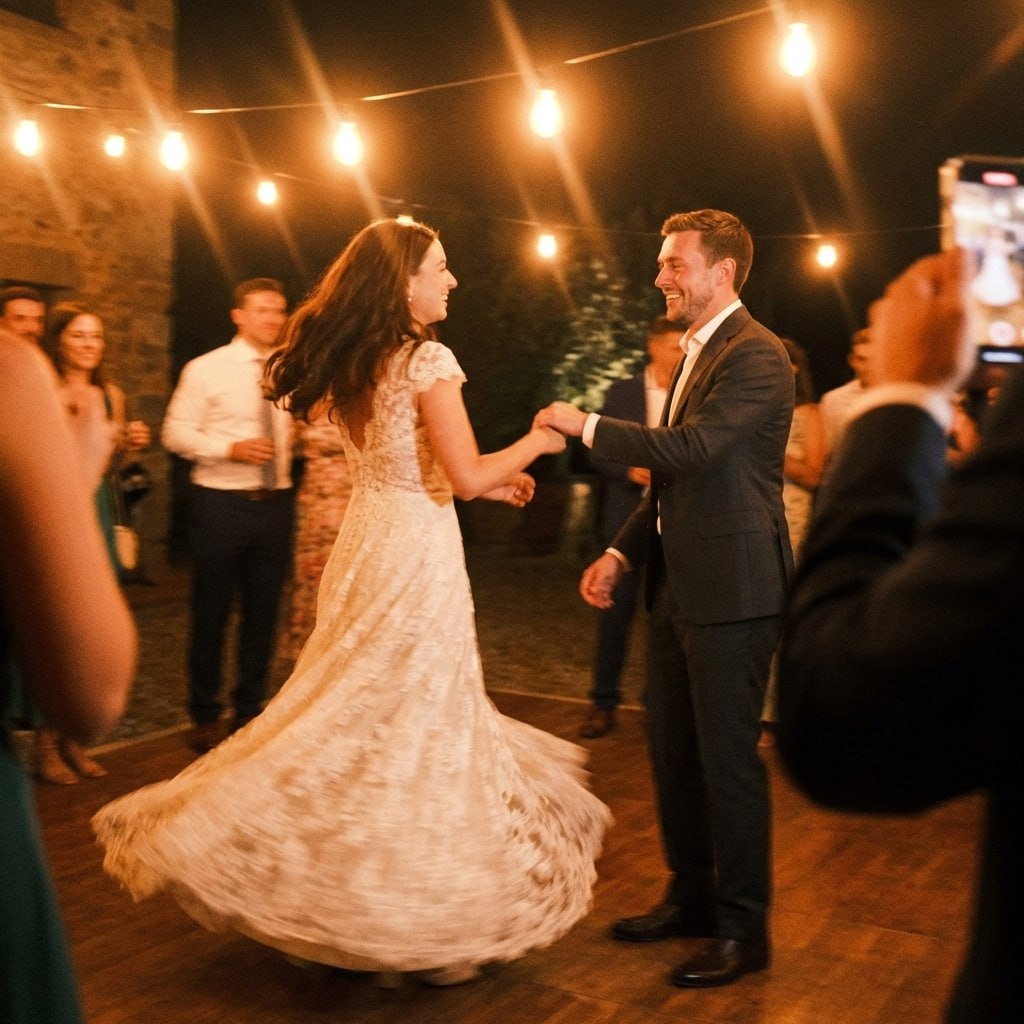
First dance
You guys!!
Work through the doubts, then enjoy the day.
A Pix Wedding QR at each table means every guest photo goes into one shared album. You spend zero time coordinating photos and all of it celebrating.
From Mom
Scan to join the album
No app, no account
UPLOADING
Saving your moment
THE ALBUM
Emma & Jack
June 21, 2026
647 photos · 95 guests


SCAN TO TRY
pix.wedding/
your-wedding
Why Smart People Have More Doubts Before Marriage
People who think deeply, analyze carefully, and consider multiple perspectives are more likely to experience pre-marriage doubt. This is not a flaw. It is a feature of a thoughtful mind. The same cognitive ability that helps you succeed in your career and navigate complex situations also makes you scrutinize major life decisions more closely.
The irony is that people who never question their decision to get married may actually be at greater risk. Blind certainty can mask avoidance, denial, or lack of reflection. The couples who do the hard work of examining their doubts tend to enter marriage with clearer eyes and stronger foundations.
- •Doubt before marriage is correlated with conscientiousness and self-awareness
- •Couples who discuss doubts openly have higher marital satisfaction scores
- •The goal is not to eliminate doubt but to understand what it is telling you
- •Blind certainty is not healthier than thoughtful questioning
- •Working through doubt together is a form of pre-marital team building
The 'Enough' Problem: How Perfectionism Fuels Marriage Doubt
In an age of unlimited options (dating apps, social media, romanticized portrayals of relationships), it is easy to wonder if your partner is 'enough.' Is the love passionate enough? Is the communication good enough? Is the sex fulfilling enough? This is the perfectionism trap, and it is one of the biggest sources of modern marriage doubt.
The antidote is shifting from a consumer mindset ('is this the best option?') to a builder mindset ('can we build something great together?'). No partner is perfect. No relationship checks every box. The question is not whether your partner is flawless. It is whether the foundation is strong enough to build on.
When Doubts Point to Real Issues That Need Resolving
Not all doubts are just anxiety. Some point to genuine issues that deserve attention before you walk down the aisle. If your doubts center on trust, values, or recurring unresolved conflict, these are signals, not noise. A couples therapist can help you determine whether the issue is resolvable or fundamental.
The key indicator is pattern versus moment. A single argument does not mean you are incompatible. But a pattern of dismissive behavior, unresolved resentment, or value misalignment is worth addressing. The best time to address it is now, before the wedding, not after.
Explore more free wedding tools
Everything you need to make your wedding day stress-free and unforgettable.
Seating Chart Planner
Plan your reception seating visually.
Guest List Manager
Track RSVPs and dietary needs.
Timeline Builder
Plan your entire wedding day.
Venues by State
Explore venues across all 50 states.
Countdown Timer
Count down the days to your big day.
Bachelorette Party Games
15+ games with rules, supplies, and timing.
Alternative to Wedding Guest Book
15 creative alternatives guests actually enjoy.
Wedding Menu Builder
Design and print your reception menu.
Frequently Asked Questions
Everything you need to know about our free tools and how they help your wedding day.
Yes. Doubts before marriage are one of the most common experiences for engaged couples, yet one of the least discussed. Having doubts means you are treating the decision with the weight it deserves. The key is whether the doubts are about normal anxiety or about specific, persistent concerns in the relationship.
Doubt fluctuates. It comes and goes, often triggered by stress or overthinking. Knowing it is wrong tends to feel consistent, heavy, and clear. Doubt asks 'what if?' Knowing says 'this is not right.' If you are genuinely uncertain about which you are experiencing, that uncertainty itself suggests doubt rather than knowing.
In most cases, yes, but with thoughtful framing. Avoid saying 'I am not sure I want to marry you.' Instead, try 'I am processing some feelings about marriage and I want to be open with you.' This invites conversation rather than creating panic. Most partners respond better to honesty than they would to discovering you kept doubts secret.
A therapist can help enormously. They provide a neutral space to explore your doubts without judgment, help you distinguish between anxiety and intuition, and teach communication skills for discussing difficult topics with your partner. Many couples find that 3 to 5 sessions before the wedding provides lasting clarity.
Doubts about your specific partner are different from doubts about marriage as an institution. If you are questioning your partner's character, trustworthiness, or compatibility, these are relationship issues that need to be addressed directly. A couples therapist can help you evaluate whether the concerns are resolvable or indicative of a deeper problem.
Research shows a nuanced picture. Unaddressed doubts can correlate with lower marital satisfaction, but doubts that are explored, discussed, and resolved are not predictive of divorce. The determining factor is not whether you had doubts. It is whether you did something productive with them.