
You Said Yes. Now You Are Scared. That Is More Normal Than You Think.
The ring is on, the answer was yes, and somewhere in the days after, fear showed up anyway. This guide is about that specific spike, why it happens right after the proposal, and how to work through it without treating it as a verdict on your relationship.
The Moment After "Yes"
It is common to feel a sudden wave of fear after getting engaged, even when you are genuinely certain about your partner. This fear spike usually peaks in the hours to weeks right after the proposal, not before it, and on its own it does not mean anything is wrong with the relationship. It happens because saying yes turns marriage from a comfortable, abstract idea into a concrete, dated commitment that your brain now has to plan around, explain to other people, and live inside.
For many people, the proposal itself feels purely joyful: the surprise, the ring, the celebration. Then hours or days later, a quieter voice appears, something closer to "wait, this is really happening." That voice is not betrayal and it is not intuition warning you off. It is your brain catching up to the reality of what you just agreed to, the same way any major, real commitment produces a mix of excitement and alarm.
The engagement period exists for exactly this reason. It is the space between deciding and doing, built so you can prepare emotionally and relationally, not just logistically. If you are scared right now, you are not doing engagement wrong. You are using the gap it was designed for.
The Fear-Spike Timeline: Why It Hits When It Does
The fear that follows a proposal rarely arrives all at once. It tends to build in layers, each one triggered by a different part of the engagement becoming real. Here is roughly how it unfolds.
The adrenaline crash
The proposal itself runs on adrenaline, surprise, and the joy of the moment. Once the initial rush fades, often within hours, your nervous system settles back down and the first quiet thought can be "wait, this is really happening now." That thought is not regret. It is your brain catching up to the news.
The abstract becomes concrete
Before the proposal, marriage was a "someday" idea you could picture however you wanted. The moment there is a ring and a yes, it becomes a dated, real commitment with a name, a partner, and eventually a room full of witnesses. Turning an abstract hope into a concrete plan is exactly the kind of shift that triggers fear in an otherwise healthy brain.
Everyone starts asking questions
"When is the date? Have you picked a venue? Are you doing the registry yet?" Within days of the announcement, the world expects you to already be deep in planning mode. That external pressure, arriving before you have had time to sit with your own feelings, is a major accelerant of the fear spike.
The identity shift sets in
Somewhere around the one-month mark, "fiance" or "fiancee" stops feeling like a new label and starts feeling like a new identity. Some people feel this shift as excitement. Others feel it as a low hum of "who am I now, and does the rest of my life really change this much?" Both reactions are normal responses to a genuine identity transition.
Comparison and planning fatigue
As the engagement continues, it is easy to start comparing your experience to other people's: their Instagram looks happier, their planning looks easier, their certainty looks unshakeable. None of that comparison is a reliable measure of anything. It is simply what a long, visible commitment period does to an anxious mind.
None of these windows are fixed rules. Some people feel every layer within the first 48 hours, others feel them spread across several months. The point is not the exact timing, it is recognizing that a fear spike right after a proposal is a documented, common pattern rather than a personal red flag. The Knot's guide to engagement anxiety covers the same pattern from a wedding-planning lens.
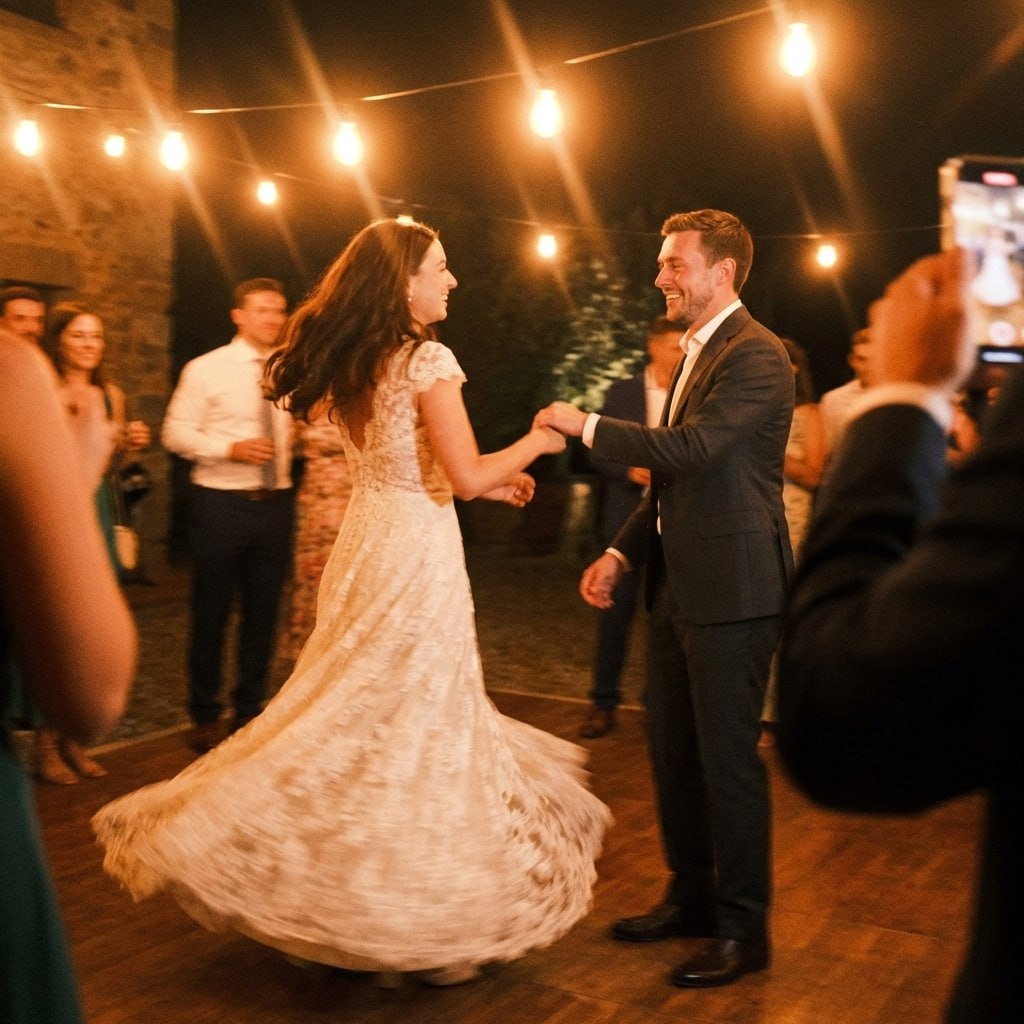
First dance
You guys!!
You do not have to plan the whole wedding while you are scared.
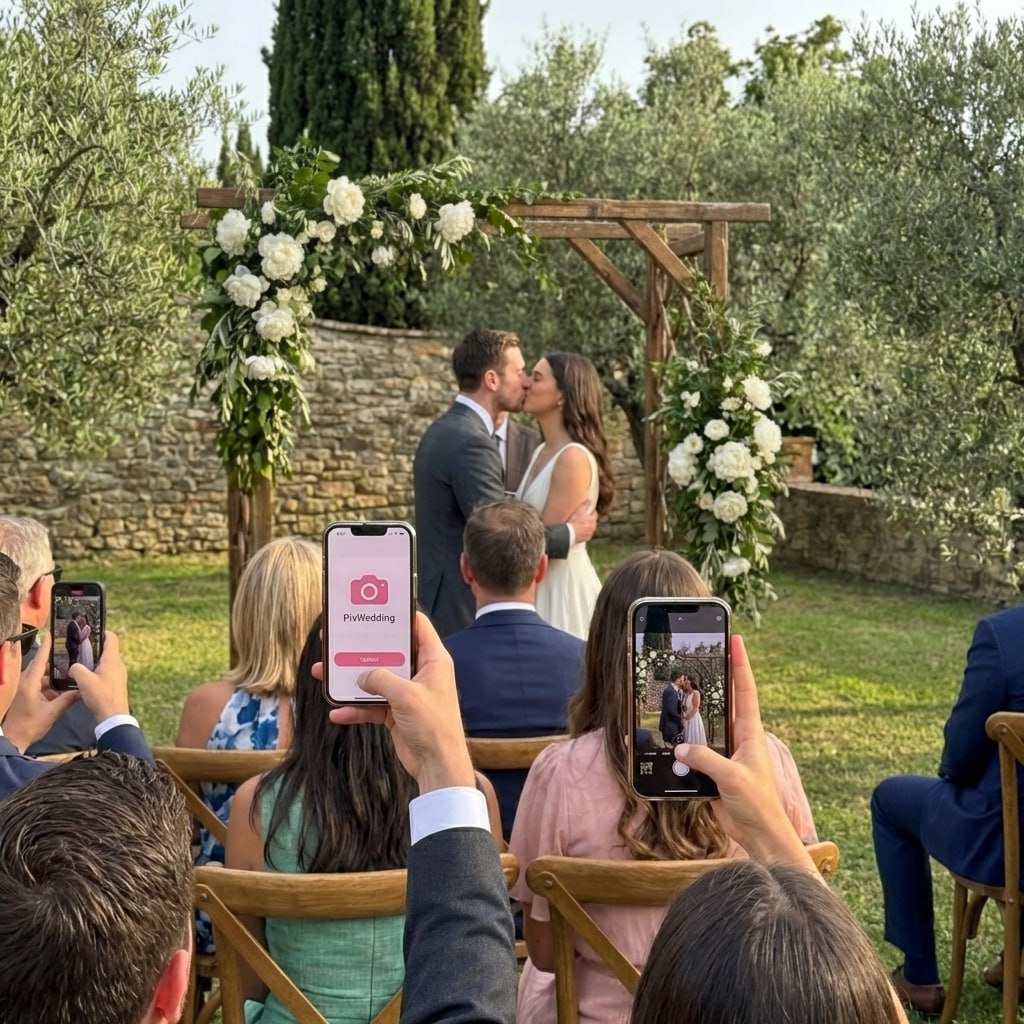
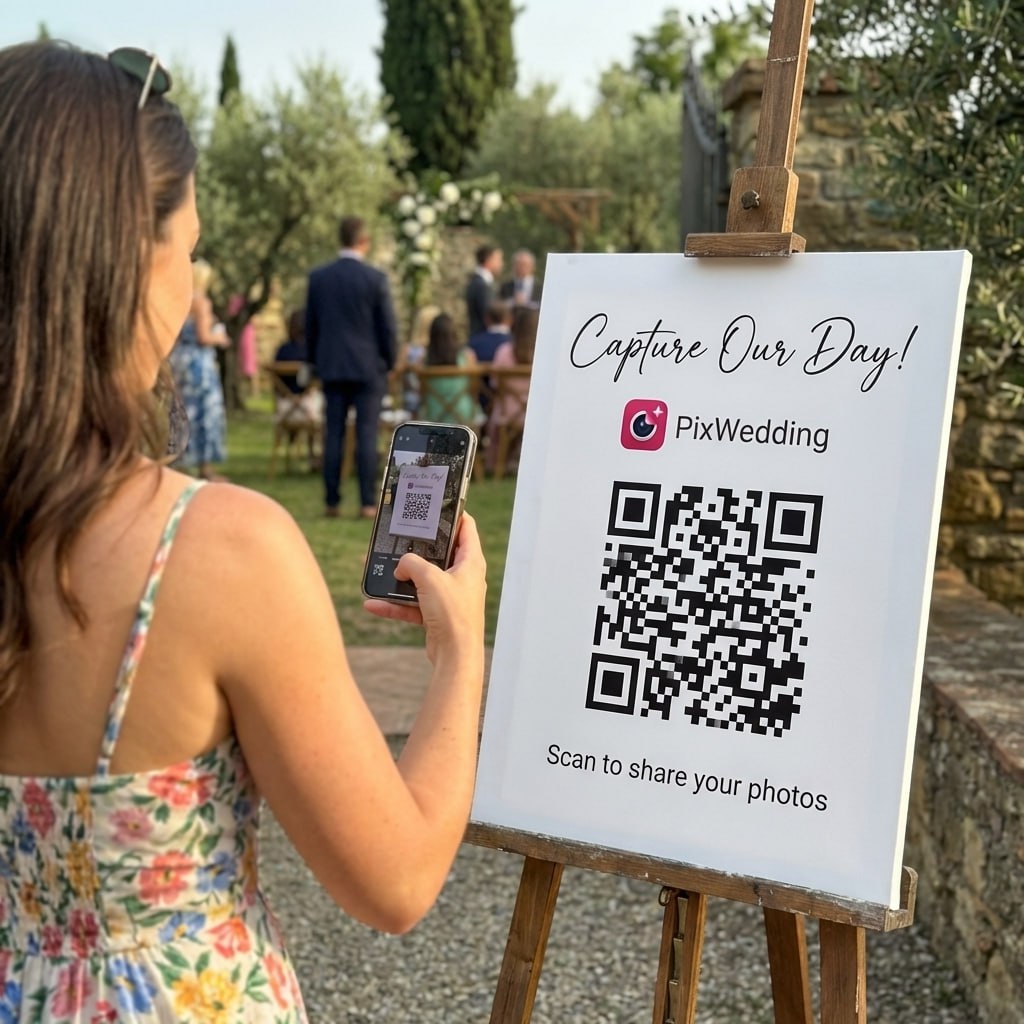
Start with one small, low-pressure piece: a free Pix Wedding gallery with a QR code guests can add photos to, ready whenever you and your partner are.
From Mom
Scan to join the album
No app, no account
UPLOADING
Saving your moment
THE ALBUM
Emma & Jack
June 21, 2026
647 photos · 95 guests

SCAN TO TRY
pix.wedding/
your-wedding
5 Reasons Fear Amplifies During the Engagement
The abstract becomes concrete
Before the engagement, marriage was a "someday" idea. After the ring, it is real. Your brain shifts from daydreaming to decision-making, and that is when fear shows up.
Everyone starts asking questions
"When is the date? Have you found a venue? What about colors?" Suddenly the world expects you to be deep in planning mode. External pressure accelerates anxiety.
A countdown begins in your mind
Even before you set a date, your brain starts counting. The engagement period feels like a ticking clock, and each passing week makes the decision feel more final.
Comparison mode activates
You start comparing your engagement to others. Their Instagram looks happier. Their proposal was more romantic. Their certainty seems unshakeable. None of this is real, but it feels real.
Well-meaning advice overwhelms
Everyone has an opinion about your wedding, your marriage, and your life. The noise drowns out your own voice, making it harder to access your genuine feelings.
Common Mistakes When Fear Hits After Getting Engaged
None of these mean you are failing at your engagement. They are simply the most common ways people try to manage the fear spike that end up prolonging it instead.
Bottling it up instead of naming it
Smiling through the "we are so excited!" script while privately panicking is exhausting, and it teaches your fear that it is not allowed to be spoken. Naming the fear out loud, even just "I am more scared than I expected to be," to your partner or a trusted friend usually shrinks it. Silence tends to make it louder.
Rushing the wedding date to "get it over with"
Some people respond to fear by trying to outrun it, booking the earliest possible date so the anxious waiting period ends sooner. This can work if you were already ready and just needed a nudge. But if the fear is about the marriage itself, a shorter engagement does not resolve it, it just compresses the same feelings into less time to process them.
Using wedding planning to avoid the fear entirely
Throwing yourself into seating charts, cake tastings, and Pinterest boards can feel productive, and it is genuinely useful work. But if planning tasks are the only thing keeping your mind busy so you never have to sit with the underlying fear, the fear does not go away. It waits. Planning and processing need to happen alongside each other, not instead of each other.
Assuming your partner already knows how you feel
It is common to expect a partner to somehow sense the fear without being told, and then feel hurt or unseen when they do not respond to something they were never told about. Fear that stays unspoken cannot be addressed together. A direct conversation, even an awkward one, is almost always more useful than a hint.
Deciding to call it off during a single bad night
Fear is often loudest late at night, after a stressful planning conversation, or right after seeing someone else's "perfect" engagement online. Big decisions made in those specific moments tend to reflect the moment more than the relationship. If a thought like "maybe I should end this" appears, it is worth sitting with it in daylight, with your partner, before treating it as a verdict.
Treating every doubt as equally serious
Not all doubts carry the same weight. Worrying about whether the centerpieces match is not the same category of thought as worrying about whether you trust your partner. Lumping them together, so that a small planning stress feels as alarming as a real relationship question, keeps the fear vague and impossible to solve. Sorting them apart is often the single most useful thing you can do.
If the fear does not ease with time, conversation, and the exercises below, or if it comes with persistent distress that affects your sleep, work, or daily functioning, that is worth bringing to a licensed therapist or counselor rather than working through alone. Reaching out is a proactive step, not a sign that anything is broken. The American Association for Marriage and Family Therapy maintains a directory of licensed therapists who work specifically with engaged and premarital couples.
How the Fear Spike Shows Up in Practice
The scenarios below are illustrative composites built from common patterns, not accounts of specific real people. They exist to show how differently the same fear spike can look from the outside.
The planner who mistook overwhelm for doubt
A newly engaged person starts a wedding checklist the same week as the proposal and feels a wave of dread every time they open it. For weeks they interpret the dread as doubt about the marriage. Eventually, talking it through with their partner, they realize the dread only ever hits while looking at spreadsheets and vendor emails, never while picturing the actual marriage. They hand half the checklist to a sibling and the dread drops sharply within days.
Fear that is tied to a task, not a person, usually points to planning overwhelm rather than relationship doubt.
The partner who kept the fear to themselves
One partner feels increasingly anxious after the engagement announcement but keeps performing excitement in public and at home, worried that admitting fear would hurt their partner's feelings. The other partner eventually notices the distance and asks directly what is going on. Once the fear is named out loud, both partners realize they had been feeling a version of the same thing separately, and talking about it together brings relief neither expected.
Fear that is spoken out loud tends to shrink. Fear that stays hidden tends to grow and create distance.
The couple who paused the date
A couple sets an 8-month engagement, but as the date approaches, one partner's fear has not eased despite talking, journaling, and reading about it. Instead of pushing forward or calling things off, they extend the engagement by six months and start premarital counseling together. The extra time is used deliberately, not just waited out, and they marry roughly a year later feeling considerably more settled.
A longer engagement only helps if the extra time is used actively. Waiting alone rarely resolves fear on its own.
How to Use the Engagement Period Productively
Instead of spending the engagement anxious, use it as structured preparation. Here is a 6-month relationship-building timeline alongside your wedding planning.
The Foundation Conversations
- Discuss your individual definitions of marriage. What does it mean to each of you?
- Share your biggest fears about marriage openly. Listen without trying to fix.
- Talk about finances: debt, spending habits, saving goals, whether to combine accounts.
- Discuss family boundaries. How involved will each family be in your lives?
The Vision Alignment
- Create a shared "marriage mission statement" in 2 to 3 sentences.
- Discuss children: timeline, parenting philosophy, what if you disagree later?
- Talk about conflict: how do you each handle disagreements? What needs to change?
- Define what "quality time" and "personal space" look like for each of you.
The Stress Test
- Make a big decision together (venue, budget, guest list) and observe how you collaborate.
- Have a deliberate disagreement exercise: pick a topic you differ on and practice resolving it.
- Share your "dealbreakers" for the marriage. What would you not be able to accept?
- Check in: how do you each feel about the engagement now compared to month one?
Setting a Timeline That Feels Right
Short engagement (3 to 6 months)
Less time for anxiety to build, maintains proposal momentum, simpler planning
Less time for emotional preparation, higher planning intensity, vendor availability may be limited
Couples who are already confident and want a simple celebration
Medium engagement (8 to 14 months)
Balanced planning timeline, room for emotional conversations, good vendor options
Can feel long if anxiety is present, planning fatigue may set in around month 10
Most couples. Enough time to prepare both the wedding and yourselves.
Long engagement (18+ months)
Maximum time for preparation, can save more money, no rush
Extended anxiety window, risk of losing momentum, others may question the timeline
Couples who know they need time to work through fears or who have complex logistics
Is This Wedding Stress, or Is It Doubt? Reflection Prompts
The hardest part of the fear spike is that it rarely announces which kind it is. Planning stress and genuine relationship doubt can feel almost identical from the inside. These prompts exist to help you tell them apart, not to produce an instant answer.
Am I afraid of the wedding event, or of the marriage itself?
Weddings are logistics: guest lists, budgets, a single day of performance in front of a crowd. Marriage is the relationship. Fear of one does not automatically mean fear of the other.
If I could skip straight past the wedding and just be married quietly, would the fear shrink?
If yes, the fear is likely pointed at the event, not the commitment. If the fear stays the same size either way, it is worth looking at more closely with your partner.
Is this fear new, or has it been present in some form throughout the relationship?
A fear that appeared the week the planning got loud is different from a doubt that has quietly followed the relationship for a long time.
Can I point to a specific behavior or moment that worries me, or is the fear more of a general unease?
Specific, nameable concerns ("we have not talked about X") are usually solvable through conversation. Free-floating unease is often about the size of the change, not the person.
What would I tell a close friend who described feeling exactly this way?
People are often far more measured and generous with a friend's fear than with their own. Borrow that perspective for yourself.
When I imagine my life five years from now with this person, what comes up first: relief, dread, or something in between?
Sit with the first honest image, not the one you think you are supposed to have.
You do not need a final answer tonight. You need enough clarity to know whether the next right step is a conversation about a table setting, or a conversation about the relationship itself.
Signs the Fear Is Settling vs. Signs Worth a Deeper Conversation
Neither list below is a diagnosis. They are general patterns that many engaged people notice, meant to help you decide what kind of conversation to have next, and with whom.
Often just the fear settling
- The fear is strongest around planning tasks, deadlines, or other people's questions
- You still feel warmth, attraction, and ease when it is just the two of you
- Talking to your partner about the fear brings relief, even if the fear returns later
- The intensity comes in waves and softens after a good conversation or a good night of sleep
Worth a deeper conversation or professional support
- The fear is about specific, unresolved behaviors from your partner, not about logistics
- The fear has been present in some form since long before the engagement
- Talking about it with your partner does not bring any relief, or you avoid the conversation entirely
- The fear is affecting your sleep, appetite, or ability to function day to day
What to Say When People Ask About the Wedding
You do not owe anyone details about your emotional state. Here are some responses for when the questions feel overwhelming:
Quick Glossary: Terms That Get Mixed Up
"Scared," "cold feet," and "doubt" get used interchangeably online, but they describe different experiences. Knowing which one you are actually dealing with makes it much easier to find the right next step.
Post-engagement fear spike
The wave of anxiety that can appear in the hours, days, or weeks right after a proposal, driven mostly by the shift from abstract to concrete. This is the focus of this guide.
Cold feet
A more general term usually used for anxiety that shows up much closer to the wedding date itself, often tied to the event, the crowd, and the finality of the day rather than the initial engagement news.
Relationship doubt
Concerns rooted in specific, ongoing issues with a partner or the relationship dynamic, rather than in the size or reality of the commitment. Doubt tends to persist across contexts, not just around wedding milestones.
If Planning Logistics Are Part of What Scares You
Look back at the fear-spike timeline above: one of the biggest accelerants is planning pressure arriving before you feel emotionally ready for it. Not every part of that pressure needs solving right now, but a few pieces can be taken off your plate early so they stop adding to the noise. Photo collection is a small, concrete example. Instead of researching a photo-sharing app during wedding week, some couples set up a free shared gallery months in advance, quietly, with no date attached and no pressure to use it yet.
That is what Pix Wedding is for: a QR code guests can scan to drop in photos from any event, engagement party included, gathered automatically into one album with no app download and no guest login. It will not resolve fear about the marriage itself, and it is not meant to. It is one small, real reduction in the "everyone needs an answer from me" load that this section of the guide talks about.
Dig deeper into specific fears
One less decision while you work through the fear
Pix Wedding gathers every guest photo into one shared album automatically, no app and no login for guests. One small thing off your plate today.
Try It FreeThe Engagement Period Is Not a Countdown. It Is a Preparation Period.
Our culture treats the engagement as a wedding planning phase. Set the date, book the venue, pick the dress. But the engagement is also, and perhaps more importantly, a relationship preparation phase. It is the time to have the conversations that will define your marriage, not just your wedding.
If you are scared, the engagement is working. It is giving you space to confront fears, align expectations, and strengthen your bond. Couples who use this time for real emotional work, not just event logistics, tend to enter marriage with greater confidence and clarity.
- •The engagement period exists for emotional preparation, not just event planning
- •Couples who have structured pre-marital conversations often report feeling more prepared
- •There is no single correct engagement length. The right length is the one that lets you feel ready.
- •Using the engagement for therapy or counseling is proactive, not problematic
- •A fear spike right after getting engaged does not, on its own, predict how the marriage will go
What to Do If You Said Yes but Are Not Sure
Saying yes to a proposal is an emotional, in-the-moment decision. You may have said yes from the heart in that instant, only to have your mind catch up later with questions and fears. This does not automatically mean you made the wrong choice. It means your emotional and rational processing happen on different timelines.
Give yourself permission to have a different relationship with the engagement than the one social media portrays. You do not have to be giddy every day or have a Pinterest board within 24 hours. You can sit with the decision, let it settle, and grow into confidence gradually. That is a valid way to be engaged.
Communication Exercises for a Scared Engagement
The single most useful thing you can do during a scared engagement is talk to your partner, not about centerpieces, about the real stuff. Schedule a weekly 30-minute check-in where you each share one thing you are excited about, one thing you are nervous about, and one thing you need from the other person.
This practice builds the communication habit you will rely on for the rest of your marriage. It also creates a rhythm of honesty that makes the scary stuff feel less scary over time. If you can talk about fear openly during the engagement, you can talk about almost anything during the marriage.
Explore more free wedding tools
Everything you need to make your wedding day stress-free and unforgettable.
Seating Chart Planner
Plan your reception seating visually.
Guest List Manager
Track RSVPs and dietary needs.
Budget Allocator
Turn your total into a category-by-category plan.
Timeline Builder
Plan your entire wedding day.
Venues by State
Explore venues across all 50 states.
Countdown Timer
Count down the days to your big day.
Bachelorette Party Games
15+ games with rules, supplies, and timing.
Alternative to Wedding Guest Book
15 creative alternatives guests enjoy.
Frequently Asked Questions
Straight answers to the questions people ask most about this topic.
Very normal. The engagement transforms an abstract idea into a concrete, dated plan, and that shift triggers fear in many people. You are not alone in this. Many newly engaged people feel a mix of excitement and fear at the same time. The fear usually reflects the weight of the commitment, not a problem with the relationship.
The proposal itself runs on adrenaline and surprise. Once that fades, often within hours or days, your brain starts processing the actual, lasting weight of the decision. That delayed reaction is one of the most common patterns in post-engagement anxiety and does not mean your initial yes was wrong.
First, breathe. Second thoughts after a proposal are common. Start by identifying what specifically is making you anxious: is it the wedding day, the marriage itself, or something about the relationship? Then share those feelings with your partner directly. The engagement period is meant for exactly this kind of processing.
Ask whether the fear changes size when you imagine the wedding disappearing but the marriage staying. If picturing a courthouse ceremony with no planning at all makes the fear shrink, it is likely about the event. If the fear stays just as large, it is worth exploring as a relationship question, ideally with your partner or a licensed counselor.
A longer engagement gives you more time, but time alone does not resolve fear. What helps is using the time actively: having honest conversations, doing pre-marital exercises, and possibly seeing a therapist. If those things are happening, even a standard-length engagement can be enough.
If your fear persists despite honest conversations and self-reflection, it is worth pausing and bringing it to a licensed therapist or premarital counselor rather than working through it alone. A postponement is not a failure, it is a decision to give yourself more time. Many people find that the fear diminishes significantly once they start having the right conversations with support.