
Funny Maid of Honor Speeches: 12+ Audience-Tested Excerpts by Humor Style
Witty, sarcastic, self-deprecating, and observational speech excerpts organized by style. With delivery timing tips, recovery techniques, and a clear guide to safe versus risky humor topics.
Generate a Funny Speech Draft with AIHow to Use This Collection
Identify your natural humor style from the four categories before reading the excerpts
Use excerpts as rhythm models - borrow the structure, replace all the content with your own
Mix styles if that reflects your voice - most funny speeches blend two approaches
Read the timing and recovery sections before rehearsing your final speech
Witty Humor
"I have known [Bride] for nine years. In that time, I have watched her become more patient, more grounded, and, somehow, a better cook. The cooking is unrelated to [Groom]. I just wanted to acknowledge the cooking."
Technique: The non-sequitur payoff is the technique here - establish a pattern, then break it.
"There are people who say that weddings are about two people becoming one. [Bride] has always been most herself in plural - her people around her, her people knowing her people. So this feels right. This feels like the correct ratio."
Technique: A conceptual observation delivered deadpan. High wit, moderate sentiment simultaneously.
"[Groom] is, objectively, an excellent choice. I say objectively because I ran the numbers. I had criteria. The criteria were extensive. He did not know about them, but he passed."
Technique: The wit is in the framing - treating a romantic evaluation as a formal process.
Self-Deprecating Humor
"I started writing this speech eleven weeks ago. I have completed drafts that I then deleted. I have consulted sources I will not name. I have, at one point, asked my cat for her opinion. She had none. So this is what I have."
Technique: The audience is immediately on your side. They are rooting for you before you have said anything substantive.
"I know people say public speaking is the number one fear. I would like to report that for the past week I have found it is actually the number one, two, and three fear, with number four being that I am going to tell this story wrong."
Technique: The callback structure (building the list to a specific anxiety) is a classic self-deprecating setup.
"I had three versions of this speech. Version one was seventeen pages. Version two was too honest. Version three is what you are about to hear. I think you're going to enjoy it. Version two was probably better."
Technique: The implied content of "version two" gets the laugh. The audience fills in the blank.
Observational Humor
"There is a moment in any close friendship when you realize you have stopped performing and started just being. I know the exact moment this happened for us. She said something embarrassing in front of people we were trying to impress. I said something equally embarrassing. And we looked at each other and knew. We were done performing."
Technique: Universal recognition humor - everyone knows this friendship turning point.
"When [Bride] is invested in something, she texts about it. A lot. The frequency with which [Groom] appeared in my messages over the last three years tells a story of its own. I did a rough count for research purposes. It was not a small number."
Technique: Observational but specific. The joke is the pattern, not any one instance.
"The thing about being someone's best friend for a long time is that you both stop being your best selves for each other and start being your actual selves. And I can tell you that [Bride]'s actual self is somehow even better than the first impression."
Technique: Starts observational and pivots naturally to a genuine, heartfelt moment.
Warm Sarcasm Humor
"I want to start by saying that [Bride] deserves this. She has been waiting for [Groom] patiently and with what I can only describe as remarkable restraint. I saw the restraint. It was significant. She did not mention him every single day. Just most of them."
Technique: The sarcasm is affectionate because the truth (she was excited about him) is clearly warm.
"[Groom], I want to be clear: we have all been watching. We have had opinions. We have had a group chat. I am not going to tell you what was in the group chat. What I will tell you is that the last message in the group chat, when she sent a photo of the ring, was: 'called it'."
Technique: The group chat reveal is funny but also shows collective approval. The warmth is the subtext.
"She told me she was not nervous about today. For reference, [Bride] is a person who spends forty-five minutes deciding where to have brunch. The fact that she is not nervous about this tells me everything I need to know about how right it is."
Technique: The sarcasm about a known quirk pivots immediately into a genuine compliment about the relationship.
Timing Tips: The Mechanics of Getting the Laugh
The same words delivered with different timing produce completely different results. These four timing principles are the most important comedy technique available to you.
The Two-Second Rule
After every intended laugh, pause for two full seconds before continuing. This is the most important timing principle in comedy delivery.
Slow Down for Punchlines
Slow your pace slightly as you approach the funny moment. Speed up slightly in the setup. The contrast signals something is coming.
Do Not Laugh First
Let the audience laugh before you do. If you laugh at your own joke, you cut the pause and undercut the timing.
Watch the Room
Make eye contact during the setup. Look at one person with a slight smile during the pause. Then continue.
Recovery Techniques: When Things Go Off-Script
Even the best comedic speakers have moments where the room does not respond as expected. Having a recovery plan means you can handle anything without losing your composure.
Joke falls completely flat
Continue without acknowledging it. Do not pause. Do not explain. Just move forward as planned.
You forget your next line mid-laugh
Let the laugh play out. Use the time to glance at your notes. The audience thinks you are letting them finish.
You laugh when you were not planning to
Let yourself laugh briefly, then say "I'm sorry, I've been telling myself not to laugh at this part for a week." Usually gets an additional laugh.
Someone in the audience reacts awkwardly
Do not address it. The rest of the room will follow your energy, not theirs. Continue with confidence.
Safe vs Risky: The Complete Topic Guide
Not every funny topic is appropriate for a wedding speech. Here is the full breakdown by risk level.
Always Safe
Your own nerves and preparation process
Situations you both got into together
Universal friendship experiences that anyone recognizes
Brief warm teasing about known, benign quirks she would agree with
Affectionate remarks about your screening of the groom (framed with love)
The evolution of the relationship as you observed it
Use with Caution
References to alcohol or partying (know the family/culture)
Self-deprecating humor about the speech itself (once is charming, twice is a crutch)
Very mild, warm references to past relationships (frame as context, not criticism)
Family dynamics (only if you know the room extremely well)
Current events or cultural references that half the room might not share
Avoid Entirely
Anything the bride has asked not to be shared
Jokes about appearance or weight in any framing
Roast-style humor without the bride's explicit advance blessing
Negative references to exes even framed as jokes
Political, religious, or cultural humor that could divide the room
Anything that requires being drunk to find funny
More Speech Resources

First dance
You guys!!
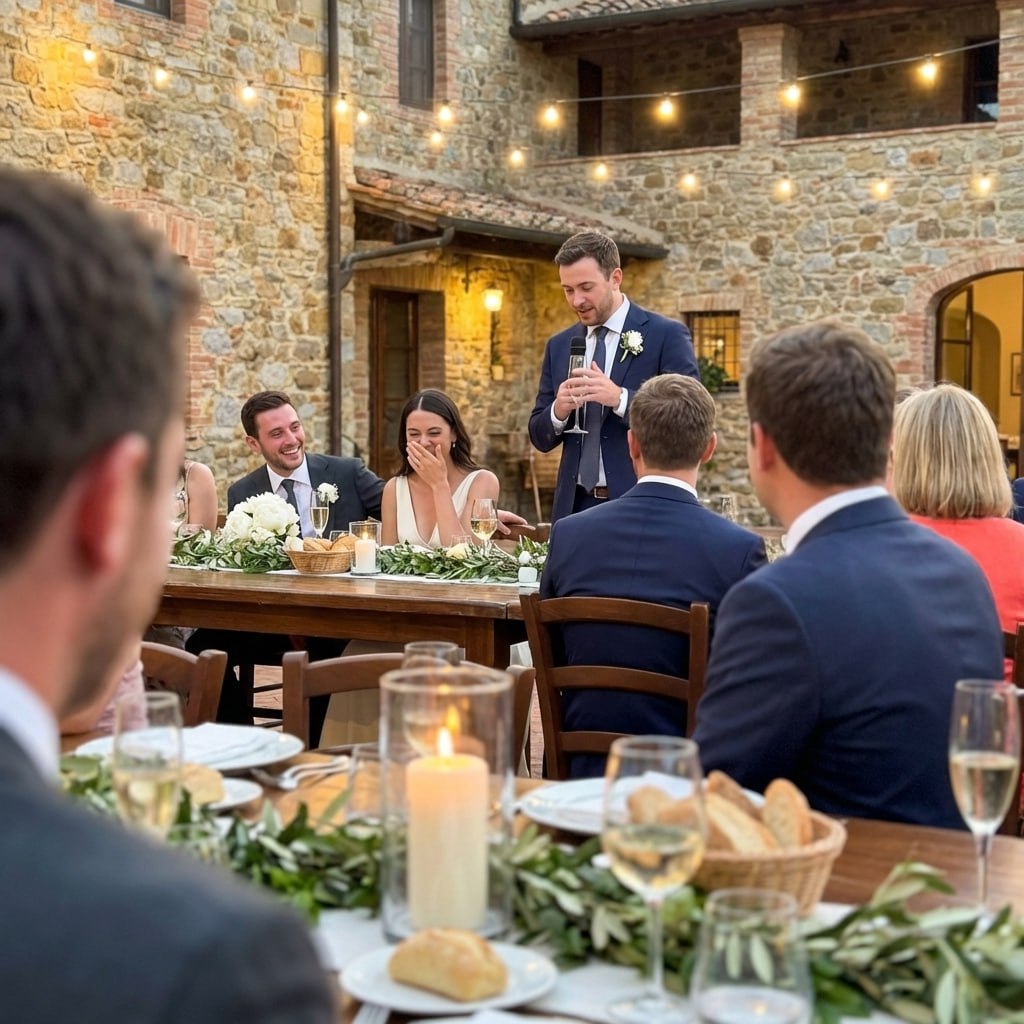
Funny speeches belong in the wedding album.
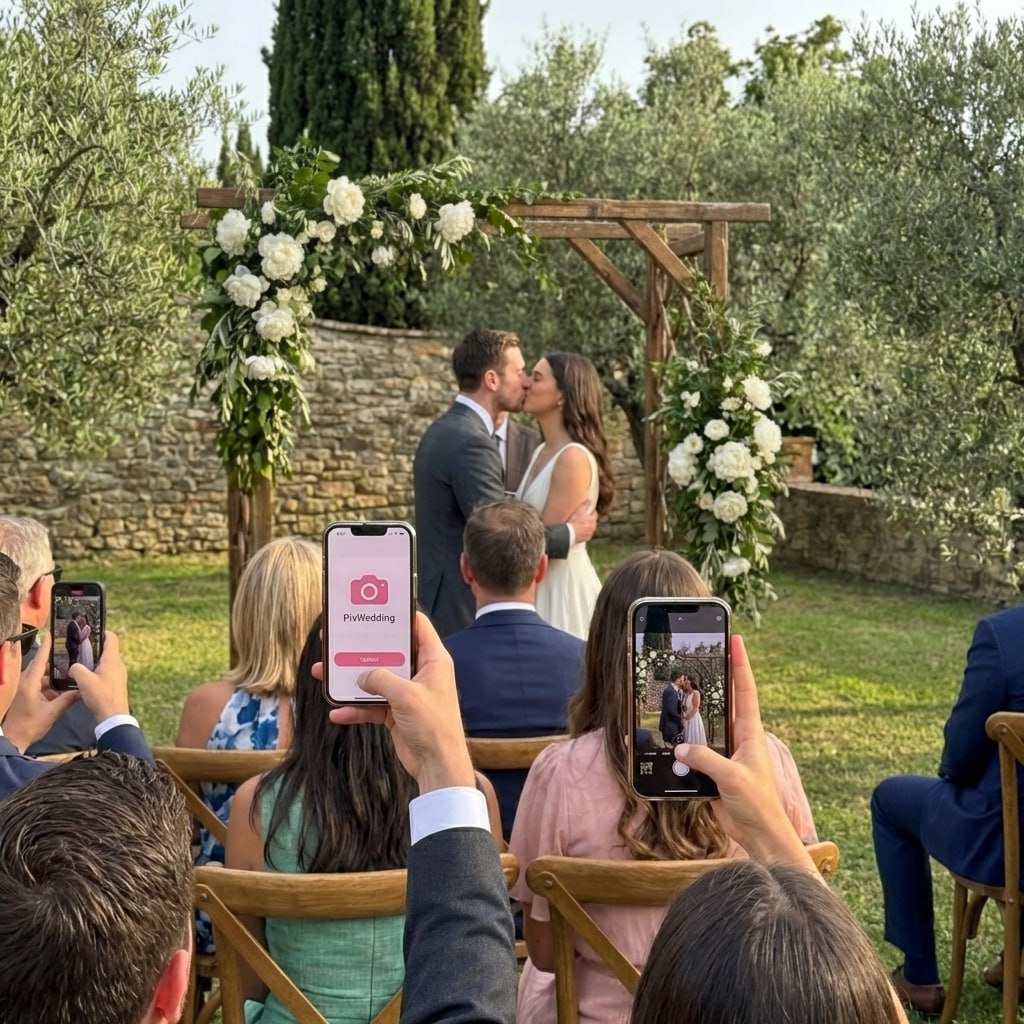
Pix Wedding puts voice messages and guest photos together in one place, so that perfectly timed punchline lives alongside the photos from the same moment.
From Mom
Scan to join the album
No app, no account
UPLOADING
Saving your moment
THE ALBUM
Emma & Jack
June 21, 2026
647 photos · 95 guests
SCAN TO TRY
pix.wedding/
your-wedding
Choosing Your Humor Style Before You Write a Single Word
The biggest mistake funny maid of honor speech writers make is trying to be funny in a style that is not naturally theirs. If you are a dry, understated humor person, a big punchline structure will feel forced. If you are warmly observational, trying to be witty will fall flat. The most effective funny speech is one written in your actual comedic voice.
Take a moment before writing to identify your natural humor style. How do you make people laugh in everyday conversation? Do you get laughs from your specific delivery of regular sentences, or from surprising observations? Do you build to punchlines, or do your funniest moments sneak up on people? Write the speech in that voice.
Once you have identified your style, look at the examples in this guide that match it. Use them as rhythm models, not content models. The structure and pacing of a self-deprecating joke can be borrowed; the specific content must be entirely yours.
- •Identify your natural comedic voice before writing, not after
- •Use examples as rhythm and structure models, not content models
- •The funniest speech sounds like you at your most naturally amusing
- •If a joke feels forced while writing, it will feel forced in the room
- •One great joke is worth more than six mediocre ones
Safe vs Risky Humor Topics: A Comprehensive Guide
Funny wedding speeches fail for one of two reasons: the jokes are not actually funny, or the jokes are funny to some people but uncomfortable for others. The second failure is worse, because it does not just produce silence - it produces discomfort that affects the rest of the speech.
Before any piece of content, ask: who in this room could this make uncomfortable? The bride, her family, the groom's family, the children present, the elderly guests? The answer to "could this make anyone uncomfortable" should always be no, with the sole exception of very mild, warm teasing of the speaker herself.
The safest rule: if there is any doubt, cut it. A slightly less funny speech that everyone in the room can enjoy fully is infinitely better than a sometimes funny speech that creates a moment of tension or embarrassment.
- •Safe: humor about situations, timing, your own reactions and nerves
- •Safe: warm, recognizable observations about the bride's known quirks that she would laugh at
- •Caution: any reference to past relationships (frame only positively if at all)
- •Caution: alcohol and party references (read the room - some families and cultures object)
- •Avoid: anything the bride might not want shared, even if it is funny
- •Avoid: anything that could be read as a criticism of either family or of the wedding itself
Explore more free wedding tools
Everything you need to make your wedding day stress-free and unforgettable.
AI Vow Generator
Write "banger" vows in seconds.
Hashtag Generator
Create unique wedding hashtags.
Thank You Notes
Generate personalized thank you notes.
Father of the Bride Toast
Full example toasts, structure, and delivery tips.
Invitation Wording
Perfect wording for your invitations.
Couple Name Combiner
Blend your names into the perfect couple name.
Photo Sharing QR
The best way to collect guest photos.
Wedding Checklist
Month-by-month planning checklist.
Funny Maid of Honor Speeches FAQs
Everything you need to know about our free tools and how they help your wedding day.
Self-deprecating humor (about yourself, not the bride) and observational humor (about universal experiences) tend to work best in mixed audiences. Witty humor works if it suits your natural voice. Sarcasm works only with a very specific, warm delivery - it can misread in a large room without strong tone control.
The best recovery is to continue without acknowledging it. Do not explain the joke, do not apologize, and do not say "that was funnier in my head." Simply continue with your next line. If you have a self-aware line prepared as a backup ("I practiced that one the most, for what it's worth"), you can use it, but only once.
Sarcasm can work brilliantly, but it is the highest-risk humor style in a wedding context because it depends entirely on delivery. In person with a warm smile and obvious affection, it reads as loving wit. Without those tonal cues, it can read as genuinely critical. If sarcasm is your natural voice, use it, but rehearse the delivery more than any other part.
The funny sections should take roughly half the total speech time, but be distributed strategically rather than concentrated. One good laugh early, one in the middle, and then the speech should build toward emotion for the close. The humor should feel like a natural part of the speech, not a comedy block followed by a serious block.
Witty humor relies on clever language, wordplay, or unexpected framing to get the laugh. Observational humor gets the laugh by describing a universal experience so accurately that the audience thinks "yes, exactly." Observational humor tends to be safer and more universally accessible. Witty humor rewards more attentive audiences.
Yes. Comedy requires precise timing that serious speeches do not. Rehearse each funny moment with specific attention to the pause after the punchline. Record yourself so you can hear whether the comic rhythm is working. And test your funniest material on at least one person who does not know the bride well - if they laugh, you are safe.