
Who Walks the Mother of the Bride Down the Aisle?
Start with her preference. Then choose a person, a seat and a cue that fit the ceremony you are having.
Who walks the mother of the bride down the aisle?
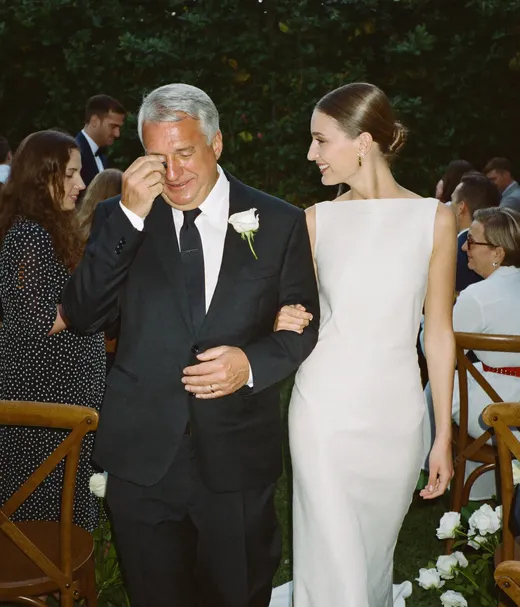
An usher or groomsman is the traditional escort for the mother of the bride. She may instead choose her son, a grandchild, a sibling, her partner, the groom or a solo walk. In a common Western procession, she is seated after the groom's parents and before the wedding party. Ask her preference first.
Checked 29 September 2026. Ceremony orders can differ by faith and venue.
Who can escort the mother of the bride to her seat?
There is a traditional answer, and there is room for the person she wants beside her. Use the table to make the practical details as clear as the choice itself.
| Escort | When it fits | Tradition or source | Plan before the ceremony |
|---|---|---|---|
| Usher or groomsman | A formal or familiar Western procession | The traditional choice in Zola's escort guide | Tell the escort where to sit or how to return to the lineup. |
| Her son or grandson | She wants a close relative beside her | Listed by Zola and Grace Presbyterian's wedding guide | Ask her first; the role is hers to choose. |
| The groom | He is free before his own entrance | Husbands are listed as examples in Grace Presbyterian's wedding guide | Plan how he reaches his ceremony position afterward. |
| Her partner | They want to enter and sit together | Husbands are listed as examples in Grace Presbyterian's wedding guide | Set the front-row seats with both households in mind. |
| The father of the bride | He can return to the bride before her entrance | Zola lists him as an option | Build enough time for him to get back without rushing. |
| A grandchild or sibling | She has another loved one in mind | Family escorts appear in Zola's guide | Practice the aisle and seat together at rehearsal. |
| She walks alone | She prefers a solo entrance | The Knot's Catholic order allows a solo walk | Give her a clear cue and an easy route to her seat. |
Swipe to compare
Checked 29 September 2026. Escort traditions: Zola and Grace Presbyterian. Seating guidance: Emily Post.
The traditional groomsman choice and family alternatives are described by Zola; Grace Presbyterian's wedding guide lists sons, brothers and husbands as examples. Emily Post's aisle walk FAQ says a bride may be escorted by her mother.
When does the mother of the bride walk down the aisle?
In the common Western order, she follows the groom's parents and is often the final parent seated before the wedding party enters. Keep that local sequence in your plan. Our full ceremony entrance guide covers everyone else.
- 1Grandparents or honored familyIf they are entering formally, seat them before the couple's parents.
- 2Groom's parentsIn the familiar Western order, they enter before the bride's mother.
- 3Mother of the brideShe is often the final parent seated before the wedding party enters.
- 4Wedding party and coupleTheir order depends on the ceremony style and the couple's choices.
Sequence based on Zola's traditional Western order. Checked 29 September 2026. For the entire lineup, see wedding ceremony entrance order.
How should your family choose her escort?
The most useful question is hers to answer. Ask whether she wants a companion and, if so, whom she wants. Then work that person's other ceremony role into the order.
Give Mom the choice before making a lineup
Olivia asks her mother privately. Her mother chooses her son. Marcus then writes the return route into the ceremony notes so the son can also stand with the wedding party. The chat is an example, not a real couple.
Zola lists sons, brothers and other relatives as possible escorts. Read Zola's escort guide. Checked 29 September 2026.
Can the mother of the bride walk alone?
Yes. A solo walk is a valid choice. So is an escort who offers support on a long or uneven aisle. Pick the version she prefers, then make its cue unambiguous.
Walking on her own
Tell her when to start and where her seat is. She can move at her own pace without picking one person from the family.
Walking with someone
Choose a person she trusts. Show them the aisle, the front-row turn and their own next step at rehearsal.
The Knot's Catholic processional example includes both solo and family-escorted entrances. Checked 29 September 2026.
What changes with divorced parents, two mothers or mobility needs?
Keep the conversation with the person whose walk it is. Family relationships and the physical route can change the answer more than any tradition does.
For divorced-parent seating, Emily Post's wedding ceremony seating guide explains shared and separate front rows. Checked 29 September 2026.
What does the full wedding procession look like?
Seeing the spacing can make a written sequence easier to use. This short planner video explains arranging people down the aisle; our rail above keeps the focus on the bride's mother.
How to Arrange the Perfect Wedding Ceremony Processional
Sinfonia Wedding, a destination wedding planner, shows the entrance order and where the family fits.
Sinfonia Wedding on YouTubeOne QR code for the guests.
Every photo in one place.
After the ceremony, guests can scan the QR code and add their phone photos to Olivia and Marcus's example album without downloading an app.
EXAMPLE WEDDING ALBUM
Olivia & Marcus's Wedding
Ceremony day, example album
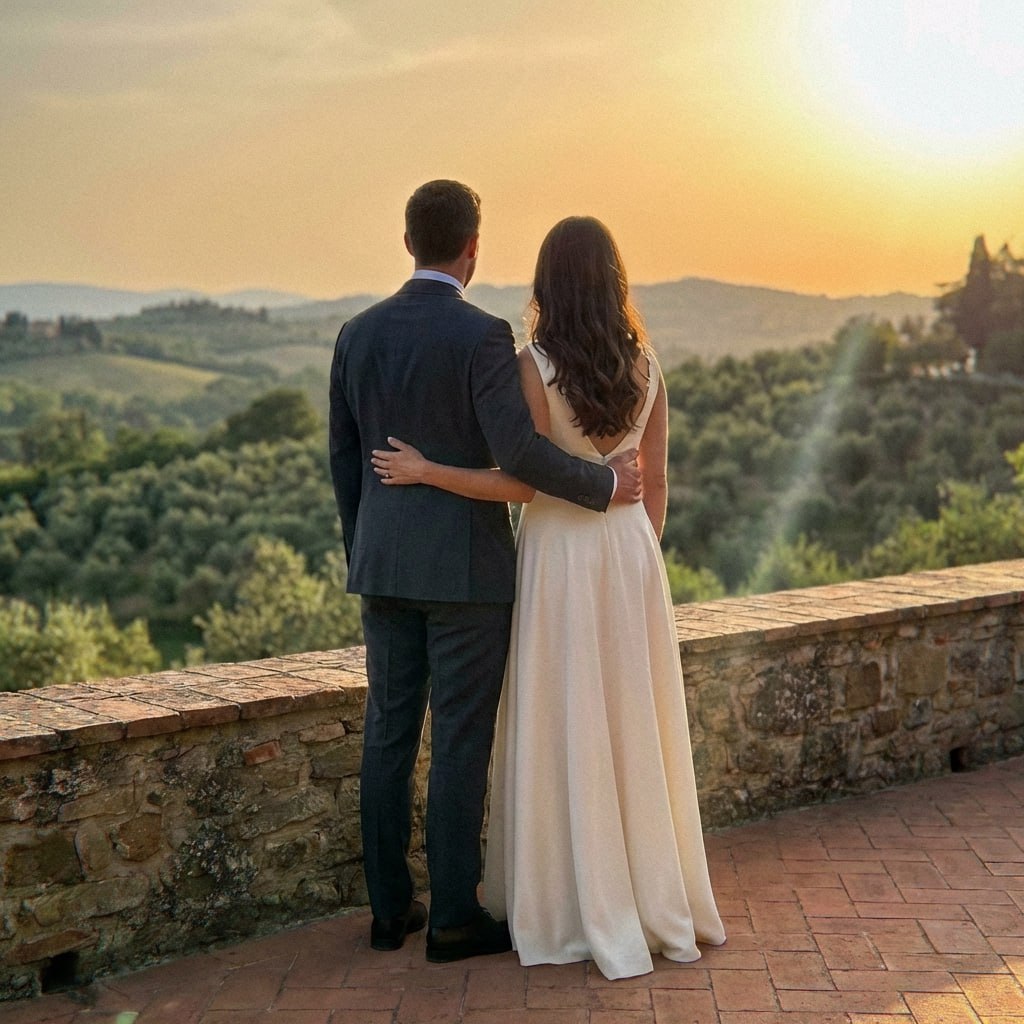
Olivia & Marcus, example
You guys!!
Let the ceremony live beyond the aisle
Give guests one QR code for the photos they take at Olivia and Marcus's example wedding. They upload in their phone browser.
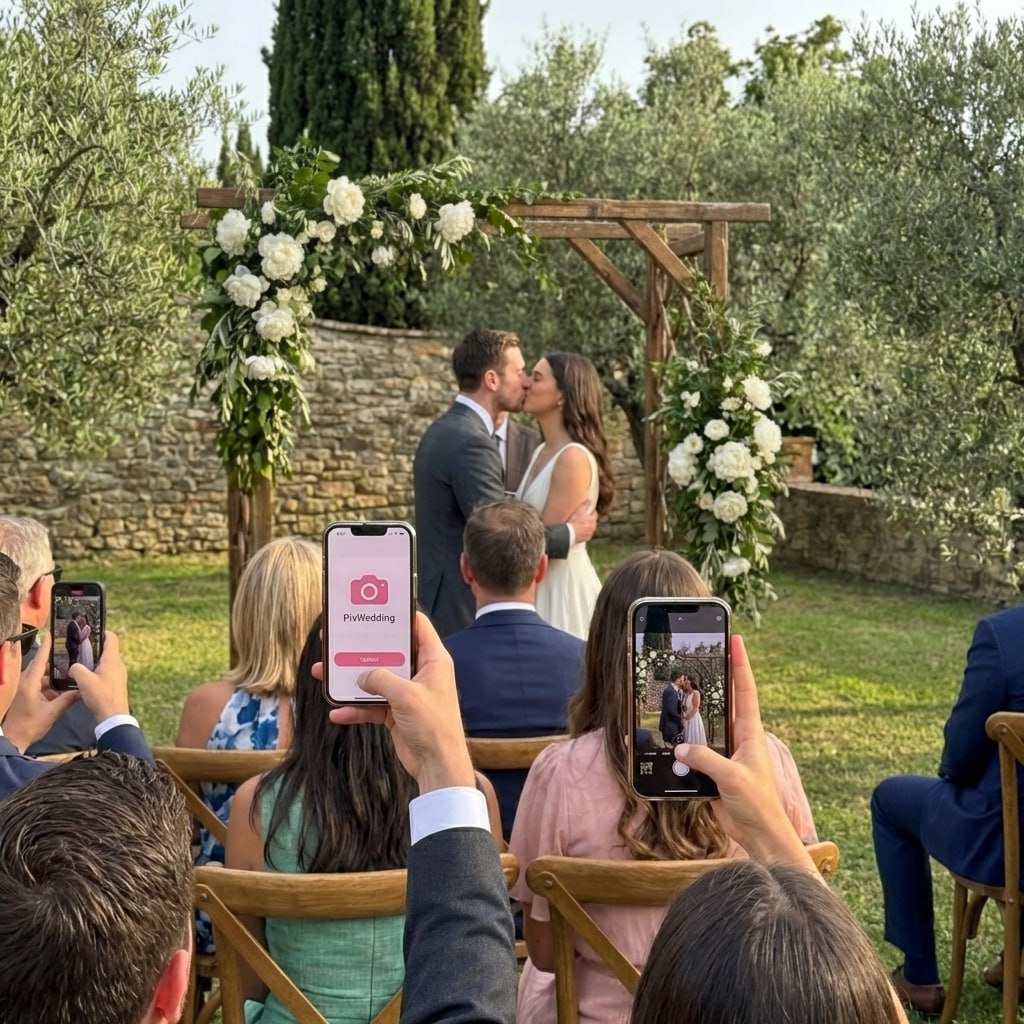
From Mom
Scan to join the album
No app, no account
UPLOADING
Saving your moment
THE ALBUM
Olivia & Marcus
Example album
24 photos · 6 guests
SCAN TO TRY
pix.wedding/
your-wedding
How do you brief her escort before the ceremony?
Write a short sequence, practice the route once, then let the person running the ceremony handle the cue. A rehearsal is especially helpful if the escort must return for a second entrance.
- 1Ask her who she wantsLet her choose a person, or a solo walk, before anyone else volunteers.
- 2Place her in the written orderList the people directly before and after her so the escort has one clear cue.
- 3Mark her seatCheck the front row and the route into it, including steps and tight turns.
- 4Practice the returnIf the escort walks again, show the route back to the aisle entrance.
- 5Give the musician a cueAgree on the entrance song and what happens once she is seated.
Give the same written order to the person cueing the procession and to her escort. Both should know who walks immediately before her.
Grace Presbyterian's wedding planning guide asks couples to list escorts and consider their spacing. Checked 29 September 2026.
The aisle lasts a moment. The photos stay together.
Illustrative album for Olivia & Marcus. Guests can send their ceremony and reception photos into one shared place.
Scan to join the album
No app, no account
UPLOADING
Saving your moment
THE ALBUM
Olivia & Marcus
Example album
24 photos · 6 guests
Who walks the mother of the bride out of the ceremony?
Plan the exit too, but do not assume it has to mirror the entrance. The couple normally goes first. The wedding party and family follow in an order that suits the space and the service.
With her partner
If they are seated together, they can leave together once the couple and attendants have passed.
With her entrance escort
The same person can return for her if the layout and ceremony order make it easy.
With another parent or alone
The recessional can pair parents differently or let them leave their seats without a formal escort.
The Knot's recessional guide describes several orders and places family after the couple and attendants. Checked 29 September 2026.
How do you ask someone to walk the mother of the bride?
Keep the request small and specific. The person's job is to walk with her, guide her to the seat, then take their own place. These are original example scripts, not quotes from couples.
“Mom, would you rather walk with someone or have the aisle to yourself? If you want company, who would feel right beside you?”
“Would you walk Mom to her seat before the wedding party comes in? She would love to have you with her. We can practice the route at rehearsal.”
“Please cue Mom and her escort after the groom's parents. Once she is seated, we will start the wedding party entrance.”
Does the mother of the bride walk in every tradition?
No. A separate seating walk is one pattern, not a rule for every service. Ask the officiant or faith community how parents enter in that ceremony.
Checked 29 September 2026. Religious and cultural orders vary even within a tradition.
What tends to go wrong with the mother's aisle walk?
Most snags come from decisions left until the ceremony starts. Give everyone a written cue and a place to go.
What else belongs on the ceremony checklist?
The bride's mother's walk is one piece of the day. Use the nearby guides for the groom's mother, the full entrance order and what the mother of the bride may do beyond the ceremony.
Choosing a mother of the bride escort
Start with her preference, then fit that person into the ceremony order. An usher may suit a formal walk, while a son or grandchild makes it a family moment. A solo entrance is also a complete plan.
Keep the full wedding party lineup in the ceremony guide. This page covers only the bride's mother's entrance, seat and exit so the small decisions do not get lost in a long procession list.
- Ask her before inviting an escort
- Show the escort the seat and return route
- Confirm the sequence with the officiant or coordinator
Planning the walk for your family
A blended family may need a seating conversation before it needs a procession diagram. Give everyone a clear place and avoid settling a sensitive question at the aisle entrance.
If she will walk the bride to the altar, fold her role into that later entrance instead of writing two walks for her. Religious processions can have different parent roles, so check with the people leading the service.
Mother of the bride aisle questions
Short answers on escorts, timing, solo walks, divorced parents and the exit after the vows.
A groomsman or usher is the traditional Western escort. A son, grandson, brother, other relative or the father of the bride can also walk with her. Ask her which choice she wants before assigning the role.
She can choose a son, sibling, grandchild, partner, family friend or another trusted person. She can also walk alone. Give that person the route and seating cue at rehearsal.
Yes. The Knot's processional examples include a solo walk. She can take her seat without an escort if that is the entrance she prefers.
He can, if the couple and the bride's mother want that arrangement. Plan how the groom gets to his place for his own entrance afterward.
In a common Western order, the groom's parents are seated first, then the bride's mother enters before the wedding party. A religious venue may use a different order, so confirm it with the officiant.
There is no required exit partner. She might leave with her partner, her entrance escort, another family member or on her own. The couple and wedding party usually leave first, with family afterward.
If they are comfortable together, they can share a front row. If not, arrange separate seats and confirm each parent's entrance privately. Emily Post gives both approaches.
Yes. Emily Post says a bride may be escorted by her mother, and Chabad describes brides entering with parents in many Jewish communities. If she escorts the bride, she does not need a separate seating walk.