Fraud Blocker
pixPix Wedding
Wedding processional order, updated November 2026

Wedding ceremony entrance order, step by step

Who walks down the aisle first, who walks with whom, where the maid of honor and best man go and how everyone leaves again. Christian, Catholic, Jewish, Hindu, civil and same-sex ceremonies, each checked against a named source.

The standard order, all ten positionsCatholic, Jewish, Hindu, civil and same-sex orders, each sourcedMaid of honor, kids, small weddings and the recessional
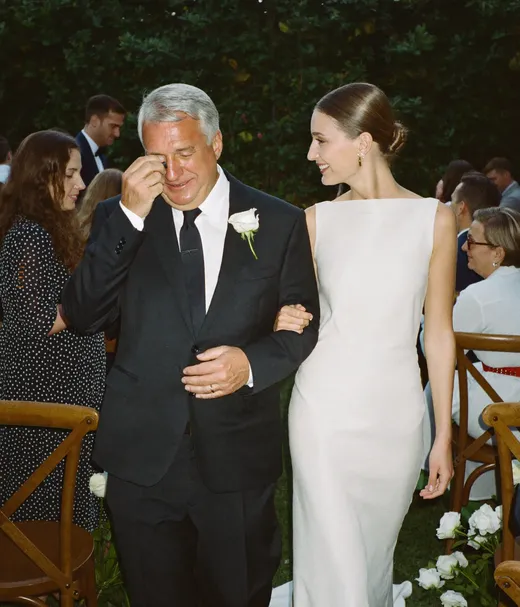
Father wiping away a tear as he walks the bride down the aisle
Position 10 of 10The bride walks in last
The short answer

A traditional wedding entrance order for a Christian ceremony: grandparents and parents are seated, the officiant takes the front, the groom and best man enter, then groomsmen, bridesmaids, the maid of honor, the ring bearer and flower girl, and the bride with her escort last. Catholic, Jewish and Hindu orders change who walks and when.

Order per WeddingWire and Zola, checked November 2026.

10Positions in the standard order. Only the bride's slot never moves
~2 minThe average wedding entrance procession, five minutes at most (Zola)
6-8 ftSpace between each walker or pair (Paperlust)
LastWhere the maid of honor walks among the bridesmaids
THE AISLE, FROM EVERY PHONE

Scan the card.
Every aisle shot lands.

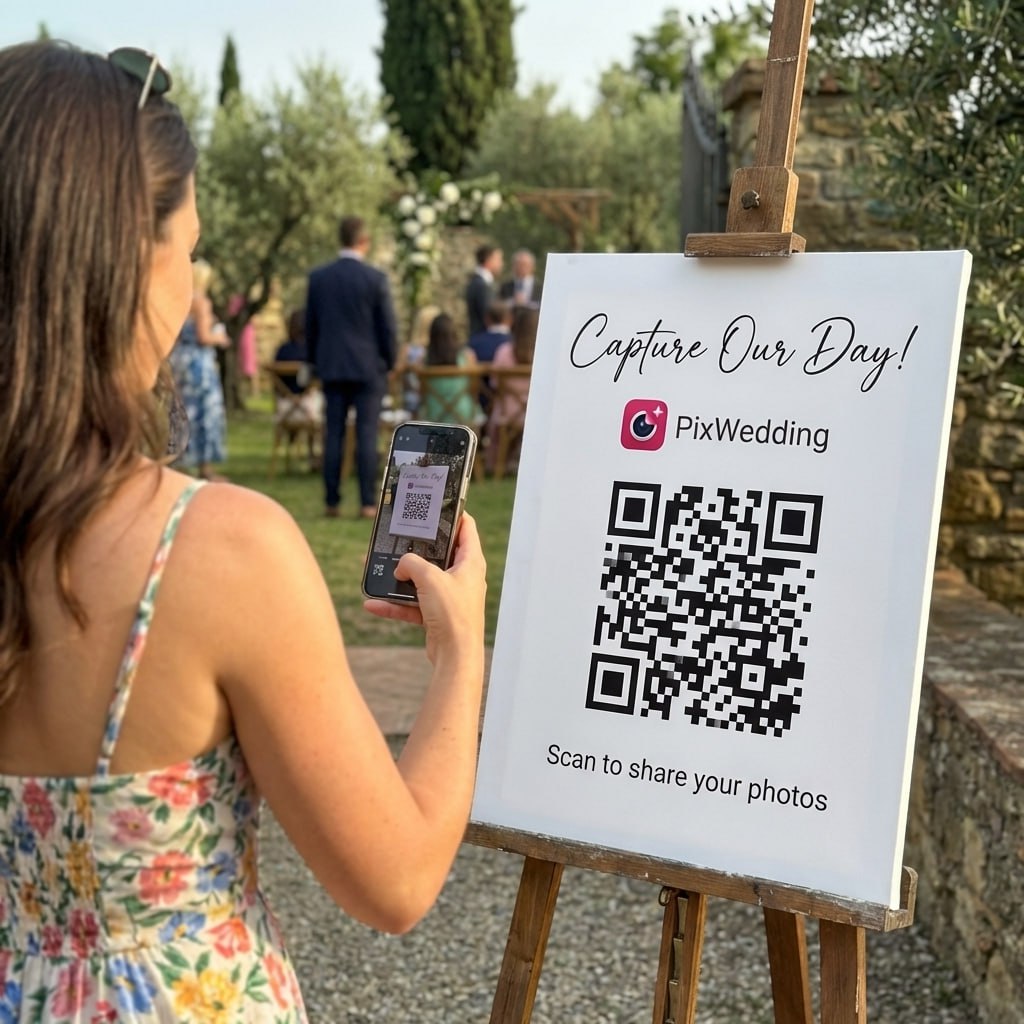
Guests film the processional from every row. They scan one QR card on their chair and upload from the phone browser, no app or account, into one album the couple keeps.

Emma & JamesScan to share your photos
9:41

SHARED GALLERY

Emma & James

AllCeremonyMine
First dance
Toast
Cake smash
Table selfie
Bouquet toss
Grandmas dancing
Confetti exit
Getting ready
Sparkler exit
Upload your photosNo app needed
01What is the order of walking in a wedding ceremony

The standard wedding processional order, position by position

This is the order of entrance for wedding ceremony planning most guides start from: a Christian ceremony with a full bridal party. Treat it as a default. Drop the slots you do not need, and keep the bride last.

  1. 1

    Grandparents

    Seated, optional

    Walked to the front rows by an usher or a grandchild. Paperlust walks them in early, after the officiant; many couples seat them before the music starts.

    Source: Paperlust
  2. 2

    Parents of the groom

    Seated, optional

    WeddingWire seats them after the guests and before the mother of the bride, in the front row on the groom's side.

    Source: WeddingWire
  3. 3

    Mother of the bride

    Seated

    The last person seated before the processional starts, front row on the bride's side. Her seat is the signal that the wedding party is next.

    Source: WeddingWire
  4. 4

    Officiant

    Walks or waits

    Walks to the front and takes their place. Zola starts the Christian order here; some officiants are already in place before the music.

    Source: Zola
  5. 5

    Groom and best man

    Wedding party

    The groom enters from the right side of the ceremony site or walks the aisle, with the best man next to him or right behind.

    Source: Zola
  6. 6

    Groomsmen

    Wedding party

    One by one after the best man, or paired with the bridesmaids. An odd one out walks alone or as part of a trio.

    Source: WeddingWire
  7. 7

    Bridesmaids

    Wedding party

    The bridesmaid who will stand farthest from the bride walks first, so nobody has to squeeze past anyone at the front.

    Source: Zola
  8. 8

    Maid or matron of honor

    Alone

    Walks alone, last of the bridesmaids, and stands closest to the bride's spot.

    Source: WeddingWire
  9. 9

    Ring bearer and flower girl

    Optional

    Together or one after the other, right before the bride. They can sit with their parents once they reach the front.

    Source: Zola
  10. 10

    The bride and her escort

    Always last

    Usually her father, but both parents, one parent or another important person all work. Guests stand when she enters.

    Source: WeddingWire
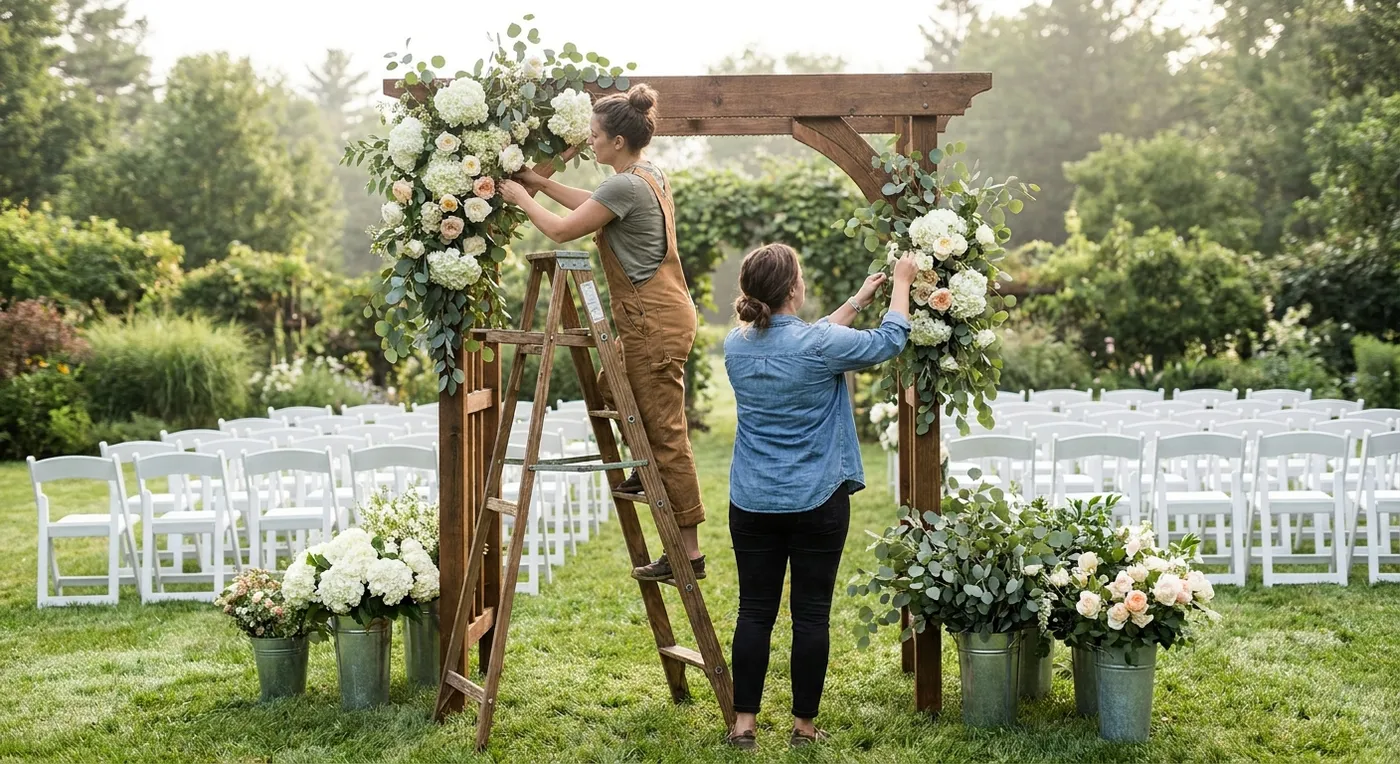
Florists dressing a ceremony arch above rows of white chairs
Where the walk ends
Where sources differ

WeddingWire seats the parents before the officiant walks. Zola starts with the officiant. Paperlust starts with the officiant and walks grandparents and parents in after them. The order of a wedding ceremony entrance is custom, not law, so any of these is correct.

Same list, other names: planners also call it the wedding aisle order, the wedding walk order or the wedding march order.
Floor plan, seen from above

From the doors to the front

The front321149781056
Bride's sideThe doorsGroom's side
Seated before the music
  1. 1 Grandparents
  2. 2 Groom's parents
  3. 3 Mother of the bride
Takes the front
  1. 4 Officiant
Walks the aisle
  1. 5 Groom + best man
  2. 6 Groomsmen
  3. 7 Bridesmaids
  4. 8 Maid of honor
  5. 9 Ring bearer + flower girl
  6. 10 Bride + escort
The groom's other route: in from the right side to wait at the front

Facing the front from the guest seats, the bride stands on the left and the groom on the right. A sketch of the custom, not a measured plan. Per WeddingWire and Zola.

02Wedding ceremony line up

Who walks when, and where they stand

Use this as your wedding line up for ceremony rehearsal. Numbers show the walking order. Facing the front from the guest seats, the bride stands on the left and the groom on the right, per WeddingWire; Zola seats the families the other way round for a Jewish ceremony.

Wedding line up order, Christian ceremony1 walks first, 10 walks last
The front
Bridesmaid
Bridesmaid
Maid of honor
Bride
Officiant
Groom
Best man
Groomsman
Groomsman
Bride's side
Row 1: mother of the bride (3)
  1. 1GrandparentsSeated
  2. 2Groom's parentsSeated
  3. 3Mother of the brideSeated
  4. 4Officiant
  5. 5Groom + best man
  6. 6Groomsmen
  7. 7Bridesmaids
  8. 8Maid of honor
  9. 9Ring bearer + flower girl
  10. 10Bride + escort
Groom's side
Row 1: groom's parents (2)
The doors: the wedding party lines up here and walks toward the front
03Does maid of honor walk first or last

The maid of honor walks last, the best man walks early

In the bridal party entrance order, the two honor attendants are at opposite ends. The best man enters with or right after the groom; the maid of honor closes the bridesmaids, just before the children and the bride.

Maid or matron of honor: last, alone

She walks alone after every other bridesmaid and stands closest to the bride's spot, so she can hold the bouquet and fix the dress. WeddingWire and Zola put her in this slot in Christian, Catholic and Jewish orders.

Best man: early, next to the groom

In a Christian ceremony he walks with the groom or right after him. In a Jewish ceremony he walks alone after the groomsmen, just before the groom and his parents. He usually looks after the rings, see the best man duties.

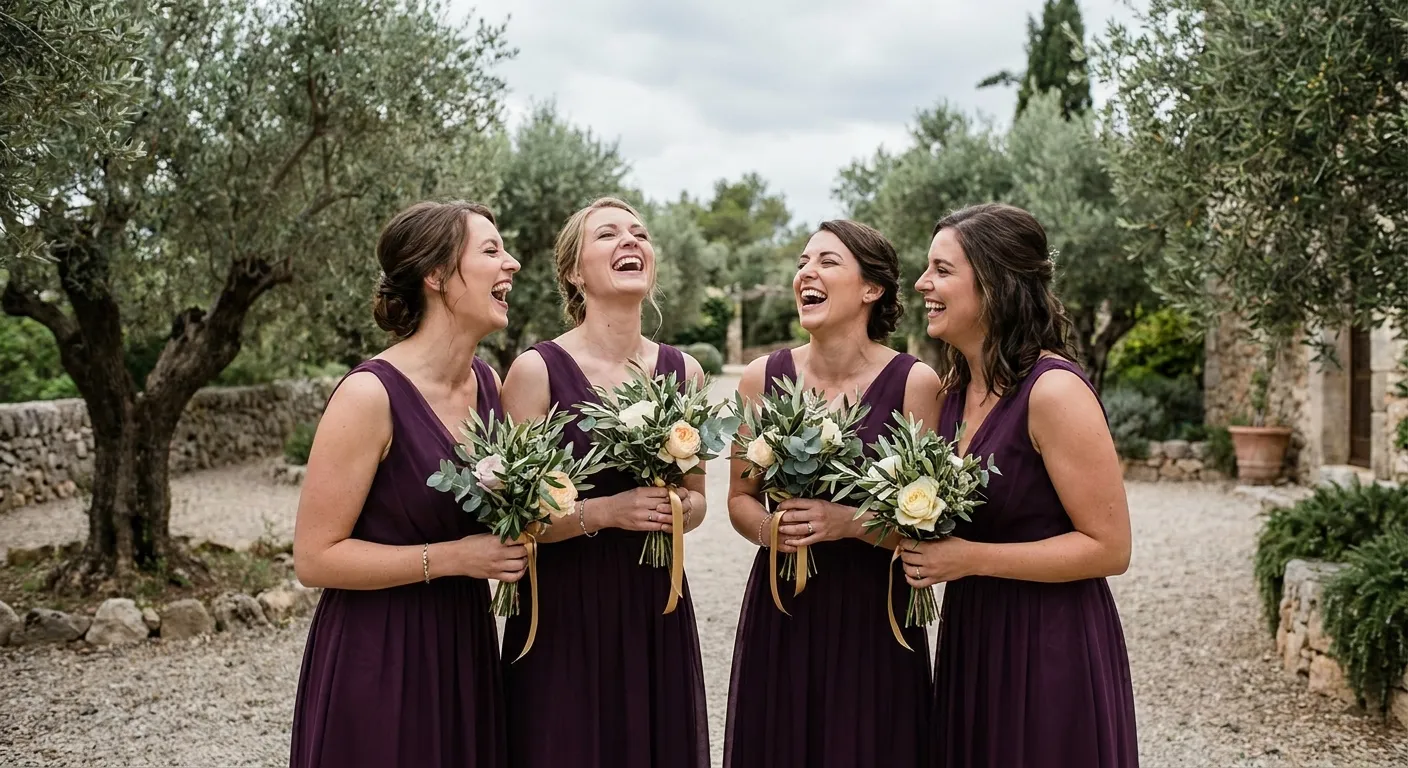
Bridesmaids in plum dresses laughing together with olive green bouquets
The honor attendant walks last
Who walks with whom

In pairs

Each bridesmaid walks with a groomsman. In the Catholic order Zola describes, the pairs walk in with the pair that stands farthest from the couple going first.

Separately

Groomsmen walk in after the best man, or wait at the front, and bridesmaids walk the aisle one by one. This is the Christian order Zola lists, and it suits a long aisle.

Odd numbers

WeddingWire's fix for an uneven bridal party: the extra person walks alone, or three people walk together as a trio. Nobody needs to be dropped to make the numbers match.

04Ring bearer and flower girl

Where the kids walk, and the backup plan

In every order we checked, the ring bearer and flower girl walk after the maid of honor and right before the bride. What changes is who goes first and where they end up.

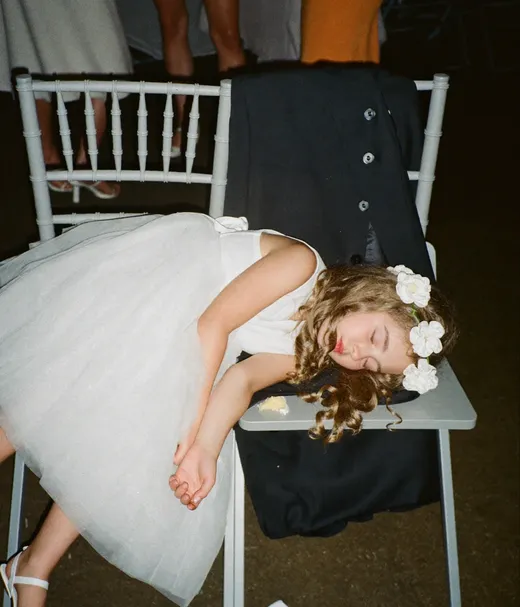
Flower girl asleep across two chairs late in the day
Plan for small legs
Christian

Flower girl and ring bearer, after the maid of honor and before the bride, per Zola.

Catholic

Same slot. Zola notes they then sit with their parents rather than stand at the front.

Jewish

Ring bearer first, then the flower girl, right before the bride and her parents.

LGBTQ+

Zola has kids usually walk last in the wedding party, right before the couple.

Very young kids

Let a parent or older sibling walk with them, or start them from the second row instead of the back door.

Real rings stay safe

Give the ring bearer a pillow with stand-ins; the best man or maid of honor keeps the real rings.

A seat at the end

Reserve front-row seats next to their parents so they are not stuck standing through the vows.

05Bride and groom entrance order

How the officiant and the groom get to the front

The bride's slot is fixed: last. The groom and the officiant have more choice. These are the options the sources list, with the source for each.

Officiant walks the aisle first

Sets the tone and signals guests that the ceremony is starting. Zola lists it as the first step of the LGBTQ+ order.

Source: Zola

Officiant already in place

Zola notes the officiant can enter before the music begins, so the first person guests watch walk in is family or the groom.

Source: Zola

Priest enters from the side

In the Catholic order Zola describes, the priest begins the procession from the side of the ceremony space.

Source: Zola

Groom enters from the side

The groom comes in from a separate spot on the right of the ceremony site and waits at the front. The best man and groomsmen follow.

Source: Zola

Groom walks with the best man

Groom and best man walk to the front together right after the officiant. WeddingWire lists this in its Christian order.

Source: WeddingWire

Groom walks with his parents

The Jewish custom: the groom walks with his parents, and he reaches the chuppah before the bride.

Source: Chabad.org
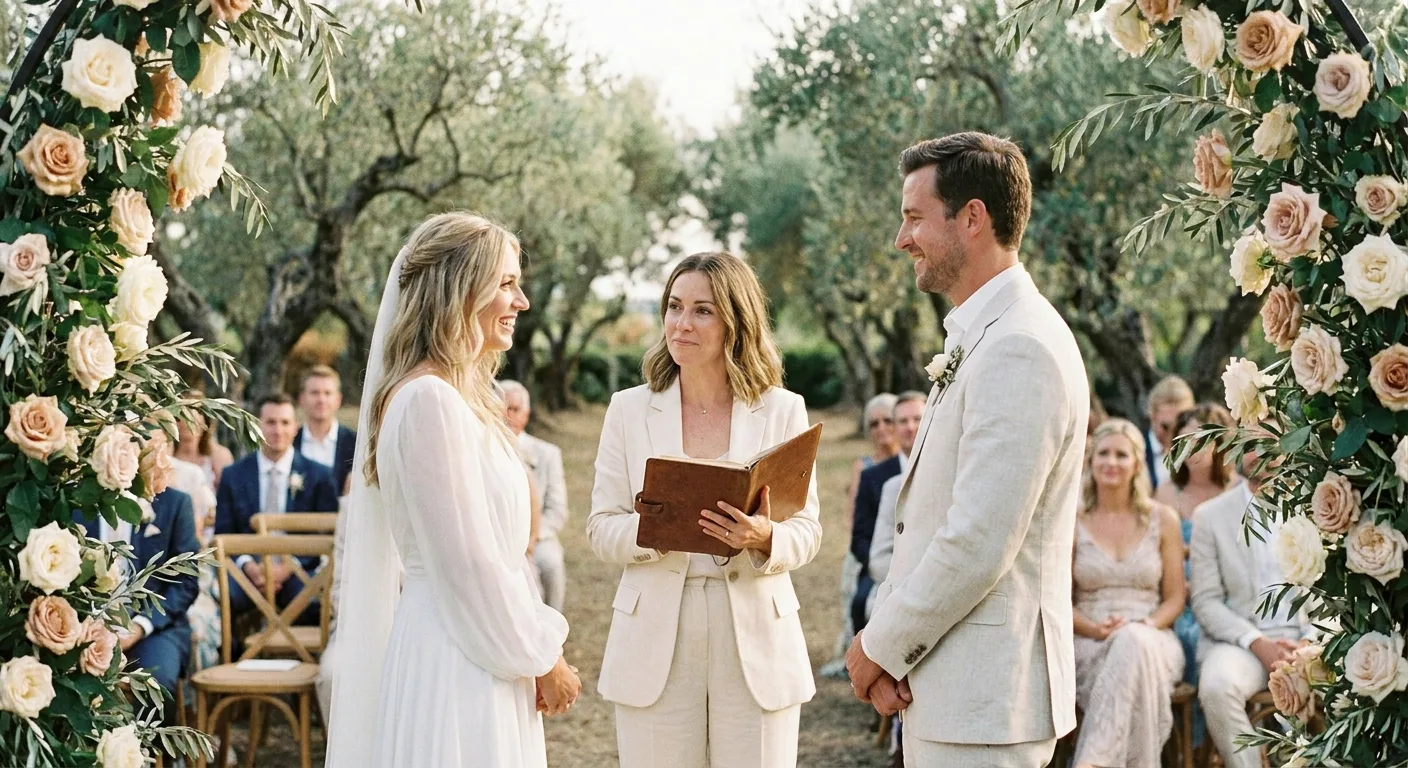
Officiant reading between the couple at an outdoor ceremony
The officiant sets the pace

Who walks the mothers?

Seating the mothers is its own question with its own options. See who walks the mother of the bride down the aisle and who walks the mother of the groom.

A friend leading the ceremony? Check the officiant requirements for your state first.

06Wedding ceremony processional order by tradition

Catholic, Jewish, Hindu and more, side by side

The order of wedding entrance changes most with religion: who goes first, how the groom arrives and who walks the bride. Each row below links to the sources we checked.

Wedding ceremony order of entry, compared
CeremonyWho enters firstGroom or first partnerBride's escortSources
Christian (Protestant)Family is seated, then the officiantFrom the right side, or to the front with the best manFather or a chosen escort, lastZola, WeddingWire
CatholicPriest, from the sideWaits at the front before the attendants walkFather by custom; the rite allows the couple togetherZola, National Catholic Register
JewishRabbi and cantor, then grandparentsWalks with both parents, before the bridesmaidsBoth parentsZola, Chabad.org
HinduThe groom's BaraatArrives in procession, then waits under the mandapOften her maternal uncle or brothersZola, Paperlust
Civil or courthouseNo fixed orderAny order you likeAnyone, or the couple walks in togetherWeddingWire, Paperlust
Same-sexOfficiant, then parentsBoth walk, one waits, or togetherParents, family or each otherZola, Paperlust
Three orders, one scale of ten slots

Where the groom walks in

Read each aisle from the top: 1 enters first. Every row is one slot, so a shorter column is a shorter processional.

GroomBrideEveryone else
ChristianEnds at the altar
  1. 1Grandparents
  2. 2Groom's parents
  3. 3Mother of the bride
  4. 4Officiant
  5. 5Groom + best man
  6. 6Groomsmen
  7. 7Bridesmaids
  8. 8Maid of honor
  9. 9Ring bearer + flower girl
  10. 10Bride + escort
Groom: 5th of 10Bride: 10th of 10
Per WeddingWire and Zola
JewishEnds under the chuppah
  1. 1Rabbi and cantor
  2. 2Grandparents, bride's side first
  3. 3Groomsmen, in pairs
  4. 4Best man, alone
  5. 5Groom + both parents
  6. 6Bridesmaids
  7. 7Maid of honor
  8. 8Ring bearer, then flower girl
  9. 9Bride + both parents
Groom: 5th of 9Bride: 9th of 9
Per Zola and Chabad.org
HinduEnds under the mandap
  1. 1Baraat: the groom arrives
  2. 2Bride's family welcomes his party
  3. 3Groom waits under the mandap
  4. 4Kanya aagman: the bride enters
  5. 5Her parents present her
  6. 6Garland exchange
Groom: 1st of 6Bride: 4th of 6
Per Zola and Paperlust

The groom walks in fifth in the Christian and Jewish orders and opens the Hindu one with the Baraat. The bride walks last in the first two and enters fourth of six in the Hindu ceremony, before her parents present her. In the Christian column, slots 1 to 3 are seated before the processional music.

Catholic processional order

Per Zola and National Catholic Register
  1. 1

    Priest, from the side of the ceremony space

  2. 2

    Groom, who waits at the front

  3. 3

    Best man

  4. 4

    Bridesmaid and groomsman pairs, the pair that stands farthest out first

  5. 5

    Maid of honor

  6. 6

    Flower girl and ring bearer, who then sit with their parents

  7. 7

    Bride, escorted by her father

The rite is looser than the custom. The National Catholic Register reports that the Order of Celebrating Matrimony lets the couple walk in together, with at least their parents and the two witnesses, and that no liturgical text has the father give the bride away. Ask your parish which version it uses.

Jewish processional order

Per Zola and Chabad.org
  1. 1

    Rabbi and cantor

  2. 2

    Bride's grandparents, then the groom's grandparents

  3. 3

    Groomsmen, in pairs

  4. 4

    Best man, alone

  5. 5

    Groom, with his father on his left and his mother on his right

  6. 6

    Bridesmaids

  7. 7

    Maid of honor

  8. 8

    Ring bearer, then flower girl

  9. 9

    Bride, with her father on her left and her mother on her right

Chabad.org notes the groom must reach the chuppah before the bride and that the escort custom does not even have the rank of rabbinic law. Its custom has both fathers walk the groom and both mothers walk the bride. Zola seats the bride's grandparents in the front row on the right and the groom's on the left.

Hindu processional order

Per Zola and Paperlust
  1. 1

    Baraat: the groom arrives with his family and friends, music and dancing, sometimes on a decorated white horse

  2. 2

    The bride's family welcomes the groom's party

  3. 3

    The groom takes his place under the mandap with his family

  4. 4

    Kanya aagman: the bride enters, often escorted by her maternal uncle or her brothers

  5. 5

    Her parents present her to the groom

  6. 6

    The couple exchange garlands under the mandap

Paperlust points out that regions differ: in some South Indian ceremonies the bride may already be seated at the altar, and Punjabi and North Indian weddings follow the Baraat format most closely.

LGBTQ+ processional order

Per Zola
  1. 1

    Officiant, who walks the aisle to set the tone

  2. 2

    Parents

  3. 3

    Wedding party, kids usually last

  4. 4

    The couple: together, or one after the other

Zola's LGBTQ+ order. There is no rule on which partner goes first; section 07 below has three set-ups to choose from.
07Same-sex, civil and small weddings

Fewer people, fewer rules, same calm walk

For civil ceremonies WeddingWire says any order works. Paperlust notes micro-weddings often simplify the processional to the couple entering together, and elopements have no formal processional at all.

Same-sex couples: three set-ups

Option 1Both partners walkEach partner walks the aisle with a parent or family member, one after the other.
Option 2One waits at the frontOne partner enters early and waits; the other walks in last, for the classic reveal moment.
Option 3Walk in togetherSide by side, so neither partner is "presented" to the other. The entrance becomes a joint statement.

Options per Paperlust; WeddingWire adds that you can follow a religious order or your own.

Courthouse or city hall

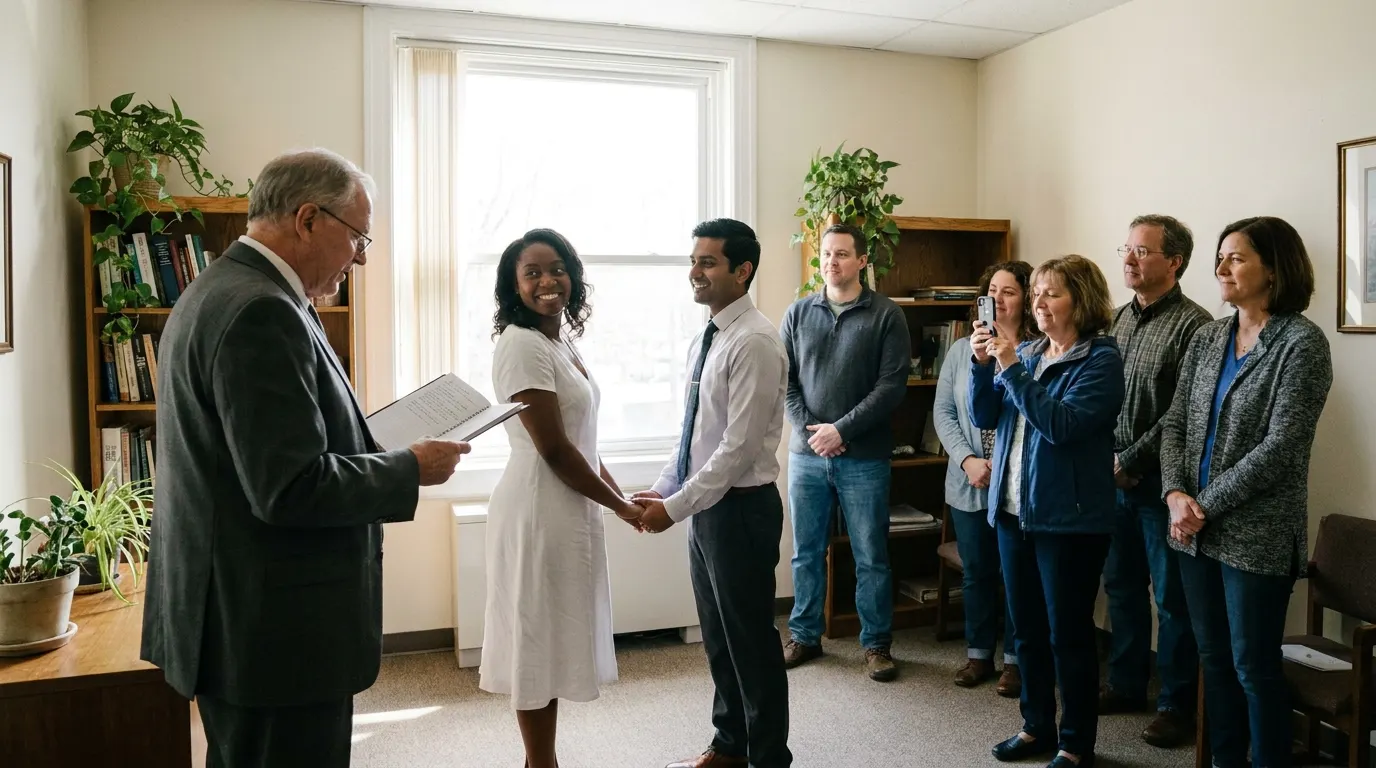
There is no fixed order. Rooms vary a lot, so ask the clerk's office how many guests fit and whether there is room to walk in at all. Entering together with your witnesses is the simple default.

No bridal party

Keep the bones of the order and skip the attendants. The four-step small wedding order in this section is short and still gives each partner a walk.

Small wedding ceremony with a few guests watching
A small ceremony, four steps
Small wedding order
  1. 1

    Officiant

  2. 2

    Parents take their seats

  3. 3

    Partner one, alone or with a parent

  4. 4

    Partner two, with an escort or alone

Our simplified version of the orders above.

08Recessional order

Who walks back up the aisle, in order

The recessional is usually the processional in reverse, with the couple leading the way, says Zola. Paperlust spells out the full order below.

From the front to the doorsThe couple always leads
  1. The couple
  2. Flower girl and ring bearer
  3. Maid of honor and best man
  4. Bridesmaid and groomsman pairs
  5. Parents
  6. Grandparents
  7. Guests, row by row
Processional against recessional

The way in, reversed

Rose lines: the couple. The lines cross because the order flips: the last people in are the first out.

Walk inWalk out

Each line joins a slot on the way in to its slot on the way out. The groom walked in fifth and the bride last, and together they lead the way out; the best man leaves with the maid of honor. Order per Paperlust and Zola.

The couple, arm in arm

This is the celebratory exit. Walk a little faster than you came in, and pause at the end of the aisle for the photographer.

Attendants walk out in pairs

Even if bridesmaids and groomsmen walked in separately, they usually pair up on the way out, meeting in the middle of the aisle.

Guests leave row by row

Paperlust has ushers dismiss rows from front to back and plans 5 to 10 minutes for it. Parents and grandparents go before the first guest row.

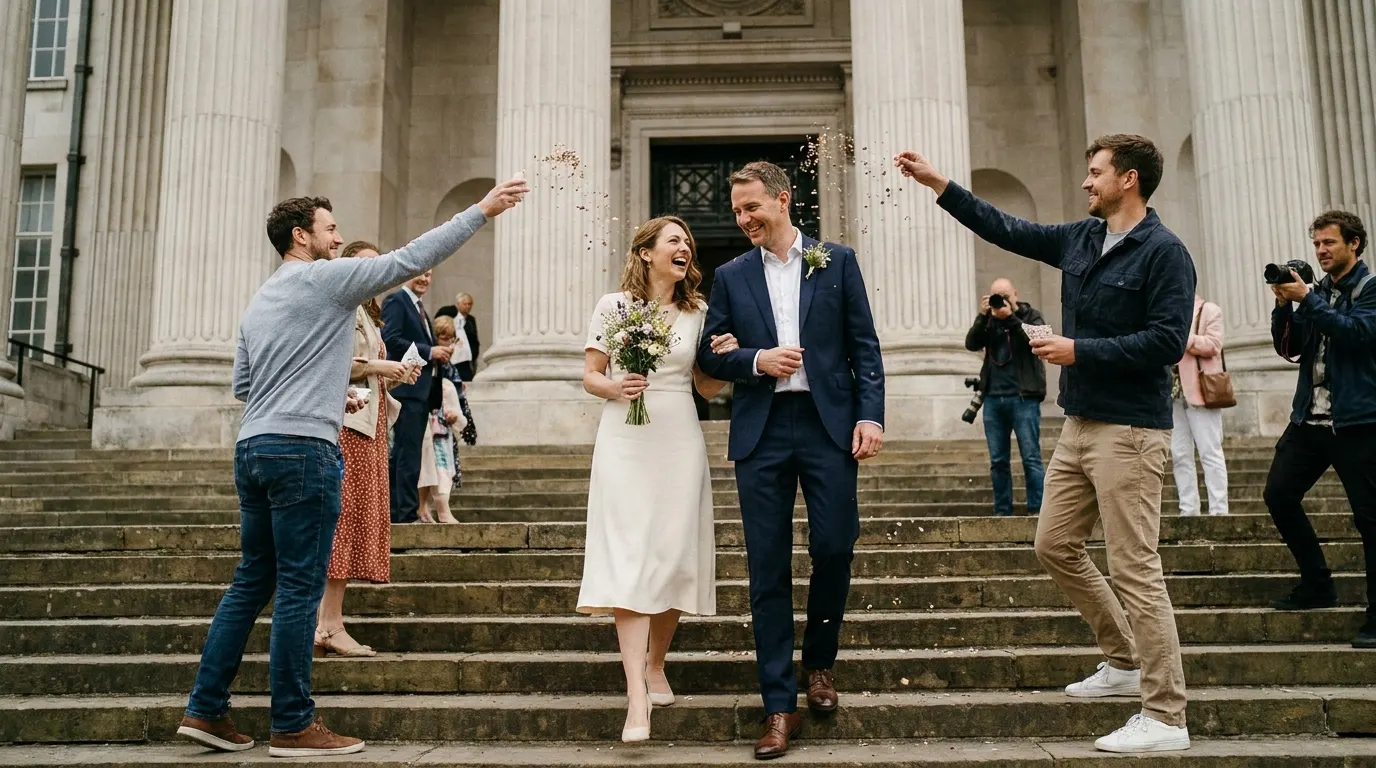
Newlyweds walking down the steps as guests cheer
First steps out as a married couple
09Wedding entrance sequence and pace

Spacing, walking pace and the music cues

A good processional looks unhurried. Once the order of entry for wedding ceremony walkers is set, these are the numbers to rehearse with, and the four places the music usually changes.

6-8 ftBetween each person or pair, so two groups never merge on the aisleSource: Paperlust
30-35Steps on a 60-foot aisle at a slow pace of about 50 beats per minuteSource: Paperlust
~2 minAverage processional length; Zola puts five minutes as the most it should takeSource: Zola
Cue 1

Prelude

Soft background music while guests find their seats and the family is walked in. It fades when the mother of the bride sits down.

Cue 2

Processional

One song, or a short medley, for the officiant, groom and wedding party. Pick something with a slow, steady beat people can walk to.

Cue 3

Bride entrance

Most couples mark the bride entrance ceremony moment with a change of song, and guests stand when it starts.

Cue 4

Recessional

The happiest track of the day, loud from the first beat, for the couple's walk back up the aisle.

Watch: a planner walks the processional

Wedding planner Emily Summer explains how a ceremony runs and who walks in the processional. Watch it with the list from section 01 open and mark anything you want to change.

Then walk it once at the rehearsal: Zola calls practicing the processional and recessional there customary, so everyone knows their cue on the day.

Video by Emily Summer on YouTube, 12:33.

10Modern wedding processional order

When the classic lineup does not fit

Every order above is a custom you can edit. These are the changes couples ask about most.

Both parents walk the bride

Zola notes most people are escorted by one parent, both parents or an important family member, and that the choice is yours. In a Jewish ceremony walking with both parents is the custom.

The groom walks the aisle

With his parents, his best man or alone, instead of slipping in from the side. It gives his family a moment too.

Walk in together

Zola lists walking down the aisle together as an option, and the Catholic rite allows the couple to enter side by side.

A pet carries the rings

Zola mentions a pet as ring bearer in non-traditional ceremonies. Give the leash to someone the pet trusts, and keep the real rings with the best man.

Divorced or blended families

Decide with each family who is seated where and who walks whom, weeks ahead. Stepparents can be seated in the front row, walked in by an usher or walk with the person they escort.

Print the order

Write each name next to its slot, so the order of entrance wedding ceremony helpers read at the door is the one you rehearsed.

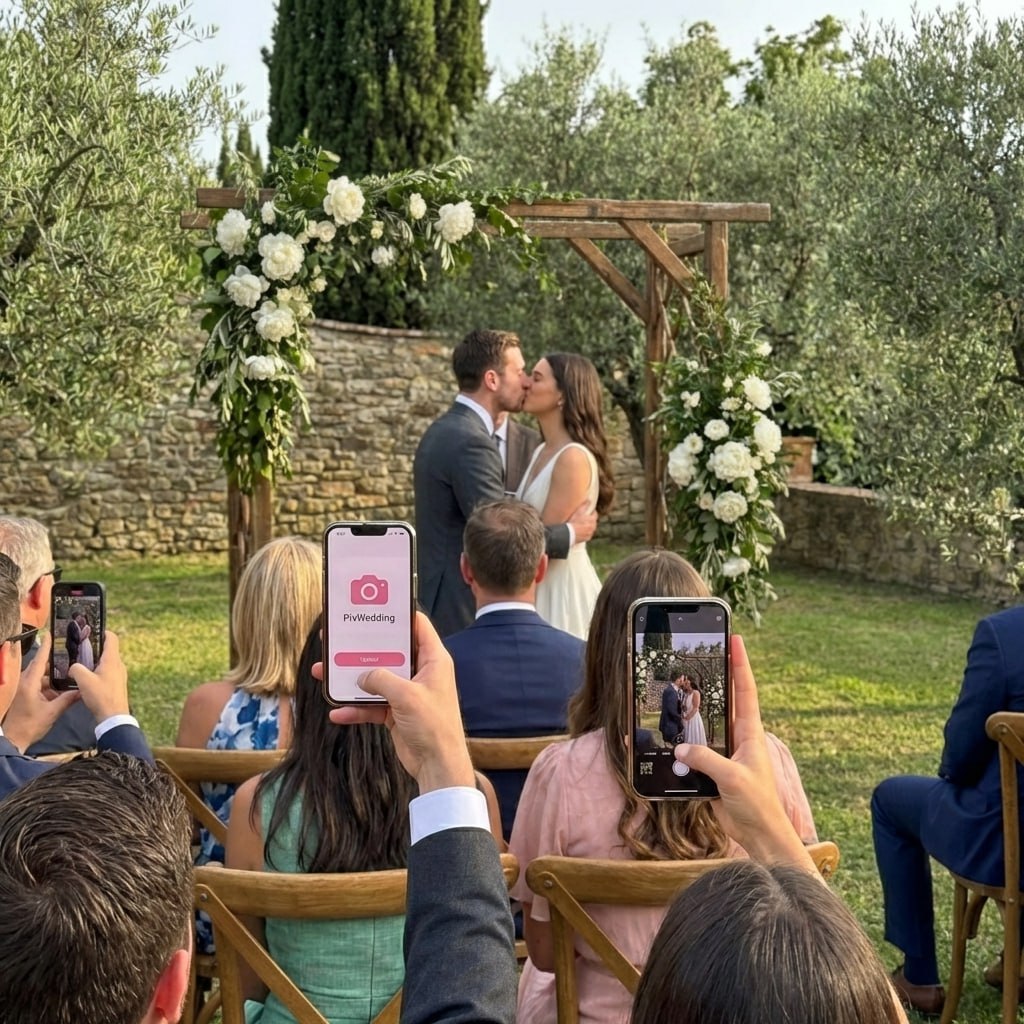
Every guest films the walk down the aisle.

Put a QR card on the ceremony chairs and every processional photo and clip lands in one shared album, no app or account for guests. Start free with 20 uploads.

From Mom

From Mom

Point your camera

Scan to join the album

No app, no account

9:41

UPLOADING

Saving your moment

9:41

THE ALBUM

Emma & Jack

June 21, 2026

647 photos · 95 guests

AllMomentsMine
Guest photo 1
★
Guest photo 2
Guest photo 4
Guest photo 5
Guest photo 6
Guest photo 7
Guest photo 8
Guest photo 9
Guest photo 10
Add photosShare your moments

SCAN TO TRY

pix.wedding/
your-wedding

Couple reviews

Rated 4.9 by couples who used Pix Wedding

4.9
out of 5 · Based on 395 reviews

My bridesmaids uploaded like 200 photos just from getting ready. By the time we got to the venue we already had a whole album and the wedding hadnt even started yet 😂 ended the night with 890 from 110 guests

Kendall R. · San Diego, CAVerified couple · May 2026
The live slideshow was the main character of our reception tbh. We had it running on a big screen and every time a new photo popped up people would cheer. My uncle figured out he could upload videos too and then it was over, everyone was recording everything 🔥

Riley J. · Savannah, GAVerified couple · November 2025

My wife found this on tiktok and showed me a reel about it. I was like sure whatever makes you happy. Now i look at the album more than she does lmao. 380 photos from 65 guests, some of these are genuinely the best photos ive ever seen of us

Jared K. · Columbus, OHVerified couple · August 2025
Read all reviews
What the guests caught

The whole day from every row

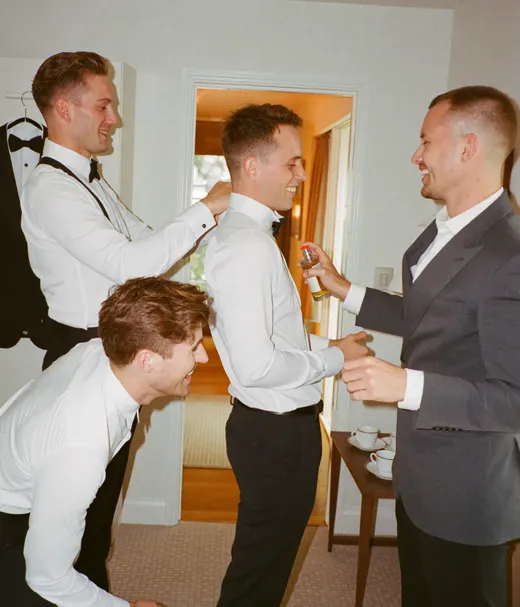
Groomsmen fixing each other's bow ties before the ceremony
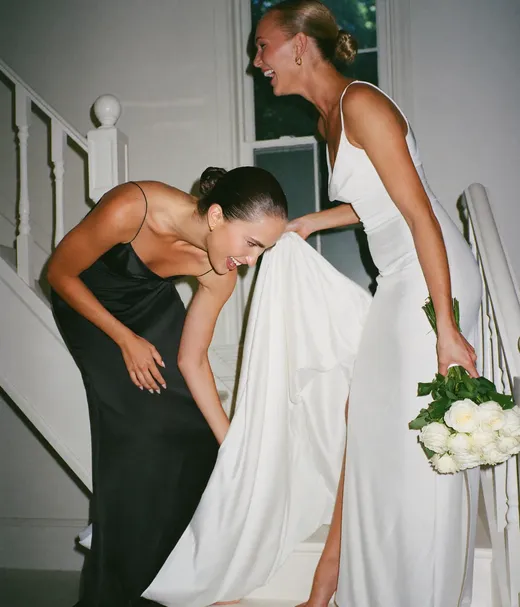
Bridesmaid in black lifting the bride's train on white stairs
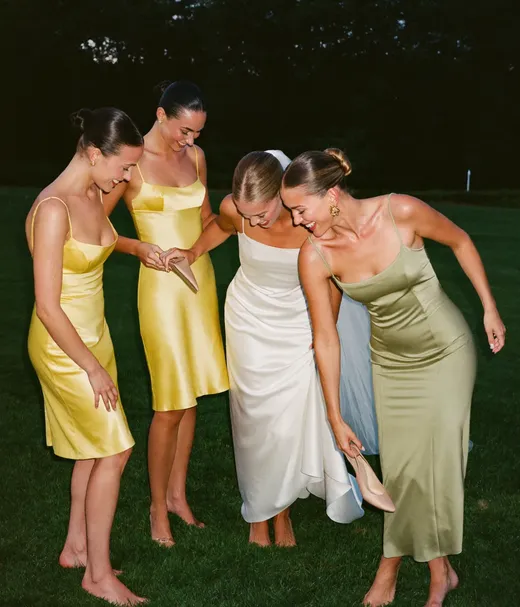
Barefoot bride and bridesmaids laughing on the lawn
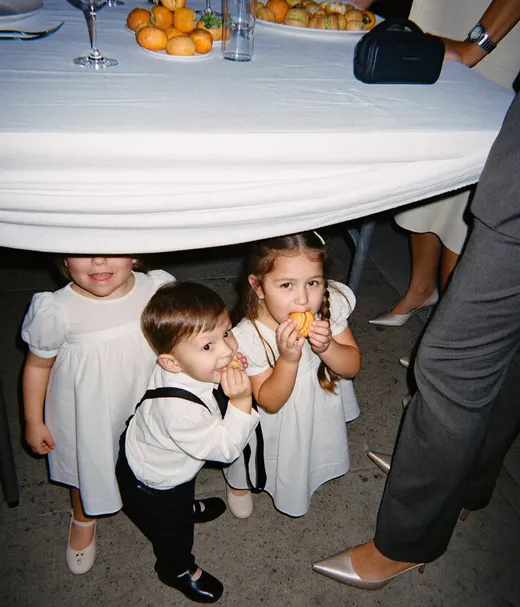
Three kids in white snacking under a reception table
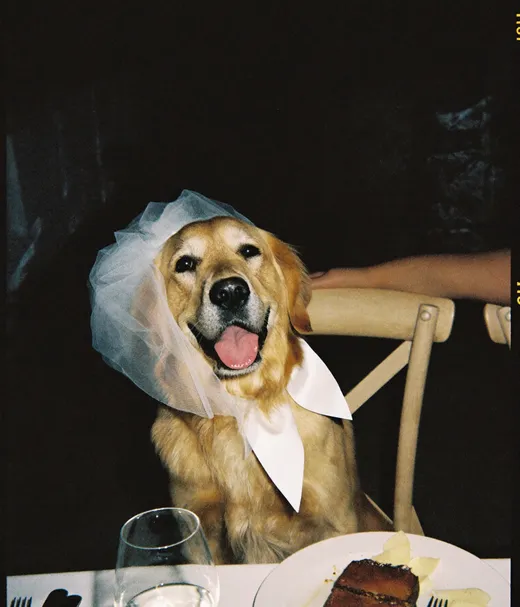
Golden retriever wearing a veil at the wedding table
Couple laughing under a clear umbrella in the rain
Guest filming the couple kissing at the head table

Getting ready, the walk, the exit and the quiet moments in between, from every guest phone, in one album the couple keeps.

More on the ceremony
Confirm the order with your officiant or venue first
Walk it once at the rehearsal
Print the names next to each slot for the coordinator
Tell the musicians or DJ the exact song changes
Give the photographer the order and who stands on which side

Why the order of wedding ceremony entrance matters

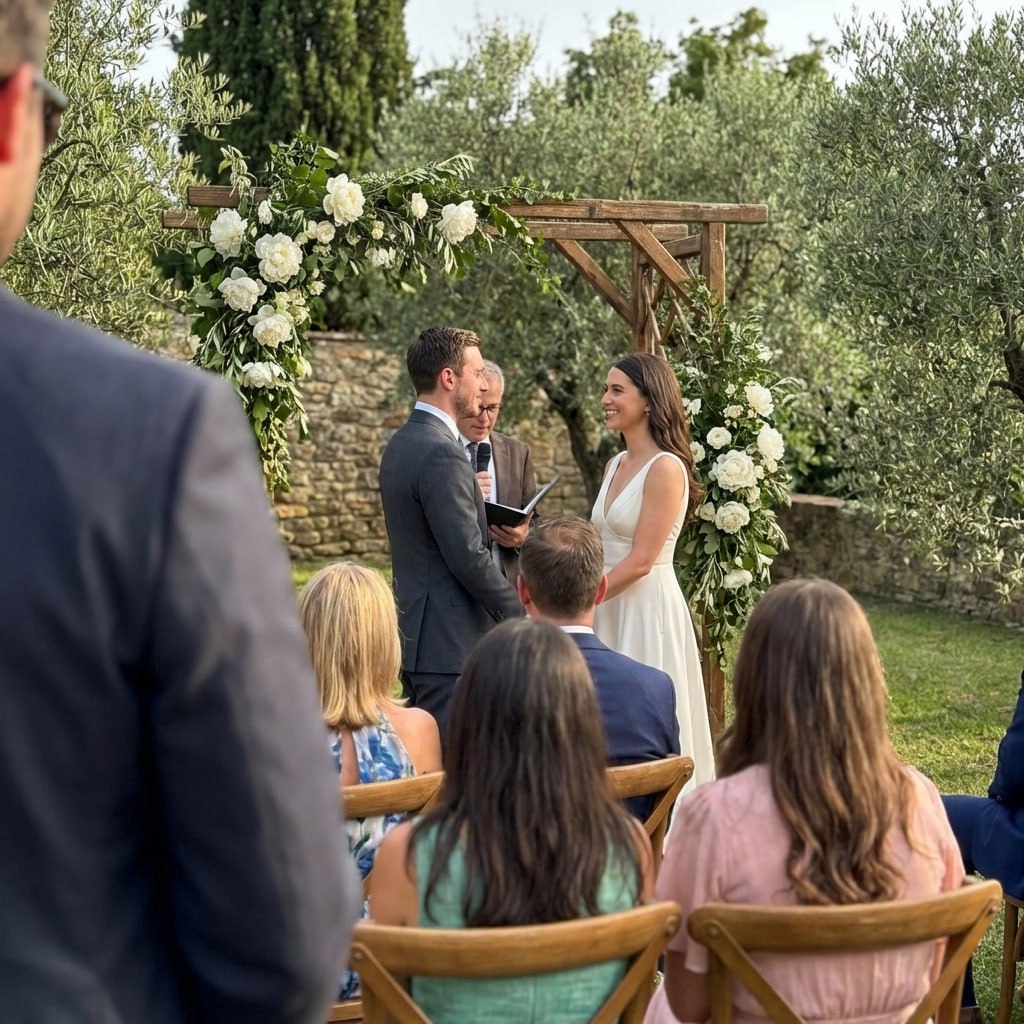
The processional is the part of the ceremony every guest watches and every phone records. A clear order means nobody waits at the door wondering when to go, the photographer knows where to stand, and the wedding party ends up in the right spot at the front without shuffling.

None of the orders on this page is a legal requirement. They are customs, and even religious ceremonies leave room: Chabad.org notes the escort custom is not part of Jewish law, and the Catholic rite allows the couple to walk in together.

Ceremony processional or reception entrance

This guide covers the wedding entrance order ceremony guests see: the walk down the aisle and back. The reception grand entrance is a different lineup, announced by a DJ or MC, with the newly married couple last.

So the order of wedding party entrance ceremony guides give is not the reception order. At the ceremony the bride walks in last; at the reception the couple does.

Photos of the processional

Tell the photographer the order and the side each person stands on, so they can stay at the front for the bride. Guests film the aisle walk on their phones from every row, and a shared album with a QR code on the chairs or the welcome sign collects those shots in one place.

Before the rehearsal

Wedding processional order FAQ

Straight answers to the questions people ask most about this topic.

In a traditional Christian ceremony: grandparents and the groom's parents are seated, then the mother of the bride, then the officiant, the groom and best man, the groomsmen, the bridesmaids, the maid of honor, the ring bearer and flower girl, and the bride with her escort last. Catholic, Jewish and Hindu ceremonies change this order.

Groomsmen walk first, either one by one after the best man or paired with bridesmaids, then the bridesmaids, with the one who stands farthest from the bride walking first. The maid of honor walks last of the bridesmaids, alone, followed by the ring bearer and flower girl, then the bride.

Last. She is the final bridesmaid down the aisle and walks alone, right before the ring bearer, the flower girl and the bride. Zola and WeddingWire put her in the same slot in Christian, Catholic and Jewish orders.

He can. In many Christian ceremonies he enters from the right side and waits at the front, or walks to the front with the best man after the officiant. In a Jewish ceremony he walks with both parents, and he must reach the chuppah before the bride.

Zola puts the average at around two minutes and the maximum at about five. Length depends on the size of the wedding party, the length of the aisle and the music. Paperlust suggests 6 to 8 feet of space between walkers so each person gets their own moment.

Usually the processional in reverse with the couple leading: the couple, the flower girl and ring bearer, the maid of honor and best man, the bridesmaid and groomsman pairs, the parents, the grandparents, then guests row by row from the front.