
What the guest album holds by breakfast
Less than you expect, and most of it is still coming. Across 203 weddings and 40,531 guest uploads on Pix, only 17.7% were in by the end of the wedding day. The day after brought 39.3%, and 82.2% arrived after the wedding day.
The median wedding in our data collects 149 guest photos from a median of 8 uploaders. Over coffee you see the dance floor and the first keen uploaders. The rest is still on guests' phones.
Pix data pulled 10 July 2026. Every outside fact links to its source. Checked 4 October 2026.
 NewNew


- 17.7%In by the end of the wedding day4.8% before plus 12.9% on the day
- 39.3%Lands on the day afterthe biggest single day
- 42.9%Arrives two or more days later14.2% on day 2, 28.7% after that
Breakfast is the start of the album, not the end.
What does a wedding album look like the morning after?
A first draft. The late-night photos are in, a few guests have sent a lot, and whole tables are still missing. The biggest single day for uploads is the one you are waking up to.
- Expect: the dance floor, the exit, the after-party and early risers' camera rolls.
- Do not expect: the full album. Over 4 in 5 uploads arrive after the wedding day.
82.2%
of guest uploads arrive after the wedding day
Pix data, 203 weddings
39.3%
land on the day after, the busiest single day
Pix data, 203 weddings
149
guest photos per wedding at the median (average 197)
Pix data, 203 weddings
8
guests upload at the median wedding (average 9.8)
Pix data, 203 weddings
All four numbers come from our guest upload statistics and the upload timing data: 203 real, non-demo weddings with 20 or more guest photos.
What lands between the last dance and breakfast?
The wedding day itself is quiet for uploads until the evening. Phones come out at the ceremony, go back in the pocket over dinner, then the curve climbs through the reception and peaks in the last hour of the wedding day.
That late surge is what you wake up to. Then the group chat starts, someone posts the link again, and the morning wave begins.
Upload levels across the 24 hours
Bar height shows one of six levels (very low, low, lift, rising, very high, peak), not a count. Hours run from UTC midnight of the wedding date, so read the shape, not the clock time.
Illustrative screen: names and texts are examples
Shape from the hourly breakdown on when guests take the most photos. We do not store the couple's local time zone, so hours run from UTC midnight of the wedding date.
When do guest uploads arrive?
Five buckets, from the days before the wedding to day 3 and later. The day after is the biggest by far, about three times the wedding day itself.
- Before01
4.8%
Before the wedding
4.8% in so far
- The day02
12.9%
Wedding day
17.7% in so far
- Day after03
39.3%
The day after
57.0% in so far
- Day 204
14.2%
Two days after
71.2% in so far
- Day 3+05
28.7%
Three or more days after
The rest of the album
The same numbers, with what is in each bucket
| When | Share | Running total | What tends to arrive |
|---|---|---|---|
| Before the wedding | 4.8% | 4.8% | Rehearsal dinner, arrivals and travel shots. |
| Wedding day | 12.9% | 17.7% | Ceremony, cocktails and the dance floor until midnight UTC. |
| The day after | 39.3% | 57.0% | Guests wake up, sort the camera roll and send the night. |
| Two days after | 14.2% | 71.2% | The second wave: guests home from travel, catching up on the chat. |
| Three or more days after | 28.7% | The rest | The long tail: reminders, late finds in the camera roll, videos sent from home. |
Shares of 40,531 guest uploads across 203 weddings, bucketed by UTC day relative to the wedding date. They add to 99.9% because of rounding. The "what tends to arrive" column describes the usual content, not a measurement.
Photos, videos and the odd voice note
The album is almost all photos. Videos are a small slice, and voice messages are rare even where the audio guestbook is switched on.
94.9%
photos
38,451 of 40,531 guest uploads
5.1%
videos
2,078 clips, about 1 upload in 20
6.9%
of weddings got a voice message
14 of 203 weddings, 130 messages in total
What that means when you scroll
- Phone photos, mostly. The bulk is the camera roll: tables, the dance floor, the after-party, friends getting ready.
- Videos are a small slice. About 1 upload in 20. They are big files, so tell guests home Wi-Fi is fine.
- iPhone HEIC files open everywhere. Pix turns HEIC into high-quality JPEG on the way in, so every photo opens on any phone or laptop.
- Voice notes are rare. The audio guestbook is on Standard and Pro. Across the 14 weddings that got any, 130 messages came in.
Media split and voice message counts from our guest upload statistics. In the founder write-up we call the audio guestbook numbers an honest failure: see what building a wedding photo app taught me.
A handful of guests fill most albums
At the median wedding 8 guests uploaded at least one photo (average 9.8). A quarter of weddings had 5 or fewer uploaders and a quarter had 13 or more.
The morning after, you often see one or two names everywhere. That is normal. The middle uploader sends about 17 photos, and the busiest ones cross 100.
How much one guest sends
Percentiles of uploads per unique uploader. Bars scaled to the 75th percentile (27.3). Uploader identity is name-based.
More uploaders does not always mean more photos
- 60 uploaders, 224 photos. The wedding with the most uploaders in our data.
- 3 uploaders, 1,365 photos. The biggest album, from three very busy guests.
- So: a quiet morning does not mean a small album. It can mean your keenest guest has not uploaded yet.
Album size by number of uploaders
| Uploaders | Weddings | Average photos | Median photos |
|---|---|---|---|
| Under 30 uploaders | 200 | 193 | 148 |
| 30 to 79 uploaders | 3 | 451 | 554 |
| 80 or more uploaders | 0 | none yet | none yet |
The 30 to 79 row is only 3 weddings, so read it as a hint, not a rule. Full method on the statistics page.
How full will your album be when you open it?
Pick an album size from our real range, then the moment you look. The estimate applies the average arrival curve from 203 weddings.
The median across 203 weddings.
The day after adds 39.3%, the biggest single day.
~85
photos in the album
~64
still on guests' phones
57.0% of the final album, on average. Each square is 2.5%.
An estimate from averages across 203 Pix weddings, not a prediction for yours. Your guests, how often you share the link and how long uploads stay open all move the number. Day buckets are in UTC, and the late uploads only arrive if the album is still open.
Guests wake up with full camera rolls, the album is one scan away
The same QR code from the tables and the link in the group chat open one album in the phone browser. No app, no account, so a guest can add last night's photos from bed.

Scan to join the album
No app, no account
UPLOADING
Saving your moment
THE ALBUM
Ines & Theo
Example album
41 photos · 6 guests
Opening the album over coffee
Here is an example album the morning after, and six things couples tend to notice on the first scroll.
NewNewIllustrative screen: names and counts are examples
- 01
The night comes first
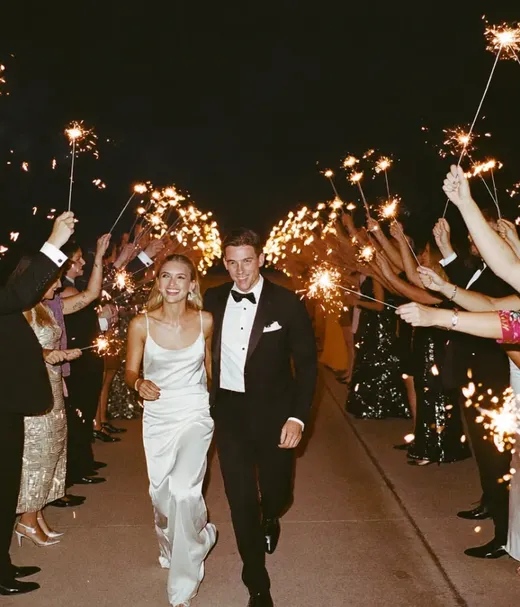
Newest uploads sit at the top, so the album opens on the dance floor, the sparkler exit and the last hour before midnight.
- 02
A few names carry it
At the median wedding 8 guests upload. The same one or two names often show up again and again.
- 03
Videos between the photos
About 1 upload in 20 is a video. Dance floor clips sit right next to the stills.
- 04
Moments your photographer missed
Tables, the hotel bar, the walk to the car, grandparents dancing. Angles from inside the crowd.
- 05
Gaps you can see
Whole tables with no photos yet. Those are the guests to nudge in the group chat.
- 06
Room for more
The upload button stays live for the plan window, so the day 2 and day 3 waves still have somewhere to land.
Guest photos vs the photographer gallery
The guest album fills in days. The professional gallery usually takes weeks. They cover different moments, so the morning after is when the guest album does its job.
2 to 4 weeks
Most wedding photographers in a Shotkit survey of 1,850 deliver in this window, and 11% take over 8 weeks.
Shotkit survey, updated Dec 2023, checked 4 October 202657%
In a Shotkit poll of photographer Facebook groups, 57% answered 4 to 8 weeks, the most common turnaround.
Shotkit poll, checked 4 October 2026500 to 800
The number of edited photos most surveyed photographers deliver.
Shotkit survey, checked 4 October 2026Side by side
| Compared | Guest album | Photographer |
|---|---|---|
| First photos | The same night, from the first guests to upload | A sneak peek, if you ask for one ahead of time |
| The bulk | 39.3% the day after, 82.2% after the wedding day | Most photographers deliver in 2 to 4 weeks (survey of 1,850) |
| Typical size | Median 149 photos, average 197 | Most deliver 500 to 800 edited photos |
| Editing | None, straight from guest phones | Edited one by one, most do not outsource it |
| Angles | A median of 8 guests, inside the crowd | One or two shooters, planned shots |
| Best for | Tables, after-party, candid moments | Ceremony, portraits, family groups |
Guest column: Pix data, 203 weddings. Photographer column: the Shotkit delivery survey and the Shotkit turnaround guide, which also suggests asking for a sneak peek ahead of time. Checked 4 October 2026. More on timing in when the photographer gallery arrives.
What to do with the album the morning after
Eight steps for the day after, most of them one message long. Most of the album is still to come, and these steps decide how much of it arrives.
- 01
Open the album before you text anyone
Scroll it once over coffee. See which tables, people and moments are already in, and which are missing.
- 02
Send the link again with a thank-you line
One short message to the wedding group chat or by email: thank you for coming, here is the album, add anything from your phone.
- 03
Pin the link where guests already talk
Pin it in the group chat and put it on the wedding website. Guests looking for it the next day should find it in one tap.
- 04
Ask the busy shooters by name
A few guests carry most of an album. A direct note to the friend who filmed the dance floor brings in more than a group reminder.
- 05
Remind people about videos
Videos are the uploads people put off. Mention them by name and say home Wi-Fi is fine.
- 06
Keep uploads open
Most of the album is still to come. Leave the upload window open for weeks, not hours.
- 07
Download a first backup
Save a ZIP of what is there now, then again when the window closes. Keep one copy off the phone.
- 08
Send one more nudge a few days later
Day 3 and later brings 28.7% of all uploads. One reminder that week reaches the guests who meant to and forgot.
Messages you can send today
Group chat, before brunch
Thank you all for last night!
We are still smiling.
If you took any photos or videos,
add them here, no app needed:
[album link]
Ines & Theo
To the friend with the videos
Maya, I saw you filming the
first dance and the sparklers.
Could you drop those in the
album when you are home?
[album link]
The last nudge
Still finding photos on your phone?
The album is open for a few
more weeks. Every angle helps.
[album link]
Names are examples. The "send the link again with your thank-you" tip comes from what we saw across real albums, written up in the founder notes.
The rest of the post-wedding to-do list
Bride Society runs through the admin that follows the wedding: thank-yous, paperwork and the loose ends. Pair it with the album steps above so the photos are not the thing that slips.
Watch on YouTubeOne QR code tonight.
Photos all week.
Guests scan the code at the tables or tap the link in the group chat and add photos and videos from the phone browser, no app and no account. The morning after and the week after land in the same album.
WEDDING ALBUM
Ines & Theo
Example album
Ines & Theo
Uploaded the morning after
Give the morning wave somewhere to land
One QR code for the tables, one link for the group chat. Guests add photos and videos from the phone browser, no app and no account, for months after the date. 20 uploads free, no card.
From the after-party
Scan to join the album
No app, no account
UPLOADING
Saving your moment
THE ALBUM
Ines & Theo
Example album
41 photos · 6 guests
SCAN TO TRY
pix.wedding/
your-wedding
How the album keeps growing for days
The morning after is the middle of the story. Day 2 brings another 14.2%, and day 3 and later brings 28.7%, more than the wedding day and the days before it combined.
That tail only exists if uploads are still open. An album that closes after 24 hours misses most of it.
57.0%
Before plus wedding day plus the day after. A little over half the final album.
71.2%
A window through day 2 catches about 71% of all uploads. The other 28.7% comes later.
28.7%
More than the wedding day and the days before it combined. It only arrives if uploads are still open.
How long Pix keeps uploads open
Every paid plan keeps uploads open for months, so the day 2 and day 3 waves have somewhere to land. For how long to choose, see how long a wedding photo album should stay open.
- Starter3 months of uploads6 months storage, ZIP download
- Standard6 months of uploads1 year storage, audio guestbook
- Pro1 year of uploads2 years storage
Day shares from the canonical timing data. Plan windows from the Pix pricing plans (Starter $49, Standard $59, Pro $89, one-time). Checked 4 October 2026.
What couples expect vs what arrives
Most guides on guest albums describe the morning after in one line. Here is where the common picture and our numbers part ways.
Most photos get uploaded during the wedding.
Only 12.9% of guest uploads land on the wedding day. 82.2% arrive after it. (Pix data, 203 weddings)
Expect 500 or more guest photos.
One vendor says its couples collect "an average of 500+ guest photos". Across our 203 weddings the median was 149 and the average 197. (WeddingPhotoSwap claim vs Pix data)
Guests upload on the night, then it is done.
Some guides describe guests uploading on the night. In our data the day after alone brings 39.3%, about three times the wedding day. (Guestpix guide vs Pix data)
You can close the album the morning after.
Closing it then would miss most of it. WeddingPhotoSwap advises giving guests a week or two; our data says keep it open for weeks. (WeddingPhotoSwap, Pix data)
More guests uploading means more photos.
The wedding with 60 uploaders collected 224 photos. The biggest album, 1,365 photos, came from 3 people. (Pix data, 203 weddings)
Everyone leaves a voice message.
Only 14 of 203 weddings (6.9%) got at least one voice message, 130 messages in total. (Pix data, 203 weddings)
The next morning, everyone opens the album and finds the night through dozens of different eyes.
What this data can tell you, and what it cannot
The numbers come from 203 real, non-demo weddings on Pix with at least 20 guest photos, pulled on 10 July 2026. No names, no single wedding, no invented details.
It can tell you
- When guest uploads arrive, by UTC day, across 203 real weddings.
- How big albums get: median 149 photos, average 197.
- How many guests upload: median 8, average 9.8.
- What the album is made of: 94.9% photos, 5.1% videos.
It cannot tell you
- What share of your guests will upload. We do not record guest counts.
- The local hour a photo was taken. Timestamps are upload times, bucketed in UTC.
- Exactly what lands by breakfast. The day-after bucket covers the whole day.
- How long the tail runs everywhere. Albums whose window closed cut it short.
Couples who chose Pix may share more than average, so treat these numbers as a picture of albums that got used, not of every wedding. If your album is quiet the morning after, the fixes are in why guests are not uploading.
The Morning-After Wedding Album: FAQ
Quick answers on when guests upload, how many photos to expect, videos and voice notes, and how long to keep the album open.
Smaller than it will be. Across 203 weddings on Pix Wedding, only 17.7% of guest uploads were in by the end of the wedding day. The day after brought 39.3%, and 82.2% of everything arrived after the wedding day. Over breakfast you see the late-night dance floor and the first keen uploaders; the bulk is still on guests' phones.
Mostly after the wedding. In our data 4.8% of uploads came before the wedding day, 12.9% on the day, 39.3% the day after, 14.2% two days after and 28.7% three or more days after. Day buckets are in UTC, so a late reception can spill into the next day.
The median wedding in our data collected 149 guest photos and the average was 197. A quarter of weddings ended at 70 or fewer and a quarter above 253. The biggest album held 1,365 photos from just 3 guests, so treat that as an outlier, not a target.
At the median wedding 8 guests uploaded at least one photo, with an average of 9.8. The middle uploader sent about 17 photos, and the busiest crossed 100. A few keen guests carry most albums.
Weeks, not hours. A window through day 2 catches about 71% of uploads, and the other 28.7% arrives on day 3 and later. Pix plans keep uploads open for 3 months on Starter, 6 months on Standard and 1 year on Pro.
Send the album link again with a thank-you message, pin it in the group chat, ask the friends who filmed the most by name, remind people about videos, keep uploads open, and send one more nudge a few days later.
5.1% of guest uploads in our data were videos (2,078 of 40,531). Voice messages are rarer: 14 of 203 weddings (6.9%) got at least one, 130 in total. The audio guestbook is on the Standard and Pro plans.
Usually by weeks. Guest uploads start the same night and most arrive in the first days. Most wedding photographers in a Shotkit survey of 1,850 deliver in 2 to 4 weeks, and 11% take over 8 weeks.
Related guides
The full dataset, the hour-by-hour timing, how long to keep uploads open and what to do if guests go quiet.
Sources, checked 4 October 2026
- Pix Wedding: guest upload statistics, 203 weddings
- Pix Wedding: upload timing by day and hour
- Shotkit: wedding photo delivery survey (1,850 photographers)
- Shotkit: how long it takes to get wedding photos back
- WeddingPhotoSwap: group photo sharing guide
- Revel: shared wedding album guide for guests
- Guestpix: how to share wedding photos with guests
- Bride Society: post-wedding checklist (YouTube)
Ines & Theo, the guest names, the messages and the counts in the phone mockups are illustrative. The estimator applies averages and is not a prediction. All platform numbers come from aggregated, anonymized data across 203 weddings.
More free wedding planning tools
Free tools for the QR sign, the thank-you notes, the checklist and the photos that follow.
QR Sticker Designer
Design custom print-ready stickers.
Hashtag Generator
Create unique wedding hashtags.
How to Collect Guest Photos
5 methods ranked by participation rate and ease.
Share Wedding Photos with Guests
Compare every sharing platform by ease and participation.
Best Way to Get Guest Photos
The single method with the highest participation rate.
How to Make a Shared Wedding Album
Step-by-step setup for every platform.
Alternative to Disposable Cameras
Better, cheaper options than disposable cameras.
Alternative to Wedding Photo Booth
5 cheaper alternatives to a $1,000+ photo booth rental.