
Wedding Weekend Itinerary Template: 3 Full Schedules You Can Copy
A complete 2-day, 3-day, and extended weekend itinerary, ready to adapt. Plus how to budget the extra events and keep guests in the loop without a spreadsheet meltdown.
The short answer
A wedding weekend itinerary is a shared schedule, usually posted on your wedding website and handed out as a printed card, that tells guests what is happening each day: which events they are invited to, what time each one starts, the dress code, and whether it is optional. Most couples build it around three anchors: an arrival or welcome event, the wedding day itself, and a lower-key closing event like a day-after brunch. According to Zola's 2026 First Look Report, a survey of over 11,500 couples marrying in 2026, 18% are now hosting a full 2-to-3-day wedding weekend and 37% are hosting at least one additional event beyond the ceremony and reception, like a welcome party or day-after brunch.
Source: Zola's 2026 First Look Report, the largest survey Zola has run, covering over 11,500 couples marrying in 2026.
Does Your Wedding Actually Need a Weekend Itinerary?
A weekend itinerary makes sense when
- More than half your guest list is traveling in from out of town.
- You are hosting 2 or more events beyond the ceremony and reception.
- Events happen at different venues or addresses across the weekend.
- You want guests to know which events are optional versus expected.
You probably do not need one when
- x It is a single-day, single-venue wedding with no add-on events.
- x Almost every guest lives locally and is not booking a hotel.
- x The only extra event is a small, invite-only rehearsal dinner (a simple text or invitation insert covers that).
In that case, our single-day wedding timeline templates are the better fit.
Template 1: The Classic 2-Day Weekend
Rehearsal dinner Friday, wedding Saturday, casual brunch send-off Sunday. This is the shape of Zola's "37% host one extra event" cohort.
FRIDAY - REHEARSAL + DINNER
4:30 PM  Ceremony rehearsal (wedding party + officiant)
6:30 PM  Rehearsal dinner begins (wedding party + immediate family)
9:00 PM  Dinner wraps, optional drinks nearby for those staying out

SATURDAY - THE WEDDING
12:00 PM Hair and makeup begins
2:30 PM  First look and wedding party photos
4:00 PM  Ceremony
4:30 PM  Cocktail hour begins
5:30 PM  Reception entrance and dinner
7:30 PM  Toasts
8:00 PM  First dance, open dancing begins
11:00 PM Send-off

SUNDAY - FAREWELL BRUNCH
10:30 AM Brunch opens, come-and-go style
12:30 PM Brunch wraps, safe travels
Template 2: The Full 3-Day Weekend
Welcome party Friday night, a free morning Saturday, wedding Saturday afternoon and evening, brunch Sunday. This matches Zola's 18% "full 2-to-3-day weekend" group.
FRIDAY - ARRIVAL + WELCOME PARTY
3:00 PM  Hotel check-in opens, welcome bags in rooms
6:00 PM  Welcome party begins (full guest list, resort casual)
9:00 PM  Welcome party ends

SATURDAY MORNING - OPEN / OPTIONAL
9:00 AM  Optional group activity (hike, pool, golf, city tour)
          No obligation, guests can opt out and rest instead
12:00 PM Free time, lunch on your own

SATURDAY - THE WEDDING
1:00 PM  Hair and makeup begins
4:00 PM  First look
5:30 PM  Ceremony
6:00 PM  Cocktail hour
7:00 PM  Reception dinner
8:30 PM  Toasts and first dance
9:00 PM  Open dancing
Midnight Send-off

SUNDAY - FAREWELL BRUNCH
10:00 AM Brunch opens, buffet style
12:00 PM Brunch wraps, checkout by 12:00 or 1:00 PM per hotel policy
Template 3: The Extended Out-of-Town Weekend
A Thursday-to-Sunday build for weddings where most guests are flying in, common for destination-style weekends at a single resort or estate.
THURSDAY - ARRIVALS
All day  Guests arrive, welcome bags delivered to rooms
7:00 PM  No-host casual meetup at the hotel bar (not a formal invite)

FRIDAY - REHEARSAL + WELCOME PARTY
11:00 AM Optional excursion (beach, vineyard, walking tour)
4:30 PM  Ceremony rehearsal (wedding party only)
6:00 PM  Rehearsal dinner (wedding party + immediate family)
8:00 PM  Welcome party begins (full guest list joins)
10:00 PM Welcome party ends

SATURDAY - THE WEDDING
1:00 PM  Hair and makeup begins
4:30 PM  First look and portraits
5:30 PM  Ceremony
6:00 PM  Cocktail hour
7:00 PM  Reception
8:30 PM  Toasts, first dance
11:30 PM Send-off

SUNDAY - FAREWELL BRUNCH + DEPARTURES
10:00 AM Farewell brunch, come-and-go
1:00 PM  Brunch wraps
All day  Staggered departures per guest travel plans
For a deeper single-day breakdown of Saturday itself, hand these off to your free Wedding Day Timeline Builder, which fills in vendor call times and buffer minutes automatically.
The Guest Communication Timeline
- 1
9 to 12 months out
If it is a true multi-day weekend, mention it on the save-the-date so guests can start budgeting for extra hotel nights and time off work.
- 2
6 to 8 months out
Build a dedicated "Wedding Weekend" page on your wedding website listing every event, time, dress code, and whether it is optional or expected. Link a hotel room block if you have one.
- 3
10 to 12 weeks out
Send formal invitations. Any hosted event beyond the ceremony (welcome party, rehearsal dinner, brunch) gets its own RSVP line, even if it is on the same card.
- 4
3 to 4 weeks out
Lock final headcounts per event with each venue or caterer. Some guests attend the wedding but skip the welcome party or brunch, so these numbers will not match your total guest count.
- 5
Week of
Leave a printed itinerary card in welcome bags for out-of-town guests, and post a digital version on the wedding website in case anyone loses the paper copy.
Budgeting the Extra Events
Every event you add to the weekend is a separate line item, on top of your core wedding budget. Here is what each one realistically costs, based on figures from The Knot and Zola.
| Event | Typical cost | Note |
|---|---|---|
| Rehearsal dinner (25 to 40 guests) | $2,500 to $5,000 | See our full rehearsal dinner cost breakdown for venue-by-venue pricing. |
| Welcome party (full guest list) | $2,000 to $5,000 | The Knot puts a mid-range welcome party at this range for 50 to 100 guests; ours goes deeper in the welcome party guide. |
| Day-after brunch, casual come-and-go | $1,000 to $2,500 | The Knot cites this for a hotel-restaurant, drop-in style brunch. |
| Day-after brunch, seated or buffet | $4,000 to $8,000 | The Knot cites this for a fuller buffet or plated brunch at a restaurant or banquet space. |
| Core wedding day (ceremony + reception) | around $36,000 average | Zola's 2026 First Look Report puts the average US wedding at $36,000, unchanged from the prior year. |
Sources: The Knot, welcome party planning guide, The Knot, post-wedding brunch guide, and Zola's 2026 First Look Report. Actual costs vary heavily by city and guest count; use our free Wedding Budget Allocator to fit the extra events into your total.
Hotel Blocks and Getting Guests Between Venues
Once a weekend has 2 or more venues, logistics become part of the itinerary itself, not an afterthought. If most guests are traveling, a room block at one or two hotels near the main events keeps everyone within shuttle range and makes it easy to post one set of directions instead of ten.
What to spell out for guests
The hotel or hotels with a room block, the booking code, and the cutoff date to get the group rate
Whether shuttles run between the hotel and each event, or if guests need to arrange their own transportation
Parking availability and cost at each venue, especially for a welcome party or brunch at a separate address from the ceremony
A single point of contact (a wedding party member or planner) guests can text if they get lost or a shuttle is running late
A Worked Example (Illustrative)
This is a hypothetical, illustrative scenario, not a real couple. Say roughly 60% of a 120-guest list is traveling from out of state. Rather than default to a full 3-day weekend, the couple adds exactly two events: a Friday welcome party open to everyone (solving the "guests arrive Friday with nothing to do" problem) and a Sunday brunch (solving the "guests fly out Sunday afternoon without a real goodbye" problem). The rehearsal dinner stays small, wedding-party-only, as tradition suggests. That is 2 add-on events, not 4, chosen because each one solves a specific, identifiable gap in the weekend, not because a template said to include it.
One Album for the Whole Weekend, Not Four Group Chats
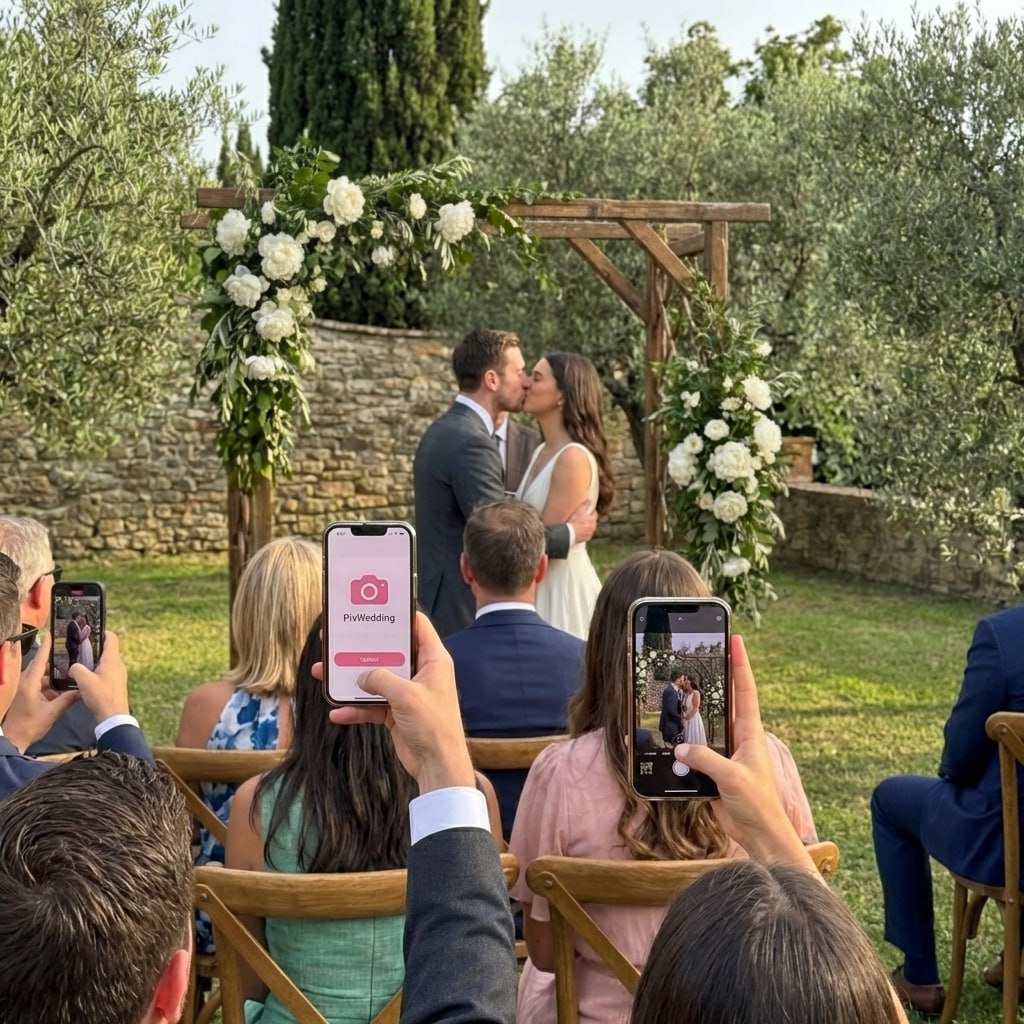
A wedding weekend multiplies your photo problem, not just your event count. The welcome party has its own guest subset. The rehearsal dinner has another. The ceremony and reception pull in everyone. The brunch is a smaller, sleepier crowd again. Left alone, that turns into four separate camera rolls scattered across dozens of phones, most of which never get shared.
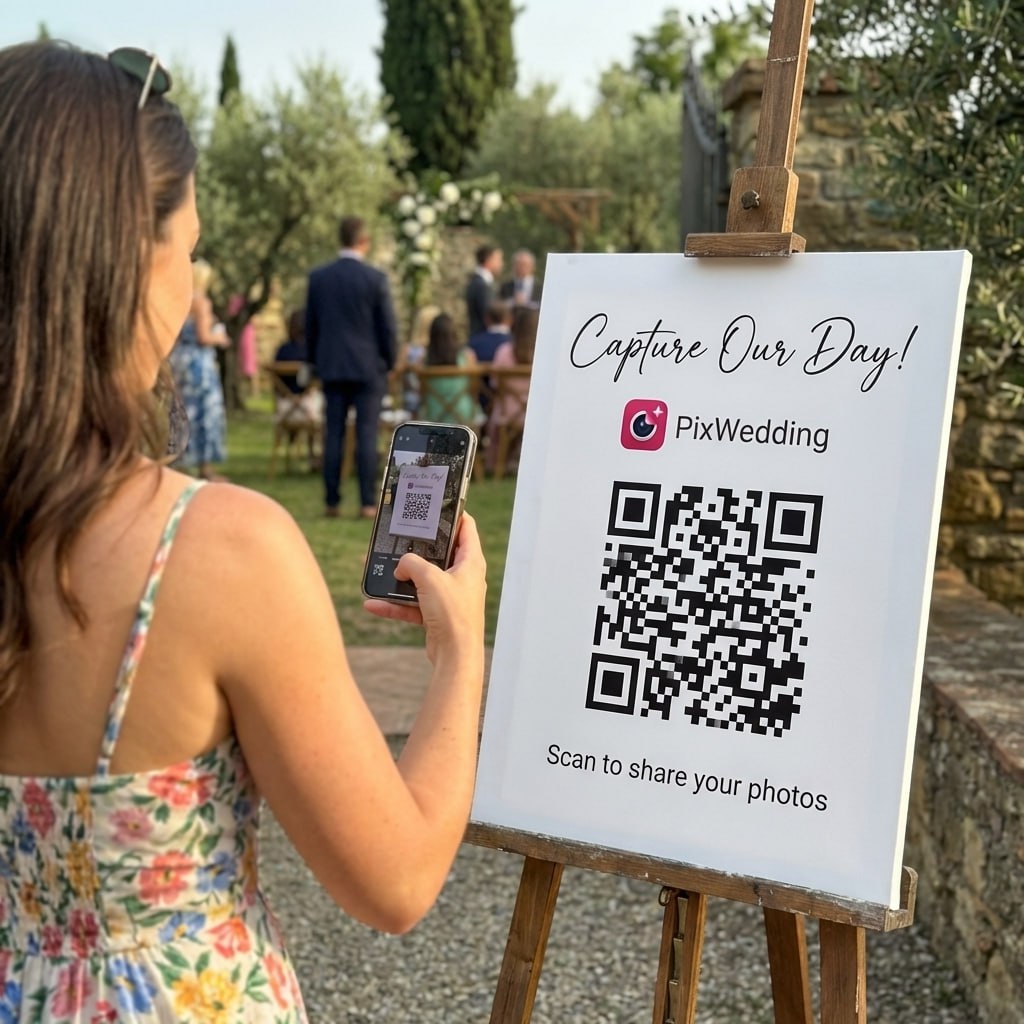
The fix is one link that stays open the entire weekend. With Pix Wedding, you set up a single QR code before the welcome party, print it on the table cards, and it keeps collecting from Thursday arrivals through Sunday's farewell brunch. Guests scan once, no app download, and every candid from every day lands in the same album automatically. You are not asking anyone to remember a second link on day three.
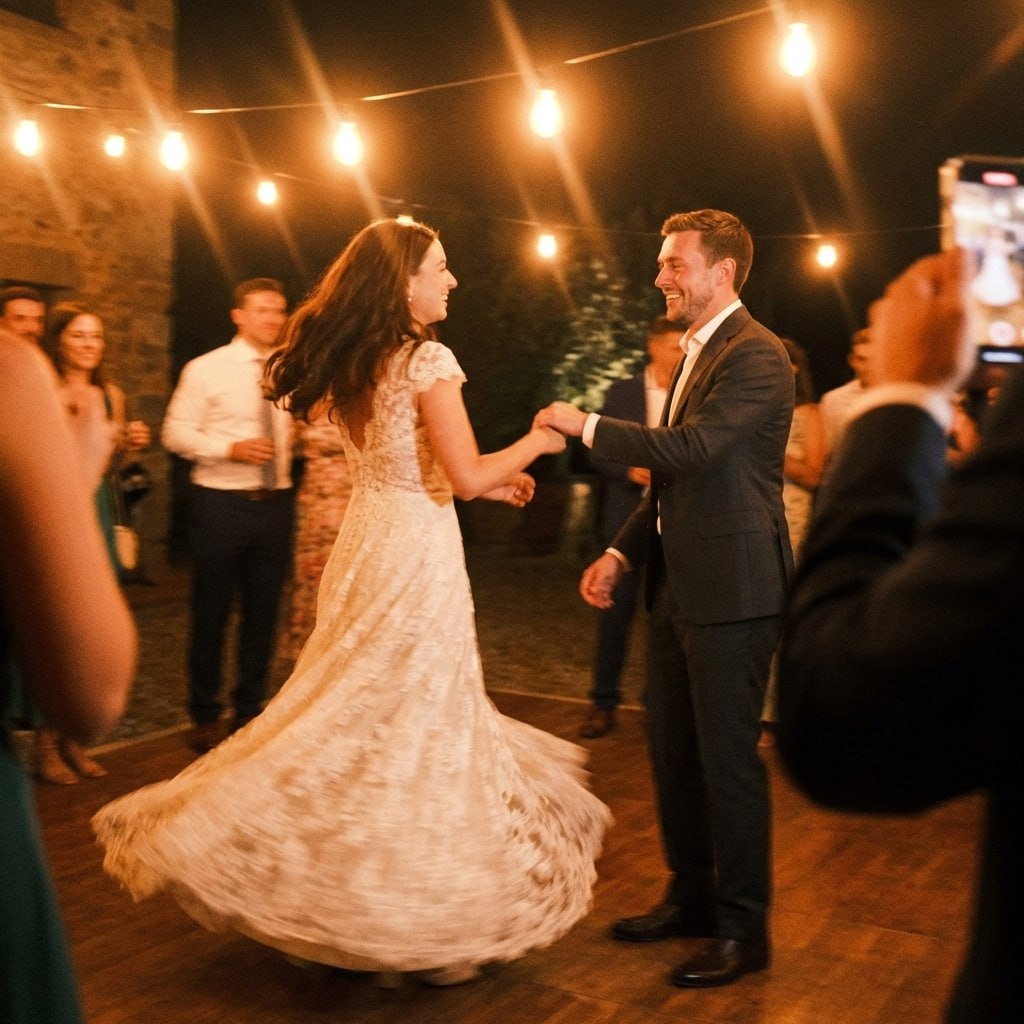
First dance
You guys!!
Your wedding weekend deserves one album, not four
Set the QR code up before the welcome party. It keeps collecting photos through the farewell brunch, no new link needed each day.
From Mom
Scan to join the album
No app, no account
UPLOADING
Saving your moment
THE ALBUM
Emma & Jack
June 21, 2026
647 photos · 95 guests


SCAN TO TRY
pix.wedding/
your-wedding
Common Wedding Weekend Itinerary Mistakes
Packing every hour with a scheduled event. Guests who traveled need unstructured time too. Leave at least one open block per day for a nap, the pool, or exploring on their own.
Not marking which events are optional. If the welcome party is come-one-come-all but the rehearsal dinner is wedding-party-only, say so explicitly on the itinerary. Ambiguity creates awkward RSVPs.
Skipping a dedicated itinerary page on the wedding website. A printed card gets lost in a suitcase. A wedding website page guests can reload from their phone at 8am Saturday does not.
Underestimating transportation between venues. If the welcome party, ceremony, and brunch are at three different addresses, guests need shuttle times or driving distances in the itinerary itself, not buried in an email.
Forgetting vendor and wedding-party call times are a separate document. The guest-facing itinerary and the internal vendor timeline are not the same file. Keep them separate so guests are not confused by hair-and-makeup call times.
Starting a new group chat or app for every single event. By day three, guests have four separate photo threads on four separate phones and none of them get organized. One link that stays open the whole weekend solves this.
Leaving out a dress code per event. A welcome party dress code (resort casual) reads very differently from a ceremony dress code (black tie optional). List both, every time.
No rain or heat contingency noted anywhere. If any outdoor event depends on weather, tell guests where the backup happens before the weekend starts, not via a group text at 6am.
Wedding Weekend Glossary
Wedding weekend
A wedding celebrated across 2 or more days rather than a single event, usually with at least one additional gathering beyond the ceremony and reception.
Welcome party
A casual, come-one-come-all gathering (often the evening before the wedding) open to the full guest list, distinct from the smaller, more formal rehearsal dinner.
Rehearsal dinner
A more intimate, traditionally hosted dinner for the wedding party and immediate family, usually held right after the ceremony rehearsal.
Day-after brunch or farewell brunch
A closing gathering the morning after the wedding, often casual and drop-in, that gives traveling guests one more chance to say goodbye.
Hosted event
An event where the couple or their families cover the cost. If you send a formal invitation, etiquette says you are hosting.
No-host or unhosted gathering
An informal meetup (e.g., "we'll be at the hotel bar at 8") where guests pay their own way. Not sent as a formal invitation.
Welcome bag
A small gift left in guests' hotel rooms on arrival, often including the printed or card-stock version of the weekend itinerary.
Minimony
A small, scaled-down ceremony, sometimes held as one component of a larger wedding weekend for couples who want an intimate "I do" plus a bigger celebration.
Quick-Reference Checklist Before You Send Invitations
Every event has a confirmed date, time, and address
Each event is marked optional or expected
Dress code is listed per event, not just for the ceremony
RSVP lines exist for every hosted event, not only the wedding
Hotel room block and booking cutoff date are finalized
Transportation or parking notes are written out for each venue
A wedding website itinerary page is live and linked from invitations
A single photo-sharing link is set up before the first event of the weekend
Plan Each Event in the Weekend
Why More Couples Are Turning the Wedding Into a Weekend
The single-day wedding used to be the default. Now, with more couples marrying farther from where their guests live, a growing share are stretching the celebration across 2 or 3 days so the travel is worth it for everyone. Zola's 2026 First Look Report, based on responses from over 11,500 couples, found 18% now host a full 2-to-3-day weekend and 37% add at least one extra event on top of the ceremony and reception.
The logic is simple: if your college roommate is flying in from another state for a single 4-hour reception, a welcome party the night before and a brunch the morning after turn that trip into an actual visit, not a layover.
- •A weekend format spreads the schedule so no single day is overloaded
- •Out-of-town guests get more than one shot at spending real time with the couple
- •Add-on events double as a soft-launch for guest photo sharing before the main day
- •Not every guest needs to attend every event, which keeps costs and logistics manageable
How to Decide Which Events to Add
Start with your actual guest travel pattern, not a template. If 80% of your guest list lives within an hour of the venue, a full 3-day weekend adds cost and planning load without much benefit. If half your guests are flying in, a welcome party and brunch turn a single travel-heavy weekend into something worth the flight.
A useful rule: add one event per genuine need. A welcome party solves the awkward Friday-night-with-nothing-to-do problem. A day-after brunch solves the guests-leaving-without-a-goodbye problem. Do not add a third event just because you saw it on a template; extra events mean extra cost, extra RSVPs to track, and extra fatigue for guests who are already giving up a whole weekend.
Explore more free wedding tools
Everything you need to make your wedding day stress-free and unforgettable.
QR Sticker Designer
Design custom print-ready stickers.
Hashtag Generator
Create unique wedding hashtags.
How to Collect Guest Photos
5 methods ranked by participation rate and ease.
Share Wedding Photos with Guests
Compare every sharing platform by ease and participation.
Best Way to Get Guest Photos
The single method with the highest participation rate.
How to Make a Shared Wedding Album
Step-by-step setup for every platform.
Alternative to Disposable Cameras
Better, cheaper options than disposable cameras.
Alternative to Wedding Photo Booth
5 cheaper alternatives to a $1,000+ photo booth rental.
Wedding Weekend Itinerary FAQ
Straight answers to the questions people ask most about this topic.
Give guests the shape of the weekend on your wedding website 6 to 8 months out, and send a printed or card-stock itinerary in welcome bags the week of the wedding. If any event, like the welcome party, requires an RSVP, include it on your formal invitations 10 to 12 weeks before the date.
No. Rehearsal dinners are traditionally limited to the wedding party and immediate family, while welcome parties and day-after brunches are usually open to the full guest list. Mark clearly on the itinerary which events are for everyone and which are more limited, so no one shows up somewhere they were not invited.
There is no fixed multiplier, but each additional hosted event adds a real line item. A welcome party typically runs $2,000 to $5,000 and a day-after brunch $1,000 to $8,000 depending on format, on top of the roughly $36,000 average cost of the core wedding, per Zola's 2026 data.
A wedding weekend itinerary is the guest-facing schedule across every day of the celebration: welcome party, wedding day, brunch, and any other events. A wedding day timeline is the hour-by-hour breakdown of Saturday itself, including vendor call times, hair and makeup, and photo windows. Most couples need both; our free Wedding Day Timeline Builder handles the second one.
Both, ideally. Put the full itinerary on a dedicated wedding website page guests can revisit from their phone all weekend, and include a condensed version (dates, times, dress codes) as an insert card with formal invitations for guests attending multiple events.
Set up one shared photo link before the first event and keep it live through the last one, rather than starting a new group chat or app per event. A QR code table card at the welcome party that keeps collecting through the farewell brunch means every candid from the whole weekend lands in a single album, no separate uploads to track down later.