
Wedding Welcome Party Guide: Ideas, Etiquette, and Who Pays
The night before the wedding, done right. How a welcome party is different from a rehearsal dinner, what it costs, and how to word the invitation.
The short answer
A wedding welcome party is a casual gathering, usually the evening before the wedding, open to your full guest list rather than just the wedding party. It is the low-stakes counterpart to the more formal rehearsal dinner, and it exists to give traveling guests something to do on arrival night and to break the ice between both families before the wedding day itself. According to Zola's 2026 First Look Report, a survey of over 11,500 couples marrying in 2026, 37% of couples are now hosting at least one additional event beyond the ceremony and reception, and the welcome party is one of the two most common choices alongside the day-after brunch.
Source: Zola's 2026 First Look Report (11,500+ couples) and The Knot's welcome party planning guide.
Welcome Party vs. Rehearsal Dinner
These two events get confused constantly. Here is exactly how they differ.
| Welcome Party | Rehearsal Dinner | |
|---|---|---|
| Who is invited | Full guest list, often including everyone who traveled | Wedding party, immediate family, sometimes officiant |
| Formality | Casual, come-and-mingle | More structured, built around toasts |
| Typical timing | Evening before the wedding, or the first night of a longer weekend | Right after the ceremony rehearsal, evening before the wedding |
| Typical cost | $2,000 to $5,000 for the full guest list | $2,500 to $5,000 for 25 to 40 guests |
| Who traditionally hosts | The couple, sometimes with parents splitting the cost | Traditionally the groom's family, now often shared or couple-paid |
| Purpose | Break the ice between both friend groups and families before the big day | Confirm ceremony logistics and give an intimate space for toasts |
Planning both events for the same weekend? See our full Rehearsal Dinner Guide for the more formal event, or the full weekend itinerary templates to see how they fit together.
Welcome Party Formats by Budget
Budget: Under $1,500
Backyard, park, or hotel courtyard
BYO cooler or a simple keg and wine setup
Taco truck or pizza delivery for the group
String lights and a speaker playlist instead of a DJ
Lawn games (cornhole, giant Jenga) to keep mingling low-pressure
Mid-range: $1,500 to $4,000
Restaurant patio, brewery buyout, hotel lounge
Passed appetizers and a 2-drink-ticket bar
A local restaurant private patio with a set menu
A brewery or taproom buyout for a relaxed, no-frills vibe
A live acoustic musician instead of a full band
Splurge: $4,000+
Rooftop bar, resort lawn, private estate space
Themed cocktail bar (a signature "welcome" drink named for the couple)
A full open bar with passed hors d'oeuvres
Live band or DJ for the full evening
Photo-worthy lounge setup with lighting designed for evening candids

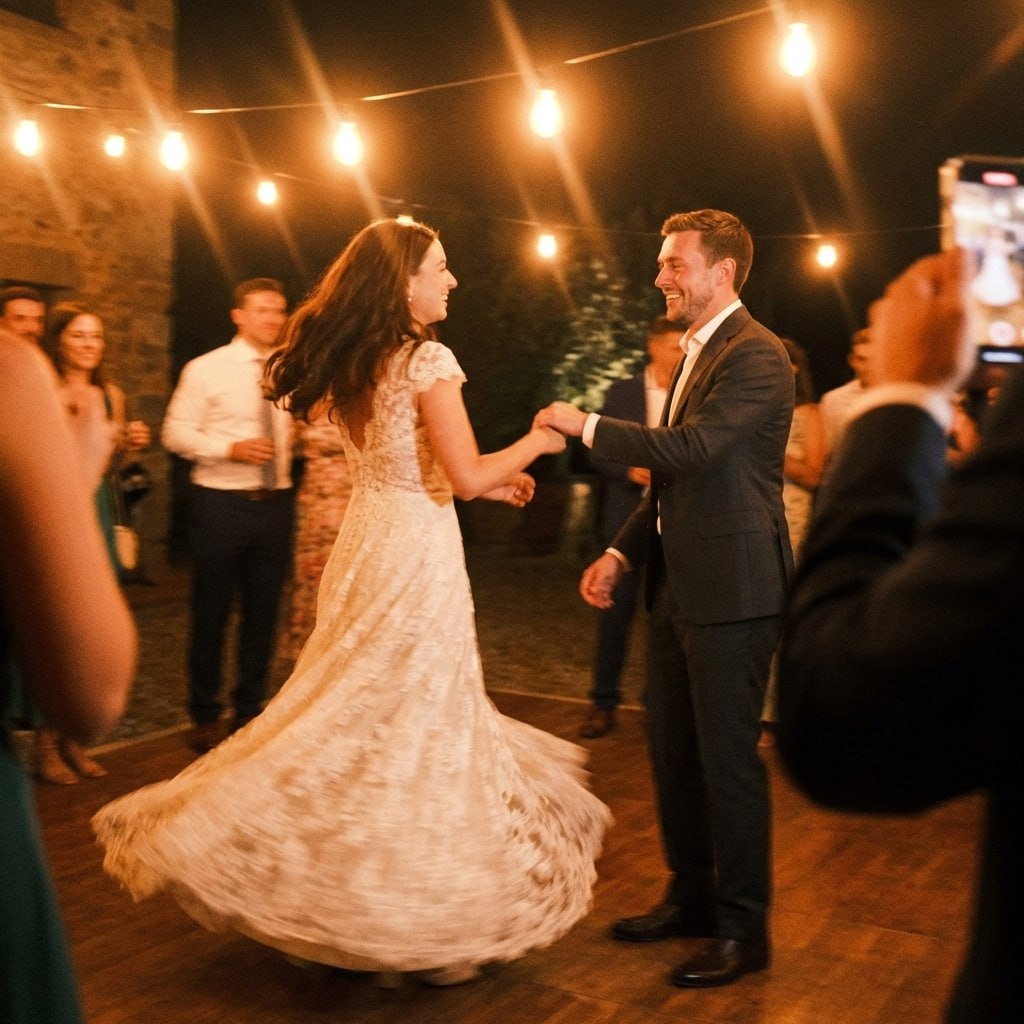
First dance
You guys!!
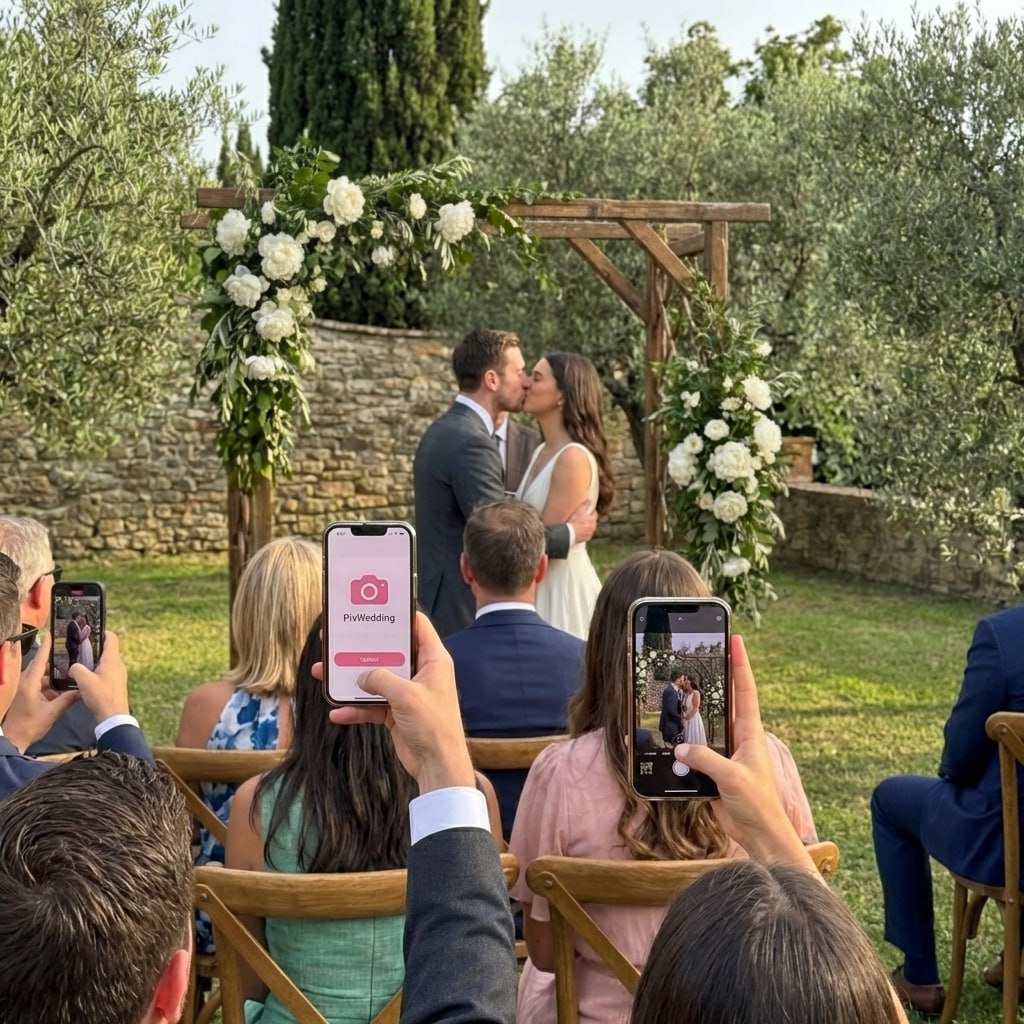
The welcome party is where guests meet the camera for the first time
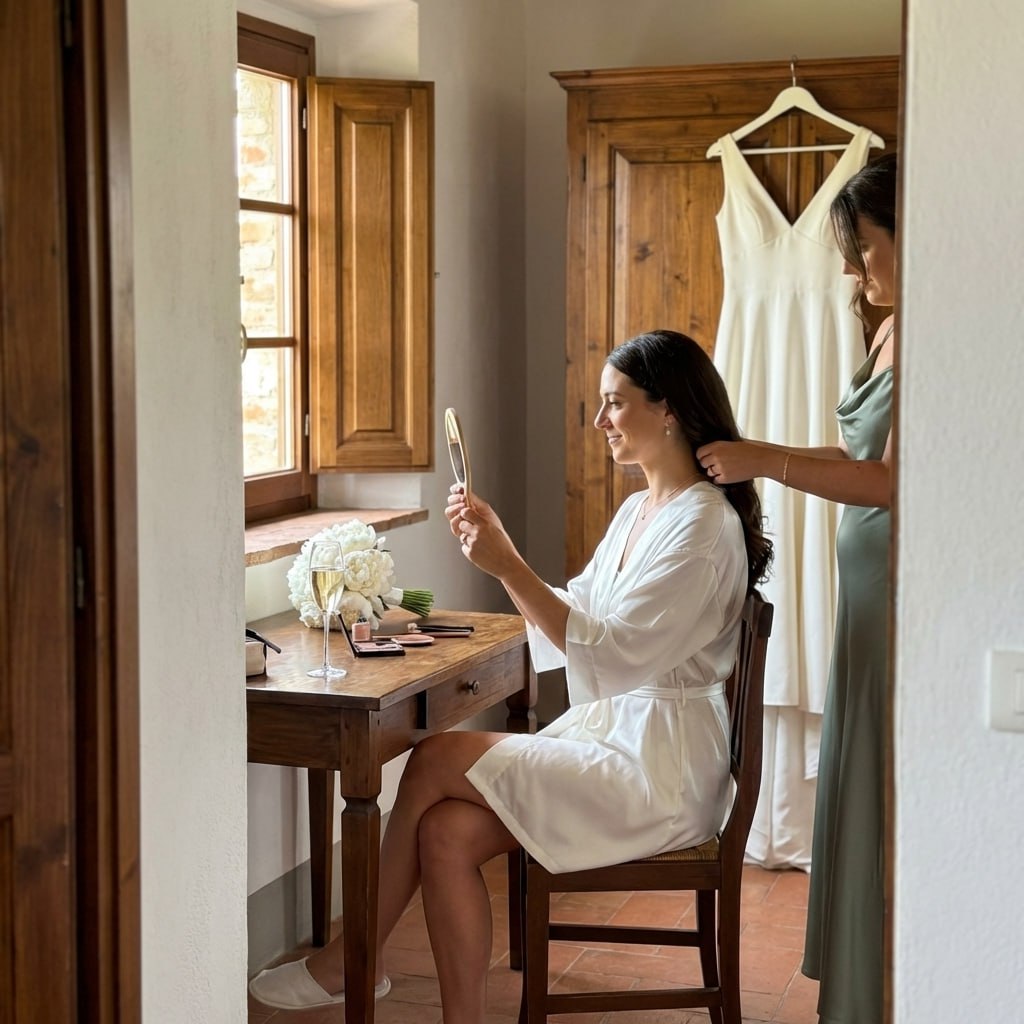
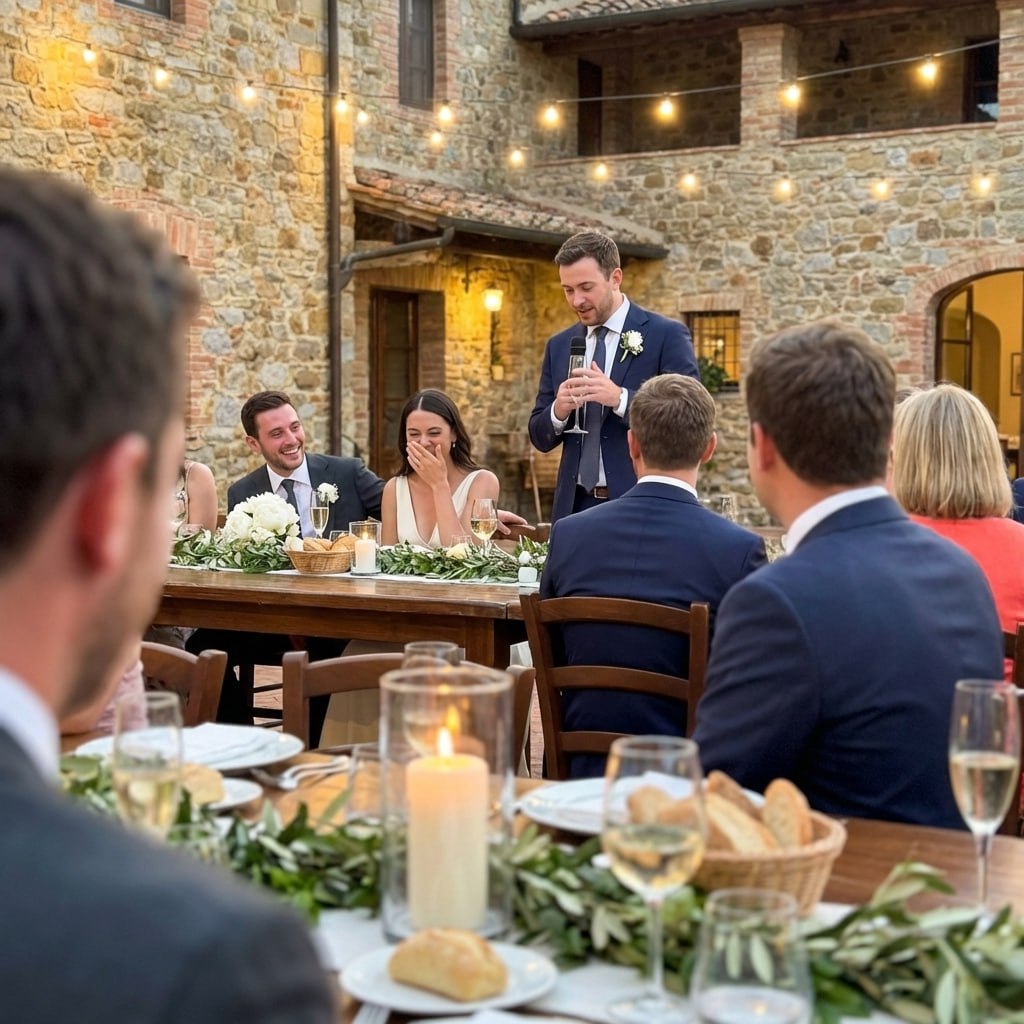
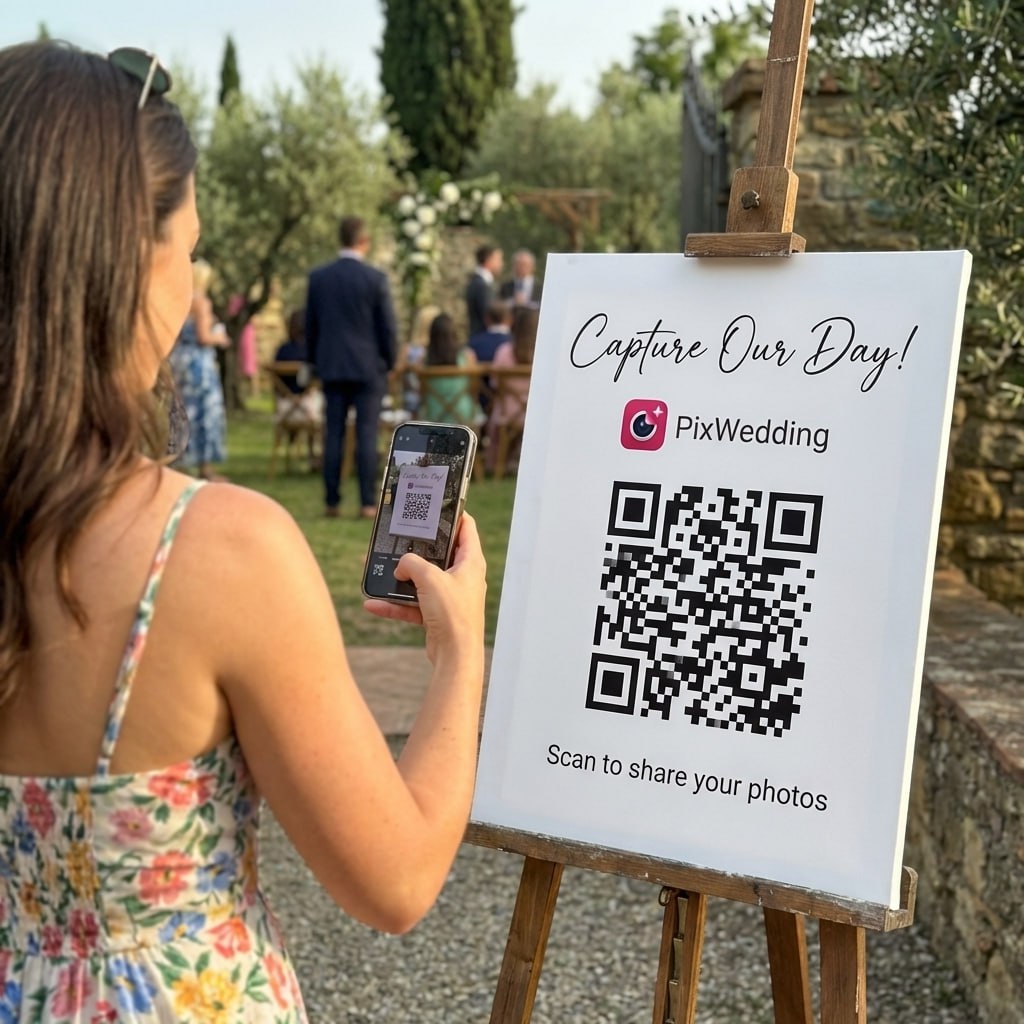
Set up the QR code before the first drink is poured. It is the easiest night of the weekend to test guest photo sharing before the wedding day matters most.
From Mom
Scan to join the album
No app, no account
UPLOADING
Saving your moment
THE ALBUM
Emma & Jack
June 21, 2026
647 photos · 95 guests


SCAN TO TRY
pix.wedding/
your-wedding
Who Pays for the Welcome Party?
Short answer
If you send a formal invitation, you are hosting, which means guests should never be asked to pay. The couple typically covers the welcome party, sometimes splitting the cost with parents. The Knot's welcome party guide notes budgets around $3,000 are typical, climbing toward $5,000 for larger guest lists or a fuller bar and menu.
Long answer
There is an increasingly common middle ground: the no-host meetup. Instead of a formal invitation, the couple mentions on their wedding website that they will be at a specific bar or restaurant at a specific time on arrival night, guests are welcome to join, and everyone covers their own tab. This is not rude as long as it is framed as a casual suggestion rather than a formal invite. The etiquette line is simple: formal invitation equals hosted equals you pay; casual "come find us" mention equals no-host equals guests pay their own way.
A Typical Welcome Party Timeline
Doors open, early arrivals greeted, drinks available
Passed appetizers or light food service begins
Couple makes the rounds, informal welcome toast (optional, kept under 2 minutes)
Music picks up if there is a DJ or playlist, mingling continues
Event winds down, couple thanks guests for coming and reminds everyone of tomorrow's timing
Venue Ideas by Setting
The right welcome party venue depends on your wedding's location and how many guests traveled. These are general venue categories to consider, not specific businesses. Always confirm capacity, cost, and private-event availability directly with a venue before booking.
Hotel lounge or rooftop bar
Best if most guests are staying at one hotel; zero transportation needed and a built-in bar.
Independent local brewery or taproom
Casual, budget-friendly, and usually flexible about outside food or food trucks.
Backyard or family home
The lowest-cost option if a family member has the space; requires more DIY setup.
Restaurant private patio or side room
A middle-ground option with built-in service staff and no setup or cleanup for the couple.
Public park pavilion or waterfront space
Good for a daytime or early-evening welcome gathering in warm-weather months.
Resort lawn or poolside space
Common for destination-style weekends where the wedding venue itself has multiple event spaces.
Wine bar or tasting room
A relaxed, conversation-friendly option when the group skews toward a smaller, older, or quieter crowd.
Getting Both Families to Actually Mingle
The biggest risk at a welcome party is two friend groups clustering on opposite sides of the room. A little structure, without turning it into a program, keeps people mixing.
Assign a "welcome committee" of 2 to 3 people from each side whose only job is introducing new arrivals around
Use a seating or standing arrangement that mixes both families instead of two separate tables
Set out simple conversation-starter cards on cocktail tables ("how do you know the couple?")
Skip a formal microphone moment; a quick, informal toast while people are already standing together works better than pulling everyone into rows of chairs
Put a photo-sharing QR code on every table so the first candids of the weekend start circulating immediately, which naturally gets strangers showing each other their phones
Invitation Wording by Tone
Traditional
Please join us for a Welcome Party in honor of
[Bride] and [Groom]
[Day], [Date] at [Time]
[Venue Name]
[Address]
Cocktail attire, RSVP by [Date]
Playful
We made it! Come celebrate the weekend with us.
Welcome Drinks: [Day] at [Time]
[Venue Name]
Casual and comfortable. First round's on us.
RSVP by [Date]
Casual, no-host (wedding website copy, not a formal invite)
Getting into town Friday? We'll be grabbing drinks at [Bar Name] around 7pm.
No formal invite, just come find us if you're around. This one's on you, but we'd love the company.
Destination weekend
Welcome to [Location]!
Join us for a Welcome Party as we kick off the weekend
[Day], [Date] at [Time]
[Venue Name]
Resort casual. Light bites and drinks provided.
Need wedding invitation wording too? Try our free Wedding Invitation Wording Generator.
Menu and Signature Drink Ideas
Keep the food easy to eat while standing and mingling. Skip a plated dinner; that is the reception's job.
Food that works standing up
Passed appetizers (sliders, skewers, mini tacos)
A grazing table with cheese, charcuterie, and fruit
A build-your-own station (nachos, flatbreads, or a taco bar)
Late-night snack cart if the party runs past 9pm
Signature drink ideas
Name a cocktail after an inside joke or how the couple met
Offer one signature drink plus beer and wine, not a full bar, to control cost
A mocktail option clearly labeled for non-drinkers and designated drivers
A self-serve drink station to reduce bartender staffing costs
Planning Timeline: When to Lock Each Decision
4 to 6 months out
Decide hosted vs no-host, set the guest list, and book a venue if you are hosting a sit-down or catered event.
2 to 3 months out
Finalize the menu and bar package, and add the welcome party to your wedding website with time, dress code, and RSVP details.
4 to 6 weeks out
If you sent a separate invitation, this is your RSVP deadline. Confirm the guest count with your venue or caterer.
Week of the wedding
Confirm final headcount, set up signage or table cards, and brief whoever is greeting early arrivals.
Hosting Logistics: 8 Steps
- 1
Decide the guest list first: full wedding list, or out-of-town guests only. This determines venue size and budget.
- 2
Pick a venue that reads differently from your ceremony and reception spaces, so the weekend does not feel repetitive.
- 3
Set a 2 to 3 hour window, typically starting between 6pm and 7pm the evening before the wedding.
- 4
Decide hosted vs no-host: if you send a formal invitation, you are paying. If it is a casual "meet us at the bar" mention, guests can cover their own tab.
- 5
Book food and bar service light. This is not the reception; passed apps and a simple bar setup are enough.
- 6
Add welcome party details to your wedding website and, if hosted, a dedicated RSVP line on the invitation.
- 7
Assign one person (planner, wedding party member, or venue host) to greet early arrivals and keep the night moving.
- 8
Set up photo sharing before the first guest walks in, since this is the first group photo moment of the whole weekend.
Do This, Not That
Do
- Keep the food and bar simple; this is not a second reception.
- Choose a venue that feels different from your ceremony and reception spaces.
- Set a firm end time so guests can rest before the wedding day.
- Say clearly on the invitation whether it is hosted or no-host.
Don't
- x Schedule formal toasts or a dance floor; save that for the reception.
- x Send a formal invitation and then ask guests to cover their own drinks.
- x Let it run past 9 or 10 PM the night before an early wedding-day call time.
- x Forget to tell guests the dress code; "resort casual" and "cocktail attire" read very differently.
Blended Families and Older Guests
If either family is blended, meeting for the first time, or includes guests who are not big drinkers or late-night people, the welcome party is the lower-pressure place for that first introduction, not the reception dance floor. Keep the room bright enough for real conversation, offer a seating area away from the bar and music for older relatives, and end at a reasonable hour so grandparents and young families are not stuck deciding whether to leave early.
For interfaith or multicultural weddings, the welcome party can also be the right moment to introduce a tradition from one side of the family, like a specific toast, song, or dish, without turning the reception program into a checklist of cultural moments. Ask both families in advance what they would like included, rather than guessing.
More Wedding Weekend Guides
Why the Welcome Party Became a Standard Wedding Weekend Event
The welcome party solves a real logistical problem: guests who flew or drove in on Friday have nothing scheduled until Saturday's ceremony, often 20+ hours later. Rather than leave everyone to fend for themselves in a hotel lobby, couples started hosting a low-pressure gathering the night before, and it stuck. Zola's 2026 First Look Report shows 37% of couples now build at least one extra event into the weekend, and the welcome party is consistently one of the two most common choices, alongside the day-after brunch.
It also solves a social problem. At a 150-person reception, most guests only get a few minutes near the couple. A welcome party, with a smaller crowd and no formal program, gives the couple and their families a real chance to actually talk to people who traveled to be there.
- •Solves the 'guests arrive Friday with nothing to do' gap
- •Gives both families a lower-pressure first meeting than the reception
- •Doubles as a soft test run for whatever photo-sharing setup you plan to use on the wedding day
- •Keeps the more formal, intimate rehearsal dinner separate and on-tradition
Choosing Between a Hosted Welcome Party and a No-Host Meetup
Budget is usually the deciding factor. A hosted welcome party for a full guest list of 80 to 100 typically runs $2,000 to $5,000, which is a real addition on top of an average $36,000 wedding, per Zola's 2026 data. A no-host meetup, where the couple simply mentions on the wedding website that they will be at a specific bar, costs the couple nothing beyond their own tab, and many out-of-town guests appreciate having somewhere to go regardless of who is paying.
There is no wrong choice here as long as the framing matches the format. A printed or formal invitation implies hosting; a casual mention on the wedding website FAQ page does not.
Explore more free wedding tools
Everything you need to make your wedding day stress-free and unforgettable.
Seating Chart Planner
Plan your reception seating visually.
Guest List Manager
Track RSVPs and dietary needs.
Budget Allocator
Turn your total into a category-by-category plan.
Timeline Builder
Plan your entire wedding day.
Venues by State
Explore venues across all 50 states.
Countdown Timer
Count down the days to your big day.
Bachelorette Party Games
15+ games with rules, supplies, and timing.
Alternative to Wedding Guest Book
15 creative alternatives guests enjoy.
Welcome Party FAQ
Straight answers to the questions people ask most about this topic.
No. A rehearsal dinner is a smaller, more formal event for the wedding party and immediate family, usually held right after the ceremony rehearsal. A welcome party is a casual gathering open to your full guest list, meant to give traveling guests something to do the night before the wedding.
If you send a formal invitation, you are hosting and should cover the cost, typically the couple or sometimes split with parents. If it is a casual 'meet us at the bar' mention rather than a formal invite, guests can reasonably be expected to pay their own way.
For a full guest list, budget $2,000 to $5,000, per The Knot's welcome party planning guide. Smaller, no-host meetups can cost the couple little to nothing since guests cover their own drinks.
Probably not. Welcome parties solve a specific problem: out-of-town guests with nothing to do on arrival night. If the large majority of your guest list lives nearby and is not staying in a hotel, the extra event and cost may not add much value.
Almost always more casual than the wedding itself. Resort casual, smart casual, or 'garden party' attire are common. Specify the dress code clearly since it will read differently from your ceremony dress code.
Yes, especially for smaller weddings. Many couples fold the rehearsal dinner into the start of the welcome party, having close family and the wedding party arrive slightly earlier for a private toast before the full guest list joins. Just be clear with each group about arrival time.
Plan for 2 to 3 hours, typically starting between 6 and 7 PM the evening before the wedding. End at a reasonable hour, ideally by 9 or 10 PM, so guests and the wedding party are rested for an early wedding-day call time.