
Wedding vendor deposits: refundable vs nonrefundable
Most deposits carry a "nonrefundable" label, but consumer-protection law in dozens of jurisdictions overrides that term when vendors cannot deliver or when forfeiture clauses are disproportionate to actual loss. What matters most before signing: the cancellation schedule, force-majeure language, and how you pay.
Plan your deposit budgetThe direct answer
Most wedding vendor deposits are labeled nonrefundable, but that label is not a legal ceiling. Consumer-protection law overrides unfair forfeiture clauses in roughly 30 of 50 US states. The UK Consumer Rights Act 2015 makes "no refund ever" clauses unenforceable when disproportionate to the vendor's actual loss. Australia's Australian Consumer Law requires a refund or remedy when a vendor cannot deliver the contracted service. Canada's provincial consumer protection acts apply a similar proportionality standard.
What matters most before signing is not the word "nonrefundable" but three specific elements: whether the contract has a cancellation schedule with refund tiers at 90, 60, and 30 days; whether it has a force-majeure clause naming specific events (pandemic, wildfire, hurricane, government closure); and whether you are paying by credit card, which is the only common payment method that triggers a chargeback right. A contract without a cancellation schedule and without force-majeure language exposes the full deposit to forfeiture under virtually any scenario.
8 contract red flags to spot before you sign
These eight clauses -- or absences of clauses -- appear most frequently in vendor contract disputes. Spotting them before signing gives you leverage to negotiate. Spotting them after signing leaves you with legal remedies only.
- 1
100% nonrefundable under any cause whatsoever
A clause stating the deposit is forfeited regardless of who cancels, including the vendor, is a major red flag. If the vendor goes out of business or is incapacitated, the couple has no contractual remedy. Consumer law may override it, but that requires a dispute process. Negotiate vendor non-performance language before signing.
- 2
No force-majeure clause at all
A contract with no force-majeure language leaves both parties legally bound even when a hurricane, wildfire, pandemic, or government order makes the event impossible. Post-2020, any vendor contract without this clause is below the current industry standard. Ask for one in writing before deposit.
- 3
No cancellation schedule
The absence of a tiered cancellation schedule (e.g., 75% refund at 90 days, 50% at 60 days, 0% at 30 days) means the vendor claims full deposit regardless of how far in advance the couple cancels. A fair schedule reflects the vendor's actual lost opportunity cost, not a 100% penalty.
- 4
No vendor non-performance clause
The contract should specify what happens if the vendor fails to show, sends a substitute without consent, or delivers materially below the agreed scope. Without this clause, the couple's only remedy is litigation. A simple sentence covering no-show and substitute consent is sufficient.
- 5
Deposit over 50% more than 6 months before the event
Industry norms place initial deposits at 20-30% for most vendors. A request for 50% or more when the event is 9-12 months out is above market. The more cash you hand over early, the more exposure you carry if the vendor closes or defaults before the date.
- 6
No mutual-consent termination clause
Some vendor contracts give only the vendor the right to terminate without penalty (e.g., if the event conflicts with another booking they prefer). A fair contract allows either party to cancel with reasonable notice and defines the financial outcome for both scenarios.
- 7
Undefined "delivery" or "services"
A contract that says "photography services" without specifying hours, deliverables, format, and turnaround time cannot be enforced if delivery falls short. Vague scope is exploited in disputes. Require a scope-of-work attachment before signing.
- 8
Split deposit vs retainer with different refund rules
Some contracts divide the upfront payment into a "retainer" (fully earned on signing, no refund ever) and a "deposit" (partially refundable per schedule). This structure is designed to minimize refund exposure. Understand which portion is which and what the combined refund exposure is before signing.

One payment kept forever
No clauses to read
The one wedding cost with no deposit drama
Pix Wedding is one-time payment, no retainer schedule, no cancellation fees. If your wedding moves dates, your album moves with it.

From the album
Scan to join the album
No app, no account
UPLOADING
Saving your moment
THE ALBUM
Emma & Jack
June 21, 2026
647 photos · 95 guests


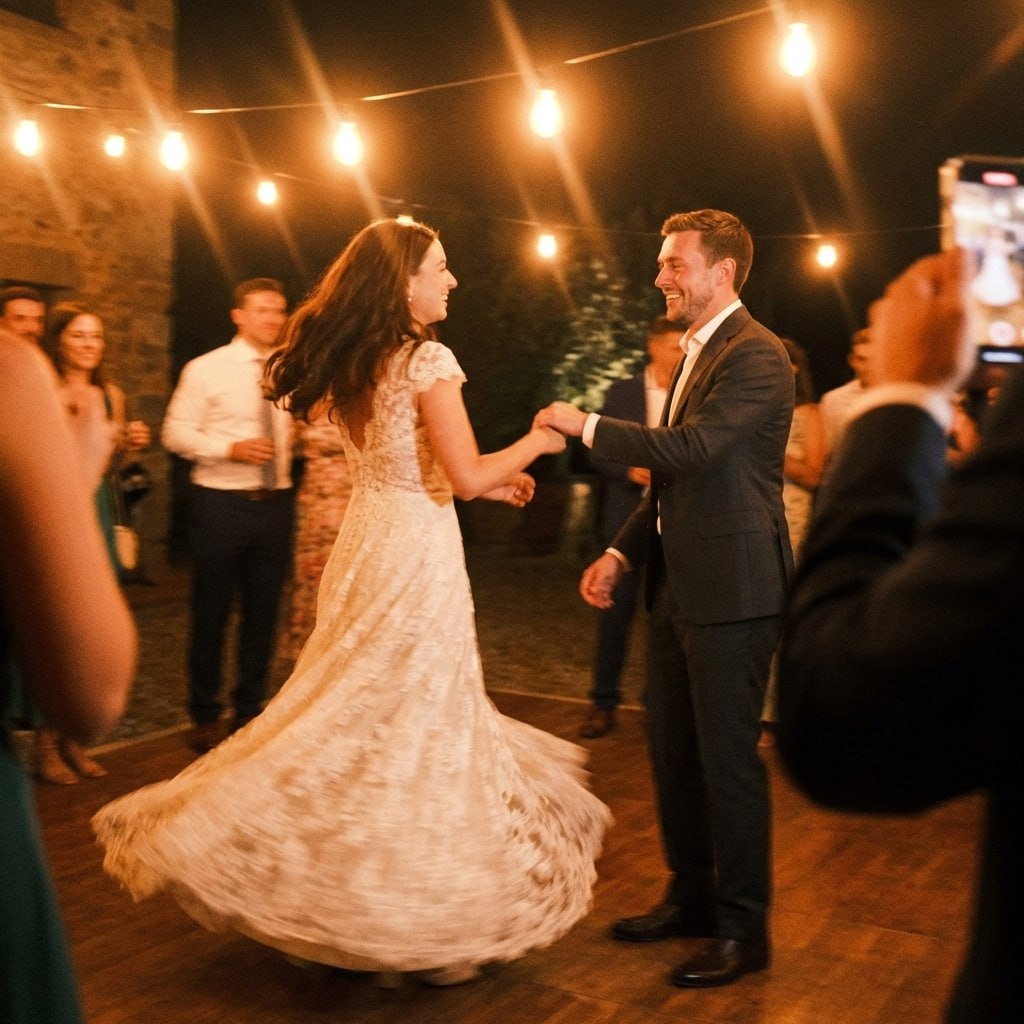

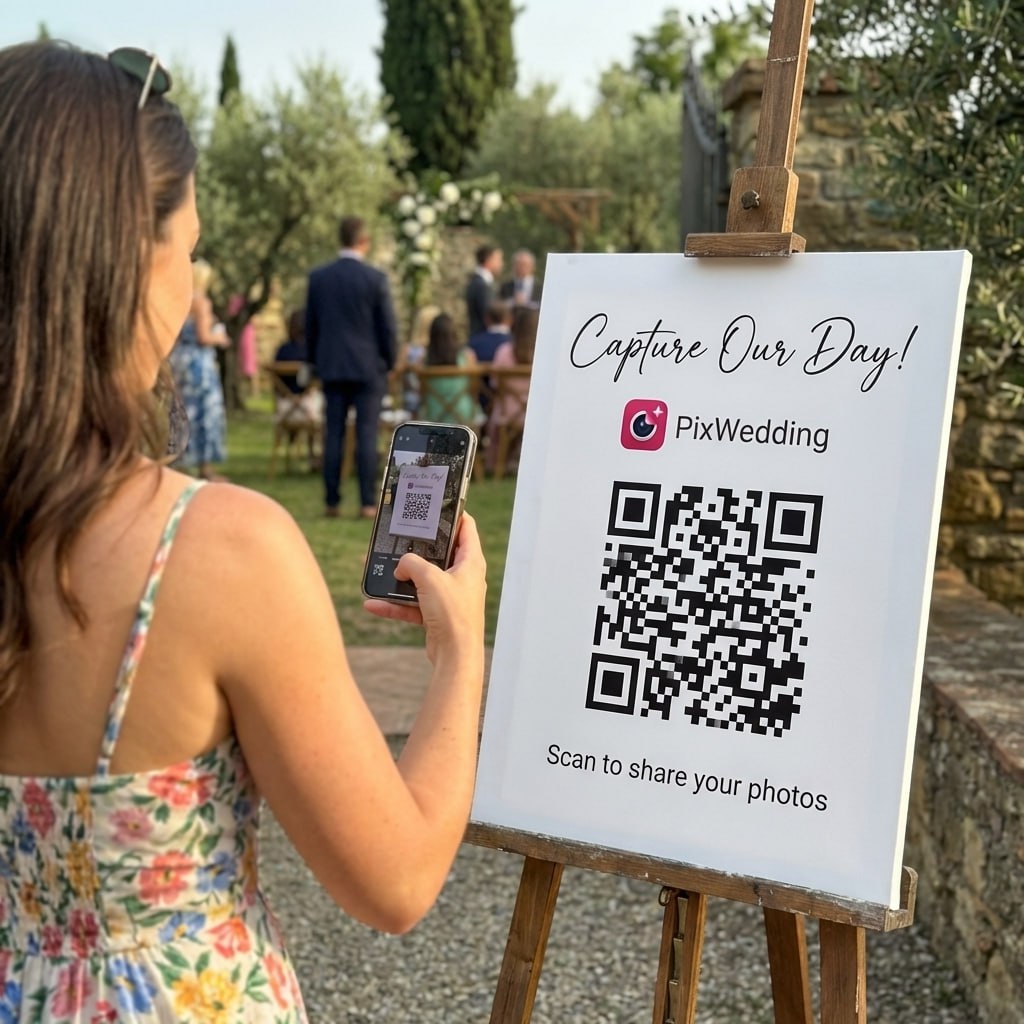



SCAN TO TRY
pix.wedding/
your-wedding
4 sample clauses: boilerplate vs better
These side-by-side comparisons show what vendors typically write versus what protects both parties fairly. Use the "better" versions as negotiation targets.
Boilerplate
"The deposit is nonrefundable under all circumstances."
Better
"If Client cancels more than 90 days before the event, 50% of the deposit will be refunded within 14 business days. If Client cancels 30-90 days before, 25% is refunded. Cancellations within 30 days forfeit the full deposit."
A tiered schedule is the market norm and protects both parties proportionally.
Boilerplate
"Vendor is not responsible for events beyond its control."
Better
"If the event is rendered impossible by declared natural disaster, pandemic, government-mandated venue closure, or act of war, either party may cancel without penalty. Deposits paid will be refunded within 30 days or, if both parties agree, applied to a rescheduled date within 18 months."
The better version names specific events and resolves the money outcome.
Boilerplate
(absent from most vendor contracts)
Better
"If Vendor fails to appear or perform on the event date without a replacement approved in writing by Client at least 72 hours in advance, Vendor will refund 100% of all monies paid within 7 business days and shall be liable for documented replacement costs up to the original contract value."
Vendor no-show with no remedy clause leaves the couple in an impossible position.
Boilerplate
"Date changes are treated as cancellations and forfeit the deposit."
Better
"If Client requests a date change more than 90 days before the original date and Vendor is available on the new date, the deposit transfers to the new date at no additional charge. A date change within 90 days may incur a rebooking fee of no more than 15% of the contract total."
Date changes and cancellations are distinct events; conflating them is a common unfair clause.
Per-vendor refund norms table (2026)
Deposit percentages, refund windows, and negotiation room vary significantly by vendor type. These ranges reflect 2026 market norms across the US and comparable markets.
| Vendor | Typical deposit % | Refund window | Force-majeure norm 2026 | Negotiation room |
|---|---|---|---|---|
| Photographer | 25-30% | 60-90 day tiered schedule | Most 2026 contracts include; offer rebook option | Medium -- smaller operators more flexible |
| Videographer | 25-33% | 60-90 day tiered schedule | Increasingly standard post-2020 | Medium |
| Venue | 25-50% | 90-180 day tiered; often 0% inside 60 days | Most major venues include; independent venues variable | Low at peak dates; higher in off-peak |
| Caterer | 10-25% | 90 day soft cutoff typical | Usually present; may cap refund at 50% | Medium |
| DJ / Band | 25-50% | 30-60 day notice for partial refund | Variable; bands more likely to omit it | High for smaller local acts |
| Florist | 20-30% | 30-60 days for partial; inside 14 days usually 0% | Often absent; worth requesting | High |
| Cake baker | 25-50% | Typically 30-60 days | Rarely formalized; verbal agreements common | High |
| Officiant | 50% or flat fee | 60 day notice typical for partial refund | Usually will rebook without penalty | High |
| Hair / Makeup | 25-50% | 30-60 days for partial refund | Often absent; artist-dependent | High |
| Transportation | 20-30% | 30-60 day soft cutoff | Companies typically have standard policy; ask | Medium |
| Day-of coordinator | 25-33% | 60-90 day tiered schedule | Freelancers variable; agencies more consistent | Medium |
5-step dispute escalation if a vendor refuses to refund
Follow these steps in order before escalating to the next. Most disputes settle at step 1 or 2. Steps 3-5 are for vendors who ignore formal demand.
- 1
Formal email + certified mail demand letter
Before any formal action, send a written demand via email and certified postal mail stating the specific amount in dispute, the contractual or legal basis for the refund, and a deadline of 10-14 business days to respond. Many vendors settle at this stage to avoid the next steps. Keep all correspondence; it is your evidence record.
Cost: $0-$10. Timeline: 2 weeks. - 2
Credit card chargeback
If the deposit was paid by credit card and the vendor failed to deliver services as contracted, file a chargeback with the card issuer under "services not received" or "significantly not as described." Chargeback deadlines vary by card network (typically 60-120 days from statement date) but can extend to 540 days in some cases. Document the contract, the failure, and your demand letter.
Cost: $0. Timeline: 30-60 days for provisional credit. - 3
State consumer protection office complaint
File a complaint with the state attorney general's consumer protection division or the equivalent agency in your jurisdiction. Vendors with multiple complaints face formal investigation. Filing a complaint costs nothing and creates a public record that vendors are strongly motivated to avoid. UK residents should contact Citizens Advice and the Competition and Markets Authority.
Cost: $0. Timeline: 4-12 weeks for a response. - 4
Small claims court
Small claims court handles disputes without attorneys in most jurisdictions. US state small claims limits range from $5,000 to $25,000 (California), covering most wedding vendor deposits. Filing fees are $30-$100. Bring the contract, payment receipts, correspondence, and any evidence of vendor failure. Judgments can be enforced against the vendor's business accounts.
Cost: $30-$100. Timeline: 30-90 days from filing. - 5
Public review and BBB complaint
A factual, documented public review on Google, The Knot, and WeddingWire, combined with a Better Business Bureau complaint, creates reputational pressure that motivates many vendors to settle. Keep the review factual and specific. Do not exaggerate; defamation claims, while rare, do occur. The BBB complaint generates a formal response request to the vendor.
Cost: $0. Timing: after other steps are exhausted.
State and region legal notes: does nonrefundable actually stand?
The enforceability of a nonrefundable clause varies significantly by jurisdiction. This table summarizes the key statute and general legal posture in 10 jurisdictions.
| Jurisdiction | Key statute | Does "nonrefundable" stand? | Recourse |
|---|---|---|---|
| California (CA) | CA Business & Professions Code § 17200 | Partial -- unfair business practice doctrine limits forfeiture | Consumer protection complaint; small claims up to $12,500 |
| New York (NY) | NY General Business Law § 349 | Partial -- deceptive acts doctrine may override absolute clauses | AG consumer protection; small claims up to $10,000 |
| New Jersey (NJ) | NJ Consumer Fraud Act | Often does not stand if vendor cancels or fails to perform | Triple damages possible under CFA for vendor fraud |
| Massachusetts (MA) | MA Chapter 93A | Partial -- unfair or deceptive practices statute applies | AG complaint; consumer court; attorney fee shifting |
| Illinois (IL) | IL Consumer Fraud and Deceptive Business Practices Act | Partial -- same unfair-practice principle applies | AG complaint; small claims up to $10,000 |
| Texas (TX) | TX DTPA (Deceptive Trade Practices Act) | Largely stands; exceptions for vendor non-performance | DTPA complaint; small claims up to $20,000 |
| Florida (FL) | FL UDAP (Unfair and Deceptive Trade Practices) | Partial -- vendor non-delivery overrides clause | AG complaint; small claims up to $8,000 |
| United Kingdom | Consumer Rights Act 2015 | Generally does not stand if disproportionate to actual vendor loss | Citizens Advice; Alternative Dispute Resolution; County Court |
| Australia | Australian Consumer Law (Schedule 2, Competition and Consumer Act 2010) | Does not stand if vendor cannot deliver; unfair contract terms provisions apply | ACCC complaint; state fair trading office; VCAT / NCAT |
| Canada | Provincial consumer protection acts (Ontario CPA 2002 as model) | Partial -- vendor non-performance typically triggers refund obligation | Provincial consumer protection office; small claims (limits vary by province) |
Disclaimer: this table is general guidance, not legal advice. Statutes change and court interpretations vary. For disputes involving substantial sums, consult a licensed attorney in your jurisdiction.
Force-majeure clauses in 2026 wedding contracts
Force-majeure clauses normalized after 2020 as couples discovered that contracts without them left deposits fully exposed when pandemic lockdowns cancelled events. The clause that was once boilerplate for large commercial agreements is now expected in any professional wedding vendor contract.
The 2026 version of a well-drafted force-majeure clause is more specific than pre-2020 versions. Rather than relying on "act of God" language -- a term courts have interpreted inconsistently across different states -- it names the triggering events explicitly: declared national or regional emergency, government-mandated venue closure or gathering restriction, pandemic or epidemic declared by a recognized public health authority, wildfire evacuation order affecting the venue's county, hurricane or tornado warning issued within 48 hours of the event, and venue destruction by fire, flood, or structural failure.
The clause should also distinguish between cancellation and postponement. Under cancellation, all funds are returned within a specified period (typically 30 days). Under postponement, the deposit transfers to the new date at no additional charge for a defined window (typically 12-18 months), with a refund option if no suitable date is available within that window.
Climate-driven disruptions are the fastest-growing force-majeure category. The 2022-2025 hurricane and wildfire seasons cancelled or forced relocation of hundreds of weddings in Florida, California, Oregon, and Washington. Outdoor venues in high-risk regions now increasingly purchase event-cancellation insurance themselves and pass the coverage through to booked couples.
Event-cancellation insurance is the paid alternative when a vendor contract lacks adequate force-majeure language. Standalone wedding cancellation insurance is available from several major insurers including Travelers, Markel, and Wedsure. Policies cost $150-$500 depending on budget and coverage scope. They do not replace strong contract language, but provide a financial backstop for events no clause can anticipate.
Wedding insurance as a deposit backstop
Wedding insurance is not a substitute for reading contracts carefully, but it is an effective financial backstop for the scenarios that fall outside any contract clause. A vendor who goes bankrupt six months before the wedding, a parent whose sudden illness forces cancellation, or a hurricane that makes the venue inaccessible -- these are the events insurance covers when contracts do not.
Policies typically cost $150-$500 for most weddings under $50,000. Coverage usually includes: cancellation or postponement due to illness, injury, or death of an immediate family member; vendor no-show or vendor bankruptcy; severe weather making the venue unreachable; military deployment of a partner; and damage to wedding attire, rings, or gifts.
Liability coverage is frequently included or available as a rider and is often required by venues as a condition of booking. A $1 million liability policy protects against guest injuries at the event and is standard for most mid-to-large venues.
When wedding insurance makes sense
- Total wedding budget over $15,000-$20,000 -- the financial exposure justifies the $150-$500 premium.
- Outdoor venue in hurricane, wildfire, or tornado season -- weather cancellations are the most common claim type.
- Elderly or seriously ill immediate family members -- unexpected illness-related postponements are covered; pre-existing conditions may be excluded.
- Venue or vendor with a thin financial track record -- insurance covers vendor bankruptcy; contracts typically do not.
- Purchase at least 6-12 months before the event -- most policies will not cover vendors already booked before the policy start date for pre-existing cancellation risks.
6 worst mistakes when signing a vendor contract
These are the most frequently cited mistakes in vendor contract disputes. Each one reduces or eliminates legal options after the fact.
- 1
Skipping the cancellation schedule entirely
The cancellation schedule is the most financially important clause in a vendor contract. Failing to read it before signing -- or signing a contract without one -- leaves the full deposit at risk from day one with no proportional offset for cancelling early.
- 2
Accepting no force-majeure clause
Post-2020, any vendor contract without a force-majeure clause is below market standard. No clause means no contractual path to a refund when a wildfire, hurricane, or declared health emergency makes the event impossible. Ask for it in writing before the deposit leaves your account.
- 3
Paying via Venmo, Zelle, or bank transfer
Peer-to-peer payment apps and wire transfers offer almost no consumer protection. Credit cards are the only payment method that triggers a chargeback right. Paying $3,000 via Venmo to a vendor who disappears leaves you with no institutional recourse other than small claims court.
- 4
Paying cash with no written receipt
A cash payment without a signed receipt, invoice number, and description of services is legally equivalent to a gift. If a dispute arises, there is no documentary evidence the transaction occurred as a service contract. Always get a receipt with the amount, date, vendor name, and service description in writing.
- 5
Relying on a verbal or "gentlemen's agreement"
Verbal contracts are enforceable in theory but nearly impossible to prove in practice. A vendor who says "of course we can move the date if needed" and does not put it in writing has made a statement with no legal weight. If it matters, it needs to be in the signed contract.
- 6
Confusing rebooking with cancellation
Some contracts treat a date change as a cancellation and forfeit the deposit accordingly. Others allow rebooking at no charge if the vendor is available. Knowing which applies before requesting a date change prevents an accidental forfeiture. Ask the vendor to confirm in writing before changing the date.
Before-you-sign checklist
Run through this list before transferring any deposit. Each item takes under five minutes and prevents problems that take weeks to resolve.
Read the cancellation schedule first, not last. It is the most financially consequential clause.
Search the contract document for "force majeure" and "act of God." If neither appears, ask the vendor to add a clause before signing.
Ask for the cancellation and refund policy in a separate email confirmation, not just inside the contract PDF.
Pay by credit card wherever possible. It is the only deposit payment that triggers chargeback rights.
Save every direct message, email, and voicemail from the vendor before and after signing.
Screenshot the vendor's social media and website at time of booking -- useful evidence if they later claim insolvency or change ownership.
Confirm any verbal promises in writing via email reply: "As discussed, the date can be moved once at no charge if you are available."
Related wedding planning guides
Why "Nonrefundable" Does Not Mean What Most Couples Think It Means
The word "nonrefundable" appears in the overwhelming majority of wedding vendor contracts. Most couples read it and assume it is an absolute legal ceiling -- that once the money is transferred, it is gone under any circumstances. That assumption is wrong in a meaningful proportion of cases.
Consumer protection statutes in most developed legal systems distinguish between a clause that limits a refund proportionally to a vendor's actual loss versus a clause that forfeits the full deposit even when the vendor suffers no demonstrable loss. The latter category -- particularly a 100% forfeiture clause for cancellations made many months before the event -- is increasingly challenged under unfair contract terms doctrine.
The practical implication: a couple who cancels a $2,000 photographer booking 11 months before the event, when the photographer can readily rebook that date, has a stronger case for a partial refund than the contract language suggests. A vendor who cannot demonstrate specific financial harm from an early cancellation faces difficulty defending an absolute forfeiture clause in court or before a consumer protection authority.
- •UK Consumer Rights Act 2015 makes "no refund ever" clauses unenforceable when disproportionate to actual vendor loss
- •Australia ACL requires a refund or remedy when a vendor cannot deliver the contracted service
- •Roughly 30 US states have unfair business practices statutes that can override absolute forfeiture clauses
- •Canada's provincial consumer protection acts (Ontario, BC, Alberta) follow a similar proportionality principle
- •"Nonrefundable retainer" is a slightly stronger legal construct than "nonrefundable deposit" but is still not absolute
The Post-COVID Contract Landscape in 2026
The pandemic permanently changed how wedding vendor contracts handle extraordinary events. Before 2020, force-majeure clauses were uncommon in small-vendor contracts because they were considered boilerplate for large commercial agreements. After 2020, couples who had paid deposits for events cancelled by government orders discovered those contracts had no mechanism for a refund.
The wedding industry responded. By 2026, force-majeure clauses covering pandemic, wildfire, hurricane, and government-mandated closure are standard in contracts from established photographers, venues, and caterers. They are still absent from many smaller, independent vendors operating on informal agreements.
Climate-driven event disruptions are now the growing edge of force-majeure disputes. Hurricane Ian in 2022 cancelled hundreds of Florida weddings; the Western wildfire seasons of 2023 and 2024 affected outdoor venues across California, Oregon, and Washington. A well-drafted 2026 force-majeure clause names these events explicitly rather than relying on "act of God" language, which courts have interpreted inconsistently.
Event-cancellation insurance has grown as a complement to (not replacement for) strong contract language. Several major insurers now offer standalone wedding cancellation riders that cover weather delays, vendor bankruptcy, sudden illness of an immediate family member, and military deployment. The policy typically pays out what the contract did not recover.
Negotiating Deposits Before You Sign
Most couples treat the vendor contract as a take-it-or-leave-it document. Experienced wedding planners treat it as a starting position. The cancellation schedule, force-majeure clause, and payment method are all negotiable before signing -- not after.
The most effective negotiation approach is specific and written: "Can we add a cancellation schedule that refunds 50% if we cancel more than 90 days out?" is a clear, professional ask that most established vendors accept because it mirrors industry norms. A vendor who refuses a standard industry schedule deserves scrutiny.
Date-change language is an underutilized negotiation point. Adding a clause that permits one date change at no charge -- if made more than 90 days out and if the vendor is available -- protects against the most common forced-cancellation scenario without costing the vendor anything in normal circumstances.
Explore more free wedding tools
Everything you need to make your wedding day stress-free and unforgettable.
QR Sticker Designer
Design custom print-ready stickers.
Hashtag Generator
Create unique wedding hashtags.
How to Collect Guest Photos
5 methods ranked by participation rate and ease.
Share Wedding Photos with Guests
Compare every sharing platform by ease and participation.
Best Way to Get Guest Photos
The single method with the highest participation rate.
How to Make a Shared Wedding Album
Step-by-step setup for every platform.
Alternative to Disposable Cameras
Better, cheaper options than disposable cameras.
Alternative to Wedding Photo Booth
5 cheaper alternatives to a $1,000+ photo booth rental.
Wedding vendor deposits: FAQ
Straight answers to the questions people ask most about this topic.
It depends on the contract and your jurisdiction. If the contract includes a cancellation schedule (e.g., 50% back if cancelled 90+ days out), that schedule governs. If the contract says 100% nonrefundable under any circumstances, consumer-protection law in roughly 30 US states, the UK Consumer Rights Act 2015, and Australia ACL can override that clause if it is deemed unfair or if the vendor cannot deliver. If the venue cancels or cannot perform, refunds are generally required regardless of what the contract says.
Yes. The word "nonrefundable" in a contract is not an absolute legal barrier. Deposits can be refundable when: the vendor cancels or cannot perform, a force-majeure event beyond both parties' control prevents the wedding, state consumer-protection law deems the clause unfair, or the couple negotiated a cancellation schedule at signing. "Nonrefundable" primarily means the vendor is not obligated to refund simply because the couple changes their mind with no notice.
Force majeure is a contract clause that excuses performance by either party when an extraordinary event outside their control prevents the wedding: pandemic, declared natural disaster, government-ordered venue closure, extreme weather making travel impossible, or venue destruction. A well-drafted clause names both cancellation (full release) and postponement (deposit rolls to new date). Post-COVID contracts in 2026 typically address pandemics, wildfires, and hurricanes explicitly.
Yes, in small claims court for most dispute amounts. Small claims limits range from $5,000 (some US states) to $25,000 (CA), covering most wedding vendor deposits. Before filing, send a formal demand letter via certified mail, attempt a credit card chargeback if paid by card, and file a complaint with the state consumer protection office. Filing fees are typically $30-$100 and do not require an attorney.
Wedding insurance is worth considering for weddings over $15,000-$20,000, outdoor ceremonies in storm-prone seasons, or couples with elderly or ill immediate family. Policies cost $150-$500 and cover cancellation, vendor no-show, property damage, and liability. It does not replace reading contracts carefully, but provides a financial backstop for events no clause can anticipate. Purchase at least 6-12 months before the wedding date.
Industry norms in 2026: photographers typically ask 25-30%; venues 25-50% at booking; caterers 10-25% upfront; DJs and bands 25-50%; florists 20-30%; officiants often a flat fee or 50% retainer. Any request for 50%+ more than 12 months before the event is above market and warrants negotiation or a tighter cancellation schedule in return.