
How much to tip wedding vendors: the 2026 cheat sheet
One range for each of 19 vendors, where three 2026 guides agree, plus when each envelope goes and who carries it. Every number links back to The Knot, Zola or Here Comes The Guide.
Tip the caterer 15 to 20% of the food and drink bill, hair and makeup 15 to 20% per artist, bartenders $20 to $50 each and the officiant $50 to $100. Delivery and setup crews get $5 to $20 per person. Photographers, videographers, DJs, planners and florists are optional, usually $50 to $200 each.
Check every contract first: if gratuity is already billed, cash on top is optional. Zola notes couples usually set aside about 5 to 10% of the budget for extras like tips. Put the cash in labeled envelopes two weeks out and give one trusted person the list.
Ranges from The Knot, Zola and Here Comes The Guide. Checked 4 October 2026.
The six envelopes most weddings need
Scan. Upload.
The guests' side of the day.
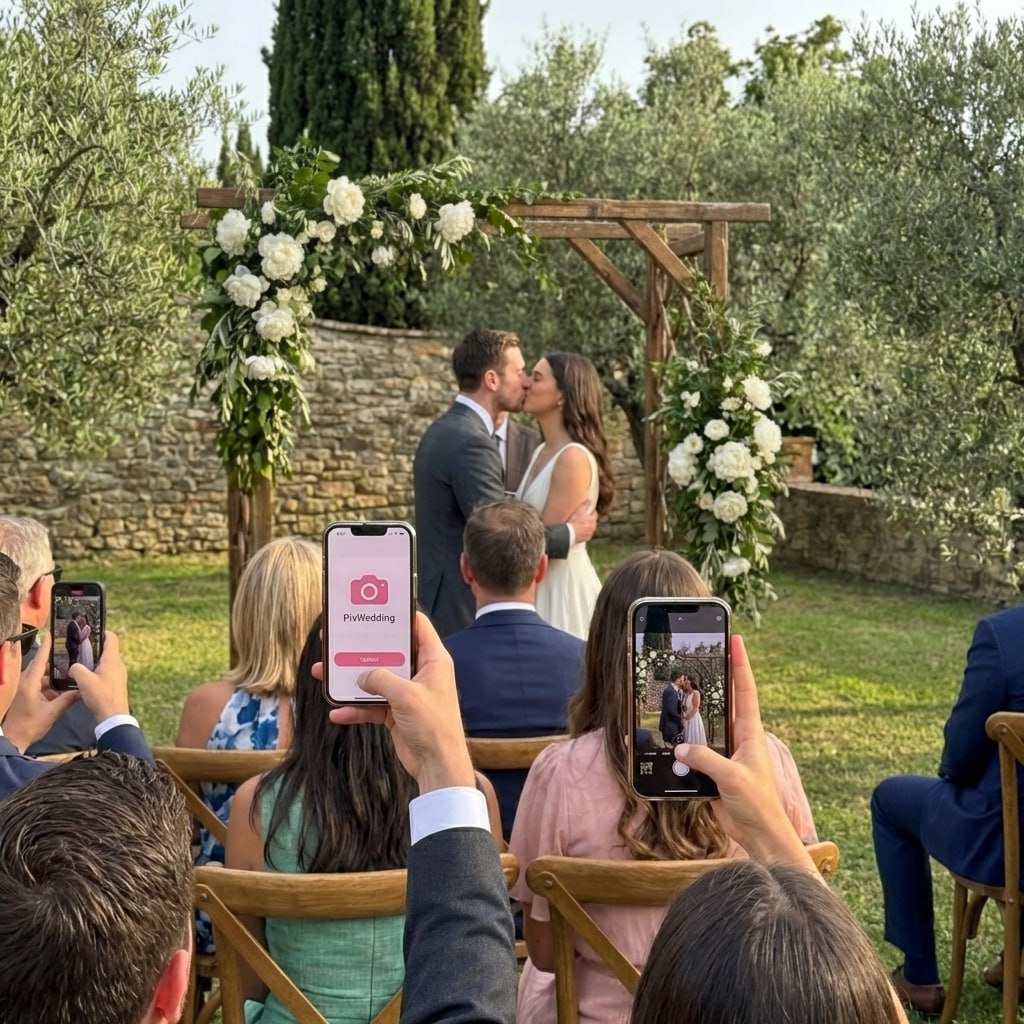
Your vendors cover the planned moments. Watch a guest scan the table QR code and add photos from the phone browser, no app and no account. Every upload lands in one album you can share with your planner and photographer after.
WEDDING ALBUM
Sofia & James
Example album
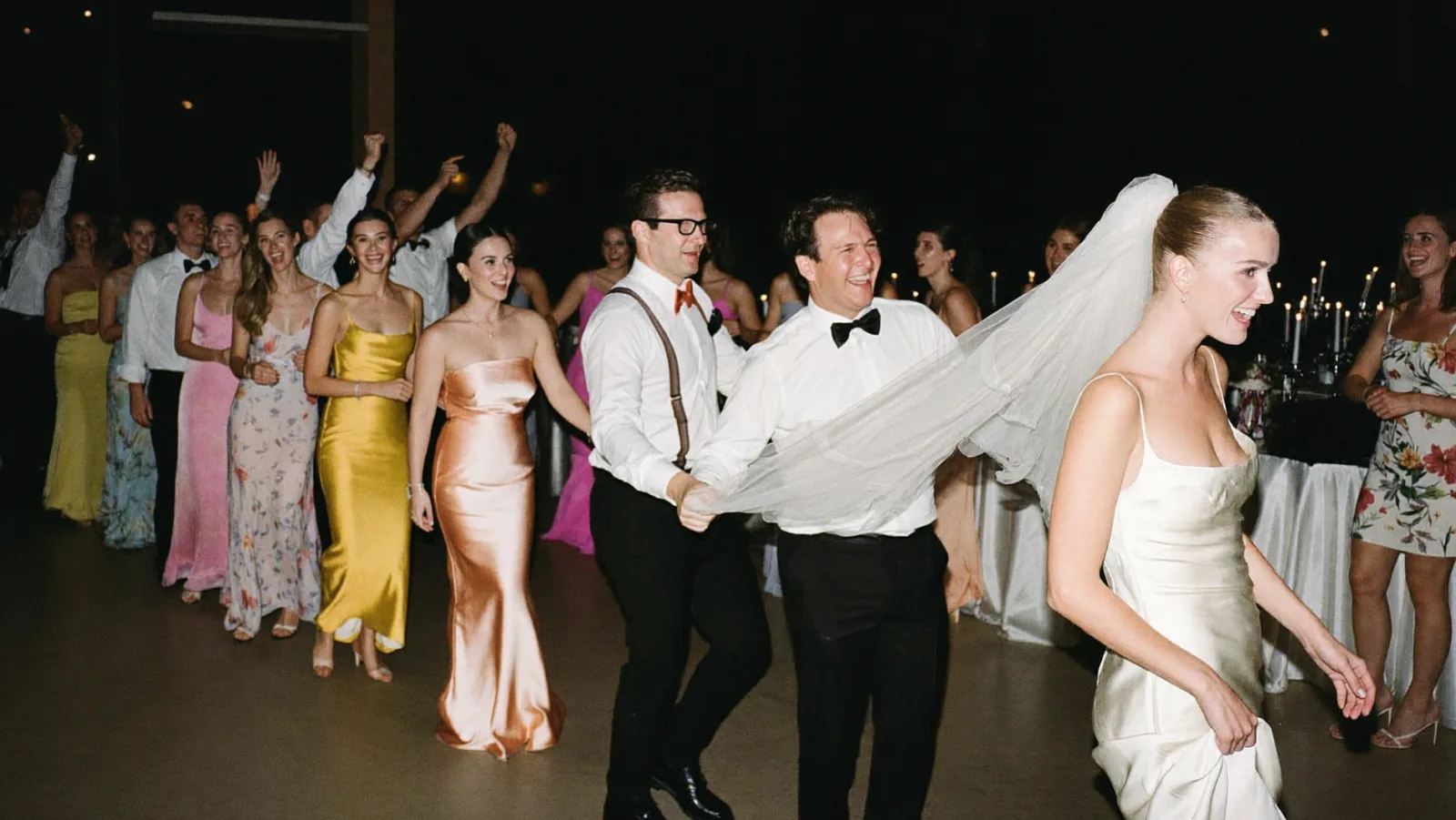
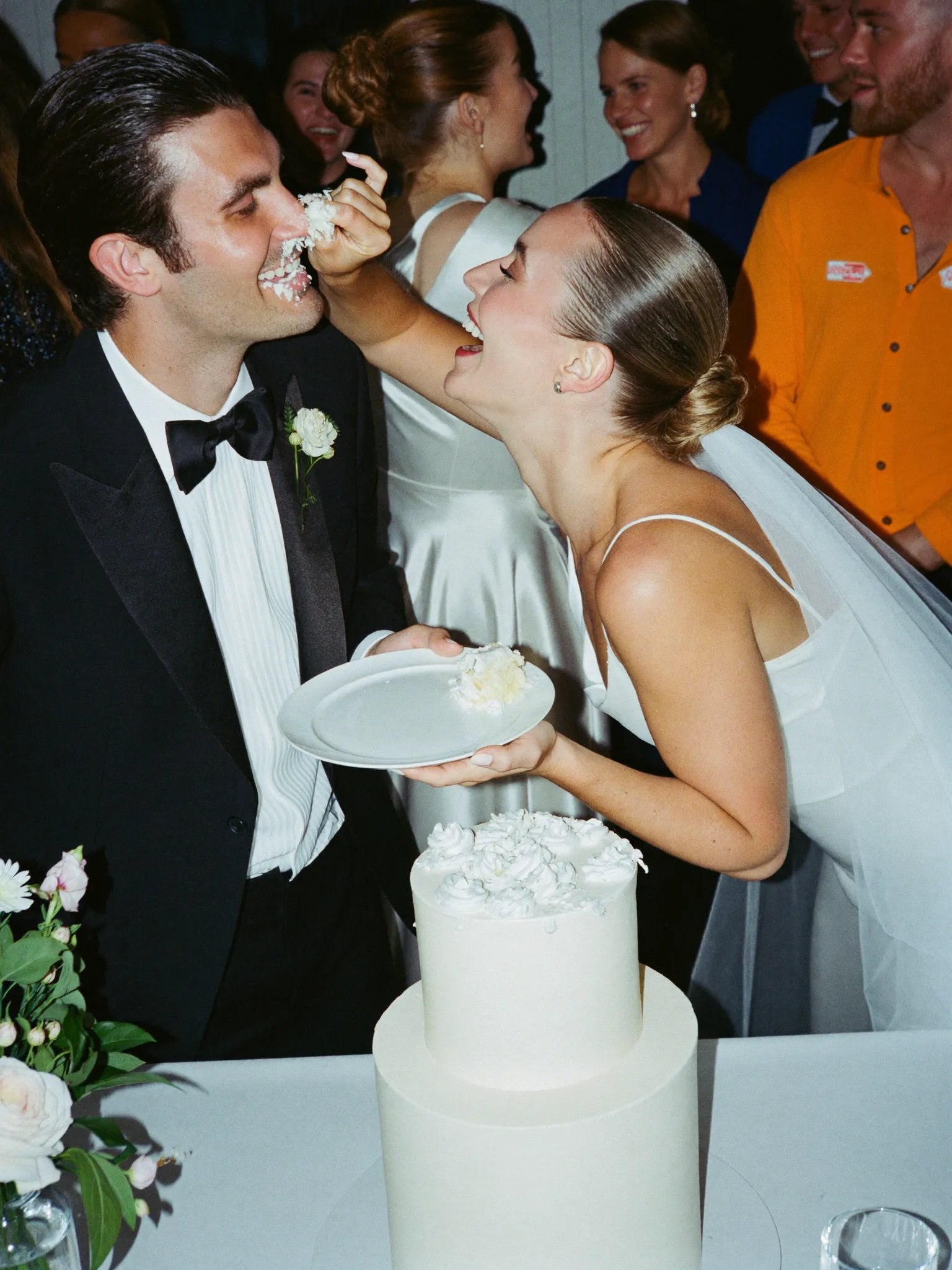

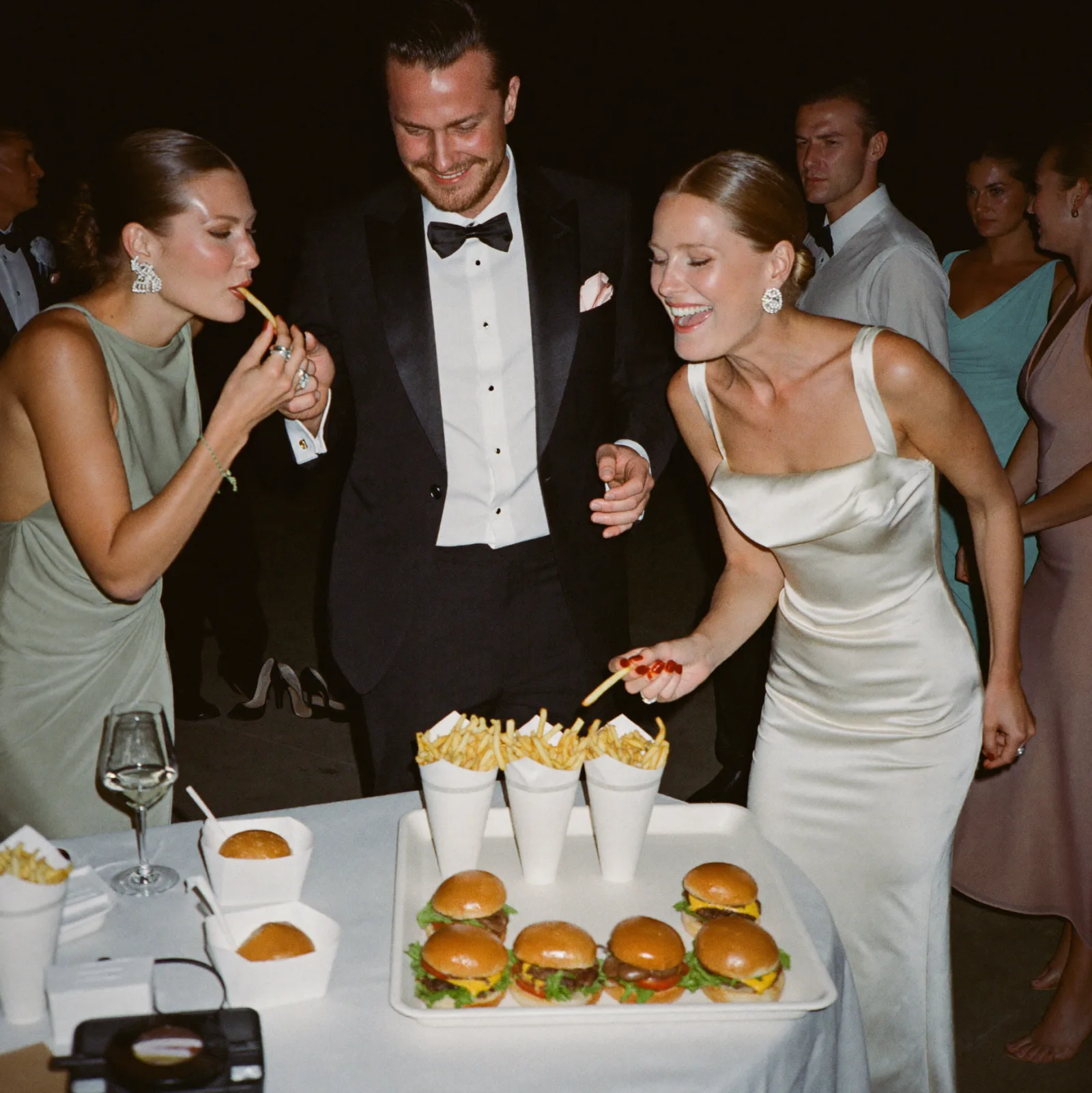

The cheat sheet, one row per envelope
One range per vendor, taken from where The Knot, Zola and Here Comes The Guide overlap. The second line shows where a guide goes higher or lower. Status follows Here Comes The Guide’s three groups.
| Vendor | Typical tip | Status | When |
|---|---|---|---|
| Catering and waitstaff | 15-20% of food and drinkOr per person: captain $100-$200, chef $50-$100, servers $20-$50 | Check contract | End of the reception, to the catering manager |
| Bartenders | $20-$50 eachOr 10-20% of the bar bill | Check contract | End of the reception, to the head bartender |
| Hair and makeup | 15-20% per artistThe Knot goes up to 25%. Tip the trial too | Expected | As soon as the look is done |
| Photographer | $50-$200 per shooterCouples most often gave 1-5% or about $200. Assistants $50-$75 | Optional | End of the reception, or with the gallery |
| Videographer | $50-$200 per shooterZola: 1-5% of the service | Optional | End of the reception |
| DJ | $50-$150Couples in Zola’s survey most often gave 1-5% or $200 | Optional | End of the reception |
| Band | $25-$50 per musicianThe Knot starts at $15 | Optional | One sum to the bandleader, or an envelope each |
| Ceremony musicians | $15-$50 eachHere Comes The Guide: or 15% of the fee | Optional | End of the ceremony |
| Full-service planner | 15-20% of the fee, or a giftHere Comes The Guide caps it at $500. Couples gave 1-5% or $200 | Optional | End of the reception, or a note after |
| Day-of coordinator | $50-$150Zola and Here Comes The Guide group them with planners | Optional | End of the reception |
| Officiant | $50-$100, or a donationDonations to a house of worship run $100-$500 | Expected | Rehearsal dinner, or right after the ceremony |
| Delivery and setup crews | $5-$20 per personHeavy setup crews $20-$50 (Zola). The Knot: $10-$50 | Expected | On arrival, or left in advance with whoever accepts deliveries |
| Drivers | 15-20% of the billThe Knot: or $50 per driver | Check contract | After the last ride |
| Valet | $1-$2 per carThe Knot: up to $5 per car | Check contract | Start or end of the night, to the captain |
| Coat check and restroom | $1-$2 per guestZola: restroom $0.50-$1 per guest | Check contract | At the start, so guests know it is covered |
| Photo booth attendant | $50-$100Same range at The Knot and Here Comes The Guide | Optional | End of the reception |
| Florist | $50-$100, crew $10-$20 eachThe Knot: not typically tipped, or a gift | Optional | After setup, or a card after the wedding |
| Cake baker | $50-$200 or a giftDelivery crew $20-$40 in total (Zola) | Optional | Crew on arrival, baker a note after |
| Alterations | $20-$30Only The Knot lists it | Optional | At the final fitting |
Percentages apply only when the contract has no gratuity. Each guide's full wording is in the source table in section 03. Want the dollar amount for your own bills? The wedding tip calculator does the math per envelope.
Four vendors most couples tipped
The guides tell you what is polite. Zola’s 2026 Wedding Spend Survey asked 720 couples what they did. The caterer and hair and makeup topped the list, mostly as a percentage. Photographers and DJs were tipped about as often, but with far smaller amounts.
Source: Zola 2026 Wedding Spend Survey, 720 couples surveyed within 180 days of the wedding, published in Zola's tipping guide updated 1 June 2026. Checked 4 October 2026.
What The Knot, Zola and Here Comes The Guide say in 2026
Three current guides side by side for the same 19 vendors. Where a cell says “Not listed”, that guide skips the vendor. This is where every range in the cheat sheet comes from.
| Vendor | The Knot (Jan 2026) | Zola (June 2026) | Here Comes The Guide (June 2026) | When and to whom |
|---|---|---|---|---|
| Catering and waitstaff | 15-20% of the food and drink fee, split among servers and bartenders, plus $200-$300 for the maître d’ | 16-20% of the bill if not included. Per person: captain $100-$200, chef $50-$100, servers $20-$50, bussers $10-$30 | 15-20% of food and drink, or manager $100-$300, head chef $50-$100, waitstaff $20 each | End of the reception, to the maître d’ or catering manager |
| Bartenders | 15-20% of the drink fee if not in the contract | $20-$50 each | 10-20% of the alcohol bill. No bar tip jars | End of the reception, to the head bartender |
| Hair and makeup | 15-25% each. Hair is “definitely expected” | 16-20% of the service, per artist. Tip at the trial too | 15-20%. Expected | As soon as the look is done |
| Photographer | $50-$200 per team member, or 5-15%. Not expected | 1-5%, or about $200. Assistants $50-$75 | $50-$200 each, or a gift. Optional | End of the reception, or with the gallery |
| Videographer | $50-$200 per team member | 1-5% of the service | $50-$200 each, or a gift. Optional | End of the reception |
| DJ | $50-$150. “Optional, but preferred” | 1-5%, or $200 | 10-15% of the bill, or $50-$150 | End of the reception, by an attendant or the planner |
| Band | $15-$50 per member | 1-5%, or $25-$50 per member | $25-$50 per musician | One sum to the bandleader, or an envelope each |
| Ceremony musicians | $15-$50 each | $25-$50 each | 15% of the fee, or $15-$25 each | End of the ceremony |
| Full-service planner | 15-20% of the fee, or a gift | 1-5% of the fee, or $200. The least tipped vendor | 15-20% of the fee, up to $500, or a gift. Optional | End of the reception, or a note with a check after |
| Day-of coordinator | $50-$150 | 1-5% of the fee, or $200 (grouped with planners) | Grouped with planners: 15-20%, up to $500 | End of the reception |
| Officiant | $50-$100, or a $100-$500 donation to the house of worship | $50-$100, or a $50-$100 donation. Ordained friends get a gift | $50-$100, or a $100-$500 donation. A judge may be barred from accepting | Rehearsal dinner, or right after the ceremony |
| Delivery and setup crews | $10-$50 per person. Expected | Delivery $5-$20 per person, setup crew $20-$50, cake crew $20-$40 in total | $5-$20 per person. Expected | The day before, to the lead accepting deliveries |
| Drivers | 15-20%, or $50 per driver. Check the contract | 15-20%. Tip each driver separately | 15-20% if not in the contract | After the last ride |
| Valet | $1-$5 per car, split among the attendants | $1-$2 per car | $1-$2 per car, if not included | Start or end of the night |
| Coat check and restroom attendants | Not listed | Coat check $1-$2 per guest, restroom $0.50-$1 per guest | $1-$2 per guest, if not included | At the start, so guests know tips are covered |
| Photo booth attendant | $50-$100 | Not listed | $50-$100 | End of the reception |
| Florist | Not typically tipped. $50-$200 or a gift | $50-$100. Delivery crew $10-$20 each | 10-15% of the bill, $50-$150 or a gift | After setup, or a card after the wedding |
| Cake baker | $50-$200 or a gift | Cake delivery crew $20-$40 in total | Delivery crew $5-$20 per person | A note after the wedding. The crew on arrival |
| Alterations | $20-$30. Optional | Not listed | Not listed | At the final fitting |
Amounts from The Knot (updated 26 January 2026), Zola (1 June 2026) and Here Comes The Guide (17 June 2026). Checked 4 October 2026.
Which envelopes you cannot skip
Here Comes The Guide sorts wedding vendors into three groups. Only three are expected no matter what. Four depend on the contract, and the rest are a thank-you for great work.
Expected
Check the contract first
Optional
Groups as published by Here Comes The Guide, updated 17 June 2026. Its own line: unless a tip is built into your contract, tipping is never mandatory.
Why tipping guides give different numbers
The Knot and Here Comes The Guide give etiquette advice. Zola’s survey reports what 720 couples did. Here are the six vendors where that gap shows most, and how to read it.
Wedding planner
1% to 20%- The Knot15-20% of the fee or a gift. Planner Nora Sheils: close to 80-90% of her clients tip.
- Zola survey1-5%, or $200. Planners were the least tipped vendor at 48%.
- Here Comes The Guide15-20%, up to $500. Says a planner does not expect a tip.
Zola’s table and text read the 48% two ways (tipped vs not tipped). Either way, planners get tipped least. If yours ran the whole day, a percentage of the fee is the etiquette answer.
DJ
$50 to 15%- The Knot$50-$150. “Optional, but preferred.”
- Zola survey1-5%, or $200 flat. 67% of couples tipped the DJ or band.
- Here Comes The Guide10-15% of the bill, or $50-$150.
Every source lands near $50-$200 in cash. Zola adds that a DJ who also runs the timeline as MC earns a bit more.
Hair and makeup
15% to 25%- The Knot15-25% each. Hair is “definitely expected”.
- Zola survey16-20%. 71% tipped, 90% of them as a percentage.
- Here Comes The Guide15-20%. Filed as expected.
- Emily Post15-20%. Everyday hair salon rate.
The only vendor all four agree is expected. 15-20% is the overlap, The Knot stretches to 25%.
Bartenders
10% to 20%- The Knot15-20% of the drink fee. To the head bartender.
- Here Comes The Guide10-20% of the alcohol bill. No tip jars for guests.
- Zola$20-$50 per bartender.
- Emily Post$1-$2 a drink or 15-20%. Everyday bar tab, not a hosted bar.
You need the final tab for a percentage, so tip at the end. If the bar sits in the catering contract, the gratuity usually covers it.
Officiant
$50 to $500- The Knot$50-$100 tip, or a $100-$500 donation to the house of worship.
- Zola$50-$100 tip, or a $50-$100 donation. Ordained friends get a gift.
- Here Comes The Guide$50-$100 or $100-$500. A judge may be legally barred from accepting one.
The tip agrees at $50-$100. The donation is where they split. For a judge or clerk, send a thank-you note, not cash.
Florist
$50 to 15%- The Knot$50-$200 or a gift. Not typically tipped. Tip the delivery people.
- Zola$50-$100. Crew $10-$20 each on arrival.
- Here Comes The Guide10-15%, $50-$150 or a gift.
The crew carrying the arches gets cash on the day. The designer gets a card, a gift or a tip if the install was complex.
The Knot, Zola, Here Comes The Guide and Emily Post's general tipping guide. Checked 4 October 2026.
What the envelopes add up to at three sizes
Three made-up weddings priced with the cheat sheet ranges. The bills are examples, not averages. In every one the caterer’s envelope is the biggest, because it is the only percentage of a big bill.
- Caterer 18% of $4,000$720
- Bartender 1 x $40$40
- Hair and makeup 20% of $300$60
- Photographer Flat$100
- DJ Flat$100
- Officiant Flat$75
- Delivery crews 3 x $15$45
- Caterer 18% of $8,000$1,440
- Bartenders 2 x $40$80
- Hair and makeup 20% of $600$120
- Photographer + assistant $150 + $60$210
- Videographer Flat$100
- DJ Flat$150
- Officiant Flat$100
- Day-of coordinator Flat$100
- Delivery and setup 4 x $15$60
- Valet 80 cars x $2$160
- Caterer 18% of $14,000$2,520
- Bartenders 3 x $50$150
- Hair and makeup 20% of $900$180
- Photographer + assistant $200 + $75$275
- Videographer Flat$150
- Band 6 x $40$240
- Ceremony musicians 3 x $25$75
- Planner $500 cap$500
- Officiant Flat$100
- Delivery and setup 6 x $20$120
- Drivers 18% of $800$144
- Valet 120 cars x $2$240
Illustrative examples, not averages. Your contracts decide the real numbers, and some of these vendors may already bill gratuity. Run your own bills through the wedding tip calculator.

First dance
You guys!!
Envelopes planned. Now catch every guest photo.
Your vendors cover the planned moments. Put one QR code on the tables and guests add the rest from their own phones, no app and no account. The first 20 uploads are free.
From Mom
Scan to join the album
No app, no account
UPLOADING
Saving your moment
THE ALBUM
Sofia & James
June 21, 2026
647 photos · 95 guests


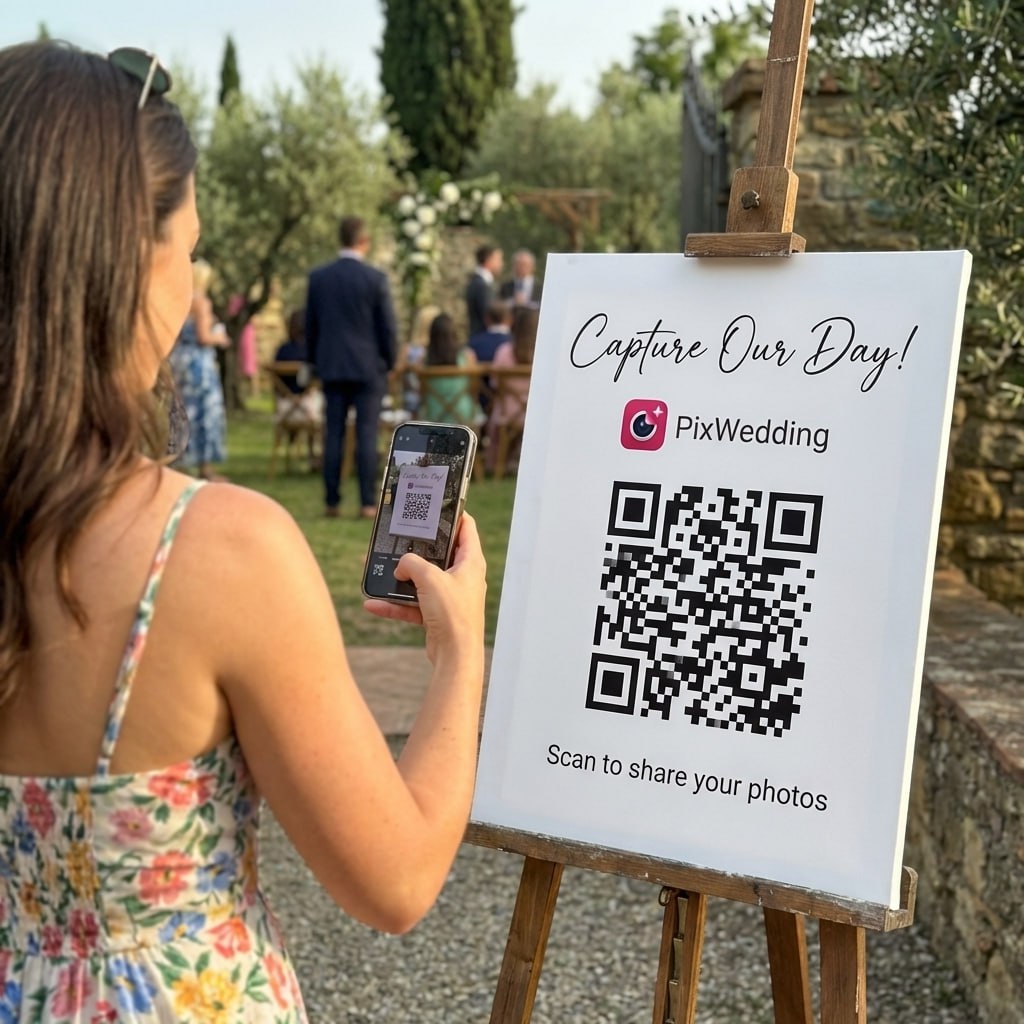

SCAN TO TRY
pix.wedding/
your-wedding
Start free with 20 uploads, no card. Upgrade later from $49, a one-time payment. See plans·Or work out your envelopes first
Your 12-envelope wedding day checklist
Zola suggests a bank visit two weeks before the wedding so you get the right bills. Write the vendor’s name and the amount on each envelope, plus who carries it, and skip any envelope the contract already covers.
Add a thank-you to each one
The planner in the video below tucks a short note into every envelope and sorts the small envelopes into five big ones: beauty team, ceremony, deliveries, reception and the vendors you mail after. It keeps the point person from digging through twelve loose envelopes.
Who carries the envelopes, and when they go
You will be pulled in every direction on the day. Split the envelopes in advance and give each person a printed list with names, amounts and timing.
Your point person
Zola suggests one trusted person for all of it: your planner if you have one, or a maid of honor, best man or family member.
On-site coordinator or catering manager
Here Comes The Guide says delivery and setup envelopes can go to them before the wedding day.
Best man
A second pair of hands for the envelopes that fall outside the reception.
The couple
Keep the few that deserve a personal word, and hand them over in the last hour.
Roles from Zola and Here Comes The Guide. The guides split on the caterer: The Knot says the end of the reception, Zola suggests before service starts and Here Comes The Guide allows either. Here Comes The Guide tips venue attendants at the start, so guests know tips are covered.
The five big envelopes method, from a planner
One envelope per vendor, five per moment
A New Orleans wedding planner walks through who to tip, how much and when, then shows how she organizes the cash: one small labeled envelope per vendor with a thank-you note, sorted into five large envelopes. Posted in 2020, so take the amounts from the cheat sheet and the method from her.
Watch on YouTubeHow to pay the tip in 2026
Cash is still what most vendors prefer, according to Zola, but apps and card tips are normal now. One rule keeps it simple: ask at the final invoice, and send any digital tip the morning of the wedding with a note.
Cash in labeled envelopes
- Zola says most vendors still prefer cash
- Visit the bank two weeks out for the right bills
- Easy to split among a catering or valet team
- Write the vendor name and amount on the front
Venmo, PayPal or Zelle
- Zola notes some vendors prefer these apps
- Ask which one when you settle the final invoice
- Send it the morning of the wedding
- Add a note that says it is a tip, not a balance
On the final invoice
- Zola says many vendors take a tip added to the final invoice by card
- Handy for the planner or the photography studio
- Ask whether a card fee comes out of the tip
Personal check
- A check takes days to clear
- It can read like an invoice payment
- Use one only if the vendor asks for it
Cash, app and invoice guidance from Zola's tipping guide (updated 1 June 2026). The morning-of timing for app tips is our own rule, so nobody is on their phone during the reception.
Read the contract for these words
Zola puts it plainly: a service charge usually goes to the business for overhead, and gratuity goes to the people serving you. Caterers, bars and transportation companies often bill one or the other already.
Two states have rules on this. In Massachusetts, a charge that guests would reasonably expect to go to staff must go to the wait staff under the state Tips Act (c. 149, s. 152A). In New York, a banquet administrative charge that is not a gratuity has to be labeled that way in the contract and the bill under 12 NYCRR 146-2.19. Elsewhere, the contract wording and the manager's answer are what count.
More on this in do you tip wedding vendors if gratuity is included.
Not sure? Ask the catering manager: "Does the service charge go to your team?"
Regional norms: what changes and what does not
The three guides publish national ranges. Use them as your starting point, then adjust the percentage envelopes to local prices.
Big-city venues
Everything costs more, so the percentage tips (caterer, bar, hair and makeup, drivers) grow with the bills. Read the catering contract closely, since many city venues bill gratuity or a service charge already.
Mid-size cities and suburbs
The national ranges in the cheat sheet fit most weddings here without adjustment. Your venue coordinator knows what is normal locally.
Rural and small-town weddings
Smaller bills mean smaller percentage tips. The per-person envelopes for delivery, setup and valet crews stay the same, because the work does.
When in doubt, ask
Your venue coordinator or day-of planner works local weddings every season. Ask them what couples there usually give, and whether anything is already billed.
Eight tipping mistakes and the fix
Forgetting the valet team
Count the cars, multiply by $1-$2 and give one envelope to the captain, unless the venue bills it.
Tipping on top of billed gratuity without checking
Read the catering, bar and transportation contracts for the words in section 11 before you fill a single envelope.
Forgetting delivery and setup crews
Here Comes The Guide files them as expected. $5-$20 per person, envelopes left with whoever accepts deliveries.
Giving the caterer’s envelope at a random moment
The guides split between before service (Zola) and the end of the night (The Knot). Pick one and tell your point person.
Mixing up the envelopes
Write the vendor name and amount on every envelope and hand over a printed list with the timing.
Leaving the cash run for the last day
Zola suggests visiting the bank two weeks before the wedding, so you get the right bills without a rush.
Tipping the lead and forgetting the team
Second shooters and assistants get $50-$75 each (Zola). Here Comes The Guide says tip them even when the owner shoots.
Handing everything out yourselves
You will be pulled in every direction. Split the envelopes between a point person, the best man and the on-site coordinator.
Owners, trials, judges and tip jars: edge cases
The situations the 2026 guides answer that the cheat sheet does not, each with the source that says so.
A solo owner, budget spent
Owners do not expect tips like their employees do. A review is worth more to them.
Source: ZolaAn owner who went above and beyond
Tip an owner when the service exceeds expectations. Zola suggests 1-5%.
Source: The Knot, ZolaSecond shooters and assistants
Zola puts them at $50-$75 each. Here Comes The Guide says tip them too, even when the owner shoots.
Source: Zola, Here Comes The GuideThe hair and makeup trial
The trial takes the same time and skill as the day, so tip then too. Travel fees are not tips.
Source: ZolaA judge or court officiant
A government officiant may be legally barred from accepting a tip. Send a thank-you note instead.
Source: Here Comes The GuideA tip jar on the bar
Guests should not be asked to tip. Cover the bar staff yourselves.
Source: Here Comes The GuideDestination weddings
Ask the local planner about customs and tip in the local currency. All-inclusive venues often bundle a gratuity.
Source: The Knot, ZolaWhen the budget runs out, these still count
Zola says owners who run their own business do not expect tips the way their staff do, and a review is worth more to them. These six cost nothing but a few minutes.
A detailed review
Post it where couples look for vendors: Google, The Knot or WeddingWire. Name the people who helped and the moment they saved.
A tag when you post
Tag the photographer, florist and venue when you share the photos, so the people who follow you see their work.
A short testimonial
Email two or three sentences the vendor can use on their own site, and say whether they can use your first names.
A referral
If a friend is planning a wedding, pass the vendor’s name on and tell the vendor you did.
A handwritten note
Mail it in the weeks after the wedding and mention one specific moment they made better.
The guest album link
Send your planner, florist and DJ the link to your guest photo album. Guests catch angles the pros were not standing at.
Wedding Vendor Tipping FAQ
What couples ask while they fill the envelopes: the total budget, the venue coordinator, delivery crews, paying by app, a friend as officiant and what to do when the money runs short.
Zola notes that couples usually set aside about 5 to 10% of the total wedding budget for extras like tips. The caterer's envelope is the big one, since it is 15 to 20% of the food and drink bill. Our three illustrative weddings come to $1,140, $2,520 and $4,694 in tips, and the caterer is 54% to 63% of each total. To get your own number, put your bills into the free wedding tip calculator.
If the coordinator is a venue employee and the contract does not bill gratuity, $50 to $150 is in line with what The Knot lists for a day-of coordinator. If the coordinator owns the business, The Knot says owners of large companies are traditionally not tipped and Zola says owners do not expect tips the way employees do. A detailed review is a good thank-you either way.
Yes. Here Comes The Guide files delivery and setup crews as expected tips. Zola and Here Comes The Guide both list $5 to $20 per person, Zola puts heavy setup crews at $20 to $50 and cake delivery crews at $20 to $40 in total, and The Knot lists $10 to $50 per person. Leave the envelopes with your on-site coordinator or catering manager so they go out on arrival.
Yes, if the vendor wants it. Zola says some vendors prefer Venmo, PayPal or Zelle and many accept a tip added to the final invoice by card, though cash is still preferred. Ask which one they use when you settle the final invoice, send it the morning of the wedding and add a note that it is a tip, so it is not read as a balance payment.
Zola suggests a gift rather than cash for a friend who got ordained for your wedding. For a professional or religious officiant, the guides agree on $50 to $100, or a donation to the house of worship ($100 to $500 at The Knot and Here Comes The Guide). A judge or court officiant may be legally barred from accepting a tip, so send a thank-you note instead.
Here Comes The Guide says tipping is never mandatory unless it is built into your contract. Start with the expected group (delivery and setup crews, the officiant, hair and makeup) and the staff whose gratuity is not already billed. For vendors who own their business, Zola says a review means more to them than a tip, and a handwritten note with one specific moment goes a long way.