
How to give a wedding toast without being cringey (with 10 real examples)
A non-cringey wedding toast is 90 to 180 seconds long, follows a 5-part structure, and avoids 6 specific topics that reliably make rooms uncomfortable. Most cringe comes from going over 3 minutes, not from nerves. Here are 10 real example toasts you can adapt, the length table by role, and the rescue lines for when your voice breaks.
Try the AI Speech GeneratorThe direct answer: what makes a toast non-cringey
A non-cringey wedding toast runs between 90 and 180 seconds when spoken at a measured pace. It follows a five-part structure: a hook that earns the room's attention (10-20 seconds), a relationship anchor that establishes who you are to the person (20-30 seconds), one specific story (45-60 seconds, never a montage), the universal point the story reveals about who they are (20-30 seconds), and a clear raise-your-glass close (10-15 seconds). The total is 2 to 2.5 minutes. That is the template. Every part serves a function, and removing any part collapses the toast.
The toast also avoids six topics that produce cringe regardless of execution: ex-partners, embarrassing photos, in-jokes fewer than half the room understands, drunk-night-out stories, financial commentary about either partner, and religion framed as reproductive pressure. These are not edgy; they are uncomfortable for guests who did not sign up to hold that information. Most cringe at a wedding toast is structural, not performative. The speaker goes over 3 minutes, they include a story that requires prior knowledge, or they do not have a planned ending. Fix those three things and the toast lands in the top 20% without any extra work.
The 5-part toast structure
Every strong wedding toast follows the same architecture. Each part has a specific job. Speakers who skip parts or reorder them produce toasts that feel shapeless. Speakers who follow the structure, even loosely, produce toasts that feel complete.
- 1
Hook
10-20 secondsOne line that earns the room's attention before you introduce yourself. It can be a single concrete image, a light observation, or a one-sentence question. The hook is not a warm-up; it is the first impression, and it sets the tone for everything that follows. Keep it under 20 words.
Example: "The first time I met Priya, she was arguing with a vending machine. She won."
- 2
How You Know Them
20-30 secondsTwo or three sentences that give the room your relationship to the person and establish your credibility as a speaker. This anchors the toast in a specific relationship rather than generic affection. Name the year you met, the context, and one detail that makes the relationship real.
Example: "I've known Marcus since our first week of law school in 2015. We spent approximately 600 hours in the same library before we said more than ten words to each other."
- 3
One Specific Story
45-60 secondsThe core of the toast. ONE story, not a montage of three. Pick a single moment that is concrete, visual, and character-revealing. The story should end with something that explains why this person is a great partner, not just a fun friend. Resist the urge to add a second story. One story, fully told, is worth five briefly mentioned.
Example: Tell the vending machine moment fully: what happened, what Priya said, what it revealed about her stubborn refusal to let a situation be unfair. Then connect that quality directly to why she is exactly the right partner for her spouse.
- 4
The Universal Point
20-30 secondsThe sentence that lifts the story from a specific anecdote to a truth about the person. This is what makes strangers at Table 12 who have never met the couple still feel the toast. It names the quality the story revealed and connects it to who they are in this relationship. Keep it simple. One sentence is enough.
Example: "That is who Priya is. She does not let the world be unfair when she can do something about it. And I think that is the best possible quality in a partner."
- 5
The Raise-Your-Glass
10-15 secondsThe close. Clear, warm, and definitive. Say the couple's names together. Ask the room to raise their glasses. One toast-worthy sentence. Then stop talking. The biggest toast mistake is adding more material after the raise-your-glass because the speaker does not trust the ending. Trust it. Sit down.
Example: "Please raise a glass to Priya and James. May you always find what you're looking for, even when the machine says no."
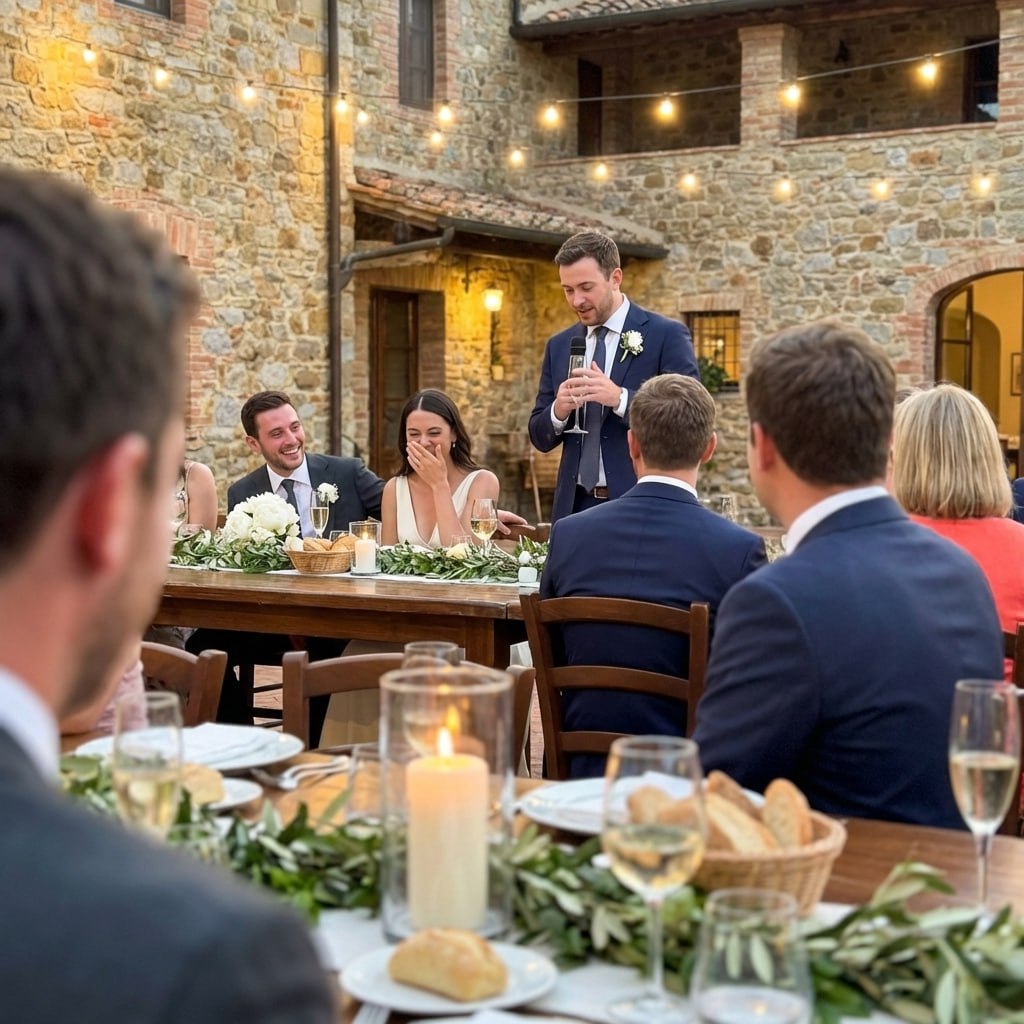
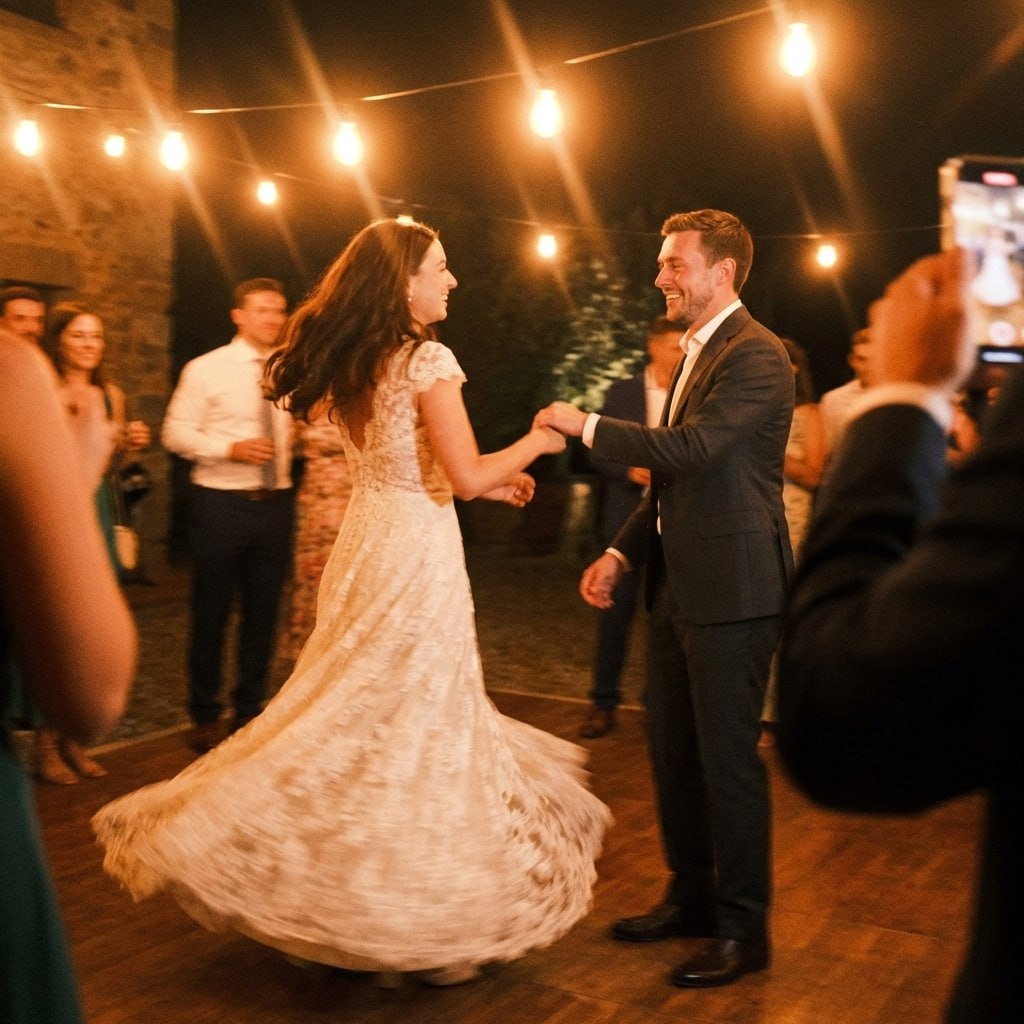
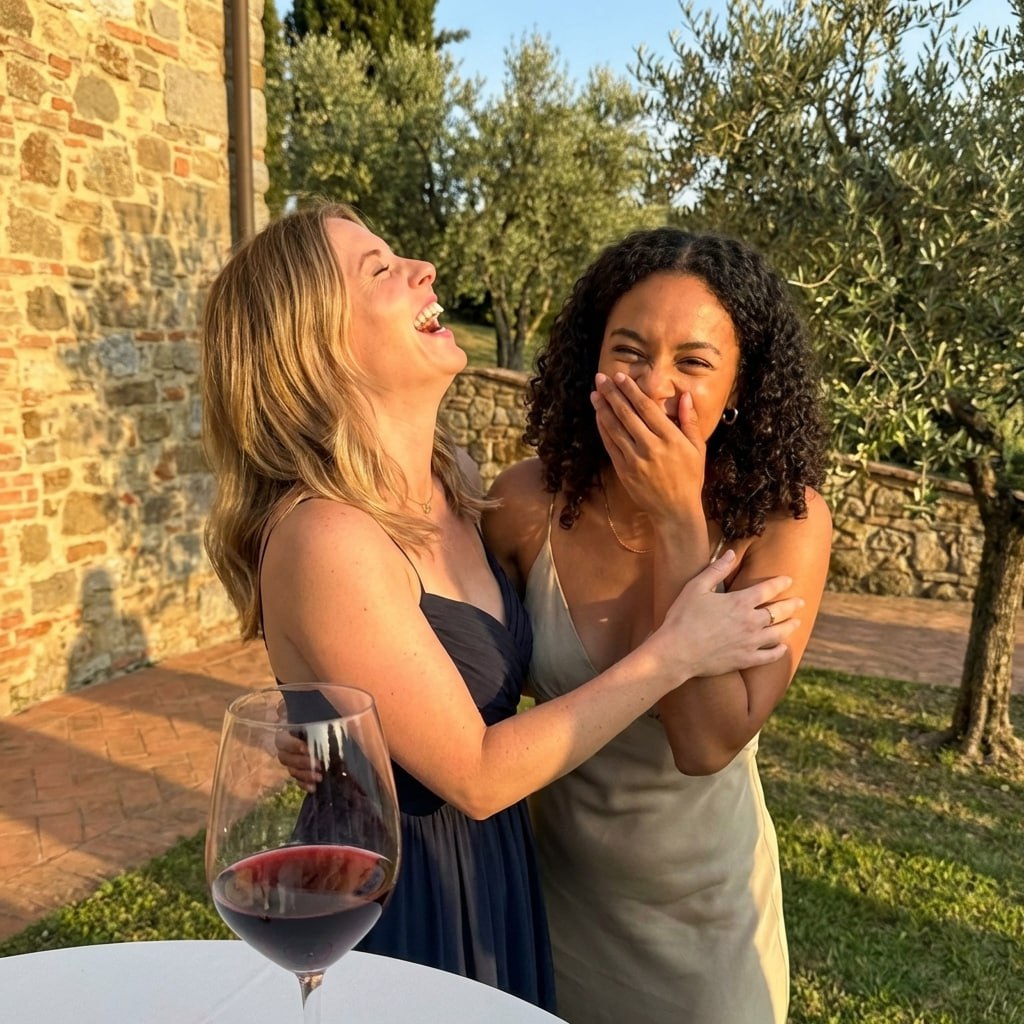
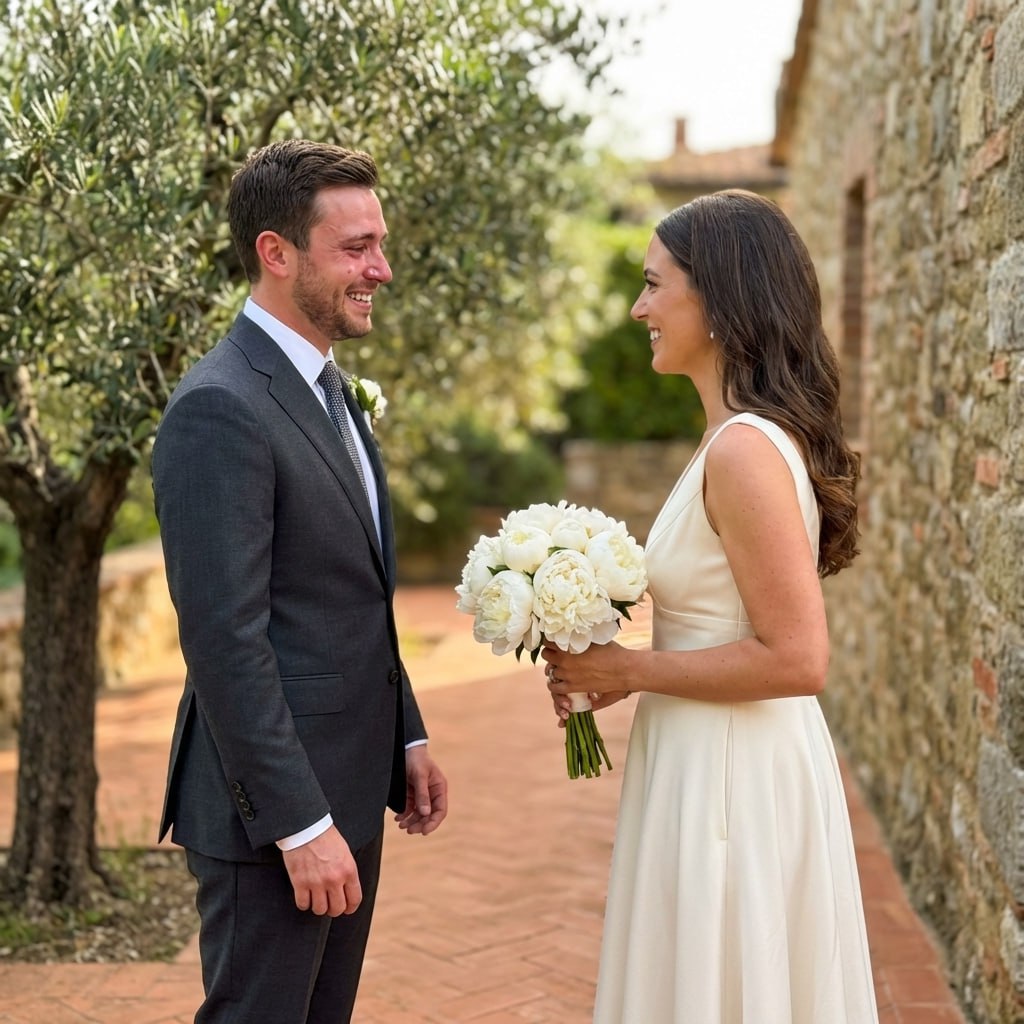
Best man at the mic
Caught by 6 guests
The toast lands. The candid moment lands in your album.
Pix Wedding captures the speeches, the laughs, the tears, from every guest's phone. Set up your QR album in five minutes.
From the dad
Scan to join the album
No app, no account
UPLOADING
Saving your moment
THE ALBUM
Emma & Jack
June 21, 2026
647 photos · 95 guests
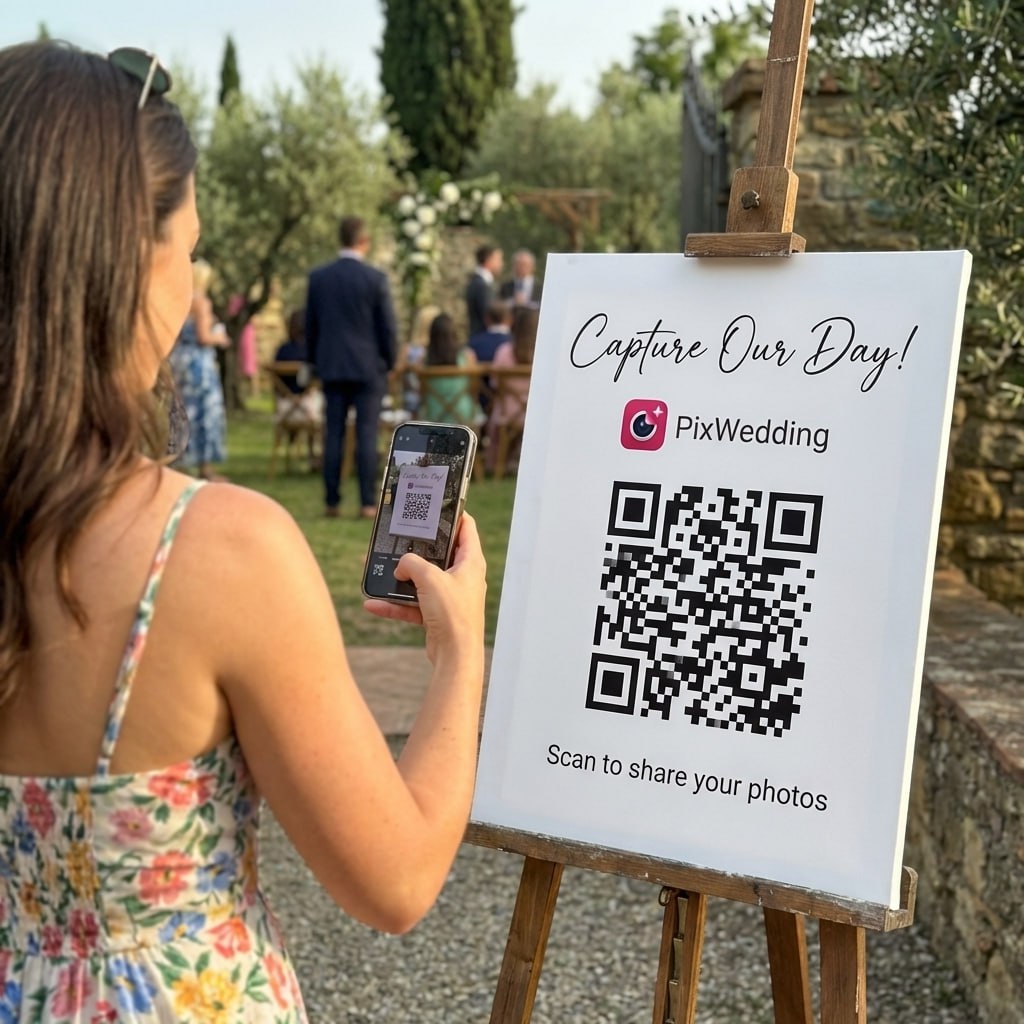
SCAN TO TRY
pix.wedding/
your-wedding
10 real example toasts you can adapt
Each toast below follows the 5-part structure. They cover different roles, tones, and relationships. Use them as direct scaffolding by swapping names and details, or as a reference for tone and pacing when writing your own.
The first time I met Daniel, he had rearranged our entire dorm room before I arrived so his desk got the window. I should have known then. He is the most quietly strategic person I have ever met. We lived together for three years. I watched him study harder than anyone I knew, stay calm when everyone else panicked, and somehow always have enough pasta in the apartment for when people needed it at midnight. Then he met Claire. And I watched something shift. He started double-checking plans. He started asking whether other people were comfortable. He started, and I say this with full respect, listening more than he talked. Claire did not change who he is. She made him more of it, just the better parts. To Daniel and Claire. To the man who finally gave someone else the window seat. Please raise your glasses.
Sofia and I met in ninth grade biology when she slid me her notes because she saw I was lost. She has been doing some version of that ever since. I have watched her navigate things that would have broken most people, with a kind of steadiness that still impresses me. She does not perform confidence. She actually has it. When she told me about Eli, she used words she had never used before. Words like "safe" and "seen." That was the moment I knew. The best thing I can say about Eli is that Sofia is more herself around him than anyone else in her life. He does not take up her space. He just makes her space feel bigger. Sofia, you deserve every single good thing that is coming. Eli, welcome to the family. Glasses up, please.
For those who do not know me, I am Michael, and I am the better-looking brother. He prepared me to say that. Growing up with Tom meant sharing a room, sharing a car, and sharing every single embarrassing childhood photo in existence. Those photos are not on my phone. They are on our mother's phone, which is far more dangerous. Tom has always been someone who finds the problem before it finds him. We used to call him the plan-ahead guy because he was always thinking three steps forward. Except when it came to love, where he somehow managed to fall directly, completely, and helplessly. Rachel, you broke his system. And watching someone as organized as my brother just trust something completely, that is the most beautiful thing I have seen him do. To Tom and Rachel. May your plans always be flexible. Glasses up.
I need to tell you about a Tuesday when Leah was eleven years old. Our cat had gotten out. It was raining. I had already decided it was hopeless and come inside. Leah stayed outside for three hours. Not because she was sure she would find him. She told me afterward she was not sure. She stayed because leaving felt wrong. She found him. I have thought about that Tuesday a lot over the years. Because that is Leah. She does not leave when leaving would be easier. She stays when it matters, even when the outcome is uncertain, even when she is standing in the rain. Tom, I want you to know: you are loved by someone who knows how to stay. I have been her sister for twenty-six years. I am very, very lucky. And now you get to be lucky too. Please raise your glasses to Leah and Tom.
I have worked with James for ten years. In that time I have received approximately 4,000 emails from him, all formatted correctly, all sent at 7 a.m., all with the subject line that actually described the contents of the email. He is the most organized human being I have ever encountered in a professional setting. I genuinely did not think he had an unplanned moment in him. Then I met Nina. And I watched a man who color-codes his calendar agree to a spontaneous trip to Portugal with twelve hours' notice. I watched him get on a plane without a printed confirmation. He said it was fine. Nina, I do not know what you did. But on behalf of everyone who has worked with James, thank you. To James and Nina. May your next twelve years have at least as many unplanned moments. Glasses up.
I met Maya and Ryan two years ago, so I cannot claim the history some people in this room have. What I can offer is an outsider's perspective: what they look like when they don't know anyone is watching. I have seen them at a grocery store on a Sunday morning. I have sat next to them at a dinner where the food was bad and the conversation was polite. I have seen the un-curated version. What I saw was simple: they are kind to each other in the small moments. The way Maya listens when Ryan is explaining something she's probably heard before. The way Ryan makes space for her in a room where he already knows everyone. Kindness in the daily moments is harder than it sounds. I think it is also the whole thing. To Maya and Ryan. Glasses up.
When your daughter tells you she is getting married, there is a version of that conversation you imagine, and then there is the real one. The real one with Diane was at my kitchen table, a Thursday morning, coffee going cold. She was nervous to tell me. I could not understand why until she said: "I did not think I would do this again." She waited until it was right. She waited until it was Marcus. I have watched them build a life with intention and patience and a sense of humor about the hard parts. I have watched Marcus show up, consistently, for my daughter in ways that took me years to learn. Diane, you did not settle. You chose. There is a difference, and you have always known it. Marcus, welcome. You are going to have a wonderful life together. Please raise your glasses.
Families are built. I believe that. I have believed it for most of my life, and raising James confirmed it for me again. This room holds people who came to each other through all kinds of paths. Some by birth, some by choice, some by marriage, some by the kind of loyalty that earns the word family without the ceremony. You are all here because James and Emily wanted you here. Emily, I have watched you step into a complicated set of relationships and make each one your own. You did not come with a manual. You came with patience and curiosity and a willingness to figure it out. That is all any of us can ask. James, you brought someone extraordinary into this family. Everyone in this room is better for it. To James and Emily. To the families we are born into and the ones we build. Please raise your glasses.
I was asked to give this toast 48 hours ago. I want Kevin to know I am choosing to interpret that as a compliment. Here is what I know about Kevin that matters: he has never once let me down when it actually counted. Smaller things, yes. He was late to my birthday. He borrowed my charger and kept it for a month. But when it counted, he was there. The measure of a person is not the small things. It is who shows up when showing up is hard. Danielle, you are marrying someone who shows up when it counts. From someone who knows firsthand, that is rarer than you think. To Kevin and Danielle. Glasses up.
We are all here because we love Anna. And because she loves Ben. I have watched Anna become herself over twenty-eight years. I have not always understood her choices. I have always trusted her judgment. Those two things can coexist. She chose Ben. That is enough for me. Ben, you are welcome in this family. Fully, without reservations, without conditions. Anna, I am proud of you. I love you. That will never change. Please raise your glasses to Anna and Ben.
The 6 banned topics (and why each one bombs)
These six topics produce discomfort regardless of how skillfully they are handled. They are not edgy material that occasionally misfires. They are structurally incompatible with what a wedding toast is for.
- 1
Ex-partners
Mentioning a previous relationship, even briefly and "just as context," forces every guest to hold that information for the rest of the wedding. It does not land as funny or edgy. It lands as uncomfortable, for the couple, for the ex's mutual friends in the room, and for both sets of parents. There is no version of an ex-partner mention that improves a toast.
- 2
Embarrassing photos or stories involving humiliation
A story that makes the subject look foolish or embarrassing to strangers does not honor them; it holds them up for a laugh at their expense. The couple's wedding day is not the moment for that exchange. Embarrassing stories shared in private among friends, told at a wedding in front of the in-laws, the grandparents, and the work colleagues, are a different category of thing entirely.
- 3
In-jokes that fewer than half the room understands
An in-joke creates two groups: the people who are in, and everyone else. At a wedding toast, "everyone else" is usually the majority of the room. The couple stops being the focus; the in-group does. Save the in-jokes for the rehearsal dinner or the late-night table. The wedding toast audience is too mixed for material that requires a key.
- 4
Drunk-night-out stories
A story about the time the groom blacked out, made a terrible decision, or behaved in a way he has presumably moved past is not a wedding toast story. It tells the room something about the speaker's judgment as much as the subject's past. The couple's parents, employers, and older relatives are in the room. The story does not need to be told there.
- 5
Financial commentary
"Can't believe she said yes given what he makes" or "finally found a man who can afford the lifestyle she wants" are jokes that comment on the economic dimension of the relationship. They are almost never received as funny by the couple; they are received as intimate information shared without permission. Money references in toasts land as tacky even when they are intended affectionately.
- 6
Religion as pressure ("we are praying for grandkids")
Publicly expressing religious hopes or reproductive expectations for the couple, even framed as a joke, puts the couple in an impossible position: they cannot respond, they cannot correct the framing, and they have to smile through it. For couples navigating fertility concerns, different faith backgrounds, or families with differing expectations, this type of comment can land as genuinely hurtful. Leave the couple's future plans out of the toast.
Delivery tips that change how the toast lands
The written material accounts for roughly half the quality of a toast. Delivery accounts for the other half. These five techniques are the highest-leverage adjustments most speakers can make.
Print on cards, hold the mic right
Print the toast on 3x5 index cards in a large font, not on flimsy paper that shakes visibly when hands tremble with nerves, and absolutely not on a phone screen that will turn off mid-toast. Hold the microphone an inch from your lips, not two feet away where the room loses half the volume. If the mic is on a stand, adjust it before you begin rather than hunching during the toast.
Look at the couple every 30 seconds
The toast is for the couple, not the audience. Glance at your cards, glance at the room, but return to the couple regularly. Direct eye contact with the people being honored is the single delivery choice that creates the emotional connection the room is there to witness. When the speaker looks at the couple and the couple looks back, the room responds.
Speak slower than feels natural
Nerves accelerate speech. The pace that feels normal to a nervous speaker is too fast for the audience. Deliberately slow down to 70% of what feels right. Pause before a punchline, not after it. The pause before is where anticipation builds; the pause after is where silence grows awkward. Say the line, let it land for one beat, then move forward.
Breathe out before you begin
Standing at the mic holding a full breath produces a tight, pressured opening sentence. Before the first word, exhale completely. The first sentence will come from a more relaxed place, which sets the vocal tone for everything that follows. This is the single easiest technique to practice and the one most speakers forget to use.
Do not drink before the toast
One drink loosens nerves and sharpens the illusion of confidence. Two drinks erodes judgment about what is appropriate to say and when to stop. The risk-reward ratio of drinking before giving a toast in front of 80 to 150 people is genuinely poor. Drink immediately after. During cocktail hour or dinner, stay sober enough to deliver the material you wrote.
Nervous-laughter rescue lines (use verbatim if needed)
Something will happen. Your voice will crack, or you will lose your place, or a joke will not land. Having a rehearsed response to each scenario means it looks like composure rather than panic. These lines are designed to be used exactly as written.
IF: Your voice cracks from emotion
"Give me a second. This is actually the easy part."
Pause, smile at the couple, breathe. The room will wait. This line acknowledges the moment without turning it into an apology.
IF: You start laugh-crying
"Happy tears. Give me a moment."
Two words, then stop talking until the breath settles. Do not apologize. Do not explain. Happy tears at a wedding are not a failure.
IF: You lose your place in the toast
"Let me find my line here..." (pause, look at the card) "Right, here we are."
Normalizing the card lookup in the moment is less awkward than 12 seconds of visible searching in silence. Say something while you look.
IF: A joke falls flat
Do not acknowledge it. Keep moving to the next sentence at a steady pace.
Trying to explain a joke that did not land, or saying "that was funnier in my head," extends the flat moment. Move through it.
IF: You freeze entirely
"I want to get this right, so give me one second."
Look at the card. Take a breath. This line transforms a freeze into a moment of care for the couple rather than a visible failure.
Length by role: the sweet spot table
Different roles carry different length expectations. A best man toast that runs 2.5 minutes reads as appropriately substantial. A father of the groom toast that runs 2.5 minutes starts testing the room's patience if a longer father of the bride toast already ran. Know your position in the sequence.
| Role | Ideal Length | Max Length | When to Skip | Content Focus |
|---|---|---|---|---|
| Best man | 90-150 sec | 180 sec (3 min) | If the relationship is casual or recently formed | One story + the partnership observation |
| Maid of honor | 90-150 sec | 180 sec (3 min) | If the couple prefers no speeches | The friendship anchor + what the partner reveals |
| Father of the bride | 90-120 sec | 150 sec (2.5 min) | Never; guests expect this one | The parent-child relationship, warmth toward new partner |
| Father of the groom | 60-90 sec | 120 sec (2 min) | If the father of bride goes long | Brief welcome of the partner into the family |
| Mother of the bride | 60-90 sec | 120 sec (2 min) | If it feels repetitive after father of bride | Character of the child, warmth toward partner |
| Mother of the groom | 60-90 sec | 120 sec (2 min) | If combined with father toast | Welcome to the family, one specific quality of the partner |
| Officiant intro (toast-adjacent) | 30-45 sec | 60 sec | If another emcee handles transitions | Set the scene, name the toaster, clear the floor |
The microwedding 60-second toast
For weddings under 30 guests, the standard 2-minute toast template often runs long relative to the room's size and intimacy. When 25 people are seated at one table or in a living room, a 2.5-minute formal toast can feel disproportionate to the setting. The format compresses, and shorter is genuinely better.
A 60-second toast at a micro or elopement-adjacent wedding follows the same 5-part structure but in its most compressed form: a single opening line, one sentence on the relationship, two or three sentences on the person's essential quality, one sentence connecting that quality to the partnership, and the raise-your-glass. The 10th example toast above (the father of the bride micro-toast) demonstrates this at about 95 words.
At intimate weddings, the emotional stakes are often higher because the guests are all close relationships. A shorter toast that is fully present and specific lands harder than a longer one that tries to fill a room that does not need filling. The permission to be brief is something many toasters at small weddings do not give themselves.
The 60-second ceiling also frees up the moment for something a larger wedding cannot do: spontaneous follow-on toasts from the table. When the first toast is short, others feel permission to add 30 seconds of their own. The cumulative effect is warmer and more personal than one polished long toast would have been.
What couples wish their toast-givers knew
Share the running order with your toasters in advance. The best man who does not know whether he is speaking before or after the father of the bride prepares a very different toast than one who knows he is opening and setting the tone. A simple note three weeks out ("you are on second, after the maid of honor, between main and dessert, you have 2 minutes") changes the quality of what they produce.
Confirm the microphone situation. Is there a handheld mic, a podium mic, or nothing? Will there be a sound person adjusting levels? Toasters who have never held a microphone in a reception hall need to know whether to hold it close or stand at a podium. This sounds like logistics; it is actually one of the biggest delivery variables.
Tell the toaster the timing slot with a specific constraint. "Sometime during dinner" is not a useful instruction. "Between the main course clearing and the cake cutting, the MC will call your name, you will have 2 minutes" gives the speaker a mental container. People perform better inside defined constraints.
Give the toaster explicit permission to not do it if they are genuinely anxious. Some people freeze under public speaking pressure in ways they cannot control. A toast given by someone who is dissociated with fear is worse for everyone, including the toaster, than no toast. Make the offer real and mean it.
6 worst toast mistakes (ranked by damage)
- 1
Going over 3 minutes
The single most common toast failure. Every minute past 3 loses the room incrementally. At 4 minutes, polite applause starts to feel performative. At 5 minutes, guests are doing math about when the cake arrives.
- 2
Reading from your phone
The screen turns off. You hunt for the unlock button. The room watches. Even worse: a visible notification interrupts the toast mid-sentence. Print on cards.
- 3
Mentioning an ex-partner
There is no framing that makes this land well. Not "just as context," not "it is funny because," not "they have both grown so much since then." Leave it out entirely.
- 4
Telling a story only 4 people in the room understand
An in-group story creates an out-group. Most of the room becomes an audience for something they cannot follow. The couple becomes secondary to the story's inside knowledge.
- 5
Drinking before the toast
One drink feels fine. Two drinks impairs judgment about what is appropriate. The risk of saying something regrettable in front of 100 people, on video, for the rest of the couple's life, is not worth it.
- 6
No eye contact with the couple
A toast delivered entirely to the room is a performance. A toast where the speaker returns regularly to the couple is a tribute. The moment the speaker looks at the couple and the couple looks back is the moment the room feels it.
Related wedding guides and tools
Every toast deserves to be captured from every angle.
Set up a QR photo album so the best man toast, the father's speech, and the moment the couple cries all come back to you from every guest's phone, automatically.
Create Your Free Guest AlbumWhy Most Wedding Toasts Become Cringey (And the Fix)
The single most common reason a wedding toast becomes cringey is length. When a speaker has not cut their material, every additional minute increases the cringe probability. The audience starts shifting. Eye contact from guests becomes performatively supportive rather than genuinely engaged. The speaker can usually feel this, which makes them nervous, which makes them talk faster or add more material to "recover." The spiral is familiar to anyone who has attended enough weddings.
The second reason is lack of specificity. Generic toasts that describe someone as "kind," "funny," and "always there for you" produce polite applause and no tears. Specific toasts, ones that name a moment, a detail, a place, a year, land differently. "She drove four hours in a snowstorm to help me move a couch" is more powerful than "she has always been there for me."
The third reason is structure collapse. Speakers who have not planned a clear ending add material to delay the commitment of actually finishing. They say "and one more thing" two or three times. The raise-your-glass moment arrives as a relief rather than a peak. A toast with a planned ending, written in advance, produces a completely different experience for the room.
- •Keep the total time under 3 minutes, ideally 90-180 seconds
- •Use one specific story rather than a montage of three vague ones
- •Plan the ending before you write the rest of the toast
- •Print on cards, not paper, not your phone screen
- •Practice out loud at least twice before the day
The Invisible Work: What Happens Before You Stand Up
The visible quality of a wedding toast is almost entirely determined by decisions made before the speaker stands up. Choosing the right story matters more than delivery. A mediocre speaker with a strong story beats a confident speaker with weak material every time.
Story selection is the highest-leverage decision. The best toast stories have three qualities: they are specific enough to be visual (the audience can picture the moment), they are character-revealing (they show something true about the person being honored), and they are universally accessible (strangers can follow and feel the emotional logic without knowing the players).
Couples can help their toast-givers do better work by giving them a timing slot in advance ("you are on between the main course and dessert, you have 2.5 minutes"), confirming the microphone setup, and explicitly making it okay to use index cards. Many toasters are embarrassed to use notes because no one has told them it is allowed.
What the Best Wedding Toasts Have in Common
Wedding planners and photographers who work every weekend observe dozens of toasts per year. The ones that consistently land share a pattern: they make the couple visible as individuals, not just as a couple. The best man does not just describe the groom as a great guy; he shows the groom doing one specific groom-like thing that the couple and the room both recognize as true.
They also end in a beat of genuine warmth, not a joke. Jokes as a closing beat are a high-variance choice: if the joke lands, it is a strong close, but if it falls flat, the speaker sits down to weak applause during a joke that did not work. Ending with a quiet, sincere line and then the raise-your-glass is almost always the safer, stronger choice.
The best toasts feel like they were written for this couple, at this wedding, on this day. That quality only comes from the speaker spending time writing specifically, not from finding a template and filling in names.
Explore more free wedding tools
Everything you need to make your wedding day stress-free and unforgettable.
QR Sticker Designer
Design custom print-ready stickers.
Hashtag Generator
Create unique wedding hashtags.
How to Collect Guest Photos
5 methods ranked by participation rate and ease.
Share Wedding Photos with Guests
Compare every sharing platform by ease and participation.
Best Way to Get Guest Photos
The single method with the highest participation rate.
How to Make a Shared Wedding Album
Step-by-step setup for every platform.
Alternative to Disposable Cameras
Better, cheaper options than disposable cameras.
Alternative to Wedding Photo Booth
5 cheaper alternatives to a $1,000+ photo booth rental.
Wedding Toast FAQ
Straight answers to the questions people ask most about this topic.
The ideal length is 90 to 180 seconds (1.5 to 3 minutes) when spoken at a measured pace. Best man and maid of honor toasts sit comfortably at 2 to 2.5 minutes. Parent toasts land best at 90 seconds to 2 minutes. Any toast that exceeds 3 minutes noticeably tests the room's attention. The cringiest toasts are almost always the long ones: the speaker keeps adding "one more thing" until the energy drains. When in doubt, cut the last paragraph.
Writing it down is the right move for almost everyone. Print the toast on cards, not paper that shakes, and not on your phone. Reading from cards is not embarrassing; stumbling through a half-memorized speech in front of 120 people is. Professionals who speak regularly can work from bullet points. Everyone else: write it out, print it, bring the cards.
Start with a single specific sentence that earns the room's attention, not "Hi, my name is..." and not a joke that requires explaining. The strongest openers drop straight into a concrete image: "The first time I met Jake, he was trying to open a wine bottle with a shoe." or "Sophie has exactly one rule for friendship: you are not allowed to be late twice." One line. Something real. Then say who you are and how you know the couple.
The six topics that reliably make a toast cringey: any mention of an ex-partner, stories or photos that embarrass anyone in the room, inside jokes that fewer than half the room will understand, drunk-night-out stories (funny to you, alarming to the in-laws), financial commentary about either partner ("I still can't believe you landed someone like her on a teacher's salary"), and religious pressure ("we're all praying this one sticks"). These topics are not edgy or funny in the moment; they redirect the room's attention away from the couple and onto their own discomfort.
Yes, and it is increasingly common. A joint toast from the couple, delivered together or with one leading and one adding, is well-received at most modern weddings. Keep it under 2 minutes, thank your guests specifically (not just generically), and name a person or two who made a particular difference. The couple toast works best placed at the end of the toast sequence, after the traditional toasters, so it feels like a warm close rather than an interruption.
A toast ends with a raised glass and a group cheer. A speech is stand-alone. In practice, most wedding speeches function as toasts: they end with "please raise your glasses." The distinction matters mostly for length expectations. A speech can run to 5 or 6 minutes if it is genuinely compelling. A toast should end within 3 minutes and close clearly with the raise-your-glass line so guests know when to cheer.