
The wedding photo of my grandmother I will frame forever (Brooklyn, 487 photos)
Sarah and Marcus got married in Brooklyn on 20 September 2025. Their 71 guests uploaded 487 photos. One was a candid of Sarah's grandmother laughing that she will frame for the rest of her life.
487
guest photos uploaded
71
guests who uploaded
10 min
setup time (bride's own quote)
"We told people scan the card on your table. 71 guests uploaded 487 photos by the end of the night. I found a picture of my grandmother laughing that I will frame forever. Setup took maybe ten minutes. Nothing else this year felt this worth the money."
The photo she will frame forever
Out of 487 uploaded photos, Sarah chose one to put on the wall. That one photo was a candid of her grandmother laughing. Not a professional portrait. Not the first dance. Not the ceremony. A candid laugh, caught at close range by someone sitting near the grandmother at a reception table.
There is something worth pausing on in that math. 487 photos represents a large album by any standard. Seventy-one different people pointed their cameras at the Brooklyn wedding from their own angles, at their own moments, across a full evening. The couple had a professional photographer too, presumably, covering the ceremony and portraits with trained intent. And the image Sarah picked is not from the professional shoot. It is a candid of her grandmother's face.
This is what the framing decision reveals: the emotional hierarchy of a wedding does not always follow the photographic hierarchy. The formally-lit portraits, the wide ceremony shots, the golden-hour couple photos. These are the ones couples expect to treasure. But memory does not rank images by how well they were composed. It ranks them by how close they get to something real.
A grandmother laughing at a wedding is one of those images. It is a face that has watched the bride grow up. It is a presence at the table that will not be there indefinitely. The bride knows this. The laugh is not just the laugh. It is the whole weight of that relationship rendered in one unposed second, caught by whoever happened to be sitting three feet away with a phone.
The fact that this photo came from a guest upload rather than the professional photographer does not diminish it. It locates it. It explains how it happened. Someone at the grandmother's table had their phone out. They happened to look at her at the right moment. They uploaded the photo that night to the album. Sarah found it while scrolling through 487 images and it stopped her. That is the whole story of how the framed photo got made.
Consider what would have had to happen for this photo not to exist. Someone would have needed to decide not to upload. Or not to take the photo in the first place. Or the card would have needed to not be on the table. Or Sarah would have needed to scroll past it without stopping. Any break in that chain and the framed photo does not happen. The card on the table was the link Sarah and Marcus could control. They controlled it. The rest followed.
Why the photographer probably did not get this one
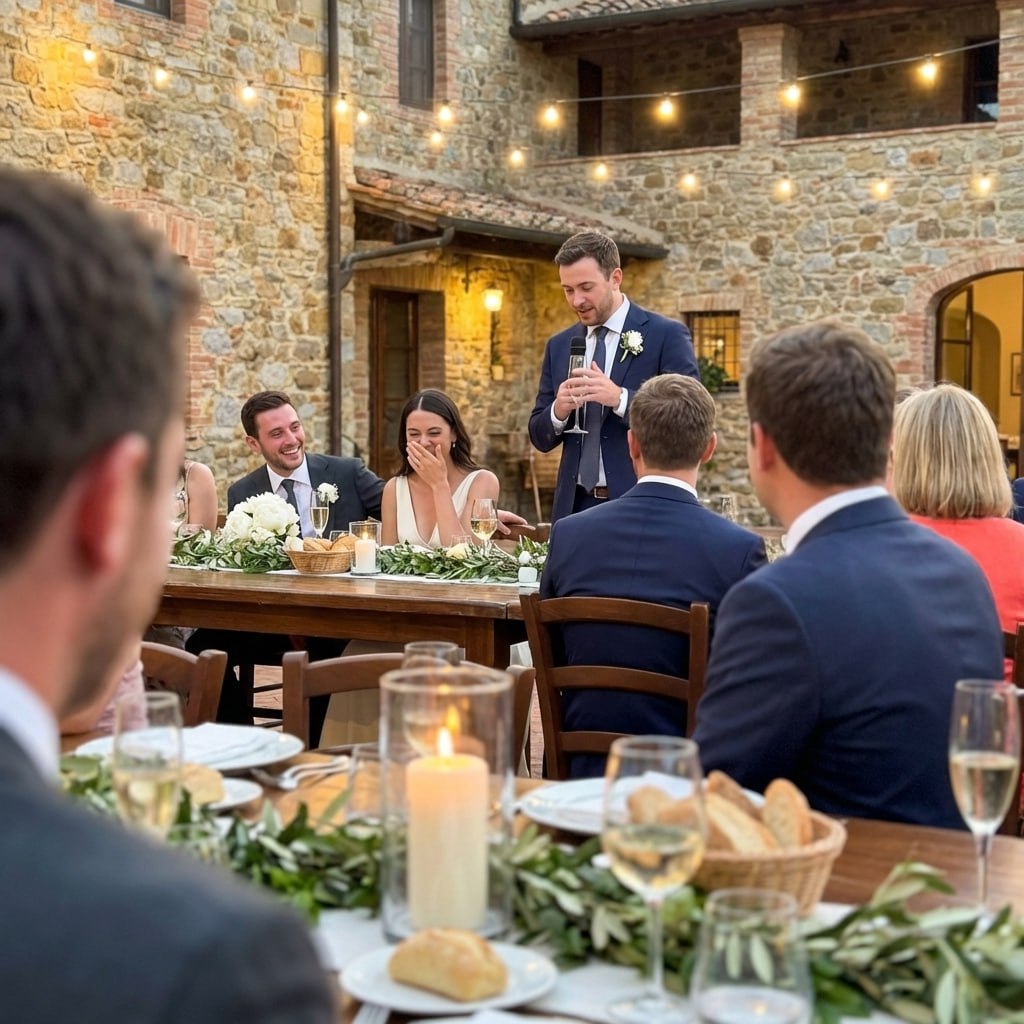
A professional wedding photographer at a Brooklyn reception with 71 guests is running a defined shot list throughout the evening. The couple's entrance. The first dance. The parent dances. The toasts. The cake. A sweep of the reception room during cocktail hour. Table candids during dinner. These are the moments that make up the standard wedding photography package and they require constant movement and constant decision-making.
There is no room in that list for stationing at one specific table and waiting for a specific guest to react in a specific way. The professional will sweep past the grandmother's table during dinner. They might take a photo of the whole table together. They might catch the grandmother in the background of a wider shot. But the close, candid, reaction-moment frame that ends up on the wall? That requires someone to be there for the duration of the dinner, watching, phone out, positioned for a close shot.
The guest sitting next to the grandmother is that person by accident. They have nowhere to be. They are eating and talking and watching the same faces the photographer is not. When the grandmother laughs at something, the guest at her elbow has the best angle in the room. The photographer has whatever angle they happen to be standing at, 30 or 40 feet away, in the middle of another shot.
This is not a failure of professional photography. It is the inevitable geometry of a job that requires one person to cover an entire reception simultaneously. Triage is the skill. The professional triages toward the couple, the ceremony, the formally significant moments. They cannot also triage toward every face at every table at the moment of maximum expression. That would require 71 photographers.
Sarah and Marcus had 71 photographers. That is what a 71-guest upload album is. Seventy-one different people, spread across the room, each with full attention on whichever moment was in front of them. One of them happened to be in front of the grandmother when she laughed. That is the photo going on the wall.
The relationship between pro photography and guest photography is not competitive. They cover different things well. The professional delivers the ceremony, the portraits, the formally composed images that become the official visual record of the day. The guest album delivers the room at ground level: faces, reactions, small conversations, the grandmother at table 5 at the exact moment she laughs. Both exist. Both matter. Sarah and Marcus will have both. Only one is going on the wall.
The decision to put a card on each table is not a statement about the professional photographer. It is a statement about the geometry of the room. The pro covers the areas they can cover. The card turns every table into its own coverage zone, staffed by whoever happens to be sitting there.
The setup that made it possible: scan the card on your table
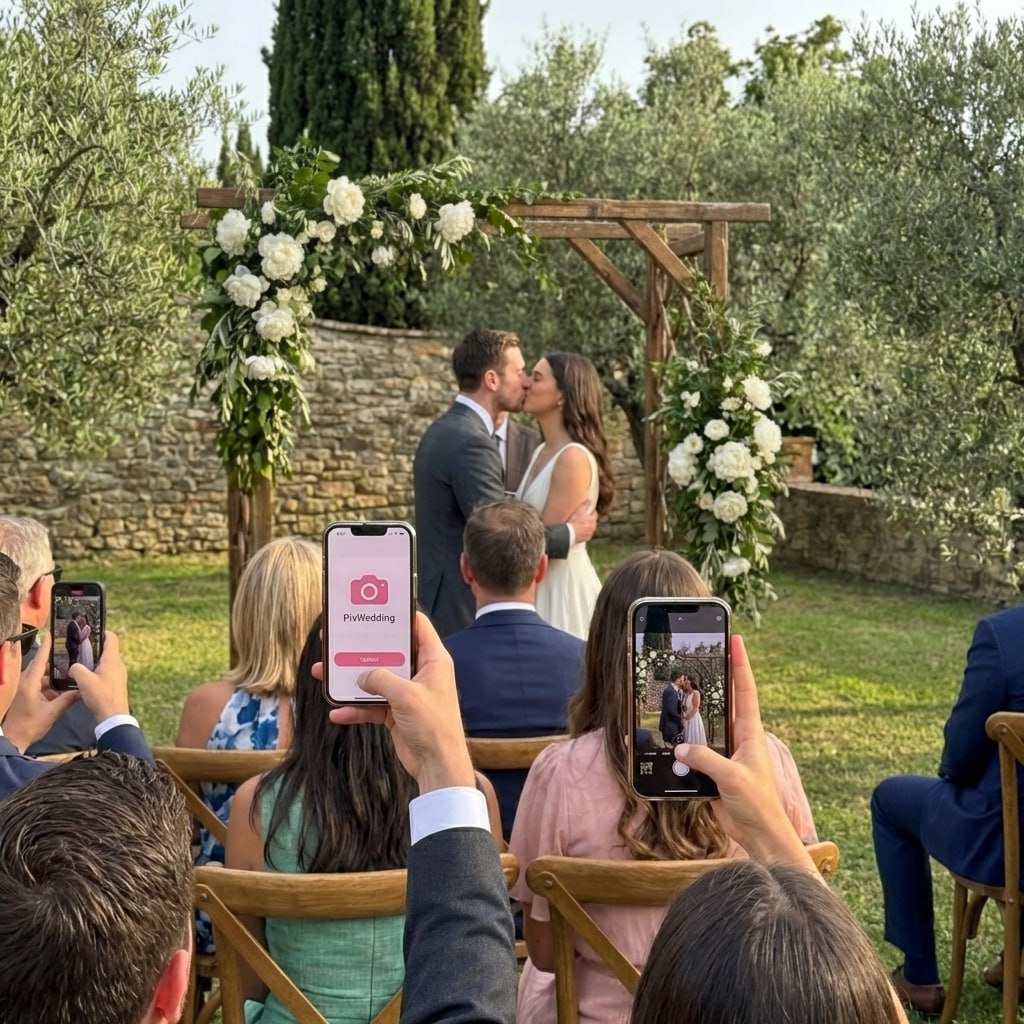
Sarah described the adoption path in six words: "we told people scan the card on your table." That is the complete guest instruction. There is a card. The card is already at the table. The guest does not need to find a URL, remember a hashtag, download an app, or create an account. The card is the entire interface.
The simplicity of this matters because complexity is where participation dies. Every extra step between "I took a photo" and "this photo is in the album" is a step where someone drops out. A card already on the table means the decision to participate requires one motion: scanning. That is why 71 out of 71 invited guests uploaded photos, not 20 out of 71.
The bride estimated the whole setup took about 10 minutes. That interpretation, grounded in her words, points to a task set that is genuinely short: print a card per table with the QR code and a brief prompt, place the cards at each place setting or in the center of the tables, and optionally mention the album once during a toast or in the printed menu. For 8 to 10 tables, that is a 10-minute job if the cards are already printed.
The result was 487 photos by end of night. That is an average of 6.9 photos per uploading guest, which means guests were not uploading one photo each out of reluctant compliance. They were uploading multiple. When the barrier is low and the album exists, participation compounds.
The numbers from this one wedding
| Metric | Value |
|---|---|
| Total guest-uploaded photos | 487 |
| Guests who uploaded | 71 |
| Setup time (per bride) | About 10 minutes |
| Photos per uploading guest (estimated) | 6.9 per guest |
| Bride's rating | 5 out of 5 |
| Bride's value framing | "Nothing else this year felt this worth the money" |
Source: verbatim public review by Sarah & Marcus, Brooklyn, 20 September 2025. No numbers have been modified.
The one number that frames the story
Six point nine photos per uploading guest, across 71 guests, yielding 487 photos by end of night. That ratio tells you this was not passive compliance. Guests were actively selecting which of their photos were worth contributing to the shared record. The grandmother photo was one of those selections. Someone at her table looked at their camera roll after capturing the moment and decided: yes, this one goes in.
Every framed-forever photo depends on that decision being made by the right person at the right table. The card-on-each-table setup creates the conditions. The guest at the grandmother's table makes the call. Setup and proximity together are what make the outcome possible.
What 6.9 photos per uploading guest actually means
487 photos and 71 uploading guests. Dividing those numbers gives an average of 6.9 photos per person. That number is worth reading carefully. A guest who uploads once out of social obligation submits one or two photos. A guest who uploads 6.9 photos on average is not just complying with a request. They are actively curating. They went through their camera roll after the night and chose multiple frames worth sharing.
That curation step is significant. It means guests were not uploading everything blindly. They were selecting. A guest who uploads seven photos has made seven small editorial decisions: this one is worth keeping in the shared record. Some of those seven decisions will be wrong from the couple's perspective. But some of them will be exactly right, including, in this case, the one where someone at the grandmother's table looked up and took a close shot of her laughing.
An average of 6.9 also means the distribution was uneven. Some guests probably uploaded 20 or 30 photos. Some uploaded 2 or 3. The guests who uploaded heavily were likely the ones with the best eye for the room, the most social investment in the couple, or simply the most time to reflect on what they had captured. That variation in upload volume is actually useful: the guests who uploaded most are the most reliable sources of candid coverage.
None of that analysis was required for the outcome to happen. Sarah and Marcus did not need to know any of it. They needed to put a card on each table, say one sentence about scanning it, and then scroll through the album afterward. The math resolved itself into 487 photos and one grandmother photo. The setup made it easy; the guests made it real.
"Nothing else this year felt this worth the money"
This line is the most compressed thing in the review. Sarah is not comparing the guest photo album to other photo products. She is comparing it to everything she bought in 2025 for the wedding and for life in general. Catering. The dress. The venue. The professional photographer. Flowers. The honeymoon. Everything she spent money on in a year that included a wedding. And the album, which took 10 minutes to set up, felt more worth the money than any of it.
That is not a small claim. A Brooklyn wedding in 2025 involves real spending. The average total cost for a New York wedding sits well above $30,000. A statement that any single line item was worth more than anything else in that budget is a statement about the ratio of emotional return to financial cost. The photo album has an extraordinarily low denominator. The emotional return, once you find the grandmother photo, has no clear ceiling.
The other items in the budget do not disappear in value once the wedding is over. The venue made the day happen. The catering fed 71 people. The photographer delivered the formal record. But the value from all of those is relatively predictable before the day. You know what good catering feels like. You have seen wedding photos before. The guest album delivered something Sarah did not know to expect: a photo of her grandmother laughing that she will frame forever. Unexpected value, especially unexpected emotional value, registers differently than expected value.
The cost-to-outcome ratio is also part of the equation. Ten minutes of setup, a card per table, and the result is a 487-photo archive that includes the most meaningful image of the day. Whatever the album costs, the marginal cost per emotionally significant photo works out in a way that no other wedding expense does.
There is also a timing element in the value framing. Sarah wrote "nothing else this year." The year contained the full experience of planning, executing, and living through the wedding day and its aftermath. The catering memory fades once the plates are cleared. The dress goes into storage. The venue is a space you visited once. The album is something Sarah will open on a Tuesday afternoon three years from now and scroll through. The grandmother photo will be on the wall that whole time. The value of a keepsake is not fully realized on the wedding day. It accumulates.
What 10 minutes of setup actually looks like
Sarah said setup took maybe 10 minutes. She did not itemize what those 10 minutes contained. What follows is interpretation grounded in her words, not a transcript of her actual steps. The point is to make concrete what "10 minutes" means in practice for someone trying to replicate this.
The most likely component of the 10 minutes is placing a card at each table. A venue with 71 guests probably has somewhere between 8 and 10 reception tables. Walking 10 tables and placing a card at each one takes two or three minutes at a relaxed pace. If the cards are small enough to sit under a floral arrangement or beside a place setting without disrupting the tablescape, there is no negotiation with the venue involved.
Before that placement step, the cards need to exist. Printing and cutting a simple card with a QR code and a one-line prompt ("scan to add your photos") takes another five to ten minutes at a home printer, assuming the design is already set up. The entire design-to-placement pipeline for a card-on-each-table setup is genuinely short. This is not a vendor engagement. It is a print job.
Sarah also mentioned telling guests to scan the card. That verbal cue likely happened during a toast or was embedded in the printed menu, not as a separate announcement with its own setup time. A single sentence from the best man or the officiant during the reception is enough to make the card's purpose clear. Combined with the physical presence of the card at the table, most guests who intended to participate would have known what to do.
The important thing about 10 minutes is what it implies about where this fell in the wedding planning hierarchy. Ten-minute setup tasks do not require vendor meetings, rehearsals, coordination calls, or a line item in the wedding coordinator's timeline. Sarah and Marcus did it themselves. The grandmother photo on their wall is the outcome of a task that took less time than most ceremony readings.
There is also an asymmetry worth naming: the setup work was done by the couple before the guests arrived. The guests then did all the work of taking and uploading the photos. The couple's 10 minutes of effort was a prerequisite for 71 guests collectively contributing 487 photos throughout the evening. That leverage ratio, roughly one minute of setup per 48 photos in the final album, is unusual for any wedding expense. Most wedding line items require labor proportional to the output. The card-on-table setup converts a small fixed effort into a large variable output that keeps arriving all evening.
The grandmother principle, generalized
The grandmother principle is this: the photos couples treasure most are often the ones the professional photographer was not positioned to take. Not because the professional was negligent. Because they were doing their job, which requires being somewhere else most of the time.
A wedding reception is 71 simultaneous stories. The couple is the main story, and the professional covers that story well. But every table is running its own subplot. Old friends reuniting. Family members who rarely see each other. The grandmother watching a grandchild she helped raise get married. These stories are happening in parallel and they are happening close up, at table level, not from the position the photographer occupies.
The structural truth of professional wedding photography is that coverage width and coverage depth are in tension. You can cover the whole room broadly or you can cover one corner deeply. A professional maximizes breadth. The guest at any given table maximizes depth for that specific table at that specific moment. The grandmother photo lives at the intersection of depth and timing: someone at the right table at the right moment with a phone in their hand.
This principle applies beyond grandparents. It applies to the college friend who finally made it to the wedding after five years of distance, laughing at the head table. The flower girl falling asleep on a chair at 9pm. The look between two siblings during the toasts that only someone sitting close enough to see both faces simultaneously could capture. These are all grandmother-principle photos. They require proximity and presence, not skill or equipment.
When 71 guests upload 487 photos, each of them is contributing their own proximity. The result is a composite coverage of the reception that no single professional could produce alone. The framed-forever photo emerges from that composite. It was always going to be there. The question was only whether anyone created the conditions for it to be found.
The grandmother principle also carries a time pressure that couples sometimes do not register until later. The older family members at a wedding are often the ones whose presence at a future event is not guaranteed in the same way. Parents age. Grandparents age. The laugh captured at this wedding may be one of the last on record before a meaningful health change. Couples who look back at guest albums five years later often describe a specific emotional quality to the grandparent photos that they did not anticipate when they first scrolled through them. The photo you frame at 28 and the reason you keep it at 38 are sometimes different.
Sarah framed the photo because it captured a moment of pure happiness from someone she loves. That is reason enough. The principle is not morbid. It is the same principle that makes any candid of an older family member at a family gathering worth more than a posed group shot. The candidness is the record of who they actually are when they are not holding still for a camera. That record, once made, does not lose value.
What this one wedding cannot tell us
The review is real and the numbers are what they are. But one wedding with one outcome is not a controlled study. There are things this account genuinely cannot tell us, and they are worth naming directly.
We do not know if the grandmother knew she was being photographed at the moment of the laugh. The photo might have been taken openly, or it might have been a candid from across the table. This matters because a grandmother who was aware and performing for the camera is not the same as a grandmother captured in an unguarded moment. The review does not say which it was, and we should not assume.
We do not know which specific guest took the shot. The review credits the album and the card-on-table setup, but the specific person at that specific table who pointed their phone at the right angle at the right second is unknown. If a different set of guests had been seated at that table, or if the attentive guest was in the bathroom at the moment of the laugh, the photo does not exist. The outcome was partly contingent on seating arrangements and timing that no setup could fully control.
We also cannot generalize the 487-photo count or the 71-guest upload rate as typical outcomes. Every wedding has different guest demographics, different phone habits, different levels of social media engagement, and different table card visibility. Some weddings will see higher participation, some lower. The card-on-table setup makes participation easy. It does not guarantee it.
What the account can tell us is that the conditions were created and the photo emerged. The conditions were: 71 guests with phones, a low-friction upload path, and someone sitting close enough to the grandmother to see her face. That combination produced the framed-forever photo. Whether the same combination reliably produces the same category of outcome at other weddings is a question this one account cannot fully answer.
We also cannot know how many of the other 486 photos will matter to Sarah and Marcus in different ways over time. The grandmother photo is the one named in the review. It is probably not the only photo in the album they will return to. Reviews tend to name the peak moment, not the full distribution of value. The 487-photo album almost certainly contains other images that land differently in five years than they do today. But those images are not what the review was about, and they are not what this account is about either.
What worked vs what it cannot replace
| What worked | What it cannot replace or guarantee |
|---|---|
| Card on each table giving guests one action (scan this) | Replace the specific proximity of a guest at the grandmother's table |
| 71 guests self-organizing the upload without coordination | Guarantee which specific moment any guest captures |
| The volume of 487 photos ensuring the one shot existed | Tell you in advance which photo would become the one worth framing |
| A 10-minute setup delivering a lifetime keepsake | Replicate the experience if no one at that table had their phone out |
| A complete guest perspective of the room | Replace the professional coverage of the ceremony and portraits |
| Zero friction upload from any phone browser | Guarantee 100% upload rate from all 71 guests who attended |
Scrolling through 487 photos until one stops you
487 photos is a two-to-three-hour scroll at a relaxed pace, maybe less if you move quickly through the ones that are clearly duplicates or slightly blurred. Most couples who go through a large guest album describe the experience not as a chore but as a kind of post-wedding unwinding. The wedding day itself passes too fast to absorb. The album gives it back at a manageable pace.
The grandmother photo did not come with a label. Sarah scrolled through images of the venue, the crowd, the dancing, the speeches, probably multiple shots of the same moment from different angles, slightly blurred action shots, the back of someone's head. And then she hit the frame of her grandmother laughing and it stopped her. That is not a search algorithm. It is recognition. The image registers differently because the emotional weight behind it is already there before the scroll begins.
This is why the volume of 487 matters. The framed-forever photo is not predictable. Sarah could not have asked for it specifically before the wedding, because she did not know which guest would take it or at what moment. But she knew it might exist somewhere in the album. The only way to ensure it existed was to ensure the album existed at all, which required the 10-minute setup, the card per table, and the 71 guests who participated.
The photo does not become framed-forever until the moment of recognition in the scroll. Before that moment, it is one of 487 files. After that moment, it is the one photo that changes the entire value calculus of the album. That recognition happens in seconds. The setup that made the recognition possible took 10 minutes. The grandmother's laugh that made the recognition inevitable took no time at all. It just happened, and someone with a phone was close enough to catch it.
The scroll is also the first time the couple sees their wedding from 71 simultaneous perspectives. The professional photographer shows the couple one visual narrative. The guest album shows 71. The room from behind the bar. The ceremony from the back row. The parents' faces during the vows from the seat closest to them. The grandmother at table 5, mid-laugh. Scrolling through a guest album is the closest a couple can get to experiencing their wedding as every other person in the room experienced it.
More real wedding stories and guides
Related stories and guides on guest photo sharing, candid wedding photography, and preserving the moments the photographer did not catch.
Grandma laughing
487 photos · Brooklyn
Find the one photo you will frame forever
Sarah and Marcus had 487 photos from 71 guests after their Brooklyn wedding. The one they framed forever was their grandmother laughing. Yours is in your guests' phones too.
From table 5
Scan to join the album
No app, no account
UPLOADING
Saving your moment
THE ALBUM
Emma & Jack
June 21, 2026
647 photos · 95 guests
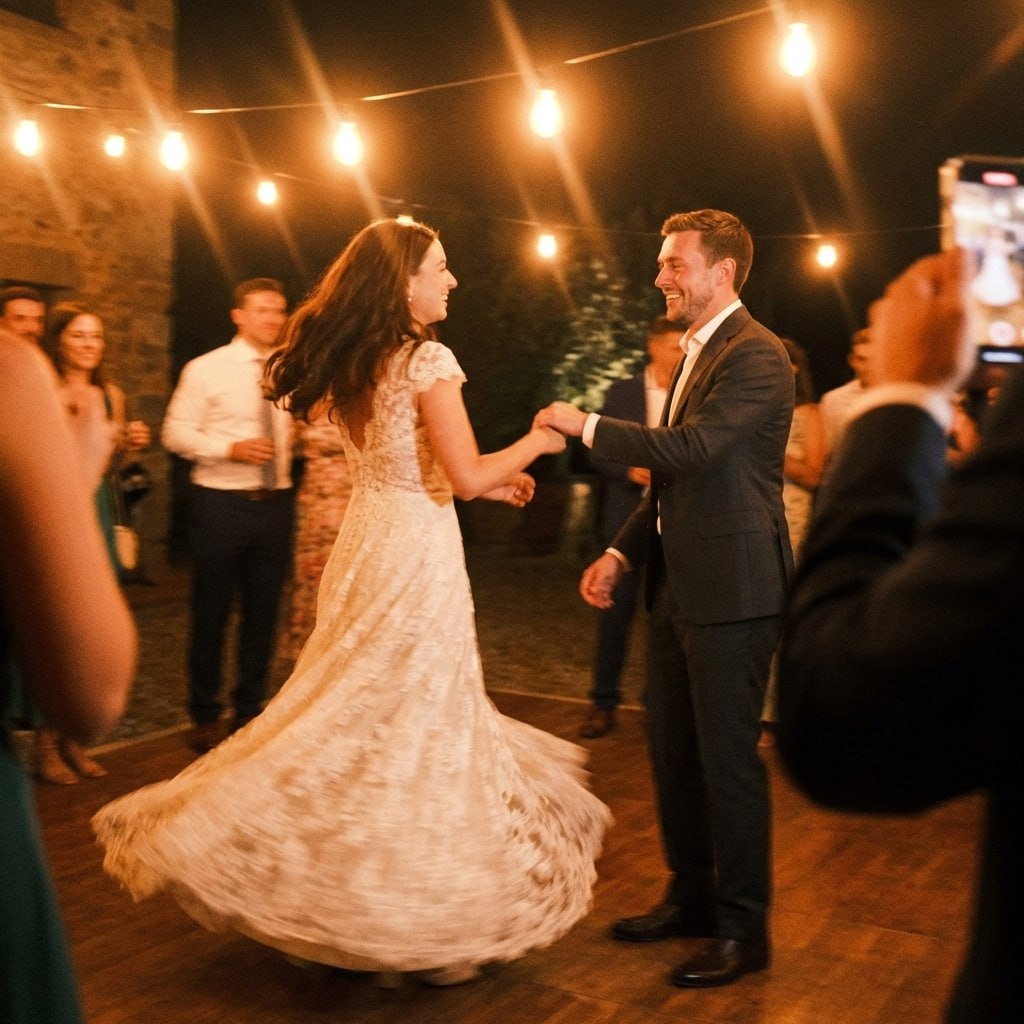
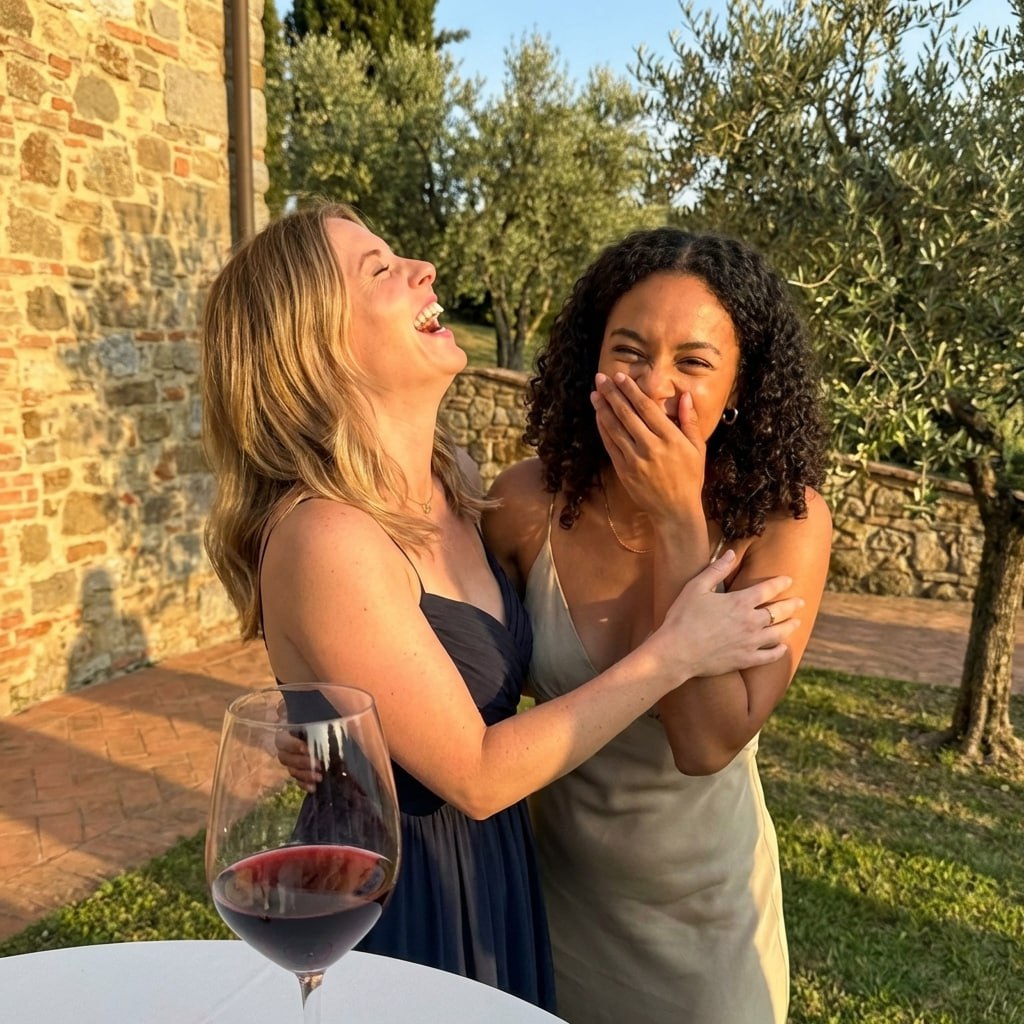
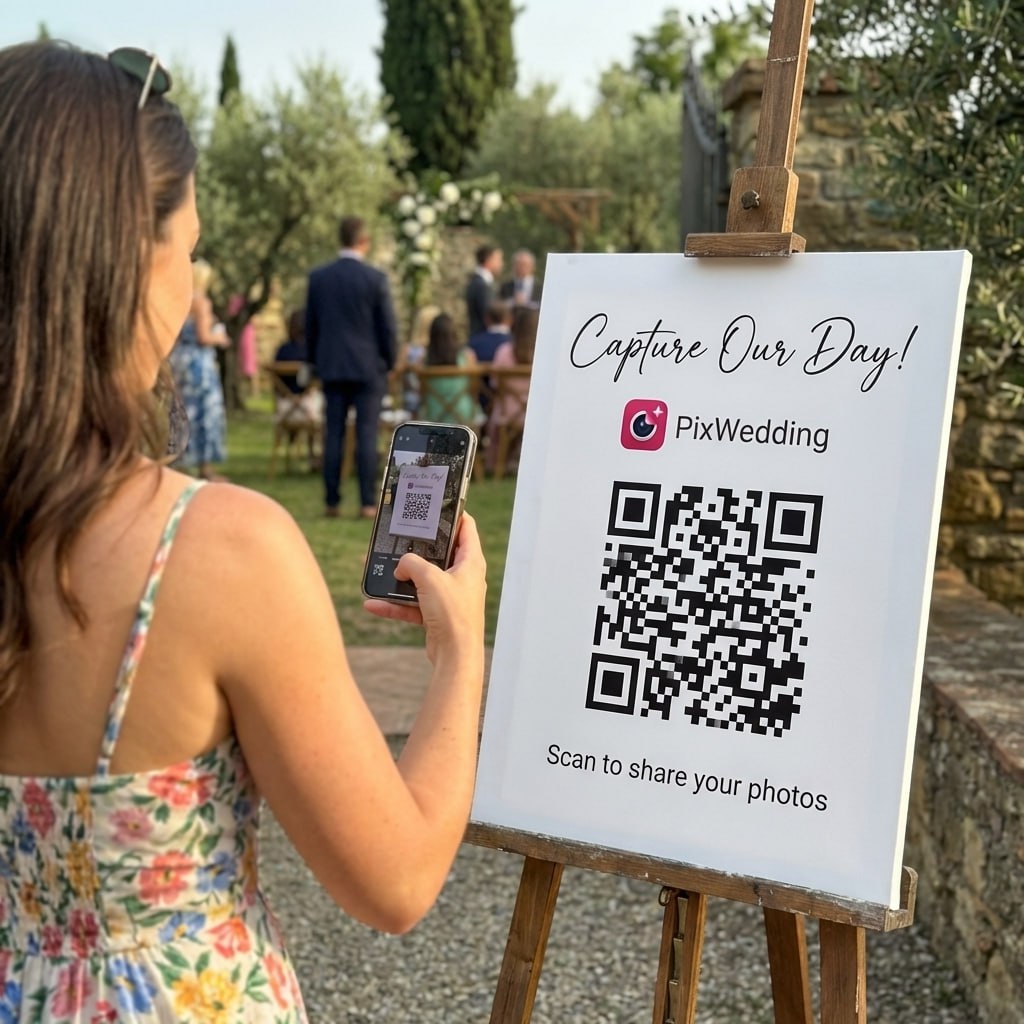
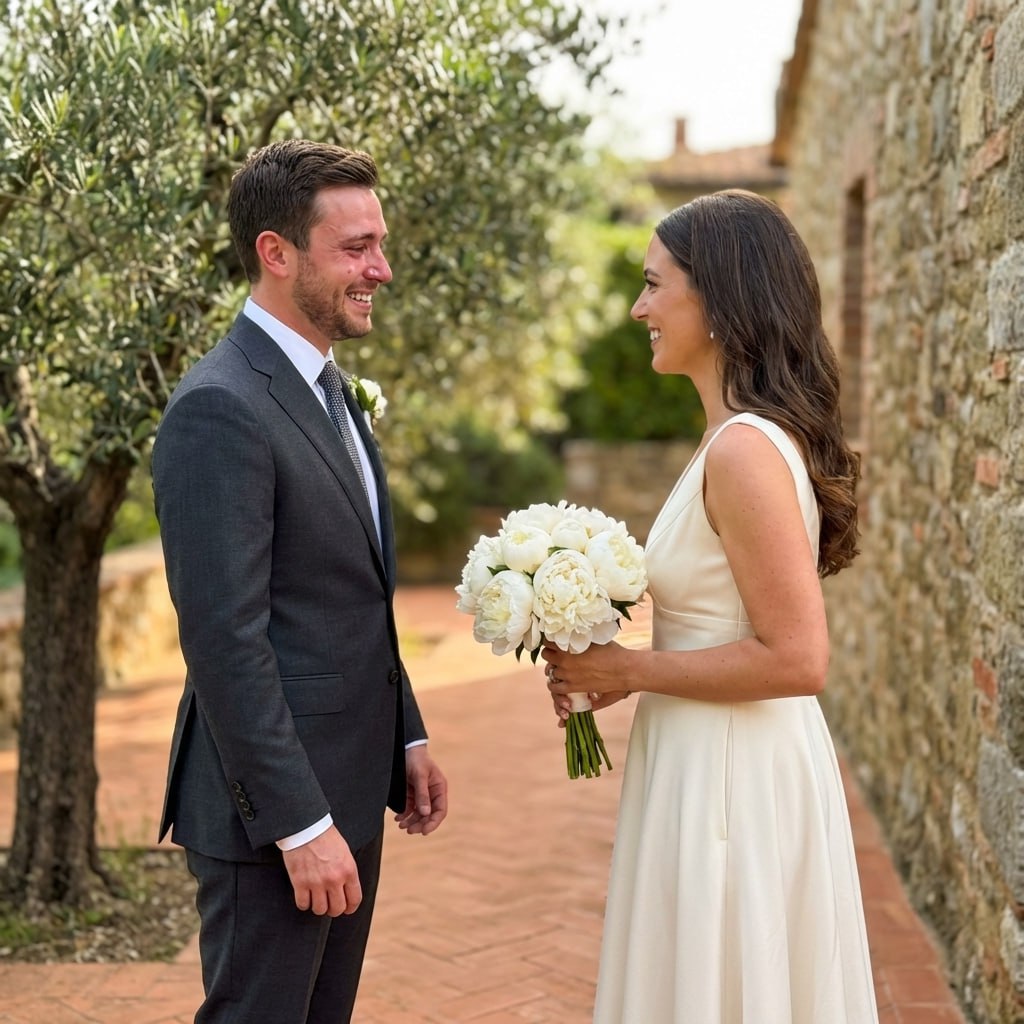
SCAN TO TRY
pix.wedding/
your-wedding
The photo you will frame is already in your guests' phones
Sarah found her grandmother laughing in a 487-photo album that took 10 minutes to set up. Put a card on each table. Let the guests do the rest.
Set up my guest albumThe one-photo-worth-the-whole-album principle
When Sarah the bride wrote her review, she said she found a picture of her grandmother laughing that she will frame forever. She did not say she found 10 framing-worthy photos. She did not describe a collection. She described one specific shot that landed in a way nothing else did.
This is not unusual. Couples who go through guest-uploaded albums after their wedding often describe the same pattern: most photos are good, some are great, and then there is one frame that stops them. It might be the grandmother. It might be two old friends seeing each other across the room. It might be the look on the father of the bride's face during the first dance, captured from an angle the photographer was not at.
The professional photography package covers the wedding in full. The professional is everywhere that matters on the formal shot list. But the guest album fills in every gap in the room, and the gaps are where those unguarded moments live.
Think about what it means that Sarah described the grandmother photo as the thing she will frame forever after an album of 487 photos. 486 other photos exist. Some of them are probably beautiful. Some are probably professionally lit by guests with good cameras. But the one that made it to the framing shortlist was a candid, a moment, a reaction shot taken by someone sitting close enough to see her grandmother's face.
That is the principle. The emotional weight of a large guest album is often concentrated in a single frame. The purpose of having 487 photos is partly to ensure that frame exists. You cannot ask guests to find the one emotionally significant moment and photograph only that. You need the volume so the signal can emerge from the noise.
- •Guest albums provide volume; the framed-forever shot emerges from that volume
- •Emotional weight concentrates in one or two frames, not distributed evenly across hundreds
- •The professional covers the planned; guests cover the unguarded
- •Proximity is the decisive variable: the person closest to the moment captures it
Why pro photographers cannot cover grandma's table
A wedding photographer working a Brooklyn reception with 71 guests is managing a specific job: deliver the ceremony coverage, the couple portraits, the reception highlights, and enough candids of the crowd to tell a complete story. That is a full day of intentional work and requires constant movement.
What the professional cannot do is be stationed at one specific table for the duration of dinner. They are not there when the grandmother hears something that makes her laugh. They are not positioned for a close reaction shot when an old family story gets told between courses. They pass through, they take wide shots of the room, they capture the dances. The close reading of table 5 is not in their shot list.
This is a structural fact about how professional wedding photography works, not a flaw. A photographer who tried to cover every table at close range would miss the ceremony, the portraits, and the first dance. The job requires triage. The formal shot list wins.
The guest at the grandmother's table has none of those constraints. They are there for the whole dinner. They have their phone. They are watching the same face the photographer never gets close enough to frame. When something happens, they capture it from a distance of three feet instead of forty.
That proximity gap is why some of the most emotionally resonant wedding photos in history were taken by guests. Not because guests are better photographers. Because they were in the right place and had no other job to do.
Explore more free wedding tools
Everything you need to make your wedding day stress-free and unforgettable.
QR Sticker Designer
Design custom print-ready stickers.
Hashtag Generator
Create unique wedding hashtags.
How to Collect Guest Photos
5 methods ranked by participation rate and ease.
Share Wedding Photos with Guests
Compare every sharing platform by ease and participation.
Best Way to Get Guest Photos
The single method with the highest participation rate.
How to Make a Shared Wedding Album
Step-by-step setup for every platform.
Alternative to Disposable Cameras
Better, cheaper options than disposable cameras.
Alternative to Wedding Photo Booth
5 cheaper alternatives to a $1,000+ photo booth rental.
Questions about this Brooklyn wedding and the grandmother photo
Straight answers to the questions people ask most about this topic.
Sarah, the bride, gave a 5-star review and specifically called out the photo of her grandmother laughing as the one she will frame forever. The review also noted that 71 guests uploaded 487 photos and that setup took about 10 minutes. The value line she used was "nothing else this year felt this worth the money." That combination of a deeply personal emotional find plus low friction and high participation is what drove the rating.
In specific situations, yes. A professional photographer is positioned for the ceremony, the formal portraits, the first dance. They are not stationed at table 5 watching the grandmother react to the best man's speech. Guests at that table see her face. If one of them has their phone out at the right second, they capture what the professional never could have from 40 feet away. This is not a criticism of wedding photographers. It is a structural reality about physical positioning.
Based on Sarah's description, roughly 10 minutes. The likely steps are: print a small card per table that includes a QR code and a one-line prompt, place them at each place setting or in the center of the table, and optionally mention the album during a toast or in the printed menu. For a venue with 71 guests and probably 8 to 10 tables, 10 minutes of placement is realistic if the cards are already printed.
The one-photo principle is the observation that in a large wedding album, the photo that means the most is often not the professional hero shot. It is one specific candid moment that no one planned for and that only one person happened to capture. In Sarah and Marcus's case, 487 photos were uploaded and the one that the bride chose as the photo she will frame forever was a candid of her grandmother laughing. The principle holds that the value of a guest photo album is often concentrated in a single frame.
Probably not without help, and that is worth planning for. The guests at the grandmother's table who are likely to photograph her are younger family members or friends. They are the ones who scan the code and upload. The grandmother does not need to participate in the upload for her photo to end up in the album. She just needs to be at the table where the photo gets taken by someone else.
There is no algorithmic shortcut. The couple needs to scroll through the album and look for the emotionally resonant frames. In Sarah's case, she found it. 487 photos is a lot, but it is also a two-to-three-hour scroll at a relaxed pace. Most couples describe looking through the guest album as one of the best post-wedding experiences of the whole process. The framed-forever shot reveals itself.