
What a high-volume wedding album looks like, hour by hour
Getting ready. The ceremony. Cocktail hour. Dinner and speeches. The first dance. Late night. And the wave that lands the morning after. This is how a busy guest photo album actually fills.
Details drawn from real, anonymized weddings on our platform. This is not a single named couple's story. It is a representative timeline built from real upload patterns we can trace back to our own data.
Why a timeline instead of a case study
An earlier version of this page told a named-couple story with specific numbers we could not verify against our own database. We have rewritten it as an honest, anonymized timeline instead, because a single unverifiable case study is worth less than an accurate picture of how a high-volume wedding album actually behaves across a real day.
Rather than anchor this page to one couple, one venue, or one calendar date, we are describing the pattern: what a high-volume album looks like as it fills hour by hour, drawn from real, anonymized upload activity across weddings on our platform. The biggest single album we have ever hosted holds 1,365 guest photos, and it came from just 3 people uploading. That is the extreme end of the curve, and it anchors this page because it is the clearest real example of what "high volume" actually means in practice. For contrast, the typical wedding on our platform ends the day with a median of 149 photos from 8 guest uploaders. Most weddings live much closer to that number than to 1,365.
What follows is not a minute-by-minute transcript of a specific evening. It is the shape that a busy wedding album reliably takes, broken into the phases every wedding day moves through: getting ready, ceremony, cocktail hour, dinner and speeches, the first dance, the open dance floor, and then the long tail of uploads that keeps arriving for days after the newlyweds have already gone on their honeymoon.
The wedding day, phase by phase
A wedding day has a rhythm, and a guest photo album follows it closely. Here is how volume typically rises and falls from the first hour of getting ready to the last guest who finally uploads their favorite shot days later.
Getting ready: the quietest hours in the guest album
Most guests are still at home, in the car, or checking into a hotel while the wedding party gets ready. The people who could be photographing this window (the couple, their parents, the bridal party) are usually not the ones scanning a QR code yet; that job typically belongs to a hired photographer. In our data, this stretch of the day barely registers in the guest upload timeline at all. It is the emptiest part of the album, and that is expected, not a failure of the system.
Whatever guest photos do appear from this window tend to arrive much later, after the wedding, once someone who was in the room realizes they took a photo of the bride's shoes or the groom's cufflinks and finally uploads it days after the fact.
The ceremony: guests are watching, not shooting
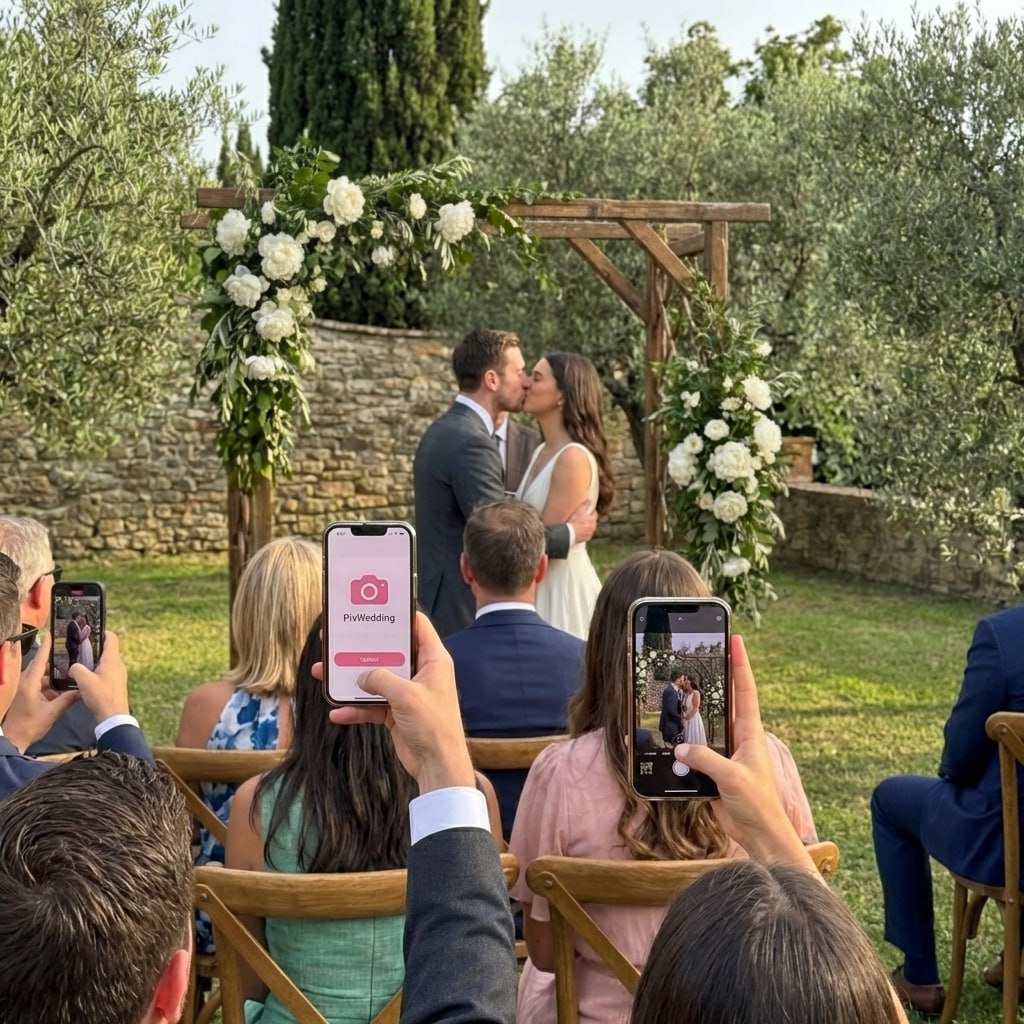
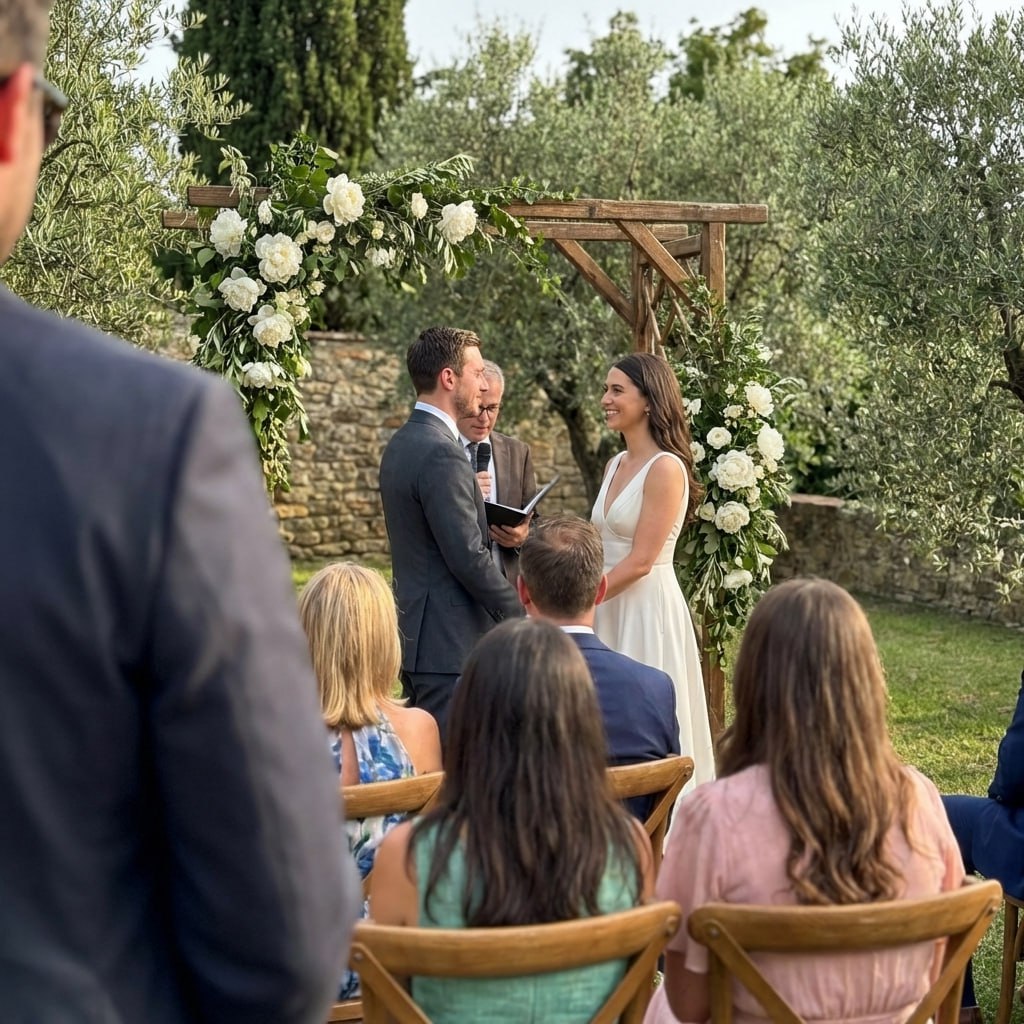
Once guests are seated for the ceremony, upload volume stays low, and it should. Most people are watching the couple, not their own phone screen. Some guests will snap a discreet photo of the processional or the first kiss, but the ceremony is consistently one of the thinnest windows in the guest photo timeline across our data.
This is the clearest place where the professional photographer's coverage and the guest album are not competing for the same content. Guests are not trying to replace formal ceremony photography, and the numbers show it: this phase almost never produces a meaningful share of the eventual album.
Cocktail hour: the first real wave
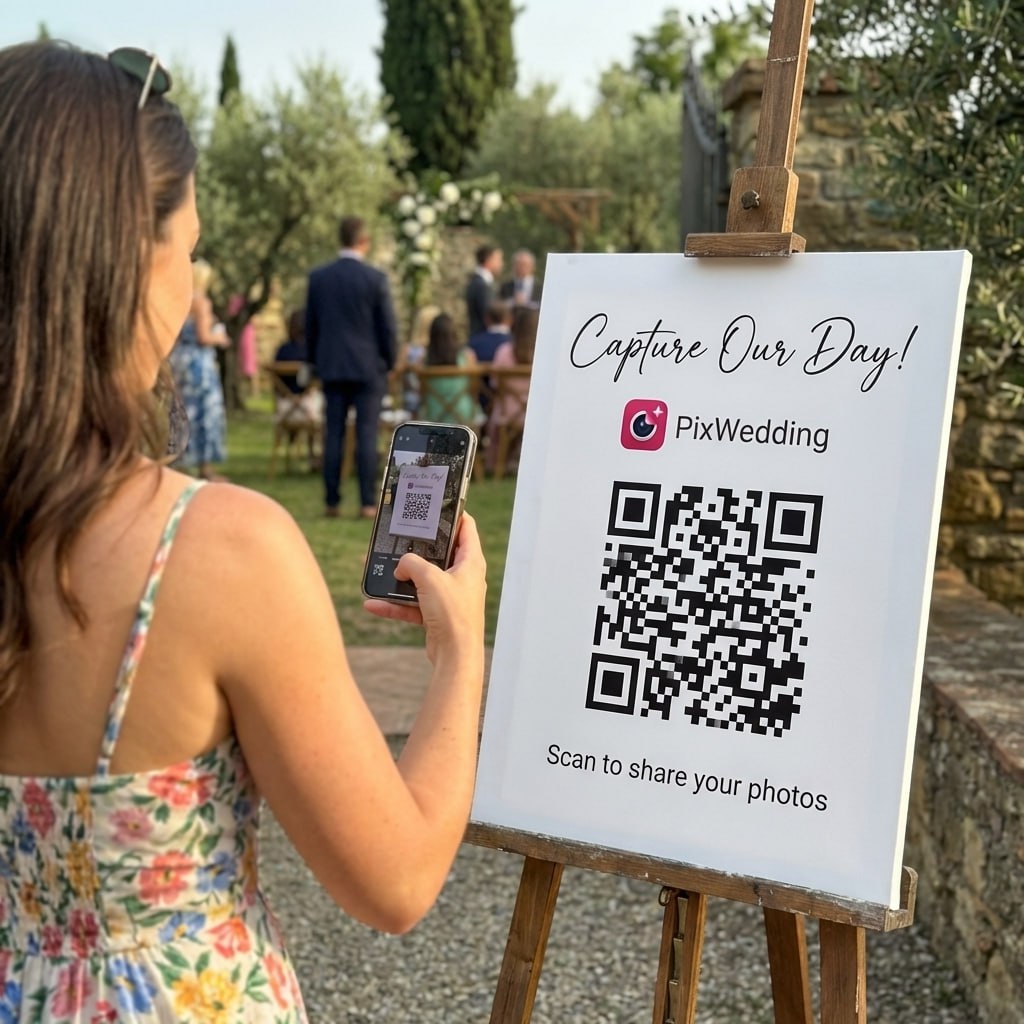
Cocktail hour is usually the first window where guest uploads pick up meaningfully. People are relaxed, standing around with a drink, and this is often the first moment they notice a QR code on a welcome sign or a table card out of pure curiosity. Expect casual content here: group shots, the venue itself, the first candid moments of the day, and a handful of guests testing the upload flow for the first time.
This is also the moment social proof starts to matter. Once a couple of guests are visibly scanning and uploading, others notice and follow. Whether cocktail hour becomes a meaningful contributor to the day's total or barely registers often comes down to whether the QR code is visible and whether anyone mentions it out loud.
Dinner and speeches: a dip, then a small burst
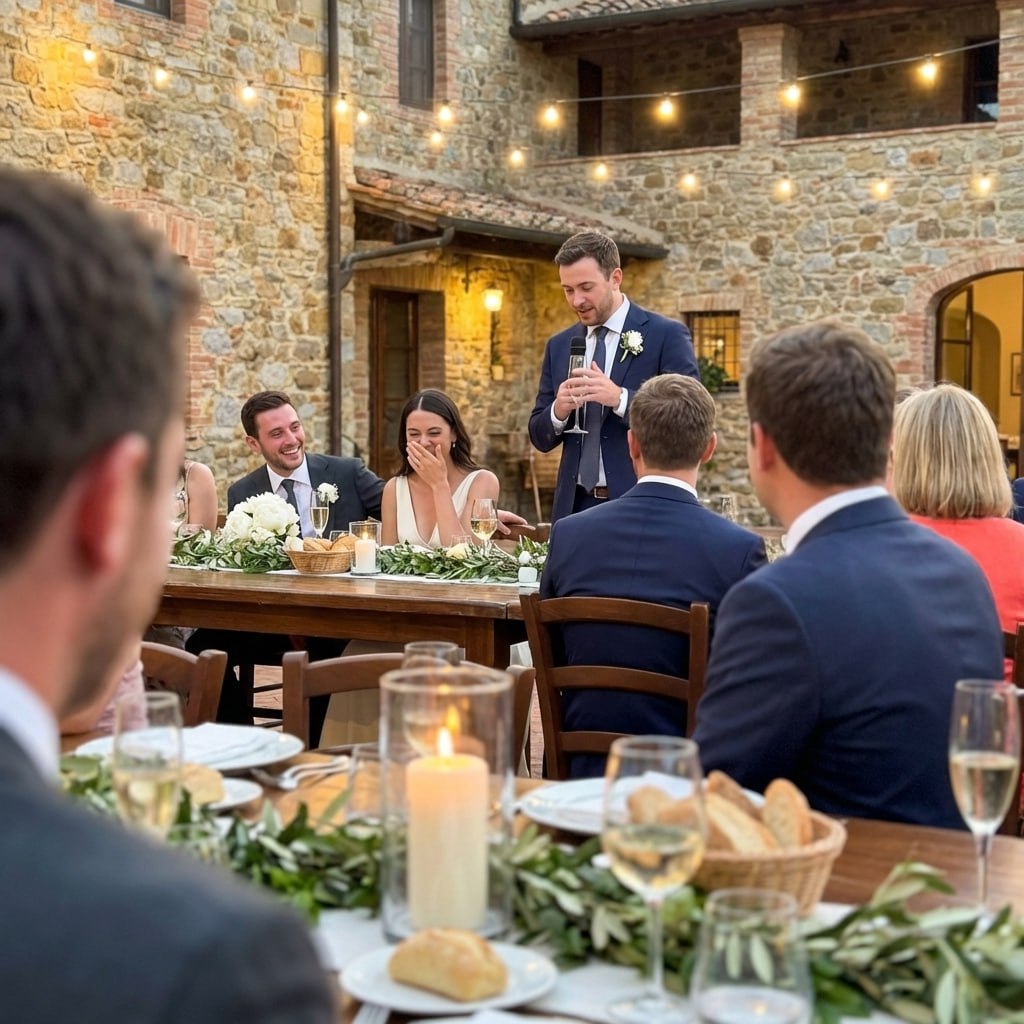
Once the meal starts, upload volume typically dips again. Guests are seated, eating, and listening, and that is simply not a high-photo moment for most people. A particularly emotional or funny speech can produce a short burst of activity as guests reach for their phones to capture a reaction shot or a toast, but the sustained peak of the day has not arrived yet.
Couples sometimes worry when they picture this lull, assuming something has gone wrong with the album. It has not. This is one of the most consistent low points across every high-volume album we have looked at, and it says nothing about how the rest of the night will go.
The first dance: a sharp, concentrated spike
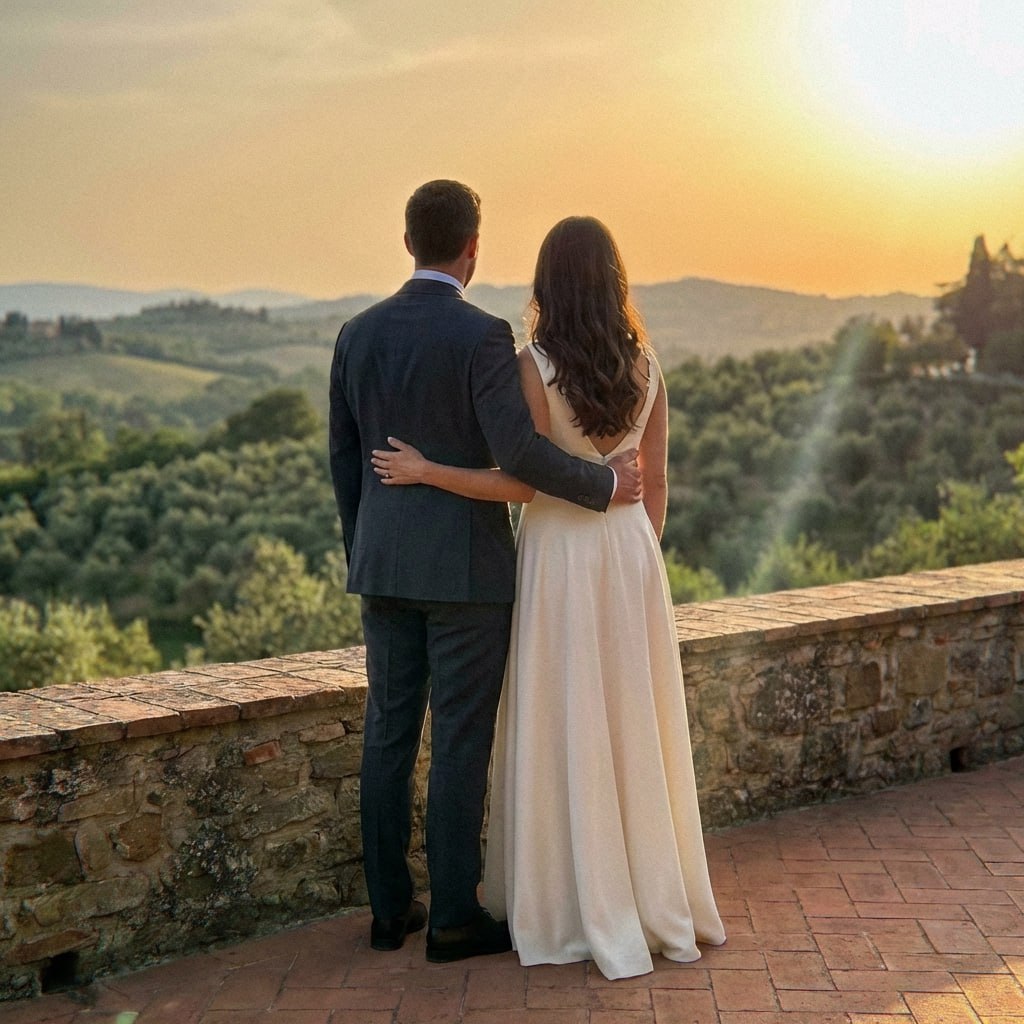
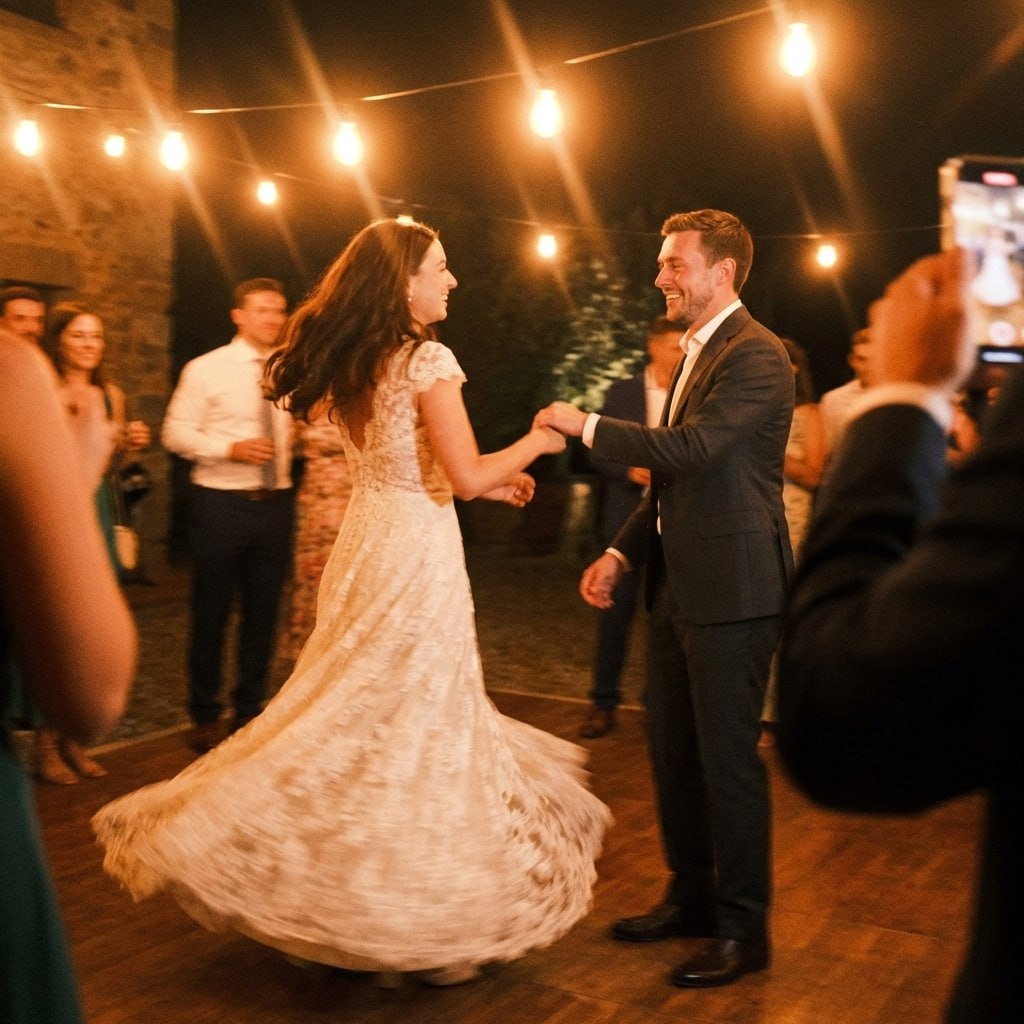
The first dance produces one of the sharpest, most concentrated spikes of the entire day, compressed into just a couple of minutes. A large share of the guests in the room reach for their phone at nearly the same moment, which means the album often ends up with the same few seconds photographed and filmed from a dozen different angles around the room.
Not everyone uploads in the moment. Some guests keep filming through the whole song and only upload later that night, or the next morning, once they have a second to sort through what they captured. The spike in the moment and the eventual upload count for this window are two different things.
Open dance floor and late night: where the album gets its volume
Once the dance floor opens, this is consistently where guest photo volume climbs highest across our data. Social norms around photographing each other loosen when people are dancing, and phones come out far more freely than they did during the seated portions of the evening. This stretch of the night is where most of a high-volume album's bulk actually accumulates.
It is also where the shape of a high-volume album becomes visible: a small number of enthusiastic guests, not the whole room, drive most of the uploads. The 1,365-photo album described earlier in this page came from just 3 people. On the dance floor, this is the phase where that handful of enthusiastic uploaders is doing the majority of the work, snapping photo after photo while most of the room is simply dancing.
Last songs and lights up: a tired tail
As the night winds down, volume tapers. Phones are low on battery, guests are tired, and the light in most venues gets worse as the evening drags on. A few of the most committed photographers in the room keep shooting until the very end, but this window contributes far less than the peak of the dance floor did just an hour or two earlier.
Whatever gets captured here often does not get uploaded on the spot. Many guests are simply trying to get home. What was shot in these final minutes tends to surface in the album later, alongside everything else from the night.
The morning after: often the single biggest wave of the entire album
This is the part of the timeline that surprises couples most. The wedding day itself is not when the album finishes filling. Guests wake up, scroll their camera roll over coffee, and send over everything from the night before in one sitting. A meaningful share of the eventual album lands in exactly this window, often more than landed during the reception itself.
Part of what drives this wave is simple logistics: the QR code that was on every table is gone once the venue is cleared, and guests who did not upload in the moment do it the next time they think of the wedding, which is usually the following morning. Part of it is also that people are more deliberate the next day, choosing their better shots rather than uploading everything in the middle of a dance floor.
The days after: a long, slow tail
The album does not close the morning after either. On our platform, a real and meaningful share of guest uploads keeps arriving two, three, and more days after the wedding. Some guests are slow to get around to it. Some see the album filling up with other people's photos and are reminded to add their own. Some simply were not thinking about their camera roll until the following weekend.
This is the single most practical reason to leave an upload window open far longer than the wedding day itself. A tool or a habit that closes the album quickly is cutting off real content that was always going to arrive, just not on the night. For the exact day-by-day breakdown behind this pattern, see our full timing report.
The shape of the day, at a glance
No two weddings move through their day at exactly the same pace, so we are describing relative volume rather than assigning a single wedding's exact numbers to every phase. This is the consistent shape we see across high-volume albums.
| Phase of the day | Typical guest upload volume | What is happening |
|---|---|---|
| Getting ready | Very low | Most guests have not arrived yet |
| Ceremony | Low | Guests are seated and watching |
| Cocktail hour | Rising | First relaxed, curious uploads |
| Dinner and speeches | Low, with small bursts | Seated, eating, occasional toast reaction |
| First dance | Sharp spike | Same moment, many angles, at once |
| Open dance floor | Peak | Loosened norms, enthusiastic uploaders driving volume |
| Last songs, lights up | Tapering | Tired guests, low battery, worse light |
| Morning after | Major wave | Guests scroll their camera roll and send what they have |
| Days after | Long, slow tail | Stragglers and second thoughts, over several days |
Volume comes from a few guests, not from headcount
It is tempting to assume that a bigger guest list guarantees a bigger album. Our data says otherwise. The wedding that produced the biggest single album we have ever hosted, 1,365 photos, did not come from an unusually large guest list. It came from just 3 people who happened to be enthusiastic about capturing the day and kept uploading throughout every phase described above.
Across our full dataset, the wedding with the most unique guest uploaders was not the wedding with the most photos. Broad participation and high volume are two different things, and they do not always show up together. A small circle of guests uploading dozens of photos each will fill an album faster than a large guest list where most people upload once or not at all. For the full comparison of these two shapes, side by side, our high-volume album page breaks it down in detail.
What this means practically: if you want your own album to end up on the fuller side of the curve, the single most useful move is not inviting more people, it is making the flow effortless for the handful of guests who are already excited to shoot the day, and placing the QR code where that phone-in-hand guest already is (the dance floor edge, the bar, near the photo booth queue) rather than only at the entrance.
What a professional gallery misses that the timeline catches
A professional wedding photographer is hired to cover a specific brief: the couple, the ceremony, formal portraits, and a set of key reception moments. That brief runs on a schedule, and schedules have gaps. A portrait session that pulls the photographer outside, a formal-photo list that takes longer than planned, or simply the physical impossibility of covering the entire dance floor and the bar and the photo booth line at once, all create windows in the professional record that no single photographer can close alone.
This is not a criticism of professional photography. Formal portraits are often the most technically demanding and most treasured images from the entire day, and a photographer who prioritizes them is doing exactly the job they were hired to do. The gap is a structural feature of single-photographer coverage, not an error in judgment.
Guest photos fill exactly the windows a single professional cannot cover: the open dance floor from multiple angles at once, the corridor conversation, the group of cousins reuniting near the bar, the moment right after the toast when everyone at the table reacts. None of it replaces the professional gallery. It documents what the professional brief was never going to catch in the first place, precisely because the guest timeline and the photographer's schedule are covering different things at the same time.
Watch: Guest Photo Sharing Apps, Compared
Source: How-To-Heroes, "5 Best Photo Sharing Apps for Weddings."
First dance
You guys!!
See what a full wedding day of guest photos looks like
Free to start, 20 guest uploads free, no card. Your album fills the same way, hour by hour.
From Mom
Scan to join the album
No app, no account
UPLOADING
Saving your moment
THE ALBUM
Emma & Jack
June 21, 2026
647 photos · 95 guests

SCAN TO TRY
pix.wedding/
your-wedding
What this timeline cannot tell you
This page describes a pattern, not a prediction. Every wedding is different: guest lists skew younger or older, venues are indoor or outdoor, some receptions run four hours and some run eight. The relative shape (low during the ceremony and dinner, peaking on the dance floor, a major wave the next morning) is consistent across our data, but the exact size of each phase will differ for your own wedding.
We also cannot tell you, from this page alone, exactly how many of your own guests will upload or exactly how many photos your own album will end with. What we can tell you is the shape the day is likely to follow, and where to put your effort (QR placement, timing of any announcement, and how long you leave the window open) if you want your own album to land on the fuller side of that shape.
Finally, this timeline is not a claim that every high-volume album looks identical. Some weddings get their peak earlier, during cocktail hour, if the crowd skews toward guests who love photographing venues and outfits. Others barely register a first-dance spike because half the room is already on the dance floor by the time it happens. The phases above are the reliable pattern, not a rigid script.
What a high-volume album does not include, either
A timeline that only tells the flattering half of the story is not honest, it is a brochure. Here is the other side, drawn from the same real data.
Guest uploads across our platform skew heavily toward photos rather than video, and that does not change much even on the busiest dance floor. If you are picturing a highlight reel emerging automatically from a full album, that is not what the data shows. Someone specific needs to be asked to film, or it mostly will not happen on its own.
A high-volume album is a reception phenomenon, not a ceremony one. Even the fullest albums we have hosted stay thin during the vows. If ceremony coverage matters to you, that is squarely a professional-photographer job, not something a busy guest album will backfill.
Guests simply are not there yet. The getting-ready hours belong to whoever the couple hired to be in the room, and a QR album has no guests to draw uploads from during that window regardless of how the rest of the day goes.
Planning your own album around this timeline
A few practical moves, mapped to the phases above, for couples setting up their own guest photo album.
- 1
Do not expect much from getting-ready or the ceremony
These phases are reliably quiet in the guest timeline. If you want that coverage, it belongs to your professional photographer, not your QR album.
- 2
Introduce the QR code at cocktail hour, not before
This is when guests are relaxed enough to notice it and curious enough to try it. A QR code guests see for the first time during the ceremony or getting ready is easy to forget by the time it matters.
- 3
Do not worry about the dinner lull
A dip in uploads during the meal and speeches is normal, not a sign the system is failing. The peak has not arrived yet.
- 4
Put an extra QR card near the dance floor and the bar
This is where volume peaks and where the enthusiastic uploaders who drive most of the album are already standing with a phone in hand.
- 5
Do not close the album the night of the wedding
A major share of the eventual album lands the morning after and in the days that follow. Closing the window early cuts off content that was always going to arrive.
- 6
Send a short reminder the morning after
A brief thank-you message with the album link the next day gives guests who did not upload the night before an easy nudge to add what they captured.
The 1,365-photo album, in the context of this timeline
The 3 guests behind our platform's biggest single album did not upload evenly across the day. If the timeline above holds (and our data says it consistently does) then the bulk of those 1,365 photos landed during the open dance floor and the morning-after wave, with only a thin scattering from the ceremony and dinner. A few people were shooting through the highest-volume windows of the night, and a good share of what they captured did not even get uploaded until the next day.
That is the real lesson behind the number. 1,365 is not the result of 3 people uploading steadily all day. It is the result of a few enthusiastic guests riding the same peaks every high-volume wedding rides: the dance floor, and the morning after. Your own wedding does not need a big guest list to get close to that shape. It needs a handful of guests who are already excited to shoot the day, an easy way for them to upload without friction, and enough patience from the couple to let the album keep filling for days, not hours.
What this page can and cannot claim
- The biggest single album on our platform (1,365 photos, from just 3 guest uploaders)
- The typical wedding album on our platform (median 149, average 197)
- The relative shape of the day (quiet ceremony and dinner, peak on the dance floor, a major wave the morning after, a longer tail across the following days)
- The behavioral rule that album volume is driven by a few enthusiastic guests, not by guest-list size
- Any single named couple's wedding (this page describes a pattern, not one event)
- An exact hour-by-hour count for your own specific wedding
- Guest participation expressed as a share of your invite list (we do not collect guest headcounts)
- Comparisons to other photo-sharing tools we do not have data on
For the exact percentages behind the timing shape described in this page, including the day-by-day breakdown of when uploads actually land, see our full timing report rather than treating the relative labels above as precise figures.
More on guest photo volume and timing
The pages below carry the full underlying data behind this timeline: the raw distributions, the day-by-day timing breakdown, and the anatomy of the biggest albums on our platform.
Why we tell this as a timeline, not a case study
Most "real wedding" pages on the internet, ours included at one point, try to tell a story through one named couple. The problem is that a single couple is one data point, and one data point either has to be verified in detail or it is fabrication wearing a nice font. We would rather show you the shape a high-volume wedding album actually takes, hour by hour, using patterns we can trace back to real, anonymized data across many weddings on our platform.
The hour-by-hour structure is deliberate. A wedding photo album is not a still snapshot, it is a living thing that grows in bursts and lulls across a single day and then keeps growing for days afterward. Reading it as a timeline, rather than as a single final number, tells you something a total count never can: where the photos actually come from, and where they never will.
What to do with this if you are planning your own album
Use the shape of the day, not the size of any one album, to plan your own QR placement and timing. If the dance floor is where volume peaks, that is where an extra QR card belongs. If the morning-after wave is real, do not close your upload window the night of the wedding. The timeline in this page is meant to be actionable, not just descriptive.
Explore more free wedding tools
Everything you need to make your wedding day stress-free and unforgettable.
QR Sticker Designer
Design custom print-ready stickers.
Hashtag Generator
Create unique wedding hashtags.
How to Collect Guest Photos
5 methods ranked by participation rate and ease.
Share Wedding Photos with Guests
Compare every sharing platform by ease and participation.
Best Way to Get Guest Photos
The single method with the highest participation rate.
How to Make a Shared Wedding Album
Step-by-step setup for every platform.
Alternative to Disposable Cameras
Better, cheaper options than disposable cameras.
Alternative to Wedding Photo Booth
5 cheaper alternatives to a $1,000+ photo booth rental.
Questions about the high-volume wedding timeline
Straight answers to the questions people ask most about this topic.
No. This page describes an anonymized, representative pattern assembled from real data across many weddings on our platform, not a single named couple. An earlier version of this page told a named-couple story with specific numbers we could not verify against our own database. We rewrote it as this honest, data-backed timeline instead.
The largest single guest album in our dataset holds 1,365 photos, driven by just 3 guest uploaders. That sits at the extreme high end of the distribution. For the full breakdown of that album and how it compares to the platform average, see our high-volume album page.
Across real weddings on our platform, the median is 149 photos with an average of 197. The 1,365-photo album described on this page is the ceiling, not the norm. Most couples should plan around the median and treat anything above it as a bonus.
Volume is lowest during the ceremony and dinner, when guests are seated and watching rather than shooting, and highest once the dance floor opens. A large share of the eventual album also lands after the wedding day itself, once guests get home and look through what they captured. Our timing report has the full hour-by-hour and day-by-day breakdown.
Not reliably. Guest headcount and album size are not the same thing. Our data shows that the wedding with the most unique uploaders was not the wedding with the most photos: volume tends to come from a small number of enthusiastic guests who upload a lot, rather than from a large guest list where everyone uploads a little.
Longer than most couples expect. A meaningful share of guest uploads on our platform land days after the wedding, not during it, as guests scroll their camera rolls once the day has settled. Closing the album quickly cuts off real content that is still on its way in.