
Maid of Honor Speech Templates: 5 Fill-In Frameworks for Every Personality
Choose from five proven templates - The Love Story Narrator, The Funny Best Friend, The Sentimental Sister, The Adventure Companion, and The Elegant Classic. Each includes fill-in blanks, word banks, transition phrases, and timing markers.
Or Generate a Custom Speech with AIChoose Your Template Style
Template 1: The Love Story Narrator
Romantic, story-focused, emotional build
Best for: Someone who has witnessed the couple fall in love and has a strong narrative instinct
Opening [30 sec]
Fill in: [YOUR NAME], [BRIDE'S NAME], [RELATIONSHIP], [NUMBER]Hi everyone. I'm [YOUR NAME], and I have had the honor of being [BRIDE's NAME]'s [RELATIONSHIP] for [NUMBER] years. I have a lot I could say about [BRIDE]. I decided to tell you a story instead.
The Friendship Anchor [60 sec]
Fill in: [QUALITY], [STORY], [SENSORY DETAIL], [REALIZATION]The thing you need to understand about [BRIDE] is [QUALITY SHE HAS]. I learned this the first time it really mattered, which was [BRIEF DESCRIPTION OF STORY]. I remember [SPECIFIC SENSORY DETAIL FROM THE MOMENT]. And I thought: this person is [WHAT YOU REALIZED ABOUT HER].
The Pivot [45 sec]
Fill in: [GROOM'S NAME], [SPECIFIC WORD], [X]When she told me about [GROOM'S NAME], she used a word she had never used before: [SPECIFIC WORD OR PHRASE SHE USED]. I had known [BRIDE] for [X] years. I knew what that meant. I think she knew I knew, because she got quiet after she said it.
The Couple [45 sec]
Fill in: [OBSERVATION], [GROOM'S NAME], [SPECIFIC BEHAVIOR]What I have seen in the months and years since is [DESCRIBE SOMETHING SPECIFIC ABOUT HOW THEY ARE TOGETHER]. [GROOM'S NAME], the way you [SPECIFIC THING HE DOES] tells me everything about who you are. And [BRIDE] - watching you love him has been one of the great privileges of knowing you.
Toast [30 sec]
Fill in: [BRIDE], [GROOM], [SPECIFIC WISH]Please raise your glasses. To [BRIDE] and [GROOM] - may you always [SPECIFIC WISH TIED TO A THEME IN YOUR SPEECH]. We love you both.
Template 2: The Funny Best Friend
Humor-forward, warm, with an emotional landing
Best for: Naturally funny speakers who want to entertain first and move second
Opening Hook [30 sec]
Fill in: [YOUR NAME], [BRIDE], [YEAR/CONTEXT], [EXAGGERATED TIME]Hi. I'm [YOUR NAME], and I have been [BRIDE]'s best friend since [SPECIFIC YEAR OR CONTEXT]. I have been working on this speech for [EXAGGERATED TIME PERIOD]. The original draft was [FUNNY DESCRIPTION OF WHAT YOU WROTE AND DELETED]. This is the third version.
Funny Story [60 sec]
Fill in: [BRIDE], [FUNNY STORY], [AMOUNT]For those of you who don't know [BRIDE] well, let me give you a defining image. [BRIEF, FUNNY BUT WARM STORY ABOUT HER]. This is the kind of person she is. And I say that with [AMOUNT] of affection.
The Real Moment [45 sec]
Fill in: [FUNNY QUALITY], [BRIDE], [GENUINE QUALITY], [GENUINE STORY]But here's the thing. Underneath [FUNNY QUALITY FROM STORY], [BRIDE] is [GENUINE QUALITY]. And I have seen her prove it over and over again, most memorably when [BRIEF GENUINE STORY]. That is when I understood who she actually is.
On the Couple [30 sec]
Fill in: [GROOM'S NAME], [SPECIFIC THING ABOUT HIM][GROOM'S NAME] - I should tell you that I was screening you. I had criteria. You passed all of them, most importantly: [GENUINE SPECIFIC THING ABOUT HIM]. [BRIDE] is lucky. So are you.
Toast [30 sec]
Fill in: [BRIDE], [GROOM], [SHORT TOAST]To [BRIDE] and [GROOM] - [SHORT, SLIGHTLY FUNNY BUT GENUINELY WARM TOAST TIED TO YOUR SPEECH THEME]. Please raise your glasses.
Template 3: The Sentimental Sister
Deep, honest, family-rooted emotion
Best for: Sisters speaking for a sister or anyone with a lifelong, family-depth friendship
Opening [30 sec]
Fill in: [BRIDE'S], [RELATIONSHIP], [NUMBER]I have been [BRIDE'S] [RELATIONSHIP: sister/closest friend/person] for [NUMBER] years. That is longer than most things in my life. It is also, without question, the best thing in my life.
The Before [60 sec]
Fill in: [HONEST BEGINNING], [FEELING ABOUT IT]There was a version of us that did not look like this. [HONEST DESCRIPTION OF THE BEGINNING OF YOUR RELATIONSHIP - rivalry, distance, awkwardness, anything real]. I think about that version of us now and I feel [WHAT YOU FEEL ABOUT IT]. Because it turned into [THIS].
The Turning Point [60 sec]
Fill in: [WHEN], [SPECIFIC DETAIL], [WHAT SHE SAID OR DID]Everything changed [WHEN]. I remember [SPECIFIC DETAIL FROM THE MOMENT]. She said [SOMETHING SHE SAID OR YOU SAW]. And I thought: that is who she is. That is who she has always been underneath everything.
The Couple [45 sec]
Fill in: [GROOM'S NAME], [BRIDE], [SPECIFIC THING ABOUT HIM][GROOM'S NAME] - I want you to understand something about [BRIDE]. She loves with her whole self. She has always loved that way. The fact that she is turning all of that toward you is not something I take lightly, and I hope you don't either. [ONE SPECIFIC THING ABOUT HIM THAT PROVES HE UNDERSTANDS THIS].
Toast [30 sec]
Fill in: [BRIDE], [GROOM], [PERSONAL TOAST]To [BRIDE] and [GROOM] - [DEEPLY PERSONAL TOAST, PERHAPS REFERENCING YOUR SHARED HISTORY OR YOUR PARENTS IF RELEVANT]. I love you.
Template 4: The Adventure Companion
Energetic, story-driven, specific adventures as the backbone
Best for: Friends who have traveled, taken risks, or shared significant experiences together
Opening [30 sec]
Fill in: [YOUR NAME], [BRIDE], [CONTEXT], [SHARED ADVENTURES]Hi, I'm [YOUR NAME]. [BRIDE] and I have known each other since [CONTEXT]. In that time, we have [BRIEF LIST OF 2-3 SHARED ADVENTURES OR EXPERIENCES]. I know her well enough to say what I'm about to say with complete confidence.
The Adventure Story [90 sec]
Fill in: [BRIDE], [WHEN/WHERE], [SITUATION], [WHAT SHE DID], [LESSON]The story that captures [BRIDE] best happened [WHEN/WHERE]. We were [WHAT YOU WERE DOING] and [WHAT WENT WRONG OR UNEXPECTED OR CHALLENGING]. And [BRIDE] [WHAT SHE DID - the action that reveals character]. In that moment I understood something about her that I still carry with me: [WHAT IT TAUGHT YOU ABOUT HER].
The Pivot [45 sec]
Fill in: [QUALITY], [BRIDE], [GROOM], [OBSERVATION]When I meet the person someone loves, I watch how they handle [SOMETHING FROM THE ADVENTURE STORY - e.g. "the unexpected", "difficulty", "the boring moments"]. Because that is where the real character is. What I have seen watching [BRIDE] and [GROOM] together is [WHAT YOU HAVE OBSERVED].
Toast [30 sec]
Fill in: [BRIDE], [GROOM]To [BRIDE] and [GROOM] - may every detour lead somewhere better than where you planned to go, and may you always be the person the other one wants beside them when it does. Please raise your glasses.
Template 5: The Elegant Classic
Poised, articulate, dignified, beautiful
Best for: Formal weddings, more reserved speakers, or situations where elegance is more appropriate than humor
Opening [30 sec]
Fill in: [YOUR NAME], [BRIDE'S NAME], [NUMBER]Good evening. I am [YOUR NAME], and I have had the privilege of knowing [BRIDE'S NAME] for [NUMBER] years. I have been thinking about what to say tonight for a long time. In the end, I decided to say only what is true.
Who She Is [75 sec]
Fill in: [BRIDE], [QUALITY], [SPECIFIC DEFINITION], [EXAMPLE 1], [EXAMPLE 2][BRIDE] is [QUALITY]. Not in the abstract way we sometimes use that word, but in the way that means [SPECIFIC DEFINITION OF HOW SHE EMBODIES IT]. I have seen this in her [SPECIFIC EXAMPLE]. And in [SECOND SPECIFIC EXAMPLE]. These are not small things. They are the measure of a person.
The Relationship [45 sec]
Fill in: [GROOM'S NAME], [FIRST OBSERVATION], [SECOND OBSERVATION]When she told me about [GROOM'S NAME], the first thing I noticed was [WHAT YOU NOTICED ABOUT HOW SHE SPOKE OR ACTED DIFFERENTLY]. The second was [SECOND OBSERVATION]. I have known [BRIDE] long enough to understand what both of those things meant.
Toast [30 sec]
Fill in: [BRIDE], [GROOM]Please raise your glasses. To [BRIDE] and [GROOM] - may you build a life as full of grace, honesty, and beauty as the love you have brought into this room tonight.
Completed Example Speeches
Seeing a template with every blank filled in is the fastest way to understand what you are aiming for. These are original example speeches, not the final words, but a demonstration of what the templates look like when they become real.
Template 1: The Love Story Narrator (completed example)
Hi everyone. I'm Sarah, and I have had the honor of being Maya's college roommate and closest friend for eleven years. I have a lot I could say about Maya. I decided to tell you a story instead.
The thing you need to understand about Maya is that she notices people. I learned this the first time it really mattered, which was during finals week of our sophomore year. I was sitting in the hallway of our dorm at 2am, definitely not crying, and she came out of our room with a cup of tea and sat on the floor next to me without saying a word. I remember the sound of the building settling and the fact that she had put honey in it even though she knew I said I did not like honey, because she remembered that I had once said honey was comforting. And I thought: this person is going to be in my life forever.
When she told me about Daniel, she used a word she had never used before. She said he was "easy." I had known Maya for six years. I knew what that meant for someone who overthinks everything, who carries everyone, who has never once taken the low-effort path in a relationship. I think she knew I knew, because she got quiet after she said it.
What I have seen in the four years since is two people who bring out the most settled versions of themselves when they are together. Daniel, the way you listen to her when she is working through something, the actual patience of it, tells me everything about who you are. And Maya - watching you stop bracing and just be loved has been one of the great privileges of knowing you.
Please raise your glasses. To Maya and Daniel - may you always be each other's easiest thing. We love you both.
Notice how every blank has been replaced with something true and specific. "Eleven years," "finals week," "sophomore year," "the sound of the building settling," "honey" - these are the details that make an audience feel they are inside a real memory, not a template.
Template 2: The Funny Best Friend (completed example)
Hi. I'm Rachel, and I have been Jen's best friend since we were both assigned to the same terrible college apartment in 2015. I have been working on this speech for four months. The original draft was seventeen pages long and included a PowerPoint. My therapist said the PowerPoint was "a lot." This is the third version.
For those of you who don't know Jen well, let me give you a defining image. Three years ago, we went on a hiking trip in Colorado. Jen did not know how to read a trail map. Jen refused to admit she did not know how to read a trail map. We spent forty-five minutes going uphill in the wrong direction before she said, and I am quoting directly, "I think the map might be broken." This is the kind of person she is. And I say that with absolutely infinite affection.
But here's the thing. Underneath that completely unshakeable confidence, Jen is the most genuinely caring person I have ever met. And I have seen her prove it over and over again, most memorably when my dad was in the hospital two years ago and she drove four hours after a work trip, let herself into my apartment with the key I had given her, and made me dinner without me asking or even knowing she was coming. That is when I understood who she actually is.
Tom - I should tell you that I was screening you. I had criteria. You passed all of them, most importantly: you can read a trail map, and you tell her the truth without being unkind about it. Jen is lucky. So are you.
To Jen and Tom - may your life together always have more right turns than wrong ones, and may you always find each other at the top anyway. Please raise your glasses.
The humor in this example is warm and self-directed (the PowerPoint), and the funny story about Jen is about a lovable flaw rather than something humiliating. The pivot to the genuine moment lands harder because the audience has been laughing.
Word Bank: When You Are Stuck
These words and phrases are starting points. Use them if you are stuck, then replace them with language that feels more naturally yours.
qualities
emotions
transitions
toast Openers
Timing Your Speech: A Practical Guide
At a conversational speaking pace (approximately 130 words per minute), here is how timing works for a maid of honor speech.
300-400 words
2.5-3 min
Too short - add more specificity to your stories
400-650 words
3-5 min
Perfect range - this is your target
650-800 words
5-6 min
On the edge - consider trimming one section
800+ words
6+ min
Too long - cut until you are at 650 or fewer
Delivering the Speech: Pacing, Nerves, and Eye Contact
A well-written speech can still fall flat if the delivery is rushed or robotic. These are the practical things that make the difference between a speech that is read and one that is felt.
Practice aloud, not in your head
Reading silently does not prepare your voice. Stand up, hold your actual notes, and speak at the volume you will use in the room. Do this at least five times before the day. By the fifth run, the emotional peaks will surprise you less.
Pause on purpose at your biggest moments
When you reach a line that matters most, slow down and pause after it. A two-second pause reads as confidence to the audience. The instinct to rush through emotional moments is what causes mumbling and breakdown. Breathe into the pause.
Make eye contact with the bride for your most important line
You will be facing the audience for most of the speech. Plan one specific moment, usually the final sentence before the toast, where you turn to the bride and say it directly to her. That one turn is often what guests remember most.
Use printed notes in large font, never your phone
Print at 14pt or larger, double spaced, on single sides. Highlight your transitions in one color and your emotional beats in another. Phones lock, dim, and look casual. Paper looks like you prepared, because you did.
If your voice breaks, pause and look at your notes
Looking down briefly gives your face a moment to reset. Take one slow breath. Then look back up and continue. The audience is entirely with you when emotion shows. What they do not want is for you to apologize for it or try to laugh it off.
End with the glass raised, not with words
Practice the physical motion of raising your glass on the word "raise." The toast should end in silence, with everyone drinking, not with you still talking. Say the final toast line, pause, raise the glass, and let the room follow. Then drink.
Common Mistakes and How to Fix Them
These are the patterns that show up most often in maid of honor speeches, and what to do instead.
Starting with "For those of you who don't know me..."
Start with a line that immediately establishes your relationship to the bride in one specific sentence. "I have known Maya for eleven years" tells the room who you are without the filler preamble.
Telling a story that requires too much context to land
If you need more than 20 seconds to set up the situation before anything happens, the story is too inside. Either trim the setup ruthlessly or choose a different story that is self-contained.
Listing qualities without evidence
"She is kind, generous, and funny" means nothing to the room because it is what everyone says about everyone at weddings. Replace every quality adjective with the one specific moment that proves it.
Forgetting to address the groom
Even one sentence spoken directly to the groom, by name, shows the room you see the couple rather than just the bride. It also tends to get a warm response from his side of the room.
Reading word-for-word without looking up
Know your speech well enough to look up during the main emotional beats. Highlight two or three places in your printed notes where you plan to lift your eyes and hold them on the bride or the room for a moment.
Ending with the toast line but not the toast action
Practice raising the glass as part of the delivery. The physical cue tells the room to raise their glasses. Say the line, pause, raise, let the room follow, drink. Do not keep speaking after "please raise your glasses."
Tailoring Your Speech by Relationship
The same template lands differently depending on how you know the bride. Here is how to adjust your approach based on the nature of your relationship.
Speaking for a sister
You have the longest shared history in the room, which is your greatest asset and your biggest trap. Lean into the length of time and what you have watched her become, rather than trying to summarize your entire childhood. One early memory, one turning point, one observation about who she is now. The shared history is implied; you do not need to document it.
Avoid sibling rivalry humor unless the bride has specifically requested it and you are certain the tone will read as warm rather than pointed to a room full of people who do not know your dynamic.
Speaking for a best friend
Your job is to show the room who she is when she is most herself, which is usually when she is with you. The stories that land are the ones where her character shows through a specific action or decision, not through description. You also have the license to be funnier than a sister typically can be, because your dynamic is peer-to-peer rather than family-rooted.
Avoid any story that the bride has not heard you tell before. If you are not certain she knows which story you are planning to use, tell her in the weeks before. No surprises on the day.
Speaking for a colleague or newer friend
Be honest about the nature of the relationship rather than performing a depth you do not have. "I have known Emma for three years, which is long enough to know what I am about to say with complete certainty" is far stronger than overstating the closeness. Then fill the speech with specific, genuine observations from those three years. Precision replaces longevity.
Avoid phrases like "she is like a sister to me" if you have only known her professionally. The room will sense the inflation. What you have genuinely seen and heard in three years is enough material for a four-minute speech if you are specific.
How to Make a Template Sound Like YOU
The biggest risk with any template is that it sounds like a template. Here is how to make it completely yours.
Fill every blank with something specific and true
Not a generic placeholder but an actual moment, actual words, actual detail from your real relationship.
Read it aloud three times and flag anything that does not sound like you
Anything stilted, anything too formal, anything you would never actually say in conversation.
Rewrite flagged sentences in your own words
Keep the same information and emotional purpose, but use your natural vocabulary and rhythm.
Add one thing the template does not have
A phrase only you would use. An inside reference that you contextualize for the audience. Something that is unmistakably yours.
Do a final read-aloud timing check
Make sure you are between 3 and 5 minutes at a natural pace, not rushed.
More Speech Writing Resources
First dance
You guys!!
Your words matter. Save them properly.
After you deliver that speech, Pix Wedding keeps the voice recording alongside every photo guests snap, all in one album the couple keeps forever.
From Mom
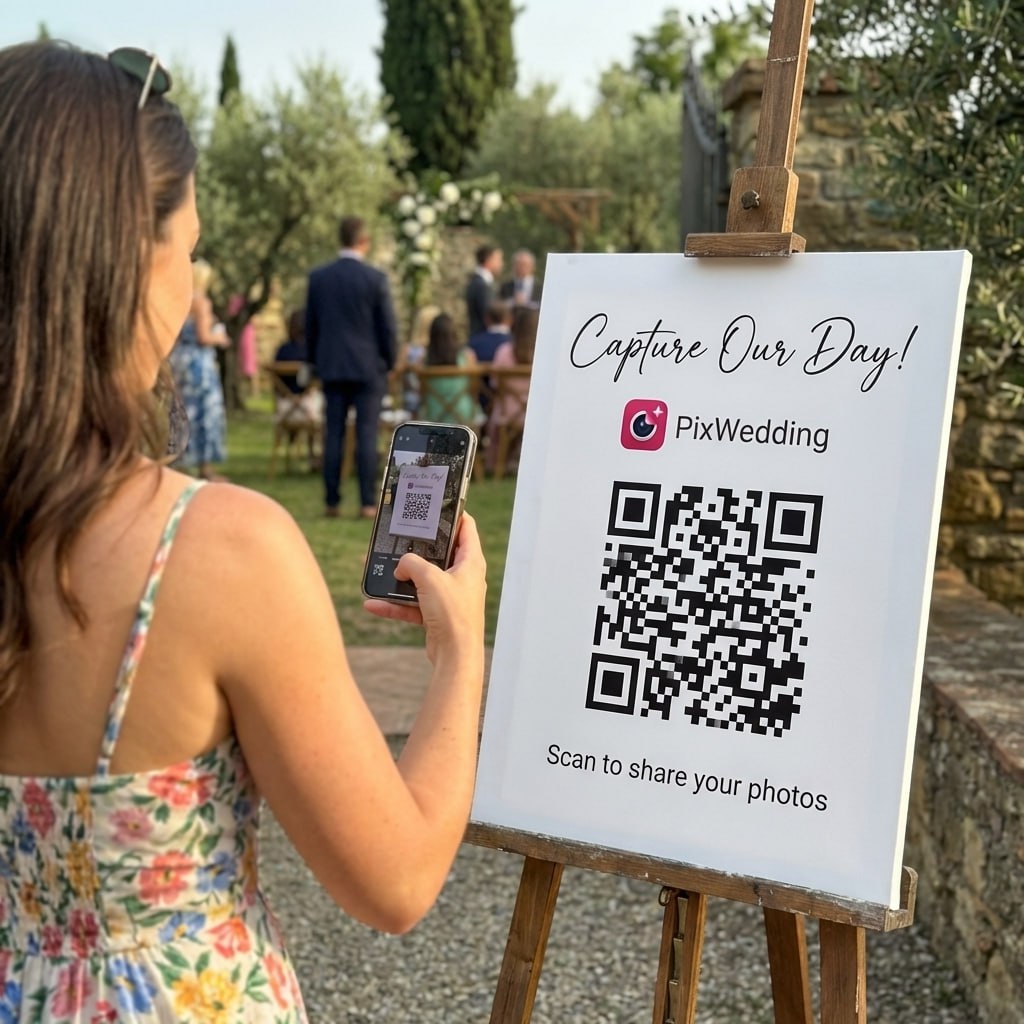
Scan to join the album
No app, no account
UPLOADING
Saving your moment
THE ALBUM
Emma & Jack
June 21, 2026
647 photos · 95 guests
SCAN TO TRY
pix.wedding/
your-wedding
How to Use a Speech Template Without Sounding Like You Used a Template
The biggest risk of using a template is that it sounds like one. The solution is personalization at the story level. The structure is a template; the content must be entirely yours.
Every blank you fill in should be a specific detail from your actual relationship. Not "she has always been there for me" but the exact moment, the exact place, the exact thing she said or did. When the blanks are filled with real specifics, even the most structured template disappears and what remains is a speech that sounds completely personal.
After filling in all the blanks, read the whole speech aloud three times and flag any sentence that does not sound like you. Then rewrite those sentences in your own voice, keeping the same information but using words you would actually say. The goal is to retain the structure while making every word sound naturally yours.
- •Every blank must be filled with something specific and true from your relationship
- •After filling in, read aloud and flag anything that does not sound like you
- •Rewrite those sentences in your own words while keeping the same meaning
- •The word banks are suggestions - use the words that feel natural to you
- •Timing markers are guides - rehearse to find your actual natural pace
Transition Phrases That Connect Sections Naturally
The weakest part of most template-based speeches is the transition between sections. The shift from friendship stories to the couple can feel abrupt or mechanical if not handled carefully.
The best transitions use a quality from the friendship section as a bridge to the couple section. If you have just told a story about her generosity, the transition might be: "That generosity is what I see every time she talks about [Groom's name]." The specific quality threads the sections together rather than abruptly pivoting.
- •"And then something changed..." (for the romantic pivot)
- •"I have watched her for [X] years, and I have never seen her..." (setup for the couple)
- •"The thing about [Bride] is..." (connecting character to relationship)
- •"When she first told me about [Groom]..." (natural entry into the romance story)
- •"What I know about [Bride] and [Groom] is..." (moving to the couple section)
- •"If [X quality] is what she brings to our friendship, imagine what she brings to a marriage." (bridge from friendship to couple)
Explore more free wedding tools
Everything you need to make your wedding day stress-free and unforgettable.
AI Vow Generator
Write "banger" vows in seconds.
Hashtag Generator
Create unique wedding hashtags.
Thank You Notes
Generate personalized thank you notes.
Father of the Bride Toast
Full example toasts, structure, and delivery tips.
Invitation Wording
Perfect wording for your invitations.
Couple Name Combiner
Blend your names into the perfect couple name.
Photo Sharing QR
The best way to collect guest photos.
Wedding Checklist
Month-by-month planning checklist.
Maid of Honor Speech Template FAQs
Everything you need to know about our free tools and how they help your wedding day.
Start by reading the template fully to understand the emotional arc. Then fill in the blanks in order, writing your own specific memories and details in each space. After filling everything in, read the full speech aloud and revise any parts that do not sound natural in your voice.
Choose based on your natural speaking style, not what you think a speech should sound like. If you are naturally funny, choose the Funny Best Friend. If you are more sentimental, choose the Sentimental Sister or Love Story Narrator. Your comfort with the tone will show in your delivery.
Aim for 3 to 5 minutes, which is 400 to 700 words at a natural speaking pace. The templates here are designed to fall within that range when filled in. Time yourself reading it aloud - if you are over 6 minutes, cut rather than speak faster.
Absolutely. The templates are starting points, not rigid rules. You might take the opening from the Funny Best Friend and the pivot-to-couple section from the Love Story Narrator. Customize until the speech sounds like you.
Use notes. Print your speech in a large font (14pt or above), double spaced, and highlight the key transition points. You do not need to memorize it word for word, but you should know your content well enough to look up and make eye contact during the most important moments.
Yes, always. Run the content (not necessarily the exact words) past the bride before the wedding day to make sure there are no surprises, nothing she would prefer not shared, and nothing that might upset the family dynamic. This also gives her something to look forward to.
Pause intentionally rather than rushing through emotional moments. Take a slow breath, look down at your notes for a second, then look back up. If your voice breaks, that is human and the room will be with you. Practicing aloud at least five times before the day reduces the surprise of your own emotional response during the real delivery.
In tone, often yes. Maid of honor speeches tend to center on the bride: who she is, how she loves, what the friendship has meant. Best man speeches tend to roast the groom more. That said, the structural rules are the same: specific story, pivot to the couple, and a warm toast. Both should stay under 5 minutes.
Avoid any reference to ex-partners unless the bride has explicitly said she is comfortable with it. Avoid embarrassing physical details, private information the couple has not shared publicly, or anything the family of either side would find inappropriate. Also avoid inside jokes that leave most of the room out. The audience should always feel included, not excluded.
Yes, with one adjustment: lean on the qualities you have genuinely observed at work rather than inventing depth you do not have. "She is the most composed person I know under pressure, and I have watched her handle [real situation]" is more powerful than vague closeness claims. Honest observation beats performed intimacy.