










Fraud Blocker
pixPix Weddingwedding
Honest Decision Guide

Is a Wedding Planner Worth It? The Honest Answer

Short answer: it depends on your budget, guest count, timeline, and how much free time you actually have. A wedding planner is usually worth it for larger, complex, or time-starved weddings, and usually not worth it for smaller, simpler ones where free tools plus a day-of coordinator cover the same ground.

Below is the actual math, a decision tree for your situation, and what to do instead if you decide to skip one.

Try the Free Alternative

Full Planner vs Partial vs Month-of vs No Planner

Every option, side by side, with real cost ranges.

OptionTypical CostTimelineYour ControlBest For
Full-Service Planner$3,800 (Knot avg) - $4,000-$10,000+ (Zola)10-18 monthsLowest (they lead)Large or destination weddings, no spare time, complex logistics
Partial Planner$2,500 - $6,000 (Zola range)4-8 monthsSharedCouples with some time but who want expert help on specific pieces
Month-of Coordinator$2,400 avg (Knot)Last 4-8 weeks + day-ofHigh (you plan, they finalize)Organized couples who want a safety net before and during the day
Day-of Coordinator$1,600 avg (Knot) - $1,200-$2,500 (Zola)Last 1-2 weeks + day-ofHighestCouples who planned everything and just need someone running the day
No Planner (DIY + free tools)$0Self-managed, start earlyFullBudget-conscious, organized couples with time, paired with a day-of coordinator if possible

Figures combine data from The Knot Real Weddings Study and the Zola Wedding Cost Index. Actual pricing varies by market, with major metro areas running noticeably higher than the national averages shown here.

The Cost-vs-Value Math

Two named sources give slightly different numbers, and that spread matters.

What The Knot reports

The Knot Real Weddings Study (surveying over 10,000 US couples married in 2025) puts the overall average planner spend at $2,100, with full-service planners averaging about $3,800, month-of coordinators around $2,400, and day-of coordinators near $1,600.

What Zola reports

The Zola Wedding Cost Index tracks real bookings and reports a higher national average of $4,047 for full planning services, with a typical range of $3,200 to $4,900. Zola breaks day-of coordination out separately at roughly $1,200 to $2,500.

What this means for you

The gap between the two sources (roughly $2,100 to $4,047 for an "average" planner) is itself the point: pricing varies enormously by market and scope, so a single number cannot tell you if a planner is worth it. Instead, compare the quoted fee to a percentage of your own total budget. As a rough guide, a fee under about 8-10% of your total spend is generally easier to justify than one above 15-20%, especially for a wedding under $30,000 where a flat $3,000-$4,000 fee can represent a much bigger share of the budget.

The Same Fee, at Different Budgets

Using flat national averages from The Knot, here is what each option represents as a share of three sample budgets.

Total BudgetFull-ServiceMonth-ofDay-ofDIY + Free Tools
$20,000$3,800 (19%)$2,400 (12%)$1,600 (8%)$0 (0%)
$40,000$3,800 (9.5%)$2,400 (6%)$1,600 (4%)$0 (0%)
$80,000$3,800 (4.75%)$2,400 (3%)$1,600 (2%)$0 (0%)

Percentages are illustrative, calculated from the flat national average fees reported by The Knot Real Weddings Study applied against each sample budget. Your actual quote will vary by market and scope, but the pattern holds: the same planner fee becomes a much bigger bite out of a smaller budget.

Planner or no planner, the guest photos still need a home.

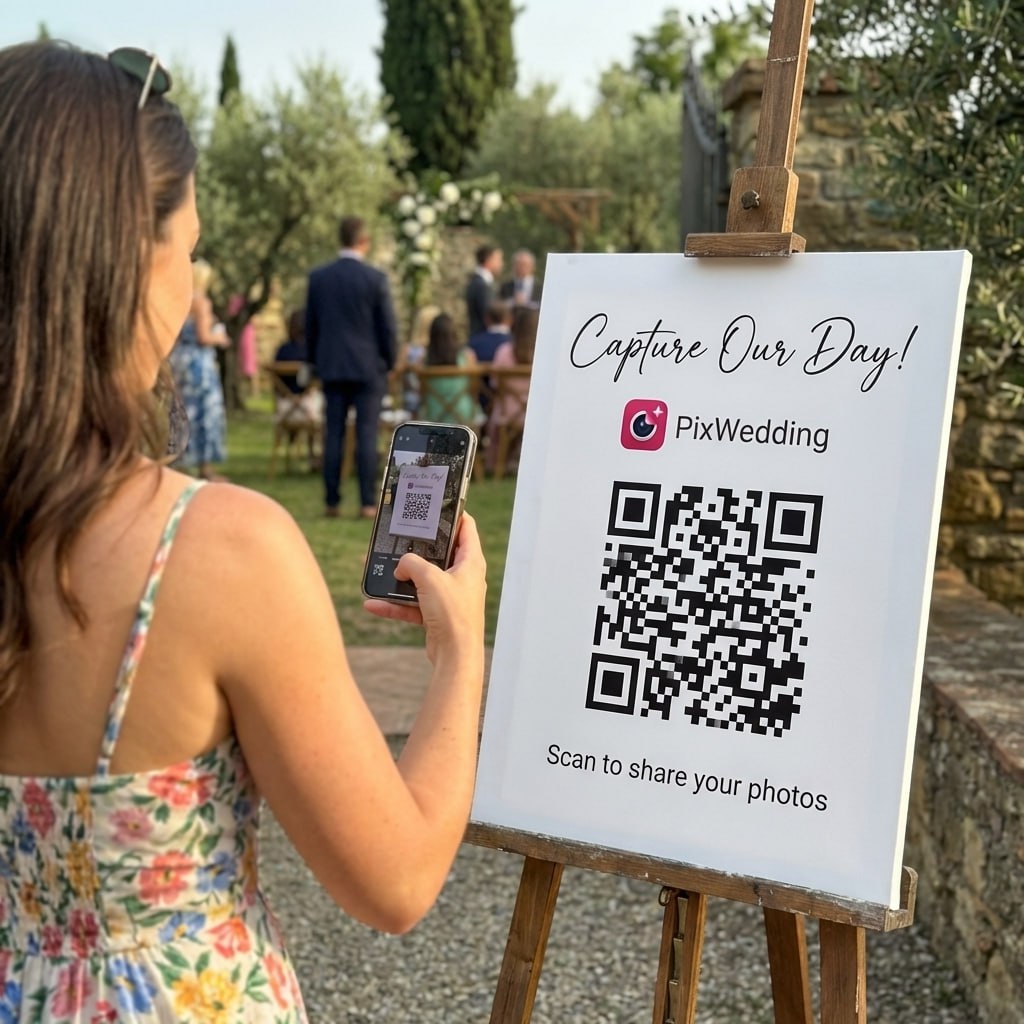
Whichever way this decision goes, every couple wants all the guest photos in one place afterward. Pix Wedding does that with a QR code, no app required, and no extra line item in the budget.

From Mom

From Mom

Point your camera

Scan to join the album

No app, no account

9:41

UPLOADING

Saving your moment

9:41

THE ALBUM

Emma & Jack

June 21, 2026

647 photos · 95 guests

AllMomentsMine
Guest photo 1
Guest photo 2
Guest photo 4
Guest photo 5
Guest photo 6
Guest photo 7
Guest photo 8
Guest photo 9
Guest photo 10
Add photosShare your moments

SCAN TO TRY

pix.wedding/
your-wedding

A Simple Decision Tree

Find the branch that matches your situation.

If: Budget under $20,000

Then: Use free tools (checklist, budget allocator, timeline builder) and skip a planner entirely. A planner fee at this budget can eat 15-30% of the total.

If: Budget $20,000-$40,000, organized couple, some free time

Then: DIY the planning with free tools, then add a day-of or month-of coordinator for the final stretch.

If: Budget $40,000-$75,000, limited free time

Then: A partial planner or month-of coordinator is usually the sweet spot between cost and hands-on help.

If: Budget $75,000+, or 150+ guests, or destination wedding

Then: A full-service planner is usually worth it. The fee is a small percentage of spend relative to the risk they absorb.

If: Both partners work long hours with little planning bandwidth, regardless of budget

Then: Weight toward at least a partial planner or month-of coordinator, since time (not money) is the scarce resource.

If: You genuinely enjoy planning and have the time

Then: Skip the planner. A day-of coordinator is likely the only paid help worth adding.

When a Planner Is Worth It, and When It Is Not

Usually Worth It When

Guest count is 150-200+ or the venue requires multi-vendor coordination
It is a destination wedding with long-distance vendor management
Both partners work long hours with little bandwidth to plan
The wedding blends multiple cultural traditions or ceremonies
Budget is $50,000+ so a 10% fee still buys real expertise
You want someone else absorbing day-of problem-solving

Usually Not Worth It When

Budget is under roughly $20,000-$25,000 and the fee eats a large share of it
Guest list is under 100 at a single, full-service venue
You and your partner enjoy the planning process itself
You have at least one organized, detail-oriented person with free time
Free tools can already cover checklist, budget, and timeline needs
You are comfortable managing vendors directly

Common Mistakes When Hiring a Planner

If you do decide to hire one, avoid these.

Hiring based on Instagram alone

A beautiful portfolio does not tell you how a planner handles a vendor cancellation at 6am. Ask for references and how they have handled real problems.

Not clarifying what is actually included

Some "full-service" packages exclude design or vendor management. Get the scope of work in writing before signing.

Assuming the planner negotiates every vendor down

Vendor relationships can help, but do not treat assumed savings as guaranteed. Ask specifically what discounts they can realistically secure.

Skipping the contract details

Confirm cancellation policy, who shows up on the wedding day (owner vs. assistant), overtime fees, and what happens if the planner is unavailable near the date.

Hiring too late

Good full-service planners book out 10-18 months ahead. Waiting until 3 months out limits you to month-of or day-of coordination only.

Ignoring personality fit

You will spend many hours with this person during a stressful process. A planner who does not listen or pushes their own aesthetic over yours can add stress instead of removing it.

Questions to Ask Before You Hire a Planner

Bring this list to every consultation call.

How many weddings do you personally lead per year, and will you be the one present on my wedding day?
What exactly is included in this package, and what costs extra?
Can I see a full timeline of what you handle in month 1, month 6, and the final week?
How do you handle a vendor cancellation or emergency the week of the wedding?
What is your cancellation and refund policy if plans change?
Can you share two or three references from recent weddings similar in size or budget to mine?
Do you receive referral fees from any vendors you recommend?
What is not included in this fee that I might assume is (e.g. design, favors, RSVP tracking)?

A Worked Example (Illustrative Only)

Not a real couple. A simplified math walkthrough to show how the decision plays out.

Imagine a hypothetical couple with a $28,000 total budget, 90 guests, and one local venue. A full-service planner quote at the Knot average of roughly $3,800 would represent about 13.5% of the entire budget. A month-of coordinator at the Knot average of $2,400 would represent about 8.5%. Free planning tools cost $0.

In this illustrative scenario, using free tools for the checklist, budget tracking, and timeline, then adding a month-of coordinator for the final six weeks, would cost roughly $2,400, or 8.5% of the budget, while still providing professional hands-on management for the wedding day itself. A full-service planner would add real value (10+ months of vendor sourcing and design help) but at a meaningfully higher share of a fairly modest budget.

For a hypothetical couple with a $90,000 budget, a full-service planner at even the higher Zola range ($4,000-$10,000+) still represents only 4.5-11% of spend, which is a much easier case to justify given the complexity that typically comes with a wedding at that scale.

Beyond the Math: Control vs Stress Reduction

The decision is not purely financial. Two couples with identical budgets can reach opposite conclusions.

If you want maximum control

Some couples find the planning process itself meaningful: choosing every vendor, negotiating every detail, and building the day from scratch. Handing that over to a planner, even a great one, can feel like losing part of the experience. For these couples, free tools that support (not replace) their own decisions tend to be the better fit, with a day-of coordinator as the only paid help.

If you want maximum stress reduction

Other couples find that dozens of small vendor decisions and logistics are pure stress with no upside. For them, outsourcing that decision fatigue to a professional, even at a real cost, buys back time and mental space that has value beyond what a spreadsheet can capture. Neither instinct is wrong. Knowing which one describes you is most of the decision.

When to Decide, on a Timeline

The window to add professional help narrows as the wedding date approaches. Here is when each option is still realistically available.

12-18 months out

This is the window to book a full-service planner if you want one. Popular planners in busy markets fill their calendar this far ahead, especially for peak wedding season dates.

9-12 months out

If you have decided to DIY, this is when to start the free checklist and lock the venue and top vendors yourself. Still enough runway to book a partial planner if you change your mind.

6-8 months out

Good moment to reassess: are you on track, or does the workload feel unmanageable? This is the last comfortable window to add a partial planner without rushing them.

2-3 months out

Book a month-of coordinator now if you have not already. Waiting past this point limits you to whichever day-of coordinators still have your date open.

4-6 weeks out

The latest realistic point to hire a day-of coordinator. Any later and you are relying entirely on yourself, a family member, or a willing friend to run the day.

Wedding week

If you skipped paid help entirely, this is when the free-tools-plus-willing-helper plan gets tested. Confirm vendor arrival times yourself and delegate a single point of contact for the day.

Regional demand shifts these windows too. In markets with a high concentration of weddings and a limited pool of planners, popular dates and planners can book out earlier than the ranges above, according to industry pricing data from Zola. If you are marrying in a major metro area during peak season (typically late spring through early fall), add a buffer of one to two months to every window above.

Signs You Have Found a Good Planner

If you decide to hire, these are good signals during the consultation.

They ask about your priorities and budget before pitching their own vision
They give you a written contract with a clear scope of work and cancellation terms
They can name specific vendors they have worked with recently in your area
They are upfront about what is and is not included in the quoted price
References from recent couples describe them as responsive and calm under pressure
They have a clear backup plan process for weather, vendor no-shows, or timeline slippage

Wedding Planner Glossary

The terms you will hear during consultations, defined plainly.

Full-Service Planning

End-to-end planning starting 10-18 months out: venue search, vendor booking, budget management, design direction, and day-of execution.

Partial Planning

The couple has already made some decisions (venue, maybe a few vendors) and hires a planner to fill in the rest, usually 4-8 months out.

Month-of Coordination

Sometimes used interchangeably with "day-of," but typically means the planner steps in about a month before the wedding to finalize details, not just show up on the day.

Day-of Coordination

The most limited tier: the coordinator confirms vendors and runs the wedding day itself, usually with one or two planning meetings beforehand.

Banquet Event Order (BEO)

The document a venue or caterer uses to execute the event: room layout, meal times, vendor arrival windows. A planner typically reviews this on your behalf.

Vendor Referral Fee

A commission some planners receive for booking you with a specific vendor. Not inherently bad, but worth asking about for transparency.

Questions to Ask Yourself First

Before you talk to a single planner, answer these honestly.

1.If I imagine the week before the wedding with no planner, what specifically worries me: budget, logistics, or family dynamics?
2.Is the thing I actually want help with a skill (design, negotiation) or just time (I do not have hours to research vendors)?
3.Would I rather spend the planner's fee on the wedding itself, or on removing stress from the process?
4.Do I have one detail-oriented person (myself, a partner, a family member) who could realistically run point instead?
5.If I hired only a day-of coordinator and did everything else myself with free tools, what would I be missing?

Free Planning Alternatives

Whatever You Decide, Do Not Lose the Photos

Planner or no planner, guests will take hundreds of photos on their phones. Pix Wedding collects every one automatically with a QR code, so nothing gets stuck in someone else's camera roll.

Get Started Free

Making the Right Decision for Your Wedding

The question is rarely whether wedding planners provide value. Most do. The real question is whether that value clears the bar of the cost for your specific budget, timeline, and personality. A planner is a purchase, and like any purchase, it should be evaluated against what you actually get back.

For many couples with weddings under roughly $30,000, a combination of free digital tools and a day-of coordinator covers most of what a full planner does, at a fraction of the price. For larger, more complex, or more time-starved situations, a full planner becomes a much easier call.

  • Day-of and month-of coordinators tend to offer the strongest value per dollar for most couples
  • Free planning tools handle a large share of what a full planner does during the planning phase itself
  • The right answer depends on budget, guest count, timeline, and how much free time you actually have
  • Destination weddings and multi-tradition celebrations benefit the most from professional, hands-on planners

The Free Alternative: Being Your Own Wedding Planner

If you decide to skip the professional planner, set yourself up to succeed anyway. Use the Pix Wedding free checklist for a month-by-month timeline, the budget allocator for financial tracking, and the seating chart tool for reception planning. These free tools automate much of the organizational work a planner would otherwise charge for.

The part that is genuinely hard to replace yourself is day-of execution. Even a highly organized couple should not be the ones managing vendor arrivals and timeline slippage on their own wedding day. Budgeting for a day-of coordinator, and letting your guests handle photo memories through a tool like Pix Wedding, frees you up to actually be present.

What a Planner Typically Does Not Do

It helps to be clear on the limits of the role before you compare cost to value. Most planners, even full-service ones, do not personally design invitations, act as your photographer or videographer, provide catering or floristry themselves, or guarantee vendor pricing below what you could negotiate directly.

They also generally do not manage guest-side logistics like collecting photos from attendees after the event, building a digital guest list app, or handling RSVP tracking unless that is explicitly scoped into the contract. Those are exactly the gaps free tools and lightweight apps are built to fill, which is part of why the free-tool-plus-coordinator combination works so well for many budgets.

Explore more free wedding tools

Everything you need to make your wedding day stress-free and unforgettable.

Common Questions About Hiring a Planner

Wedding Planner FAQ

Everything you need to know about our free tools and how they help your wedding day.

The Knot Real Weddings Study puts the overall average at $2,100, with full-service planners averaging about $3,800, month-of coordinators around $2,400, and day-of coordinators near $1,600. Zola's Wedding Cost Index reports a higher national average of $4,047 for full planning services, with a typical range of $3,200 to $4,900. Prices vary by market, with major cities running 30 to 50 percent higher.

Yes. With free planning tools (Pix Wedding offers 30+, including checklists, budget allocators, and timeline builders), organized couples can plan the entire wedding themselves. The one piece that is hard to DIY is the wedding day itself, which is where a day-of coordinator earns its fee.

A month-of (or day-of) coordinator steps in 4 to 8 weeks before the wedding to confirm vendors, build the timeline, run the rehearsal, and manage the day itself. A full-service planner is involved for 10 to 18 months, handling venue search, vendor booking, budget, design, and logistics from the start.

Some planners have vendor relationships that can offset part of their fee, but this is not guaranteed and depends on the planner and market. For smaller weddings the planner fee itself is usually larger than any savings found. For large or complex weddings, vendor access can make the math work better.

Pair free planning tools, such as the Pix Wedding checklist, budget allocator, and timeline builder, with a day-of coordinator. That combination gives you the organizational structure of a planner during the months of planning and professional, hands-on management on the wedding day itself, for a fraction of a full-service fee.

Strongly consider a planner for destination weddings, guest counts above 150 to 200, multi-day or multi-tradition celebrations, couples with no spare time to plan, or budgets above roughly $50,000 where a 10 percent fee still buys meaningful expertise and risk reduction.

For most weddings under $20,000 to $25,000 with a straightforward guest list and venue, a day-of coordinator plus free planning tools typically covers the same ground for a fraction of the cost. A full planner is usually harder to justify at this scale unless time, not money, is the constraint.

Is a Wedding Planner Worth It? (2026) - Cost, Value & Alternatives | Pix Wedding