
How to Write Vows as the Groom
Aim for 150 to 250 words, about one to two minutes out loud, in four parts: a story, what you love, your promises and one closing line. Below: a word counter, example lines by style, three templates and a four-week practice plan.
Free, and the counter runs in your browser. Nothing you type is saved.
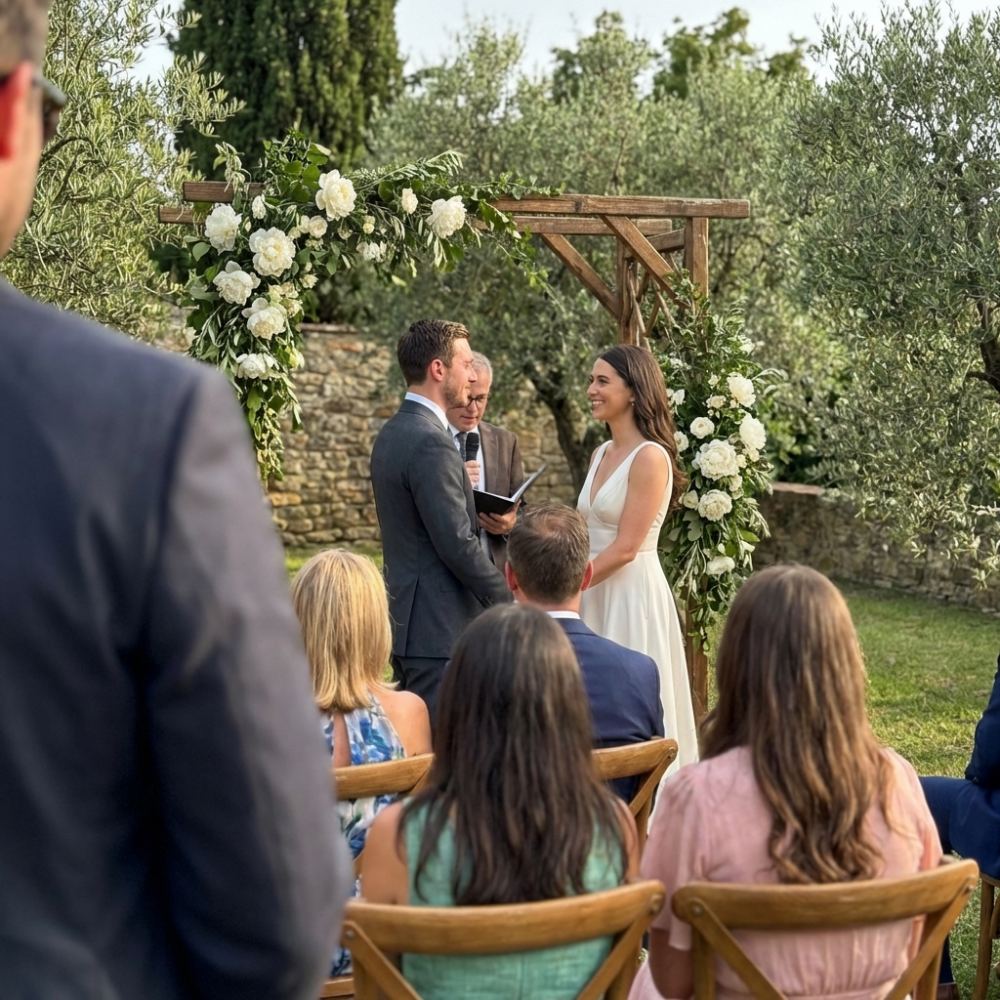
How do you write wedding vows as the groom?
Write 150 to 250 words in four parts: one real story, two or three specific things you love about your partner, three to five promises and one closing line. Draft it by talking first, cut it to time with a timer, agree on length and tone with your partner, and read it from a printed card on the day.
61%
of couples married in 2025 wrote their own vows (The Knot)
150-250
words is where most vows land, per Zola
1-2 min
spoken aloud for most vows, per Zola
150 wpm
average US conversation pace (NCVS, via VirtualSpeech)
Sources: The Knot 2026 Real Weddings Study (10,474 US couples married in 2025), Zola’s vow writing guide and VirtualSpeech, a secondary source citing the US National Center for Voice and Speech. Checked 3 October 2026.
Four parts and a word budget
Most vow guides use some version of the same shape. Zola’s runs to six parts. We fold it into four, because four is easy to remember with your heart racing. The budgets below add up to 200 words, the middle of the usual range.
Where the words go
- 0160 words, about 24 sec
A story only you know
One real moment, told in three or four sentences. Where you were, what happened, what you noticed.
“The night your car died outside the gas station, you laughed so hard you cried. I knew right then I wanted every bad day to look like that one.”
- 0250 words, about 20 sec
What you love about them
Two or three specific things. Small and true beats big and vague.
“I love that you text me when you get home, every time, even after six years.”
- 0370 words, about 28 sec
Your promises
Three to five promises, at least one concrete enough that you could prove it next Tuesday.
“I promise to keep the coffee on, to call when I am late, and to tell you the truth when it is hard to say.”
- 0420 words, about 8 sec
One closing line
One sentence that looks forward. Say it, then stop.
“I choose you today, and I am going to keep choosing you.”
The word budgets and example lines are ours and illustrative. The 150 to 250 word range is from Zola. Seconds are words divided by 150 words a minute, rounded. Not sure how to open? Our guide on how to start wedding vows has first lines.
Seven minutes on the same shape
A walkthrough of a vow outline, a full example of a short vow read out loud and three common mistakes. Watch it once before your first draft, then come back here for the word counter.
Watch on YouTubeWord counter and time estimator
Paste your draft and see how long it runs at an everyday pace of 150 words a minute and at a slow, nervous-groom pace of 100. It runs in your browser and nothing is saved.
Runs in your browser. Nothing is saved, stored or sent.
Paste or type your vows. Most land between 150 and 250 words.
How long a draft takes to say
Arithmetic, not a measurement: words divided by words per minute. Bar length shows the slower pace. 150 wpm is the average US conversation rate reported by VirtualSpeech, which also puts a comfortable presentation pace at 100 to 150 wpm.
2:00
is how long a 200-word vow takes at 100 words a minute, the slow end of a comfortable presentation pace. With pauses and a wobble or two, plan for that, not for the faster number.
Talk first, write second
Most grooms who say they cannot write can tell a good story at the bar. Use that. Answer a few questions out loud, then turn what you said into the four parts.
Eight brainstorm questions
- 01Where were you the moment you knew?
- 02Which habit of theirs would you miss first?
- 03What did they do on your worst day together?
- 04What do they do for other people when nobody is watching?
- 05What do your friends say changed about you since you met?
- 06Which inside joke can you explain in one sentence?
- 07What does an ordinary Sunday look like in ten years?
- 08What do you already do for them that you want to promise to keep doing?
Talk for five minutes
Open the voice memo app, pick three questions from the list and answer them out loud, like you are telling your best man. Do not stop to fix anything.
Turn it into text
Play it back or use your phone’s transcription and type out the lines that made you smile or made your voice catch. Those are your raw material.
Cut it into four parts
Sort the lines into story, love, promises and close, then trim each part to its budget. You already said it once, so it will sound like you.
Rewrite every promise until it could only be yours
- I promise to always support you.I promise to read every draft of your thesis, chapter four included.
- I promise to make you happy.I promise to keep making pancakes on Sundays. The burnt ones are mine.
- You are my everything.You are the first person I want to tell when something good happens.
- I will always be there for you.When you call at 2 AM, I will pick up, and I will bring the car around.
Example lines written for this page. Want more help with the “what to say about her” part? Read how to write vows for her.
Borrow a line, by style
Six styles, two example lines each. Use them to find your tone, then swap in your own details. Every line here was written for this page and is an example, not a quote.
- Heartfelt
Heartfelt
For the groom who wants the room quiet.- “You never asked me to be someone else. You just made me want to be better at being me.”
- “I promise to be the first person you call, with good news and with bad.”
- Funny
Funny, with a landing
One or two jokes, then mean it.- “I promise to love you even when you steal the blanket, which, based on six years of research, is every night.”
- “I also vow to never again say “I know a shortcut” on a road trip.”
- Short
Short and sweet
When you agreed on under a minute.- “You are my favorite person and my safest place.”
- “I choose you today, and every day after this one.”
- Religious
Faith-centered
Check with your officiant what fits the ceremony.- “I thank God for putting you in my path, right when I needed you most.”
- “Before God and the people we love, I promise to build a home where patience and kindness come first.”
- Second marriage
Second time around
Honest about the road here, focused on now.- “I know now that love is a choice you make on ordinary Tuesdays.”
- “I am making that choice with you, with my eyes wide open.”
- With kids
Blended family
A line or two for the kids, by name.- “[Child’s name], today I make promises to you too.”
- “I promise to show up for your games, your bad days and your big news, and to love your mom the way you deserve to see someone loved.”
Swipe for all 6 styles
Going for laughs? Keep jokes to the first half and keep the last line straight. More lines in funny wedding vows for her, and if you are worried about sounding corny, read vows without sounding cheesy.
Three groom vow templates
Copy one, fill in every bracket with a real detail and paste the result into the counter above. If a blank stays generic, it will sound generic out loud too.
The 4-part classic
Story, love, promises, close. Fill the blanks with real details and it lands near the middle of the usual range.
106 words as written, about 0:42 at 150 wpm, before your blanks[Name], [where we were the first time I knew]. [What happened, in one or two sentences]. [What I noticed about you in that moment]. I love the way you [a specific habit]. I love that you [something you do for other people]. And I love that you [something only I get to see]. So here is what I promise. I promise to [an everyday promise]. I promise to [a promise for the hard days]. I promise to [a promise about growing together]. And I promise to [something small and funny that is true]. [Name], I choose you today, and I am going to keep choosing you.
Short and sweet
For a quick ceremony, or a partner who wants short vows. Three promises, one closing line.
44 words as written, about 0:18 at 150 wpm, before your blanks[Name], before you, [what life looked like, one line]. Now [what it looks like with you, one line]. I promise to [promise one], to [promise two], and to [promise three]. You are my [one word or phrase], and today I choose you for good.
Funny start, serious finish
Get the laugh early, then let the room go quiet for the promises. The last line is never a joke.
93 words as written, about 0:37 at 150 wpm, before your blanks[Name], I have a confession: [a funny, kind truth about how we met]. You [how they reacted]. That is when I knew I was in trouble, the good kind. Now the serious part, so everyone listen. You make [a specific thing] easier. You make me [a specific way I am better]. I promise to [a funny but true promise]. I also promise to [a serious promise], to [a serious promise], and to [a serious promise]. No jokes for this last line: I love you, and I choose you, today and every day after.
Stuck on a blank? Our free AI wedding vow generator can suggest a first pass to react to. Rewrite whatever it gives you in your own words, and read should AI write my wedding vows first.
Four weeks, eight steps
A small job every few days beats one long night. Start four weeks out and the last week is just reading out loud.
- 4 weeks outAgree on the frame. Settle length, tone and who goes first with your partner, then tell your officiant. Keep the words themselves secret if you like.
- 4 weeks outBrainstorm out loud. Record a five-minute voice memo answering three of the brainstorm questions. Write down the lines that made you smile.
- 3 weeks outWrite a messy first draft. Fill the four parts in one sitting: a story, what you love, your promises, a closing line. Do not edit yet.
- 2 weeks outCut it to time. Paste the draft into the counter and cut to between 150 and 250 words. Cut the weakest promise before you touch the closing line.
- 1 week outRead it aloud with a timer. Stand up and read it at the pace you would use in the ceremony. Rewrite any line you trip over twice.
- 3 days outPrint the final copy. Large type, double-spaced, on a card or in a vow book. Give a second copy to your officiant or best man.
- The day beforeTwo read-throughs, then stop. Read it twice out loud, put it in the envelope and stop editing. A late rewrite is the one you will stumble on.
- The ceremonyBreathe, look up, slow down. Take one breath before you start, look up at the end of each part and say the closing line to your partner, not the page.
Running out of time? The last-minute groom checklist covers the rest of the week, vows included.
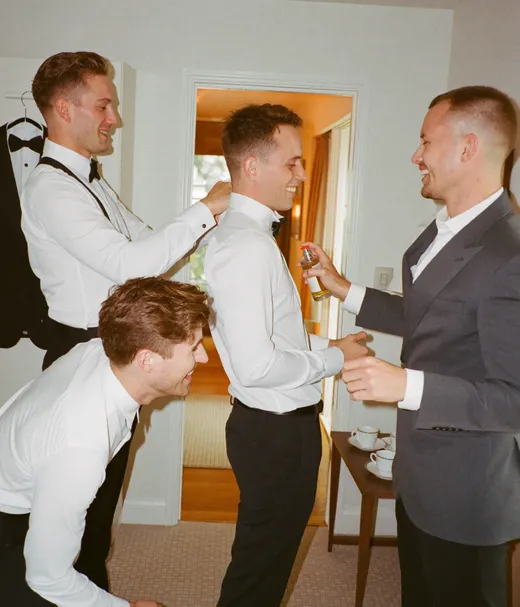
Match your partner on length and tone
You can keep the words a surprise and still agree on the frame. Three things to settle before either of you writes a line.
Match within about 30 seconds
Agree on a target, like “about two minutes each”, and share word counts, not drafts. A 90-second vow next to a 5-minute vow is the mismatch guests remember.
Same mood, your own words
If one of you plans jokes and the other plans tears, say so ahead of time. You do not need the same style, just no surprises about the mood.
Decide who goes first
There is no fixed rule. Ask your officiant what they suggest, settle it at the rehearsal and put it in the run sheet so nobody hesitates at the altar.
The 30-second gap is our rule of thumb, not a published standard. For the length question in more depth, see how long should vows be.
Do this, skip that
Read your draft against both lists. If a line fails the right-hand list, cut it, even if it is your favorite joke.
What works
- Name one real moment. A specific story does more than a list of adjectives.
- Say their name. At the start and once near the end.
- Make one promise you can prove. Something they would notice next Tuesday.
- Write for your partner. Guests are listening in, they are not the audience.
- Read it aloud before it is final. Your ear catches what your eye misses.
- Bring a printed copy. Plus a backup with someone you trust.
What backfires
- Roast your partner. Teasing works once, a run of jokes at their expense does not.
- Mention exes. Even as a punchline. Grandparents are in the front row.
- Lean on inside jokes. One is charming. Three leave the room out.
- Promise what you cannot keep. “I will never be grumpy” is a promise you break by Friday.
- Surprise them with length. Stick to the target you agreed on.
- Memorize if it makes you anxious. Reading is normal. Blanking at the altar is worse.
Kids in the picture? Speak to them by name for a line or two, keep the promises simple enough for them to remember and check with your partner first. Short on words? Short wedding vows for him has compact examples.
Nerves and delivery
Shaky hands and a tight voice are normal, and the room is on your side. These six habits keep the words coming out at a pace your partner can hear.
- Print it big
- Large type and double spacing, so you can find your place again after you look up.
- Mark the breaths
- Put a slash where you want to pause. Most grooms rush, and the slashes slow you down.
- Read it to one person
- Your best man, a sibling, the dog. Saying it to a face once takes the edge off saying it to a crowd.
- Card over phone
- A phone screen can dim, lock or light up with a message mid-sentence. If you use it, turn on Do Not Disturb.
- If you cry, pause
- Stop, breathe, look at your partner and start the line again. Everyone waits, and nobody minds.
- Look up at the seams
- Glance up at the end of each of the four parts. Four looks is plenty, and the last one is for the closing line.
Read it, do not memorize it
Reading from a card or a vow book is normal at a wedding. It frees your head for the moment instead of the next line. Keep one copy in your jacket and hand a second to your officiant or best man.
Somebody will film it
The vows are one of the most filmed minutes of the day. If you are having an unplugged ceremony, tell guests before it starts. If not, ask them to film from their seats and to share the clips afterward.
Eight groom vow mistakes
None of these are fatal, and each one has a fix you can make this week.
- 01
Starting the night before
Tired vows ramble. Start four weeks out and you get three weeks of small fixes instead of one rushed draft.
- 02
Writing a speech for the guests
Vows are said to one person. If a line only works because the room laughs, it belongs in the reception toast.
- 03
Stacking inside jokes
Keep one, and give it a sentence of context so the room is with you.
- 04
Abstract promises only
“Always” and “forever” with nothing concrete sound borrowed. Pair each big promise with a small, specific one.
- 05
Never timing it
A draft that reads in a minute can take two when you say it slowly at the altar. Time it out loud.
- 06
Copying a template word for word
Templates are scaffolding. If a guest could have read your vows somewhere else, fill in more blanks with your own details.
- 07
Reading off a lit-up phone
Notifications and auto-lock land at the worst moment. Print it, or put the phone in Do Not Disturb with auto-lock off.
- 08
Editing on the morning of
A line you wrote an hour ago is the one you trip on. Lock the text the day before.
Writing your own vows from scratch for the first time? The general guide on how to write wedding vows covers the basics for both partners.
Your vows, from every row
Your photographer shoots from one spot. Guests film from theirs. A Pix Wedding album collects those photos and clips in one place: guests scan a QR code or open a link and upload from the phone browser, with no app and no account. At the median wedding on Pix, guests add 149 photos.
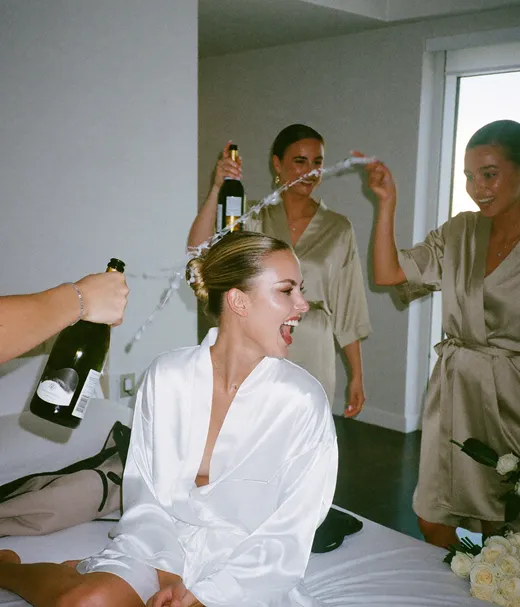
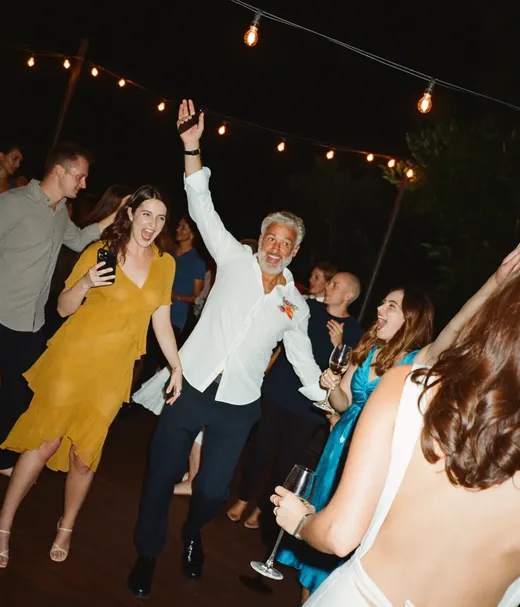
Scan to join the album
No app, no account
UPLOADING
Saving your moment
THE ALBUM
Maya & Daniel
Example album
186 photos · 41 guests
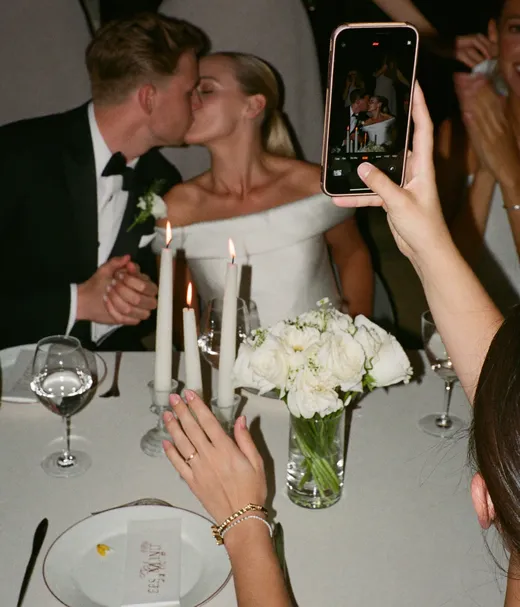
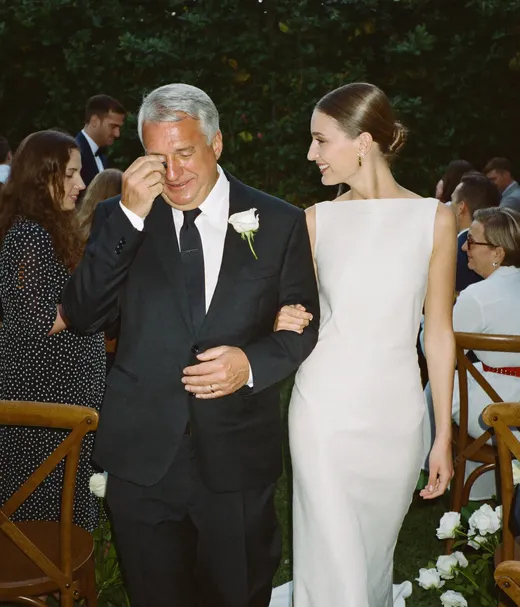
Scan. Upload.
Relive the vows.
Watch a guest scan the QR code and add photos and videos from the phone browser in seconds, no app and no account. Every clip of your vows lands in one album you can watch the morning after.
WEDDING ALBUM
Maya & Daniel
Example album
Maya & Daniel
The vows, from row 3
Groom’s vows written. Ceremony captured.
One album for every photo and clip your guests take of the vows. Guests scan a QR code or open a link, no app and no account, and you decide whether they can view and download. 20 uploads free, no card.
From the front row
Scan to join the album
No app, no account
UPLOADING
Saving your moment
THE ALBUM
Maya & Daniel
Example album
186 photos · 41 guests
SCAN TO TRY
pix.wedding/
your-wedding
Groom Vows: Common Questions
Quick answers on length, what to say, reading versus memorizing, nerves and matching your partner.
Say one real story about your partner, two or three specific things you love about them, three to five promises and one closing line. Keep it personal and concrete: a moment only the two of you share beats general words about love. Write it to your partner, not to the guests.
Aim for 150 to 250 words, which Zola says is about one to two minutes spoken aloud. At an average conversation pace of about 150 words a minute, a 200-word vow takes about 1:20. Match your partner’s length within about 30 seconds.
Talk first, write second. Record a five-minute voice memo answering a few questions about your partner, write down the lines that sound like you, then sort them into four parts: story, love, promises, close. A fill-in template gives you the structure, and your details make it yours.
Yes. If your voice goes, stop, take a breath, look at your partner and start the line again, and nobody in the room will mind. Reading the vows aloud a few times in the week before helps, because the lines that get you are less of a surprise.
Read them. Reading from a printed card or vow book is normal, and it removes the fear of blanking at the altar. Glance up at the end of each part so it still feels like you are talking to your partner, and give a backup copy to your officiant or best man.
Open with your personality and close with sincerity. One or two jokes early on sound like you and relax the room, then the promises and the closing line should be said straight. If you are funny by nature, keep the last line joke-free so it lands.
There is no fixed rule, and couples do it either way. Ask your officiant what they suggest, decide together and settle it at the rehearsal so nobody hesitates on the day.
Agree on a rough target, such as about two minutes each, and compare word counts instead of reading each other’s drafts. If yours runs long, cut a second story or the weakest promise before you cut the closing line. If it runs short, add one more specific memory.
You can use one to get unstuck, then rewrite every line with your own details. An AI draft gives you a starting structure, but the story, the habits you love and the promises have to come from you or they will sound generic. Our guide on whether AI should write your vows covers where it helps and where it does not.
Related guides
What to say about her, how long to go, how to open and a few tools for when the blank page wins.
Sources, checked 3 October 2026
- The Knot 2026 Real Weddings Study
- Zola: how to write wedding vows
- VirtualSpeech: average speaking rate
Maya & Daniel, the vow lines, the names, the times and the counts in the mockups on this page are illustrative. Photos are from our own library. Spoken times are arithmetic from the word counts.
More free wedding writing tools
Free tools for the vows, the speeches and the thank-you notes that come after.
AI Speech Pro
Banger toasts for Best Man & more.
Hashtag Generator
Create unique wedding hashtags.
Thank You Notes
Generate personalized thank you notes.
Father of the Bride Toast
Full example toasts, structure, and delivery tips.
Invitation Wording
Perfect wording for your invitations.
Couple Name Combiner
Blend your names into the perfect couple name.
Photo Sharing QR
The best way to collect guest photos.
Wedding Checklist
Month-by-month planning checklist.