
How to Start Wedding Vows: 25+ Opening Lines That Work
The first line is the hardest to write, and it sets the tone for everything after it. Browse 25+ vow opening lines by category, copy the one that sounds like you, then use memory mining to make it yours.
 New
New
 New
New
How do you start wedding vows? Wedding vow opening lines, chosen on purpose
Start with a specific opening line: a real memory, a direct address, or a clear promise, in one or two sentences. The best vow opening lines name something only the two of you would recognize. That is why “you complete me” falls flat next to a real Tuesday morning.
- A real memory"There is a specific afternoon I think about..."
- A direct address"You are the person I reach for..."
- A clear promise"I promise to be the person who always answers..."
Swipe for all 4
The anatomy of a great opening line
Every opener that works is built from the same three parts. Here they are, marked on one of the lines below.
“1When I first realized 2I was in love with you, I was not standing somewhere poetic. 3I was watching you argue with a GPS, and I thought: I want to be lost with this person forever.”
- 1
Hook
The first few words that make your partner and the room lean in. Usually the shortest, punchiest part.
- 2
Name
A direct address or clear ownership: their name, "you", or "I promise". It says who the sentence belongs to.
- 3
Moment
The detail, memory or observation that makes the line impossible to reuse at anyone else's wedding.
What guests remember most from vow exchanges
Swipe for all 5
Emotion-first vs story-first openers
Both work. Pick the one that matches how you naturally think and talk.
Emotion-first
"Loving you is the most unexpectedly specific thing that has ever happened to me. Let me tell you what I mean by that."
- Best for:
- Expressive, emotionally articulate personalities
- Risk:
- Can feel abstract without a specific story following it
- Fix:
- Follow the emotion with a concrete scene within two sentences
Story-first
"I still think about the afternoon we [specific event]. Something shifted that day that I have never been able to fully explain, and today I am not going to try. I am just going to say: thank you for that afternoon."
- Best for:
- Concrete, memory-oriented, narrative personalities
- Risk:
- Too much setup before the emotional point
- Fix:
- Start the story as close to the moment of meaning as possible
25+ wedding vow opening lines, filtered by category
Pick a category, read a few lines and ask: does this sound like me? Swap the bracketed parts for your real story, and tap copy to keep one while you draft.
I promise vow opening lines
Lead with a commitment instead of a feeling. Works well for a steady, dependable tone.
- 01
“I promise to be the person who always answers when you call, even when I said I was busy.”
- 02
“I promise that my love for you is not a feeling that comes and goes. It is a decision I made and will keep making every day.”
- 03
“I promise to show up for you not just on the easy days, but on every Tuesday that feels like a Monday.”
When I first vow opening lines
Anchors the opener in a real, specific memory of meeting or realizing.
- 01
“When I first realized I was in love with you, I was not standing somewhere poetic. I was watching you argue with a GPS, and I thought: I want to be lost with this person forever.”
- 02
“When I first met you, I told my best friend I had found someone interesting. By the third date I knew interesting was not nearly the right word.”
- 03
“When I first saw you across [specific location], I had no idea that was the last first meeting I would ever need.”
You are vow opening lines
A direct address that speaks to your partner instead of about them.
- 01
“You are the person I reach for when something good happens and I need someone to make it more real.”
- 02
“You are not just the person I love. You are the specific version of this life I choose, over every other possible version.”
- 03
“You are, without any competition, the strangest and most wonderful thing that has ever happened to me.”
From this day vow opening lines
Forward-looking. Works when you want to open on commitment rather than backstory.
- 01
“From this day forward, I want my life to be something I only tell you about first.”
- 02
“From this moment, I am choosing a future that has you at the center of it, not because I have to, but because every version of the future I like has you in it.”
- 03
“From today, whatever comes, I want to face it as your partner.”
Memory-based vow opening lines
The category that tends to land hardest. See the memory mining section below to find your own.
- 01
“[Describe a specific, ordinary moment: the coffee order, the road trip, the waiting room] That was the moment I understood what loving you meant.”
- 02
“I still have the message you sent me on [specific date or occasion]. I saved it not because I knew this day was coming, but because it already told me everything I needed to know.”
- 03
“There is a specific afternoon I think about when I think about why I am here today. It was not dramatic. It was just us, and it was enough to change everything.”
Observation-based vow opening lines
Opens with a reframed idea or realization rather than a scene.
- 01
“The thing nobody tells you about falling in love is that the scariest part is being fully seen. You saw me anyway.”
- 02
“I used to think commitment meant giving something up. You showed me it means gaining the one thing that makes everything else make sense.”
- 03
“I have thought carefully about what I want to say today, and I keep coming back to the simplest version: you make my life better in every way that matters.”
Opener examples by relationship story type
Different origin stories call for different openers. Find yours and use the line as a starting frame.
Swipe for all 6 stories
The power of a specific memory as your opener
Anyone can say "I love you." Only you can name the Tuesday morning when you understood what kind of love this was. That is why memory openers land harder than any declaration.
- It proves you pay attention to your partner
- Guests cannot dispute it. It is undeniably yours
- It roots the idea of love in a real event
- Hearing a moment they remember creates instant intimacy
- It implies time passing and a commitment chosen

The memory mining technique, in five steps
- Step 1List 10 moments
Without filtering, write down 10 specific moments from your relationship. Include mundane ones: the first fight you resolved, the worst vacation that became a story, the ordinary dinner that became a ritual.
- Step 2Ask what each one reveals
For each moment, ask what it says about your partner or about the two of you. The richest answer is your best opening material.
- Step 3Find the one that carries weight
Which memory do you return to most often without deciding to? That involuntary return is a signal that something matters there.
- Step 4Name what it meant
Write one sentence: "[Memory] was the moment I understood [specific thing]." That sentence is the raw material for your opener.
- Step 5Compress into an opening
Squeeze the memory and its meaning into two sentences at most. Cut every word of setup and start close to the emotional center.
- What is the most ordinary moment you shared that you keep returning to?
- What is the first moment you felt fully safe with this person?
- What is the moment you first laughed so hard you could not stop?
- What is the moment that surprised you most about who they are?
- What is the moment you knew this was the person?
Cliches to avoid, and what to say instead
These openers turn up in countless vows, and that is the problem. Your partner deserves words that could only come from you.
| Cliche opener | Why it falls flat | Try instead |
|---|---|---|
| From the moment I first saw you | Promises a moment, then skips it | Name the actual moment and what you saw or thought. |
| You are my best friend | Could be said at any wedding | Describe one specific thing a best friend does that they do for you. |
| I never believed in love until I found you | A big claim with no proof | If true, describe who you were specifically before they arrived. |
| You complete me | Borrowed from a movie | Describe the specific gap they filled or what changed in you. |
| Words cannot express... | Gives up before it starts | Use words. That is the entire task. Find the specific ones. |
| Today is the first day of the rest of our lives | A slogan, not a sentence of yours | Pick any other forward-looking construction that sounds like your voice. |
Swipe for all 6 cliches
Before and after: turning a cliche into a real opener
The same fix, applied to finished lines. These are illustrative examples, not real couples.
You are my best friend.
You're the person I called first when the flight got cancelled, not because you could fix it, but because I wanted you to know before anyone else did.
Words cannot express how I feel.
I've rewritten this line eleven times. None of the words were big enough, so here is the small one: yes.
I never believed in love until I found you.
I used to think happy was a mood. You turned it into a person I get to come home to.
You complete me.
I used to make every decision twice, once for me and once for the version of me still figuring things out. Because of you, I only have to decide once now.
The second it landed
From row two
A strong opening deserves a lasting record.
You put real thought into your opening line. Pix Wedding makes sure guests capture the moment it lands, with photos, video and voice messages in one album. The first 20 uploads are free, no card, and paid plans are a one-time payment (see pricing).
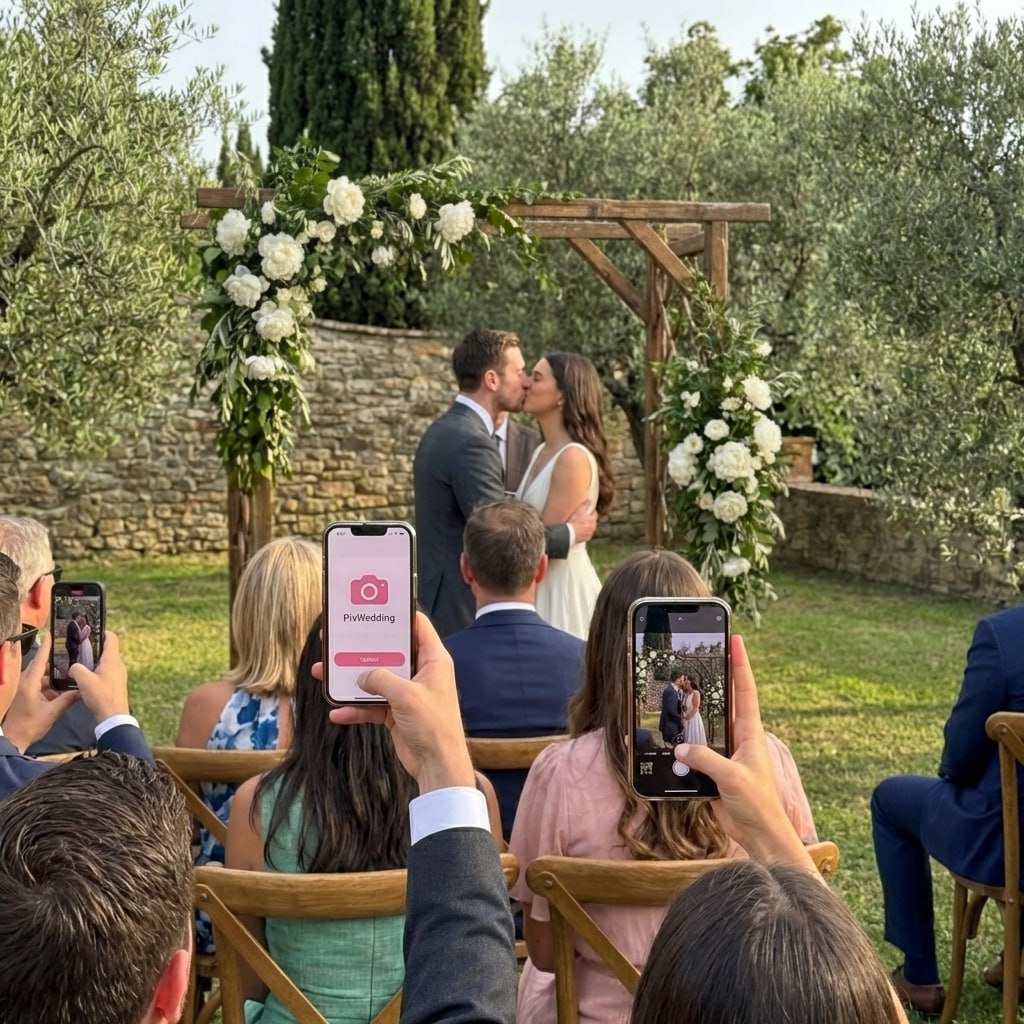
From the best man
Scan to join the album
No app, no account
UPLOADING
Saving your moment
THE ALBUM
Sam & Riley
Example album
647 photos · 95 guests
SCAN TO TRY
pix.wedding/
your-wedding
Watch: tips for writing your own wedding vows
Wedding planner Emily Summer shares practical, heartfelt tips for getting your vows started, including how to open them. Worth six minutes before you sit down to draft.
15 personalized opener frameworks
Each framework is a pattern, not a script. Read the pattern, then fill it with your own memory, admission or observation.
Swipe for all 15 frameworks
Matching your opener to your tone
Tone is the emotional register you set in the first sentence, somewhere between serious and light. Choose the tone that is yours, the one that makes your partner think: yes, that is us.
Swipe for all 4 tones
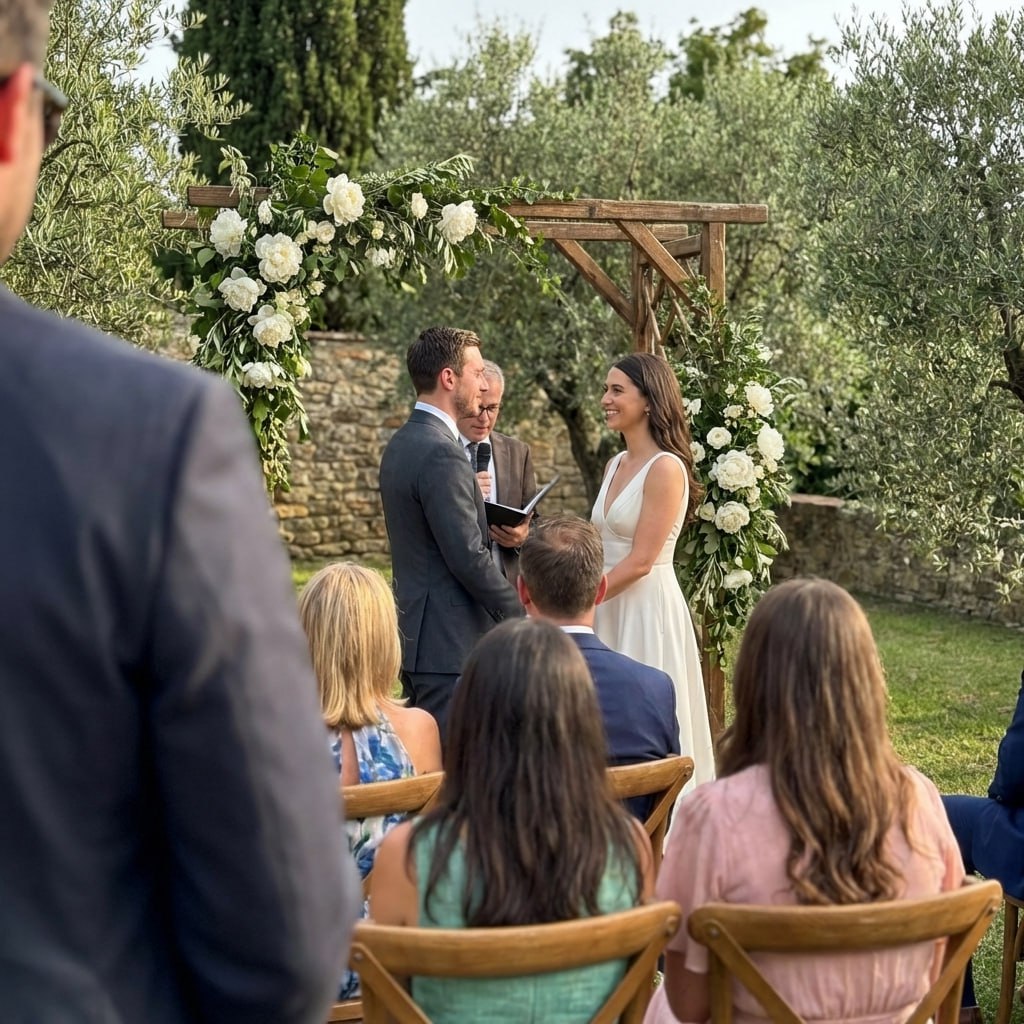
You will be looking at each other. Guests will catch every reaction
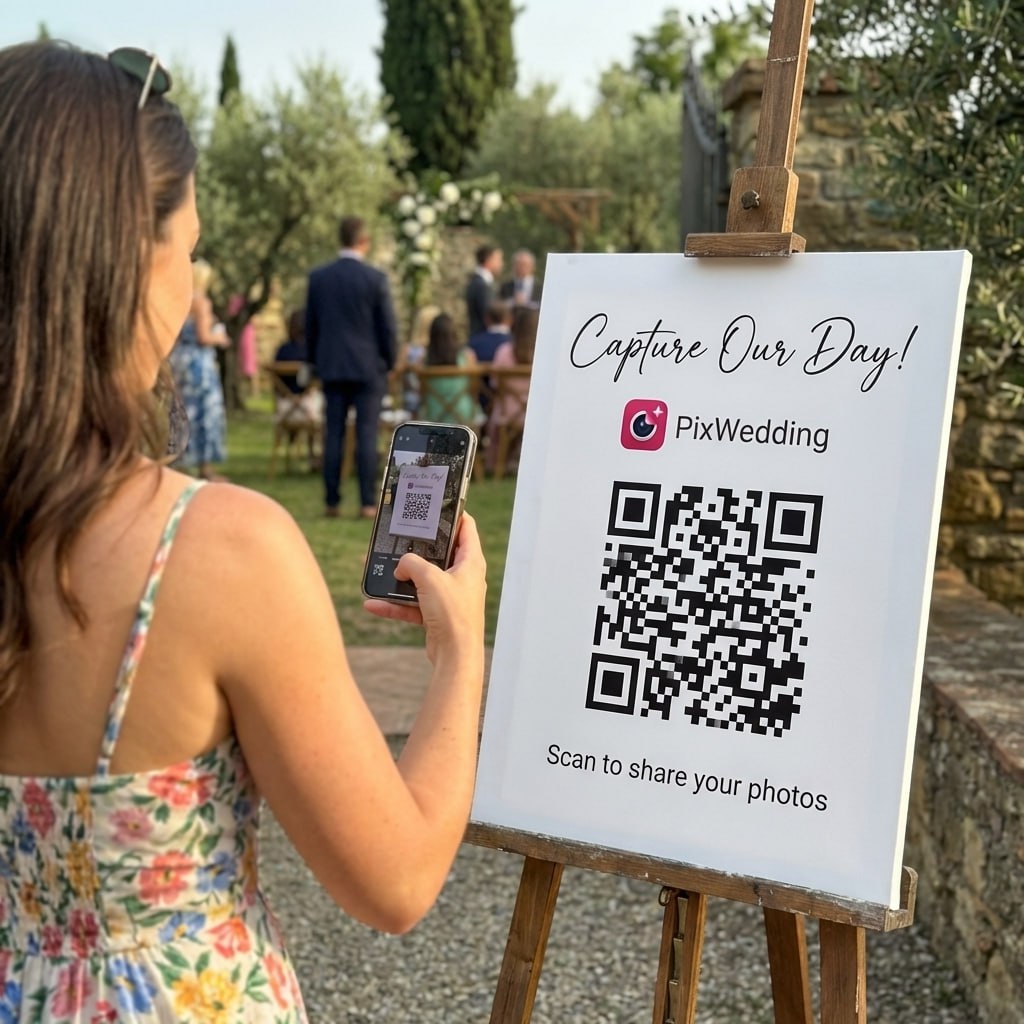
The best photos of your vows come from the rows behind you. Put a QR code on the tables and every guest adds their photos and videos to one album, with no app and no account.
Scan to join the album
No app, no account
UPLOADING
Saving your moment
THE ALBUM
Sam & Riley
Example album
647 photos · 95 guests
The first line problem: why it feels so hard
Most people who write their own vows stall on the first line. The middle comes easier, and the closing often writes itself. The fix is the order you write in.
Write your vows in this order
- FirstWrite the body
Your stories and promises. This is where you find out what your vows are about.
- SecondWrite the closing
It often writes itself once the body is done.
- LastWrite the opener
Now you know the story you are telling, so the first line has something to point at.
Four reasons the opener stalls
Swipe for all 4
The 5 most personal opener types
These five draw the strongest reactions. They share one quality: nobody else could have written them.
- 1The private moment made public
Naming something that happened between the two of you, without explaining it fully, creates instant intimacy in a public setting.
- 2The unexpected admission
Admitting something you were afraid to feel or say, like how scared you were to fall in love, reads as instantly authentic.
- 3The specific ordinary detail
The mundane thing they do that you love. It hits hardest because it proves loving attention over time.
- 4The character witness statement
One moment where you watched your partner's character show under pressure frames the whole vow as testimony.
- 5The honest reckoning
Admitting you did not expect this, and that it changed something, lands because it is true and humble.
Why most vow openers fail, and how to fix yours
Most openers fail for one of four reasons. Find yours and the fix is right next to it.
"I have loved you since the first moment I saw you." Could describe anyone loving anyone.
Fix: Name the moment. Where were you, what happened, and what did you think or feel that surprised you?
Three sentences of setup before the emotional point arrives. By then the opening energy is gone.
Fix: Cut everything before the moment of meaning. Start at the emotional center.
An earnest romantic opener from someone whose relationship runs on irreverence feels out of character.
Fix: Ask: does this sound like me talking to my partner in private? If not, rewrite it in that register.
Beautiful language that says nothing specific. Impressive on paper, empty when spoken.
Fix: Remove every word that is there to sound good. What remains is the start of your real opener.
The opening line workshop: write yours in 20 minutes
Four timed steps give you three candidate openers and a winner. Set a timer for each and keep writing until it goes off.
- 5 minList 5 moments
Write down 5 specific moments from your relationship, no filtering. One sentence each. Include mundane ones.
- 5 minNote what each reveals
For each moment, write one sentence about what it revealed about your partner or your relationship. Fast, no editing.
- 5 minWrite 3 versions
Pick the richest moment and turn it into three openers: memory-first, emotion-first, and observation-based.
- 5 minRead aloud, pick one
Read all three aloud. Pick the one that sounds most like you and refine it slightly. The hardest part is done.
Then practice saying it
Swipe for all 4
Testing your opener, the final checklist and do's and don'ts
Read the line to one trusted person, then run it through the checklist and the do's and don'ts. Every yes means you are on track.
- 01Pick who to ask
Someone who knows your relationship well enough to judge it, and is honest enough to say when it does not land.
- 02Read it cold
Do not explain or set it up. Read the opening line or two, then stop. Watch their face before they speak.
- 03Listen for recognition
The best response is "that is so you." The worst is polite enthusiasm with nothing specific in it.
- 04Keep it or go back
If it lands, leave it alone. If not, go back to your memory mining list and try another moment or framework.
- My opener names something specific that could not have come from a template or another couple's vows
- Reading it aloud, it sounds like me talking, not like a formal speech or a romantic movie
- It creates an implicit question that the rest of my vows will answer
- It establishes the tone I intend to carry through the whole vow exchange
- It does not require more than one or two sentences of setup before the emotional center arrives
- I have read it to at least one person and watched their face, not just asked "is it good?"
- My closing line echoes or resolves something from this opening, creating a circular structure
- I have practiced saying it aloud enough times that it feels familiar rather than terrifying
Do
- Start as close to the emotional center of your story as possible
- Name at least one specific detail that only you two would recognize
- Use the same register you use in real conversation
- Test it on one person before the ceremony
- Let the opener create a question the body of the vow answers
- Read it aloud immediately after writing it
Don't
- Open with any phrase that appears on a wedding Pinterest board
- Use abstract words (love, soulmate, destiny) without grounding them in something specific
- Try to be clever at the expense of being true
- Write an opener that needs three sentences of setup before the emotion arrives
- Choose a tone that does not match who you are in the relationship
- Spend so long on the opener that you rush the promises
Circular structure: connecting your opening to your closing
Decide your opening and closing together. Your opener makes a promise to the listener, and the closing line is where you keep it.
Swipe for all 4 pairs
How your opener sets up everything that follows
| Opener type | The body must | If it does not |
|---|---|---|
| Memory opener | At some point, explain what that memory meant or what it changed. | Listeners wonder why you started there. |
| Emotion opener | Ground the feeling in at least one concrete detail. | The vow stays a declaration and never becomes a witness statement. |
| Humor opener | Drop into real sincerity within the first minute. | The whole vow feels unserious. |
| Observation opener | Connect your promises to what you observed about your partner. | The structure does not feel earned. |
Swipe for all 4 opener types
Building your circular structure, step by step
- Step 1Identify the core image in your opener
Read your opening line. Its single most important word, image or idea is your anchor.
- Step 2Write your closing as the future version
Project the anchor forward. A past moment becomes a future intention; a quality becomes a promise to keep it.
- Step 3Check the echo feels like arrival
The closing should resolve the question the opener raised, not repeat it.
- Step 4Leave distance between them
Let the body of your vows stand between opener and closing, or the circle feels like padding.
- Step 5Read the full vow aloud to test the arc
If the closing feels earned, you have your structure. If it feels abrupt, the body needs more substance first.
Scan. Upload.
Every reaction in the room.
You will be looking at your partner and thinking about your next line. Your guests will be watching both of you. Watch how a guest scans the QR code and adds photos and videos from the phone browser in seconds, with no app and no account.
WEDDING ALBUM
Sam & Riley
Example album
More vow guides and free tools
This page covers the opening line. These cover the rest of the words you will say on the day.
Why your first line matters more than any other
The first line you say to your partner sets the emotional register for everything after it. A specific, honest or surprising opener tells the room that what comes next will be real.
It is also the hardest line to write because it carries the most pressure. Many writers draft everything else first and come back to the opening at the end. That works.
- Specific openers tend to land harder than generic ones
- The first line sets your tone for the entire vow exchange
- Writing your opening last, after the body, often produces better results
- The best openers create a question in the listener's mind that the vows then answer
Explore more free wedding tools
Everything you need to make your wedding day stress-free and unforgettable.
AI Speech Pro
Banger toasts for Best Man & more.
Hashtag Generator
Create unique wedding hashtags.
Thank You Notes
Generate personalized thank you notes.
Father of the Bride Toast
Full example toasts, structure, and delivery tips.
Invitation Wording
Perfect wording for your invitations.
Couple Name Combiner
Blend your names into the perfect couple name.
Photo Sharing QR
The best way to collect guest photos.
Wedding Checklist
Month-by-month planning checklist.
Questions about starting your vows
Length, tone, cliches and finding your own vow opening line: short answers with the technique behind them.
Start with a specific opening line in one or two sentences: a real memory ("The first time I realized I wanted to marry you..."), a direct address ("You are..."), or a clear promise ("From this day forward..."). Specific memories tend to land hardest because they show your partner you have thought about them, not about wedding phrases.
There is no single best line, but vow opening lines that work fall into six patterns: I promise, when I first, you are, from this day, memory-based and observation-based. Browse the category tabs above for 18 examples, plus 6 by relationship story and 15 fill-in frameworks, then swap in your own details.
Only if humor is part of your relationship and your natural voice. A funny opening line can dissolve tension and draw the room in, but it must be followed by real emotional depth. Starting with a joke and staying there leaves the moment feeling light instead of significant.
The most common cliche openers are "From the moment I first saw you," "You are my best friend," and "I never believed in love until I found you." Replace each with a specific version: instead of "the moment I first saw you," name the place and what you thought. Specificity is the cure for cliche.
Yes. Opening with a line from a book, film or song that captures your relationship can work well. Move quickly from the quote to your own voice ("Those words feel true for us because...") so the vows do not feel borrowed.
No. Each partner's vows should sound like them. What should match is the general tone (both heartfelt, both with humor, or both serious) and the approximate length. The opening lines can be completely different in style.
One to three sentences. The opener is a doorway, not the room. Draw your partner and the guests in, set your tone, create an emotional hook, then move into your promises and stories. Openers that run too long delay the substance.
Use the memory mining technique: list 10 specific moments from your relationship, however small or ordinary, then ask which one carries the most emotional weight or says the most about your partner. Turn that moment into one or two sentences.
Skip trying to write a clever opener from nothing. List 10 moments, note what each reveals, and pick the one you return to without deciding to. That involuntary return usually points to your opener.
Emotion-first openers lead with feeling before narrative. Story-first openers lead with a specific scene that creates the feeling. Emotion-first suits naturally expressive people; story-first suits people who think in scenes and events. Both work.
Read your opening line cold to one trusted person who knows your relationship and will tell you the truth. Do not set it up. Read it and watch their face. If they react with recognition or real emotion, it is working.
Circular structure means your closing line echoes your opening line in a way that feels intentional. If you open with a memory of a specific morning, close with a promise about all the mornings ahead. Guests feel the arc even if they cannot say why.
Yes, and many writers find that writing the opener last works better. Once the body of your vows is written, the best opening often becomes obvious because you know what story you are telling.