
How Long Should You Date Before Marriage? The Data and the Signs
There is no magic number. US couples date about three years before getting engaged, and one well-known study links longer dating to lower divorce risk, as a pattern rather than a rule. Here is what the research says, and how to tell if you are ready.

How long to date before marriage? In one line
Most US couples date about three years before getting engaged. Research links dating three or more years before the proposal to lower divorce risk, but as an association, not a cause. Readiness counts more than the calendar: real difficulty weathered together, the big conversations had, and a relationship that feels secure.
Average time US couples dated before getting engaged, in a survey of 10,474 couples married in 2025.
The Knot Real Weddings Study 2026Average engagement in the same study. About 40% of couples were engaged for 11 to 18 months.
The Knot Real Weddings Study 2026Divorce risk for people who dated 3+ years before the proposal vs under 1 year, after controls. An association, not a guarantee.
Francis-Tan & Mialon, Economic Inquiry (2015)Median age at first marriage in 2025 for women and men in the United States.
US Census Bureau, CPS 2025Checked 29 September 2026. The Knot figures via its February 2026 study release; The Knot site blocks automated checks.
Relationship Duration Before Marriage: What the Emory Study Found
Economists Andrew Francis-Tan and Hugo Mialon of Emory University surveyed 3,151 ever-married US adults and asked how long they dated before the proposal. The table shows divorce risk for each group compared with couples who dated under a year.
| Dated before the proposal | Share of sample | Simple comparison | After controls | What it means |
|---|---|---|---|---|
| Under 1 year | 30% | Reference (1.00) | Reference (1.00) | The comparison group. Plenty of short courtships last, this is only the baseline. |
| 1 to 2 years | 37% | About 21% lower (0.79) | About 9% lower (0.92), not significant | Once age, income and other factors are included, the gap mostly fades. |
| 3 years or more | 33% | About 48% lower (0.52) | About 24% lower (0.76), significant | The one dating-length gap that held up after controls. Still a link, not proof that waiting causes it. |
Swipe for each dating length
Hazard ratios from Table 2 of Francis-Tan & Mialon, Economic Inquiry 53(4), 2015 (full text). Lower than 1.00 means lower divorce risk than the under-1-year group. Checked 29 September 2026.
What the Numbers Do and Do Not Say
The study is useful, and easy to overstate. Four things to keep in mind before you treat three years as a deadline.
An association, not a timer
The authors call these links noncausal. People who date longer may differ in other ways, like age, income or how carefully they choose a partner.
The clock stops at the proposal
The study counted dating time before the proposal. Engagement months are not part of its numbers.
Controls shrink the gap
The 3+ year effect falls from about 48% to about 24% after controls. In separate analyses it held for men (0.58) but not for women (0.98).
One online sample
3,151 ever-married US adults recruited through Amazon Mechanical Turk. Useful, but not a national random sample, and averages hide individual couples.
In the same study, people who said they knew their spouse very well had about 44% lower divorce risk after controls (hazard ratio 0.56). How well you know each other seems to carry more weight than the months on the calendar. Francis-Tan & Mialon, 2015
Dating, Moving In, Engagement, Wedding: The Timeline in Numbers
Every couple takes this path in its own order. Each stop shows the verified average and what research ties to it.
- Datingabout 3 yrs
Average before the engagement (The Knot 2026). Dating 3+ years before the proposal was linked to about 24% lower divorce risk after controls (Francis-Tan & Mialon 2015).
- Moving inyour call
No verified national average. Moving in before engagement was linked to slightly lower satisfaction than moving in after it, and the differences were small (Rhoades, Stanley & Markman 2009).
- Engagement14 months
Average engagement, about 40% last 11 to 18 months (The Knot 2026). This time is not counted in the Emory dating numbers.
- Wedding28.4 / 30.8
Median first-marriage age for women and men, 2025 (US Census Bureau). Up to about 32, each extra year was linked to 11% lower divorce odds (Wolfinger, IFS 2015).
Sources: The Knot Real Weddings Study 2026, Francis-Tan & Mialon 2015, Rhoades, Stanley & Markman 2009, US Census Bureau Table MS-2, Wolfinger, Institute for Family Studies 2015. Checked 29 September 2026.
Milestones to Reach Before You Get Engaged
Time only helps if you use it. These six experiences tell you more about a shared future than any count of months.
Long stretches under one roof
Living together, a long trip, or caring for someone together. You see how chores, money and downtime split on ordinary days.
A shared money picture
Full honesty on debt, income and spending, even if you never open a joint account before the wedding.
A real disagreement, repaired
Not a small spat. One that tested whether you can come back together without resentment lingering.
Family, more than once
A holiday or a family event, where you meet relatives in an unscripted setting rather than a polished first dinner.
One hard season together
Illness, a job loss, grief or a difficult move. Hardship shows patterns that easy months never will.
The next 5 to 10 years, out loud
Kids, location, careers, and what each of you privately means by a good marriage.
Signs You Are Ready to Get Married, and Signs to Slow Down
Yellow lights are not stop signs. They point to the next conversation, and most couples have one or two.

Green lights
- You have seen each other in real difficulty and liked how you both handled it
- You have had the big conversations: children, money, religion, family, career
- The relationship feels secure and steady, not only exciting
- You can disagree without contempt or threats to leave
- You have been honest about your full history, including money and past relationships
- You like each other, and would choose this person as a friend
Worth slowing down
- You have never had a meaningful disagreement, so you do not know how conflict goes
- There is a big conversation you keep avoiding because it feels too heavy
- Marriage is partly meant to fix something, like loneliness or family pressure
- You feel rushed by age or circumstances rather than ready
- You catch yourself explaining away a dealbreaker instead of looking at it
- Trust issues came up and were never fully worked through
Are We Ready? A Private Self-Check
Eight questions, answered Yes, Partly or Not yet. It runs entirely in your browser: nothing is sent, saved or shared with anyone, including Pix Wedding.
- 1
We have seen each other through at least one real difficulty.
Critical. How someone behaves under pressure is some of the most useful information you can have.
- 2
We have had the big conversations: money, kids, family, religion, career, conflict.
Critical. Avoiding a hard topic now means meeting it later, inside the marriage.
- 3
We have been together through at least two full calendar years.
High. Holidays, seasons and yearly rhythms show habits a few months cannot.
- 4
Our visions of the future broadly line up.
High. Compatible directions matter more than identical preferences.
- 5
We have met and understood each other's families.
High. You join a family system, not only a person.
- 6
We are choosing this freely, not because of outside pressure.
High. Age, family or a deadline pushing the decision is worth naming out loud.
- 7
We have talked about premarital counseling or a marriage prep course.
Helpful. Survey research links premarital education to lower conflict and higher satisfaction.
- 8
The relationship feels secure, not only exciting.
Helpful. Excitement fades on its own schedule. Security is closer to what you are choosing.
However long you dated, the day goes by fast
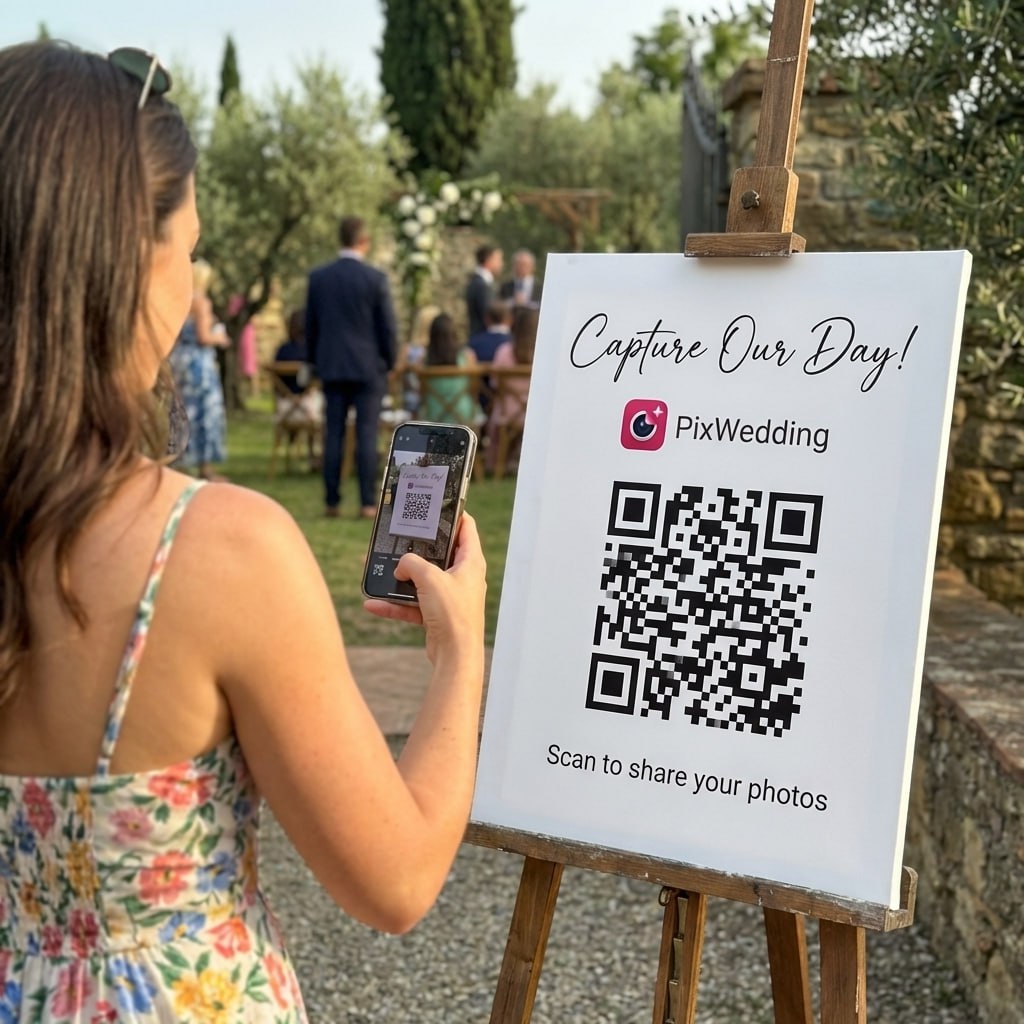
When you do get there, your guests catch the moments you miss. Put a QR code on the tables and everyone adds photos and videos to one album from the phone browser, with no app and no account.




Scan to join the album
No app, no account
UPLOADING
Saving your moment
THE ALBUM
Nora & Sam
Example album
647 photos · 95 guests




Does Age at Marriage Matter More Than Dating Length?
Age is a separate signal from dating length. Sociologist Nicholas Wolfinger analyzed federal survey data (National Survey of Family Growth, 2006 to 2010) for the Institute for Family Studies.
Lower odds of divorce for each extra year of age at marriage, up to about 32.
Wolfinger, IFS (2015)Higher odds of divorce for each year of age at marriage after 32, a smaller effect.
Wolfinger, IFS (2015)US median age at first marriage in 2025 for men and women, up from 30.2 for men in 2024.
US Census Bureau, CPS 2025Marrying in your early to mid 20s
Age research links each extra year before 32 with lower divorce odds, so younger couples often gain the most from a longer runway and more shared experience.
Late 20s to early 30s
The window this research ties to the lowest divorce risk. Partners here often bring more relationship experience, which can offset a shorter courtship.
After your mid 30s, or remarrying
Odds rose modestly past 32 in the same analysis. Blended families and settled habits likely play a part, so the conversations below matter even more.
Long distance or different life stages
If you spent long periods apart, or one of you is still in school, weight in-person, stress-tested time over total months together.
Checked 29 September 2026. For the legal minimum in each state, see how old you have to be to get married.
Six Conversations to Have Before You Get Engaged
Pick one a week. The goal is not to agree on everything, it is to know where you both stand.
Swipe for all six topics
If money is the hard one, a prenup talk can structure it: see should I sign a prenup. Checked 29 September 2026.
Eight Questions to Ask Yourself
Write the answers down privately before you compare notes. Honest answers here beat any timeline.
- 1If we broke up tomorrow, what would I miss most: this person, or the idea of being married?
- 2Have I seen my partner handle a real disappointment, and did I like how they handled it?
- 3Can I picture a hard year of marriage with this person, and do I still want it?
- 4Am I more excited about the wedding day, or about the next 30 years?
- 5What is the one conversation I have been avoiding, and why?
- 6Do I feel like myself around this person, or a performance of myself?
- 7If my closest friend described this relationship back to me, would I recognize it as healthy?
- 8What would need to be true in five years for this to feel like the right decision?
Premarital Counseling and Cultural Timelines
Two things that can matter as much as the length of your courtship: preparation, and the family system around you.
Premarital education
A large random household survey (Stanley, Amato, Johnson and Markman, 2006) linked premarital education to higher satisfaction and commitment, lower conflict and lower odds of divorce. The authors note survey data cannot prove cause.
Formats range from faith-based marriage prep to therapist-led sessions and structured inventories. Ask a few providers what a typical course looks like before you commit.
Journal of Family Psychology (2006)Culture changes the clock
In many families, relatives help vet a partner's values, background and expectations. When that process is thorough, a shorter courtship can hold up because the family did part of the getting-to-know-you work.
In more individual cultures, couples gather that knowledge on their own, over time. Neither model wins. What counts is that you know the person you are choosing.
Time is a proxy. What it buys you is a chance to see each other under strain, meet the families, and talk through money and children before you promise anything.
A Therapist on How Long to Date
In this Mended Light video, a therapist answers a viewer's question about how long to date before getting married, and what readiness looks like beyond the calendar.
Video: Mended Light on YouTube, published May 2021, about 11 minutes.
Scan. Upload.
Every guest photo in one album.
Whenever your wedding day comes, this is how guests share: they scan a QR code and add photos and videos from the phone browser in seconds, with no app and no account.
WEDDING ALBUM
Nora & Sam
Example album



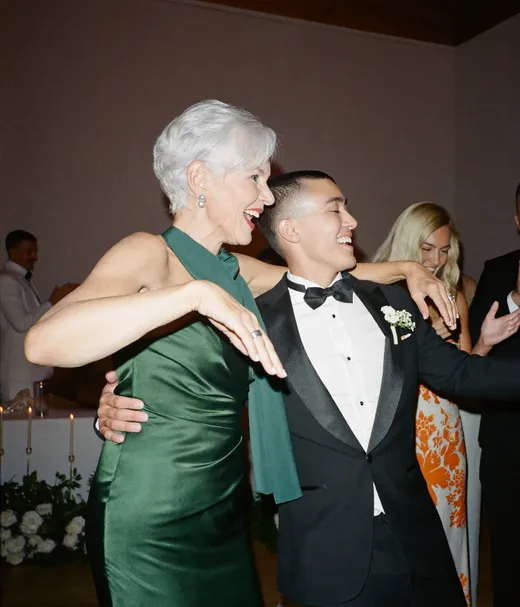



First dance
You guys!!
Planning the day you have been talking about?
Set up a free wedding album now: a QR code for the tables, 20 guest uploads free, no card required.
From Mom
Scan to join the album
No app, no account
UPLOADING
Saving your moment
THE ALBUM
Nora & Sam
Example album
647 photos · 95 guests
SCAN TO TRY
pix.wedding/
your-wedding
More Relationship Guides and Free Tools
Doubts, nerves and practical next steps, whichever one you are facing.
Explore more free wedding tools
Everything you need to make your wedding day stress-free and unforgettable.
QR Sticker Designer
Design custom print-ready stickers.
Hashtag Generator
Create unique wedding hashtags.
How to Collect Guest Photos
5 methods ranked by participation rate and ease.
Share Wedding Photos with Guests
Compare every sharing platform by ease and participation.
Best Way to Get Guest Photos
The single method with the highest participation rate.
How to Make a Shared Wedding Album
Step-by-step setup for every platform.
Alternative to Disposable Cameras
Better, cheaper options than disposable cameras.
Alternative to Wedding Photo Booth
5 cheaper alternatives to a $1,000+ photo booth rental.
Questions about how long to date before marriage
Averages, divorce-risk research and readiness: sourced answers, checked 29 September 2026.
There is no single right number. US couples in The Knot 2026 Real Weddings Study dated about three years before getting engaged. An Emory University study (Francis-Tan and Mialon, 2015) linked dating three or more years before the proposal to about 24% lower divorce risk after controls, but the authors describe it as an association, not a cause. Readiness signs matter more than months.
About three years. The Knot 2026 Real Weddings Study, a survey of 10,474 US couples married in 2025, reported an average of three years of dating before the engagement, followed by an average engagement of 14 months, with about 40% of couples engaged for 11 to 18 months.
Not automatically. In the Emory study, people who dated under a year before the proposal were the higher-risk comparison group, yet many short courtships last. What matters is whether you have seen each other in real difficulty, had the big conversations about money, children, family and conflict, and feel secure rather than only excited.
It is linked to lower risk, not proven to cause it. In the Emory study of 3,151 ever-married US adults, dating 3+ years before the proposal was tied to about 48% lower divorce risk in a simple comparison and about 24% lower after controls. The 1 to 2 year difference was not significant after controls, and the link held for men but not women.
Long enough to have lived through a hard stretch together, met each other's families more than once, talked honestly about money and children, and repaired a real disagreement. For many couples that takes a couple of years, and the US average is about three, but the checklist matters more than the calendar.
It is a personal choice. A 2009 study by Rhoades, Stanley and Markman of 1,050 married people found that those who moved in before engagement reported slightly lower satisfaction and more negative communication than those who moved in after engagement or not before marriage. The authors note the differences were generally small.
They are separate signals. Using federal survey data, sociologist Nicholas Wolfinger (Institute for Family Studies, 2015) found each extra year of age at marriage up to about 32 was linked to 11% lower odds of divorce, rising about 5% a year after that. The US median first-marriage age in 2025 was 28.4 for women and 30.8 for men.
Research is encouraging. A large household survey by Stanley, Amato, Johnson and Markman (Journal of Family Psychology, 2006) found premarital education was associated with higher satisfaction and commitment, lower conflict and reduced odds of divorce. The authors note survey data cannot prove cause, but a few sessions are a low-risk way to surface differences early.