
Bridal Bouquet Spring Flowers: 30 In-Season Blooms and the Shapes That Suit Them
Which spring flowers work best for the bride's own bouquet, how many stems to order, which shape suits your dress, and the florist script to get exactly what you want.
Share Your Wedding Photos FreeThe 6 Best Spring Flowers for a Bridal Bouquet
These six blooms lead every top-performing spring bridal bouquet. Each has unique structural qualities that make it particularly well-suited for the bride's carried arrangement.
Peony
The undisputed queen of spring bridal bouquets. Lush, ruffled heads look full even with low stem counts. Choose coral charm for peach tones, sarah bernhardt for blush, or festiva maxima for ivory.
Garden Ranunculus
Layers of crepe-paper petals in champagne, coral, burgundy, or white. Ranunculus opens slowly, so order buds a day ahead and let them bloom in a warm room before the ceremony.
Tulip
Tulips keep drinking water even after cutting, so stems lengthen in the vase. Wrap tightly with floral tape and cool overnight to prevent drooping. Parrot tulips add texture; double tulips mimic peonies at a lower cost.
Sweet Pea
Delicate, fragrant, and impossible to photograph badly. Use as filler to soften the outline of a round or cascade bouquet. Dusty rose, lavender, and white are the most popular wedding tones.
Lilac
Each lilac branch fans into dozens of tiny florets, creating instant fullness. Scent is a strong differentiator; brides who choose lilac always mention the fragrance in their vows memory.
Anemone
White petals with a dramatic black center add contrast and graphic punch. Combine with pale peonies or dusty miller for a high-fashion monochrome look.
5 Bridal Bouquet Shapes and Their Stem Requirements
Shape determines how many stems you need and which spring flowers work structurally. Before ordering, confirm with your florist which shape you want.
Round (Garden Posy)
The most photographed shape. Build a dome by placing the tallest stems in the center and spiraling outward. Ideal spring combination: 9 peonies + 12 ranunculus + 20 sweet peas + eucalyptus to fill.
Cascade (Teardrop)
Trailing stems extend 12-24 inches below the handle. Use flexible sweet peas, jasmine vine, or hanging amaranthus for the trail. Anchor with peony or ranunculus at the body.
Nosegay (Tussie-Mussie)
A compact, tight round with all stems cut to the same length. One variety can anchor the whole bouquet: 20 white anemones or 15 double tulips alone look architectural and intentional.
Hand-Tied (Loose Garden)
Stems are gathered naturally without foam, secured with floral tape then ribbon. The stems are left visible below the ribbon wrap, adding to the just-picked feel. Works best with spring ranunculus, tulips, and loose foliage.
Arm Sheaf (Presentation)
Cradled over the forearm like a beauty-queen bouquet. Requires long-stemmed varieties: 20-inch tulips, larkspur, or foxglove. Add eucalyptus branches for silvery texture.
Step-by-Step: How to Build a Hand-Tied Spring Bridal Bouquet
This process applies whether you are hiring a florist or attempting a DIY project. Understanding the steps helps you have a smarter conversation with your vendor.
Condition your flowers
Recut stems at a 45-degree angle under running water. Remove all foliage below the waterline. Place in clean buckets with flower food overnight in a 34-38°F space.
Build the armature
Choose your focal flowers (peonies, ranunculus). Hold the first stem vertically, then add each new stem at a slight diagonal to create a natural spiral grip.
Add secondaries
Layer in texture flowers (sweet peas, anemones) between focal points. Step back every few additions to check the silhouette from all angles.
Insert foliage
Tuck eucalyptus, Italian ruscus, or fern behind each focal bloom. Foliage should sit slightly below the flower heads, not above.
Secure and trim
Bind tightly with floral tape 2 inches below the lowest bloom. Trim all stems to the same length: 8-10 inches for a standard round, 6 inches for a nosegay.
Wrap the handle
Wrap with 1.5-inch satin ribbon from top of tape down. Secure with pearl-head pins. For extra hydration on a long day, wrap stems in damp paper towel inside the ribbon.
Foliage Pairing Guide for Spring Bridal Bouquets
Foliage is the difference between a bouquet that looks flat in photos and one that has depth and dimension. Choose one or two varieties maximum.
Quick-Reference Stem Count Chart
Use this as a starting point when getting quotes. Florists will adjust based on specific bloom sizes and your chosen shape.
Prices reflect US averages for spring 2026. Actual quotes vary by city, florist, and variety availability.
The Florist Script: What to Say When You Call
Many brides feel uncertain when calling a florist for the first time. Use this script as a template and fill in your specific details.
Sample Florist Call Script
"I'm planning a spring wedding on [DATE]. I'd love a round bridal bouquet roughly 10-12 inches across in a soft blush-and-white palette. I'm thinking peonies as the focal flower (probably 8-10 stems), supported by garden ranunculus and sweet peas for texture. Can you confirm availability for those varieties in [MONTH], give me a price-per-stem estimate, and suggest a backup flower if peonies are not quite open yet by my date?"
Ask the florist to confirm substitution flowers in writing. Common spring backups: lisianthus for peony, spray roses for ranunculus, freesia for sweet pea.
5 Proven Spring Color Combinations for Bridal Bouquets
Color combinations that photograph well and remain cohesive throughout a long wedding day.
Blush and Ivory
Blush peonies, ivory ranunculus, white anemones, silver eucalyptus
The perennial favorite. Works with every dress color and any venue tone.
Coral and Peach
Coral charm peonies, peach garden roses, apricot sweet peas, dusty miller
Warm and romantic. Photographs beautifully in afternoon golden-hour light.
Lavender and White
Lavender sweet peas, white ranunculus, lilac branches, ivory lisianthus
Soft and ethereal. Pairs with silver, grey, or blush wedding color schemes.
Burgundy and Blush
Dark burgundy tulips, blush anemones, deep ranunculus, olive foliage
Moody and romantic. Strong contrast reads well in both photos and venue.
All White
White peonies, ivory ranunculus, white sweet peas, white anemones with black centers
Timeless and flexible. White bouquets never compete with the dress or bridesmaids.
Preserving Your Spring Bridal Bouquet After the Wedding
Spring flowers can be preserved if you act within the first 24-48 hours after the wedding. Here are the four most reliable methods.
Hang-drying
2-4 weeksRemove ribbon, hang upside down in a dry, dark room. Peonies, roses, and lavender dry well. Sweet peas and tulips tend to lose their shape.
Silica gel
3-7 daysBury individual blooms in silica gel crystals. Best results for anemones and ranunculus. Maintains more color than air drying.
Resin casting
2-4 weeks (professional)Florists press individual blooms flat and cast them in resin blocks or frames. Popular for bridal bouquets because it preserves multiple blooms together.
Freeze-drying
2-6 months (professional)A preservation specialist freeze-dries the entire bouquet in its original shape. The most expensive option ($300-$800) but produces the most lifelike result.
Related Spring Wedding Guides
First dance
You guys!!
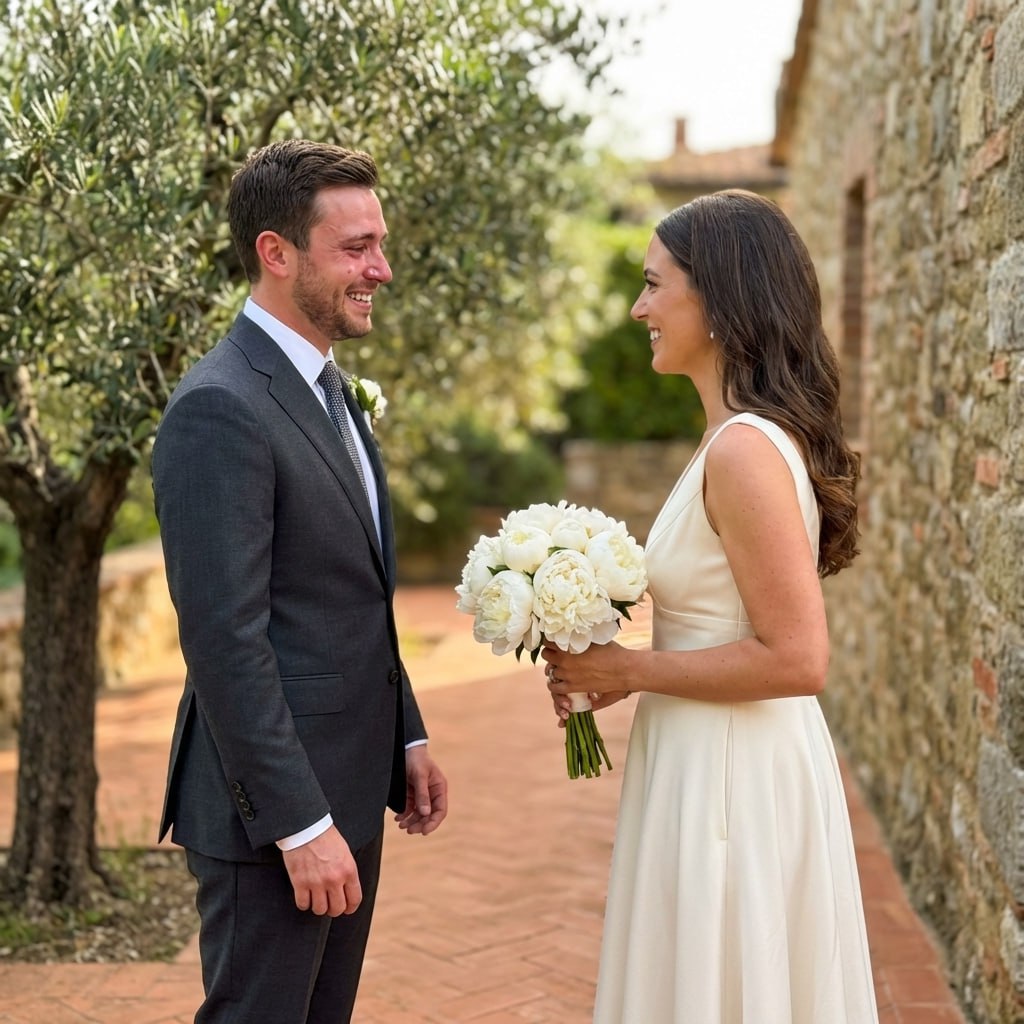
Those peonies deserve to be in every guest's shot
Your florist spent hours on that bouquet - make sure every photo guests take of it lands in your shared album. One QR code, zero hassle.
From Mom
Scan to join the album
No app, no account
UPLOADING
Saving your moment
THE ALBUM
Emma & Jack
June 21, 2026
647 photos · 95 guests

SCAN TO TRY
pix.wedding/
your-wedding
A Real Spring Bouquet Planning Scenario
A bride planning a late April garden wedding in Virginia spent three consultations trying to decide between peonies (her top choice) and ranunculus (the more budget-conscious alternative). Her florist solved the dilemma by confirming that, for an April 26 date, early-season peonies in Claire de Lune and Coral Sunset varieties would be locally available at near-peak pricing.
The final bouquet included 8 peonies as the focal flower, 12 ranunculus to fill and create depth, and 20 sweet pea stems to soften the round silhouette. Total stem count: 40. Final bouquet size: 11 inches. Florist quote: $265 including silver dollar eucalyptus foliage and a blush satin handle wrap.
The lesson: knowing your regional peony availability window changed the entire conversation. What felt like a luxury became an in-season, reasonably priced option by matching the date to the local bloom calendar.
Bridal Bouquet Glossary: 10 Terms to Know Before Meeting Your Florist
Walking into a florist consultation with these terms understood will save you time and help you get a more accurate quote.
The primary, highest-impact bloom that anchors your bouquet visually. For spring bridal bouquets, peonies, garden ranunculus, and tulips serve as the most common focal flowers.
Blooms that support and complement the focal flower. Sweet peas and anemones are typical secondary flowers in spring bridal arrangements.
Small blooms or foliage used to fill negative space and soften the outline. Baby's breath, wax flower, and spray roses serve as filler in spring bouquets.
The total number of individual stems in your bouquet. This is how florists quote and compare. A medium round bouquet typically has 35-55 stems.
The hand-tying method where each new stem is added at a slight diagonal and the bundle rotates after each addition. Creates a natural, self-supporting structure.
Preparing cut flowers before arrangement: recutting stems under water, removing foliage below the waterline, and hydrating in clean water for 12-24 hours.
The process of encouraging a closed bud to open faster by placing it in a warm room or warm water. Florists force ranunculus buds to ensure they are open by your wedding morning.
The substitute variety your florist will use if a specific bloom is unavailable on your date. Always request this in writing at contract signing.
The ribbon, twine, or satin covering the bound stems of a hand-tied bouquet. Usually secured with pearl-headed pins.
How long a cut flower lasts in water with proper conditioning. Most spring bridal flowers have a vase life of 5-10 days, giving your florist a comfortable working window.
Regional Differences in Spring Bridal Bouquet Availability
Spring flower availability is not uniform across the US. Your region determines which flowers are locally grown and which must be imported.
Pacific Northwest (Seattle, Portland)
One of the best regions for spring bridal bouquets. Local tulip farms (especially in the Skagit Valley) produce enormous quantities of affordable tulips from March through May. Peonies arrive locally in late May.
Mid-Atlantic and South (DC, Virginia, Carolinas)
Early peonies arrive in late April, 2-3 weeks before Northern states. Cherry blossoms are locally famous and available for early April weddings. Sweet peas grow locally from April onward.
Northeast (New York, Massachusetts, New England)
Peonies peak in late May to mid-June. April bouquets rely on tulips, anemones, ranunculus, and sweet peas. Local flower farms (CSA floral shares) offer beautiful mixed spring stems.
Midwest (Chicago, Detroit, Minneapolis)
Spring arrives later; local flowers are limited until late April. March and early April bouquets will rely more on imported or greenhouse stems. Compensate by leaning into tulips, lisianthus, and ranunculus.
South and Southwest (Texas, Florida, Arizona)
The longest spring window. Peonies from Georgia arrive early; local ranunculus and anemones are available from February. Some years, mid-February weddings can achieve a full spring palette.
Why In-Season Spring Flowers Make the Best Bridal Bouquets
Choosing in-season spring flowers for your bridal bouquet is one of the most impactful decisions you can make for both quality and budget. Flowers in season are harvested closer to the event, arrive fresher, and last longer out of water. They also cost 30-50% less than out-of-season imports because growers are not shipping from distant climates.
Spring offers the widest variety of any season: peonies, tulips, ranunculus, sweet peas, lilac, anemones, daffodils, hyacinths, and clematis all peak between March and May. A florist working with in-season blooms can offer more creative combinations and is less likely to need last-minute substitutions.
- •Fresher stems: local spring flowers last 2-3 days longer than imported off-season alternatives
- •Lower cost: in-season pricing is 30-50% below peak import rates
- •Better color saturation: flowers grown in natural spring light tend to have deeper, truer pigments
- •Environmental benefit: shorter supply chains mean less refrigeration and transport
- •More options: spring has the broadest palette of any season, from ivory to deep burgundy to vivid coral
Bouquet Construction: From Bucket to Aisle
The gap between a beautiful spring bouquet and one that falls apart by the reception usually comes down to conditioning and construction technique. Most DIY bouquet failures happen because stems were not conditioned long enough, or foliage was left on below the waterline.
Professional florists always condition flowers for 12-24 hours before building. They also build bouquets 24-48 hours before the wedding, not on the morning of, so stems can re-hydrate after being out of water during construction. If you are doing a DIY bouquet, plan at least two construction sessions: a rough assembly the day before, and a final trim and wrap on the morning of.
Matching Bouquet Shape to Wedding Dress Silhouette
The most visually harmonious bouquets complement the dress silhouette rather than compete with it. A full ballgown with a fitted bodice looks best with a medium round bouquet (10-12 inches) that fills the arms without covering the waist detail. A sleek column or sheath dress pairs with a narrow nosegay or arm sheaf to avoid bulk. A fit-and-flare silhouette can carry a cascade bouquet because the flare of the skirt visually balances the trailing stems.
- •Ballgown: medium round, 10-12 inches, peonies or garden roses as focal
- •A-line: round or loose garden posy, any size
- •Column or sheath: nosegay, arm sheaf, or single-variety clutch
- •Fit-and-flare: cascade or teardrop to echo the silhouette
- •Short or tea-length: petite nosegay or single-stem clutch
Explore more free wedding tools
Everything you need to make your wedding day stress-free and unforgettable.
QR Sticker Designer
Design custom print-ready stickers.
Hashtag Generator
Create unique wedding hashtags.
How to Collect Guest Photos
5 methods ranked by participation rate and ease.
Share Wedding Photos with Guests
Compare every sharing platform by ease and participation.
Best Way to Get Guest Photos
The single method with the highest participation rate.
How to Make a Shared Wedding Album
Step-by-step setup for every platform.
Alternative to Disposable Cameras
Better, cheaper options than disposable cameras.
Alternative to Wedding Photo Booth
5 cheaper alternatives to a $1,000+ photo booth rental.
Bridal Bouquet Spring Flowers: Frequently Asked Questions
Straight answers to the questions people ask most about this topic.
For a medium round bouquet (10-11 inches), budget 35-55 total stems depending on bloom size. Peonies and garden roses are large-headed and cover more ground, so 8-12 focal stems plus 20-25 secondary stems is usually sufficient. Smaller flowers like sweet peas or spray roses need 40-60 stems to create the same fullness.
Peonies typically peak from late April through June. For a March wedding, local peonies are rarely available in most of the US. Your florist can source Dutch greenhouse peonies imported from South America, but expect to pay a premium of $6-$10 per stem. A smart March alternative is double tulips (parrot or double late varieties) which mimic peony fullness at a fraction of the cost.
A hand-tied bouquet uses no foam armature; stems are spiraled and bound with tape then ribbon, and the raw stems are often visible below the wrap. A structured bouquet is built into a foam holder or wired frame, which keeps heavy blooms in exact positions and allows more precise shaping. Hand-tied suits a natural, garden aesthetic; structured is better for formal cascade or oversized designs that need to hold their shape through a long day.
Keep the bouquet in a cool room (ideally 55-60°F) until 30 minutes before the ceremony. Mist the petals lightly with water. If your venue is warm, ask your florist to add a water-pick tube to the stem bundle wrapped inside the ribbon. Avoid leaving the bouquet in direct sunlight or a hot car. During the reception, place it in a short vase with a few inches of water between the ceremony and photos.
Yes, with proper conditioning. Immediately after cutting, sear the end of each lilac branch in boiling water for 30 seconds or crush the woody stem with a hammer, then place in deep cold water for 8-12 hours. Remove all leaves below the binding point as foliage dehydrates the branch faster than the blooms. Conditioned lilac holds for 3-5 hours out of water during a ceremony and reception.
Eucalyptus (silver dollar or seeded) is the most versatile and widely available spring foliage. It provides a silvery-green backdrop that works with any bloom color. For a more romantic look, maidenhair fern adds delicate texture. For a darker, richer feel, Italian ruscus or dusty miller contrast well with blush and white spring flowers. Avoid too much foliage: foliage should fill gaps, not dominate the design.