
Wedding Cash Fund Wording: 18 Examples You Can Copy
Traditional, playful, and direct wording for honeymoon funds, home down payments, and wedding costs, plus where it actually belongs and what etiquette experts say.
The short answer
87 percent of couples now include a cash fund and 91 percent say asking for one is totally acceptable, so the etiquette debate is mostly settled. What still trips couples up is wording and placement: name a specific purpose instead of a generic label, keep it off the invitation entirely, put it on your wedding website, and pair it with a few physical registry items so every guest has a comfortable way to give.
What couples are actually asking for
Zola surveyed more than 11,500 couples marrying in 2026 about their registries. Here is what they found.
Source: Zola's 2026 First Look Report and its cash registry trends report, based on 11,500+ couples marrying in 2026.
When a cash fund reads as gracious, and when it reads as risky
Reads as gracious when
- You pair the cash fund with a handful of physical registry items, so guests who prefer a tangible gift have an easy option
- The wording explains specifically what the money is for, not just "cash appreciated"
- It lives only on your wedding website, never printed on the invitation
- You mention it verbally or through close family to guests who ask directly before the website goes live
Gets risky when
- A cash-only registry with zero physical items, some guests (often older relatives) will feel there is no comfortable way to give
- Vague, generic wording ("cash appreciated") with no explanation of purpose, which reads as an open-ended request rather than a gift
- Printing fund details directly on the invitation or a separate registry insert card
- Asking multiple times across multiple channels in a way that starts to feel like a running reminder rather than a one-time mention
Etiquette authority Emily Post puts it plainly: it has long been acceptable to give cash, and it is now also acceptable for couples to signal cash is welcome. The risk was never in asking, it was always in how and where.
Where cash fund wording actually belongs
| Channel | Put it here? | Why |
|---|---|---|
| Wedding invitation | No | Never. Emily Post's etiquette guidance is explicit that gift and registry information, cash included, does not belong on the invitation or its enclosures. |
| Wedding website | Yes | Yes, this is the correct home for it. A dedicated registry or gifts page is where guests expect to find this information. |
| Verbal, through close family or the wedding party | Yes | Yes, for guests who ask directly before the website is shared or finalized. |
| A separate registry insert card mailed with the invitation | No | Widely considered outdated and presumptuous; it implies gift-giving is expected rather than appreciated. |
| Thank-you notes after the wedding | Yes | Yes, and specific: naming what the contribution went toward makes the thank-you feel personal rather than templated. |
Placement guidance based on Emily Post's wedding registry etiquette and Zola's cash registry guide.
Traditional tone wording
Warm, formal, and safe for a wide range of guests, including older relatives.
"Your presence at our wedding is the greatest gift of all. For those who wish to give a gift, a contribution to our new life together would be cherished."
"In lieu of traditional gifts, we are saving for our honeymoon abroad. A contribution toward our travels would mean the world to us."
"As we begin our life together, we are saving toward our first home. Should you wish to celebrate with a gift, a contribution to our home fund would be deeply appreciated."
"We already share a home full of everything we need. If you would like to give a gift, we would be grateful for a contribution toward experiences we can share together."
"We are grateful for your presence and support as we plan our wedding. Contributions toward the celebration itself are welcomed and deeply appreciated."
Playful tone wording
Casual and a little cheeky, works best on wedding websites that already have a light, informal voice throughout.
"We've got two coffee makers already and zero regrets about registering for cash instead. Help us skip the toaster aisle entirely."
"Adventure fund, not sock drawer fund. Help send us somewhere warm instead of buying us matching towels."
"We're trading wedding gifts for a down payment fund. Bricks over blenders, basically."
"Skip the gift wrap. We're collecting memories, not more stuff. Help us fund our first big trip as a married couple."
"This party isn't cheap and we'd rather spend the budget dancing with you than stressing over the bill. A little help goes a long way."
Direct tone wording
No embellishment, just the facts. Useful when you want guests to spend less time reading and more time acting.
"We are asking for cash gifts in place of a traditional registry. Contributions can be made through our wedding website."
"We are saving for our honeymoon and would prefer cash contributions over physical gifts. Details are on our website."
"We are saving toward a home down payment and welcome cash gifts toward that goal in place of registry items."
"In place of gifts, we are asking for contributions toward experiences we will share in our first year of marriage."
"We are covering the wedding ourselves and welcome contributions toward the cost of the celebration, in place of gifts."
Itemized versions, for the website only
Naming a specific use for each contribution tier is the single change Emily Post's guidance points to most: describing how contributions will be used performs better than a flat, unexplained ask.
"We're saving for a home. Contributions of any size are appreciated. A few ways your gift could help: $50 toward moving boxes, $150 toward the first month's furniture, $300 toward closing costs."
"Help us get there! Choose an experience to fund, from the flight, to a sunset dinner on our first night, to a day trip we'll always remember."
"We're planning this celebration ourselves. If you'd like to contribute toward the big day instead of a gift, we would be so grateful."
Cultural cash-gift traditions worth knowing
A Western-style cash fund is not the only cash-gift tradition your guests may already know. Several cultures have long-standing customs that predate the modern wedding website registry.
Chinese: hongbao
Guests present the couple with cash in red envelopes (hongbao), often in amounts considered lucky. This is a long-standing gift-giving tradition distinct from a Western-style cash fund, but it means guests from Chinese and broader East Asian backgrounds may already expect cash to be the default gift.
Indian: shagun
Cash gifts given as a blessing of good fortune, typically in decorative envelopes, with amounts often ending in the digit 1 (101, 251) for good luck. Couples with Indian family traditions often layer a modern cash fund on top of this existing custom rather than replacing it.
Polish: apron dance, and its Filipino and Italian counterparts
A reception tradition where guests pin or place cash with the bride or groom in exchange for a dance, known as the apron dance in Polish weddings, the money dance in Filipino weddings, and la borsa (a silk bag for cash-filled envelopes) in some Italian weddings. These live at the reception itself, separate from a registry-style cash fund, and are worth mentioning to guests unfamiliar with the custom.

Registry table
Sorted, finally
The fund pays for the trip. The album keeps the day.
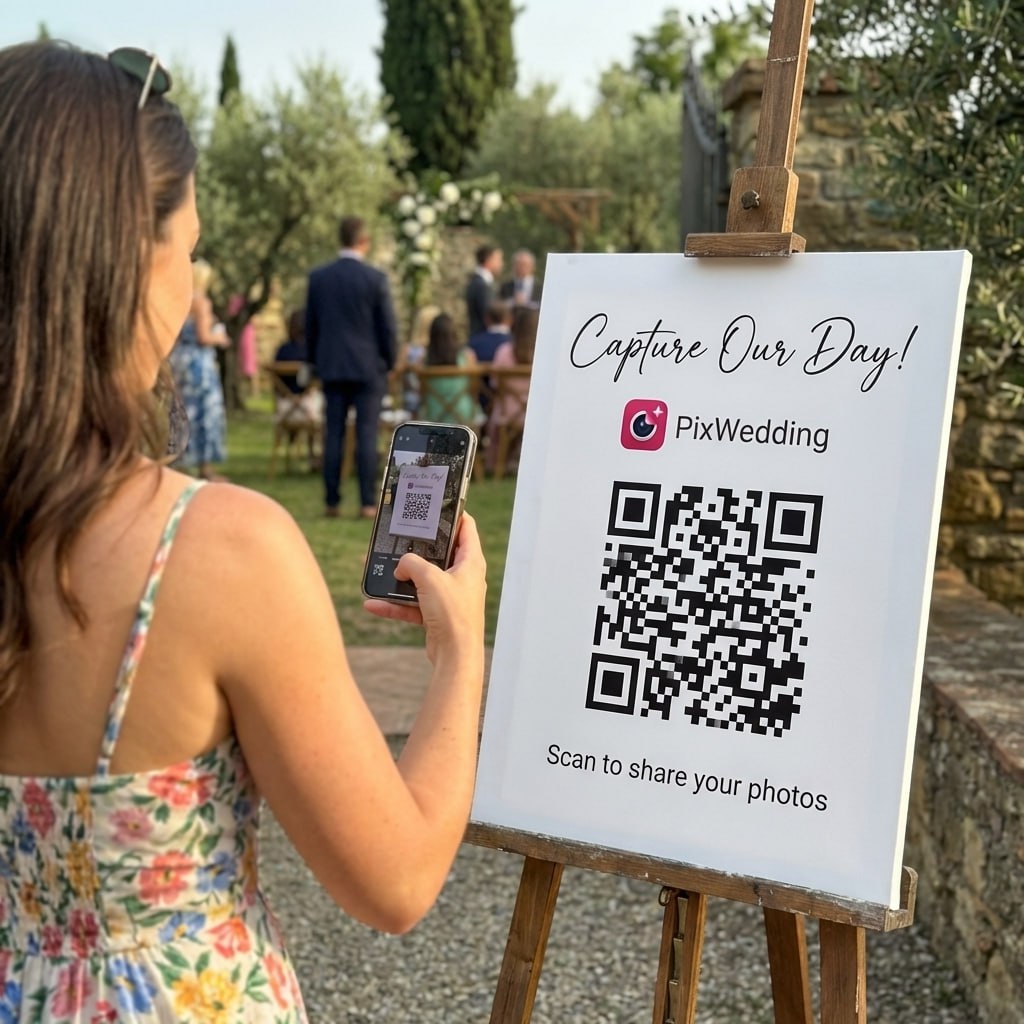
Once the wording is sorted, the next thing on the list: a free QR code that collects every guest photo from the wedding itself in one place, no app required.
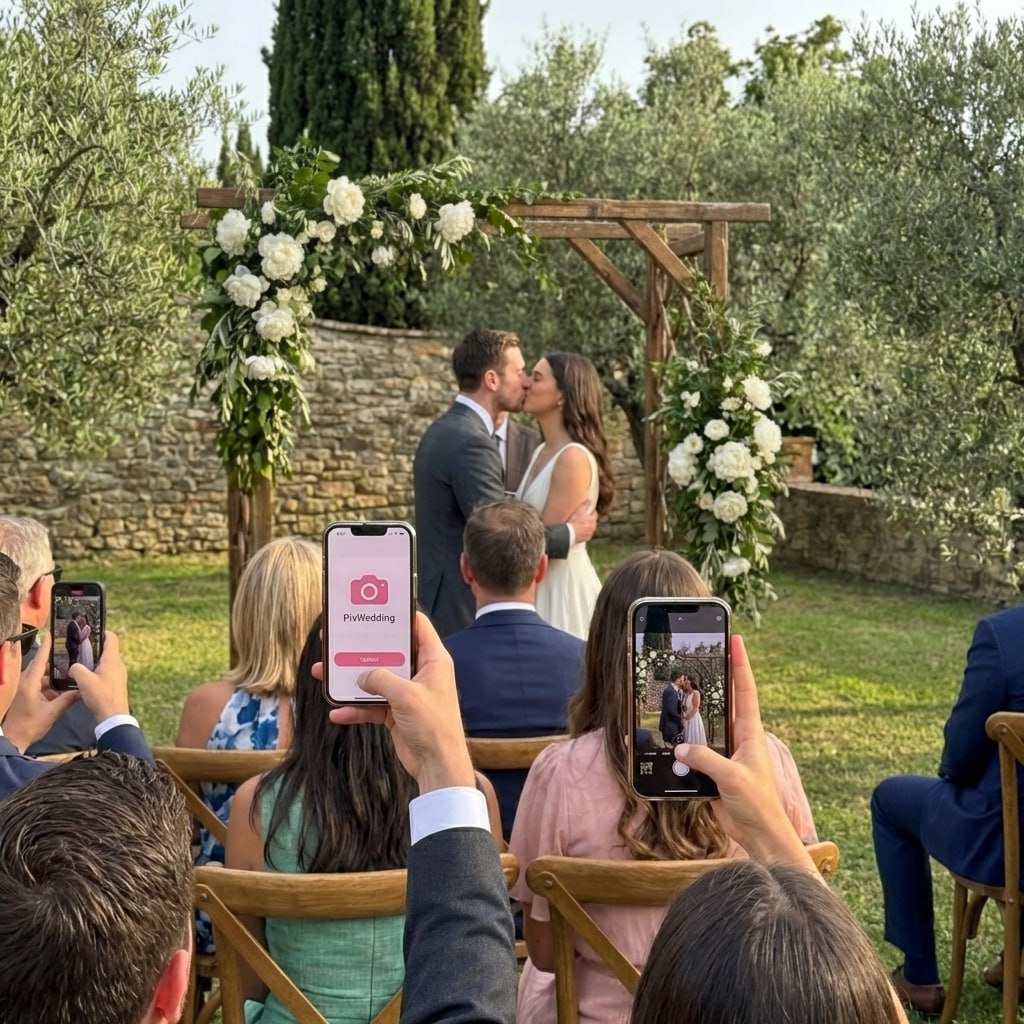
From Mom
Scan to join the album
No app, no account
UPLOADING
Saving your moment
THE ALBUM
Emma & Jack
June 21, 2026
647 photos · 95 guests




SCAN TO TRY
pix.wedding/
your-wedding
Common mistakes with cash fund wording
1. Printing any fund details on the invitation
This is the single most common etiquette misstep. Keep the invitation to event details only and let the website carry all gift information.
2. Using vague, purposeless wording
"Cash is appreciated" with no context reads as transactional. Naming what the money is for, even in general terms like "our first home" or "our honeymoon," changes how the ask lands.
3. Offering zero physical registry items
A cash-only ask with nothing else can leave guests who prefer buying something tangible without a comfortable option. Five to ten physical items alongside the fund solves this without diluting the ask.
4. Matching the wrong tone to your wedding
A stiff, formal line on an otherwise casual, playful wedding website (or a jokey line on a formal black-tie wedding) reads as out of place. Match the wording tone to how you're communicating everything else.
5. Repeating the ask across too many channels
One clear mention on the website, plus a verbal answer when asked directly, is enough. Repeating it in every group chat and RSVP reminder starts to feel like a running request instead of a single gracious note.
Why the wording is worth getting right
A cash fund is not a minor add-on for a lot of couples, it is part of how the wedding and the years right after it get paid for. Zola's data on financial trade-offs shows why clear, purposeful wording matters more than it might seem.
Against that backdrop, a well-worded cash fund is not an awkward ask, it is a practical one. Guests who understand exactly what their contribution accomplishes, a flight, a month of rent, a slice of the catering bill, tend to respond more generously than guests facing a vague, unexplained request.
Who actually says the wording, and where
The couple, family, and the wedding party all end up relaying this information at different points. Keeping the wording consistent across all four channels avoids mixed signals.
The couple, on the wedding website
The primary and safest channel. First-person wording ("we are saving for...") reads as a direct, honest statement rather than a request relayed through someone else.
Parents or close family, verbally
When guests ask family members directly ("what do they need?"), a short verbal version works well: "They mentioned they're saving toward a home and would love help with that if you're able." Family should never volunteer this unprompted.
The wedding party, if asked
Bridesmaids or groomsmen fielding the same question from guests can use the identical short verbal line the couple gives their parents, so the message stays consistent across everyone relaying it.
A wedding website FAQ page
Some couples add a one-line FAQ entry ("Do you have a registry?") that links straight to the cash fund and any physical registry items, keeping the main pages focused on event details.
An illustrative example: wording that changed after one round of feedback
For context, not a real couple. This walks through how vague wording typically gets tightened once a couple sees the guidance above.
"We don't need anything, but cash is always welcome!"
"We already have a home full of everything we need, so in place of gifts we're saving for a honeymoon along the Amalfi Coast. If you'd like to contribute, you can do so through the link below, no amount is too small and every bit gets us closer to that sunset dinner in Positano."
The rewrite names a real destination, explains why physical gifts are not needed, and softens the ask with 'no amount is too small.' Etiquette guidance points to specificity and warmth as the two levers that make cash fund wording land well instead of feeling transactional.
Cash fund terms, in one sentence each
Cash fund
A registry line item that collects monetary contributions toward a stated goal (honeymoon, home, wedding costs) instead of a physical item.
Registry cash add-on
A cash fund listed alongside a traditional item-based registry on the same wedding website, rather than replacing it entirely.
Cash-only registry
A registry with no physical items at all, only cash funds. Riskier by etiquette standards since some guests prefer buying a tangible gift.
Dollar dance / money dance
A reception tradition, common in Filipino, Polish, Italian, and other communities, where guests pin or hand cash to the couple in exchange for a dance.
Registry insert card
A separate card once mailed alongside the invitation listing registry details. Considered outdated by modern etiquette guidance; the website has replaced it.
A few more things couples ask
Do I need a different cash fund wording for the invitation vs. the website?
You do not need invitation wording at all, cash fund information should not appear there. Write one clear website version and, if you want, a shorter verbal version for family and the wedding party to relay by word of mouth.
Should the wording change if I am also asking for physical gifts?
Yes, slightly. Frame the cash fund as one option among a few, for example "for those who prefer a physical gift, our registry is linked below," so neither option reads as the default expectation.
How specific is too specific?
Naming a real, concrete purpose ("a sunset dinner in Santorini," "the down payment on our first home") performs better than vague wording. Where it can tip too far is listing exact dollar-for-dollar item costs in a way that feels more like an invoice than a gift request; a few illustrative examples work better than an itemized bill.
Keep planning
More wording help and planning tools for the rest of your wedding.
Why the etiquette debate is mostly settled, but the wording still matters
For years, the etiquette question was whether asking for cash was acceptable at all. That debate is effectively over: 91 percent of couples say it's totally acceptable, and 87 percent are doing it themselves. What has not caught up is the wording. Couples still routinely default to a generic 'Honeymoon Fund' label pulled from a template, when specific, purposeful wording reads warmer and far less transactional to guests.
The wording you choose does two jobs at once: it tells guests exactly what their gift accomplishes, and it sets the tone (formal, playful, or plainly direct) that matches how you're communicating everything else about your wedding. Mismatched tone, a stiff formal line on an otherwise casual wedding website, is the most common reason cash fund wording feels off even when the underlying ask is completely normal.
The one etiquette rule almost everyone gets wrong
Cash fund or physical registry, the rule is the same: none of it belongs on the invitation. Emily Post's guidance is explicit that registry and gift information should never appear on the invitation itself or its enclosures. The wedding website is the correct home for this information, and close family and the wedding party are the correct channel for guests who ask directly before the website goes live.
This one rule solves most of the 'is this tacky' anxiety couples feel. An invitation that only mentions the date, time, and location reads as gracious no matter what your registry looks like. A website with clearly worded, purposeful cash fund language reads as helpful, not presumptuous, because guests only see it when they're already looking for gift information.
Explore more free wedding tools
Everything you need to make your wedding day stress-free and unforgettable.
AI Vow Generator
Write "banger" vows in seconds.
AI Speech Pro
Banger toasts for Best Man & more.
Hashtag Generator
Create unique wedding hashtags.
Thank You Notes
Generate personalized thank you notes.
Father of the Bride Toast
Full example toasts, structure, and delivery tips.
Couple Name Combiner
Blend your names into the perfect couple name.
Photo Sharing QR
The best way to collect guest photos.
Wedding Checklist
Month-by-month planning checklist.
Wedding cash fund wording, answered
Straight answers to the questions people ask most about this topic.
87 percent of couples marrying in 2026 include at least one cash fund in their registry, and 91 percent say asking for cash is totally acceptable, according to Zola's 2026 First Look Report of over 11,500 couples. Asking for cash has moved firmly into the mainstream; the open question is no longer whether to ask, it's how to word it.
A cash-only registry is not inherently rude, but Zola's own guidance calls it risky: some guests, especially older relatives, feel more comfortable giving a tangible item and can feel put off with no physical option at all. The safer approach both Zola and etiquette authority Emily Post recommend is including a handful of physical items (5 to 10) alongside your cash fund, so every guest has a comfortable way to give.
Emily Post's etiquette guidance is direct on this: never put registry or gift information, cash fund or otherwise, on the wedding invitation itself. It belongs on your wedding website, and close family or your wedding party can mention it by word of mouth when asked. Save the invitation for the event details only.
Naming it specifically performs better. Emily Post's guidance suggests describing exactly how contributions will be used, and Zola's data backs this up: guests respond better to a fund labeled 'Sunset Dinner in Santorini' than one labeled generically 'Honeymoon Fund,' because a specific ask feels like a gift with a purpose rather than an open-ended cash request.
38.9 percent of couples with a cash fund are now registering toward a home down payment, according to Zola's 2026 report, a shift beyond the traditional honeymoon-only cash fund. 86 percent still include a honeymoon or travel fund, and 27 percent (up from 16 percent the year before) are now asking guests to help cover the wedding itself.
Yes, and it's the most common approach. Most wedding website platforms let you list a cash fund alongside a standard registry, so guests who prefer buying a physical item and guests who prefer contributing cash both have an easy path. Emily Post's guidance caps the total number of registries at three to avoid looking self-indulgent.