Digital Wedding Guest Book: 8 Apps Compared, Plus a Free Maker
Audio phones, call-in lines, video booths and QR apps, with the prices we checked on each vendor's site. Then try the free maker below and see how a digital guest book feels before you pay for one.
Short answer
A digital wedding guest book collects guest messages on a device instead of paper: voicemails on a vintage phone, calls to a number, short videos, or notes and photos sent from a QR code. QR apps cost about $29 to $119 one-time, a call-in line about $99, and an audio phone rental about $299 per event (vendor prices checked September 2026).
Pix Wedding is a QR option: guests add photos and videos with a short note, no app, and Standard ($49, one-time) adds the audio guestbook with guest names. See all 8 compared.
This preview runs in your browser only. Create a free Pix Wedding gallery so every real guest can sign in from their own phone.
Your guest book is empty
Add the first message above and watch it appear here as a keepsake page, just like guests will see at your wedding.
01The 5 types
What is a digital wedding guest book, and which kind?
A digital guest book is any guest book where the messages end up on a device instead of on paper. That covers five quite different products. They differ in what guests leave, where they leave it and what you keep afterwards.
Audio guest book phone
A vintage rotary phone at the reception. Guests pick up, hear your greeting and leave a voicemail after the beep.
Cost Rental from After The Tone: $299 per phone per event, plus return shipping.
Feels like an event moment
You keep real voices and laughter
Great for grandparents who skip phones
Queue at one phone
Voice only, no photos
Has to be shipped back on time
Call-in voicemail line
A phone number guests call from their own phone to leave a message, before, during or after the wedding.
Cost LifeOnRecord: $99 for a 1-year service with a toll-free number and transcripts.
No hardware, no queue
Remote guests can call in
Works on any phone
Guests must remember to call
Voice only
Less of a "moment" at the venue
Video guest book
Guests record a short video message, either on a rented booth or tablet, or from their own phone through an app link.
Cost Included in some QR apps (GuestPix lists a written and video guestbook on every paid plan) or rented as a booth.
Faces and voices together
Fun to replay on anniversaries
Great for a wedding film
Many guests feel shy on camera
Booths need a spot and power
Large files
QR photo + message app
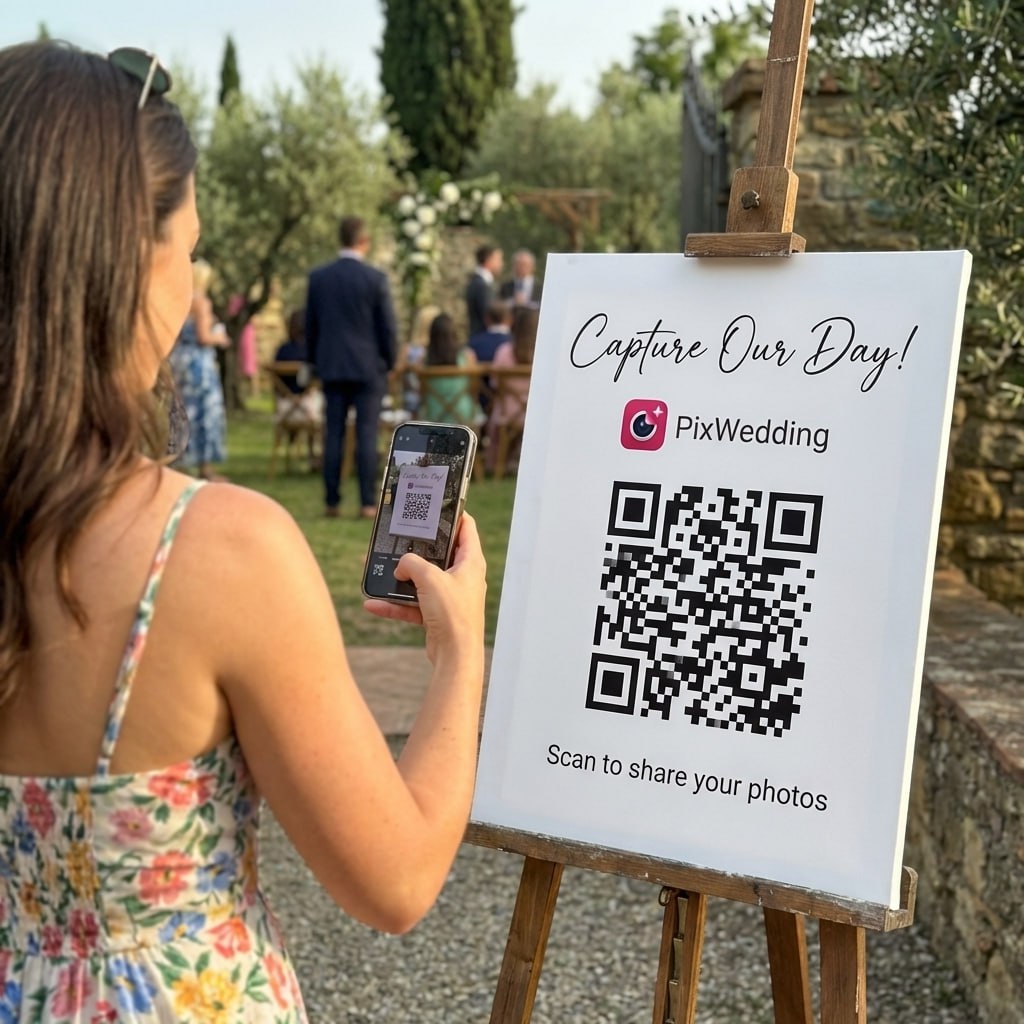
One QR code on the tables. Guests scan, then add photos, videos and a note, and on some apps a voice message.
Cost $29 to $119 one-time on the apps we checked; Pix Wedding and Wedibox also have a small free tier.
No queue, every guest signs from their seat
Collects the photos too
Download everything afterwards
Needs a data connection
Less tactile than a book
Features differ a lot by plan
Printed keepsake hybrid
Guests sign on a device, and the entries become a printed book after the wedding.
Cost My Digital Guestbook: $129, which includes a 32-page hardcover book.
A real book on the shelf
Handwriting and drawings kept
No paper stress on the day
One device means a line
Mostly text and drawings
Extra copies cost more
02Best digital guest book apps
8 digital guest books compared, with real prices
We read each vendor’s own pricing page on September 24, 2026. Plans change, so click a name to check the current offer before you buy. Rose chips mark the gaps that matter most for a guest book.
Pix WeddingPix Wedding
One QR code on every table. Guests add photos and videos with a short note from their own phone, no app. Standard ($49, one-time) adds the audio guestbook with guest names. 20 guest uploads free, no card.
Service
What guests leave
Voice messages
Free option
Price
Storage
Pix WeddingPix Wedding
Photos and videos with a short note, from one QR code, no app
Audio guestbook with guest names on Standard ($49) and Pro ($79)
20 guest uploads, no card
$39 Starter, $49 Standard, $79 Pro, one-time
6 months to 2 years online, ZIP download on every paid plan
Web and phone booth audio on Standard; dial-in number on Premium
Free option
No free plan
Price
$49 Standard, $97 Premium
Storage
12 months (Standard) or 14 months (Premium)
Eventoly
What guests leave
Photos, videos, written notes and voice messages
Voice messages
Standard ($59) and Pro, with a printable book export
Free option
Free trial, limits not published
Price
$49 Starter, $59 Standard, $89 Pro, one-time
Storage
6 months to 2 years
After The Tone
What guests leave
Voicemails on a vintage rotary phone
Voice messages
Yes, that is the product
Free option
No free option
Price
$299 per phone per event (rental)
Storage
Edited voicemails in an online portal
LifeOnRecord
What guests leave
Voice messages by toll-free call, WhatsApp or email
Voice messages
Yes, with transcripts and human editing
Free option
No free option
Price
$99 service; vintage phone rental $149 to $199 extra
Storage
1-year service
My Digital Guestbook
What guests leave
Handwritten or drawn messages on a device, no app
Voice messages
Not listed
Free option
No free option
Price
$129 including a 32-page hardcover book
Storage
Printed keepsake book
Prices and features from each vendor's own website, checked September 24, 2026. Kululu and similar apps were left out because their current prices were not published in a form we could verify.
Two honest notes on Pix Wedding: a written note travels with a photo or video upload, so a guest adds at least one picture, and voice messages start at Standard. If voice is the main thing you want, Pix Standard, Wedibox and Eventoly all include it from $49. If you only want voices, a phone or a call-in line may suit you better than any app.
Table 6 signed in
Best night ever
Your digital guest book, signed from every table
Guests scan one QR code and add their photos and videos with a short note, no app. Standard adds voice messages and guest names. 20 guest uploads free, no card.
A blank box makes guests freeze and write "Congrats!". A prompt on the table card gets stories. The free maker above has a "Give me a prompt" button with ideas like these.
“The moment I knew you two were meant to be was...”
“My best advice for your first year of marriage is...”
“A memory of you I will never forget...”
“For your first anniversary, I hope you...”
“The funniest thing I have seen you do together...”
“What I love most about you as a couple...”
“A song that will always remind me of you...”
“In ten years I picture you two...”
“My wish for your life together...”
“The first time I met you, I thought...”
“A date night idea for your first year...”
“Please never stop...”
06Paper vs digital
Paper guest book vs digital: pros and cons
Neither is wrong. Paper wins on feel, digital wins on reach and what you keep. Many couples run both.
Paper guest book
Pros
A physical object you can hold and flip through
Handwriting has a charm no screen copies
Works without WiFi, phones or batteries
Easy for every age group
Cons
Guests queue at one table and many skip it
Text only, no photos, voices or video
One copy: a spilled drink or a lost box and it is gone
Remote guests cannot sign at all
Digital guest book
Pros
Every guest signs from their seat at the same time
Photos, videos and voice messages next to the words
Guests who cannot attend can still take part
Download the whole thing and back it up
Cons
Needs a phone and a data connection
Less tactile unless you print it afterwards
Features and storage time vary by plan
Some guests need a clear nudge to use it
When paper is the better call
Your family keeps an heirloom book that gets signed at every wedding
The venue has no WiFi and weak or no cell signal
You are running a deliberately unplugged, phones-away wedding
The ceremony is small enough to hand the book to every guest
The format matters less than the nudge. These six habits help fill a guest book.
Put the QR where people sit
A card on every table beats one sign at the entrance. Guests sign during the quiet moments between courses, not in a queue.
Have the MC say it out loud
One line after dinner works: "Scan the code on your table and leave the couple a message and a photo." It reminds every table at once, including the guests who never saw the sign.
Ask before the wedding
Share the link in your wedding website or a week-before message. Guests can write something thoughtful at home instead of rushing at the venue.
Invite the people who cannot come
Send the same link to relatives abroad or friends who could not travel. A digital guest book is the one format where they can still sign.
Help the grandparents
Ask a cousin or a bridesmaid to walk older guests through it, or keep a small paper card and pen as a backup. Nobody should feel left out.
Plan an anniversary replay
Save the messages for your first anniversary. Reading or hearing them a year later hits differently than scrolling through them the morning after.
Digital guest book pricing
Messages, photos and voices for one payment
Start with 20 guest uploads free, no card. Standard is $49 once and adds the audio guestbook with guest names.
--days
--hours
--minutes
--seconds
Starter
$59$39one-time
For collecting every original
Unlimited photos, videos & guests
Original quality (no compression)
No app for guests, QR + browser upload
Film roll mode with shot limit & revealNEW
QR code template designs
A & T
A & T
A & T
A & T
3 months upload from event date
6 months storage + ZIP download
Pay with Apple Pay, Google Pay or card.Money back if your guests never upload.
Chosen by most couples
Standard
$74$49one-time
Most couples pick this
Voice messages from guests start here
Everything in Starter
Live slideshow at the reception
Audio guestbook & guest names
Photo missions, photo bingo + leaderboardNEW
Up to 6 sub-albums (ceremony, reception)
Private upload link for your photographerNEW
Custom script and serif fonts
6 months upload, 1 year storage
Pay with Apple Pay, Google Pay or card.Money back if your guests never upload.
One-time payment, no subscription
Pro
$118$79one-time
For big guest lists
Everything in Standard
AI selfie search for guestsNEW
Multiple admins
Custom domain for your album
Priority support
1 year upload, 2 years storage
Pay with Apple Pay, Google Pay or card.Money back if your guests never upload.
One payment. Yours to keep.No subscription. No renewals. No surprise charges.
Secure checkout. Polar, Apple Pay, Google Pay.
Money-back guarantee:if your guests never upload a single photo, you get 100% back.See how it works
Digital guest book vs online wedding guest book vs guest book app
People search for the same idea with different words: digital guest book, online wedding guest book, virtual guest book or guest book app. They all mean a guest book that lives on a device instead of on paper. The practical difference is how guests reach it: a phone at the venue, a number they call, or a link and QR code that opens on their own phone.
Online guest books that open in the browser are the easiest for guests, since nobody installs anything. Apps that need a download or an account lose the guests who will not bother.
What to check before you pay for any digital guest book
Before you pick a service, read its pricing page for these points. Plan names alone tell you very little.
Whether voice messages are on the plan you will buy, not only on the top plan
How long guests can upload and how long files stay online
Whether you can download everything in original quality
Whether guests need an app or an account
What happens after the storage window ends
Why couples still keep a paper card on the table
A digital guest book does not have to replace paper completely. Many couples keep a small stack of cards and a pen for guests who do not want to use a phone, then photograph the cards and add them to the album. You get one collection that includes everyone.
Explore more free wedding tools
Everything you need to make your wedding day stress-free and unforgettable.
Costs, apps, voice messages and what you keep afterwards
Digital Wedding Guest Book FAQ
Straight answers to the questions people ask most about this topic.
A digital wedding guest book collects guest messages electronically instead of on paper. Depending on the type, guests leave a voicemail on a vintage phone, call a number, record a video, or scan a QR code and add a note with their photos. You keep the entries as audio files, videos, an online album or a printed book.
On the vendor pages we checked in September 2026, QR photo and message apps cost $29 to $119, a call-in voicemail line like LifeOnRecord costs $99, an audio guest book phone rental from After The Tone is $299 per phone per event, and a printed hybrid like My Digital Guestbook is $129 with a hardcover book. Pix Wedding has a free tier with 20 guest uploads and paid plans at $39, $49 and $79, one-time.
It depends on what you want to keep. For voices from older guests, an audio phone is the easiest. For messages plus the photos guests take, a QR app like Pix Wedding, Wedibox, GuestPix, GuestCam or Eventoly fits better. Compare what each one collects, whether voice messages are on the plan you would buy, and how long it keeps your files.
Not with a QR web app. With Pix Wedding, guests scan the QR code and the upload page opens in their phone browser, no app and no account. Audio phones and call-in lines need no app either, since guests just use a phone.
Yes. Audio guest book phones and call-in lines are voice-only. Several QR apps add voice messages too: on Pix Wedding the audio guestbook with guest names comes with Standard ($49) and Pro ($79), and Wedibox includes audio messages from its $49 Wedding plan.
A phone creates a moment at the venue and suits guests who avoid screens, but only one person can use it at a time and it collects voice only. An app lets every guest leave a message from their seat and adds photos and videos, but it needs phones and a data connection. Some couples use both.
Yes, with a call-in line or a QR app you can share the link or number in advance. Remote relatives can leave a message the week of the wedding and it lands in the same collection as everyone else’s.
Yes. My Digital Guestbook prints the entries as a hardcover book, Eventoly exports a printable book, and with any app you can print your favourite messages and photos in a photo book. The free maker on this page also has a print or save as PDF button for your sample entries.
It depends on the plan. Pix Wedding keeps albums online for 6 months on Starter, 1 year on Standard and 2 years on Pro, and every paid plan includes a ZIP download of the full album that you keep forever. Always download a copy once the wedding is over.
It is a free preview that runs in your browser. You can sign sample entries with a name, message, mood and photo, flip through them as a book, print them or save them as a PDF. To collect messages from real guests on their own phones, create a Pix Wedding album; the free tier includes 20 guest uploads with no card.
Put a QR card on every table, have the MC mention it once after dinner, and share the link before the wedding. A short prompt on the card, like "Tell us your best marriage advice", gives guests something to write about, which a plain "Sign our guest book" does not.
On Pix Wedding a note travels with a photo or video upload, so the simplest ask is one photo plus a message, and a quick selfie at the table is enough. If some guests only want to write, keep a small paper card and pen as a backup.