
Opalescent Wedding Color Palette: Iridescent, Pearl & Chrome for 2026
Opalite searches are up 2,710% on Pinterest. Here is what "opalescent" actually means for a wedding, five hex-coded palettes, and why shimmer needs different lighting than flat color.
Share Your Wedding Photos FreeThe short answer
Opalescent means a milky, shifting shimmer, the same optical effect as the gemstone opal, applied to wedding decor, glassware, fabric, and jewelry. It is one of two major 2026 color directions identified by Pinterest, alongside the moodier plum-and-olive palette. Opalescent palettes stay pale and cool at their base (white, lavender, silver) with a color shift that only shows under the right light, which is the single biggest thing to plan around.
The Data Behind the Trend
Pinterest's 2026 Wedding Trends Report is based on more than 7 billion wedding-related searches and 16.7 billion wedding ideas saved on the platform. It groups these terms under "Ethereal Shimmer," describing opalescent finishes as bringing "a fantasy-like sheen to wedding colour stories."
| Search Term | Year-over-Year Change |
|---|---|
| Opalite aesthetic | +2,710% |
| Opalescent aesthetic | +685% |
| Purple opal | +545% |
| Midnight teal | +470% |
| Chrome wedding | +340% |
Source: Pinterest Newsroom, 2026 Wedding Trends Report.
What "Opalescent" Actually Means
These terms get used loosely by florists and rental companies. Here is what each one means in one sentence, so you can brief vendors precisely.
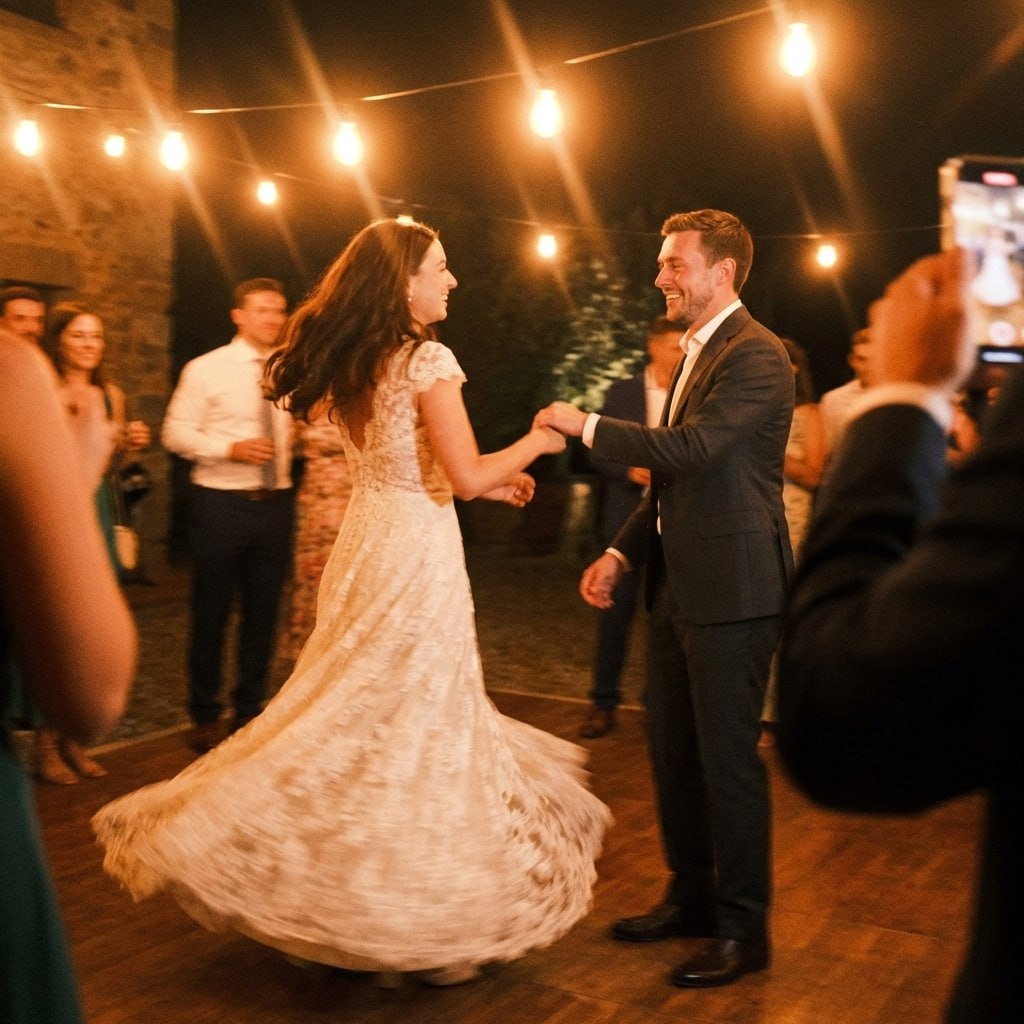
First dance
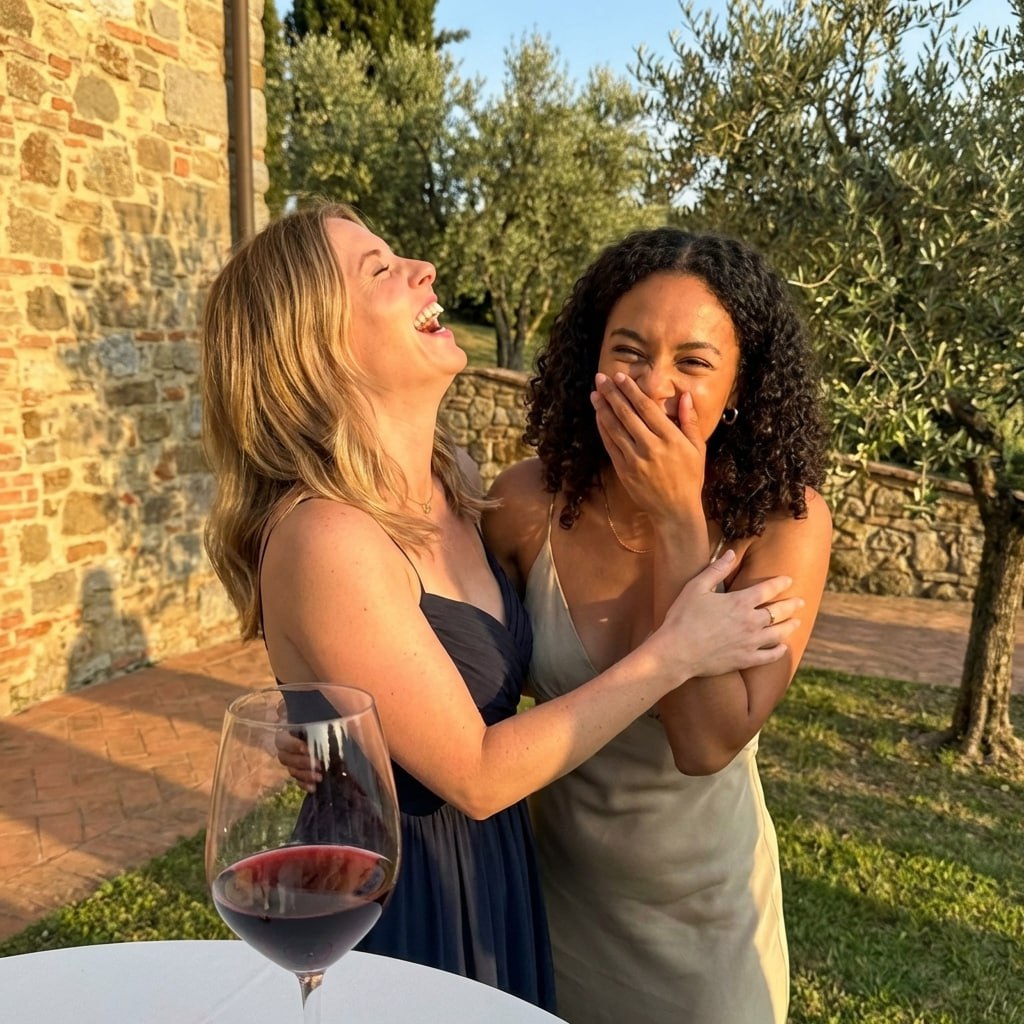
You guys!!
Shimmer looks different in every photo. Keep all of them.
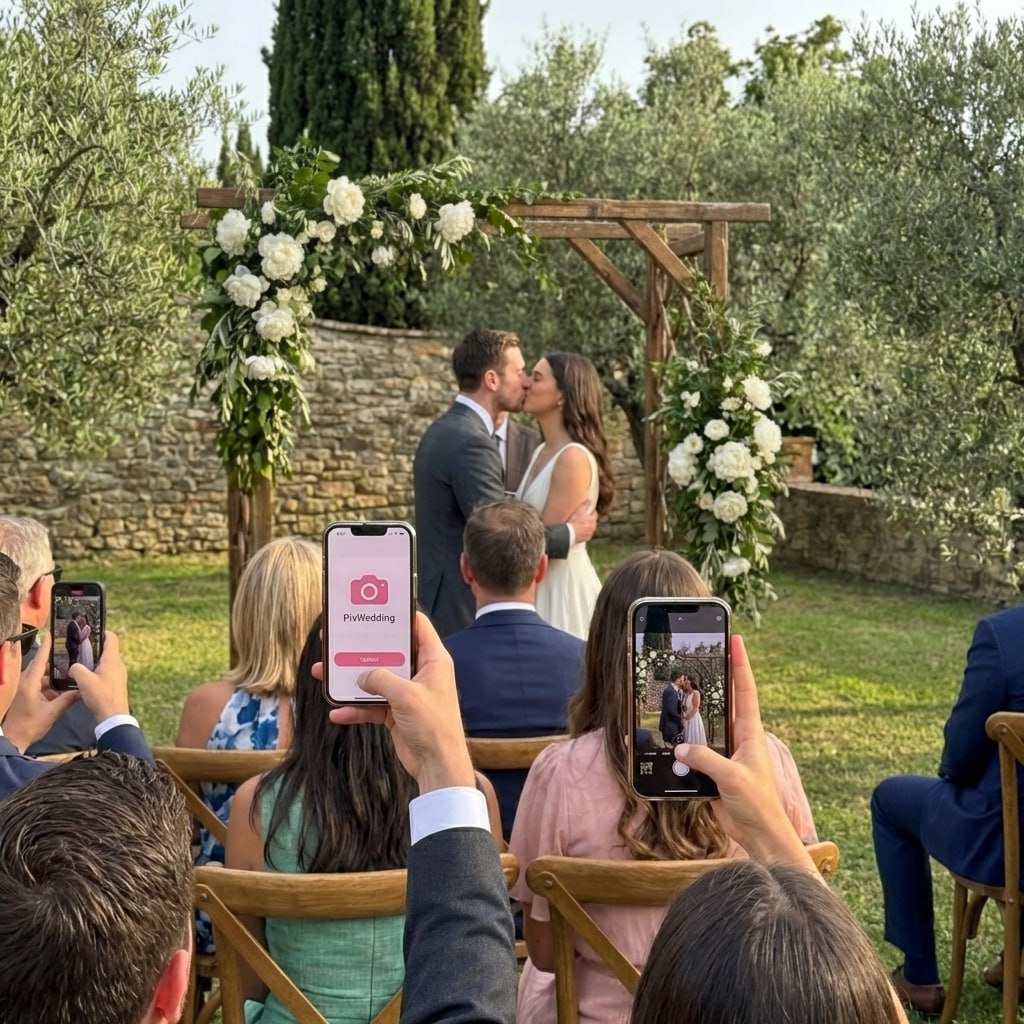
Opalescent decor shifts color with the light, candlelight, golden hour, the dance floor. One QR code collects every guest's version of it in a single shared album.
From Mom
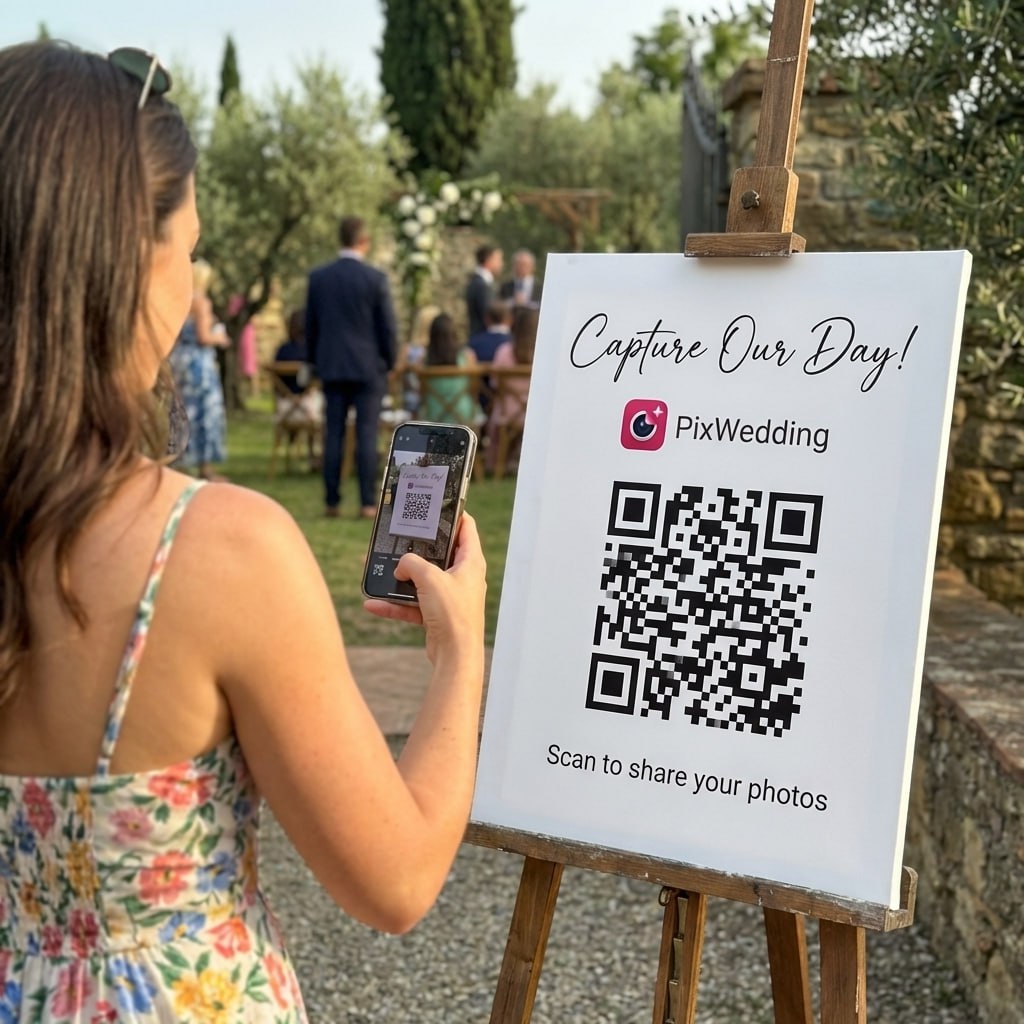
Scan to join the album
No app, no account
UPLOADING
Saving your moment
THE ALBUM
Emma & Jack
June 21, 2026
647 photos · 95 guests
SCAN TO TRY
pix.wedding/
your-wedding
5 Opalescent Wedding Palettes
The base hex codes below cannot capture actual shimmer, but they set the tonal foundation your florist, stationer, and rental company will build the finish on top of.
Moonstone Dawn
The most wearable, entry-level opalescent palette. Nearly white with a faint lavender-blue shift, this reads as an elevated ivory rather than a full color theme.
Pearl Blush
A romantic, warmer take on opalescence. Pearl blush and soft pink shimmer feel closer to traditional bridal pink, with just enough sheen to catch candlelight.
Midnight Opal
The dramatic, evening-reception version. Deep midnight teal grounds the palette so the iridescent accents read as jewel-like sparkle rather than washed-out pastel.
Chrome Frost
A cooler, more modern palette built around chrome and steel tones rather than pearl. Suits minimalist, architectural venues over romantic garden settings.
Purple Opal Glow
Named for the specific "purple opal" search trend, up 545% per Pinterest. A dusty lavender-purple base with pale, chrome-flecked accents.
Translating Opalescence Onto the Tablescape
Chargers
Iridescent glass or acrylic chargers are the single highest-impact, lowest-cost way to introduce the finish onto every place setting.
Vases and Bud Vases
Opal or milk glass vases scatter shimmer across the table even when the florals themselves stay neutral.
Linens
A subtle-sheen organza or shot-silk runner over a matte tablecloth introduces shimmer without overwhelming the table.
Candles
Pearl-finish taper or pillar candles pick up warm light after dark, when most other shimmer elements go quiet.
Signage
Mirror or chrome placecards and welcome signs reflect rather than shift color, and pair well as a contrast finish next to softer pearl elements.
Cake
An edible pearl or opal-effect glaze on the cake extends the finish to the one element every guest photographs up close.
Why Shimmer Photographs Differently Than Flat Color
A flat color (say, burgundy) looks roughly the same in every photo regardless of light source. Opalescent finishes do not work that way. Direct, harsh flash tends to blow the shimmer into a single flat highlight, erasing the color shift that makes the effect worth having in the first place. Soft, continuous, warm light (afternoon daylight, candlelight, string lights, low venue uplighting) is what actually reveals the lavender-to-blue or pink-to-gold shift an opal finish is designed to show.
This is a real planning consideration, not just a photography footnote: if your reception venue relies on bright, cool overhead lighting, ask about adding warm accent lighting (candles, uplighting, string lights) specifically over the areas where you have invested in opalescent decor, or the shimmer effectively disappears in photos.
The guest-photo angle
A single photographer, shooting from one position with one flash setup, only captures one version of how your shimmer decor looked. Guests are shooting all night, from every angle, under whatever light is actually happening in that moment, at the bar, on the dance floor, at golden hour outside. A shared album that collects every guest's photos ends up with a much fuller record of how the opalescent finish actually shifted through the evening than any single photographer's gallery can hold.
Attire Accents: Where Opalescence Belongs on the Body
Bridal Jewelry
Opal, moonstone, and pearl jewelry are the most direct, lowest-commitment way into this trend. They work with any dress color and hold their shimmer under both daylight and evening lighting far more reliably than fabric.
Veils and Hair Accessories
Iridescent or pearl-embellished veil trim, combs, and hairpins catch light as the bride moves, which is exactly the kind of subtle motion-triggered shimmer this aesthetic is built around, more than a static fabric ever can.
Groom and Party Details
A chrome or gunmetal tie clip, opal-flecked cufflinks, or a subtly iridescent tie fabric extend the theme to the wedding party without requiring a full color change.
Opalescent vs. Traditional White Wedding Palette
| Attribute | Opalescent | Traditional White/Ivory |
|---|---|---|
| Surface finish | Shimmer, iridescent, shifts with angle | Matte or satin, consistent from any angle |
| Lighting sensitivity | High: looks different under candlelight, daylight, and flash | Low: reads roughly the same under most lighting |
| Best captured under | Soft, continuous, warm light (golden hour, candles, string lights) | Works under almost any light, including direct flash |
| Sourcing | Specialty glass, iridescent fabric, and chrome hardware, often a smaller vendor pool | Widely available through nearly every rental company |
| Overall mood | Ethereal, otherworldly, celestial | Classic, timeless, safe |
When the Opalescent Trend Is Worth It
Lean into it if
- Your reception has warm, controllable lighting: candles, string lights, or dimmable uplighting.
- You want an ethereal, celestial mood rather than a bold, saturated color statement.
- You are comfortable sourcing from a smaller pool of specialty rental vendors.
- You want a look that still reads elegant and timeless if the specific trend fades.
Reconsider it if
- Your venue is locked into bright, cool overhead lighting you cannot supplement or change.
- Your budget does not allow for specialty glass or fabric sourcing beyond a standard rental package.
- You want every photo to look identical regardless of lighting conditions.
- You are set on a bold, saturated color story; opalescent palettes stay pale at their base by design.
A Worked Example (Illustrative)
Illustrative scenario, not a real couple
Picture an evening reception in a hotel ballroom with standard overhead lighting. The couple chooses Midnight Opal: a deep midnight-teal linen base with iridescent glass chargers and chrome flatware. Because the venue's default lighting is cool and bright, they add warm uplighting along the head table and switch every centerpiece candle from LED to real flame, which is what actually makes the chargers shift from silver to lavender-blue across the evening. Bridal jewelry stays in moonstone rather than a matching iridescent dress, keeping the shimmer concentrated where it reads best in photos: the table, not the whole room.
Common Opalescent Styling Mistakes
Trusting product photos over an in-person sample.
Iridescent glass photographed under studio lighting can look far more dramatic than it will under your actual venue lighting. Request a physical sample before ordering a full set.
Mixing too many competing finishes.
Chrome, pearl, and full iridescence all read as "shimmer" but photograph differently together. Pick one or two dominant finishes rather than layering all three.
Skipping a lighting plan entirely.
Opalescent decor without warm, adjustable lighting to reveal it is the single most common reason couples feel the trend "did not show up" in their photos.
Over-ordering specialty glass that cannot be returned.
Confirm return and damage policies before committing to a large order of iridescent glassware, since it is a smaller, more specialized rental category.
Assuming every guest photo will capture the shimmer.
Phone cameras under mixed lighting render iridescence inconsistently. Expect variation, and treat it as part of the charm rather than a flaw.
Opalescent Wedding Planning Checklist
Work through this before booking specialty rentals, so the shimmer you paid for actually shows up on the day.
Choosing Phase
Lighting Phase
Day-Of Phase
More 2026 Wedding Color Guides
The Two Directions in 2026 Wedding Color: Shimmer vs. Rooted
Pinterest's 2026 report frames this year's wedding palettes as a split between two directions. One is "Ethereal Shimmer," the opalescent, iridescent, chrome-accented aesthetic covered on this page. The other is the moodier, nature-driven "Rooted Romance" direction built around plum, merlot, fig, and olive. Neither is objectively more popular than the other; they serve different moods and different venues.
Couples do not have to pick strictly one or the other. Some of the most distinctive 2026 palettes borrow a single opalescent or chrome accent (a charger, a signage finish, bridal jewelry) inside an otherwise grounded, earthy color story, which keeps the shimmer from overwhelming the room while still nodding to the trend.
Sourcing Opalescent Decor Without Overspending
Because iridescent and chrome finishes are a smaller category within most rental catalogs, availability and pricing vary more than for standard white or ivory linens. Book specialty glass and chrome hardware earlier than you would standard rentals, and ask your rental company directly whether a piece is described as "iridescent" for marketing purposes or actually shows a visible color shift under warm light, since the two are sometimes conflated in product photography.
A cost-conscious approach is to concentrate the finish on items guests interact with closely (place settings, favors, signage) rather than large-scale elements like drapery or flooring, where the same visual impact requires far more material and expense.
Explore more free wedding tools
Everything you need to make your wedding day stress-free and unforgettable.
QR Sticker Designer
Design custom print-ready stickers.
Hashtag Generator
Create unique wedding hashtags.
How to Collect Guest Photos
5 methods ranked by participation rate and ease.
Share Wedding Photos with Guests
Compare every sharing platform by ease and participation.
Best Way to Get Guest Photos
The single method with the highest participation rate.
How to Make a Shared Wedding Album
Step-by-step setup for every platform.
Alternative to Disposable Cameras
Better, cheaper options than disposable cameras.
Alternative to Wedding Photo Booth
5 cheaper alternatives to a $1,000+ photo booth rental.
Opalescent Wedding Color FAQ
Straight answers to the questions people ask most about this topic.
They overlap but are not identical. Iridescent describes any surface that shifts color with viewing angle, like a soap bubble. Opalescent specifically references the softer, milkier, pearl-like version of that effect named after the gemstone opal. In practice, most 2026 wedding decor described as "opalescent" uses iridescent glass, fabric, or finishes, so the terms are used close to interchangeably by florists and rental companies.
Often somewhat, yes. Iridescent glassware, specialty chrome hardware, and shimmer fabrics are a smaller, more specialized part of most rental catalogs than plain white or ivory options, which can mean higher rental fees or longer lead times. Concentrating the opalescent finish on a few high-impact elements (chargers, a single accent wall, bridal party jewelry) rather than the entire tablescape keeps the look without the full-scale cost.
Pinterest's official 2026 Wedding Trends Report documents "opalite aesthetic" searches up 2,710% year over year, alongside related terms like "opalescent aesthetic" (+685%) and "purple opal" (+545%). The report groups this under what it calls "Ethereal Shimmer," one of two major 2026 color directions, the other being the moodier, nature-driven plum-and-olive palette.
Yes, and it is one of the most common executions. A classic ivory or white gown with opal or pearl jewelry, an iridescent veil trim, or a shimmer hair accessory brings the trend into bridal styling without requiring a colored dress. The heavier opalescent styling (tablescape, lighting, signage) can carry the rest of the theme.
Direct camera flash tends to flatten shimmer into a single hot spot of light rather than showing the color shift, while soft continuous light (candlelight, golden hour, warm venue lighting) reveals the iridescence properly. Professional photographers plan around this, but guests are shooting all night under whatever light is actually in the room, which is exactly why the same opal charger can look grey in one photo and lavender-blue in the next.
Start with jewelry and small tabletop details rather than a full room build: opal or moonstone bridal jewelry, iridescent glass bud vases, and pearl-finish taper candles. All three are widely available, reusable, and let you test how the shimmer photographs at your specific venue before committing to larger rental pieces like chargers or an accent wall.