
How to Sleep the Night Before Your Wedding
Tomorrow is the wedding and your brain will not switch off. Here is the eve, step by step: a bedtime worked out from your hair and makeup call, a 90-minute wind-down, breathing that slows a racing mind, and a plan for waking at 3 AM. If the wedding is still a week or two away, there is a start-earlier plan too. Every number on this page links to its source.
How to sleep the night before your wedding in one paragraph
Set lights out about 8 hours before your alarm, and set the alarm from your hair and makeup call. Have your last coffee at least six hours before bed and your last drink at least three hours before, and finish dinner a couple of hours before bed. Ninety minutes out, hand your phone to someone you trust, write tomorrow's to-do list on paper, take a warm shower and set the room cool and dark. In bed, do a few rounds of 4-7-8 breathing. If you are still awake after about 20 minutes, or you wake at 3 AM, get up somewhere dim and go back when you feel sleepy.
And if the night is short anyway, you will still be fine. The excitement of the day carries a lot of people through the ceremony, and the short-night morning plan covers the rest. If the wedding is still a week or two away, start earlier: steady nights before the eve make a short last night much easier to run on.
What the CDC says adults need each night. Aim for it on the eve, and on the nights before it if you can.
CDC, About SleepCaffeine taken six hours before bed still cut measured sleep by more than an hour in a sleep lab study.
Drake et al., JCSM 2013How long before bed a warm bath or shower helped people fall asleep faster, in a 2019 meta-analysis.
Haghayegh et al., 2019The bedroom range the Sleep Foundation recommends, about 15.6 to 20°C. Set the hotel thermostat on arrival.
Sleep Foundation, 2025What keeps couples awake the night before
Nerves get the blame, but most bad wedding-eve nights are schedule problems too: late coffee, a late rehearsal dinner, a wake time that jumps on the last morning, and a phone that never stops. Each one has a specific fix.
A bad night before a big day has a name. The Sleep Foundation describes acute insomnia as sleep trouble that lasts less than three months and is often caused by a stressful life event, such as a major relationship change. A wedding counts, even a happy one. It can resolve on its own as you adjust, which is why one rough night is normal and not a sign that something is wrong. Sleep Foundation, types of insomnia
| What happens | Why it costs sleep | The fix |
|---|---|---|
| The to-do list replays at bedtime | Your brain keeps rehearsing tomorrow instead of switching off | Five minutes writing tomorrow's to-do list before lights out |
| Afternoon coffee to push through tasks | Caffeine is still active at bedtime and shortens the night | Last caffeine at least six hours before your planned bedtime |
| Welcome drinks and the rehearsal dinner | Alcohol makes sleep lighter and more broken in the second half of the night | Stop early, alternate with water, leave at a set time |
| Guests in town, late catch-ups | Bedtime drifts later every night of the week | Pick a leave-by time for every social plan and tell someone |
| An early hair and makeup call | Wake time jumps two or three hours on the one day it matters | Move your wake time earlier during the week, not the night before |
| Flying in across time zones | Your body clock runs on home time for days | Shift sleep before you fly and arrive early enough to adjust |
| A hot, unfamiliar hotel room | A warm room makes it harder to fall and stay asleep | Thermostat to 65 to 68°F, blackout the windows, pack earplugs |
| A phone that buzzes with vendor and guest texts | Every late message restarts the planning loop | Hand the phone and the questions to one trusted person after 8 pm |
Sources: Drake et al. on caffeine, Sleep Foundation on alcohol, Sleep Foundation on temperature, Scullin et al. on bedtime to-do lists, CDC Yellow Book on jet lag, checked 27 September 2026.
Set your bedtime from the hair and makeup call
The one fixed point on the wedding morning is the time someone expects you in the chair. Work backwards from it to find tonight's alarm and lights out. If the wedding is still days away, move toward that wake time a little each morning instead of jumping to it on the last night.
| Call time | Alarm | Start winding down | Lights out |
|---|---|---|---|
| Call 5:30 am | Alarm 4:45 am | Wind down 7:15 pm | Lights out 8:45 pm |
| Call 6:30 am | Alarm 5:45 am | Wind down 8:15 pm | Lights out 9:45 pm |
| Call 7:30 am | Alarm 6:45 am | Wind down 9:15 pm | Lights out 10:45 pm |
| Call 8:30 am | Alarm 7:45 am | Wind down 10:15 pm | Lights out 11:45 pm |
| Call 9:30 am | Alarm 8:45 am | Wind down 11:15 pm | Lights out 12:45 am |
Illustrative math, not a rule: 45 minutes from alarm to the chair, about 30 minutes to fall asleep and 7.5 hours of sleep, so lights out is 8 hours before the alarm and the wind-down starts 90 minutes before that. Adjust for how long you take to get ready.
Hair and makeup goes first
The person in the chair first sets everyone's morning. Ask your stylist for the running order early in the week, and if you have a choice, take a middle slot rather than the first one.
Rehearsal dinner with an end time
Put the end time on the invitation, not just the start. It gives you a reason to leave that nobody argues with, and your guests plan around it.
Bachelor and bachelorette parties weeks out
A late party in the final week costs you nights you cannot get back. Weeks before the wedding is kinder to your sleep and to everyone's hangover.
Who sleeps where on the eve
Some couples sleep apart the night before, some do not. Pick the room where you sleep best, and if you share with a friend, agree on lights out before you check in.
A 90-minute wind-down for the night before
Times count back from lights out; slide the whole thing to match your bedtime from the table above. If you have a few nights before the wedding, run it on each of them so that by the eve it feels automatic.
- -90 min
Close the planning loop
Answer the last message, then hand your phone or the group chat to your partner, maid of honor or best man. From here on, questions go to them.
- -80 min
Write tomorrow's to-do list
Spend five minutes on paper listing what happens tomorrow and who owns each part. In a Baylor sleep lab study, people who wrote a to-do list fell asleep faster than people who wrote about finished tasks.
- -75 min
Warm bath or shower
About ten minutes of warm water, one to two hours before bed, is the window the 2019 meta-analysis linked to falling asleep faster. The drop in body temperature afterwards is the point.
- -45 min
Set up the room
Thermostat to 65 to 68°F, curtains closed, clock turned away, earplugs and an eye mask on the nightstand. The AASM's advice is a room that is quiet, dark and a little bit cool.
- -30 min
Something slow and boring
A paper book, gentle stretching or music you already know. Skip anything with a plot twist, a work inbox or wedding pages.
- -10 min
Slow breathing or a body scan
Four rounds of 4-7-8 breathing, or tense and release each muscle group from your feet up (both are explained further down). Relaxation techniques are part of CBT-I, the most strongly recommended insomnia treatment.
- 0
Lights out, no clock watching
Get into bed when you feel sleepy. If you are still awake after about 20 minutes, the 3 AM plan below works at 10 pm too.
Finish dinner early
Mayo Clinic advises avoiding heavy or large meals within a couple of hours of bedtime, because the discomfort can keep you up. Eat at the rehearsal dinner, just not the third helping of dessert at 10 pm.
Mayo ClinicLast drink three hours out
The Sleep Foundation says experts recommend avoiding alcohol for at least three hours before bedtime. For a 10 pm lights out, the toasts end by 7 pm and the rest is water.
Sleep FoundationDim the lights after dinner
Evening light pushes your body clock later, which is the opposite of what an early call needs. Lamps instead of overhead lights, and screens down as early as you can manage.
CDC Yellow BookSources: Scullin et al., 2018, Haghayegh et al., 2019 (via ScienceDaily), AASM, Sleep Foundation, NCCIH on relaxation and CBT-I.
Get the wedding out of your head and onto paper
The thing that keeps most couples up is a to-do list that will not stop replaying. There is a small, well-run study on exactly that. At Baylor, 57 young adults spent five minutes before bed either writing a to-do list for the coming days or writing about tasks they had already finished, then slept in a lab with overnight sleep monitoring.
16 vs 25 minThe to-do list group fell asleep in about 16 minutes on average, against about 25 minutes for the group that wrote about finished tasks. The more specific the list, the faster people fell asleep.
Tomorrow, in order:
1. ______________  Who: ________
2. ______________  Who: ________
3. ______________  Who: ________

Things I cannot fix tonight:
- ______________________
- ______________________

First thing I do when I wake up:
______________________
Paper, not your phone. Opening the phone to write a list is how you end up answering the florist at 11 pm.
How to fall asleep when you are anxious
Dr. Michael Breus, a clinical psychologist and sleep specialist, explains how stress shows up in your body, why a bad night makes the next day's stress worse, his power-down hour before bed, and when sleep trouble is worth taking to a doctor. Seven minutes, and it pairs well with the wind-down above.
Sleep Doctor on YouTube, May 2024, 7:12Three ways to slow a racing mind
Nervous energy lives in the body as much as the head: a fast heartbeat, shallow breaths, a clenched jaw. These three techniques give it somewhere to go. Pick one, practice it once or twice in the days before, and it will feel familiar when you need it on the eve.
4-7-8 breathing
- 1Breathe in quietly through your nose for a count of 4
- 2Hold your breath for a count of 7
- 3Breathe out through your mouth for a count of 8
- 4Repeat for three to four cycles
Popularized by integrative medicine doctor Andrew Weil. Cleveland Clinic notes it can lower heart rate and blood pressure, the state your body wants for sleep. Keep the ratio, not the speed: count faster if 7 feels long.
Cleveland Clinic, 4-7-8 breathingBox breathing
- 1Breathe all the air out slowly
- 2In through your nose for a count of 4
- 3Hold for 4, then breathe out for 4
- 4Hold for 4 again, and repeat for three to four rounds
The silent counting is the point: it gives a racing mind one small job. Handy in the hotel bathroom at 3 AM or in the chair during hair and makeup the next morning.
Cleveland Clinic, box breathingProgressive muscle relaxation
- 1Start at your feet: tense the muscles for a few seconds
- 2Let go and notice the difference for a few breaths
- 3Move up: calves, thighs, stomach, hands, shoulders, jaw
- 4If you are still awake at the top, start again at your feet
Relaxation techniques like this one are part of CBT-I, the insomnia treatment NCCIH calls the most strongly recommended. It also gives nervous energy somewhere to go.
NCCIH on relaxation and CBT-IWhen trying harder makes it worse
The harder you try to fall asleep, the more awake you tend to feel. A technique from sleep therapy flips that around: lie in the dark with your eyes open and gently try to stay awake, without checking the time. It is called paradoxical intention, and it takes the pressure off. Be clear on the evidence, though: the American Academy of Sleep Medicine's 2021 guideline found too little research to recommend it as a treatment on its own, so treat it as a low-stakes experiment, not a cure. AASM guideline summary, American Family Physician
What to do when you wake and cannot get back to sleep
Waking in the night before a big day is normal. What decides the rest of the night is the next twenty minutes, so decide now what you will do, and you will not have to decide it at 3 AM.
- 1
Leave the clock alone
Counting the hours left turns a normal wake-up into a countdown. Keep the phone face down and out of reach.
- 2
Breathe slowly for a few minutes
Long, easy exhales and a loose jaw. You are giving your body a chance to drift back without forcing it.
- 3
Write the thought down
If one worry keeps looping, put it on the notepad by the bed with the name of the person who will handle it. It will still be there at 8 am.
- 4
Get up after about 20 minutes
The AASM's tip for brides-to-be: if you are not asleep after 20 minutes, get out of bed. Sit somewhere dim and quiet with something dull.
- 5
Go back when sleepy
Not when you decide it is time. Sleepy means heavy eyes and yawning, and that is when you return to bed.
- 6
Set two alarms and relax
Fear of oversleeping keeps people awake. Two alarms, or a wake-up call from the front desk, takes that worry off the table.
Still awake after about twenty minutes? Get up, somewhere dim, and come back when you are sleepy.
AASM tips for brides-to-beKeep by the bed
A notepad and pen, water, earplugs, an eye mask, and a book you have read before. Nothing with a screen.
The two weeks before: five phases, one steady wake time
Reading this with days or weeks to spare? The eve gets much easier when the nights before it were steady. Your body responds to routine more than to effort, and the AASM's advice to brides-to-be starts with going to bed and waking up at the same time every morning, weekends included. Everything below hangs off that one habit.
- Days 14 to 8
Set the anchor
- Work out your wedding-morning wake time from your hair and makeup call (table below).
- Pick one wake time for every morning, weekends included, and start moving it toward the wedding one in small steps.
- Protect 7 or more hours a night. The CDC sets that as the adult minimum.
- Book the last big tasks into daytime slots so they stop following you to bed.
- Days 7 to 4
Clear the runway
- Set a caffeine cutoff six hours before bedtime and stick to it.
- Move hard workouts to the morning or early afternoon so you are not wired at bedtime.
- Hand off the jobs that keep you up: vendor calls, the seating chart, collecting guest photos.
- Start the five-minute to-do list at bedtime so the habit is automatic by the eve.
- Days 3 to 2
Protect the nights
- Travel, welcome drinks and arrivals cluster here. Give every plan a leave-by time.
- If you fly east, shift your sleep an hour earlier per day for two or three days first.
- Do not try a new sleep aid, supplement or medication for the first time now.
- Unpack the wedding bag completely so nothing needs checking at midnight.
- Day 1
The eve
- Keep the rehearsal dinner light on alcohol and leave at the time you agreed.
- Warm bath or shower one to two hours before bed.
- Room cool, dark and quiet. Phone charging outside the bed.
- Run the 90-minute wind-down and the breathing from earlier on this page, with the 3 AM plan ready.
- Wedding morning
Start the day on purpose
- Get up at the planned time even if the night was short.
- Open the curtains or step outside for daylight, then eat a real breakfast.
- Coffee at your normal amount, not double. Water beside you all morning.
- If you nap, keep it to about 20 minutes and well before the ceremony.
Sources: AASM tips for brides-to-be, CDC, Drake et al., CDC Yellow Book 2026, Sleep Foundation on naps. The phase grouping is our own planning suggestion, not a clinical protocol.
Your guests can handle the photos
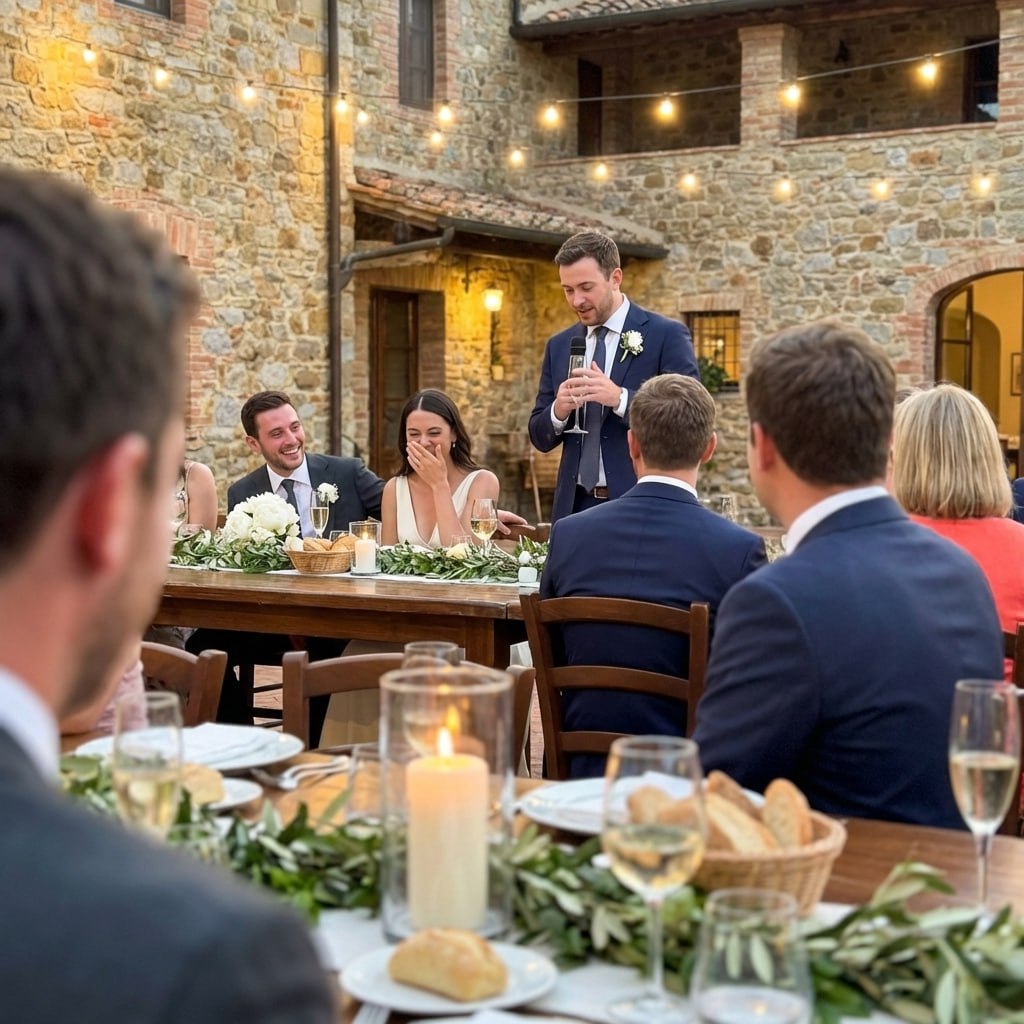
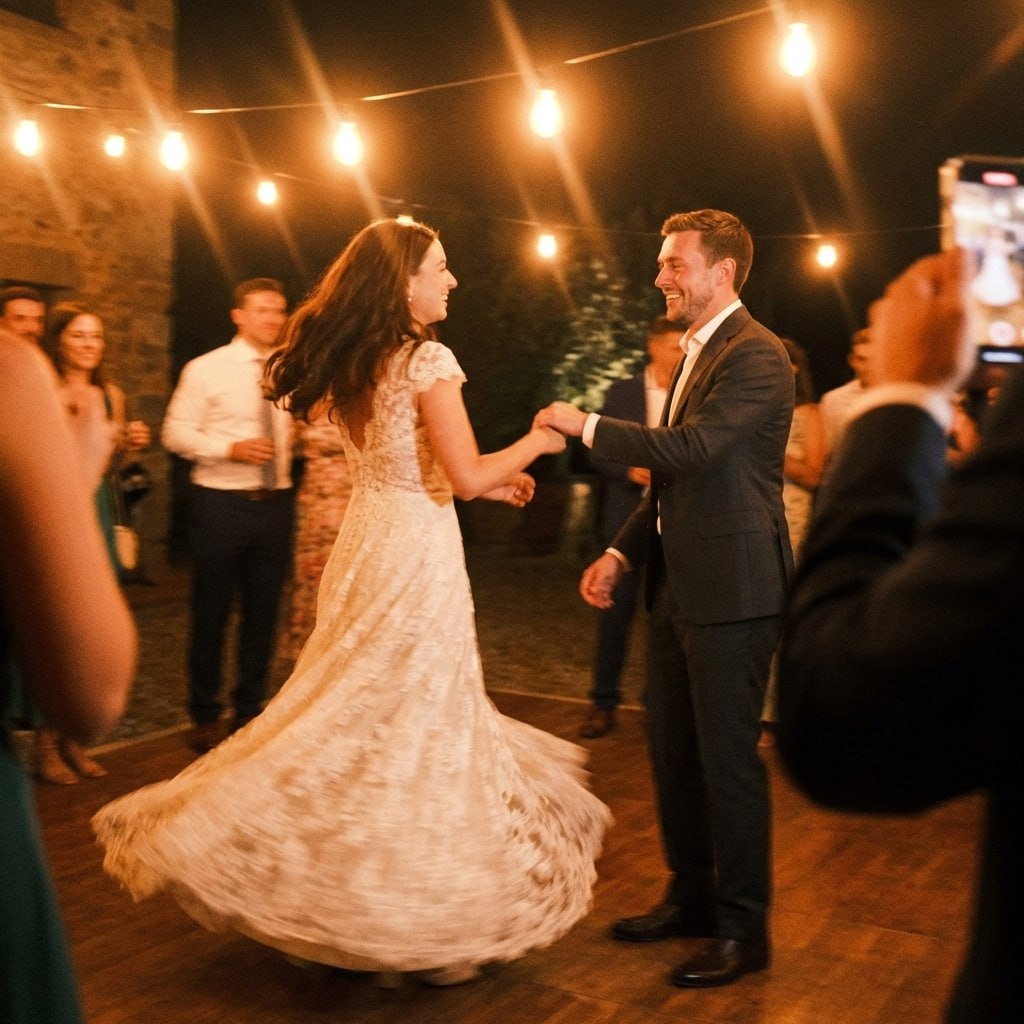
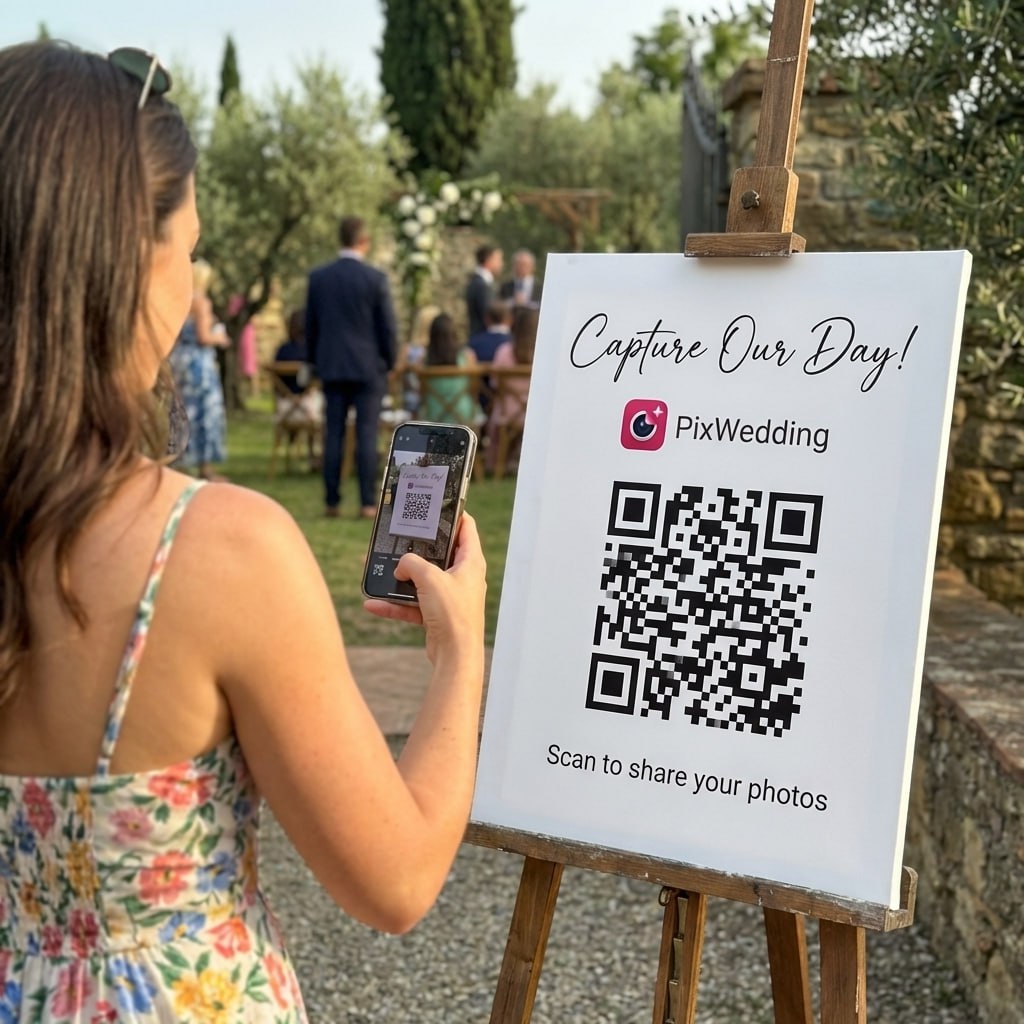
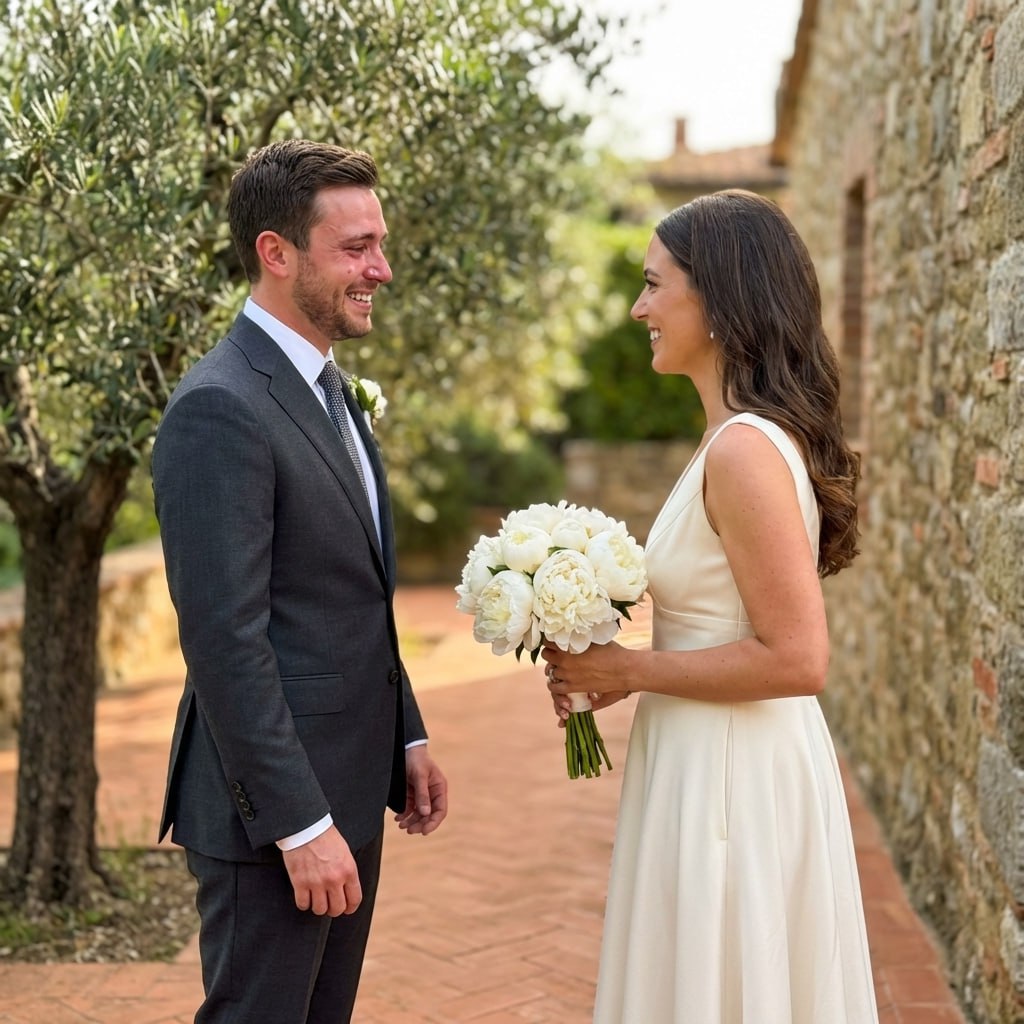
Put a QR code on the tables and every guest adds their photos to one album from their phone. Nothing to chase after the wedding, so you can sleep on it.



Scan to join the album
No app, no account
UPLOADING
Saving your moment
THE ALBUM
Emma & Jack
June 21, 2026
647 photos · 95 guests




What the evidence says about pills, teas and nightcaps
Wedding week is the worst week to test something new on your body. Here is what the US National Center for Complementary and Integrative Health, the CDC and the Sleep Foundation say about the usual suspects. None of it replaces advice from your own doctor.
| Option | What the source says | Wedding-week verdict |
|---|---|---|
| Melatonin | NCCIH says it may help jet lag, and two clinical guidelines (2017 and 2019) recommended against it for chronic insomnia. The CDC Yellow Book says 0.5 to 1 mg is often enough to shift the body clock and advises against high doses above 5 mg. | Most useful for a destination wedding. Test it weeks earlier, never first on the eve. |
| Chamomile tea | NCCIH: no conclusive evidence from clinical trials on whether it helps insomnia. | A warm, caffeine-free ritual is fine. Do not count on it to knock you out. |
| Valerian | NCCIH: trials have had inconsistent results and its value for insomnia has not been demonstrated. | Wedding week is the wrong week to experiment. |
| A nightcap | The Sleep Foundation explains that alcohol leads to lighter, more fragmented sleep in the second half of the night as it wears off. | Helps you drop off, then wakes you at 3 AM. Keep it small and early. |
| Relaxation techniques | NCCIH: relaxation is part of CBT-I, the most strongly recommended insomnia treatment, with a small amount of evidence on its own. | Free, no side effects, practice it all week. |
| Prescription sleep medicine | Only through your doctor, who knows your history and the timing of your wedding day. | Ask weeks ahead if sleep has been a problem. Never borrow someone else's. |
Sources: NCCIH, Melatonin: What You Need To Know, NCCIH, Sleep Disorders and Complementary Health Approaches, CDC Yellow Book 2026, Jet Lag Disorder, Sleep Foundation, Alcohol and Sleep. Talk to your doctor before starting any supplement or medication, especially if you are pregnant or take other medicines.
Jet lag math for flying in to get married
The CDC Yellow Book gives average adaptation rates of about 1 hour per day after flying east and 1.5 hours per day after flying west. It also suggests shifting your sleep an hour earlier (east) or later (west) per day for the 2 to 3 days before you fly. Here is what that means for common wedding routes.
| Route | Shift | Days to adjust | Before you fly |
|---|---|---|---|
| US West Coast to Hawaii | 2 to 3 hours west | About 2 days | Usually not needed |
| US East Coast to US West Coast | 3 hours west | About 2 days | Optional: bed 1 hour later for 2 days |
| US West Coast to US East Coast | 3 hours east | About 3 days | Bed 1 hour earlier for 2 to 3 days |
| US East Coast to the UK | 5 hours east | About 5 days | Bed 1 hour earlier for 2 to 3 days |
| US East Coast to Italy, Spain or France | 6 hours east | About 6 days | Bed 1 hour earlier for 2 to 3 days |
| Western Europe to US East Coast | 5 to 6 hours west | About 4 days | Bed 1 hour later for 2 to 3 days |
| Western Europe to California | 9 hours west | About 6 days | Bed 1 hour later for 2 to 3 days |
Use light on purpose
The Yellow Book explains that bright morning light moves your body clock earlier and evening light moves it later. After flying east, get outside in the morning; after flying west, stay in the light into the evening.
Arrive early enough
If the table says six days and you land two days before, the wedding happens on your home clock. Arrive earlier if you can, or pre-shift harder at home and keep the first days at the destination quiet.
Melatonin, carefully
This is where melatonin has the best case. The Yellow Book says 0.5 to 1 mg is often enough and advises against more than 5 mg. Ask your doctor about timing before the trip.
Days are our rounded estimates from the CDC Yellow Book 2026 average rates (Riedy and Williams), checked 27 September 2026. Time differences shift with daylight saving, so check yours for the wedding date. People vary; treat these as planning numbers.
You slept three hours. Here is the morning plan.
Plenty of couples get a short night before the wedding and still have the day of their lives. The excitement carries you through the ceremony and the first hours of the reception, and any steady nights you had earlier in the week are doing their job in the background.
“Even a single good night's sleep will lead to recovery of concentration and decreased irritability.”
Daylight first
Open the curtains or walk outside for a few minutes. Light early in the day tells your body clock it is morning.
Eat a proper breakfast
Nerves kill appetite. Eat anyway, protein and something you know sits well, because lunch may not happen.
Normal coffee, not double
Your usual cup is fine. Doubling it on a short night stacks jitters on top of nerves.
Water all morning
Ask one person to keep a bottle in your hand from hair and makeup to the ceremony.
A short nap, if any
The Sleep Foundation's advice is about 20 minutes, no more than 30, and before 3 pm. Longer can leave you groggy.
Move a little
A short walk or a few stretches before getting dressed shakes off the heavy feeling faster than lying down again.
Nap guidance from the Sleep Foundation. If poor sleep has lasted for weeks, not days, that is worth raising with your doctor well before the wedding.
Scan. Upload.
Then get some sleep.
Guests scan a QR code at the wedding and add their photos and videos from the phone browser, with no app and no account. Everything lands in one album, so collecting pictures is not on anyone's to-do list the week after.
WEDDING WEEKEND
Maya & Jon
Example album
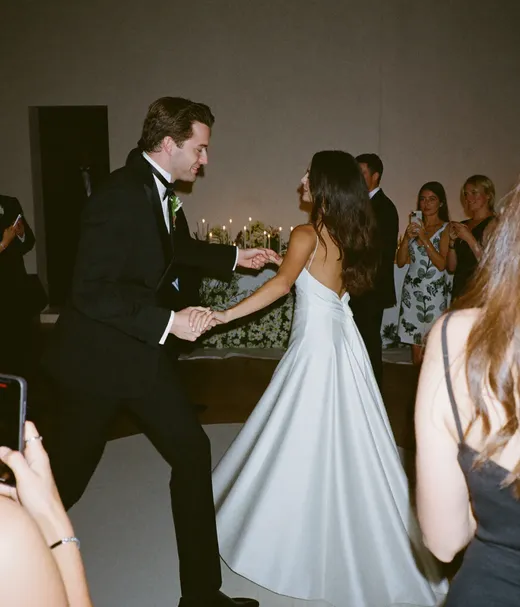
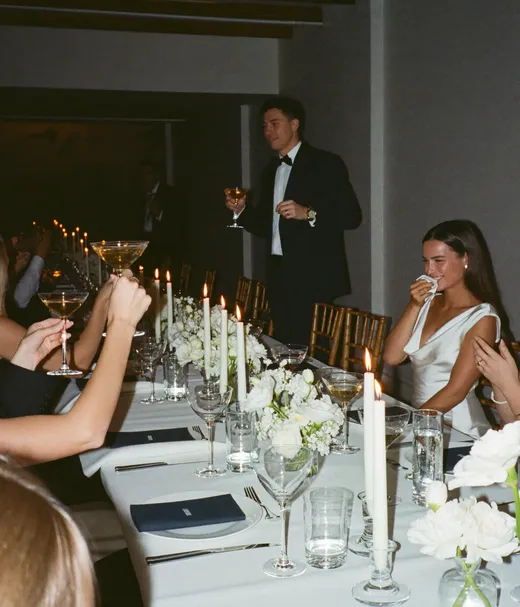
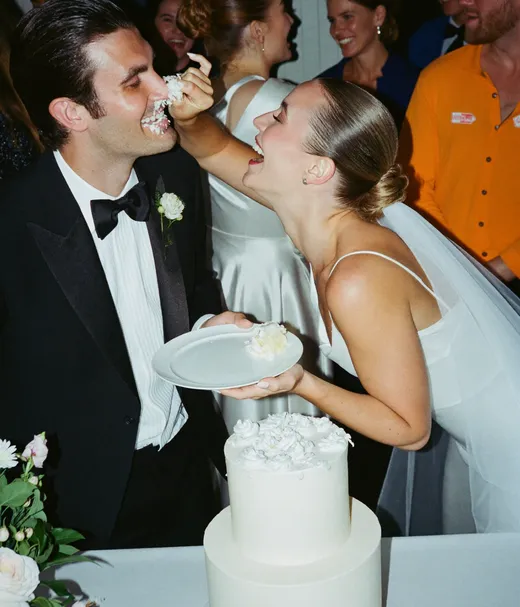



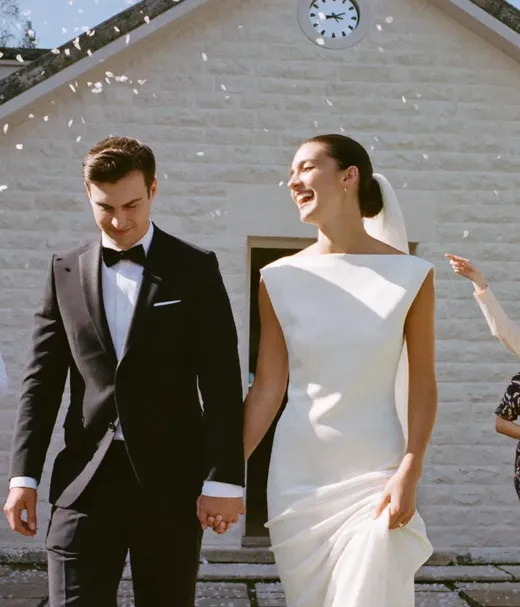

Rehearsal dinner
From Jon's sister
Cross one wedding-week job off tonight.
Set up a shared album in a few minutes and print the QR code. Guests upload photos and videos from the phone browser during the wedding, so there is nothing to chase afterwards. The first 20 uploads are free, no app and no card.
From Grandma
Scan to join the album
No app, no account
UPLOADING
Saving your moment
THE ALBUM
Maya & Jon
Wedding weekend
647 photos · 95 guests
SCAN TO TRY
pix.wedding/
your-wedding
Pre-wedding sleep advice that does not hold up
A nightcap will help me sleep.
It can help you fall asleep, then the second half of the night gets lighter and more broken as it wears off.
Sleep FoundationStaying in bed longer gets me more sleep.
Lying awake teaches your body that bed is a place to worry. The AASM's advice is to get up after about 20 minutes.
AASMMelatonin is a strong sleeping pill.
It is a hormone that times your body clock. NCCIH notes guidelines recommend against it for chronic insomnia; jet lag is where it has support.
NCCIHA long nap on the wedding day will fix a short night.
Keep naps to about 20 minutes and before 3 pm. A long nap can leave you groggy right before the ceremony.
Sleep FoundationCoffee after lunch is fine if I usually fall asleep.
In the sleep lab, caffeine six hours before bed still cut total sleep by more than an hour.
Drake et al., 2013I can get by on less sleep the week of the wedding.
Your usual need does not shrink because the calendar is full. Mount Sinai sleep specialist Dr. Andrew Varga told Zola that an eight-hour sleeper should plan to get the same eight hours before the wedding.
ZolaYour people can protect your sleep too
Half of good wedding-week sleep is other people agreeing not to need you after 8 pm. Give each of them one clear job this week.
Your partner
Agree on the leave-by time for every plan in the final week, and on who answers the late texts. Two tired people arguing about a seating chart at midnight helps nobody.
Maid of honor or best man
Hand them your phone after 8 pm on the eve and give them the list of vendor numbers. Their job is to be the person everyone asks instead of you.
Parents and family
Tell them the end time of the rehearsal dinner in advance, and that you will be leaving then. It lands better as a plan than as an exit.
Planner or day-of coordinator
Give them the timeline and the vendor contacts early in the week, so the 11 pm "did anyone confirm the shuttle" question goes to them.
A photo album that runs itself
Collecting guest photos after the wedding is one more thing to chase. A shared QR album set up before the week starts means guests upload during the day and nobody has to follow up.
Handing off the photos
With Pix Wedding you create the album once, print the QR code for the tables, and guests upload from the phone browser. The first 20 uploads are free, and paid plans are one-time payments: Starter $49, Standard $59 and Pro $89. Set it up before the week starts, or read how to collect photos from wedding guests for every method.
More guides for the last week
This page covers sleep on the eve and the two weeks before it. These cover the rest of the last week: nerves, checklists and the rehearsal dinner.
Sleeping the night before your wedding: the essentials
If you remember five things from this guide:
- Set lights out about 8 hours before an alarm worked out from your hair and makeup call
- Last caffeine six hours before bed, last drink three hours before, dinner done a couple of hours before
- Ninety minutes out: phone handed off, to-do list on paper, warm shower, cool dark room
- In bed, a few rounds of 4-7-8 or box breathing, or progressive muscle relaxation
- Awake after about 20 minutes? Get up somewhere dim and come back when sleepy
Why the nights before the eve matter too
How you feel on the wedding morning is partly set in the days before: how many solid nights you banked, whether your wake time was already close to the one you need, and whether the rehearsal dinner and travel pulled your schedule off course.
The eve still matters most, and it has its own routine above. But a short last night after a steady week is far easier to run on than a short last night after a chaotic one, so start earlier if you can.
Sleep terms in plain English
A few words you will see in sleep advice, and what they mean for the night before your wedding:
- Acute insomnia: short-term sleep trouble, less than three months, often set off by a stressful life event
- Sleep hygiene: the everyday habits and bedroom setup that make sleep easier, like a steady wake time and a cool, dark room
- Circadian rhythm: your body clock, which light, meals and wake time keep in step
- CBT-I: cognitive behavioral therapy for insomnia, the most strongly recommended insomnia treatment, which includes relaxation techniques
- Paradoxical intention: gently trying to stay awake in bed to take the pressure off falling asleep
Explore more free wedding tools
Everything you need to make your wedding day stress-free and unforgettable.
QR Sticker Designer
Design custom print-ready stickers.
Hashtag Generator
Create unique wedding hashtags.
How to Collect Guest Photos
5 methods ranked by participation rate and ease.
Share Wedding Photos with Guests
Compare every sharing platform by ease and participation.
Best Way to Get Guest Photos
The single method with the highest participation rate.
How to Make a Shared Wedding Album
Step-by-step setup for every platform.
Alternative to Disposable Cameras
Better, cheaper options than disposable cameras.
Alternative to Wedding Photo Booth
5 cheaper alternatives to a $1,000+ photo booth rental.
Questions about sleeping the night before your wedding
Bedtime, caffeine and alcohol, melatonin and jet lag: short answers with sources.
Yes. A restless night before a big event is common, and the Sleep Foundation describes short-term (acute) insomnia as sleep trouble that lasts less than three months and is often set off by a stressful life event. One short night will not ruin the day. If sleep has been poor for weeks, not days, raise it with your doctor well before the wedding.
Work backwards from your hair and makeup call. Allow about 45 minutes from alarm to the chair, about 30 minutes to fall asleep and 7.5 hours of sleep, so lights out is roughly 8 hours before the alarm. For a 6:30 am call that means an alarm at 5:45 am and lights out at 9:45 pm. If you can, move toward that wake time over the week before instead of jumping to it on the eve.
If you are still awake after about 20 minutes, get up, sit somewhere dim with something dull and go back to bed when you feel sleepy, which is the AASM's advice to brides-to-be. If the night stays short, get up at your planned time, get daylight, eat breakfast, drink water, keep coffee at your normal amount, and if you nap keep it to about 20 minutes and before 3 pm, as the Sleep Foundation advises.
Not for the first time. NCCIH says melatonin may help jet lag, while two clinical guidelines recommended against it for chronic insomnia. The CDC Yellow Book says 0.5 to 1 mg is often enough to shift the body clock and advises against doses above 5 mg. If you want to use it, especially for a destination wedding, ask your doctor and test it weeks ahead.
Last caffeine at least six hours before bed: in a 2013 sleep lab study, 400 mg of caffeine taken six hours before bedtime still cut total sleep by more than an hour. Last alcoholic drink at least three hours before bed, which is what the Sleep Foundation says experts recommend. For a 10 pm lights out, that means coffee before 4 pm and the rehearsal dinner toasts done by 7 pm.
Arrive early and shift before you fly. The CDC Yellow Book gives average adaptation of about 1 hour per day after flying east and 1.5 hours per day after flying west, and suggests moving sleep an hour earlier (east) or later (west) per day for 2 to 3 days before the trip. A 6 hour shift flying east works out to roughly 6 days to adjust.