
How to Sleep Before Your Wedding
Good wedding-day sleep starts a week before, not the night before. This 7-day strategy trains your body to sleep on cue, manages anxiety, and ensures you arrive at the altar rested.
7-Day Sleep Foundation
One new habit each day, building toward a restful wedding eve
Set Your Foundation
Choose a consistent bedtime and wake time for the entire week. Your body clock needs regularity to produce melatonin on schedule. Pick a time you can stick with every night.
Cut Caffeine After Noon
Caffeine has a half-life of 5 to 6 hours. That 3 PM coffee still has half its caffeine in your system at 9 PM. Switch to herbal tea or water after noon starting today.
Start a Wind-Down Routine
Begin a 30-minute pre-bed routine: dim lights, no screens, and a calming activity like reading or stretching. Do the same sequence each night so your brain learns the signal.
Add Daily Movement
20 to 30 minutes of walking, yoga, or light exercise helps your body feel physically tired by evening. Avoid intense workouts; you do not want soreness before the wedding.
Practice a Relaxation Technique
Try 4-7-8 breathing tonight: inhale 4 counts, hold 7, exhale 8. The technique works better when practiced over multiple nights rather than tried cold on the wedding eve.
Optimize Your Environment
Set your bedroom to 65 to 68 degrees. Use blackout curtains or a sleep mask. Put your phone in another room. These environmental signals tell your body it is time for deep rest.
Execute the Practiced Routine
Wedding eve. Follow the same routine you have practiced all week. Your body knows the signals. No caffeine today. Light dinner by 7 PM. Wind-down by 9:30 PM. Trust the process.
Managing Night-Time Anxiety
6 techniques to quiet the mind when worries surface at 2 AM
The Worry Dump
Spend 15 minutes each evening writing every worry on paper. For each one, write one specific action you will take. Then close the notebook and physically put it away.
Body Scan Meditation
Lie down and focus on relaxing one body part at a time, starting from your toes and moving up to your forehead. Spend 5 seconds on each area.
5-4-3-2-1 Grounding
Name 5 things you see, 4 you can touch, 3 you hear, 2 you smell, and 1 you taste. This pulls your mind out of the future and into the present moment.
Progressive Muscle Relaxation
Tense each muscle group for 5 seconds, then release for 10. Start with your feet and work upward. The contrast between tension and release triggers deep relaxation.
Reframing Thoughts
When a worry appears, ask: Will this matter in 5 years? Can I solve it right now? If the answer is no to both, acknowledge it and let it pass. It is not your job to fix it at midnight.
Self-Compassion Statement
Say to yourself: I have done everything I can. Tomorrow will be beautiful no matter what. I deserve rest tonight. Repeat it slowly three times.
Wedding Eve Protocol
By the time you reach the night before your wedding, you have been practicing this routine for a full week. Your body knows the signals. Trust the process and follow the plan.
No caffeine at all today
Light dinner by 7 PM, nothing new or spicy
One drink maximum at rehearsal dinner
Home by 9:30 PM, start your practiced wind-down
Warm shower or bath at 9:30 PM
Screens off completely by 9:30 PM
Worry dump journaling at 10:00 PM
Breathing exercises at 10:15 PM
Lights out by 10:30 PM
If awake after 30 minutes, get up for 15 minutes in dim light, then return
The Comfort Truth
Even if you sleep poorly, your wedding day will still be wonderful. Here is why: your body releases a surge of adrenaline and cortisol on days that matter. This natural response keeps you alert, energized, and emotionally present for the entire celebration.
It is common for couples running on very little sleep to feel just as energized on the wedding day as those who got a full night's rest. The crash comes the day after, which is why a restful first honeymoon day is worth planning for.
And remember: lying in a dark room with your eyes closed still gives your body meaningful physical rest, even without full sleep. Even if you are awake, you are still resting. You will be fine.
Pre-Wedding Sleep Myths vs. Reality
Bad advice about sleep before a wedding is everywhere. Here is what science actually says.
Myth
A glass of wine will help you sleep better.
Reality
Alcohol disrupts REM sleep. You may fall asleep faster but you will wake more often and sleep more lightly. Avoid alcohol the night before, especially before your wedding.
Myth
Sleeping pills are a safe backup plan for the wedding night.
Reality
Never take a sleep medication for the first time the night before a big event. Side effects like grogginess, disorientation, or hangover effects can affect your entire wedding morning.
Myth
If you cannot sleep, just lie there and rest.
Reality
Lying awake in bed actually trains your brain to associate the bed with wakefulness. If you are not asleep after 25 minutes, get up briefly. Return only when drowsy.
Myth
One terrible night of sleep will ruin how you feel.
Reality
Your body releases adrenaline and cortisol on emotionally significant days. Many couples who sleep poorly still feel energized, alert, and emotionally present throughout their wedding.
Myth
Eating a large meal before bed helps you sleep.
Reality
Heavy digestion keeps your core body temperature elevated, which interferes with sleep onset. A light dinner by 7 PM and a small snack at 9 PM if needed is far better.
Myth
More time in bed means more sleep.
Reality
Going to bed too early when you are not tired creates sleep pressure anxiety. Keep your bedtime consistent rather than trying to sneak in extra hours.
Foods and Habits That Support Better Sleep
Your diet in the week before your wedding directly affects how well you sleep. These evidence-backed choices help.
Tart cherries or cherry juice
Naturally high in melatonin. Drinking tart cherry juice in the evening has been shown in studies to improve sleep duration and quality significantly.
Bananas and almonds
Both contain magnesium and potassium, which relax muscles, and tryptophan, a precursor to serotonin and melatonin. A small handful of almonds is a perfect pre-bed snack.
Herbal teas (chamomile, valerian, passionflower)
Chamomile contains apigenin, a compound that binds to brain receptors that reduce anxiety and initiate sleep. Start the tea ritual early in the week so your body learns the cue.
A cool, dark room (65 to 68 F)
Core body temperature must drop by 1 to 2 degrees to initiate sleep. A cool room assists this process. Use blackout curtains, remove electronics that emit light, and invest in a comfortable eye mask.
Pink noise or nature sounds
Unlike white noise, pink noise (rain, ocean waves) has been shown to enhance slow-wave deep sleep. Run a sleep sounds app at a low volume throughout the night for the week leading up to your wedding.
Warm bath 90 minutes before bed
The warm bath raises your skin temperature, which then drops sharply when you exit. This drop signals your body that it is time for sleep. Time it at 90 minutes before your target bedtime for best effect.
What to Do If You Wake at 3 AM
Waking at 3 AM the night before your wedding is extremely common. This protocol gets you back to sleep without creating more anxiety.
Do not check the time.
Knowing it is 3 AM and calculating how many hours of sleep remain is the fastest way to trigger anxiety. Cover the clock or put your phone face down before bed.
Stay still for 15 minutes.
Give your sleep pressure time to rebuild. Lie quietly and breathe slowly. Many people return to sleep within 15 minutes if they simply stay still and do not engage their mind.
If still awake, do not panic.
Anxiety about being awake is more disruptive than being awake itself. Remind yourself: I am resting. My body is still recovering. Adrenaline will support me tomorrow.
Get up briefly if needed.
If you are tossing and turning with a racing mind, get up. Go to another room in dim light. Do a gentle activity (read a physical book, stretch) for 15 to 20 minutes until drowsy.
Return to bed with a grounding phrase.
Say quietly to yourself: "I have done everything I can. Tomorrow will be beautiful. I choose rest." Repeat it slowly. This replaces the anxiety loop with a deliberate, calming narrative.
Deep Answers to Sleep Questions You Are Actually Asking
Beyond the FAQ. The questions that come up at 11 PM when you are staring at the ceiling and worrying about tomorrow.
I have a history of insomnia. Will my wedding night be a disaster?
People with chronic insomnia often have a surprising experience on their wedding eve: the unique emotional weight of the night creates a different kind of sleep pressure that sometimes overrides the usual insomnia pattern. That said, the best preparation for someone with chronic insomnia is to start the 7-day wind-down protocol earlier, to speak with a doctor if needed about short-term support, and, most importantly, to reframe the goal from "get 8 hours of sleep" to "rest my body as well as possible." Sleep performance anxiety, the anxiety about not sleeping, is often worse than the actual sleep deprivation. Releasing the expectation of perfect sleep is frequently what finally allows sleep to come.
My partner and I are sleeping separately the night before the wedding. Will that affect my sleep?
Possibly, and in both directions. Some people sleep better alone because they are not disrupted by their partner's sleep patterns. Others find the absence anxiety-provoking because the separation feels lonely or unfamiliar. If sleeping separately is your plan, practice sleeping alone in the weeks before. If you normally co-sleep and the separation will be difficult, acknowledge that in advance. Some couples arrange to have a brief call or text exchange before sleep that provides connection without the full presence. What matters most is managing the expectation rather than being surprised by how your body responds.
Should I take melatonin the night before my wedding?
Low-dose melatonin (0.5 mg to 1 mg) is generally safe for most people and can help reset a disrupted sleep schedule. However, if you have never taken it before, the wedding eve is not the night to experiment. Melatonin affects people differently: some feel refreshed, others feel groggy the next day. If you want to use it, test it a week before to understand how your body responds. Time it at 90 minutes before your target bedtime. Avoid higher doses, which are counterproductively sedating and more likely to cause next-day grogginess.
What if I literally cannot stop my thoughts from racing?
Racing thoughts are the most common reason people cannot fall asleep before a wedding. The most effective intervention for this specifically is structured writing. Get out of bed, take a notebook, and for 15 minutes write every single thought that is circling in your mind. Do not edit. Just dump. For each worry, write the single next action you would take if you could. Then close the notebook physically, put it outside the bedroom, and return to bed. The act of externalizing the thoughts onto paper removes them from the loop. Many people are asleep within 20 minutes of this practice.
Three Sleep Scenarios: What Might Happen
Imagine three different couples, three different sleep experiences the night before. All three still have a wonderful wedding day.
Camille, bride
Sleep: About 3 hours, woke at 4 AM and did not return to sleep
Camille had followed the 7-day routine but her mind simply would not quiet on the last night. She got up at 4:30 AM, wrote in her journal for 20 minutes, made chamomile tea, and read a novel until 6:30 AM. She arrived at the venue on 3 hours of sleep. "Adrenaline carried me completely," she might say afterward. "I did not feel tired until the honeymoon flight the next morning."
David, groom
Sleep: Surprisingly well. About 7.5 hours.
David had been skeptical about the 7-day sleep strategy but followed it. He cut caffeine at noon, took a walk each evening, and had a consistent wind-down. He expected the worst on the wedding night. Instead, he was asleep within 20 minutes of lying down. He attributed it to exhaustion from following the routine and having nothing left to decide. "There were no more to-dos. Everything was done. I just let go," he might say.
Priya and her partner
Sleep: Together the night before (they ignored the tradition)
They had decided against sleeping separately and chose to spend the wedding eve together. They had a quiet dinner, turned off phones by 9 PM, and went to bed at 10. Neither slept perfectly but both slept enough. "We woke up together on our wedding morning and that was the moment it felt real," Priya might say. "No amount of tradition would have been worth missing that."
Build Your 60-Minute Wind-Down Routine
The most effective pre-sleep routines take about 60 minutes. Start 60 minutes before your target sleep time and follow this sequence.
Dim every light in the house
Bright light suppresses melatonin production. Lower all lights to roughly 30% of normal brightness. This tells your circadian system that nighttime is beginning.
All screens completely off
Set a hard rule: no phone, no tablet, no laptop. Blue light from screens delays melatonin release by 1 to 2 hours. Put all devices in another room if needed.
Make herbal tea
Chamomile, passionflower, or valerian. Sip it slowly. The ritual of making and holding a warm drink also has a physiological calming effect beyond the tea itself.
Worry dump journaling (10 minutes only)
Write every worry on paper. For each one, write one micro-action. Close the notebook. This is a timed exercise: exactly 10 minutes, then stop.
Warm shower or bath
The post-bath temperature drop signals the body to produce sleep hormones. Keep it at a comfortable warm temperature, not scalding.
Breathing exercise in bed
4-7-8 breathing: inhale 4, hold 7, exhale 8. Four cycles. This is the last active thing you do. After this, you are simply waiting for sleep.
Lights out. No clock-checking.
Your routine is complete. Release the goal of falling asleep quickly. Your goal is simply to stay still and breathe. Sleep will come when it comes.
Getting Married Abroad: Sleep and Jet Lag Considerations
Destination weddings add a layer most sleep advice ignores: your body clock is fighting a time zone change on top of everything else. Here is how to adjust the 7-day protocol when you are traveling to get married.
Start shifting before you fly
If the time difference is 3 or more hours, nudge your bedtime and wake time by 20 to 30 minutes per day toward your destination schedule, starting a few days before departure. Arriving with your body clock already partway adjusted cuts the adaptation time roughly in half.
Get outside within an hour of landing
Morning sunlight at your destination is the single strongest signal for resetting your circadian rhythm. If you land in daylight, get outside immediately, even for a short walk. Light exposure recalibrates your internal clock faster than sleep alone.
Time melatonin to the new time zone, not your old one
Melatonin works by supplementing your body's own signal, so take it at the bedtime of your destination, not the bedtime you are used to at home. Taking it at the wrong time can push your adjustment further off instead of correcting it.
Skip alcohol on travel days
Alcohol fragments REM sleep and worsens dehydration, both of which compound jet lag. It feels relaxing in the moment but tends to leave you more tired the next day, which is the opposite of what you want heading into wedding week.
Build in a buffer day for anything over 6 hours of time difference
If your itinerary allows it, arrive at least two full days before the wedding for a time difference of 6 hours or more. One day is rarely enough for your body to catch up, and you do not want your first fully adjusted night to be the wedding night before.
14-Day Sleep Reset Before Your Wedding
Start two weeks out. Each day has one specific bedtime routine adjustment. By the night before your wedding, your body will be primed for rest even if adrenaline is high.
Set a fixed bedtime 30 minutes earlier than usual. Do not adjust wake time yet. The goal is to start banking sleep.
Cut caffeine off at 2 PM. Swap afternoon coffee for herbal tea (chamomile, lemon balm, or valerian root).
No screens for 30 minutes before bed. Replace with a physical book, gentle stretching, or journaling.
Move your phone charger outside the bedroom. Charge it in the hallway. Use a separate alarm clock if needed.
Add a 10-minute evening walk after dinner. Evening light exposure and movement reset your circadian rhythm.
Write a full brain dump before bed: every open task, worry, or thought. Getting it on paper clears your mind for sleep.
Cool your bedroom to 65-68F (18-20C). Lower temperatures signal your body to produce melatonin more reliably.
Practice 4-7-8 breathing for 5 minutes in bed: inhale 4 counts, hold 7, exhale 8. Repeat 4 cycles.
Delegate any remaining wedding tasks to someone else. A clear task list, fully handed off, is worth more than any supplement.
Pack your wedding bag, lay out your outfit, and confirm all vendor times. Having nothing left to remember makes sleep easier.
Eat dinner before 7 PM. A lighter, earlier meal reduces nighttime cortisol and digestion disruption.
If sleep does not come, do not fight it. Put on a sleep meditation or white noise. Rest is still rest, even without sleep.
The nights before major life events have always been restless. Every marathon runner, every first-time parent, every person who has made a brave choice knows this feeling. You are in very good company.
What to Do If You Wake Up at 3 AM
It happens to almost every couple. Here is a six-step rescue sequence that works even when anxiety is at its peak.
Do not look at your phone. The blue light and any notifications will reset your alertness completely. Keep the room dark.
Get up and drink 4 ounces of cold water. A brief temperature change helps interrupt the anxiety loop that is keeping you awake.
Sit in a chair (not your bed) and do progressive muscle relaxation: squeeze each muscle group from feet to face, hold 5 seconds, release.
Return to bed and use the 4-7-8 breath. Commit to doing 8 full cycles before giving up. Most people fall asleep before finishing them all.
If you are still awake after 20 minutes, write one page of stream-of-consciousness thoughts. Do not edit. Just drain the mental noise onto paper.
Remind yourself: one night of broken sleep will not ruin your wedding. Adrenaline will carry you through. Tomorrow you get to marry the person you love.
If you are a light sleeper
Use a white noise machine or a fan. Consistent sound drowns out environmental noise and gives your brain a stable audio anchor to settle against.
If your mind races
Try the cognitive shuffle technique: picture a random word (like "suitcase"), then slowly visualize unrelated images starting with each letter. S is for sunset, U is for umbrella. The randomness short-circuits overthinking.
If you wake at 3am
Stay off your phone. Drink a small amount of water, do the progressive muscle relaxation from step three above, and return to bed. Most people fall back asleep within 20 minutes using this approach.
Things That Hurt Sleep the Night Before Your Wedding
Avoid these regardless of how harmless they seem in the moment.
What Actually Helps: A Quick Summary
If you only do five things from this entire guide, do these.
Everything else is bonus. These five create the foundation for restful nights in the weeks that matter most.
Print this list and put it on your nightstand the week before the wedding.
Delegate all remaining tasks by Day 5. An empty to-do list is the single most powerful sleep aid available to you.
Stop caffeine at 2 PM starting two weeks out. This alone improves sleep latency significantly for most people.
Keep a consistent bedtime in the two weeks leading up to the wedding. Consistency trains your body to wind down on schedule.
Do the 4-7-8 breathing technique in bed every night until it becomes automatic. You will use it on the wedding eve without thinking.
Accept imperfect sleep. Resisting sleeplessness creates more sleeplessness. Deciding rest is enough removes the pressure that keeps you awake. One night of light sleep, carried on adrenaline, is not the end of a beautiful wedding morning.

First dance
You guys!!
Sleep well knowing one thing is already handled.
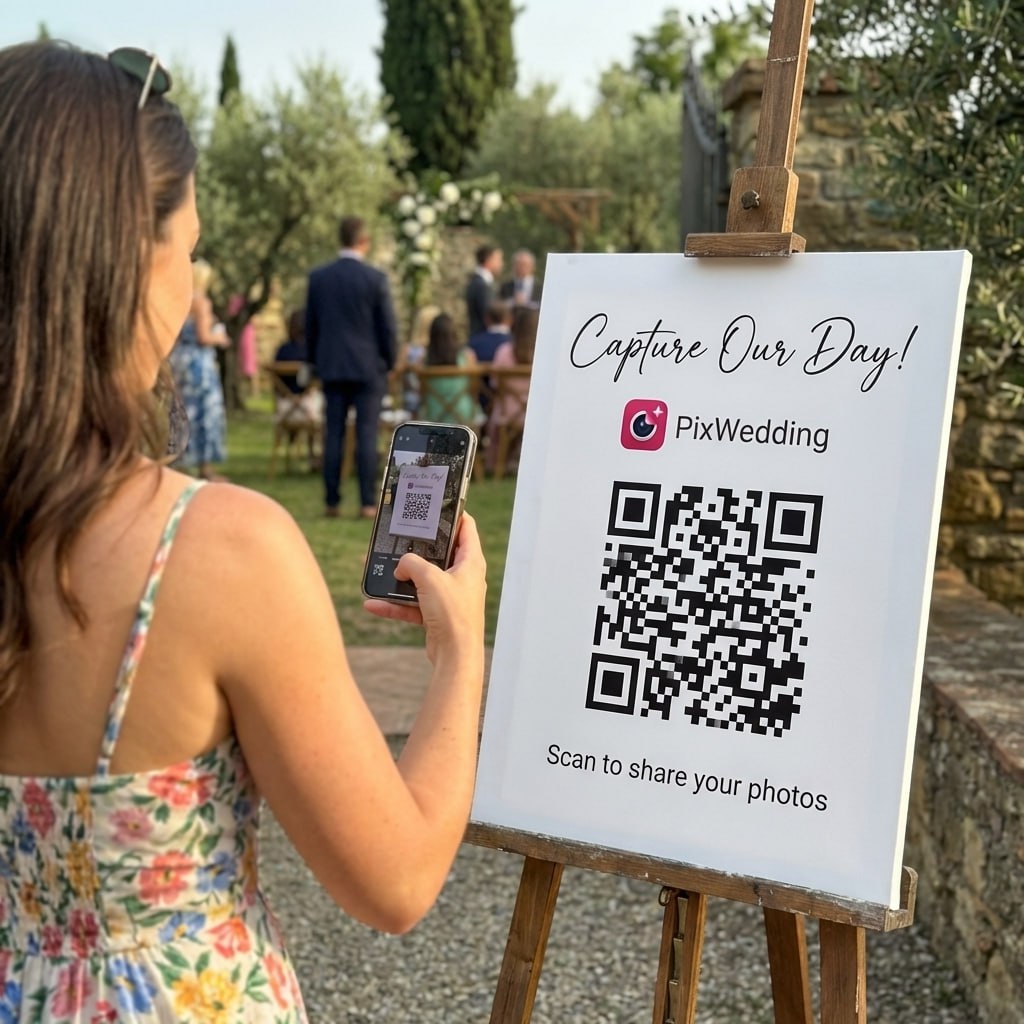
Pix Wedding collects guest photos on autopilot. Set it up before the wedding, print a QR code, and guests do the rest while you actually rest.
From Mom
Scan to join the album
No app, no account
UPLOADING
Saving your moment
THE ALBUM
Emma & Jack
June 21, 2026
647 photos · 95 guests


SCAN TO TRY
pix.wedding/
your-wedding
Why a Week-Long Approach Works Better Than One Night
Sleep science is clear: your body cannot be forced into good sleep on a single night. It responds to patterns, consistency, and practiced signals. Trying to sleep well only on the wedding eve is like trying to run a marathon without training.
A 7-day ramp-up gives your circadian rhythm time to calibrate. By the wedding eve, your body has been receiving consistent sleep signals for a full week. This dramatically increases your chances of falling asleep naturally, even with the excitement.
The Connection Between Anxiety and Sleep Before Weddings
Pre-wedding anxiety is not a sign that something is wrong. It is your brain processing an enormous life event. The problem is that anxiety peaks at night when there are no distractions, which is why bedtime feels like the hardest part.
The anxiety management techniques on this page work by giving your brain something specific to do instead of spiraling. A body scan, breathing exercise, or worry dump redirects your attention from future worries to present sensations.
Building a Sleep Toolkit You Can Use Beyond the Wedding
Everything on this page is useful beyond your wedding. Consistent sleep schedules, caffeine management, wind-down routines, and breathing techniques are lifelong tools for better sleep.
Many couples report that the sleep strategy they built for their wedding week became a permanent part of their routine. Consider this week as an investment in a skill you will use for years.
Explore more free wedding tools
Everything you need to make your wedding day stress-free and unforgettable.
QR Sticker Designer
Design custom print-ready stickers.
Photo Sharing QR
The best way to collect guest photos.
Hashtag Generator
Create unique wedding hashtags.
How to Collect Guest Photos
5 methods ranked by participation rate and ease.
Get Photos After the Wedding
Message templates to gather guest photos post-wedding.
Share Wedding Photos with Guests
Compare every sharing platform by ease and participation.
Best Way to Get Guest Photos
The single method with the highest participation rate.
How to Make a Shared Wedding Album
Step-by-step setup for every platform.
Frequently Asked Questions
Everything you need to know about our free tools and how they help your wedding day.
Your body's sleep system responds to consistency. One night of trying to sleep well does not work. Seven days of consistent bedtimes, reduced caffeine, and practiced relaxation trains your body to sleep on cue.
The 4-7-8 technique: breathe in for 4 counts, hold for 7, exhale for 8. This activates your parasympathetic nervous system and physically slows your heart rate. Practice it daily for best results.
Only if prescribed by your doctor. Do not try any new medication the night before your wedding. Side effects like grogginess could affect your morning. Stick to behavioral techniques.
Yes. Your body releases adrenaline and cortisol on big days, providing energy even after poor sleep. Many couples who sleep badly still feel energized throughout their wedding day.
Moderate exercise like walking or yoga helps significantly. Do it at least 4 hours before bedtime so your body has time to cool down. Avoid intense exercise in the final week to prevent soreness.
Lying in a dark room with your eyes closed still provides physical rest. Do not panic, do not check the clock, and do not go on your phone. Rest is enough. Your adrenaline tomorrow will carry you.