
How Much Money Should You Give as a Wedding Gift?
A useful amount starts with your budget, your relationship and the cost of showing up. Here are sourced 2026 ranges and the exceptions that matter.


How much money should you give as a wedding gift?
Zola's 2026 report puts the average wedding gift at $130; The Knot's guest study puts it at $150. Use those as reference points, not a bill. Give what fits your budget and your relationship with the couple. Travel, wedding party costs and bringing a guest can change the amount. A thoughtful card matters too.
Checked 29 September 2026. These studies use different samples, so the two averages are not interchangeable.
The wedding gift tool lets you weigh relationship and travel. This guide stays focused on the etiquette behind the number.
How much should you give by relationship?
These ranges come from Zola and The Knot. They are published etiquette guidance, not a required payment or a price for your seat.
| Relationship | Typical range | Source | Notes |
|---|---|---|---|
| Coworker or acquaintance | $75 to $100 | Zola, 2026 | A starting range, not a requirement. |
| Friend or relative | $100 to $150 | Zola, 2026 | Move within it for your own budget. |
| Close friend | $150 to $250 | The Knot, 2026 | Choose the amount you can give comfortably. |
| Immediate family | $250 or more | The Knot, 2026 | The Knot suggests this, but no family owes a fixed sum. |
| Wedding party | $150 to $200+ | Zola, 2026 | Allow for attire, travel and prewedding costs. |
| With a plus-one | About 1.5 to 2 times your solo amount | Zola, 2026 | Only if that fits the two of you. |
Swipe through relationship ranges
Checked 29 September 2026. Range sources: Zola's 2026 gift guide and The Knot's guest gift guide.
A quick take on wedding gift amounts
Hitched explains how to think about a cash wedding gift. The linked 2026 sources above provide the current dollar guidance.
Hitched on YouTubeHow do you choose an amount you can afford?
The Knot's etiquette expert puts your available budget before a suggested dollar range. Work backwards from the full cost of attending, then select a gift that feels generous within it.
Checked 29 September 2026. The Knot and Zola both put affordability ahead of the number on a range chart.
How much if you bring a plus-one?
Zola suggests about 1.5 to 2 times the solo amount. The Knot notes that two people can give one joint gift, with both names on the card. Neither asks you to calculate the cost of two dinners.
One household gift, two names
Decide what the two of you can comfortably give together. A partner does not need to match your solo amount dollar for dollar. Sign one card from both of you.
Checked 29 September 2026. Zola's plus-one guidance and The Knot's joint-gift advice.
- Your solo amount$100Example starting point
- About 1.5 to 2 times$150 to $200Zola's plus-one guidance
- One cardBoth namesA joint gift, per The Knot
What if attending already costs a lot?
Flights, lodging, attire and prewedding events all use the same household budget as the gift. A destination wedding or wedding party role can justify a smaller present.
Checked 29 September 2026. These are budget considerations, not fixed discounts from an assumed national gift price.
What about local cost of living?
Where you live affects what you can spare, and where the wedding is held can affect your travel bill. The ranges above do not include a city-by-city adjustment. Set your amount from your own costs instead of adding a percentage for a major city.
The Knot on overall guest spendingShould you send a gift if you cannot attend?
If you are close to the couple, a gift and a note show that you care even when you cannot be there. For a distant invitation or a tight budget, a personal message is a considerate response.
For Priya & Arjun
We are so sorry to miss your day. We are cheering for you both from afar, and we hope this helps you start married life.
With love, Maya & Dev
Zola recommends a gift and a personal note for close friends who cannot attend, while allowing for the guest's finances and connection to the couple. The Knot suggests checking the registry for a price point that fits.
If you are debating whether to give anything, our guide to attending without a gift covers the etiquette in more detail.
Checked 29 September 2026. Zola's RSVP-no answer and The Knot's guest guidance.
Is cash or a registry gift the better choice?
Either is a real gift. A cash fund tells you exactly what the couple wants help funding, while a registry item removes guesswork about style and duplicates.
Use the fund they chose
When a honeymoon or home fund is on the couple's registry, contributing there is direct and easy to acknowledge. Check the payment screen for any processing fee before you finish.
Zola's cash fund fee detailsChoose an item they listed
A registry item is a strong choice when you want something tangible. Zola reports that 49% of couples intentionally added lower-priced options in its 2026 report.
Zola's 2026 reportChecked 29 September 2026. The Knot Guest Study reports that guests use cash, physical gifts and gift cards, so none is the universal default.
Keep their wedding memories,
all in one album
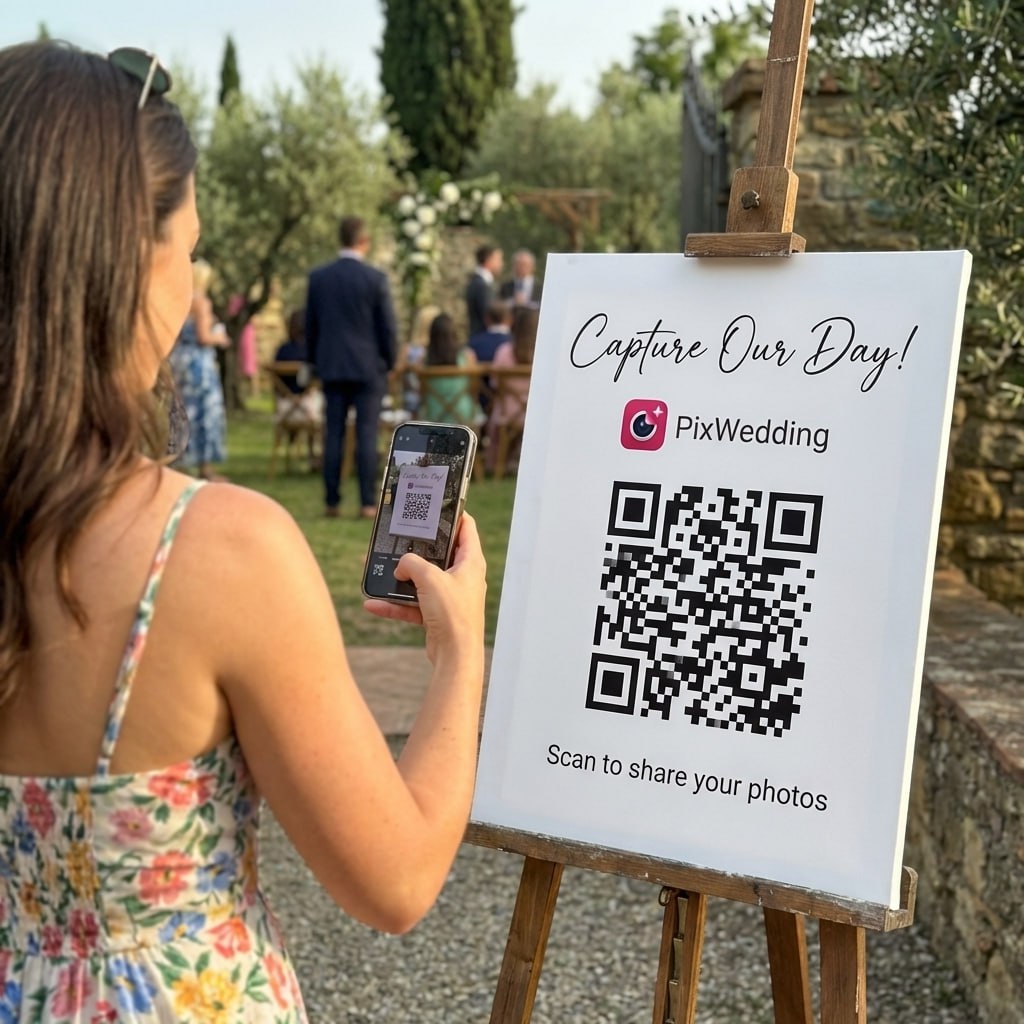
At the reception, guests scan a QR code and add photos and videos from their phone browser. The couple keeps every angle in one album.
WEDDING GALLERY
Priya & Arjun's Wedding
Illustrative wedding album






What is the best way to give cash?
A card with cash is personal. A transfer is convenient when the couple has requested it. A registry cash fund can carry a card-processing fee, so check the amount shown at checkout.
| Method | Useful when | Published fee | Before you send |
|---|---|---|---|
| Card with cash | A personal note and a clear handoff | No platform fee | Put your name on the card and use a secure card box or hand it to the couple. |
| Check | A mailed gift before the wedding | No app fee | Write it to one person, using their pre-marriage name (Zola). |
| Venmo | When the couple asks for it | No fee from balance, bank or debit; 3% with a credit card | Confirm the recipient before sending. |
| Zelle | Direct bank transfer when requested | Typically no consumer fee; ask your bank | Confirm the recipient's email or number. |
| PayPal | Domestic personal payment | No fee from balance or bank; cards cost 2.90% plus fixed fee | Use the intended personal-payment flow. |
| Zola cash fund | A fund the couple put on its registry | 2.5% card handling fee, or Venmo rules apply | The checkout shows the payment route and fee. |
Swipe through cash gift methods
Checked 29 September 2026. Fees: Venmo, Zelle, PayPal and Zola. Check your payment screen before sending.
What should you write with a cash gift?
Write something the couple will recognize as yours. One detail about them, a warm wish and your signature are enough.
We loved seeing you two celebrate. We hope this helps with the trip you have been planning. With love, Maya and Dev.
If you send money digitally, put the same note in a card or a private message. If you mail a check, Zola says to write it to one person, using their pre-marriage name, so the deposit is simpler.
Checked 29 September 2026. Zola's check and card advice.
Do wedding gift customs change the amount?
Yes, the form of the gift and the meaning of its number can matter in some families. Follow the couple's own wishes rather than assuming a whole culture uses one rule.
Checked 29 September 2026. These are documented examples, not rules for every guest or family.
Guests share the photos the couple missed
Alongside the card or registry gift, guests can add their own wedding pictures to one album. A QR scan opens the browser upload page.




Scan to join the album
No app, no account
UPLOADING
Saving your moment
THE ALBUM
Priya & Arjun
June 21, 2026
647 photos · 95 guests







Which wedding gift rules are worth ignoring?
The published ranges help you choose, but they should not turn the gift into an invoice or a test of generosity.
| Avoid | Do this instead | Why |
|---|---|---|
| Trying to cover your plate | Choose by budget and relationship | The meal price is not a gift invoice. |
| Forcing one regional percentage | Account for your real travel costs | No national location multiplier sets a guest's gift. |
| Sending a transfer to an unconfirmed account | Use the couple's registry or confirm the recipient | A payment app can send funds to the wrong person. |
| Writing a check to both newlyweds | Write it to one person, using their pre-marriage name | They may not share an account or surname. |
Swipe through gift etiquette fixes
Checked 29 September 2026. The plate rule and check-name guidance come from Zola and The Knot.
Need help with another wedding money question?
Use the gift tool for a personal estimate, or keep browsing practical advice for the rest of the wedding budget.

First dance
You guys!!
The gift is chosen. Keep the day in one place
Guests scan a QR code and add wedding photos from their phone browser, no app and no account. The couple can start free with 20 guest uploads.
From Mom
Scan to join the album
No app, no account
UPLOADING
Saving your moment
THE ALBUM
Priya & Arjun
Illustrative album
647 photos · 95 guests
SCAN TO TRY
pix.wedding/
your-wedding
How much money to give for a wedding gift in 2026
Zola's 2026 average of $130 and The Knot's $150 guest-study average are broad reference points, not minimums. The relationship table gives published ranges from both sources, and the budget steps show how to adapt them.
If a number still feels difficult, use the wedding gift calculator for a personal starting point, then decide what you can afford without pressure.
When a thoughtful note matters more than a number
A gift card, small registry item, group present or personal note can carry more meaning than an amount chosen to satisfy someone else's rule. Write your name clearly on a card so the couple can thank you.
If you are in the wedding party or traveling a long way, include those costs in your total before deciding what to spend on the present itself.
Explore more free wedding tools
Everything you need to make your wedding day stress-free and unforgettable.
QR Sticker Designer
Design custom print-ready stickers.
Hashtag Generator
Create unique wedding hashtags.
How to Collect Guest Photos
5 methods ranked by participation rate and ease.
Share Wedding Photos with Guests
Compare every sharing platform by ease and participation.
Best Way to Get Guest Photos
The single method with the highest participation rate.
How to Make a Shared Wedding Album
Step-by-step setup for every platform.
Alternative to Disposable Cameras
Better, cheaper options than disposable cameras.
Alternative to Wedding Photo Booth
5 cheaper alternatives to a $1,000+ photo booth rental.
Wedding gift amount questions
Ranges are a starting point. Your relationship and your own budget decide the gift.
Zola's 2026 First Look Report says $130 and The Knot's latest Guest Study says $150. They are different studies, so use the figures as reference points. Your own budget and relationship with the couple matter more than either average.
Yes. Zola's 2026 guidance puts friends and relatives at $100 to $150 and coworkers at $75 to $100. The Knot also says $100 is fine. Choose what you can afford and include a personal card.
Zola suggests about 1.5 to 2 times a solo gift for a guest bringing a plus-one. The Knot says a couple can give one joint gift and should both sign the card. Pick a combined amount that suits your finances rather than paying for two meals.
The Knot's $250 or more guidance covers immediate family generally, not parents specifically. If parents are already helping with the wedding, they can count that support when deciding whether to give another gift. Choose an amount or a personal present that fits the family's circumstances.
If you are close to the couple, a gift and a note are thoughtful even when you RSVP no. Zola says there is room to adjust for your finances and relationship. A registry item or a sincere card can be enough when your budget is tight.
Yes, when the couple has asked for that method. Venmo charges no fee when you send from your balance, bank or debit card, but a credit card costs 3%. Zelle says consumer transfers typically have no fee, though your bank may differ. Confirm the recipient before sending.
No. Zola and The Knot both reject tying the gift to the couple's catering cost. The guest cannot know that cost, and a costly venue does not change what you can afford.
Both are welcome choices. Use a cash fund when the couple has listed one, or choose an item from the registry that fits your budget. The Knot's Guest Study reports that both cash and physical gifts are common.