Are Disposable Cameras Worth It at a Wedding?
Short answer: yes for vintage charm and outdoor weddings, no for indoor receptions where 20-30% of shots come back too dark to use. Here is the full cost breakdown and honest verdict.
Disposable cameras deliver real value at outdoor, daylight, or golden-hour weddings where natural light makes up for flash limitations. They are not worth the money at dim indoor receptions: flash range caps at 8-10 feet, 20-30% of shots come back unusable, developing takes 1-3 weeks, and the all-in cost runs $25-35 per camera. For 100 guests, that is $300-420 for uncertain results you will not see for two weeks.
A QR wedding photo album collects instant, full-resolution, well-lit photos from every guest's smartphone at a fraction of the cost and zero waiting. Most couples who have tried both do not go back to film.
Pros and Cons of Disposable Cameras at Weddings
Both sides matter. Disposable cameras are not purely bad or purely good, they are good in specific conditions and bad in others.
Pros
Genuine film aesthetic
Grain, slight color shifts, and soft edges create a look no Instagram filter perfectly replicates. For couples who love the analog vibe, a few great disposable shots are irreplaceable.
Guest engagement and fun
Cameras on tables give guests something to do during cocktail hour and dinner. The tactile experience of winding film and pressing a physical shutter is genuinely enjoyable for many people.
Captures candid moments
Guests shoot subjects and moments your professional photographer is too busy to catch: cousins catching up in the corner, grandma dancing, toasts at individual tables.
No app or tech required
Older guests or anyone uncomfortable with smartphones can participate. Hand them a camera and they are immediately contributing.
Physical keepsake potential
Developed prints can become a guest book, scrapbook additions, or gifts to family members who appeared in shots. The physical object has weight that digital files lack.
Cons
High cost per usable photo
At $25-35 per camera all-in (purchase + developing + scanning), you pay $1.20-2.30 per usable image after factoring in the 20-30% that come out blurry or dark. That is expensive for uncertain results.
Indoor photos frequently fail
Flash tops out at 8-10 feet. Receptions are dim by design. Between 20-30% of shots at an average indoor wedding are technically unusable: too dark, too blurry, or overexposed.
Wait weeks to see results
Developing takes 1-3 weeks from most labs. You submit cameras and wait. In the meantime you have no idea if any good shots exist. The post-wedding period where you most want to relive the day is camera-less.
Cameras get lost or taken home
Industry estimates put camera loss rates at 15-20% per wedding. Guests pocket them as souvenirs, they fall behind cushions, bartenders toss them. On a 12-camera setup, you might develop only 10.
Ongoing collection logistics
Someone needs to collect cameras from every table at the end of the night, label them, and mail or drive them to a lab. Labs do not return cameras quickly, and digital scans add cost.
You still pay for bad shots
Film development is not selective. You pay to develop all 27 exposures whether they include a masterpiece or 27 pictures of the ceiling. Labs charge per roll, not per good photo.
Real Cost Breakdown: 100-Guest Wedding
These are real 2026 prices from major labs (The Darkroom, Walmart Photo, Walgreens) and retail sources. No rounding down.
| Line item | Low estimate | High estimate | Notes |
|---|---|---|---|
| 12 cameras (purchase) | $144 | $216 | $12-18 each, Fujifilm or Kodak |
| Developing (12 rolls) | $120 | $180 | $10-15 per roll at mail-in lab |
| Digital scans (12 rolls) | $36 | $60 | $3-5 per roll, often bundled |
| Shipping to lab (both ways) | $18 | $35 | USPS Priority or lab's prepaid |
| Lost / damaged cameras (2 est.) | $24 | $50 | Camera + partial develop cost |
| Total spend | $342 | $541 | Wide range based on lab choice |
| Total exposures (10 cameras developed) | 270 | 360 | 27-36 shots per camera |
| Usable shots (70-80% rate) | 189 | 288 | 20-30% unusable at indoor reception |
| Cost per usable photo | $1.19 | $2.86 | For uncertain, non-instant results |
Prices based on Fujifilm QuickSnap, The Darkroom lab, and USPS Priority Mail rates, June 2026.
When Disposable Cameras ARE Worth It (and When They Are Not)
The honest decision tree. Your venue and lighting are the single biggest factor.
Worth it when...
Your ceremony and reception are mostly outdoor or in bright natural light
You are getting married during daylight hours (golden hour or afternoon)
The film-grain aesthetic is non-negotiable for your vision board
You want a low-tech activity for guests who are not smartphone-comfortable
You have a small guest list (under 50) and a tight, one-room venue
You are combining disposable cameras with a digital option (hybrid approach)
Your photographer leaves early and you want coverage of the late-night reception
You want physical prints for a scrapbook or mailed to family members
Not worth it when...
Your reception is evening-only in a dim, moody ballroom or barn
Your budget is tight and $300-500 on uncertain results is a stretch
You want to see photos immediately after the wedding or during the honeymoon
You have a large guest list where most smartphones will outperform disposables
Your venue has dramatic up-lighting, dark walls, or candlelit only tables
You want to share photos with guests quickly after the event
Your venue does not allow camera flash (some historic sites prohibit it)
You have done it before and ended up with mostly unusable dark shots

Cocktail hour
Everyone's here!
Skip the developing wait. Get every guest's photos instantly.
A QR wedding album collects full-resolution photos from all your guests in real time, no film, no wait, no lost cameras. See it working in 30 seconds.

From Grandma
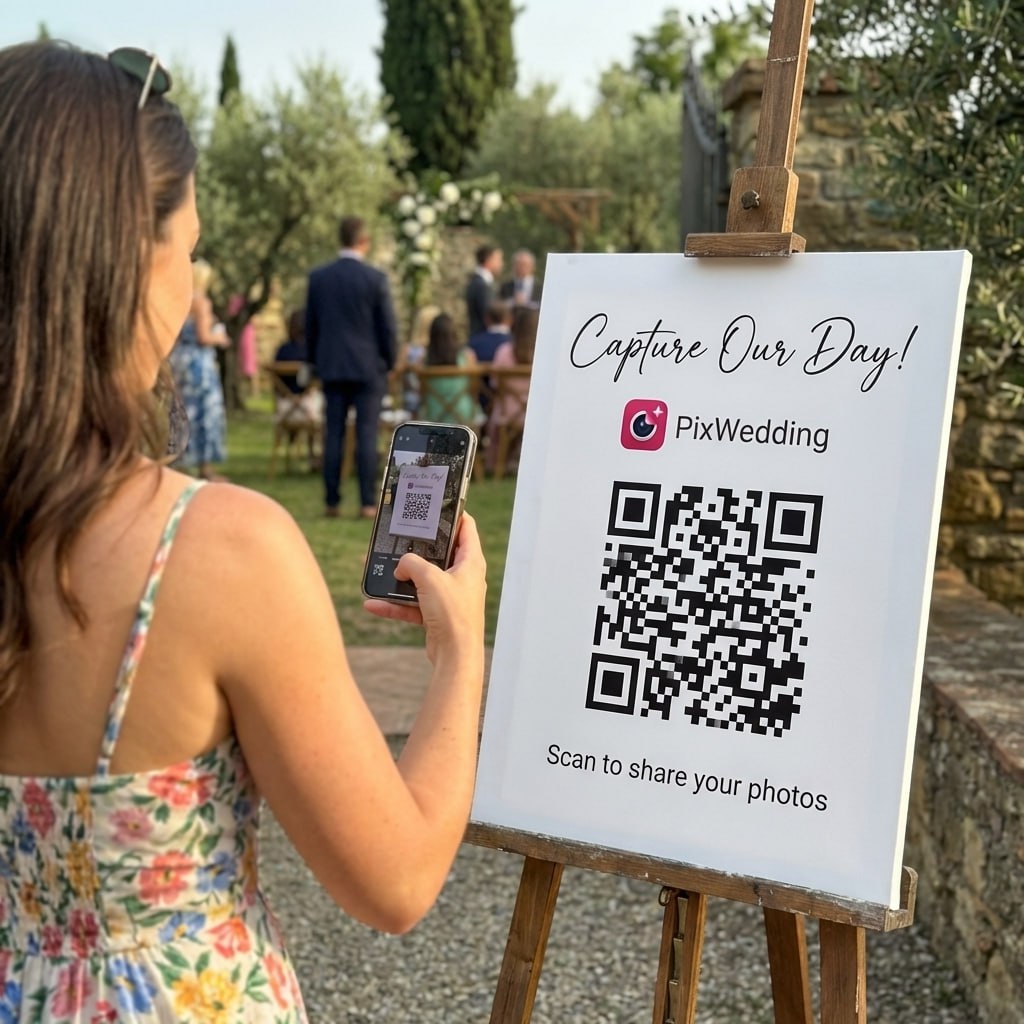
Scan to join the album
No app, no account
UPLOADING
Saving your moment
ALBUM
Emma & Jack
647 photos · 95 guests
Sarah B.


Disposable Cameras vs QR Album vs Photo Booth
A direct comparison on every metric couples actually care about.
| Factor | Disposable cameras | QR photo album | Photo booth |
|---|---|---|---|
| Cost for 100 guests | $342-541 | $0-49 | $800-1,800 |
| Usable photos | 189-288 | 400-1,000+ | 150-300 strips |
| Instant access | No (1-3 weeks) | Yes (real-time) | Yes (prints) |
| Indoor quality | Poor-fair | Excellent | Good (studio light) |
| Outdoor quality | Excellent | Excellent | Limited (movable) |
| Setup effort | Medium | Very low | High (vendor) |
| Collection effort | High | None | None |
| Lost item risk | High (15-20%) | None | None |
| Shareable digitally | After scanning | Instantly | Usually |
| Film/vintage aesthetic | Yes (authentic) | Filters only | Sometimes |
| Guest tech needed | None | Smartphone | None |
QR album pricing based on Pix Wedding free tier. Photo booth range based on 2026 US vendor averages.
Real Wedding Scenarios: What Actually Happened
Four wedding setups, four very different outcomes. Lighting is everything.
Outdoor garden ceremony, July afternoon
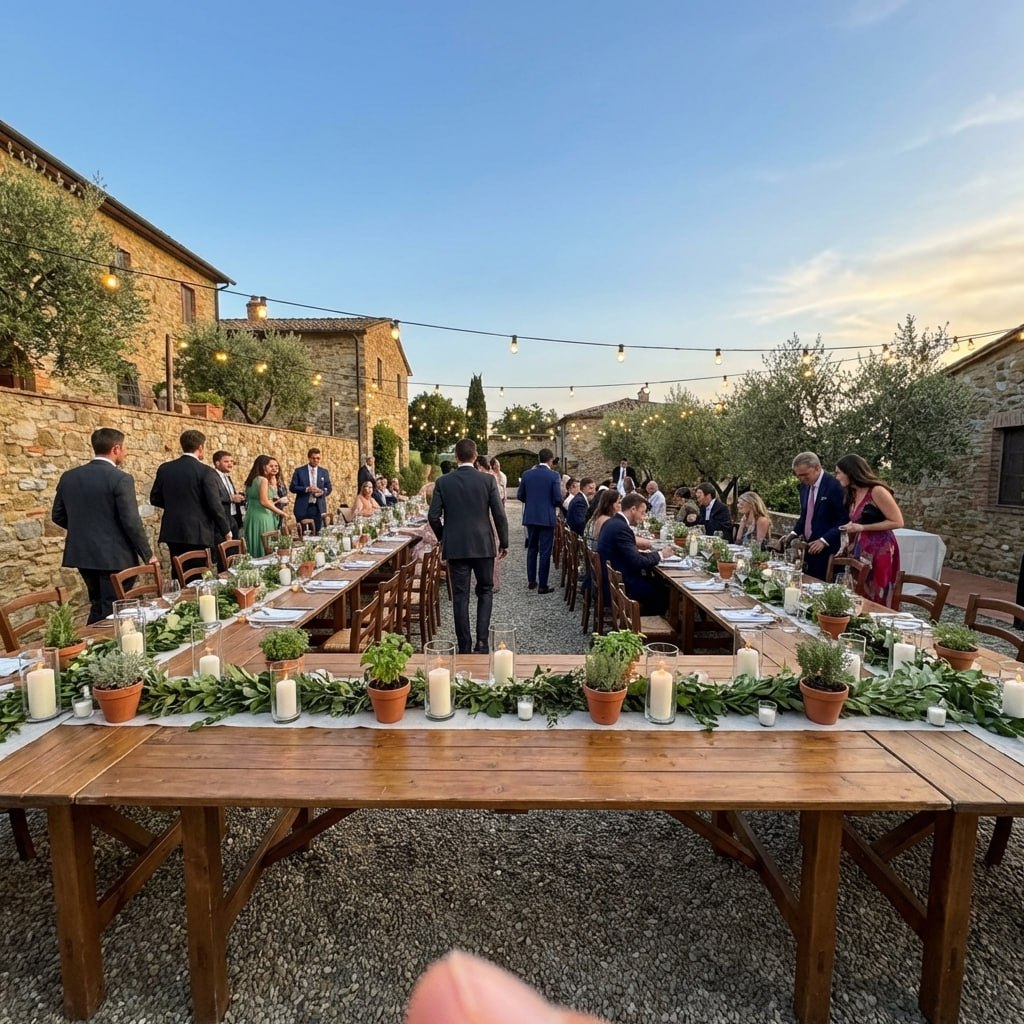
Twelve cameras placed at round tables under string lights. Guest usage was high during the four-hour outdoor cocktail reception. Natural light solved every flash limitation. The couple got 180 keepers out of 300 exposures, including three shots of the flower girls they still use as screensavers. Total spend: $390. Verdict: absolutely worth it.
Ballroom reception, February evening
Ten cameras on dinner tables at a candlelit ballroom reception. Flash range ended at 10 feet; the room seated guests at 15-20 foot intervals. The couple received 48 usable images from 240 exposures, mostly portraits taken in the bright foyer. Moody candlelit dance-floor shots were too dark to see faces. Total spend: $320 for 48 usable photos. Verdict: $6.67 per keeper, and none from the reception itself.
Barn venue, late afternoon into evening
Eight cameras used during golden hour and early reception. The outdoor cocktail hour produced stunning film shots. Indoor dinner shots were hit-or-miss. The couple kept cameras for outdoor use only and had guests shift to QR album upload for the reception. Hybrid approach gave them film aesthetics where it worked and sharp digital coverage everywhere else.
Urban rooftop, nighttime ceremony and reception
Six cameras placed for a nighttime rooftop wedding. The venue was lit primarily by Edison bulb strings and candles at 200 lux or less. Nearly every shot beyond 6 feet came out underexposed even with flash. Forty total usable shots across all six cameras, mostly close-up portraits by the bar. Developing cost: $168. Verdict: painful.
The Verdict
After running the numbers and looking at real outcomes, here is where disposable cameras land in 2026.
For outdoor or daytime weddings
Disposable cameras are a legitimate choice. Natural light erases their biggest limitation. You will get genuine film grain and color shifts that feel warm and human in a way digital processing does not fully replicate. Budget $350-450 for a full 100-guest setup, expect 200-280 usable shots, and enjoy the experience. Just make sure someone is assigned to collect cameras at the end.
For evening or indoor-heavy receptions
The math does not work in your favor. Flash range limitations, fixed focus, and slow film in low light mean 20-30% of your shots come back unusable. You will spend $300-500 and wait 1-3 weeks to find out. Your guests' smartphone cameras will produce sharper, better-exposed images in the same conditions, and a QR album collects those photos in real time.
The hybrid approach (most popular in 2026)
Many couples use both: 3-5 disposable cameras as interactive decor during cocktail hour and ceremony (when lighting cooperates) plus a QR album for the full reception. Guests who love the analog experience get it. Guests with iPhones contribute sharp candids automatically. The couple gets film keepers and a complete digital archive. Total extra cost over QR album alone: $75-150 for a small camera set. This is the answer for couples who genuinely cannot decide.
If You Go Ahead: 8 Tips to Get More Usable Shots
Decided disposable cameras are right for your wedding? These tips significantly improve your hit rate.
Only use cameras with flash built-in
Flash-less cameras are beautiful for outdoor daylight but useless indoors. Buy the Fujifilm QuickSnap or Kodak FunSaver, not the Ilford black-and-white version, unless your entire wedding is outside.
Place them at ceremony exit, not just dinner tables
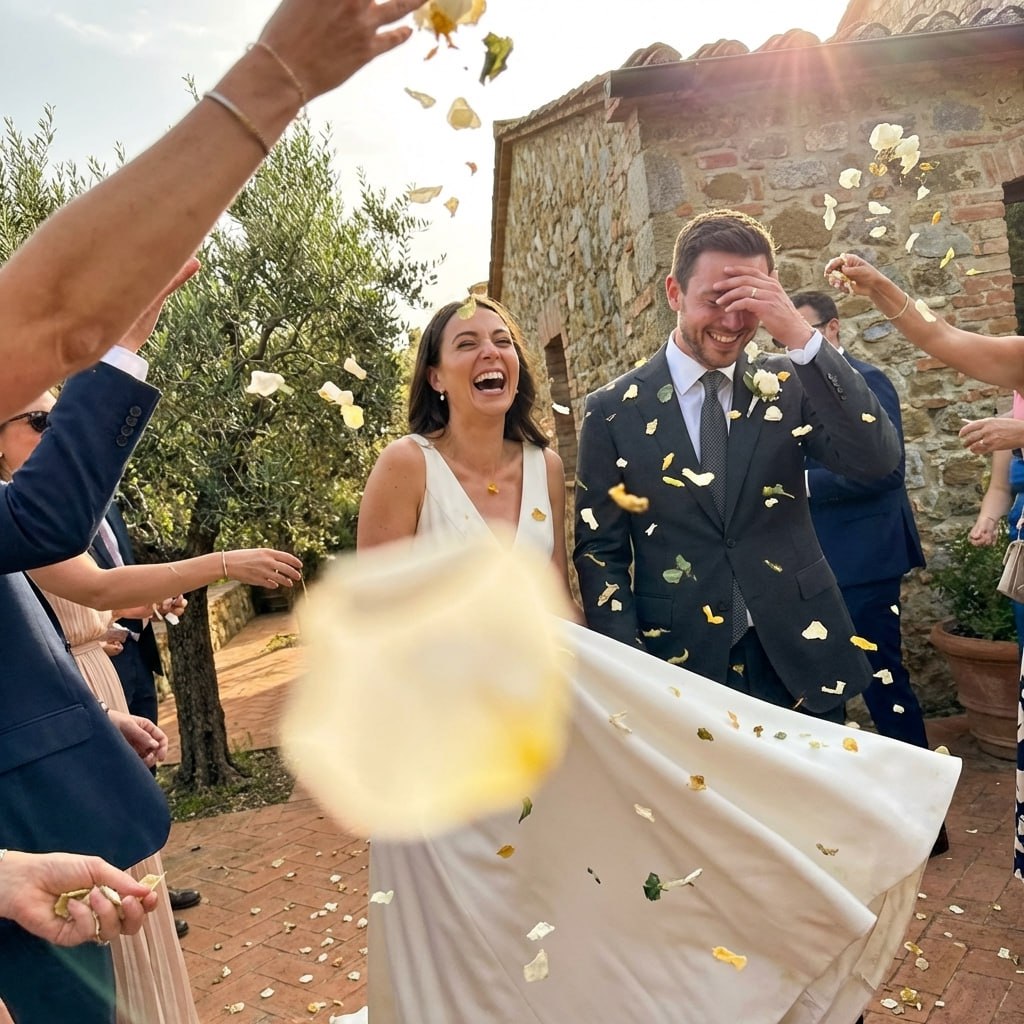
The outdoor ceremony exit (confetti throw, kiss, send-off) is peak lighting and high emotion. Putting a camera here gets better results than anywhere in the reception.
Brief your tables with a small instruction card
Many guests have never used a disposable camera. A small card that says "Wind and shoot! Flash works up to 10 feet." doubles usage rates and reduces wasted exposures.
Assign a camera collector before the end of the night
Tell your venue coordinator, day-of coordinator, or a trusted family member to sweep all tables before midnight. Cameras disappear with departing guests constantly.
Use a mail-in lab that provides digital scans
The Darkroom, Richard Photo Lab, and Indie Film Lab all mail-develop and provide high-res digital scans in one step. Do not use a drugstore unless you want to wait longer for lower quality scans.
Buy 2-3 extra cameras as buffer
Budget for 15-20% loss. If you need 10 cameras, buy 13. The unused ones are not wasted; they serve as emergency coverage if something goes wrong.
Pair with a QR album for the reception
Let disposable cameras handle ceremony and cocktail hour where lighting is good. Switch to a QR album for the dim reception. Best of both formats, none of the limitations.
Set realistic expectations with your partner
Agree before the wedding: disposable cameras are for charm and a few keepers, not comprehensive coverage. Your professional photographer and QR album handle the rest.
Related guides
The Real History of Disposable Cameras at Weddings
Disposable cameras became a wedding staple in the 1990s and early 2000s when the only alternative was hoping your pro photographer caught every moment. Back then, placing a Fujifilm QuickSnap on each table was genuinely innovative. Guests who never touched a camera could capture candid reactions, silly dance-floor moments, and behind-the-scenes shots the hired photographer missed.
The appeal made sense: single-use film cameras were affordable, required zero skill, and the grainy, slightly-imperfect results carried a warmth that early digital photos lacked. The format stuck around through cultural nostalgia even as smartphones made everyone a capable photographer.
By 2020, the calculus shifted. Every guest now carries a smartphone with a 12-megapixel camera, optical image stabilization, and a night mode that handles dim reception lighting without a flash. The case for disposable cameras narrowed to one narrow lane: the specific aesthetic of grain, light-leaks, and film texture that digital cameras cannot perfectly replicate.
- •Fujifilm QuickSnap 400: 27 exposures, flash built-in, $14-17 retail
- •Kodak FunSaver: 27 exposures, flash built-in, $12-16 retail
- •Ilford HP5 Single Use: 27 exposures, black-and-white, $18-22 retail (no flash)
- •Kodak Professional: 39 exposures, flash, $19-25 retail
- •Generic bulk cameras: 27 exposures, $8-12 retail (quality inconsistent)
Why Indoor Wedding Photography Is the Hardest Test for Disposable Cameras
Most wedding receptions happen indoors, often in the evening, in venues with dramatic lighting designed to look romantic rather than bright. This is exactly the worst environment for a disposable camera.
Built-in flash on a Fujifilm QuickSnap or Kodak FunSaver reaches 8-10 feet. Tables at most reception venues are 10-15 feet from neighboring tables. That means photos taken across a round table at your reception are already near or past flash range. Anything across the dance floor is in shadow. The result: images that are either correctly exposed and lit up in clinical flash-white foreground, or underexposed and dark past that 10-foot radius.
Fixed-focus lenses compound the problem. These cameras cannot adjust focus based on subject distance. Up close, this works fine. At group shots or candid moments across a room, the fixed focus produces soft images that look charming in some cases and just blurry in others. Grain from ISO 400 or 800 film looks nostalgic in good light; it reads as mud in low light.
Outdoor daytime weddings are a completely different story. Natural light solves almost every limitation of the format, and the grain and saturation of film can genuinely outperform smartphone processing in bright outdoor conditions.
- •Flash effective range: 8-10 feet maximum on most models
- •Reception table diameter: typically 5-6 feet, radius to far edge 6-8 feet (borderline)
- •Dance floor distance to nearest table: often 12-20 feet (out of flash range)
- •ISO 400 film in low light: grain becomes noise, shadows lose detail
- •Outdoor daylight: film performs best, grain looks intentional and charming
Disposable Cameras at Weddings: Your Questions Answered
Everything you need to know about our free tools and how they help your wedding day.
It depends on your priorities. Disposable cameras are worth it if you want vintage-film aesthetics and a handful of charming candid keepers. They are not worth it if you want quantity, sharp indoor photos, or instant digital access. Each camera costs $12-18 to buy and $10-15 to develop, so 10 cameras for 100 guests runs $220-330 before accounting for 20-30% unusable shots. A QR-based photo sharing app collects unlimited full-resolution photos from every guest at a fraction of the cost.
The standard recommendation is one camera per 8-10 guests, so a 100-guest wedding needs 10-13 cameras. However, plan for 15-20% of cameras to disappear home with guests or get water-damaged at the bar. Many planners add 2-3 extras as buffer. If your reception is indoors, buy cameras with flash; without it, up to 50% of indoor reception shots will be too dark to use.
Budget $25-35 per camera all-in: $12-18 for the camera itself, $10-15 for developing, and $3-5 for digital scanning. A 100-guest wedding with 12 cameras totals roughly $300-420. Add in 2-3 cameras lost to guests and you land closer to $350-480. That budget buys unlimited photo collection from all 100 guests with a QR wedding album app.
Each disposable camera holds 27-36 exposures, but expect 20-30% to be blurry, overexposed, or underexposed, especially indoors. Flash range tops out at 8-10 feet, so anything beyond arm's length at a dim reception is likely dark. Across a typical 10-camera wedding setup, you might get 180-250 usable images out of 270-360 exposures taken. That works out to $1.20-2.30 per usable photo when you factor in total spend.
A QR code wedding photo sharing album lets every guest upload full-resolution photos instantly from their smartphone with no app download required. You get hundreds of sharp, well-lit, timestamped photos in a private album within minutes of them being taken. Services like Pix Wedding cost far less than developing film, and you never wait weeks to see results. For couples who want the film look, some digital apps also offer vintage filters.
Usage rates vary widely. At table settings, roughly 60-70% of cameras get used, but enthusiasm drops significantly during the dancing portion of the reception when guests put cameras down to join in. Some guests forget cameras exist, others take selfies of themselves rather than the couple, and children love using them (for better or worse). Usage rates are generally higher at outdoor daytime weddings where lighting produces better results and guests are more stationary.