Where to Put Your Wedding QR Code for Maximum Scans
The single highest-scan placement is a table tent or card at every guest seat, hit twice: once just before plates are cleared at dinner, and once again right after the first dance.
The combination matters more than the location. One centerpiece sign at the bar will only ever pull 10-20% participation. Multi-touchpoint placement (table tents + bar sign + program insert + restroom mirror + DJ verbal callout) routinely pulls 70-80%. Put the QR code wherever a guest would already be looking, with a one-sentence reason to scan it directly next to the code.
Create Your Free Photo Sharing QR CodeThe 12 Wedding QR Code Placement Options, Ranked
These ranges reflect patterns across dozens of couples who tracked their scan counts. Your venue, guest age mix, and verbal strategy will shift numbers within the band.
Guests look at their place setting repeatedly. Paired with a DJ verbal cue, this single touchpoint outperforms every other option.
Guests read the menu during cocktail hour and at the table. The dwell time is high and hands are free before dinner.
Anyone who uses the photo booth is already in "share mode." A QR code here converts nearly everyone at that station.
Picked up, held, looked at. The scan prompt is inches from the guest's face. Works especially well during cocktail hour.
Guests linger at the bar. Dwell time is high. Works best when the bartender is briefed to point it out.
Guests hold the program during the ceremony and often keep it. Passive but consistent -- especially if you add one sentence of context.
Guests pause in the restroom. No social pressure. Scan rates here are surprisingly strong because there's nothing else competing for attention.
Good for guests who are already energized and feeling celebratory. Less effective for older guests who avoid the floor.
A second wave of guests who missed the earlier prompts often scan here. The informal energy helps. Strong for evening extensions.
High visibility but guests are distracted on arrival. Works better as a warm-up than a primary collection point.
End-of-night placement. Guests are tired or leaving. Catches stragglers but should never be the only placement.
Most guests will not scan a QR code weeks before the event. Useful for awareness, not for collection.
Single Placement vs Multi-Touchpoint: What the Numbers Show
Adding placements compounds participation -- up to a point. After 6 locations plus verbal cues, returns diminish. The goal is 4-5 well-placed touchpoints, not covering every surface.
Note: rates assume at least one verbal prompt from the DJ or MC. Remove the verbal cue and subtract 20-30 percentage points across the board.
Visual Placements That Work vs Placements That Fail
The difference is usually not the code itself but the context around it.
What Consistently Works
- Table tent at every plate with a one-sentence prompt: "Scan to share your photos tonight."
- High contrast print -- dark QR on white matte stock, 1.5-2 inch minimum.
- Scannable in low light: white border around the code, larger print size for candlelit venues.
- Copy that states the benefit, not just the action: "Share photos -- everyone sees the same album."
- DJ verbal cue within 30 minutes of guests being seated.
- Backup URL printed below the QR in small text for guests who prefer typing.
- Code placed at eye height or table level, not on the floor or above 6 feet.
- Multiple locations across the venue so guests encounter it more than once.
What Consistently Fails
- Single sign in a dark corner of the venue with no overhead light.
- No instructional text -- just a QR code with "Pix Wedding" printed beneath it.
- Small print (under 1 inch square) on a table card.
- Code on the back of the printed program, facing down on the seat.
- Glossy laminated sign outdoors where glare blocks scanning.
- Code behind glass (in a frame or display case) -- glass introduces reflection that jams autofocus.
- Generic copy: "Scan here" with no explanation of what happens next.
- Placement behind centerpieces, candles, or flower arrangements that partially block the code.
The 5 Verbal Moments That Triple Your Scan Rate
Physical placement is passive. Verbal cues are active. A single well-timed mention from the DJ or MC adds 30-40% participation on top of the best physical setup. Here are the five moments that work and the script for each.
""We have a photo sharing code on every table -- scan it now to upload the photos you just took during the ceremony.""
""Before we start tonight, grab the little card at your table and scan that QR code. Every photo you share goes straight to their album.""
""While glasses are raised -- if you snapped anything tonight, now is a great time to scan the code and upload it.""
""Make sure your camera is ready. And after the cake, scan the table code to share what you got.""
""If you have not scanned the photo code yet, there are signs at the exit -- takes 10 seconds and it means a lot to the couple.""
Brief the DJ in writing. Provide a printed card with the exact wording for each moment. DJs who improvise the prompt often forget the key benefit (sharing and viewing photos together) and guests tune it out. A scripted line keeps the message clear and takes under 15 seconds per mention.
Best QR Code Placement by Venue Type
Different venues have different traffic patterns. A barn reception has different chokepoints than a hotel ballroom. Here is what works per venue type.
Ballroom
- Table tent at every seat
- Bar sign (especially near open bar)
- Photo booth if present
- DJ announcement twice
Barn or Rustic
- Table tent or card at every table
- Photo booth backdrop
- Exit barn door sign
- MC or DJ verbal prompt
Garden or Outdoor
- Cocktail table cards (water-resistant print)
- Bar station with weighted sign
- Ceremony program insert
- No glossy laminate outdoors
Restaurant or Private Room
- Menu insert or back of menu
- Table tent between settings
- Server verbal cue at dessert
- Restroom sign if space allows
Industrial Loft or Warehouse
- Multi-station signage at food/bar/photo areas
- DJ or MC announcement x2
- Late-night station sign
- Cocktail napkins if budget allows
Size, Color, and Design Specs That Get Scanned
A well-placed QR code can still fail if the print specs are wrong. These are the technical minimums that ensure reliable scanning at a wedding.
Print the QR code at a minimum of 1.5 inches square -- 2 inches is safer and handles minor camera focus lag.
Use high contrast: dark code on white or cream background. Avoid reversing (white code on dark) unless you test it first.
For dim venues (candlelit ballrooms, barn receptions), add a white border of at least 4mm around the code.
Use a sans-serif font for the call-to-action line. Max 10 words. "Scan to share your photos" is enough.
Avoid glossy lamination outdoors. Glare prevents scanning in bright sunlight or flash photography.
Add a short URL below the QR code as a fallback. Some guests will prefer typing.
Test scan from 12 inches away on two phones (one Android, one iPhone) before printing the full run.
Use matte card stock for table tents indoors. Weight of 300gsm or heavier holds shape throughout the reception.
10 Common Wedding QR Code Placement Mistakes
Most couples make at least two of these. Each one alone can cut participation by 20-30%.
Relying on the welcome sign alone -- guests are too distracted on arrival to stop and scan.
Placing the sign behind centerpieces, candles, or flower arrangements where the code is partially blocked.
Printing without any instructional text -- guests need one sentence telling them what they get.
Using a generic "Scan Here" with no context. "Scan to share and see all guest photos" outperforms it every time.
Dim or uneven lighting directly on the sign -- ambient candlelight is beautiful but not QR-friendly.
Glossy lamination that reflects flash or overhead spotlights.
Mounting the code inside a glass frame or behind a window -- glass introduces glare that blocks scanning.
Small print size (under 1 inch). A table tent at 0.8 inches will fail on half of devices.
English-only copy at multilingual weddings. Add a second-language line if guests speak another language.
No verbal pairing -- the best physical placement still loses 30-40% participation without a single verbal mention.
When to Refresh the QR Prompt Throughout the Day
A single prompt at the start of the evening is not enough. Guests arrive at different times, are distracted at different moments, and need reminders. This timeline has been effective for couples who hit 75%+ participation.
Include a half-sheet or insert with the QR code. This is awareness-only -- do not expect high scans here. It plants the idea and gives early arrivals something to do.
Place cards at every cocktail table and high-top. Have the DJ mention it once during the first 30 minutes. This is the highest-yield window -- phones are out, guests are relaxed and taking photos.
Table tents are already at every seat. The bar sign is visible. The MC does a welcome mention during the opening remarks. Guests who missed cocktail hour get their first prompt here.
Two natural pauses when phones come out anyway. A short mention from the MC converts the guests who heard the first prompt but did not act yet.
A last-chance sign near the exit or snack station. This catches the guests who were dancing, distracted, or arrived late. Less urgent but consistently adds 5-10% to final counts.
Print Specs and Budget: DIY vs Professional Printer
Most couples spend $40-120 total on QR print materials. The biggest variable is whether you use a home printer or an online print service like Canva Print, Vistaprint, or a local print shop.
DIY vs printer: Home printing works fine for table tents and program inserts on matte card stock. For bar signs and welcome signs, an online printer produces sharper QR codes with better contrast. Cocktail napkins require a dedicated print run -- that is not a DIY item.
Related Wedding QR Code Guides
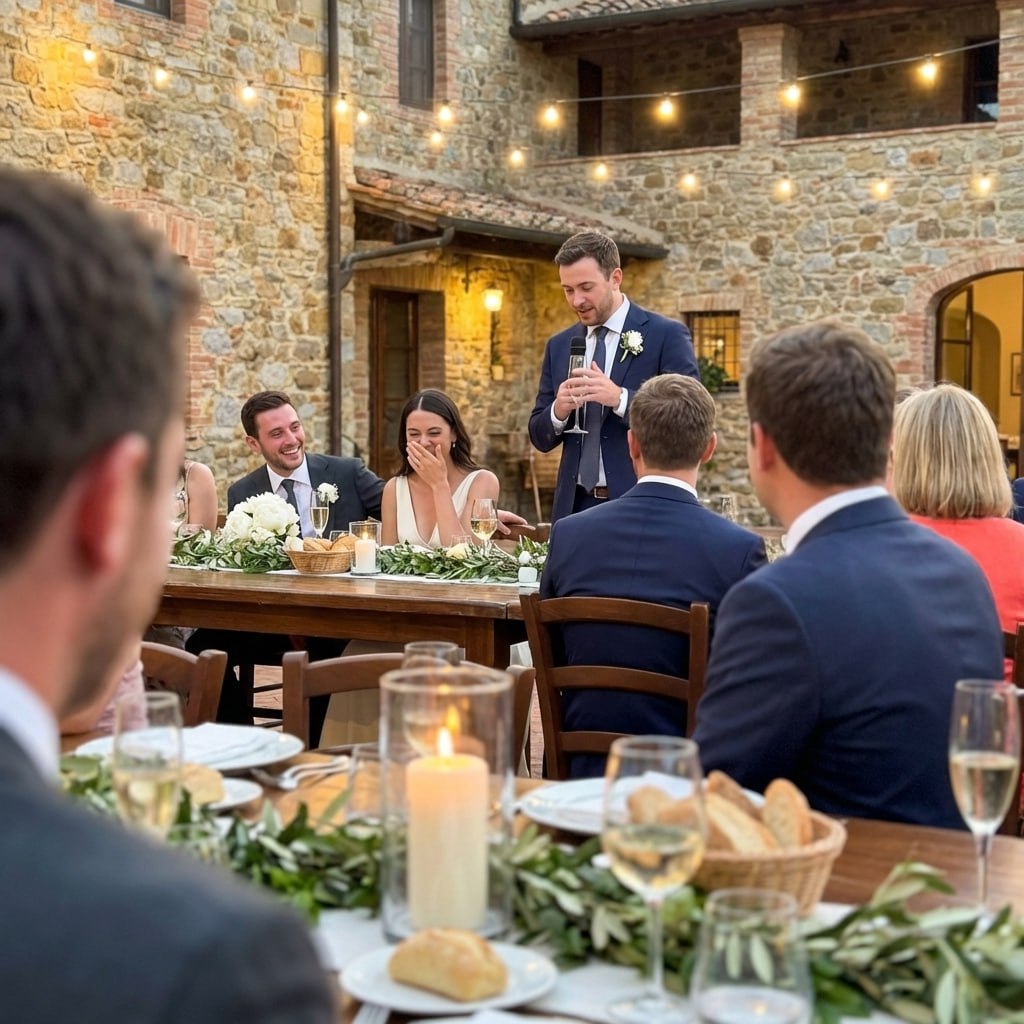
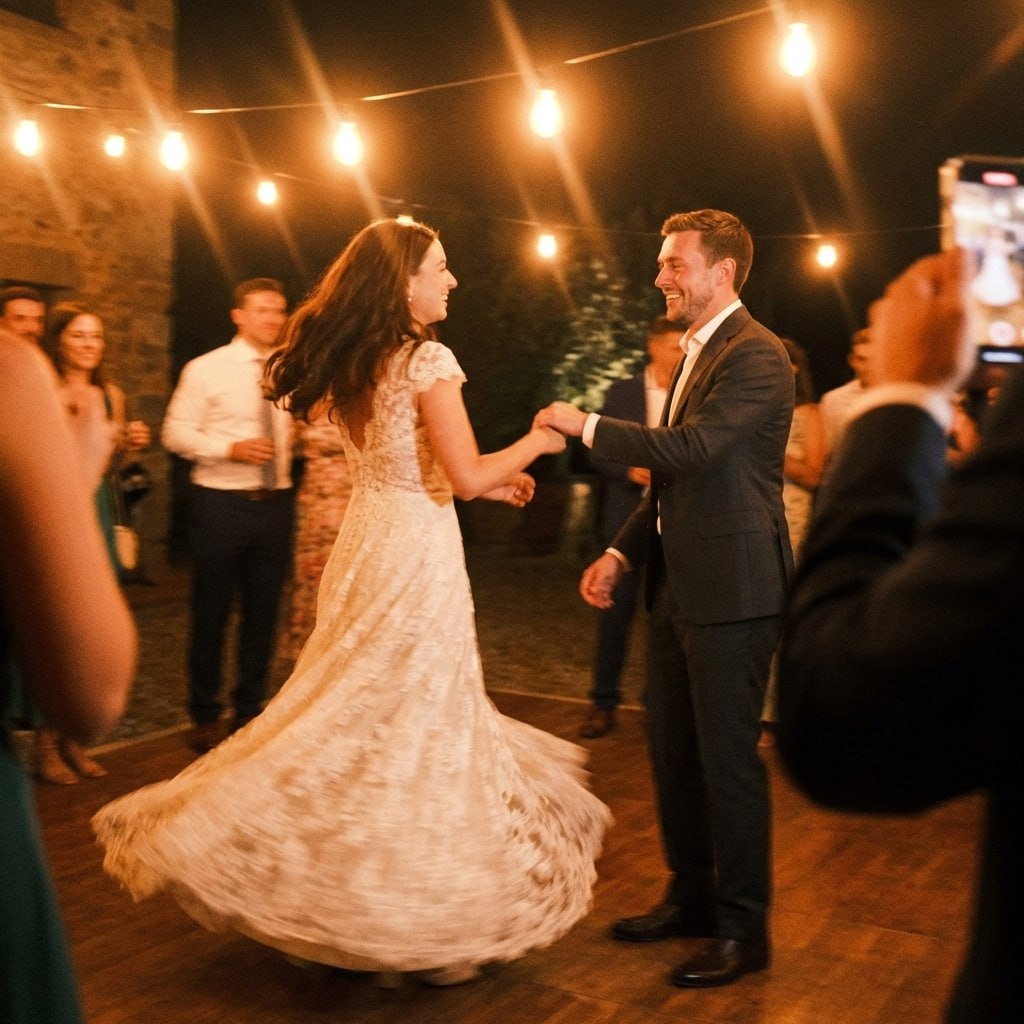
First dance
You guys!!
Create Your Wedding Photo Sharing QR Code Free
Pix Wedding generates a shareable QR code your guests can scan to upload and view every photo from your day. No app download required. Works on every phone.
From Mom
Scan to join the album
No app, no account
UPLOADING
Saving your moment
THE ALBUM
Emma & Jack
June 21, 2026
647 photos · 95 guests
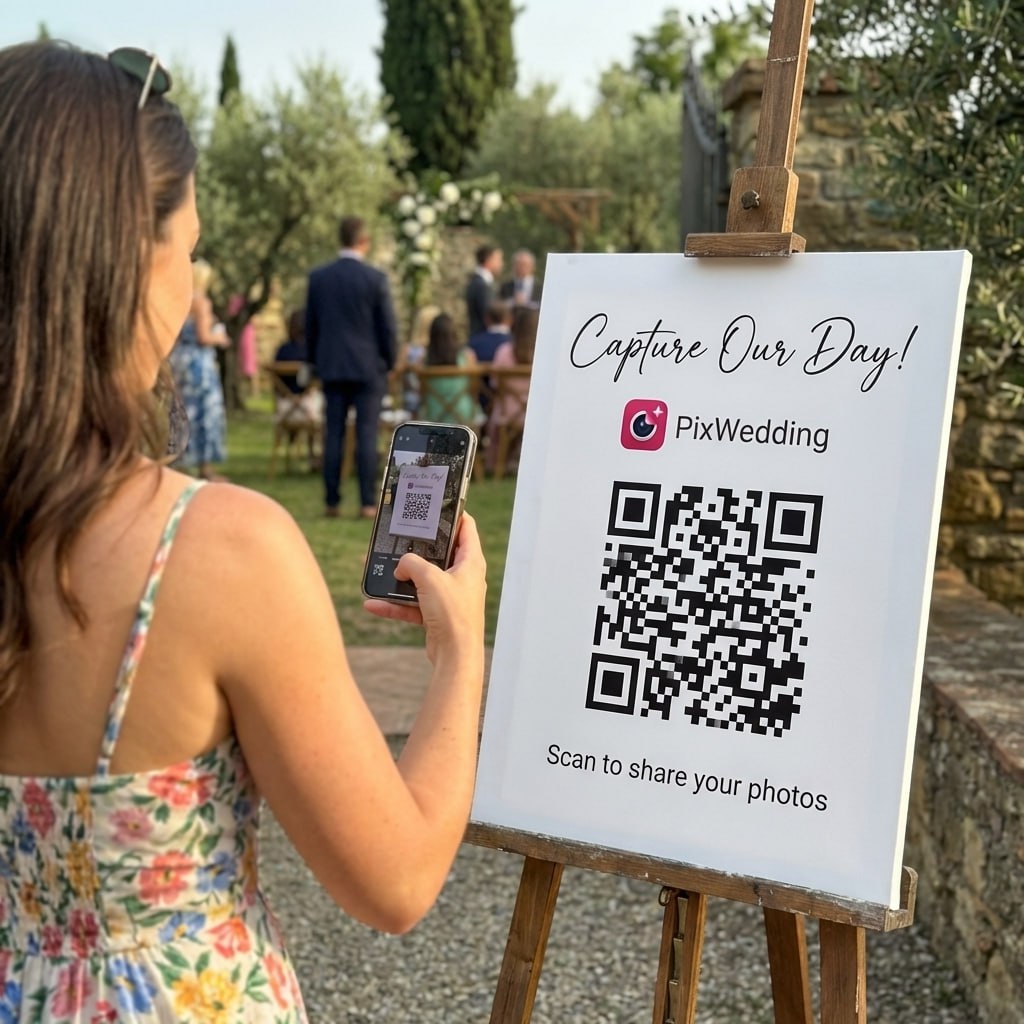
SCAN TO TRY
pix.wedding/
your-wedding
Why QR Code Placement Determines Your Photo Collection Rate
The technology behind wedding photo QR codes is reliable -- the variable that separates a 15% scan rate from a 78% scan rate is almost always placement and timing, not the code itself. What we see consistently is that couples who place a single sign near the entrance collect a fraction of the photos that couples who use a layered, multi-touchpoint approach collect.
The underlying logic is simple: guests are distracted, they forget, and most people need two to three reminders before they take action. A QR code at every seat is harder to ignore than one sign across the room. A DJ mention gives guests who missed the visual prompt a second chance. A restroom card reaches guests who were in conversation during the MC announcement.
Participation rates above 70% are achievable at most weddings when the placement strategy is intentional. That means choosing locations where guests naturally pause, adding a single line of instructional text, and ensuring the code is scannable in the actual lighting of the venue.
How to Brief Your Vendors on QR Code Placement
The DJ or MC is your most valuable ally for driving scan rates. Brief them in writing with a script for each moment: cocktail hour opener, welcome speech cue, pre-toast mention, and exit callout. Provide the same briefing to the catering team if they are involved in table setup.
For bar staff, a simple instruction is enough: "If guests ask what the card on the bar is, tell them it is how they share their photos tonight." Bartenders who understand the purpose are significantly more likely to mention it organically.
Coordinate with the venue coordinator or day-of planner to confirm that table tents are placed at seats before guests arrive, not just at empty tables before the room is set. Cards that get moved during setup are often not replaced.
- •Give the DJ a printed script with exact wording for each verbal cue
- •Confirm with the planner that table cards are placed at every seat, not just per table
- •Ask the caterer not to remove table cards when clearing plates -- clip them to the menu stand instead
- •Provide the bartender with two backup printed cards to replace any that get damaged
- •Walk the venue yourself before doors open to verify every placement is scannable and unobstructed
What to Print on the Card Next to the QR Code
The instructional text next to the QR code is as important as the placement. A bare QR code with no context gets ignored because guests do not know what they are scanning into. One sentence changes that completely.
The most effective copy patterns we see follow a simple formula: action + benefit. "Scan to share your photos -- everyone's uploads appear in one album" outperforms "Scan here" by a wide margin. Keep the font large enough to read from 18 inches without glasses. Use a sans-serif typeface.
If your event has older guests, consider adding the short URL below the code. Guests who are less comfortable with QR scanning will type the URL instead, and you lose zero participation.
Explore more free wedding tools
Everything you need to make your wedding day stress-free and unforgettable.
QR Sticker Designer
Design custom print-ready stickers.
Photo Sharing QR
The best way to collect guest photos.
Hashtag Generator
Create unique wedding hashtags.
How to Collect Guest Photos
5 methods ranked by participation rate and ease.
Get Photos After the Wedding
Message templates to gather guest photos post-wedding.
Share Wedding Photos with Guests
Compare every sharing platform by ease and participation.
Best Way to Get Guest Photos
The single method with the highest participation rate.
How to Make a Shared Wedding Album
Step-by-step setup for every platform.
Wedding QR Code Placement: Frequently Asked Questions
Everything you need to know about our free tools and how they help your wedding day.
A table tent or card at every guest seat is consistently the highest-performing single placement. Guests look at their place setting multiple times during dinner and it is hard to miss. Paired with a single DJ verbal cue, this alone can reach 50-65% participation. Add two more placements and you are in the 75-80% range.
Print one card per seat (150) plus 8-12 signs for other locations: bar, restroom, photo booth, welcome area, exit. A total print run of 170-200 units covers most 150-guest weddings comfortably. Order 10-15% extra for a 200-guest event.
Minimum 1.5 inches square for table cards. For standing signs, 3-4 inches is the sweet spot. Anything smaller than 1 inch will fail on older phone cameras and in low-light conditions. For outdoor weddings, print larger (2.5+ inches) to compensate for bright ambient light reducing contrast.
Yes, with a caveat. Program inserts get a 35-45% scan rate on their own, which is solid but not the highest. Include it as one of multiple touchpoints, not as the only placement. The program works well for guests who arrive early and read it during the ceremony wait.
Glare is the main enemy outdoors. Use matte card stock, never glossy laminate. Print the QR at 2+ inches. Add a white border of at least 4mm around the code. Position signs in shade where possible, or use weighted cards with a matte finish that lies flat on tables. Test the scan in direct sunlight before the event.
Absolutely. Verbal callouts consistently increase scan rates by 30-40% on top of physical placements alone. The two highest-impact moments are: during the first cocktail hour (when guests have their phones out) and right before toasts (high-attention moment). Brief the DJ or MC with a one-sentence script in advance.