
How Many Photos Do Wedding Guests Take?
Across most modern weddings, guests collectively take roughly 200-800 photos. The variance is wide: a 50-person backyard wedding might produce 150-300 guest photos total, while a 200-person reception with a QR code prompt regularly produces 1,000-2,500. The single biggest predictor is whether the couple actively prompts uploads (QR codes on tables, signs, programs) versus hoping guests share later, which they almost never do.
The pattern we observe consistently across weddings on our platform: guest count sets the floor, but how you ask for photos determines the ceiling. A 100-person wedding with zero prompting might collect 40 photos from guests who happen to post on Instagram. The same wedding with QR codes on every table and a mention from the MC can produce 800-1,200 organized uploads by midnight. That gap is entirely within the couple's control.
Collect Guest Photos for FreeGuest Photo Count by Wedding Size
These are the observed ranges across weddings where guests had a structured way to share photos. Numbers assume at least a basic prompt (QR code or shared link). Without any prompt, expect the lower end of each range or below it.
150-300 photos
Intimate, backyard, or micro-wedding
300-700 photos
Small to mid-size ceremony
600-1,200 photos
Standard reception size
1,000-2,000 photos
Larger traditional wedding
1,500-3,000+ photos
Large celebration or cultural wedding
Ranges reflect active photo-sharing with a structured prompt. Passive sharing (no QR code, no sign) consistently produces 40-60% fewer collected photos regardless of guest count.
How to Read These Numbers
These ranges represent photos that actually end up in a shared album, not the total number snapped on guest phones. The average guest at a 100-person wedding probably takes 8-15 photos over the course of the day. Of those, they might upload 3-5 if prompted well. The rest stay on their phone indefinitely. That is why the ceiling on collected photos is always lower than total photos taken, but the gap can be closed significantly with the right friction-reduction strategy.
Industry data from sources like The Knot and RSVPify consistently shows that photo-sharing engagement drops sharply after the event. The window where guests are most motivated to upload is during the reception itself and in the first 12 hours afterward. Every hour of delay reduces participation rate. A platform that lets guests upload in real time from the QR code without requiring an account or app download outperforms a link sent in a thank-you card two weeks later by a wide margin.
| Guest Count | Photos Collected | Typical Wedding Type |
|---|---|---|
| 30-50 guests | 150-300 photos | Intimate, backyard, or micro-wedding |
| 50-100 guests | 300-700 photos | Small to mid-size ceremony |
| 100-150 guests | 600-1,200 photos | Standard reception size |
| 150-200 guests | 1,000-2,000 photos | Larger traditional wedding |
| 200+ guests | 1,500-3,000+ photos | Large celebration or cultural wedding |
Sources: The Knot, guest photo-sharing app data and Pix Wedding platform observations across weddings that used a QR code prompt.
The Single Biggest Variable: Are You Prompting?
This is the most common reason couples are disappointed by how few guest photos they receive. It is not that guests did not take photos. It is that no one told them where to put them. The difference in collected output is stark.
No QR Code or Active Prompt
~30%
Roughly 30% of guests will share at least one photo when left to their own devices (usually via Instagram tags or personal texts). The rest never do. The window closes within 48 hours of the wedding, and after that it is essentially zero.
- Most photos stay locked in personal camera rolls forever
- Collected set is fragmented across texts, DMs, and Instagram
- Couple spends weeks chasing individual guests for photos
QR Code Prompt on Tables + Program
~75%
With a QR code on each table, a mention in the program, and an MC callout during dinner, about 75% of guests upload at least one photo before they leave. The album builds in real time and the couple wakes up the next morning to hundreds of photos already organized in one place.
- Photos collected in a single organized album on the night
- Couple receives uploads from guests they forgot to follow up with
- Post-event follow-up email closes the remaining gap
What Guests Photograph Most (Ranked)
Based on the patterns we observe across uploaded guest albums, certain moments consistently dominate guest camera rolls. The order tracks emotional intensity and photographic opportunity combined.
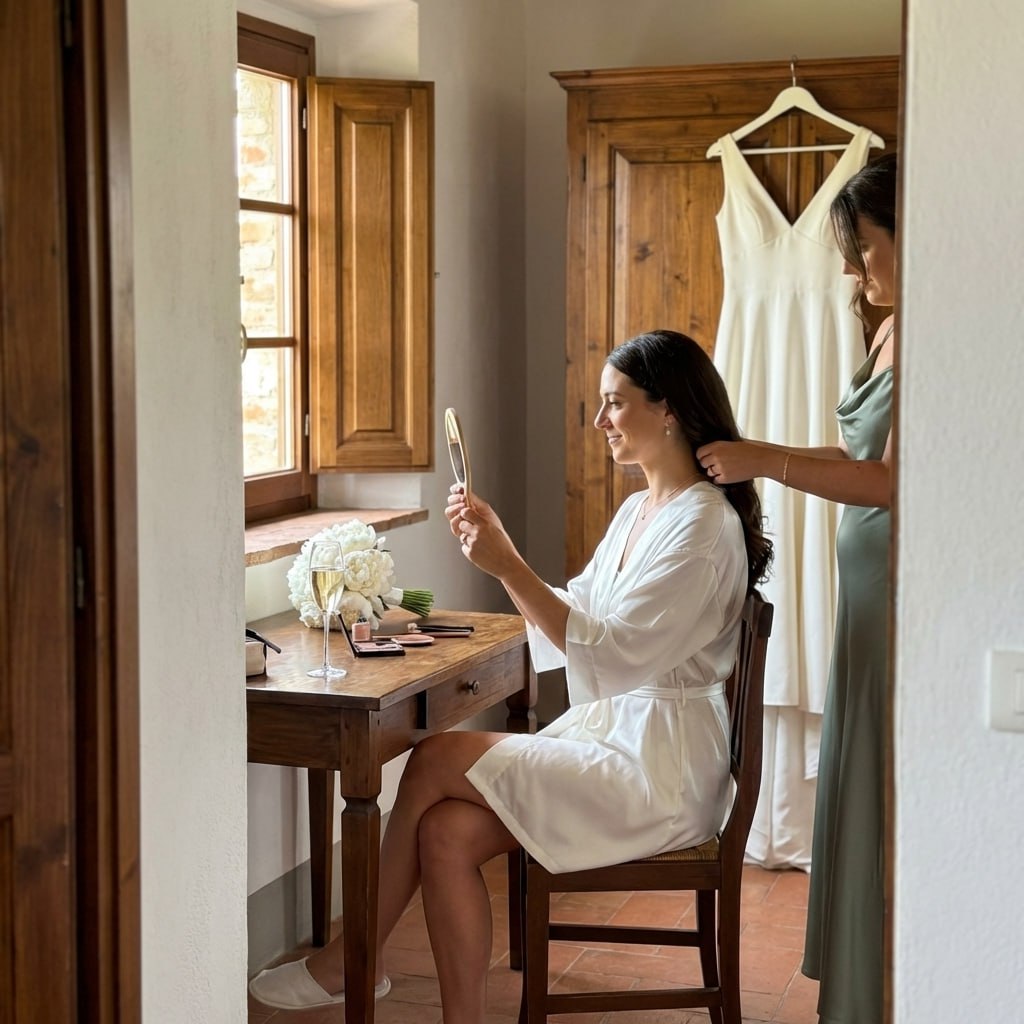
Getting-ready candids
Bridesmaids and groomsmen photos, pre-ceremony prep moments
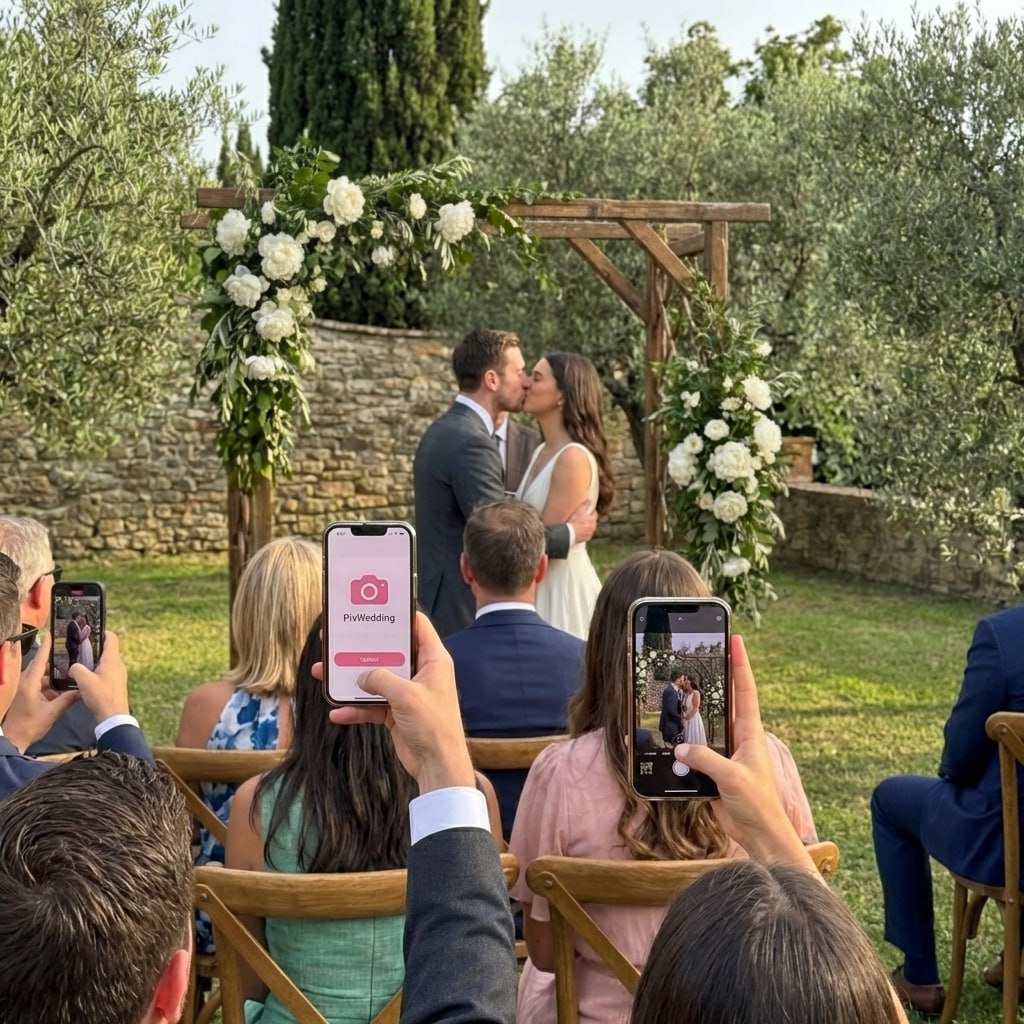
Ceremony reactions
Parents, friends, and partners in the pews reacting to vows and first kiss
First dance and key moments
Formal dances, cake cutting, bouquet toss
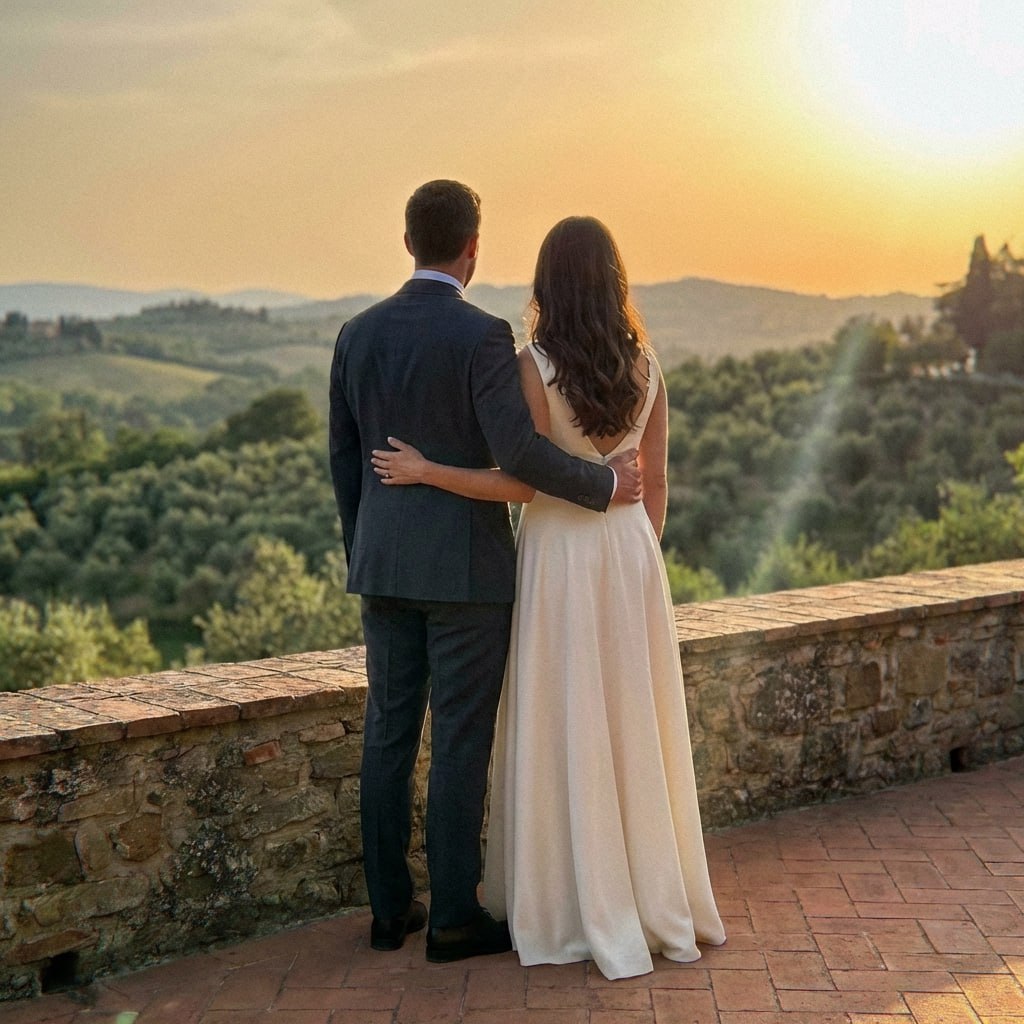
Golden hour portraits guests sneak
Guests photograph the couple during the outdoor portrait window
Open dance floor
Peak camera activity window, especially first 90 minutes of dancing
Late-night and exit moments
Sparkler exits, send-offs, late-night snack table
Watch: Should Guests Take Photos During the Ceremony?
Source: Cavin Elizabeth, "Unplugged Weddings: Why Guests Shouldn't Use Phones During Ceremonies."
iPhone vs. Android Upload Behavior
Device type shapes not just photo quality but upload patterns. This is a small but real factor when you are trying to understand why some guests contribute more than others.
iPhone (iOS)
- Live Photos add size but most sharing platforms receive the still frame without issue
- HEIC format can cause friction on some older platforms; modern apps handle it transparently
- iPhone users tend to upload more still photos and fewer video clips compared to Android guests
- Portrait mode is heavily used for ceremony and table candid shots
Android
- Android guests skew toward uploading short video clips in addition to photos, which can increase total file size of a shared album significantly
- JPEG is the default still format on most Android devices, making uploads broadly compatible
- Pixel and Samsung cameras on newer models often produce noticeably better low-light shots than older iPhones, especially on dark dance floors
- QR code scanning works natively on modern Android without a third-party app, removing friction at the moment of upload
The practical implication: if you expect a large share of Android guests, plan for video clips in your album and make sure your chosen sharing platform handles them. Photo-only platforms will frustrate guests who want to upload the 15-second clip of the first dance that they are most proud of.
5 Wedding Scenarios: Expected Photo Counts
Different venue types and contexts produce different photo behaviors. Here is what we consistently see across five common wedding scenarios, each assuming the couple uses an active sharing prompt.
Destination weddings are an outlier: smaller guest counts but higher per-person engagement because guests are in "special occasion" mode and camera activity stays elevated throughout the trip.
The QR Placement Rule of Thumb
A useful heuristic: one QR code placement for every 20-25 guests. At 100 people, that means at least four to five distinct placement points (tables, bar, photo booth backdrop, ceremony entrance, bathroom mirror). The goal is that no guest goes more than 15-20 feet without seeing a prompt. Couples who front-load QR placements at high-traffic zones like the bar and the buffet consistently see higher upload rates than those who confine signage to table tents alone.
Large weddings (200+) benefit from a dedicated "photo station" near the dance floor with a printed sign explaining how to upload. That physical context tells guests what to do at the exact moment they are most engaged with their cameras. The combination of physical prompt plus real-time social proof (seeing the album fill up on a display screen, if the venue supports it) can push participation rates above 80% at larger celebrations.
For context: according to research published by The Knot, the majority of guests who took photos at a wedding report that they would have shared those photos with the couple if they had an easy, friction-free way to do so. The barrier is not willingness. It is the absence of a clear, low-effort pathway. QR code platforms that work without account creation address this directly.
6 Common Mistakes That Cost You Guest Photos
The most common reason couples are disappointed with their guest photo collection is not bad luck. It is a predictable set of avoidable errors. Here is what we see over and over.
No physical signage asking guests to share photos at the venue
Generic or unbranded table tents that guests ignore
Asking guests to share via personal DM or social media only ("tag us!")
Not setting a clear upload window or deadline
Skipping the post-event follow-up email entirely
Not backing up the guest album before the platform link expires
The fix is simple: place a QR code on every table (not just one near the entrance), include a line in the ceremony program, have the MC mention it during dinner, and send a follow-up email the next morning. These four actions alone consistently move the upload rate from below 30% to above 70%.
What to Do With All Those Guest Photos
Once you have several hundred guest photos in a shared album, the challenge shifts from collection to curation. A few practical steps make the post-wedding workflow manageable instead of overwhelming.
The key is acting while the album is still fresh. Download the full batch within two weeks of the wedding. Most couples find that 15-25% of uploaded photos are genuinely exceptional and worth editing or printing. The rest are still valuable as a documentary record of the day, even if they are not going on the wall.
Immediate (0-48 Hours)
- Send morning-after album link to all guests
- Keep the upload window open for latecomers
- Share your favorite guest photo on your personal account to encourage more uploads
First Two Weeks
- Download and back up the full album to an external drive or cloud storage
- Send one final follow-up to guests who have not yet uploaded
- Begin a rough first curation pass: separate the top 10-15% from the rest
Long-Term Keepsakes
- Combine best guest photos with professional proofs into a single photo book
- Create a short slideshow for the first anniversary as a gift to each other
- Share a curated highlight reel with guests as a thank-you; it deepens the memory for them too
4 Tips That Consistently Increase Upload Rates
Beyond QR placement, a few tactical decisions at the planning stage reliably improve how many guest photos end up in your album. These are the highest-leverage items we see separating couples who collect 800+ photos from those who collect under 200 at the same guest count.
Use a no-account-required platform
Every extra step (create account, verify email, download app) drops participation by a measurable margin. The best guest photo platforms let someone scan a QR code and upload in under 30 seconds.
Put the link in the program, not just on tables
Guests who miss the table tent may still see the program link during the ceremony. Multiple touchpoints matter.
Frame the request as a gift, not a task
Saying "Help us remember your smile from tonight" outperforms "Please upload photos here." Emotional framing drives more action than logistical instruction.
Mention it at the start of dinner, not the end
By the end of the night, guests are tired and leaving. The dinner hour is the peak opportunity for the MC to prompt uploads while guests have their phones out and are seated.
Set an expectation, not just an invitation
Framing it as "everyone is contributing to our wedding album tonight" (descriptive norm) consistently outperforms passive invitations. People follow what they believe others are already doing.
Send a morning-after message
A single follow-up text or email the morning after the wedding, with the album link and a count of photos already uploaded, reliably captures the 20-30% of guests who meant to upload but forgot on the night.
The most useful cross-check for anything on this page is our own first-party dataset. Our own dataset of 203 real weddings shows an average of 197 guest photos per wedding with a median of 149, which is a good honest baseline when you are trying to set expectations for your own event.
Related Wedding Photo Guides
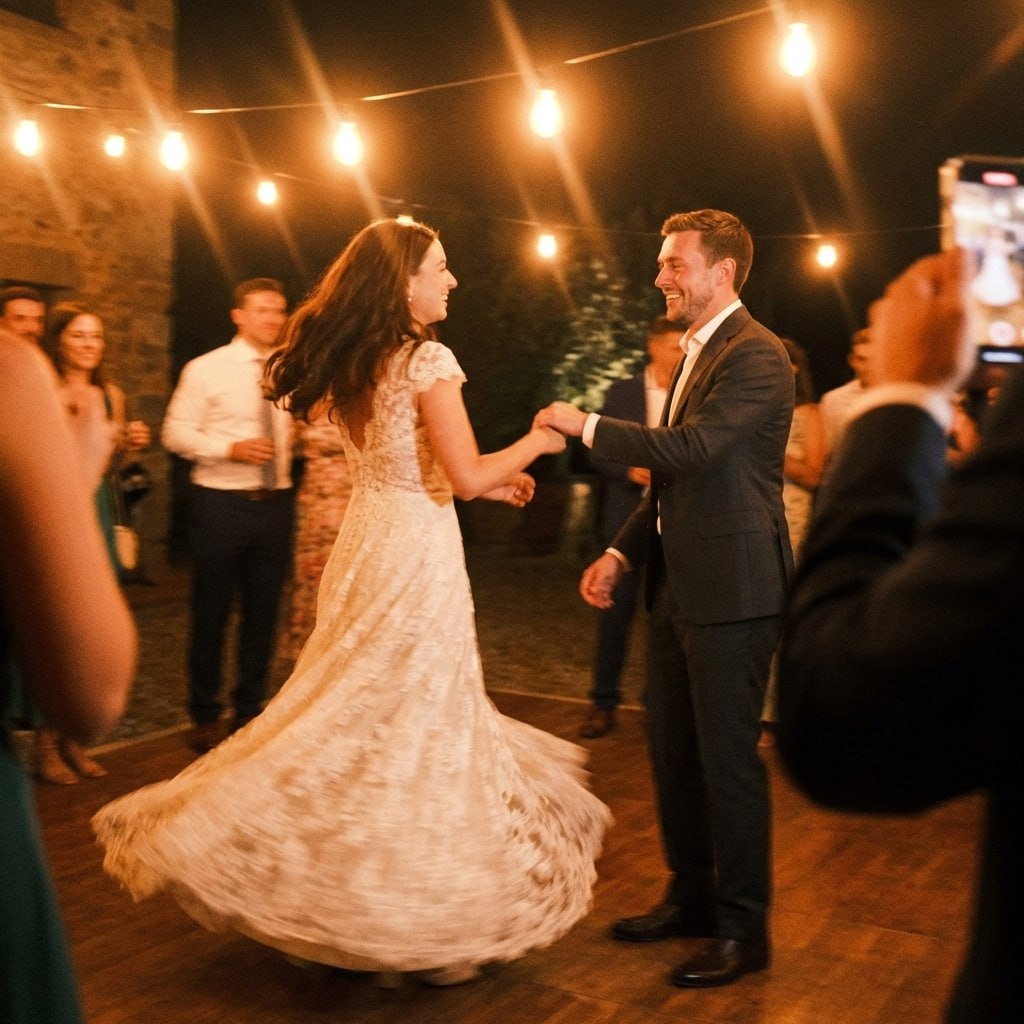
First dance
You guys!!
Collect Every Guest Photo in One Place
Pix Wedding gives you a QR code album guests can upload to instantly from their phone, no app required. Wake up the morning after your wedding to a shared album instead of chasing texts and Instagram tags for weeks.
From Mom
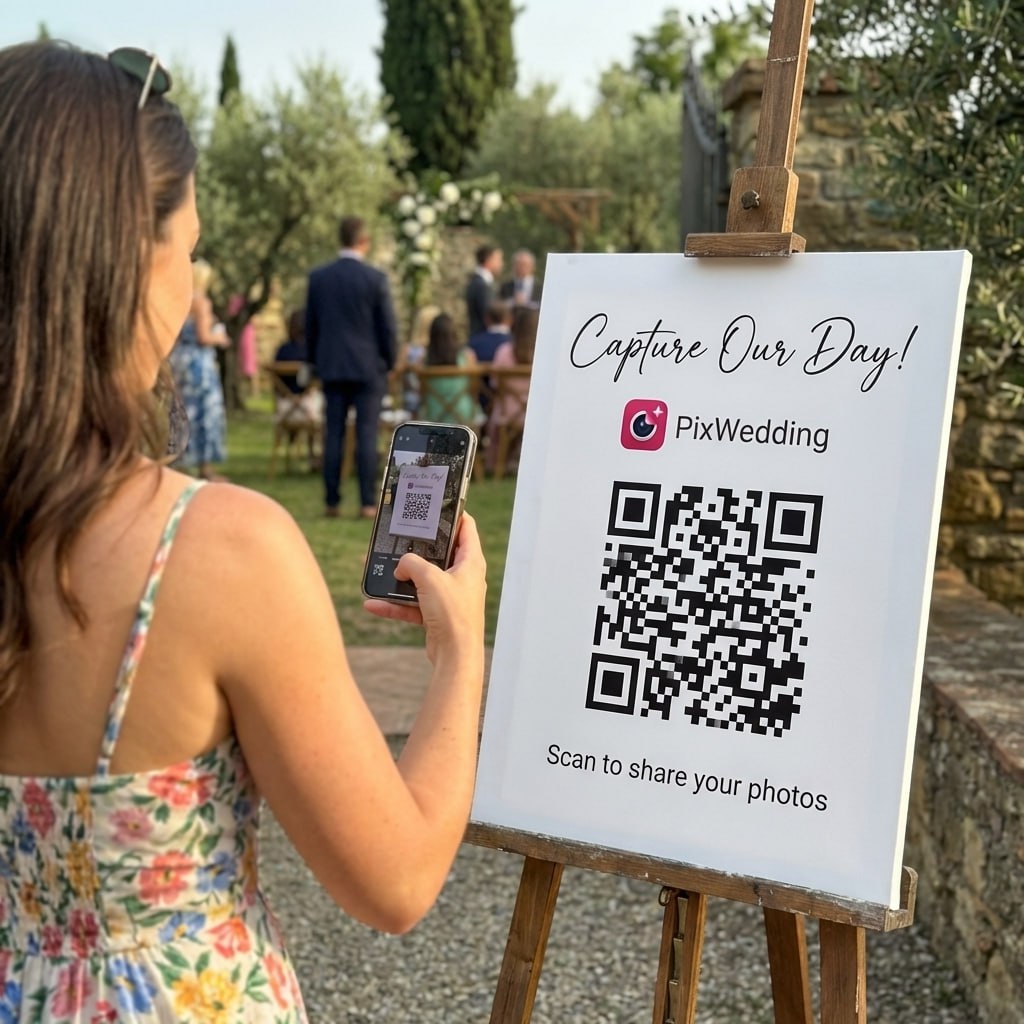
Scan to join the album
No app, no account
UPLOADING
Saving your moment
THE ALBUM
Emma & Jack
June 21, 2026
647 photos · 95 guests


SCAN TO TRY
pix.wedding/
your-wedding
Why Guest Photo Counts Vary So Much from Wedding to Wedding
The range from 150 to 3,000+ guest photos is not random. It reflects a set of very predictable decisions the couple made in the weeks before and on the day itself. Guest count is the obvious lever, but it explains far less variance than couples expect. A 60-person wedding where the couple put a QR code on every table, included a prompt in the program, and had the MC mention it twice during dinner will routinely outperform a 200-person wedding where guests were expected to "share later" via text or social media.
Phone camera quality has improved every year since 2020, which means even guests who are not "photo people" now capture sharp, usable images without thinking about it. According to data from The Knot, the majority of guests have their phone out at some point during a wedding ceremony. The question is not whether they take photos, it is whether those photos ever make it into the couple's hands.
- •Guest count: adds a floor but does not determine the ceiling
- •Active prompting: the single biggest multiplier for uploads
- •Venue lighting: natural light dramatically increases camera engagement
- •Time of day: golden hour and open dance floor are peak photo windows
- •Photo app friction: the easier the upload, the higher the participation rate
- •Post-event follow-up: a reminder email 48 hours later recovers a significant percentage of late contributions
The Post-Wedding Photo Collection Workflow That Actually Works
Most couples underestimate how quickly the window closes. In the first 24-48 hours after a wedding, guests are still in the emotional afterglow and their camera rolls are fresh. After 72 hours, the moment competes with regular life, and after two weeks it is effectively closed. The couples who end up with the most guest content follow a simple three-step workflow.
Step one: keep the QR code album link alive and send the morning-after message to all guests. Something brief works: "We loved having you there. Here is the shared album link. See what everyone captured and add yours." Step two: a 48-hour follow-up for guests who did not open the first message. Step three: one final reminder at the one-week mark, framed around the total photo count ("You helped us collect 847 photos. There is still time to add yours"). After that, close the active collection phase and move to curation.
- •Morning-after message with direct album link (highest open rate of any touchpoint)
- •48-hour follow-up targeting non-openers
- •One-week final reminder framed around community count
- •Download and back up the full album before closing guest access
- •Create a highlight reel or slideshow from guest photos as a keepsake thank-you
Guest Photos and Professional Photography: How They Work Together
One question we see repeatedly from couples is whether investing in professional photography is still worth it if guests take hundreds of photos anyway. The answer is yes, and the two outputs are not in competition. Professional photographers bring equipment, positioning access, and editing skill that no guest phone can replicate for the portraits, the first look, and the carefully composed ceremony shots.
What professional photographers cannot do is be in three places at once. The getting-ready room, the cocktail hour, the back corner of the dance floor where a group of college friends is recreating their graduation photo, the moment someone's grandmother gets pulled onto the dance floor at 9pm. Those are the moments that live in guest camera rolls, and they are often the images couples return to most in the years after. According to RSVPify's wedding research, a significant portion of couples report that their most emotionally meaningful wedding photo came from a guest, not a professional.
Explore more free wedding tools
Everything you need to make your wedding day stress-free and unforgettable.
QR Sticker Designer
Design custom print-ready stickers.
Photo Sharing QR
The best way to collect guest photos.
Hashtag Generator
Create unique wedding hashtags.
How to Collect Guest Photos
5 methods ranked by participation rate and ease.
Get Photos After the Wedding
Message templates to gather guest photos post-wedding.
Share Wedding Photos with Guests
Compare every sharing platform by ease and participation.
Best Way to Get Guest Photos
The single method with the highest participation rate.
How to Make a Shared Wedding Album
Step-by-step setup for every platform.
Guest Wedding Photos: Frequently Asked Questions
Everything you need to know about our free tools and how they help your wedding day.
At a 150-person wedding, guests typically take between 600 and 1,200 photos in total. That range assumes a mix of phone cameras and a moderate level of candid shooting throughout the day. If the couple actively prompts guests with QR codes on tables and in the ceremony program, the upper end shifts closer to 1,500-2,000 uploaded photos.
This is one of the most important numbers to understand. Without a QR code or active prompt, the pattern we consistently observe is that fewer than 30% of guests ever share a single photo from the wedding. With a well-placed QR code prompt, that figure climbs to roughly 70-75%. The lesson: "share later" almost never happens. The moment has to be now, on the night.
Outdoor weddings, especially those with golden hour lighting, consistently produce more guest photos per attendee. Natural light is flattering and guests know it. Outdoor receptions in parks, vineyards, or garden settings see noticeably higher camera activity around sunset. Indoor ballrooms tend to produce more dance floor shots, but fewer wide scenic captures overall.
From what we observe across weddings on the platform, there are two clear peaks. The first is during the ceremony itself, specifically the processional, exchange of vows, and first kiss. The second, and often larger, peak is the 60-90 minutes around the first dance and open dance floor. Camera activity tends to dip sharply after 10pm as guests tire and lighting becomes harder to work with.
The most reliable method is a shared photo album link sent the morning after, with a clear nudge ("check out what others uploaded and add your own"). A follow-up email 48-72 hours later catches the guests who missed the first message. Platforms like Pix Wedding let you keep the album open for weeks post-event, so late uploaders can still contribute. Relying on guests to DM you individual photos almost never produces a complete set.
For specific types of moments, yes. Professional photographers cannot be everywhere simultaneously. Guest photos routinely capture: the reaction of a parent in the pew during vows, the moment someone ugly-cries on the dance floor, the late-night shoe removal, and the candid groups at the bar. The professional album and the guest album serve fundamentally different purposes, and the best keepsakes usually come from combining both.
Bottom Line
Guest photo count is not a fixed number. It is a direct function of how clearly and how often you invite guests to contribute. The data is consistent: couples who build a prompt into every guest touchpoint (program, table, MC script, morning-after email) collect three to five times more photos than couples who rely on organic sharing. The photos are there. Getting them just requires asking well.
If you want a simple starting point, try Pix Wedding. You get a QR code album that works from any phone without an app or account, a shareable link you can include in your program, and a follow-up tool to remind guests after the wedding. It is the fastest way to go from a single photographer to hundreds of perspectives on one of the most important days of your life.
Try Pix Wedding Free