
Wedding Seating Chart Ideas: Table Arrangements, Etiquette & Family Politics
Table shapes, seating etiquette, and strategies for divorced parents, exes, and feuding in-laws, everything you need to think through before you start assigning seats.
Build Your Chart in the Free ToolThis page is the planning guide. The drag-and-drop builder lives at /wedding-seating-chart.
Why a Dedicated Maker Beats a Spreadsheet
Spreadsheets break when the guest list shifts. A purpose-built seating chart maker handles last-minute RSVPs gracefully.
Drag-and-Drop Placement
Move guests between tables instantly. No re-entering names, no lost data. Just drag, drop, and done.
Customizable Table Sizes
Set the exact number of seats per table to match your venue setup, from intimate rounds to long banquets.
Guest Status Tracking
See which guests are seated and which are still unassigned at a glance. No one falls through the cracks.
Smart Grouping Suggestions
Group guests by family, friend circle, or workplace to speed up the initial placement process significantly.
Family Politics Mode
Flag guests who should not sit together and the tool highlights conflicts before they become day-of disasters.
Accessibility Notes
Tag guests who need wheelchair access, hearing loop proximity, or easy exit access so venue staff can set up accordingly.
4 Table Arrangement Styles (and When to Use Each)
The shape of your tables determines how guests interact. Choose the right format for your venue and vibe before you start assigning seats.
Round Tables
Seat 8-10 per table. Best for conversation. The classic ballroom choice that never goes out of style.
Long Banquet Tables
Seat 10-20 per table. Farm-to-table aesthetic. Great for outdoor venues and bohemian receptions.
U-Shape
Seats up to 60 comfortably. Communal and intimate. Perfect when the couple wants to see every guest.
Mixed Format
Combine table types. Long table for wedding party, rounds for guests. Visually interesting and practical.
How to Use a Seating Chart Maker: 5-Step Walkthrough
Follow these steps in order and you will have a finalized seating chart ready to hand to your venue coordinator in under an hour.
Import Your Guest List
Paste in names from your RSVP tracker or type them directly. The tool accepts any format and lets you tag dietary needs or accessibility requirements.
Set Up Your Tables
Add the number of tables and seats per table to match your venue floor plan. Name each table or use numbers - your call.
Drag Guests into Seats
Start with the easy groups (close family, wedding party) then fill in the rest. The unassigned list shrinks as you work.
Review for Conflicts
Scan the layout for any awkward pairings, lonely singles, or elderly guests in inconvenient spots. Adjust with a single drag.
Share with Your Venue
Export or share the finished chart with your venue coordinator. They can set up the room exactly as planned, no confusion.
Navigating Family Politics in Your Seating Chart
Almost every wedding has at least one seating landmine. Divorced parents, estranged siblings, exes, or feuding in-laws require deliberate placement. Here is how to handle the most common scenarios without a day-of drama.
Divorced Parents
Give each parent their own table at equal distances from the sweetheart table. Avoid seating them with shared friends who might feel caught in the middle. Brief each parent on the arrangement beforehand so neither is surprised.
Exes on the Guest List
Place exes at tables where they are surrounded by their own social circle and cannot easily make eye contact with the person they dated. Physical distance and social buffering are your two tools here.
Feuding In-Laws
One side of the family per table cluster is the safest approach. The couple table acts as a neutral buffer between two family sections. Never seat feuding in-laws at adjacent tables where accidental proximity can ignite conflict.
Special Needs Guests
Elderly guests, wheelchair users, and guests with hearing impairments need specific placement: near exits, away from loud speakers, and with clear sightlines to the ceremony area. Tag these guests in your seating maker so nothing is overlooked.
Wedding Seating Etiquette Checklist
Run through this list before you finalize your seating chart.
Seating Chart Timeline: When to Do What
Seating charts fail when couples try to finalize them too early or too late. Here is the order that actually works.
Confirm your venue's table shapes and maximum seats per table with your coordinator. Start a rough draft of family clusters (immediate family, extended family, each friend group) without assigning exact seats yet.
Once most RSVPs are in, build your first full draft. Flag any known conflicts (divorced parents, exes, feuding relatives) and place the highest-stakes tables first: the couple's table, immediate family, and wedding party.
Fill in the remaining guests, run the etiquette checklist below, and send a near-final draft to anyone who needs to sign off, such as a parent contributing to the wedding or a planner managing logistics.
Lock the chart and account for last-minute cancellations or plus-ones. Export or print the final layout and share it with your venue coordinator, caterer, and anyone printing escort cards or a seating display.
Bring a printed backup and keep the digital version accessible on your phone. No-shows and last-minute plus-ones happen even after a chart is "final", so leave one or two open seats per table if your table count allows it.
Digital Tool vs Spreadsheet vs Paper: What Actually Works
Every couple starts with one of these three methods. Here is how they compare once the guest list starts changing.
Paper and Index Cards
Tactile and easy to start, but every RSVP change means physically re-writing cards. Hard to share with a venue coordinator or a partner working from a different location. Best for a first brainstorm, not a final plan.
Spreadsheet
Better than paper for tracking who is assigned where, but there is no visual sense of the room. It is easy to accidentally over-fill a table or lose track of which seats are still open, especially past 100 guests.
Dedicated Seating Chart Tool
Shows the actual room layout, flags overfilled tables, and lets you drag guests between tables without retyping anything. Changes are visible instantly to anyone with the link, which matters when a parent or planner also needs to review it.
Common Seating Chart Mistakes to Avoid
These are the mistakes that show up most often once the room is actually set.
Finalizing before RSVPs settle. Building the "final" chart with a partial guest count almost guarantees a rebuild once late RSVPs and plus-ones come in. Wait until you are within a few weeks of the RSVP deadline for the real draft.
Creating a "leftover" table. A table made entirely of guests who did not fit anywhere else tends to be the quietest, least engaged table in the room. Spread unaffiliated guests across two or three tables with a warm host instead.
Ignoring sightlines to the head table or dance floor. Tables tucked behind a pillar or facing away from the speeches feel like an afterthought to the guests seated there, even if the seating itself is otherwise thoughtful.
Not briefing the people you have separated. If you deliberately keep two family members apart, tell them ahead of time rather than letting them discover it at the table. A short private heads-up avoids a public, day-of reaction.
Forgetting to plan for no-shows. Every wedding loses a small number of confirmed guests to illness or last-minute conflicts. Leaving a little flexibility at a few tables prevents empty seats from standing out.
Working Through a Hypothetical 130-Guest Reception
The following is a hypothetical example to show the process, not a real couple's data. Picture a reception with 130 guests across 13 round tables of 10. The couple starts with the highest-stakes tables: table 1 for the couple and wedding party, tables 2 and 3 for each side of immediate family, seated at equal distance from the head table. Divorced parents on one side are placed at opposite ends of the room, each anchored by a sibling they are close to. Remaining friend groups are clustered by how they know the couple (college, work, childhood) rather than mixed together, and two "flex" seats are left open across different tables to absorb last-minute plus-ones without a late reshuffle.
Sweetheart Table or Head Table: Pros and Cons
This decision shapes the rest of your chart, so make it before assigning any other seats.
Sweetheart Table
Pros: Private moments together during the meal, no need to referee wedding party seating, and one less table's worth of family politics to manage.
Cons: The wedding party may feel split up, and some couples find it isolating after a day spent with a crowd.
Head Table
Pros: Keeps the wedding party together for photos and toasts, and gives the couple company they already trust.
Cons: Requires seating wedding party plus-ones somewhere else, and can create an "us vs everyone" feel if not designed carefully.
Should You Have a Kids Table
A dedicated kids table works well once you have 4 or more children attending, especially close in age. Seat it near a parent table rather than across the room, assign one trusted adult (a cousin, godparent, or babysitter you have hired for the day) to supervise, and add simple activities like coloring sheets to keep the table calm during speeches. For 1-3 children, it is usually simpler and less isolating to seat them with their own parents.
How the Pix Wedding Seating Chart Maker Works
The Pix Wedding Wedding Seating Chart Planner is a fully free, browser-based tool that requires no signup. Open it, add your guest names, set how many tables and seats you need, and start dragging guests into place. Your data stays in your browser so nothing is shared with third parties.
Related Wedding Planning Tools

First dance
You guys!!
Chart the seats, then collect photos from every one
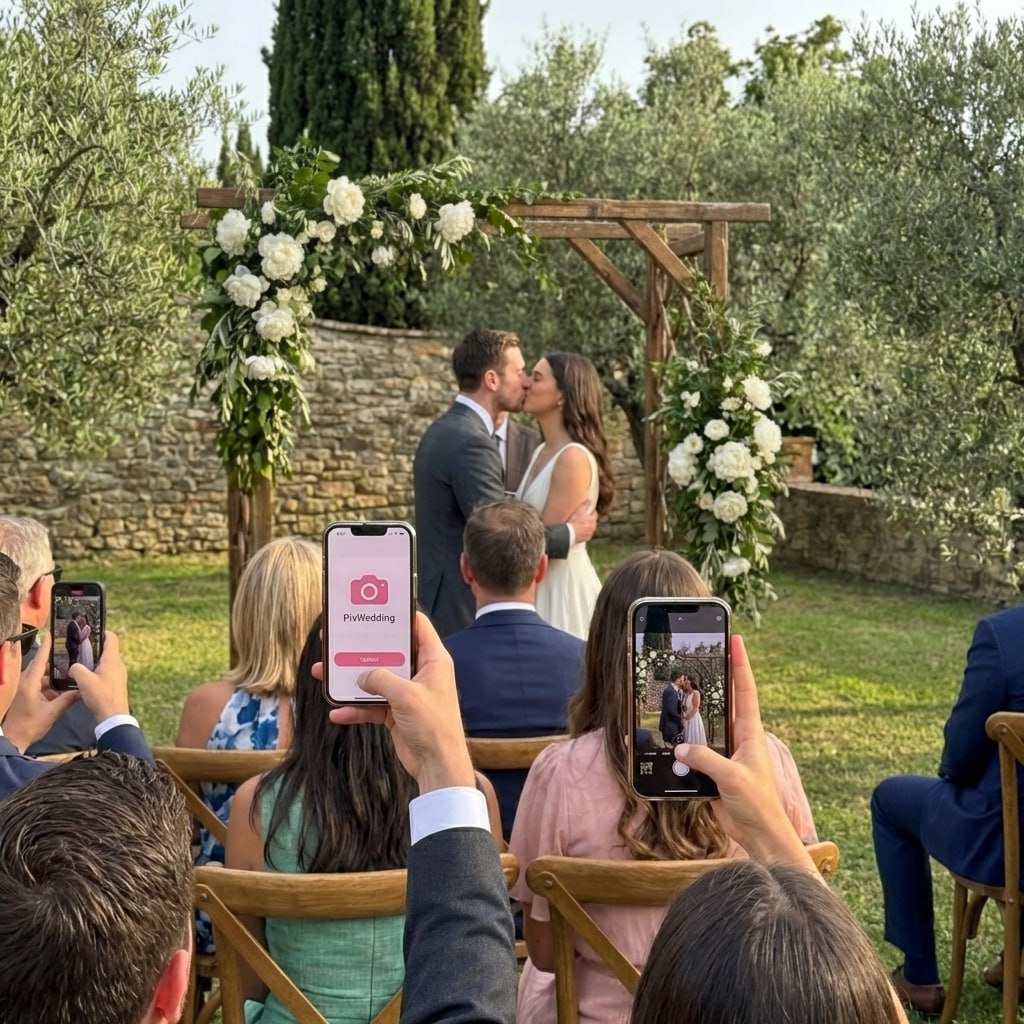
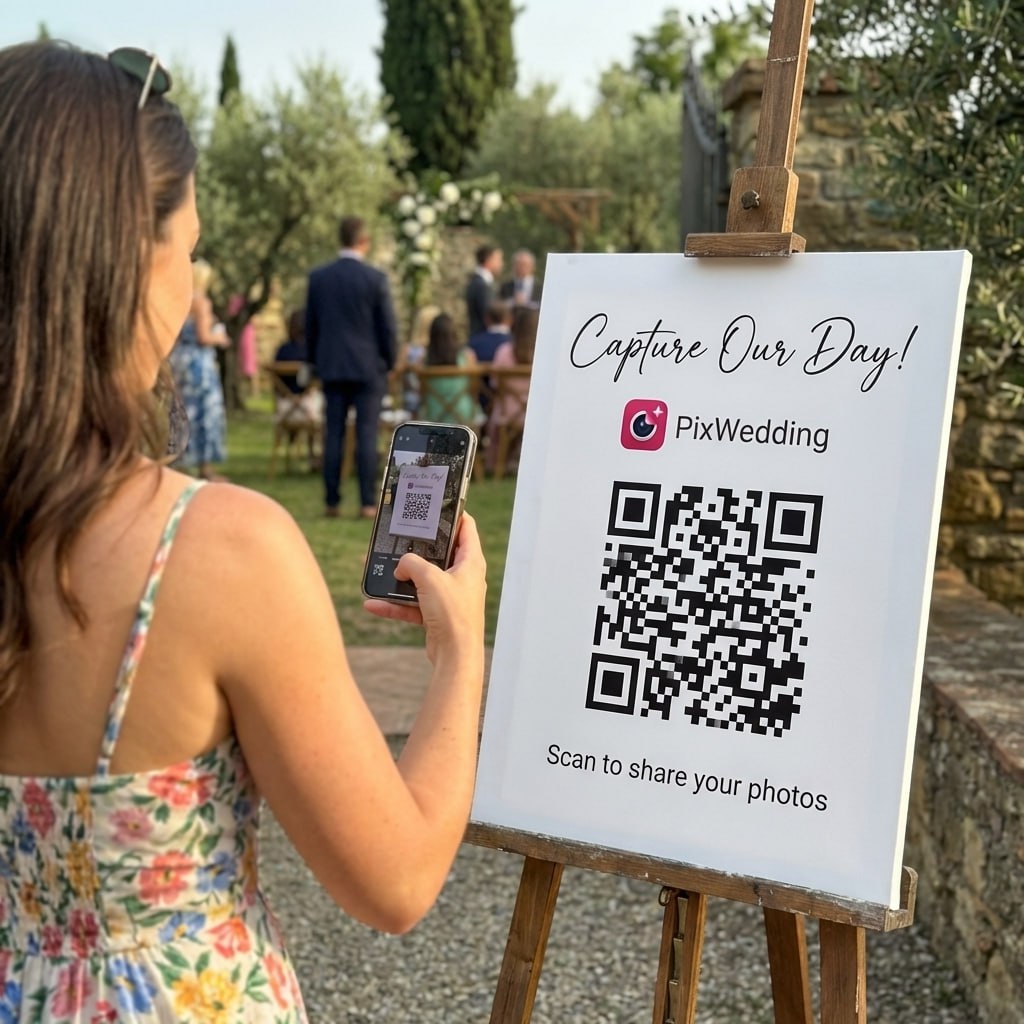
Once every guest is seated, give them a QR code to share their photos. Every seat becomes a camera angle you never expected.
From Mom
Scan to join the album
No app, no account
UPLOADING
Saving your moment
THE ALBUM
Emma & Jack
June 21, 2026
647 photos · 95 guests



SCAN TO TRY
pix.wedding/
your-wedding
Why Seating Charts Take Longer Than Couples Expect
A spreadsheet taped to a clipboard used to be the standard. Couples would shuffle index cards across a kitchen table for hours, only to redo everything when the final RSVP count shifted. A dedicated seating chart tool solves this by giving you a live, visual canvas where changes propagate instantly, but the tool only works well if the plan behind it is sound.
The average US wedding had 117 guests in 2025, according to The Knot Real Weddings Study, typically split across roughly 12-15 tables of 8-10 guests each. That is a combinatorial puzzle with emotional stakes: an aunt who cannot stand her ex, college friends who have never met the work crowd, elderly grandparents who need to sit near the exit. Working through the etiquette and family-politics questions below before you open any tool will save you multiple re-do cycles.
- •Drag-and-drop guest assignment eliminates manual re-writing
- •Visual table maps show the whole room at a glance
- •Instant conflict detection flags guests who should not sit together
- •Export-ready layouts go straight to your venue coordinator
- •Mobile-friendly access means you can update from anywhere
Table Arrangement Formats: Which Layout Fits Your Reception
The physical layout of your tables shapes the entire feel of your reception. Before you open any seating chart maker, decide on the format. Round tables remain the most popular choice for North American and European receptions, but long banquet tables are surging in popularity for farm-style and outdoor events.
The layout you choose will determine how many tables you need and how many guests fit per table - both of which directly affect your seating chart strategy.
- •Round tables (8-10 guests): best for conversation, easiest to navigate, standard ballroom choice
- •Long banquet tables (10-20 guests): intimate farmhouse feel, great for outdoor venues, harder for large cross-table talk
- •U-shape or horseshoe: ideal for weddings under 60 guests, creates a communal atmosphere
- •Classroom rows: rare for weddings but used for ceremony-reception combos in limited spaces
- •Mixed formats: many couples use a mix of rounds for most guests and one long table for the wedding party
Seating Etiquette: The Unwritten Rules That Actually Matter
Seating chart etiquette goes beyond just "put the bride's family on the left." There is a whole set of social norms that guests notice even if they never articulate them. Getting these right prevents quiet resentment and awkward moments during the meal.
The most important rule: never make guests feel like an afterthought. Front placement near the couple signals importance; banishing someone to a corner table near the kitchen can feel like a slight. Think about who your guests are to you, not just where they fit logistically.
- •Immediate family and closest friends belong in the first two rows of tables
- •Elderly guests should sit near exits or restrooms and away from loud speakers
- •Children 10 and under work well at a dedicated kids table supervised by a trusted adult
- •Do not mix people who do not share a common language unless you have a natural translator at the table
- •Seat single guests with other singles or warm, inclusive groups - never alone or in awkward couples
- •Honor the plus-one rule: never separate couples unless they specifically prefer it
Assigned Seats vs Open Seating: Which Should You Choose
Assigned seating (a full seating chart) works best for weddings over 60 guests, formal receptions, or any wedding with family dynamics that need careful separation. It removes the awkward scramble guests face when they walk into a room and have to pick a table themselves.
Open seating with assigned tables but not assigned seats is a middle ground: guests know which table to sit at but choose their own chair. This works well for smaller, casual weddings under 60 guests where the group already knows each other and conflicts are minimal. Fully open seating, where guests choose both table and seat, is the lowest-effort option but the riskiest for weddings with any family tension.
Explore more free wedding tools
Everything you need to make your wedding day stress-free and unforgettable.
Guest List Manager
Track RSVPs and dietary needs.
Budget Allocator
Turn your total into a category-by-category plan.
Timeline Builder
Plan your entire wedding day.
Venues by State
Explore venues across all 50 states.
Countdown Timer
Count down the days to your big day.
Wedding Checklist
Month-by-month planning checklist.
Bachelorette Party Games
15+ games with rules, supplies, and timing.
Alternative to Wedding Guest Book
15 creative alternatives guests actually enjoy.
Wedding Seating Chart Maker FAQ
Everything you need to know about our free tools and how they help your wedding day.
A wedding seating chart maker is a digital tool that helps you assign guests to specific tables and seats at your reception. Good makers let you drag and drop guests, visualize table shapes, and adjust the layout without starting from scratch every time a guest RSVPs or cancels.
Start building your draft seating chart 4-6 weeks before the wedding, once you have a strong RSVP picture. Finalize it no later than 2 weeks out so the venue has time to set up correctly. Leave a buffer column in your tool for last-minute changes - they always happen.
A sweetheart table seats just the two of you for intimate moments, while a head table includes the wedding party. Sweetheart tables are increasingly popular because they give couples a private space during the meal. Head tables work better for close-knit wedding parties who want to stay together all evening.
Seat feuding family members at opposite ends of the room or in rooms with clear visual separation. Give each party their own "anchor" - a person they love - at their table. Avoid placing rivals anywhere with a direct sightline to each other. A good seating chart maker lets you cluster family groups visually so you can spot these conflicts before the day.
Round tables of 8-10 guests are the gold standard for conversation because everyone can see and hear each other. Long banquet tables encourage chatting with neighbours but make cross-table conversation harder. U-shaped arrangements are great for smaller weddings under 60 guests where you want a communal feel.
Yes. The Pix Wedding Wedding Seating Chart Planner at /wedding-seating-chart is completely free to use with no account required. You can add guests, create tables, assign seats, and export your layout without paying anything.
Leave one or two flexible seats spread across different tables rather than one table exactly full to capacity. If a guest cancels close to the wedding, you can absorb the change without reshuffling the whole room. A digital tool makes this kind of last-minute edit far faster than reprinting paper cards.