Fraud Blocker
Wedding Planning

Wedding Planning Checklist 2026: Month-by-Month Timeline

47 tasks organized by timeline so you always know what to do next. From the moment you get engaged to your honeymoon and beyond.

47Total tasks
7Timeline phases
12+Months covered

2026 Wedding Budget Reality Check

What real couples are actually spending, sourced from The Knot

Before you build your own budget, it helps to know what other couples are working with. The Knot's 2026 Real Weddings Study surveyed 10,474 US couples married in 2025 and found the national average wedding cost is $34,200, with an average guest count of 117 and an average cost per guest of $292. Couples hired an average of 13 vendors to pull the day together, and 40 percent said they scaled back their guest list specifically to control costs.

$34,200National average costThe Knot 2026 Real Weddings Study
117Average guest countMost common range: 100 to 150 guests
$292Average cost per guestFood, drinks, favors, and rentals
13Average vendors hiredVenue, catering, photography, and more

Location changes these numbers substantially. The New York City metro area and San Francisco frequently run $55,000 and up for a comparable celebration, while many Midwest markets average $20,000 to $30,000 for the same guest count and scope. Your local market, season, and day of the week (Friday and Sunday weddings often cost less than Saturday) will move your own number more than any national average.

Sample Allocation for a $34,200 Budget

A common starting split couples use, adjust percentages to match what matters most to you.

Venue and catering45%~$15,390
Photography and videography12%~$4,100
Attire, hair, and makeup8%~$2,740
Flowers and decor9%~$3,080
Music and entertainment8%~$2,740
Stationery, favors, and rentals8%~$2,740
Coordinator or planner5%~$1,710
Contingency buffer5%~$1,710

These percentages are a common industry starting point, not a fixed formula. Use our free Wedding Budget Allocator to build a version based on your own total and priorities.

12 to 9 Months Before

8 tasks to complete

Set your total wedding budget

Determine your combined budget including family contributions. The Knot's 2026 Real Weddings Study (a survey of 10,474 US couples) puts the national average wedding cost at $34,200, but your number should reflect what you can comfortably afford. Allocate roughly 40 to 50 percent to venue and catering, 10 to 15 percent to photography, and spread the rest across decor, attire, entertainment, and flowers.

Draft your initial guest list

Create three tiers: must-invite, should-invite, and would-like-to-invite. Your venue capacity and budget per head will determine where you draw the line. The Knot's 2026 study found the national average guest count is 117, with most weddings landing between 100 and 150 guests. The same study found the average cost per guest is $292 once food, drinks, and favors are factored in, and 40 percent of couples said they trimmed their guest list to control costs.

Research and book your venue

Visit at least 3 to 5 venues in person. Check availability for your preferred dates and ask about included services (tables, chairs, linens, coordination). Popular venues book 12 to 18 months in advance, so this is your most time-sensitive task. Get the contract in writing with cancellation terms.

Book your photographer and videographer

Review portfolios from at least 5 photographers. Look for consistent quality across full weddings, not just highlight reels. Book a photographer who has shot at your venue before if possible. Expect to pay $2,500 to $5,000 for 8 to 10 hours of coverage with edited digital delivery.

Choose your wedding party

Select your bridal party and groomsmen. Have individual conversations rather than group announcements. Be clear about expectations including attire costs, events they will help plan, and time commitment. Aim for 3 to 6 people on each side.

Start researching vendors (DJ, florist, caterer)

Begin collecting quotes and checking reviews for your remaining major vendors. Ask each vendor for references from recent weddings and compare at least 3 options per category. Create a spreadsheet to track quotes, availability, and contract terms.

Decide on your wedding style and color palette

Browse inspiration on Pinterest and Instagram, then narrow down to 2 to 3 main colors and a cohesive style (romantic, modern, rustic, classic). This guides every future decision from invitations to flowers to table settings. Use our free Wedding Color Palette Generator for ideas.

Research wedding insurance

A comprehensive wedding insurance policy typically runs $150 to $600 depending on guest count, location, and coverage limits, and it can cover vendor no-shows, extreme weather, and venue issues. Given the total investment, insurance is worth serious consideration. Get quotes from at least two providers and read the fine print on what is and is not covered.

8 to 6 Months Before

8 tasks to complete

Book your remaining vendors (DJ, florist, caterer, baker)

Lock in contracts for all major vendors. Make sure every contract includes the date, hours, deliverables, payment schedule, and cancellation policy. Put deposits on a credit card for added consumer protection. Typical deposit is 25 to 50 percent of the total.

Shop for wedding attire

Begin dress shopping and suit or tux selection. Wedding dresses take 4 to 6 months for ordering and alterations. Schedule appointments at 2 to 3 bridal shops. For suits, decide between renting ($150 to $250) and buying ($300 to $800). Bridesmaids should order their dresses now too.

Send save-the-dates

Mail save-the-dates 6 to 8 months before the wedding. Include the date, city, and your wedding website URL. For destination weddings, send them 8 to 12 months out. Digital save-the-dates are perfectly acceptable and save $200 to $400 in printing and postage.

Plan your honeymoon

Research destinations, check passport expiration dates (renew if less than 6 months from travel), and begin booking flights and accommodation. Booking 6 to 8 months out gives you the best rates on flights. Set up price alerts for your preferred travel dates.

Create your wedding website

Include your story, event details, registry links, hotel blocks, and RSVP functionality. Most couples use free platforms like Zola, The Knot, or Minted. Make sure the URL is simple and memorable for printing on save-the-dates.

Set up your gift registry

Register at 2 to 3 stores across different price points. Include items from $25 to $500+ to give guests options. Cash fund and experience registries are increasingly popular in 2026. Update your registry link on your wedding website.

Book hotel room blocks for guests

Contact 2 to 3 hotels near your venue and negotiate group rates. Most hotels offer 10 to 20 percent discounts for wedding blocks of 10+ rooms. Set a cutoff date 4 to 6 weeks before the wedding. Include hotel details on your wedding website.

Schedule engagement photos

Book a session with your wedding photographer. Engagement photos double as practice for being in front of the camera and provide images for your save-the-dates, wedding website, and guest sign-in display. Choose a location that is meaningful to you as a couple.

5 to 3 Months Before

8 tasks to complete

Order and mail wedding invitations

Send invitations 8 to 10 weeks before the wedding with RSVP deadline set 3 to 4 weeks before. Include a response card, details card with timeline and dress code, and directions or website URL. Budget $2 to $5 per invitation suite including postage.

Plan the ceremony details

Write or select your vows, choose readings, plan the processional order, and confirm details with your officiant. If writing personal vows, start drafting now and aim for 1 to 2 minutes each. Use our AI Wedding Vow Generator for inspiration.

Design your reception layout

Work with your venue coordinator on table placement, dance floor location, DJ or band setup, and guest flow. Create a seating chart starting with the head table and VIPs, then fill in remaining tables. Use our free Wedding Seating Chart Planner tool.

Schedule hair and makeup trials

Book a trial run with your stylist 3 to 4 months before the wedding. Bring reference photos and your veil or headpiece. Take photos of the trial from multiple angles and in different lighting to see how it looks on camera.

Choose ceremony and reception music

Select your processional, recessional, first dance, parent dances, and must-play or do-not-play songs. Share the list with your DJ or band at least 6 weeks before. Use our free Wedding Playlist Builder to organize your selections.

Finalize your menu and tasting

Schedule a tasting with your caterer and select your meal options, appetizers, and dessert. Confirm dietary restrictions from your guest list and make sure the caterer can accommodate them. Decide on service style: plated, buffet, or family-style.

Purchase wedding rings

Allow 4 to 6 weeks for custom bands or resizing. Try on rings together and consider comfort fit versus standard fit. Budget $500 to $2,000 for the set. Engrave with your wedding date or initials if desired.

Plan the rehearsal dinner

Book a restaurant or venue for 20 to 40 guests (wedding party, immediate family, and out-of-town guests). Keep it casual and relaxed as a contrast to the big day. Budget $30 to $80 per person depending on the venue.

2 to 1 Month Before

8 tasks to complete

Confirm all vendor details and timelines

Contact every vendor to reconfirm the date, arrival time, setup requirements, and payment balance. Create a master timeline document with every vendor name, phone number, arrival time, and what they are delivering. Share this with your coordinator or point person.

Finalize seating chart and place cards

Lock your seating chart based on final RSVPs. Group guests by relationship and energy level. Put college friends near the dance floor and older relatives in quieter spots. Order or print place cards and table numbers.

Get your marriage license

Check your county requirements for the marriage license. Most US states require both partners to appear in person with valid ID. Some have waiting periods of 1 to 3 days between getting the license and the ceremony. The license is typically valid for 30 to 90 days.

Prepare wedding day emergency kit

Pack: sewing kit, stain remover, pain relievers, antacids, bobby pins, clear nail polish, tissues, phone chargers, snacks, and water bottles. Assign someone to carry it throughout the day. Use our free Wedding Emergency Kit Checklist tool.

Write thank-you notes for pre-wedding gifts

Start thanking guests who have already sent gifts. The earlier you begin, the less overwhelming the post-wedding batch will be. Use our free Wedding Thank You Note Generator for wording ideas.

Set up QR code guest photo sharing

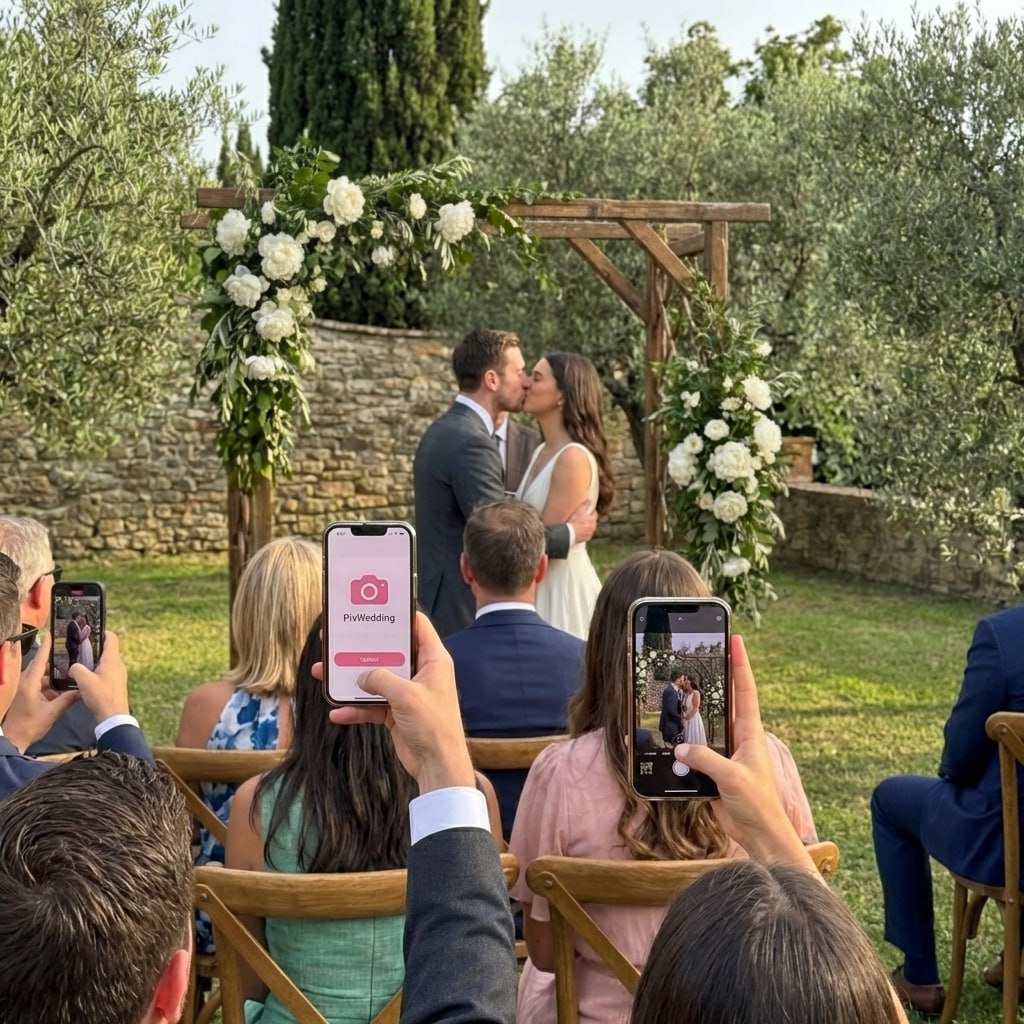
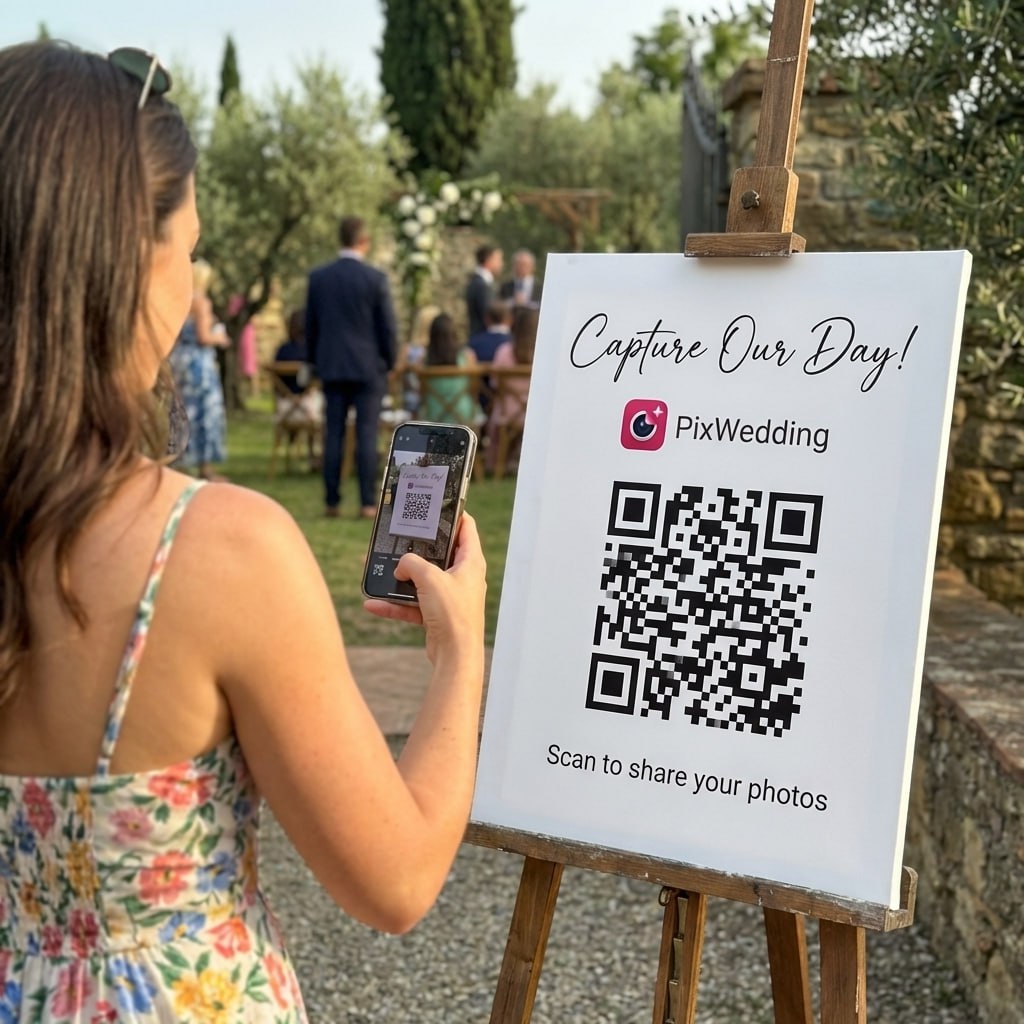
Create your private photo album on Pix Wedding and generate your QR code. Order QR code stickers or table cards. Place QR codes on every table, at the entrance, and in the bathroom. Include a brief note explaining how guests can scan and upload photos to your shared album.

Break in your wedding shoes

Wear your wedding shoes around the house for 30 to 60 minutes several times during the month. Scuff the soles lightly with sandpaper for traction on smooth floors. Consider having a comfortable pair of flats ready for dancing.

Have final dress or suit fitting

Schedule the final fitting 2 to 3 weeks before the wedding. Bring your shoes, undergarments, and accessories so everything fits together perfectly. Pick up the finished garment 1 week before and hang it properly.

Last 2 Weeks

6 tasks to complete

Confirm final guest count with caterer and venue

Submit your final headcount based on RSVPs. This is usually due 7 to 10 days before the wedding and determines your final catering bill. Most caterers charge for the guaranteed count even if fewer guests show up.

Prepare vendor payments and tips

Calculate final balances and prepare envelopes with tips. Standard tipping: coordinator (15 to 20 percent), caterer (15 to 20 percent of food cost), DJ ($50 to $150), photographer ($50 to $200), hair and makeup ($20 to $50 per stylist). Put a trusted person in charge of distributing envelopes on the day.

Rehearsal and rehearsal dinner

Walk through the ceremony with your wedding party and officiant. Confirm processional order, positions, and timing. Keep the rehearsal under 45 minutes. Follow with a relaxed dinner and any toasts or gifts for the wedding party.

Pack for the wedding day

Pack a day-of bag with your outfit, accessories, emergency kit, vows, phone charger, snacks, and any decor items you are responsible for. Pack a separate bag for the honeymoon if leaving directly after the wedding.

Delegate responsibilities for the wedding day

Assign specific tasks to reliable people: someone to manage the guest book, someone to handle vendor arrivals, someone to distribute tips, and someone to be the emergency contact for guests. The couple should not be managing logistics on the day.

Print the day-of timeline and distribute it

Create a detailed minute-by-minute schedule and share it with the wedding party, family, coordinator, and all vendors. Include addresses, contact numbers, and who is responsible for what. Send it digitally and print a few copies.

Wedding Day

5 tasks to complete

Eat a real breakfast

This sounds simple but gets overlooked constantly. Eat a full meal with protein before the day starts. You will not eat properly again until dinner, and you need energy for 12+ hours of activity, emotions, and celebration.

Give yourself 20 minutes alone before the ceremony

Take a quiet moment with your partner or by yourself before the ceremony begins. Step outside, take deep breaths, and let the enormity of the day sink in. This is the moment you will remember most clearly.

Check that QR codes are placed on all tables and visible locations

Do a quick walk-through to confirm QR code stickers or cards are on every table, at the entrance, near the bar, and in the bathrooms. One early scan by a guest will trigger a chain reaction of uploads all night.

Trust your team and enjoy every moment

You have spent months planning. Your vendors are professionals. Your coordinator has the timeline. Let go of controlling every detail and focus on being present with the people you love. This is your day.

Have someone collect cards, gifts, and personal items at the end

Assign a trusted person to gather all cards, envelopes, gifts, decor items, and leftover personal belongings at the end of the night. Have a secure car ready. Do not leave expensive items at the venue overnight.

After the Wedding

4 tasks to complete

Download and backup your guest photos

Log into your Pix Wedding album within a few days and download all guest-uploaded photos and videos. Back them up to cloud storage and an external drive. These candid guest moments are irreplaceable and complement your professional photos perfectly.

Send thank-you notes within 3 months

Thank every guest who gave a gift, hosted an event, or played a special role. Handwritten notes are the gold standard. Mention the specific gift and how you plan to use it. Use our free Wedding Thank You Note Generator for wording templates.

Handle name change paperwork (if applicable)

Start with your Social Security card, then update your driver license, passport, bank accounts, and employer records. The process takes 4 to 8 weeks from start to finish. Some counties require a certified copy of your marriage certificate, which takes 2 to 4 weeks to arrive.

Review and tip any outstanding vendors

Leave reviews for vendors who did excellent work. Reviews are the lifeblood of small wedding businesses and help other couples find great vendors. Pay any remaining balances and send a thank-you note to your photographer, coordinator, and any standout vendors.

Choose Your Planning Timeline

Not everyone has 12 months. Here is how the priorities shift.

12 to 18 Months

The traditional runway

  • Time to book in-demand venues and photographers before they fill up
  • Room to compare 3 to 5 vendors per category and negotiate
  • Space out payments so no single month feels like a financial crunch
  • Best fit if your date, venue, or guest count is not flexible

6 to 9 Months

The focused sprint

  • Prioritize venue, photographer, and caterer first, everything else follows
  • Expect a smaller pool of available vendors on popular Saturdays
  • Digital save-the-dates and invitations save weeks of lead time
  • Most common timeline for couples who get engaged in the same year they marry

3 Months or Less

The compressed plan

  • Consider a weekday or off-season date to unlock last-minute vendor availability
  • A restaurant, all-inclusive venue, or backyard setup reduces the vendor list dramatically
  • Delegate hard: a day-of coordinator becomes essential, not optional
  • QR code guest photo sharing replaces a photo booth rental that would otherwise book out

Pitfalls This Checklist Helps You Avoid

The tasks above exist because these mistakes show up again and again

Booking a venue before setting a budget

Set your total budget and guest list first, then shop for venues that fit both.

No contingency fund for surprises

Set aside 5 to 10 percent of your total budget for unexpected costs and last-minute additions.

Waiting too long to book photographer and videographer

These vendors fill up fastest. Book them in the same window as your venue.

Skipping wedding insurance to save money

A policy that costs a few hundred dollars can protect a five-figure investment against cancellation or vendor no-shows.

Overpacking the day-of schedule

Build buffer time between every transition. Photos, hair and makeup, and travel always take longer than planned.

No one assigned to logistics on the wedding day

Delegate specific tasks so you and your partner are not managing vendors during your own wedding.

For a deeper look at how these mistakes actually play out on real wedding days, read our guide on the 15 wedding planning mistakes that can derail your big day.

Who to Tip and How Much

Typical industry guidance, always check your contracts for included gratuity first

Many contracts for catering and coordination already include a service charge or gratuity line. Check before tipping again on top of it. For everyone else, these are commonly cited starting points, not fixed rules:

Wedding coordinator15 to 20 percent of their fee, or a flat gift
Catering staff15 to 20 percent of the food and beverage total, if not already included
DJ or band$50 to $150 per performer, more for a full band
Photographer or videographer$50 to $200, often unnecessary if they are the business owner
Hair and makeup artists$20 to $50 per stylist
Delivery and setup crews$5 to $20 per person

Wedding Planning Glossary

Terms your vendors will use that are worth knowing before you sign a contract

Day-of coordinatorA planner hired only for the final weeks and wedding day, who manages the timeline and vendors so you do not have to.
Escort cardA card at the reception entrance telling each guest which table they are seated at, distinct from a place card that assigns an exact seat.
Force majeure clauseA contract clause outlining what happens if extreme weather, illness, or another uncontrollable event prevents the wedding from happening as planned.
First lookA private moment before the ceremony where the couple sees each other for the first time, usually photographed separately from the ceremony.
Room flipWhen a venue transforms the same room from ceremony to reception setup, usually during cocktail hour.
Overtime rateThe additional hourly fee vendors charge if the event runs past the contracted end time. Confirm this rate before the day, not during it.
Buffer timeExtra time built into the day-of timeline between activities to absorb delays without throwing off the whole schedule.
Getting-ready shotsPhotos taken before the ceremony while the couple and wedding party are preparing, often the first images a photographer captures.

Which Planning Style Fits You?

A few honest questions before you decide how much help to hire

How many hours a week can you realistically give to planning?

Under 3 hours suggests a full-service planner or at least a month-of coordinator will save your sanity. 5 or more hours means DIY planning with this checklist is manageable.

Do you and your partner enjoy research and comparing options, or does it stress you out?

If scrolling through 40 vendor profiles feels fun, DIY planning plays to your strengths. If it feels like a chore, a planner earns their fee back in saved stress alone.

Is your venue a blank space or an all-inclusive package?

A blank venue means you are sourcing tables, linens, catering, and rentals separately, which is a much bigger lift than an all-inclusive venue with in-house services.

How large and complex is your guest list?

Weddings over 150 guests, multiple cultural traditions, or a lot of out-of-town travel logistics benefit from professional coordination even if you plan everything else yourself.

Want an Interactive Checklist?

Use our free Wedding Planning Checklist tool to track your progress, check off tasks, and stay organized throughout your entire planning journey.

Open Checklist Tool

Related Guides

2026 planning complete. Photos next.

Your month-by-month checklist covers the big decisions. Add one item in the final week: a Pix Wedding QR code so guest photos collect themselves on the day.

From Mom

From Mom

Point your camera

Scan to join the album

No app, no account

9:41

UPLOADING

Saving your moment

9:41

THE ALBUM

Emma & Jack

June 21, 2026

647 photos · 95 guests
AllMomentsMine
Guest photo 1
Guest photo 2
Guest photo 4
Guest photo 5
Guest photo 6
Guest photo 7
Guest photo 8
Guest photo 9
Guest photo 10
Add photosShare your moments

SCAN TO TRY

pix.wedding/
your-wedding

How to Use This Wedding Planning Checklist

This checklist is organized chronologically so you can work through it phase by phase. Start with the 12-to-9-month tasks as soon as you get engaged (or as early as possible if your timeline is shorter). The most time-sensitive items are venue booking and photographer booking, as popular vendors fill up 12 to 18 months in advance.

Not every task will apply to every wedding. Skip items that do not fit your plans and add custom tasks for things specific to your situation (destination travel logistics, cultural ceremony elements, etc.). The goal is to have a framework that keeps you on track without overwhelming you.

  • Start with budget and guest list since they determine everything else
  • Book venue and photographer first as they fill up fastest
  • Tackle one to two tasks per week to avoid burnout
  • Delegate tasks to your partner, family, and wedding party
  • Use our free interactive Wedding Planning Checklist tool to track progress

Wedding Planning on a Shorter Timeline

Planning a wedding in 6 months or less is absolutely possible but requires prioritization. Focus on the big four first: venue, officiant, photographer, and catering. Everything else can be simplified or scaled back. Skip custom invitations and use digital ones. Choose a restaurant wedding to eliminate separate caterer and decor vendors.

For short-timeline weddings, QR guest photo sharing becomes even more valuable because it replaces the need for a photo booth rental (which often books out months in advance). Set it up in 60 seconds and you have complete photo coverage from every guest at your wedding.

Explore more free wedding tools

Everything you need to make your wedding day stress-free and unforgettable.

FAQ

Frequently Asked Questions

Everything you need to know about our free tools and how they help your wedding day.

Most couples start planning 12 to 18 months before their wedding date. The first priorities are setting a budget, drafting a guest list, and booking a venue and photographer since these fill up fastest. However, weddings can be planned in as little as 3 to 6 months by simplifying certain elements and prioritizing the essentials.

The first three steps are: set your total budget, draft your guest list, and start researching venues. Your budget determines what is possible, your guest count determines what size venue you need, and the venue determines your date. Everything else flows from these three decisions.

According to The Knot's 2026 Real Weddings Study, the national average wedding cost is $34,200. Costs vary dramatically by region: the New York City metro area and San Francisco often run $55,000 and up, while many Midwest markets average $20,000 to $30,000 for a comparable celebration. The biggest cost drivers are venue, catering, and photography, and couples hire an average of 13 vendors to pull the day together.

Mail wedding invitations 8 to 10 weeks before the wedding date. Set the RSVP deadline for 3 to 4 weeks before the wedding to give you time to finalize the seating chart and confirm the headcount with your caterer. For destination weddings, send invitations 12 weeks out.

The most commonly forgotten tasks are: breaking in wedding shoes, packing a day-of emergency kit, setting up guest photo sharing, preparing vendor tip envelopes, and designating someone to collect gifts and cards at the end of the night. These small details are easy to overlook but make a big difference.

Create a private photo album on Pix Wedding, which takes about 60 seconds. You will get a unique QR code to print on table cards, stickers, or signs. Guests scan the code with their phone camera and can upload photos and videos directly to your shared album with no app download or sign-up needed. Set this up 2 to 4 weeks before the wedding.

Wedding Planning Checklist 2026 | Complete Month-by-Month Timeline