


Fraud Blocker
pixPix Weddingwedding
Post-wedding project guide

Wedding Photo Memory Book From Guest Photos: How to Print One That Tells the Story

Your guests took 2,000 photos. Here is how to narrow them to 80, pick a printer, design the layout, and hold a finished book in your hands within three weeks of the wedding.

Short answer

To make a wedding photo book from guest photos: collect all guest uploads in one place (a QR-based app like Pix Wedding works best), let the AI group photos by moment, run a two-pass cull from 2,000 down to 80, then upload to a printer. Artifact Uprising for the keepsake copy, Shutterfly or Snapfish for cheap family copies.

Total time: 4-6 hours of active work across two sessions. Total cost: $80-300 depending on the printer and size.

Illustrative walkthrough: an Austin-area wedding, 2,000+ photos to an 82-image Artifact Uprising book

Composite example for illustration, not a specific real couple or venue

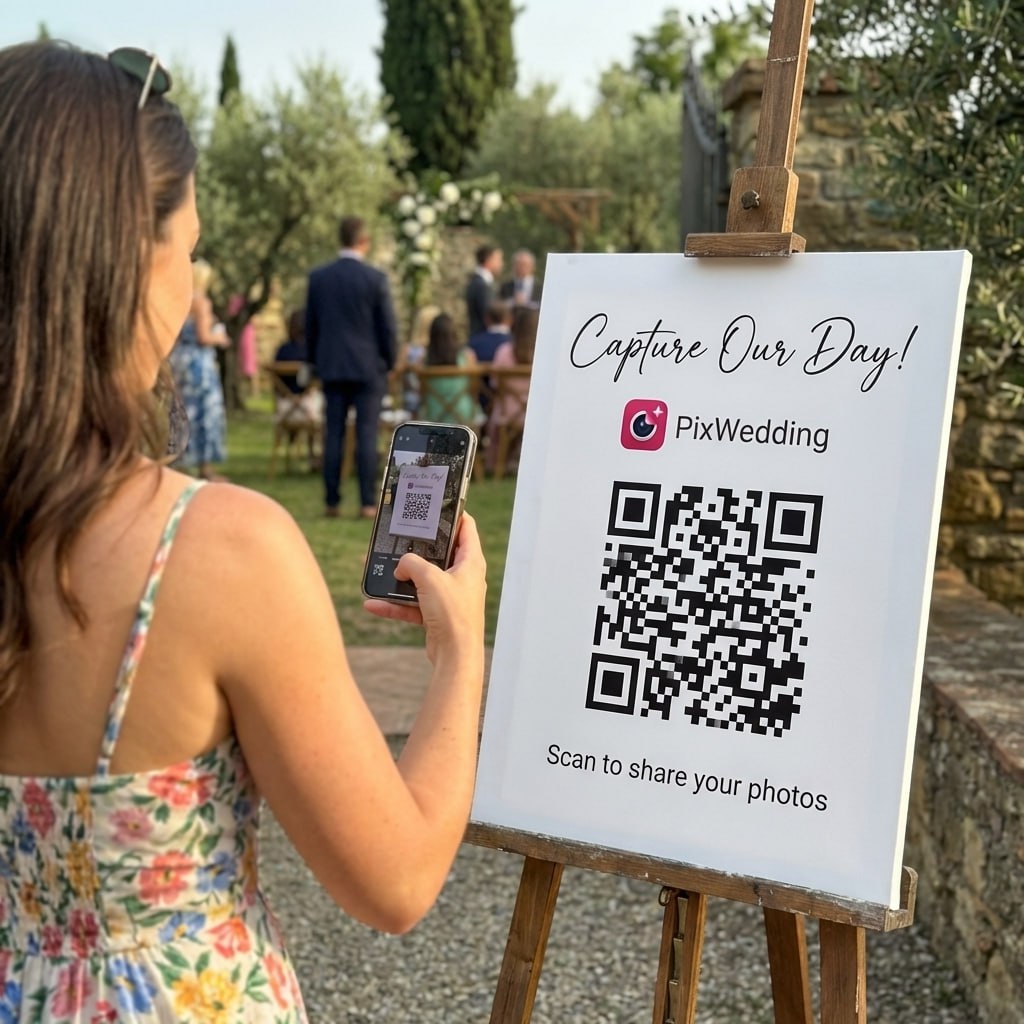
Picture a Saturday wedding in mid-October at a converted warehouse event space in East Austin, with a guest list around 150 people. The couple set up Pix Wedding the week before, printed QR codes on each table tent, and briefed two groomsmen to nudge guests toward scanning during cocktail hour. By the next morning, the album held over 2,000 photos from more than 100 contributors. The goal was a 12x12 inch lay-flat book from Artifact Uprising, roughly 80-90 pages, one copy for themselves and one each for both sets of parents.

Session one, a first pass the Sunday evening after the wedding, took well under an hour. The couple downloaded the album, which Pix Wedding had already sorted into moment folders: getting ready, ceremony, cocktails, speeches, first dance, dinner, cake cutting, dancing, and late night. Folder by folder, they deleted obvious rejects without agonizing over any single photo. Blurry shots, eyes-closed on the main subjects, and runs of nearly identical group poses got cut immediately. That pass reduced the set to a few hundred strong candidates.

Session two, a longer sitting a few days later, narrowed the remaining photos to the final 82 by asking one question for each: does this make the cut, or does another photo in the same moment do it better? The ceremony folder kept a handful, the dancing folder kept about a dozen, and late night kept just a few. One photo almost cut turned out to be a standout in the finished book: a slightly out-of-focus phone shot of a parent placing their hands on the groom's face right after the ceremony, taken by a relative standing a few rows back. It was soft but the emotion carried the page.

The 82 photos were uploaded to Artifact Uprising, laid out as a Layflat Photo Book in 12x12 at roughly 84 pages, built over about two hours using a chronological sequence template. Typical turnaround for that order runs 10-14 days. The parents copies went to Shutterfly at 8x8 inches, 60 pages each, taking advantage of one of the frequent 40 percent off promotional codes widely available online.

A common snag worth planning for: when the full photo set is uploaded to a printer like Artifact Uprising, their editor may flag a few photos as below the recommended 150 DPI for a large page size. This usually happens with uploads from an older phone that saved a medium-resolution copy rather than the full-resolution original. Going back to the Pix Wedding album and re-downloading the original upload (rather than any compressed export) almost always solves it, since Pix Wedding stores the full-resolution file by default.

Illustrative cost breakdown
  • Artifact Uprising 12x12 Layflat, ~84 pages (1 copy): ~$245-295
  • Standard shipping, Artifact Uprising: ~$15-20
  • Shutterfly 8x8, 60 pages, 2 copies with a promo code: ~$70-90
  • Pix Wedding guest upload platform: $49-59
  • Approximate total for three books + collection platform: ~$400-450

Illustrative walkthrough: a Hudson Valley wedding, a 74-page Mixbook, and a layout that almost got scrapped

Composite example for illustration, not a specific real couple or venue

Picture a summer weekend wedding at a tented barn venue in the Hudson Valley, about two hours north of Manhattan, with roughly 90 guests. Rural venues like this often have weak indoor cell signal, which can create a wrinkle: guests who scan the QR code inside a tent may find the upload will not complete until they step outside where there is enough signal to push through. Even with that friction, the album can still end up with well over 1,000 photos from dozens of contributors by the end of the night, lower than it would have been with strong indoor WiFi, but still a meaningful archive.

In this scenario, the bride works through the cull on her own a few weeks after the wedding, in two sittings: a quicker first pass that cuts the set dramatically, then a longer session that narrows things down to a final 74 photos. She chooses Mixbook for this project because she wants full control over the layout. The ceremony section becomes two full-bleed spreads. The dancing section becomes a grid of smaller photos on one page followed by a single large photo filling the next spread. That kind of layout variation is possible on Mixbook without any design software.

The project nearly derails at the design stage: after building out dozens of pages, she realizes the speeches section landed after the first dance, breaking the chronological flow and making the book feel like it has two beginnings. She catches the error at the PDF proof stage, which most photo book printers include before final payment, and spends less than an hour rearranging spreads back into the correct sequence. The lesson: sketch a rough page order before opening the editor, and know which sections get how many pages before placing the first photo.

The final book in this example is an 11x8.5 inch hardcover, 74 pages, with a second copy shipped internationally to an in-law, using a domestic promo code and paying full price plus international shipping for the second copy.

One detail that often surfaces in stories like this: a guest-taken close-up of a deceased grandparent's photo on a memorial table, something no professional photographer was positioned to shoot directly, ending up as the final page of the book. It is the kind of moment that would not exist without a guest upload system.

Illustrative cost breakdown
  • Mixbook 11x8.5 Hardcover, 74 pages, domestic copy with promo code: ~$85-95
  • Mixbook 11x8.5 Hardcover, 74 pages, international copy (full price): ~$130-140
  • International shipping: ~$20-25
  • Pix Wedding guest upload platform: $49-59
  • Approximate total for two books + collection platform: ~$290-320

Lesson from this scenario: for venues with weak indoor WiFi or no cell signal, post a note at the QR sticker instructing guests to step outside to complete the upload. A simple line of text on the table card prevents the confusion entirely.

Collect all guest photos in one place, sorted by moment, ready to print

Pix Wedding groups every upload by ceremony, cocktails, speeches, and dancing automatically. Skip the 3-hour manual sort. Start your photo book with photos already organized.

Aunt Maria

Aunt Maria

Point your camera

Scan to join the album

No app, no account

9:41

UPLOADING

Saving your moment

9:41

THE ALBUM

Emma & Jack

June 21, 2026

647 photos · 95 guests

AllMomentsMine
Guest photo 1
Guest photo 2
Guest photo 4
Guest photo 5
Guest photo 6
Guest photo 7
Guest photo 8
Guest photo 9
Guest photo 10
Add photosShare your moments

SCAN TO TRY

pix.wedding/
your-wedding

Selection workflow

How to narrow 2,000 guest photos to 80 in two sessions

The process that cuts a full afternoon of overwhelm into two manageable sittings.

  1. 1

    Download and sort by moment group

    Export the full album from Pix Wedding. The download is organized by the AI moment groups: ceremony, cocktails, speeches, dancing, etc. This is your starting structure. Do not rename folders or move files yet.

  2. 2

    First pass: delete the obvious rejects

    Go folder by folder. Delete blurry photos, photos with closed eyes on the main subject, extreme duplicates (six photos of the same group pose from different angles, keep the sharpest two). This takes 20-30 minutes and cuts 2,000 photos to roughly 400.

  3. 3

    Second pass: pick the top 2-3 per moment

    For each moment folder, you want 2-4 photos in the final book. Pick the ones with the best light, clearest faces, and strongest emotion. The ceremony folder might have 60 photos, you need 4. Dancing might have 200, you need 6-8.

  4. 4

    Check for storytelling gaps

    Look at your shortlist of 80-100 photos and read it like a story. Is there a getting-ready shot? A wide venue shot? A parents moment? A late-night dance floor shot? Fill obvious narrative gaps before moving to the printer.

  5. 5

    Export at full resolution

    Download your final selection from Pix Wedding at original resolution. Do not resize or compress. Most printers accept JPEG or TIFF. Artifact Uprising has a minimum of 150 DPI for print; original phone photos are well above this.

  6. 6

    Upload to the printer and build the layout

    Use the printer's editor to place photos. Artifact Uprising and Mixbook both let you define the book layout page by page. Start with chronological order, then adjust spreads so strong photos get more space.

Printer comparison

Artifact Uprising vs Mixbook vs Shutterfly vs Mpix vs Snapfish

Practical, plain-language notes on each platform's strengths and trade-offs, not marketing copy from their own sites.

Artifact Uprising

Premium$180-300

The best print quality available for consumer photo books. Lay-flat binding so photos that span two pages look seamless. Worth the price for the main couple's copy.

Best for: Keepsake main bookPaper: Thick matte, sustainably sourcedEditor: ModerateTurnaround: 10-14 days

Mpix

Professional$120-220

Used by professional photographers for sample albums. Print quality is close to Artifact Uprising at a lower price. Good choice if you want professional output but the $280 Artifact Uprising price is a stretch.

Best for: Semi-pro quality on a mid budgetPaper: Professional lustre or metallicEditor: Template-based, cleanTurnaround: 5-7 days

Mixbook

Mid-range$80-180

The most flexible editor of any consumer photo book service. You can build exactly the layout you want. Print quality is a step below Mpix and Artifact Uprising but is perfectly acceptable for a parents copy or a secondary gift book.

Best for: Maximum layout flexibilityPaper: Standard gloss or matteEditor: Easiest drag-and-drop editorTurnaround: 7-10 days

Shutterfly

Budget$30-90

The cheapest option and the fastest when they run promotions (they almost always have a 40-50 percent off code). Paper quality is noticeably lower than the others but completely fine for a gift book. We would not print the main copy here, but ordering six copies for family members at $35 each makes sense.

Best for: Bulk copies for extended familyPaper: Standard glossyEditor: Very easy, template-heavyTurnaround: 5-7 days

Snapfish

Budget$25-80

Very similar to Shutterfly in quality and price. Slightly cheaper on certain sizes. Good for large orders of small copies (5x5 or 6x6 books as thank-you gifts for bridesmaids or groomsmen). Colors can run slightly warm compared to the original photos.

Best for: Lowest cost per copyPaper: Basic glossyEditor: Easy, limited layout optionsTurnaround: 7-10 days
Layout templates

Three book layouts that work well for guest photo collections

Choose one structural approach before you start placing photos. Changing the layout halfway through costs hours of rework.

Chronological story

Follows the wedding day from getting ready to last dance. Most natural narrative. Best for couples who want the book to feel like flipping through the day.

Pages: 60-80 pagesSections: Getting ready, ceremony, cocktails, dinner + speeches, dancing, late night

Moment clusters

Groups photos by emotional moment rather than strict time. The first kiss gets a spread. The group shots get a spread. The dance floor gets three pages. Works beautifully with Pix Wedding moment grouping.

Pages: 70-90 pagesSections: Ceremony highlights, family, friends, speeches + toasts, dancing, late night

Guest perspectives

Organized by who uploaded the photos: family section, college friends section, work friends section. Personal captions under each photo citing the guest by name. Takes more time to design but the result feels deeply personal.

Pages: 80-100 pagesSections: Family chapter, friends chapters, photographer highlights, late night
Cost matrix

What a printed guest photo book actually costs in 2026

All-in estimates for four common scenarios, based on current pricing from each printer.

ScenarioPrinterSizePagesCost (1 copy)
Keepsake main bookArtifact Uprising12x1280$245-295
Mid-range keepsakeMpix or Mixbook11x8.570$110-160
Parents gift copyShutterfly8x860$35-55
Bridesmaid / groomsmen miniSnapfish5x540$18-30
Full family set (3 copies)Shutterfly bulk8x860 each$90-130 total
Pix Wedding (guest upload platform)One-timeAll plansUnlimited photos$49-59

Most printers run 30-50 percent discount codes regularly. Check a coupon aggregator like RetailMeNot or Honey before checking out, since full-price orders on Shutterfly or Snapfish are rarely necessary.

Gift ideas

Using the guest photo book as a gift for parents and in-laws

Parents almost never get a copy of the guest perspective from the wedding. This is the gift that consistently surprises them most.

The parents copy: smaller size, same photos

Order an 8x8 inch version from Shutterfly or Mixbook using the exact same photo selection as your main book. The design upload from your main order can be adapted to the smaller size in about 30 minutes. A 60-page 8x8 copy runs $35-55 each. Wrap it and give it as a one-month anniversary gift, which lands with more emotional punch than another appliance off the registry.

Make the parents edition slightly different

Swap in a few photos that feature the parents prominently, photos that did not make the main couples copy. Add a personal caption on the inside cover. The five extra minutes to customize the first and last pages makes it feel like a bespoke gift rather than a printed copy of your own book.

Mini books for bridesmaids and groomsmen

A 5x5 inch, 40-page Snapfish mini book runs $18-25 and ships in about a week. Build one template, order six to ten copies. Fill it with the photos your wedding party appeared in, plus a few candids from their perspective. Better than a thank-you card and cheap enough to give everyone in the party one.

First anniversary edition

Some couples wait until their first anniversary to produce the guest photo book on purpose. By then they have also received their professional album and can weave the two perspectives together: professional photos for ceremony and portraits, guest photos for the candid moments. The combined result is a richer story than either source on its own. Pix Wedding keeps your album active indefinitely, so the photos will still be there at year one.

Why collection method matters

How you collect photos decides how painful the book is to make

The collection problem most couples do not anticipate

Asking guests to text or email photos after the wedding produces a trickle over two weeks from only a fraction of attendees. The photos arrive in different formats, different resolutions, some renamed, some not. Sorting hundreds of photos from dozens of individual message threads into a photo book takes an entire Saturday.

A QR-based system like Pix Wedding solves all of this at the source. Guests upload at the wedding itself, in the moment, so participation is noticeably higher than waiting for guests to remember and send photos later. Every photo lands in one album, tagged by upload time, grouped by moment by the AI. The download is one ZIP file with clean folders. The book project starts with structure already in place.

  • AI moment grouping: ceremony, cocktails, speeches, first dance, dancing, late night sorted automatically
  • Original full-resolution files stored, not compressed previews
  • Single organized download, not scattered message threads
  • Guests upload on the day, not two weeks later when momentum is gone
  • Meaningfully higher participation than waiting on post-wedding text requests
Avoid these

Mistakes that ruin a guest photo book project

  • Waiting too long to start the cull. At two months post-wedding, 2,000 photos is paralyzing. At two weeks, the emotions are still fresh and your eye quickly spots the keepers. Start the first pass within 14 days.
  • Including too many photos. The couples who order 180-page books are rarely happy with them. The book feels like a contact sheet. Eighty photos displayed with breathing room tells a better story than 180 crammed in.
  • Using compressed photos from messaging apps. When guests text photos rather than uploading through a dedicated tool, the images often pass through WhatsApp or iMessage compression, which destroys resolution. Print quality suffers. Use full-resolution originals from Pix Wedding downloads only.
  • Not proofing the cover text carefully. Misspelled names or wrong dates on the cover are the most common print error. Every printer lets you download a PDF proof before ordering. Do it. Read every word out loud.
  • Ordering the premium book at the wrong size. A 12x12 Artifact Uprising book is stunning but also heavy and hard to display on a bookshelf. If you are ordering one to read, an 11x8.5 landscape is easier to handle. Choose the size based on how you plan to use the book, not just what looks most impressive in the cart.
  • Skipping the parents copy. A year out, "I wish we had made a copy for my parents" is one of the most common post-wedding regrets couples mention.

Related guides for collecting and using guest photos

Every step in the guest photo journey, from collection to printed keepsake.

Why the guest photo book is different from the professional album

Your photographer delivers a professional album six to twelve months after the wedding. It is beautiful, carefully edited, and costs $500-2,000. But it only shows what the photographer saw. The guest photo book is something else: it is the wedding as your 150 closest people experienced it. Aunt Teresa sneaking a last bite of cake. Your college roommate crying during the vows. The flower girl asleep under the head table at 10 PM. No photographer catches all of that.

The guest photo book is also faster and cheaper to produce than the professional album. If you collect photos digitally via a QR code system, you can have a finished printed book in your hands within three weeks of the wedding, long before the professional album arrives. Many couples order a guest book for themselves and a smaller copy for parents as a gift, total cost under $300 for three books.

  • Captures candid moments no photographer was positioned for
  • Viewpoint from every table, not just the photographer angle
  • Ready in weeks, not months
  • Budget of $80-300 vs $500-2,000 for a professional album
  • Makes a meaningful gift for parents and grandparents
  • Tells the party story, not just the ceremony story

How Pix Wedding moment grouping speeds up photo selection

The hardest part of making a guest photo book is not the printing. It is sitting with 2,000 photos and figuring out which 80 tell the story without repeating the same moment six times. Pix Wedding automatically groups uploaded photos by detected moment: cocktail hour, ceremony, speeches, first dance, dinner, cake cutting, dancing, and late night.

When you open the album after the wedding, photos are already organized by moment rather than by the timestamp of whoever uploaded them. You can see at a glance that the first dance has 47 photos (pick the best three) and the cake cutting has 12 (pick the best two). This cuts the selection phase from a full afternoon to about 90 minutes. The AI grouping is not perfect, but it gets moments right most of the time, which is enough to dramatically narrow the starting set.

Printing timeline and planning the book as a post-wedding project

The couples who end up happiest with their guest photo book treat it as a deliberate post-wedding project with a deadline, not something they will get to eventually. Set a calendar reminder for 14 days after the wedding. On that day, open Pix Wedding, download the moment-grouped album, and do the first cull. You do not have to finish in one session, but starting before the memories fade makes the selection more intuitive.

Most printers need 5-10 business days to produce the book after you finalize the order. Standard shipping adds another 3-5 days. Premium shipping cuts that to 1-2 days at a cost of $15-25 extra. If the book is a gift for a parent's birthday or an anniversary celebration, add those ship times to your deadline and work backward.

Explore more free wedding tools

Everything you need to make your wedding day stress-free and unforgettable.

Common questions about turning guest uploads into a printed photo book

Wedding Guest Photo Book FAQ

Everything you need to know about our free tools and how they help your wedding day.

Between 60 and 100 photos is the sweet spot for a printed wedding photo book. Fewer than 60 and the book feels thin. More than 100 and it starts to feel like a contact sheet rather than a curated story. For a typical 150-guest wedding, couples often collect 2,000+ guest photos and narrow that down to somewhere around 80-90 for the final book. The AI moment grouping in Pix Wedding helps you see which moments have the most coverage, which makes the cutting process faster.

Artifact Uprising produces the highest print quality and uses sustainably sourced paper, but costs $180-300 for a 50-80 page book. Mixbook is the most flexible editor with drag-and-drop layouts, priced at $80-180. Shutterfly is the fastest and cheapest at $30-90 but the paper quality is noticeably lower. For a keepsake book, go Artifact Uprising. For a parents copy or a quick gift, Shutterfly works fine.

Yes. Modern phone cameras shoot at 12-48 megapixels, which is more than enough for print sizes up to 8x10 inches. The main thing to check is that guests uploaded full-resolution originals, not compressed previews. Pix Wedding stores the original upload at full resolution by default. The only photos that print poorly are screenshots or photos that have been resaved through messaging apps, which recompress them.

The selection and editing phase takes most couples 3-6 hours spread over a few sessions. Uploading photos and designing the book in the printer app takes another 2-4 hours depending on how much you customize. Production and shipping adds 5-14 days depending on the printer. Most couples finish within 3-4 weeks of the wedding. We recommend setting a firm 30-day deadline for yourself because the longer you wait, the harder it is to start.

Make one main book for yourselves first. Then, once you love it, order copies for both sets of parents and any grandparents. Most printers charge 40-60 percent less per additional copy because the design is already done. A parents copy from Shutterfly or Mixbook can cost as little as $25-45 when ordered in bulk. We recommend making the parents copy a slightly smaller size (8x8 vs 12x12) to keep costs manageable.

A photo book is a printed, bound book where photos are printed directly on the pages, like a magazine. A photo album is a binder-style product where printed photos are inserted into sleeves or mounted on adhesive pages. Photo books are sharper, lighter, and more durable for everyday handling. Photo albums feel more traditional and allow you to add photos over time. For a guest-photo keepsake, photo books are the better fit because you are printing a fixed set of photos and want the cleanest result.

Wedding Photo Memory Book From Guest Photos (2026 Guide)