Wedding Content Creator vs Photographer: Cost, Rights and Who to Hire
Learn what a wedding content creator does, what creators and photographers cost in 2026, who owns the clips, and when to hire one, the other or both.
10 min readUpdated Sep 22, 2026Pix Wedding Team
Content creator or photographer?
A wedding photographer is the vendor you hire for the photos you will frame, print and keep for decades: posed portraits, family groups and an edited gallery, delivered weeks later. A wedding content creator films the day on a phone for social media: vertical clips, behind-the-scenes moments and edited Reels or TikToks, often in your inbox within a day. They do different jobs, so the creator is an add-on, never a swap. If you can afford one, hire the photographer. Add a creator if sharing the day quickly matters to you, and let a free guest album catch the candids neither of them sees.
I run Pix Wedding, a guest photo sharing app, so I have an opinion about the third option in this guide: the photos your guests take. I will keep that for the end. Most of this post is about the two vendors, what each one delivers, what each costs in 2026, who owns the clips, and how to decide. Where a number appears, the source is linked. Where nobody has published a reliable number, I say so.
1What Is a Wedding Content Creator, Exactly?
A wedding content creator is a vendor who spends the day capturing short, casual photos and video on a smartphone, then edits or hands over clips made for Instagram and TikTok. Zola's guide to hiring one describes them as working on mobile devices and delivering edited TikToks and Reels, often within 24 hours. Zola also reports that 21% of couples hire at least one unique or niche vendor, and content creators are the top pick in that group, at 22% of those hires.
The style is the point. Vogue's profile of the London firm Content for Brides describes the job as fly-on-the-wall iPhone footage of the couple and their guests, with labeled folders waiting in the couple's inbox the next morning. The founders told Vogue they estimate about 80% of what they shoot is video and 20% is photos, and that they leave most of the photography to the professional photographer. That split tells you a lot about where each vendor fits.
Photographer
Portraits, family groups, details and the big moments, shot on professional cameras and lenses, then culled and edited into a gallery you can print from.
Content creator
Vertical phone clips, candid behind-the-scenes moments and short edited videos for social media, usually delivered the same night or the next day.
Videographer
A cinematic film with planned shots, clean audio of vows and speeches, color grading and a highlight film delivered weeks later.
Your guests
The candid view from every table: the cousins, the dance floor, the moments no hired vendor was pointed at. Free, if you collect it.
2Side by Side: What Each One Hands You
The cleanest way to compare them is by what lands in your hands afterwards. Hours, gear and style all follow from that.
Wedding photographer
About $3,000 average
Best for: Couples who want heirloom portraits, family photos and prints or an album.
High resolution files that print well at large sizes
Planned coverage of portraits, family groups and details
Skilled with low light, flash and difficult venues
Edited, consistent look across the whole gallery
Gallery usually arrives weeks after the wedding
Little or no social media video
One or two people cannot be everywhere at once
Wedding content creator
$500 to $999 for most couples
Best for: Couples who want to post the day fast or relive it in vertical video.
Clips and edits often ready within 24 hours
Casual, in-the-moment style that feels like a friend filmed it
Behind-the-scenes moments a photographer rarely covers
Easier to blend into the crowd with a phone
Phone files are not a substitute for professional portraits
No formal family photo lists or posed sessions as standard
Newer category, so quality and contracts vary a lot
Edited clips or raw files? Ask.
Even Zola's own pages describe the deliverable two ways. The content creator guide talks about edited TikToks and Reels within 24 hours, while the videographer cost guide lists content creators at $500 to $999 for raw, unedited files within 24 hours. Both exist in the market. Before you book, get in writing how many edited videos you receive, whether you also get every raw clip, and by when.
3What Does Each Cost in 2026?
Here are the published numbers, with their sources. Local prices swing a lot, so treat these as a starting point for your quotes, not a price list.
Wedding photographer: about $3,000 on average, with most couples in the $2,500 to $4,500 range, according to The Knot.
Wedding content creator: over 60% of couples spend $500 to $999, according to Zola.
Wedding videographer, for comparison: an average of $3,993, with most couples spending $3,200 to $4,800, according to Zola's videographer cost guide. That page also shows a spread from $3,005 in Salt Lake City to $6,091 in San Francisco.
What moves the photographer price: hours of coverage, a second shooter, an engagement session and an album. Saturdays from May to October tend to be the most expensive dates.
Check your photographer quote
Enter your hours, second shooter and extras to see whether a quote sits in a normal range for your area.
To see what that means for your budget, take the US wedding average of $34,200 as an illustration. A $3,000 photographer is about 9% of it. A content creator in the middle of Zola's range, say $750, adds roughly 2%. That is why so many couples treat the creator as a small add-on to the photographer rather than a replacement. If you want to split your own total properly, the wedding budget allocator does the math by category.
4Who Films What? One Wedding Day, Two Vendors
When you hire both, the day splits naturally. Here is an illustrative split for a typical afternoon ceremony. Your times will differ, so build your own in the wedding timeline tool and share it with both vendors.
Getting readyDetails vs the real room
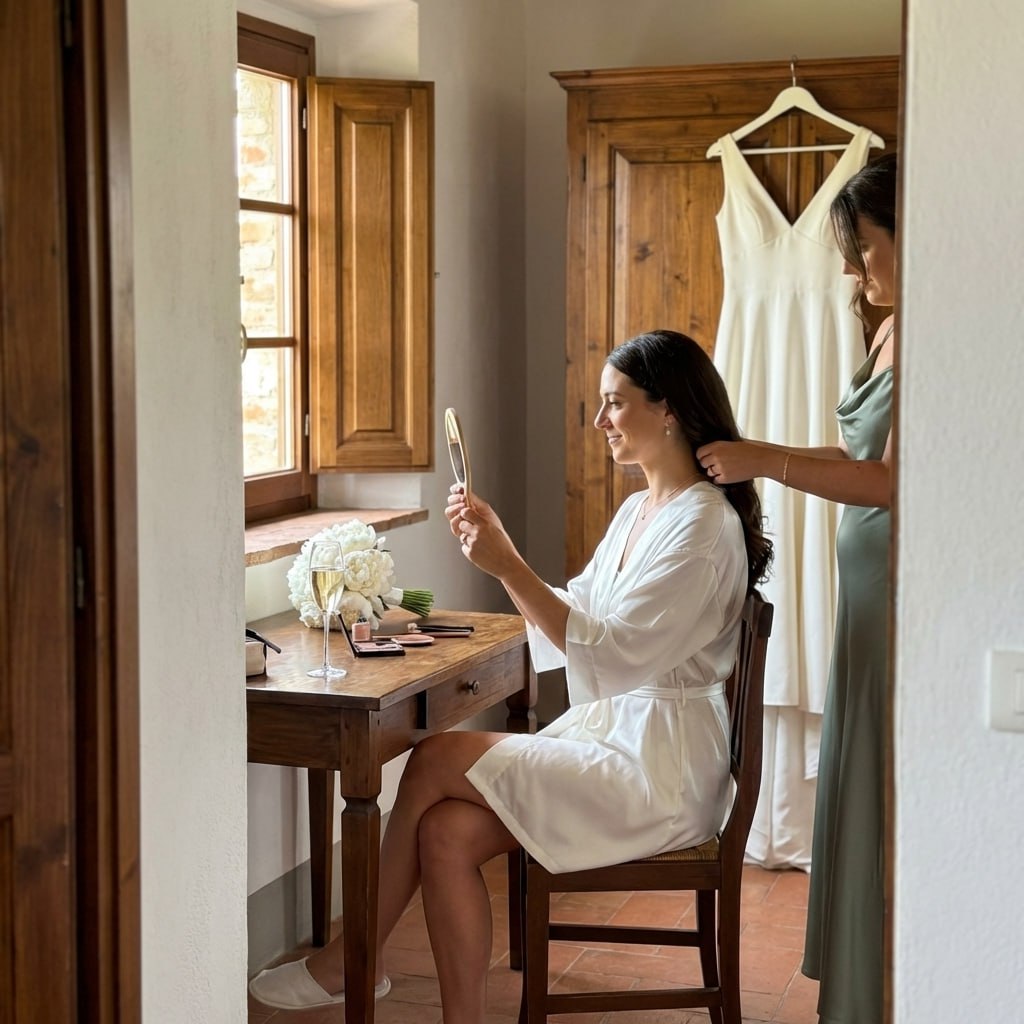
The photographer shoots the dress, rings, invitation suite and polished getting-ready portraits. The creator films the messy, funny part: the playlist, the mimosas, the button that will not close.
First lookTwo angles, one moment
The photographer takes the wide and the close-up reactions. The creator films a vertical clip from behind, the kind couples post the same week.
CeremonyPhotographer leads
This is where the photographer needs the aisle. Agree in advance that the creator films from a side position and never steps into the center line.
Family photosPhotographer only
Posed family groups run off a shot list. The creator can grab a quick behind-the-scenes clip of the organized chaos, then step away.
Cocktail hourCreator's best hour
While the photographer is busy with portraits, the creator covers guests arriving, drinks and the first hellos.
ReceptionBoth, split by format
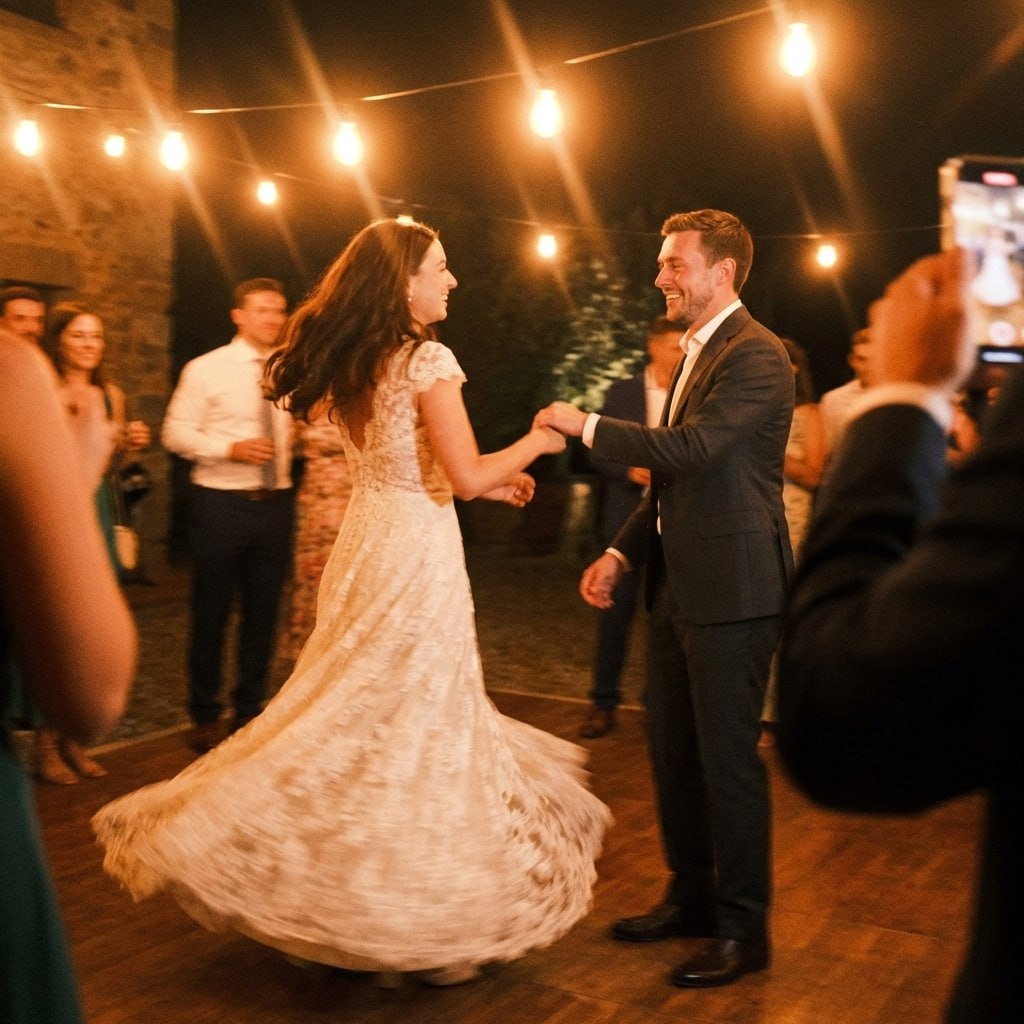
Speeches, first dance and cake get covered by both: stills from the photographer, vertical edits from the creator.
Next morningTwo very different deliveries
The creator's clips often arrive within a day. The photographer's gallery comes weeks later.
If you only have the photographer, the right-hand half of that timeline mostly disappears, and that is fine for many couples. For a full list of moments to hand your photographer, use the wedding photo shot list.
A content creator explains the job from the inside
Grace Myler Nesburg, founder of Grace Myler Media and one of the first wedding content creators in the Midwest, talks through what the role covers and who it suits. Watch it to hear how a creator describes working next to the photographer.
You plan a small, quiet wedding with few moving parts
You will collect guest photos with a shared album anyway
Add a content creator if
You want to post the day within a day or two
You love casual, behind-the-scenes vertical video
You are skipping a videographer and want some motion
You share your life online, for fun or for work
You have $500 to $1,000 left after the essentials
First dance
You guys!!
Add the view from every guest's phone
Whichever vendors you book, your guests will be filming too. Start a free album for up to 20 uploads, no card. One payment from $49 opens it to unlimited photos and videos with a full ZIP download.
This is still the most common setup, and for good reason. A skilled photographer covers every moment you will want printed, handles tricky light and gets the family photos done quickly. Spend your effort on the contract and the shot list, and read our guide on how long it takes to get wedding photos back so the wait does not surprise you.
Content creator only
Some couples skip the photographer and book only a creator to save money. I would not. Phone footage looks great on a phone screen, but it is not built for large prints or low-light portraits, and a creator is not hired to run a family photo list. If the budget truly cannot stretch, look at the options in alternatives to hiring a wedding photographer first, such as a shorter coverage package or a newer photographer building a portfolio.
Both vendors
The combination works best when each vendor knows their lane before the day. Introduce them by email a few weeks out, share one timeline, and agree on who stands where during the ceremony. If you are weighing a creator against a full videographer instead, photographer vs videographer on a budget and our wedding videographer cost guide cover that trade-off.
Neither, on a tight budget
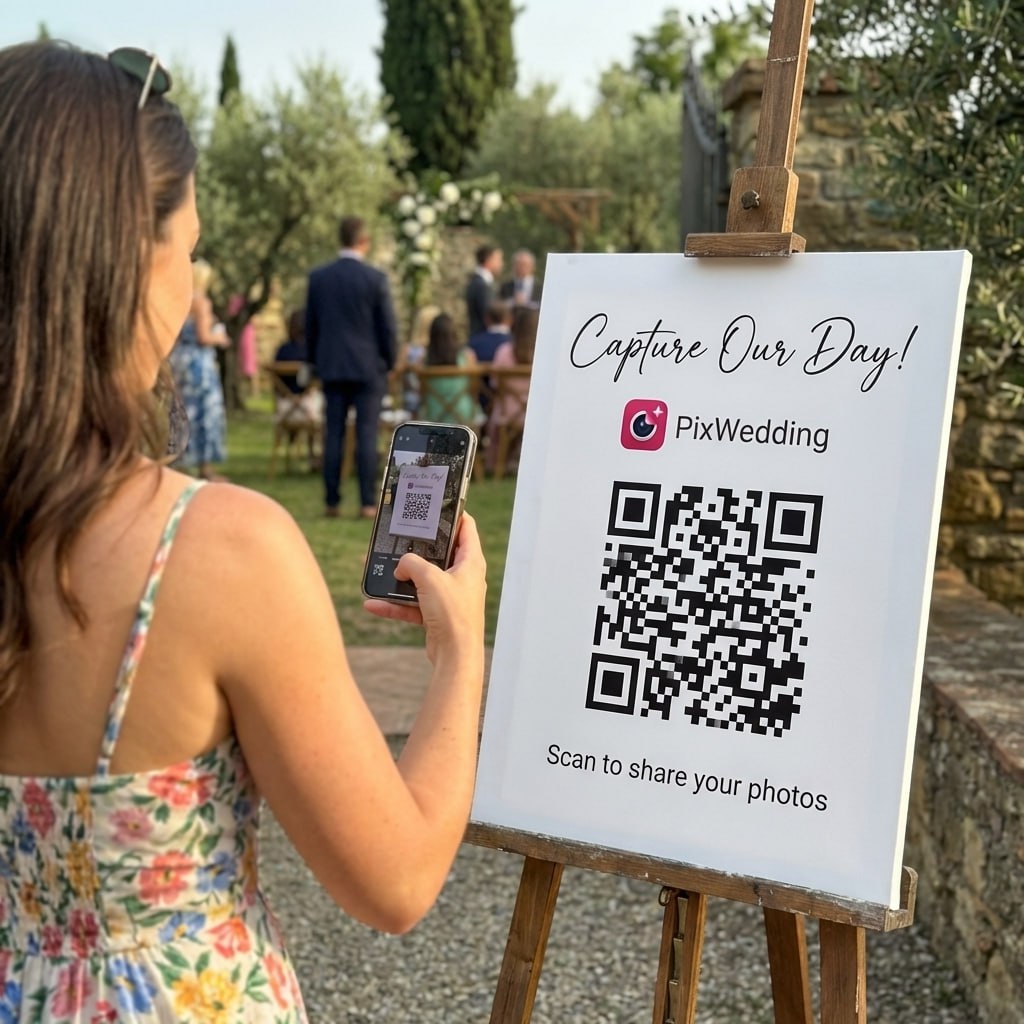
If both vendors are out of reach, ask one organized friend to take posed family photos with a good phone and put a QR code on every table so guests upload what they capture. It will not replace a professional, but it keeps the day from vanishing into forty camera rolls. Cheap alternatives to a wedding videographer has more ideas for the video side.
6Who Owns the Clips? Usage Rights in Plain English
This is the part couples skip, and it matters more with creators because their work is made to be posted. Under US law, copyright belongs to the author of a work, and owning a physical copy does not transfer it, as the US Copyright Office FAQ explains. For work by an independent contractor, the Copyright Office's Circular 9 says it only counts as a work made for hire in a short list of categories and only with a written agreement. In practice, that means the photographer or creator usually keeps the copyright and gives you a license to use the files.
That is normal and fine, as long as the license covers what you want to do. Zola's advice is to be clear on who owns the created content and the rights to share or print it. Check three things: can you post and print freely, can the vendor post your wedding on their own accounts, and can they use it in paid ads.
Not legal advice
The wording below is an illustrative starting point for a conversation with your vendor. Contracts differ by state and country, so have anything important reviewed by someone qualified.
Our use of the files
The couple may download, print, share and post all delivered photos and videos for personal, non-commercial use, without credit or further fees.
This includes social media, printed albums and gifts to family.
Ask the vendor to add this to the contract
When the vendor may post
The vendor will not post any photos or videos from our wedding until the couple has shared their own first post, or until 7 days after the wedding, whichever comes first.
Guests who ask not to appear online will not be featured on the vendor's accounts.
Adjust the day count to suit you
What we receive and when
Delivery includes [number] edited vertical videos and all raw clips and photos captured on the day.
Edited videos are delivered within [number] hours, raw files within [number] days, by download link.
Fill in the numbers from your quote
Paid advertising
The vendor may use our wedding in portfolio posts but not in paid advertising without our written permission.
Remove if you are happy to be in ads
7Questions to Ask a Content Creator Before You Book
Send these before you sign
Photographers have years of standard contracts behind them. Creators are newer, so ask more.
For the photographer, the usual questions still apply: coverage hours, second shooter, number of edited images, delivery time and backup gear. And budget for gratuity if it is customary where you live. Our guide on how much to tip a wedding photographer has the norms.
A videographer on where creators end and films begin
Delia Studios breaks down how a wedding videographer and a content creator differ in storytelling, filming, editing and deliverables. Watch it if you are choosing between a creator and a videographer as your only video vendor.
Friction between vendors usually comes from nobody setting rules. A few minutes of planning solves most of it.
Introduce them early. Put both in one email thread three or four weeks before the wedding.
Share one timeline. The same document, with ceremony, portraits and speeches marked.
Give the photographer the aisle. During the ceremony, the creator films from the side or the back.
Keep the creator out of family photos. One quick clip, then step away so the list moves.
Agree on the first dance. The photographer takes the wide spot, the creator works the edges.
Name one point of contact. A planner or friend who answers vendor questions so you do not have to.
Collect everything in one place. Decide before the day where all the files will end up.
9Where Do Guest Phones Fit In?
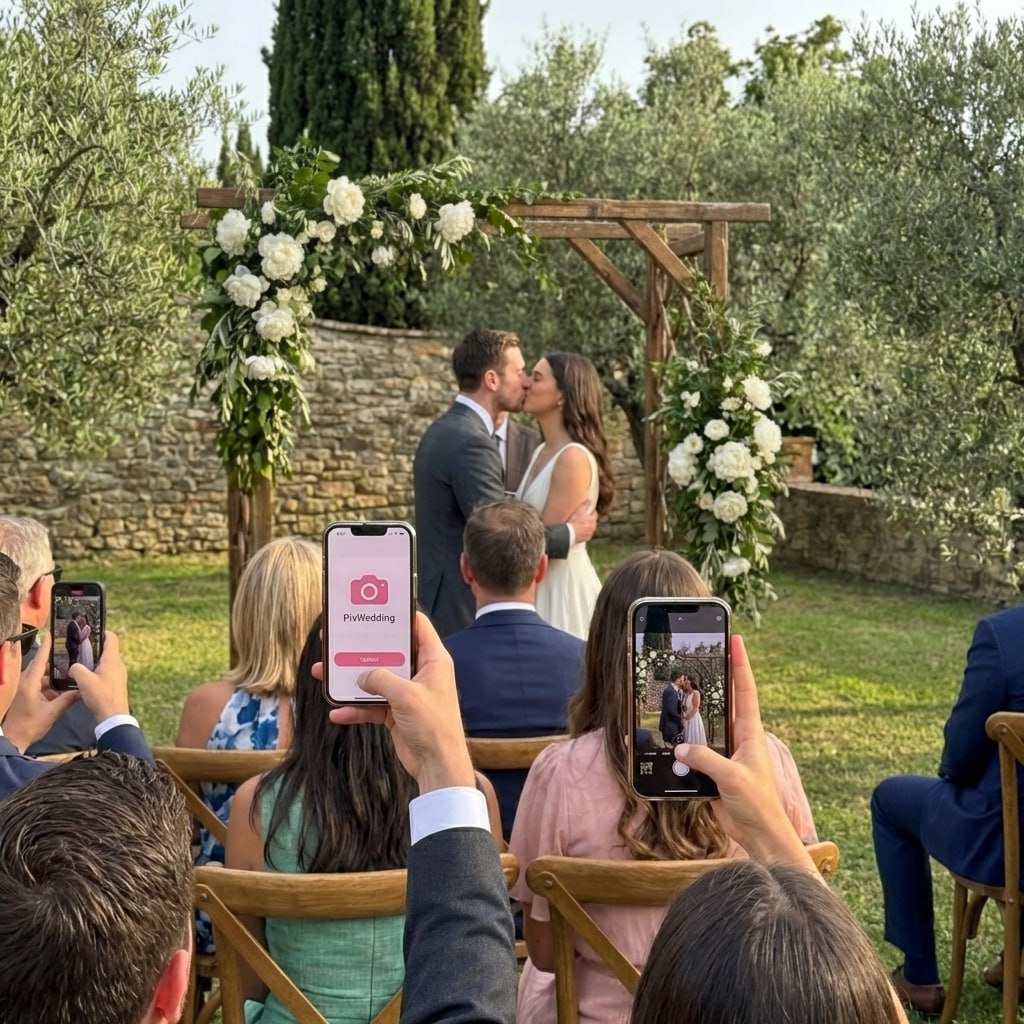
A content creator is one extra phone. Your guests bring dozens. Across 203 real weddings in our guest photo upload dataset, the median wedding collected 149 guest photos from 8 uploaders, with the middle half of weddings landing between 70 and 253 photos. Those are moments from tables and corners that neither vendor was pointed at.
That is why I think of wedding coverage in layers. The photographer is the foundation. The creator, if you want one, adds fast vertical video. The guest album fills in everything else. You can see what a finished guest album looks like in our live demo album.
Sample coverage plan, illustrativeOne way to layer the day on a mid-range budget
1. Photographer, 8 hours: portraits, family groups, ceremony, reception
3. Guest album on every table: candids from the whole day
4. One shared timeline sent to both vendors
5. All files gathered in one gallery after the wedding
Your QR
Swap the creator for a longer photographer package if posting is not your thing
On the Standard plan, the photographer upload link gives a pro a private link and a separate album inside the same gallery, with no account needed on their side. You can hand that link to your photographer after delivery so their shots sit next to the guest photos. Photo missions help too: short prompts that nudge guests to shoot the moments you care about.
10Mistakes Couples Make With Content Creators
Booking a creator instead of a photographer
Phone clips are wonderful for posting, but they do not replace portraits and family photos you will want printed.
No written deliverables
If the contract does not say how many edits, raw clips included and a deadline, you have no way to hold anyone to it.
Ignoring usage rights
Decide who may post what and when, including whether the vendor can use your wedding in ads.
Never introducing the vendors
Two people competing for the aisle during your vows is the classic result of no planning.
Forgetting guest privacy
Some guests do not want to be on social media. Tell the creator who to leave out.
Leaving files scattered
Photographer gallery, creator folder, guest camera rolls. Pick one place to collect them before the links expire.
11So, Content Creator or Photographer?
If you can afford only one, choose the photographer. The portraits and family photos are the part of the day you cannot redo, and a phone is not the right tool for them. If you have money left and you love the idea of watching your wedding as short videos the next morning, a content creator is a fair add-on at a fraction of the photographer's price.
One vendor only: photographer.
You want social video and have $500 to $1,000 spare: add a content creator.
You want a proper film with clean vow audio: a videographer, not a creator.
Tight budget: a shorter photographer package plus a guest album.
Any setup: a shared timeline, a written rights clause and one place for every file.
Start by pricing your photographer, then decide whether the creator earns a spot. Browse local options in our wedding photographer guides, and set up the guest album early so the QR code is ready for your signs.
FAQ
Frequently Asked Questions
What is the difference between a wedding content creator and a photographer?
A photographer uses professional cameras to shoot portraits, family groups and the main moments, then delivers an edited gallery weeks later. A content creator films casual photos and vertical video on a phone for social media and often delivers clips or edits within 24 hours.
How much does a wedding content creator cost?
Zola reports that over 60 percent of couples spend between $500 and $999 on a wedding content creator. Prices vary by hours, location and how many edited videos are included.
What does it cost to book both a photographer and a content creator?
Pairing the US photographer average of about $3,000 (The Knot) with a creator in the $500 to $999 range most couples pay (Zola) puts the pair at roughly $3,500 to $4,000. On the $34,200 average wedding that is a little over 10% of the budget. For a full breakdown of what drives photographer quotes and where to trim, see our [wedding photographer cost guide](/wedding-photographer-cost).
Can a content creator replace a wedding photographer?
Not well. Phone footage is made for social media, not large prints or low-light portraits, and creators are not usually hired to run a family photo list. Most sources, including Zola, describe creators as a complement to a photographer.
Who owns wedding photos and videos from a vendor?
Under US law the author usually owns the copyright and the couple receives a license to use the files, unless a written agreement says otherwise. Check the contract for personal use, vendor posting and advertising rights.
Should I hire a content creator or a videographer?
Hire a videographer if you want a cinematic film with clean audio of vows and speeches. Hire a content creator if you mainly want quick, casual vertical clips to share. Zola lists videographers at an average of $3,993, well above typical creator prices.
How do I get guest photos along with my vendors' work?
Put a QR code for a shared guest album on the tables so guests upload photos and videos from their phones. Pix Wedding is free for up to 20 uploads and one-time from $49 for unlimited photos and videos.
 wedding