Budget-Friendly Wedding Bar Ideas: 7 Ways to Host a Bar for Less
Cheap wedding bar ideas that still feel hosted: 7 budget-friendly formats from dry to beer and wine, drink math for a smaller shopping list and BYOB rules.
7 min readUpdated Sep 22, 2026Pix Wedding Team
The short answer
The most budget-friendly wedding bar that still feels hosted is beer, wine and one signature cocktail, served for the whole reception. It drops the most expensive part of a full bar (a shelf of spirits and mixers) while guests still never reach for their wallets. For reference, couples in The Knot's 2026 study spent an average of $2,800 on alcohol (GOBankingRates), and Zola puts full bar services at an average of $5,542 (Zola). The cheapest options overall are a dry reception, a cash bar, or supplying your own drinks where the venue allows it.
1The price you are cutting from: a full hosted bar
The two best-known averages measure slightly different things. The Knot's 2026 figure of $2,800 is what couples reported spending on alcohol (GOBankingRates). Zola's Wedding Cost Index puts bar services at $5,542, with a typical range of $4,400 to $6,600, a number that folds in bartending and service on top of the drinks (Zola). WeddingWire lists an average starting price of about $15 per person for bar service (WeddingWire).
Those averages are the number a budget bar is trying to beat, not a quote for yours. The gap between them is the whole story of a budget bar. Drinks are only part of the bill. Staffing, glassware, ice, mixers, service charges and hours make up the rest, and every budget-friendly format below works by shrinking one of those levers rather than just buying cheaper bottles.
Where the bar money goes
•What is poured: spirits cost more per drink than beer or wine, and a full bar needs a dozen bottles plus mixers
•How long it pours: every extra hour of hosted bar adds drinks and staff time
•Who pours: licensed bartenders are billed by the hour, often with a minimum
•Venue rules: some venues require their own bar package, others charge corkage on outside bottles
27 budget-friendly wedding bar options, from cheapest to most generous
Here are the seven formats couples use to spend less than a full open bar, ranked roughly from lowest to highest cost to you. Costs vary too much by venue and region for one price per format to be honest, so each card shows where the savings come from and the trade-off guests feel.
1. Dry reception with a great drinks table
Lowest cost
Best for: Daytime weddings, families who do not drink, dry venues.
No alcohol, bartender or liability cost
Mocktails, lemonade, iced tea and a coffee bar still feel festive
Some guests leave earlier
Say it on the website so no one is surprised
2. Cash bar
Low cost to you
Best for: Very tight budgets where you still want drinks available.
You pay only for staff or a bar minimum
Guests who want a drink can get one
Some guests see it as asking them to pay at your party
Soften it with free soft drinks and a hosted toast
3. Self-supplied bar (where allowed)
Low to medium
Best for: Venues that allow outside alcohol with a licensed bartender.
Retail prices instead of per-drink markup
Unopened bottles may be returnable, ask your store
Corkage of $15 to $25 a bottle can erase the savings
You handle buying, delivery and leftovers
4. Beer and wine only
Medium
Best for: Relaxed receptions and dinner-focused weddings.
Cheapest hosted format
Fewer bottles, no mixers, faster service
Cocktail fans will notice
Add sparkling water and soft drinks so non-drinkers are covered
5. Beer, wine and one signature cocktail
Medium
Best for: Most couples who want it to feel like a full party.
One spirit and one mixer instead of a full shelf
Looks intentional on a menu sign
Batch it ahead or the line gets slow
Pick a crowd-pleaser, not a niche drink
6. Hosted hours, then cash or beer and wine
Medium to high
Best for: Long receptions where drinking tapers late.
Guests drink free through cocktail hour and dinner
You cap the hours you pay for
The switch can feel abrupt, announce it on a sign
Late-night guests pay or downshift
7. Consumption bar with a cap
Varies
Best for: Lighter-drinking crowds and smaller weddings.
You pay for what is poured, not a per-head package
Set a dollar cap and switch to cash or beer and wine after
The final bill is unknown until the night ends
Heavy-drinking crowds can make it more expensive than a package
The baseline all of these are measured against is a full open bar: spirits, beer, wine and mixers, hosted all night. It is the easiest for guests and the hardest on the budget. For side-by-side cost scenarios of open, cash and limited bars at a real headcount, see our open vs cash vs limited bar breakdown.
3Buy less, never run out: drink math for a budget bar
Whatever format you pick, the shopping list comes from one formula. Drinks needed = drinking guests x reception hours x drinks per guest per hour. Then convert drinks into bottles using standard pours: the NIAAA defines a standard drink as 12 ounces of beer, 5 ounces of wine or 1.5 ounces of spirits (NIAAA).
Pours per container
750 ml bottle of wine: 25.4 oz, about 5 glasses
750 ml bottle of sparkling: about 5 to 6 flutes
1.75 L bottle of spirits: 59.2 oz, about 39 shots
Case of 24 beers: 24 drinks
Half-barrel keg, 15.5 gallons: about 165 beers (Wikipedia)
Sixth-barrel keg, 5.17 gallons: about 55 beers
Inputs you decide
Drinking guests: count adults 21 and over who drink, not the full list
Hours: the time the bar is open, not the whole event
Drinks per guest per hour: many planners start near 1 and adjust for their crowd
Split: what share drinks wine, beer or the cocktail
Buffer: round each item up, not down
Here is an illustrative example, not a benchmark. Assume 100 drinking guests, a 5-hour bar and 1 drink per guest per hour: 100 x 5 x 1 = 500 drinks. Split them 50 percent wine, 30 percent beer and 20 percent signature cocktail, and the list writes itself.
Illustrative shopping list500 drinks for 100 drinking guestsBeer, wine and one signature cocktail, 5-hour bar
1. Wine, 250 glasses / 5 per bottle = 50 bottles, at $12: $600
2. Beer, 150 drinks = 7 cases of 24 (rounded up), at $30: $210
3. Signature cocktail, 100 drinks x 1.5 oz = 150 oz = 3 bottles of 1.75 L, at $30: $90
4. Mixers, garnish and ice: $100
Your QR
Drinks total: $1,000 at these placeholder prices. Bartenders, glassware, corkage and tax are extra. Swap in your store's prices.
The corkage trap
Zola notes some venues charge corkage of $15 to $25 per bottle on outside wine (Zola). On the 50 bottles above that is $750 to $1,250, more than the wine itself at $600. Always price a self-supplied bar with corkage included before you compare it with the venue's package.
Get your exact bottle count
Enter your guest count, hours and drink mix in the free Wedding Alcohol Calculator for a bottle-by-bottle list.
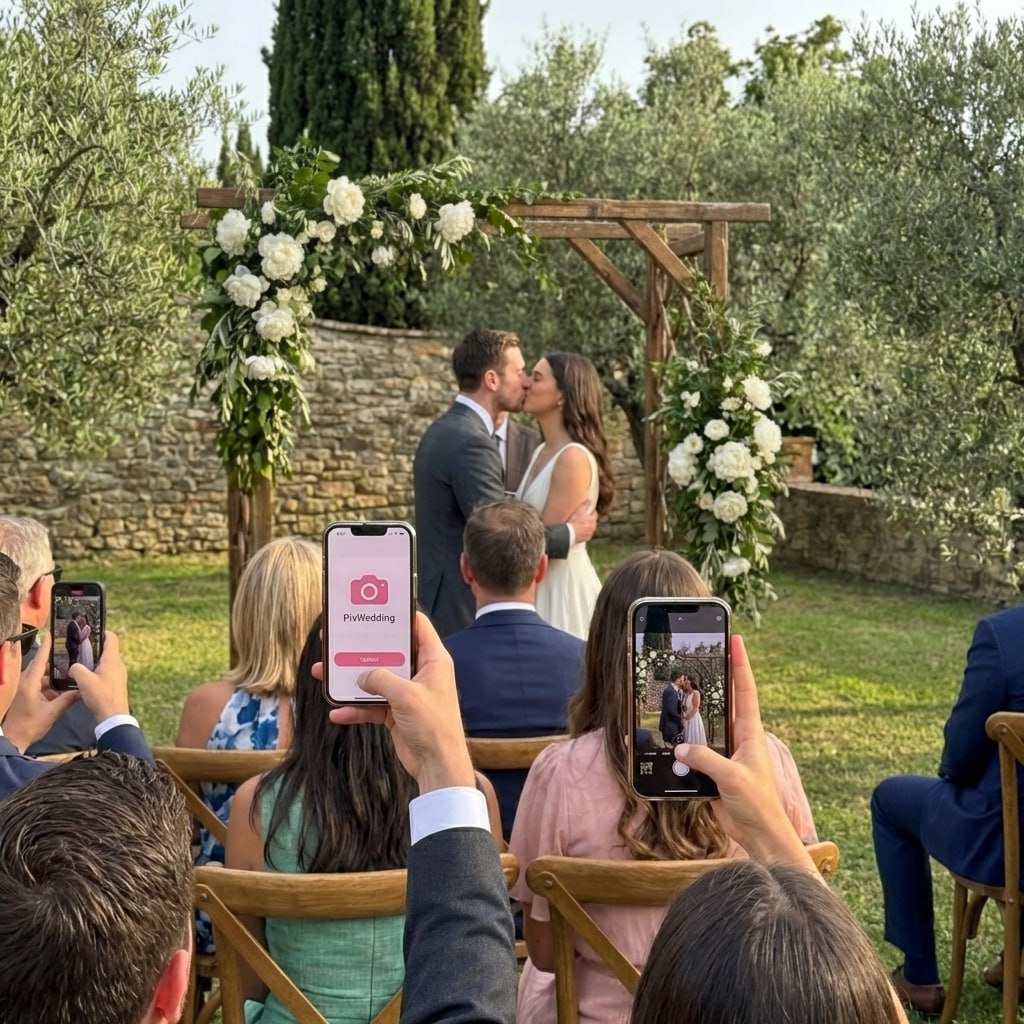
The bar line and the tables around it are where cousins catch up, friends take group selfies and the late-night shots get taken. Your photographer is usually busy with portraits or has left by then. On Pix Wedding, the median wedding collects 149 guest photos from 8 guests (guest photo upload statistics).
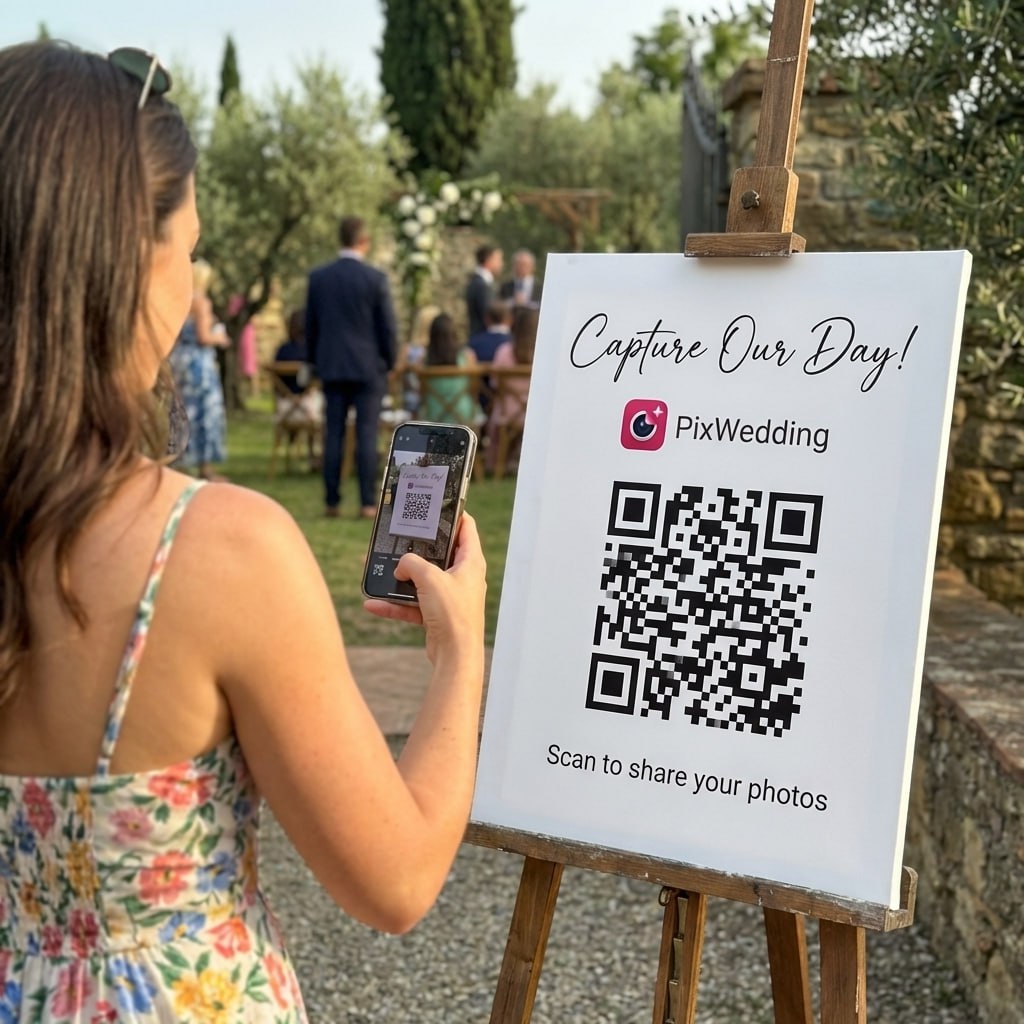
A small QR sign on the bar next to the drinks menu turns those phone photos into one shared album. Guests scan with their camera, no app or account needed, and everything lands in your private album. See the guest upload page and a live album, then design your own sign with the free QR sticker designer.
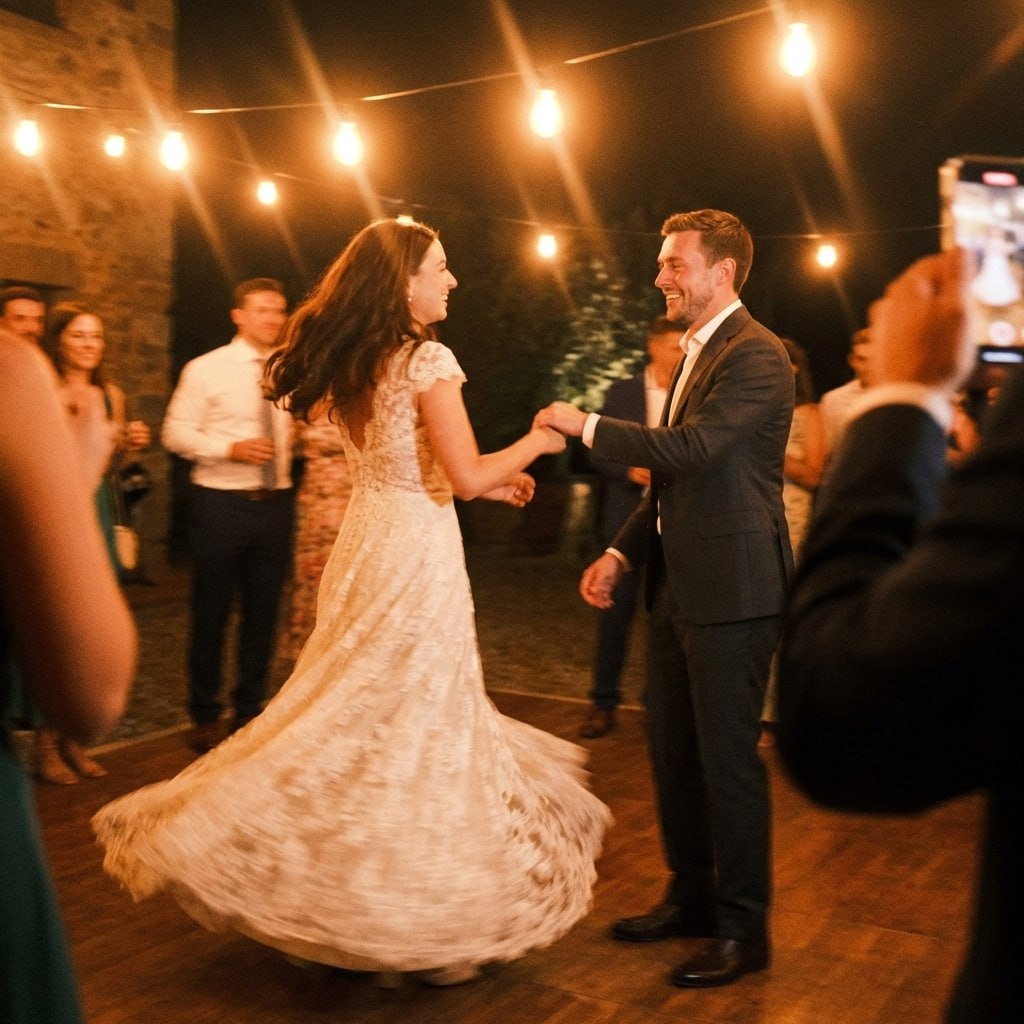
First dance
You guys!!
Put a photo QR next to the drinks menu
Free for 20 guest uploads, no card needed. One payment from $49 unlocks unlimited photos and videos and a full download.
5Is BYOB cheaper for a wedding? Ask the venue these first
Bringing your own alcohol is often the biggest saving on paper, and the one most likely to fall apart on the rules. Venue policy decides everything, and state and local alcohol laws differ. Get the venue's alcohol policy in writing before you buy a single bottle.
Questions for a BYOB wedding venue
The legal drinking age is 21 in every state, the result of the National Minimum Drinking Age Act of 1984 (Wikipedia). Plan who checks IDs at the bar, especially at weddings with lots of college-age cousins.
610 ways to spend less on any wedding bar format
Pour wine with dinner, close the bar
Servers topping up wine at the table replace a bar line during the meal, and you need fewer bartenders while everyone is seated.
Batch the signature drink
A pitcher or dispenser cocktail is fast to serve and needs one bartender instead of two.
Toast with what is in the glass
Skipping a separate sparkling pour for every guest saves a bottle for roughly every five or six guests.
Shorten the hosted hours
Host through cocktail hour and dinner, then switch to beer and wine or a cash bar for the last stretch.
Hold a daytime reception
A lunch or brunch reception has a shorter bar window, and mimosas or spritzes fit the hour.
Cut the shelf, keep the quality
Two good wines and one good beer beat ten mediocre choices, and cost less.
Ask about returns
If you buy your own, ask your store about returning unopened bottles before you buy.
Call last call early
Close the bar 30 minutes before the end of the night. It saves drinks and gets people home safely.
Get an all-in bar quote
Ask for bartender hours, glassware, ice, tax and service charge in one number so packages compare fairly.
Add a coffee or mocktail station
Non-alcoholic options give guests something in hand without a bar tab. They also look good in photos.
7How to run a cash or partial bar that still feels hosted
It is the most argued-about bar choice, and the honest answer depends on your crowd. In many circles guests expect drinks to be hosted, and paying at the bar feels like being billed at a dinner party. In others, a cash bar is normal and nobody blinks. What reads badly is a surprise.
Make a cash bar feel fair
Say it on the wedding website ahead of time
Host soft drinks, water, coffee and the toast
Give two drink tickets per guest, then cash
Keep drink prices reasonable, check with the venue
Make sure the bar takes cards, not only cash
Signs to host instead
Most guests travel far or pay for hotels
Your family's weddings are always hosted
The rest of the budget is generous
You are asking guests to stay late
A beer and wine bar would fit the budget
8Bar sign and menu wording you can copy
A clear sign makes any limited bar look designed on purpose. These are ready to print on a small easel or frame.
The bar menu
Red: house red
White: house white
Beer: local lager and a light option
Sparkling water, soda and lemonade
Cheers to the two of us
Name the real wines and beers once you buy them.
Our signature drinks
[Your name]: a gin spritz with cucumber
[Partner's name]: bourbon, ginger beer and lime
Zero proof: sparkling lemonade with mint
Plus beer, red and white wine
Naming drinks after the couple gives a limited bar a personal feel.
Tonight at the bar
Drinks are on us until 9:30 pm
After that, beer and wine are still on us
Cocktails switch to a cash bar
Guests forgive a limit they were told about.
Our drinks table
Sparkling cider for the toast
Mint lemonade, iced tea and a mocktail of the night
Coffee and hot chocolate bar after dessert
Put a line on the website too: we are celebrating alcohol-free.
9Dry and low-alcohol wedding bar alternatives
Skipping alcohol, or keeping it small, is a real choice for couples who do not drink, venues that ban it, or families where it matters. The trick is putting the same care into what is served that you would put into a bar, so the table feels like a feature.
A mocktail bar with two or three named drinks and a bartender who shakes them
A coffee and espresso bar during dessert, with syrups and whipped cream
A brunch reception with a juice bar, or mimosas as the only alcohol
An iced tea and lemonade station with fruit and herbs for summer
A hot chocolate or cider bar for winter weddings
Sparkling cider for the toast so everyone can raise a glass
Guests remember the food more than anything else at a wedding: 73 percent named it as what they noticed most in The Knot's 2024 guest survey (The Knot). If you are saving on drinks, move part of that money to the menu and nobody will talk about the bar.
Open bar vs full bar, explained by a planner
Wedding planner Emily Summer explains what an open bar includes, how it differs from a full bar, and what to ask before you sign a bar package. Watch it before you compare quotes, since the two terms get mixed up.
What is the most budget-friendly wedding bar option?
A dry reception or a cash bar costs you the least. The cheapest hosted option that still feels generous is beer, wine and one signature cocktail served for the whole reception, because it removes a full shelf of spirits and mixers.
How much can a beer and wine bar save compared with a full open bar?
It depends on your venue's pricing, so ask for both packages in writing. The saving comes from dropping the spirits shelf and the mixers that go with it, which are the priciest part of a full bar. For context, couples in The Knot's 2026 study spent an average of $2,800 on alcohol, and Zola puts full bar services, including staffing, at an average of $5,542.
How much alcohol do I need for 100 guests?
Multiply drinking guests by bar hours by drinks per guest per hour. At 100 drinkers, 5 hours and one drink per hour that is 500 drinks, for example about 50 bottles of wine, 7 cases of beer and 3 large bottles of spirits for a signature cocktail. Adjust for your crowd.
Is BYOB cheaper for a wedding?
Often, but only if the venue allows it and does not charge high corkage. At $15 to $25 per bottle, corkage on 50 bottles of wine can cost more than the wine itself. You may also need licensed bartenders and liability insurance.
How do you make a cash bar feel less stingy?
Tell guests ahead of time on the wedding website, host the soft drinks, water, coffee and the toast yourself, and hand out two drink tickets per guest before switching to cash. Check that the bar takes cards, and ask the venue to keep drink prices reasonable.
How many drinks are in a bottle of wine?
A 750 ml bottle holds about 25 ounces, which is about five 5-ounce glasses, the standard wine pour defined by the NIAAA.
What can I serve instead of alcohol at a wedding?
A mocktail bar with named drinks, a coffee and espresso bar, lemonade and iced tea stations, a hot chocolate or cider bar in winter, and sparkling cider for the toast.
 wedding