
The Ultimate Wedding Tech Checklist for 2026
30 tech items across 6 categories, a tech-by-timeline breakdown, real budget numbers, and the 7 mistakes that cause tech to fail at the worst possible moment. Photo sharing is one item. The rest you may not have considered.
Set Up Guest Photo Sharing FreeThe short answer
The non-negotiables are a working audio system at the ceremony, a photographer who shoots to dual memory cards, a vendor group chat for real-time coordination, and a guest photo-sharing method that works in a browser. Every other item on this checklist is additive. Nail those four and the day is in good shape. Miss one of them and you will know exactly where the regret comes from.
The 30-item wedding tech checklist
Six categories, five items each. Work through them in order: pre-wedding systems first, day-of logistics second, and post-wedding delivery last.
Pre-Wedding Tech
- 1
Wedding website
Pick a host (Zola, Joy, Squarespace) and go live at least 9 months out. Include date, venue address, dress code, and RSVP link.
- 2
Digital RSVP system
Avoid paper RSVP cards. A digital form collects meal choices, plus-one names, and dietary needs in one shot, with zero manual data entry.
- 3
Gift registry platform
Use a single universal registry (Zola, Blueprint) rather than three separate store registries. One link keeps guests from hunting.
- 4
Save-the-date video
A 30-second smartphone video sent via email or text outperforms a paper card in open rate and makes an impression people actually share.
- 5
Schedule and coordination app
Aisle Planner, HoneyBook, or even a shared Notion doc keeps your vendor timeline, contracts, and contacts in one place instead of a chaotic email inbox.
Day-of Communication
- 6
Vendor group chat
Create a dedicated channel (Signal, iMessage, or WhatsApp) with your coordinator, photographer, DJ, caterer, and florist. Everyone sees timeline changes instantly.
- 7
Ceremony livestream
Stream via Zoom, YouTube Live, or a dedicated service for guests who cannot travel. Test the stream URL the day before, not the morning of.
- 8
Wedding hashtag
Create a unique hashtag, print it on every table card, add it to the wedding website, and ask the DJ to announce it twice. You will want to search it for years.
- 9
QR code for guest photo sharing
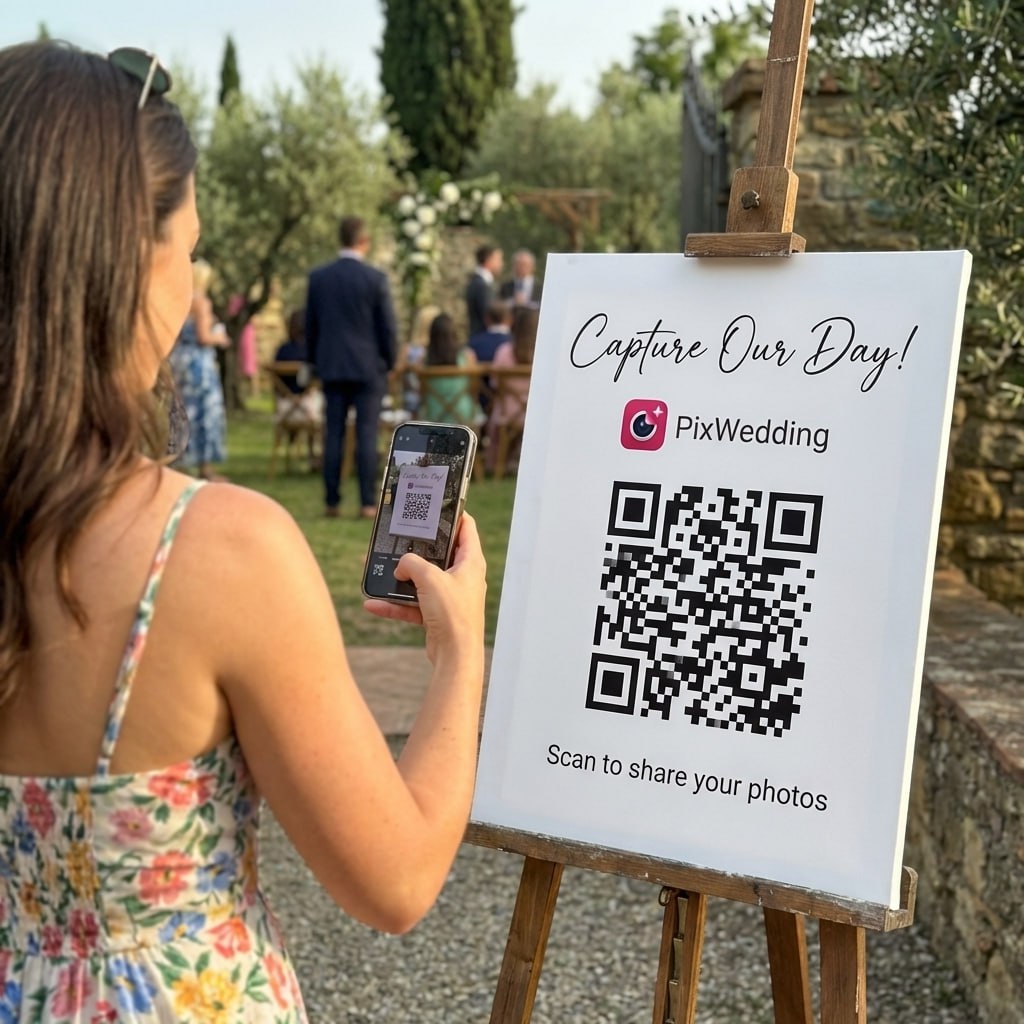
Print QR cards at every table that link to a no-download photo album. This is how you collect 800 guest photos instead of the 40 that trickle into a WhatsApp group.
- 10
Arrival coordination signal
A private group (Signal works best) for immediate family and wedding party only. Used for "car is 5 minutes out" and "ceremony door is open" messages, not general chat.
Photo and Video Tech
- 11
Photographer gear walkthrough
Before booking, ask what camera bodies and backup bodies they carry, whether they shoot dual-card to avoid a single point of failure, and what happens if the primary card fails.
- 12
Drone permit and booking
Most venues and many municipalities require a drone permit. Book the operator and apply for any airspace clearance at least 60 days out.
- 13
Second photographer or videographer
A second shooter at the ceremony covers angles the primary cannot. It costs an extra $300 to $800 and routinely produces the best candid of the day.
- 14
On-site photo backup drive
Ask your photographer to bring a portable SSD and back up cards immediately after the ceremony. A card failure in transit has ended careers and ruined memories.
- 15
Guest-facing photo sharing app
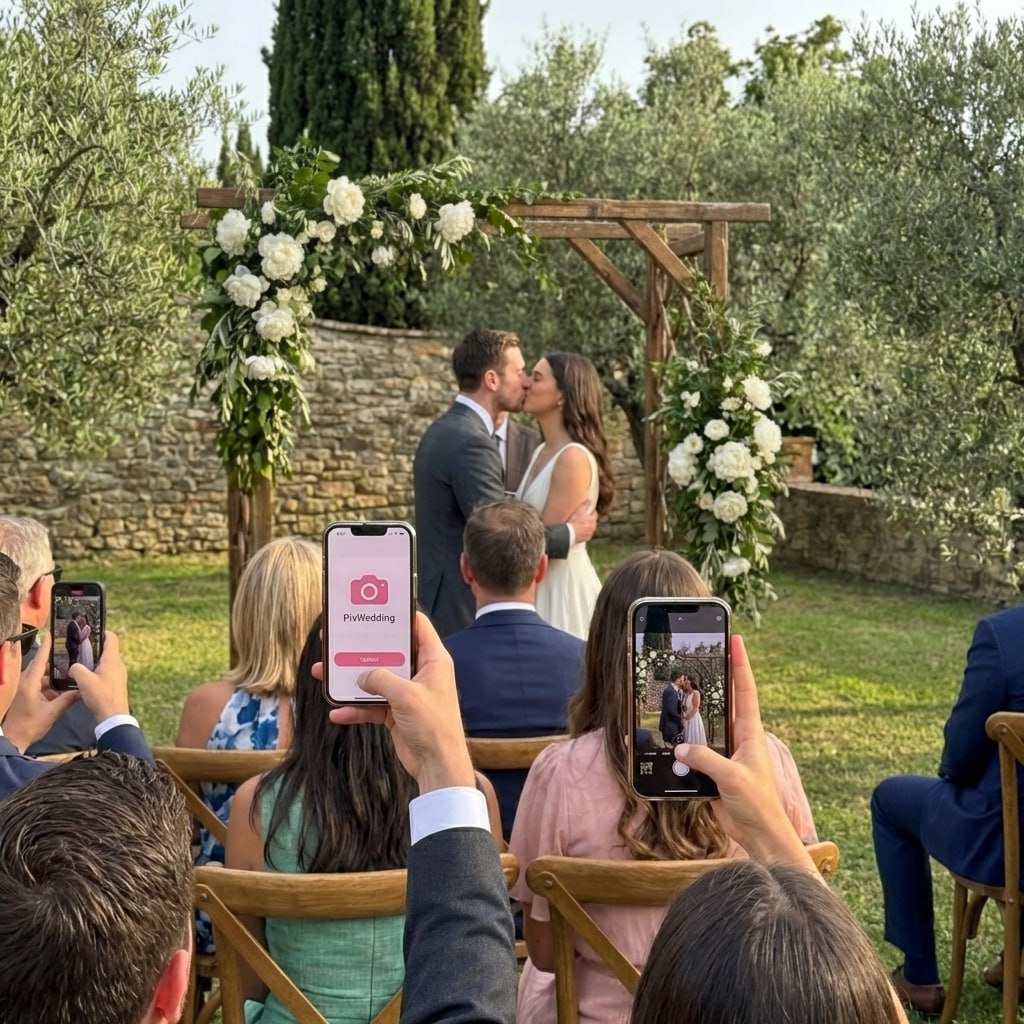
Tools like Pix Wedding let guests upload and view photos in real time via a browser, no app install needed. Set it up in 10 minutes before the rehearsal dinner.
Ceremony Tech
- 16
Ceremony audio system
Walk the ceremony space and confirm speaker placement covers both the front 5 rows and the back 5 rows. Dead zones in the middle of a vow reading are heartbreaking.
- 17
Livestream camera
A second angle camera on a tripod, separate from the videographer, dedicated solely to the livestream. It keeps the stream steady while the videographer moves.
- 18
Ambient lighting rig
Uplighting around the ceremony backdrop runs $400 to $1,200 and dramatically improves every photo taken during the ceremony. Get a quote from your AV company.
- 19
Smoke and fog machine clearance
Some venues trigger fire suppression systems. Get written clearance from the venue before booking any haze, fog, or dry-ice effect, no matter how small.
- 20
Officiant wireless microphone
A lapel mic on the officiant means their voice carries clearly to the back row and is cleanly captured on the audio track. Budget $50 to $150 for a rental if your AV company does not provide one.
Reception Tech
- 21
DJ sound system
Confirm speaker wattage against venue square footage. A 2,000 sq ft hall needs at least 1,500 watts of output to fill the room cleanly during dinner and dancing.
- 22
Dance floor lighting
Moving heads and LED pars turn a blank floor into a party. Confirm the DJ provides this or budget $200 to $600 to add a separate lighting package.
- 23
Projector or LED wall for slideshows
A slideshow of childhood photos during dinner is a crowd favorite. Confirm the projector lumens match the ambient light level of your reception space.
- 24
Dance cam or roaming video station
A GoPro or iPad on a stick for guests to record silly messages is cheaper than a photo booth ($0 to $150) and generates the most-shared clips of the night.
- 25
Photo wall or memory lane display
A curated print display or digital frame loop of engagement and pre-wedding photos near the entrance gives guests something to look at while the wedding party finishes portraits.
Post-Wedding Tech
- 26
Digital wedding album
Artifact Uprising, Chatbooks, and similar services connect directly to your photo gallery and let you design a lay-flat printed book in an afternoon.
- 27
Thank-you note automation
Postable and similar services let you write one batch of thank-you templates and mail physical cards to every guest address you collected in the RSVP form.
- 28
Photographer file delivery
Confirm whether delivery is via download link, USB drive, or gallery platform. Download links from Pixieset and similar expire. Save copies to two separate drives on day one.
- 29
AI photo culling service
Services like AfterShoot use AI to remove duplicate frames, blurry shots, and blinks before your photographer does manual edits, which can meaningfully shorten gallery turnaround time. Ask your photographer whether they already use a culling tool before assuming you need to suggest one.
- 30
Social-share rules document
Decide before the wedding which photos are approved for social media and communicate this to the wedding party. A one-page PDF is enough. Prevents the candid-before-the-bride sees it problem.
Tech by timeline: when to do what
The checklist above tells you what to do. This section tells you when. Spread the work across the planning window and nothing lands in a panicked final week.
- Book your photographer and confirm their backup gear policy
- Reserve your drone operator and begin permit research for your venue
- Purchase or reserve the wedding website domain
- Decide on your livestream approach and identify a streaming platform
- Begin vendor shortlist for AV and lighting
- Launch your wedding website with RSVP, registry link, and date
- Send save-the-date video to full guest list
- Book AV company and confirm ceremony audio coverage plan
- Set up digital RSVP form and test it on three different phones
- Research photo-sharing tools and create a test album
- Confirm livestream URL and send to remote guests
- Finalize wedding hashtag and add it to all printed materials
- Confirm projector or LED wall for reception slideshow
- Book second photographer or videographer if budget allows
- Create and order QR code cards for guest photo sharing
- Set up your guest photo-sharing album and pre-load 10 engagement photos
- Do a sound walkthrough of the ceremony space
- Confirm fog and haze clearance in writing from the venue
- Prepare the slideshow file and test it on the venue projector
- Build the vendor group chat and add all contacts
- Test the livestream from the ceremony position, not just the lobby
- Print QR code table cards and confirm placement with the coordinator
- Do a tech dry-run: audio, lights, and projector all at once
- Confirm on-site photo backup drive is packed in the photographer kit
- Check that the RSVP data is exported and saved offline as a backup
- Turn on the guest photo-sharing album two hours before guests arrive
- Verify the livestream is live 30 minutes before ceremony start
- Confirm DJ has a copy of the ceremony audio file as a backup
- Check that the officiant mic is charged and paired
- Assign one tech-fluent person to troubleshoot and communicate through the vendor chat
Apps and tools comparison by category
Six tool categories, three tiers each. Free options cover most couples. Mid-tier adds polish. Premium is for couples who want zero friction and are willing to pay for it.
| Category | Free Option | Mid-Tier | Premium |
|---|---|---|---|
| RSVP and Planning | Google Forms | Joy ($0 with ads) | Aisle Planner (from around $40/mo) |
| Photo Sharing | Pix Wedding (from $49 one-time) | Pixieset (from around $10/mo) | Pass Gallery (custom pricing) |
| Ceremony Livestream | YouTube Live | StreamYard (from around $45/mo) | Vimeo Livestream (from around $75/mo) |
| Vendor Coordination | WhatsApp or Signal | HoneyBook (from around $30-36/mo) | Aisle Planner Pro (from around $60/mo) |
| Digital Wedding Album | Google Photos Book | Chatbooks ($30-100/book) | Artifact Uprising ($200-400/book) |
| Thank-You Automation | Gmail + mail merge | Postable ($2/card) | Bond (concierge, $4-6/card) |
Prices are approximate as of mid-2026. Check provider sites for current plans.
Wedding tech by budget tier
Most of the essential tech is free or close to it. The big budget items are audio, lighting, and physical print products. Here is what each tier realistically buys you.
Budget ($0-200)
Zero-waste essentials
- Wedding website on Zola or Joy (free)
- Google Forms for RSVP ($0)
- YouTube Live for ceremony stream ($0)
- Pix Wedding for guest photo sharing (free to start, from $49 one-time)
- WhatsApp or Signal for vendor coordination ($0)
- Dance cam: GoPro or old iPad from home ($0)
- QR code generator for photo album cards (free tier, ~$15 print run)
- Slideshow built in Canva and cast via HDMI ($0 software, $20-50 HDMI cable)
Mid-Range ($200-800)
Where most couples land
- Squarespace or Showit wedding website ($16-25/mo)
- Zola premium RSVP and registry ($0-$50)
- Dedicated streaming camera on tripod ($150-300 rental)
- Photo album platform subscription ($8-20/mo)
- Uplighting package from AV company ($300-600)
- Officiant lapel mic rental ($50-150)
- Printed QR table cards from Minted or Zola ($80-200 for 100)
- AI photo culling service one-time purchase ($50-200)
Premium ($800-3000+)
Full-production experience
- Custom wedding website with video background ($500-1500)
- Drone videography with FAA waiver and edit ($800-1500)
- Second photographer for full day ($600-1200)
- LED wall rental for reception slideshows ($1500-4000)
- Full moving-head lighting rig from AV company ($600-1800)
- Professional photo booth with attendant ($1000-2000)
- Concierge thank-you card service ($400-800 for 150 guests)
- Lay-flat premium printed album ($300-600)

Ceremony
QR live
Tech makes the day. Or breaks it.
The photo slot in your wedding tech stack is the one with the biggest regret if you skip it. Pix Wedding solves it in one QR.
From Mom
Scan to join the album
No app, no account
UPLOADING
Saving your moment
THE ALBUM
Emma & Jack
June 21, 2026
647 photos · 95 guests






SCAN TO TRY
pix.wedding/
your-wedding
Must-have vs nice-to-have
Every item has a value. Not every item has the same value. When budget is tight, this is the triage framework.
Must-have
Ceremony audio system
If guests cannot hear the vows, nothing else matters.
Photographer dual-card backup
Single points of failure in memory cards have lost entire wedding galleries.
Guest photo sharing QR cards
Without a prompt, guests keep photos to themselves. The QR is the prompt.
Vendor group chat
When the timeline shifts by 20 minutes, every vendor needs to know at once.
Livestream for remote guests
Grandparents in another country deserve to watch in real time.
Officiant wireless mic
Ceremony audio feeds the videographer track, the livestream, and the back row simultaneously.
Day-after photo backup
Three copies in two locations before the photographer leaves with the cards.
Wedding website with RSVP
One URL to rule all logistics and cut paper and phone-tag down to near zero.
Nice-to-have
Drone footage
Stunning aerial shots but weather-dependent and permit-heavy. Worth it for outdoor venues with a view.
Photo booth
Fun, but guests with a QR-linked album are already taking booth-quality photos on their own cameras.
LED wall
Budget $1,500+ minimum. Incredible impact but wasted if the venue already has atmospheric lighting.
Dance cam station
A GoPro on a selfie stick costs $0 and does 80 percent of the same job.
AI photo culling service
Speeds up delivery but your photographer may already do this internally.
Custom wedding app
Adds friction unless guests are tech-native. A good wedding website covers the same ground.
Moving-head lights
Worth it for evening receptions at venues with high ceilings. Overkill for an afternoon garden ceremony.
Save-the-date video
Nice touch but a well-designed paper card still performs well for guests over 50.
7 tech mistakes that ruin wedding days
Every one of these has been reported by real couples. All of them are preventable.
1. Testing tech on the day of, not the day before
Every single tech failure at weddings could have been caught in a 45-minute dry run the afternoon before. Walk through audio, lighting, slideshow, and livestream with the actual venue setup, not a home test.
2. Relying on venue Wi-Fi for the livestream
Venue Wi-Fi is shared across vendors, staff, and potentially dozens of guests simultaneously. Use a dedicated 5G hotspot for the livestream encoder and another for the photo-sharing upload path.
3. Not printing a QR code backup
If your QR table cards are lost, damaged, or never delivered, you need a printed backup sign at the entrance and a short link on the welcome message. The URL alone is the fallback.
4. Booking a photographer without asking about card backup
Shooting to a single SD card is a known risk in the industry. Any photographer who cannot answer the dual-card question clearly either does not shoot dual-slot or has not thought about it, neither is acceptable for a wedding.
5. Using the same channel for vendor logistics and guest updates
Mix the two and your vendors get flooded with guest questions and your guests get exposed to timeline chaos. Keep a tight vendor-only channel and a separate guest information page.
6. Skipping the fog and haze venue check
Some venues have fire suppression systems that activate from particle density, not just heat. A surprise CO2 blast mid-ceremony or a false alarm evacuation is avoidable with one email to the venue manager.
7. Forgetting that the livestream needs a host
A camera pointed at the altar with no one monitoring the stream produces muted audio, a frozen frame, and a broken link half the time. Assign one specific person to watch the stream on a phone throughout the ceremony.
The last-7-days tech checklist
Everything here is a final-week-only action. If any of these are not done by the morning of, delegate immediately. This is not the time to learn new software.
- 1
Test the ceremony sound from the back row
Stand at the furthest seat and speak into the mic. Adjust EQ until the sound is clear, not boomy, and not harsh.
- 2
Send the livestream test link to three remote guests
Have them confirm they can open it on their device and see a test image. Catch platform and browser issues before the day.
- 3
Verify the QR code resolves on three different phones
Test iPhone Safari, Android Chrome, and one older device. Fix encoding errors now, not at the venue.
- 4
Export the RSVP data to a spreadsheet offline
Your RSVP platform could go down. A local copy of guest names and meal choices keeps the caterer covered no matter what.
- 5
Confirm the slideshow file is on the presentation laptop and a USB backup
Two copies, two devices, neither of them cloud-only. Cloud links require Wi-Fi; USB does not.
- 6
Brief the vendor group chat with the full timeline
Drop the minute-by-minute schedule into the group chat and ask each vendor to confirm receipt. Radio silence from a vendor is a flag to chase.
- 7
Set up the guest photo album and pre-load 10 to 15 photos
A blank album looks broken. An album with engagement photos or rehearsal dinner shots tells guests they are in the right place.
- 8
Charge every battery on every piece of tech
Drone, officiant mic, streaming camera, dance cam, DJ controller. Make a physical list and check every item off.
- 9
Confirm the second photographer has the shot list
A written shot list in their hands the night before means no misunderstandings in the chaos of the morning prep.
- 10
Give your coordinator the tech contact list
Name, phone, and primary role for the AV company, photographer, and streaming operator. If something goes wrong, your coordinator needs to reach them without hunting through email.
Keep planning
More tools and guides to build your wedding tech stack from scratch.
Why wedding tech matters more in 2026 than it did five years ago
The average couple today juggles a long vendor list, a guest count that often spans multiple time zones once remote family is counted, and an expectation of professional-quality photo and video output from a single-day event. None of that is possible without a deliberate tech stack. What was optional a decade ago is now table stakes: a wedding website, a digital RSVP, a guest photo-sharing system, and a livestream for remote family.
The shift is also driven by guest expectations. Guests who scan QR codes for restaurant menus without a second thought expect the same frictionless experience at a wedding. A paper sign-in sheet or a "text your photos to this number" approach signals to guests that you did not think about their experience, and participation tends to drop off as a result.
The good news is that nearly every essential piece of wedding tech is free or close to it. The photo-sharing platform, the RSVP system, the livestream, and the vendor coordination channel can all be set up for under $30. The categories where spending actually moves the needle are audio, lighting, and photography backup redundancy, none of which are apps. AI-assisted planning tools are also becoming part of the mix: according to The Knot's 2026 Real Weddings Study, AI adoption among engaged couples nearly doubled year over year, mostly for early-stage inspiration and drafting communications rather than final vendor decisions.
- •Couples who move RSVPs online generally report fewer follow-up calls chasing guest responses compared to paper reply cards
- •Weddings with printed QR photo-sharing cards on every table tend to collect noticeably more guest photos than those relying on a hashtag alone, since the QR removes the extra step of typing a tag
- •Ceremony audio problems (a mic cutting out, dead zones in the seating) are one of the most commonly reported day-of regrets couples mention in wedding planning communities, alongside weather and vendor no-shows
- •A second photographer typically adds $300 to $800 to the day and often catches candid moments the primary photographer, busy with formal shots, would otherwise miss
How to use this checklist without getting overwhelmed
Thirty items looks like a lot. The practical approach is to split the list by timeline: confirm the big-ticket items (photographer, AV, livestream) twelve months out, set up the digital systems (website, RSVP, photo sharing) six months out, and leave the operational details (vendor chat, QR cards, slideshow file) for the final two weeks.
The checklist is also a triage tool. If your budget is tight, the must-have column tells you where to spend and the nice-to-have column tells you where to skip. A wedding with no drone and no LED wall but excellent audio and reliable photo sharing will look and feel better than one where the money went in the wrong direction.
Finally, treat the week-of section as a literal checklist you print and hand to your coordinator. Tech that has been tested and delegated is tech that does not fail. The single biggest predictor of a smooth wedding day is whether someone other than the couple owns each item on the list.
Sources: The Knot's 2026 Real Weddings Study (AI adoption and planning trend data), and the FAA's commercial drone operator guidance for the drone permit item above. Software pricing referenced in the tools table is approximate as of mid-2026 and pulled from each provider's public pricing page; confirm current rates before booking.
Explore more free wedding tools
Everything you need to make your wedding day stress-free and unforgettable.
Seating Chart Planner
Plan your reception seating visually.
Guest List Manager
Track RSVPs and dietary needs.
Budget Allocator
Turn your total into a category-by-category plan.
Timeline Builder
Plan your entire wedding day.
Venues by State
Explore venues across all 50 states.
Countdown Timer
Count down the days to your big day.
Wedding Checklist
Month-by-month planning checklist.
Bachelorette Party Games
15+ games with rules, supplies, and timing.
Wedding tech questions, answered
Straight answers to the questions people ask most about this topic.
The non-negotiables are a working ceremony audio system, a photographer who shoots to dual memory cards, a vendor group chat for real-time coordination, and a guest photo-sharing method that does not require an app download. Everything else is additive. A wedding with solid audio and reliable photo capture will be remembered fondly. A wedding with fancy LED walls but a broken mic will not.
For a 100-guest wedding, a well-covered tech stack runs $400 to $2,000 depending on what is included in your photographer and AV contracts. The biggest variable is AV: ceremony audio plus reception lighting ranges from $600 (package from the DJ) to $4,000 (dedicated AV company with moving heads and LED panels). Photo-sharing, livestream, and coordination tools cost next to nothing when you use the free tiers.
A dedicated website is strongly preferable. A social media page locks out guests without an account, cannot collect RSVP data cleanly, and may show your personal profile and tagged photos to people you did not intend to invite. A free Zola or Joy site takes under two hours to set up and handles RSVPs, registry links, travel info, and event details in one clean URL.
Print a QR code on a small card at every table that links to a no-download photo album. Services like Pix Wedding let guests open the album in their phone browser, upload from their camera roll, and see what other guests have uploaded, all without installing anything. The QR prompt tends to drive noticeably higher upload rates than asking guests to remember a hashtag or text photos to a number, since scanning removes the extra step guests would otherwise skip.
Yes, if you have guests who cannot travel. YouTube Live is free and reliable for most ceremonies. The critical mistake is relying on venue Wi-Fi for the encoding upload. Use a dedicated 5G mobile hotspot for the livestream and designate one person to monitor the stream on a second device throughout the ceremony. Send the URL to remote guests at least 48 hours in advance so they can test it.
Pre-delegate. Every tech item on your checklist should have a named owner who is not you or your partner. The coordinator watches the vendor chat. A trusted friend monitors the livestream. The photographer handles card backups. The DJ manages audio. Your job on the day is to get married. A one-page tech responsibility sheet shared the week before is all it takes.