
Send Pictures to Newlyweds: How to Share Your Wedding Photos With the Couple
You took photos at a wedding and want to make sure the couple actually gets them. Here is the fastest method, what to write, and when to send.
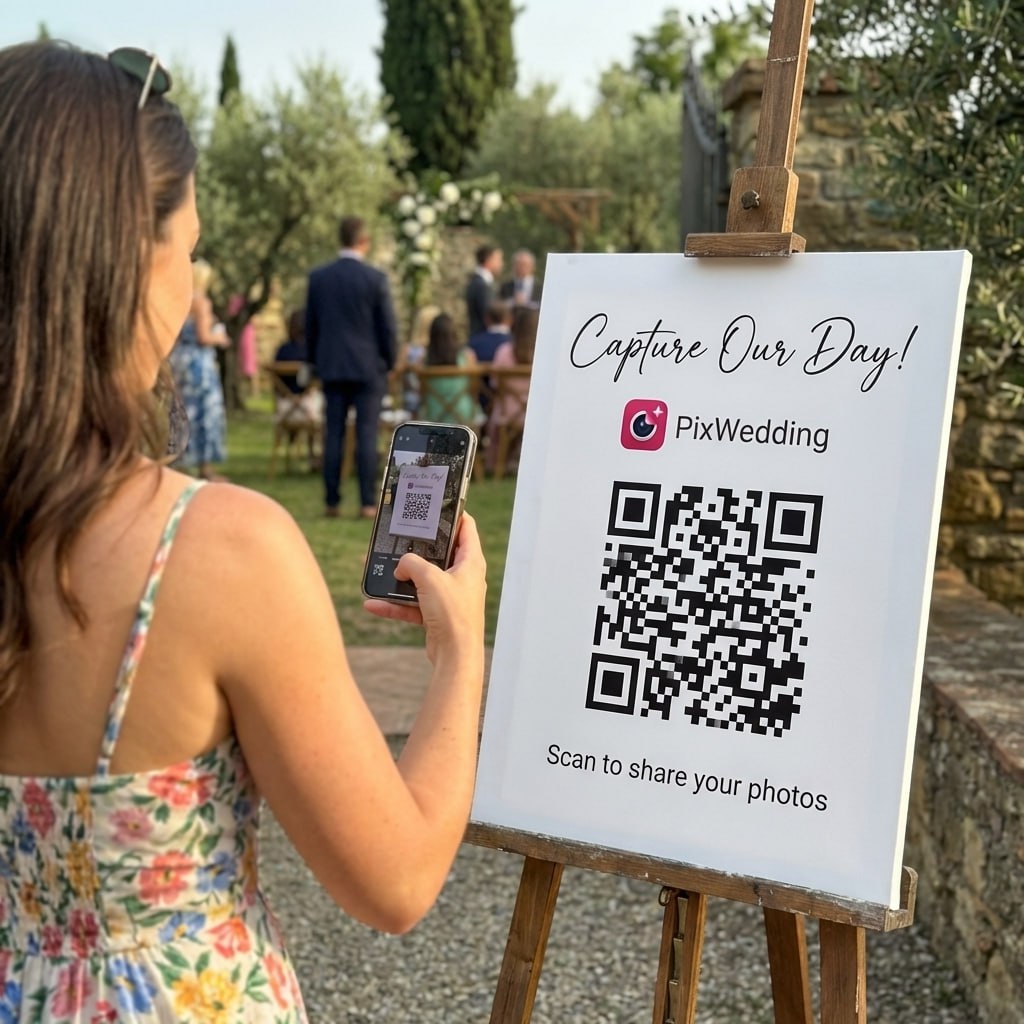
Fastest method: If the couple set up a QR photo album (like Pix Wedding), scan the QR and upload directly. No message needed, they see your photos immediately in one organized place. If no QR was provided, create a Google Photos shared album, paste all your wedding photos into it, and send the link to the couple with a short message.
Best timing: within two weeks of the wedding. What to say: two to three sentences, warm and short. See message templates below.
What to write when you send the photos
Six ready-to-copy messages for different relationships and contexts. Adapt any of them freely.
For a close friend or family member
Hi [names], here are my photos from your wedding day. I hope there
are a few good ones in there. The ceremony was beautiful and it was
such a wonderful day. Wishing you both so much happiness. Love, [your name]
For a colleague or more formal relationship
Congratulations again on your wedding. I took some photos during
the reception and thought you might like them. They are all in the
folder linked here. Best wishes to you both.
When you got a particularly great shot
Here are all my photos from the wedding. One note: there is a photo
near the end of the album (you will know it when you see it) of the
two of you right after the ceremony. I think it is a special one.
All the best.
When you are a bridesmaid or groomsman
Uploading everything I have now. There are probably 80 photos in
here between the getting-ready shots and the reception. A few are
blurry (my fault) but most should be fine. Being part of your day
meant the world to me.
When sending after the honeymoon (couple is back home)
Welcome back! I have been meaning to send these since the wedding.
Here are my photos, better late than never. Hope the honeymoon was
everything you hoped for.
When uploading through the couple's QR album (no message needed, but if you want to add one)
Just uploaded all my photos through your QR album. There are some
from cocktail hour and the first dance. Congrats again, it was a
perfect day.
When to send: immediately vs after the honeymoon
The timing depends on your relationship to the couple and how many photos you have. Here is a decision framework that actually holds up.
If you have a QR code or album link: upload during the reception
This is the ideal path. The couple sees your photos in real time, sorted with everyone else's, without any follow-up action required from either of you. The photos land while the emotional context is still fresh. If the venue screen is running a live slideshow, your photos might appear on it within 30 seconds. Upload right from your phone as you take them, or do one batch upload at the end of the evening.
If you are close to the couple: within 48 hours
The first two days after a wedding are a blur for the couple. They are reading all the messages, visiting with family still in town, and reliving the day. If you were in the wedding party or are a close friend or family member, sending photos within 48 hours adds to that joy rather than interrupting a quiet period. A quick raw upload beats waiting two weeks to send perfectly curated photos.
If the couple is on their honeymoon: wait until they land
Sending a batch of 120 photos while the couple is trying to disconnect in Santorini is well-intentioned but creates a task they have to deal with later. If you know they are away, schedule your message for the day after their expected return. Most couples announce their return on social media or in a group chat, which gives you the signal to send.
If it has been more than a month: still send them
This is the most common hesitation. "Is it too late? Will they still want them?" The answer is almost always yes, they want the photos. Couples put together anniversary slideshows, wedding albums, and framed prints for years after the wedding. Late photos land at a quieter moment when the couple can actually sit and enjoy looking through them. Send with a note like "better late than never" and do not over-apologize for the timing.
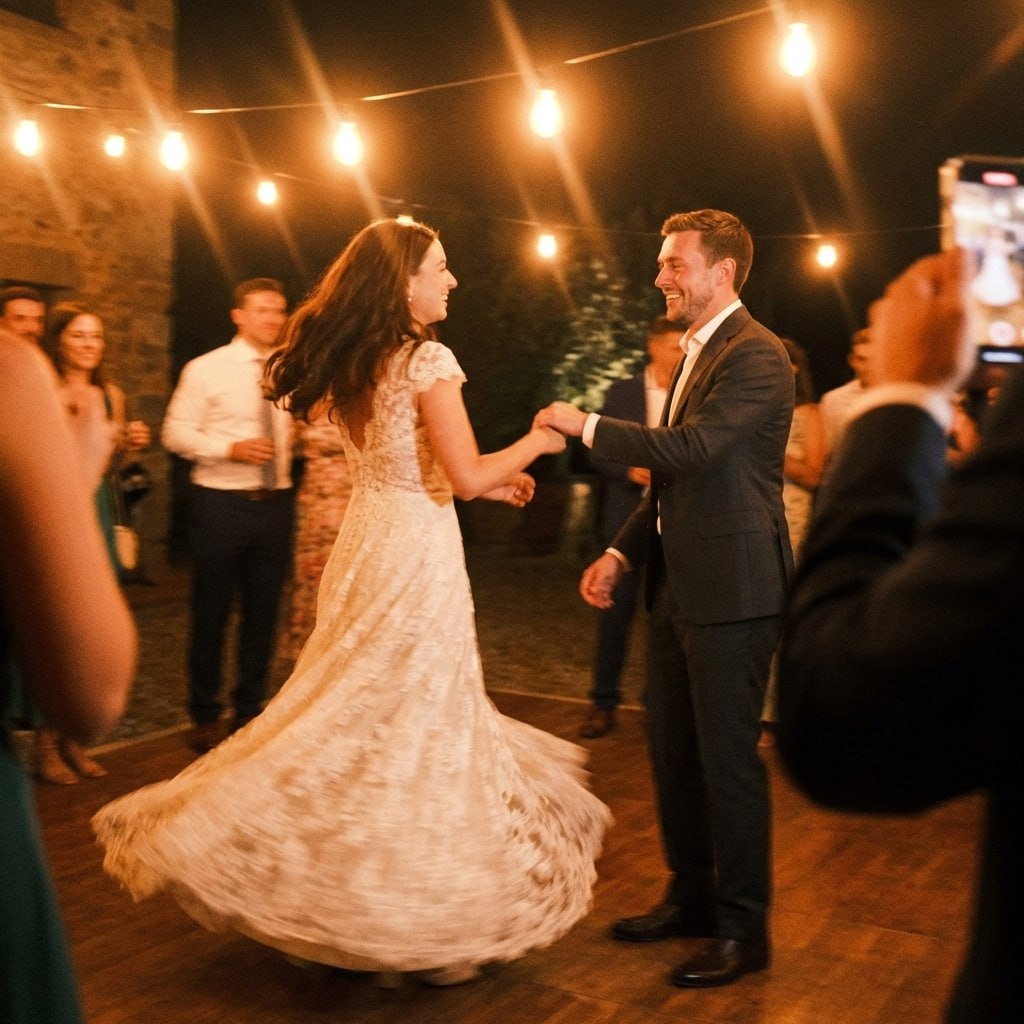
First dance
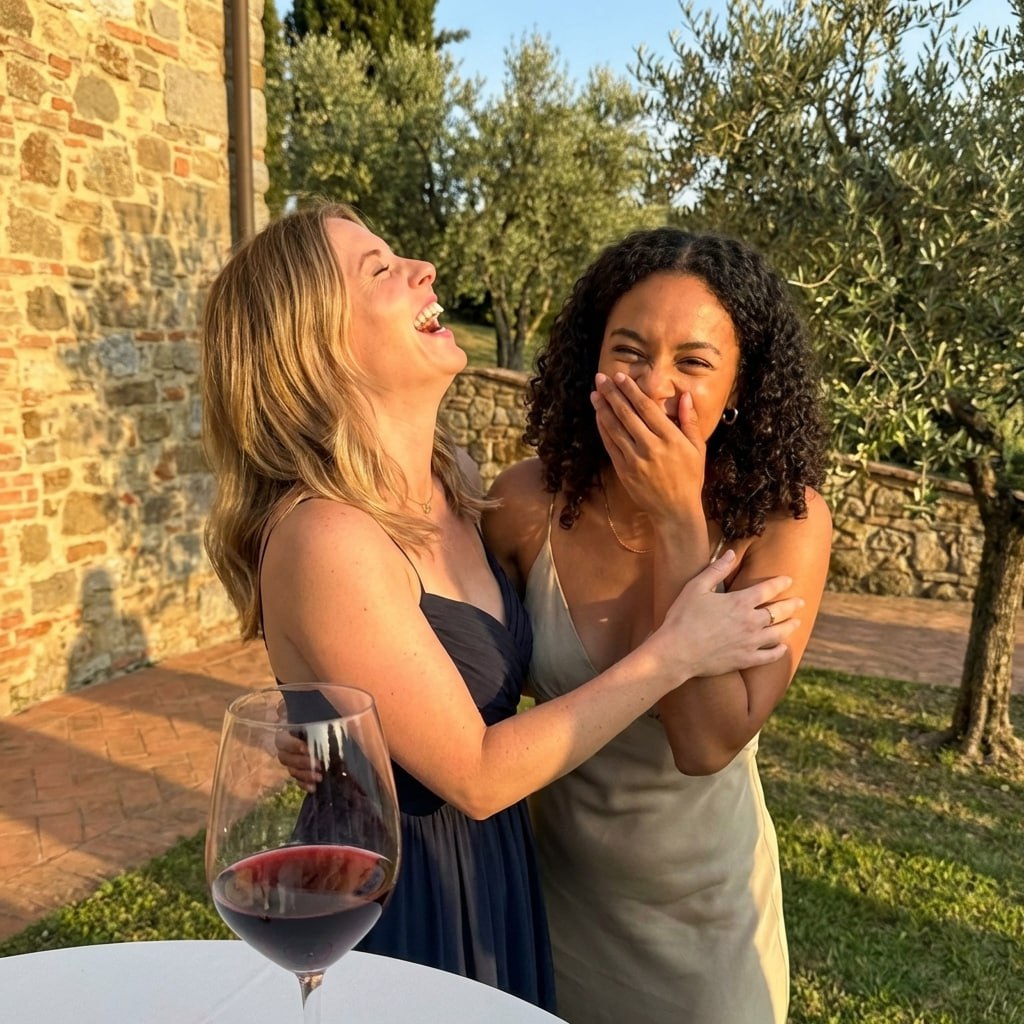
Guest capture
Make it easy for your guests to send you their photos
Pix Wedding gives couples one QR code. Guests scan it at the reception, upload their photos without any signup, and every shot lands in your album automatically, sorted by moment.
Aunt Maria
Scan to join the album
No app, no account
UPLOADING
Saving your moment
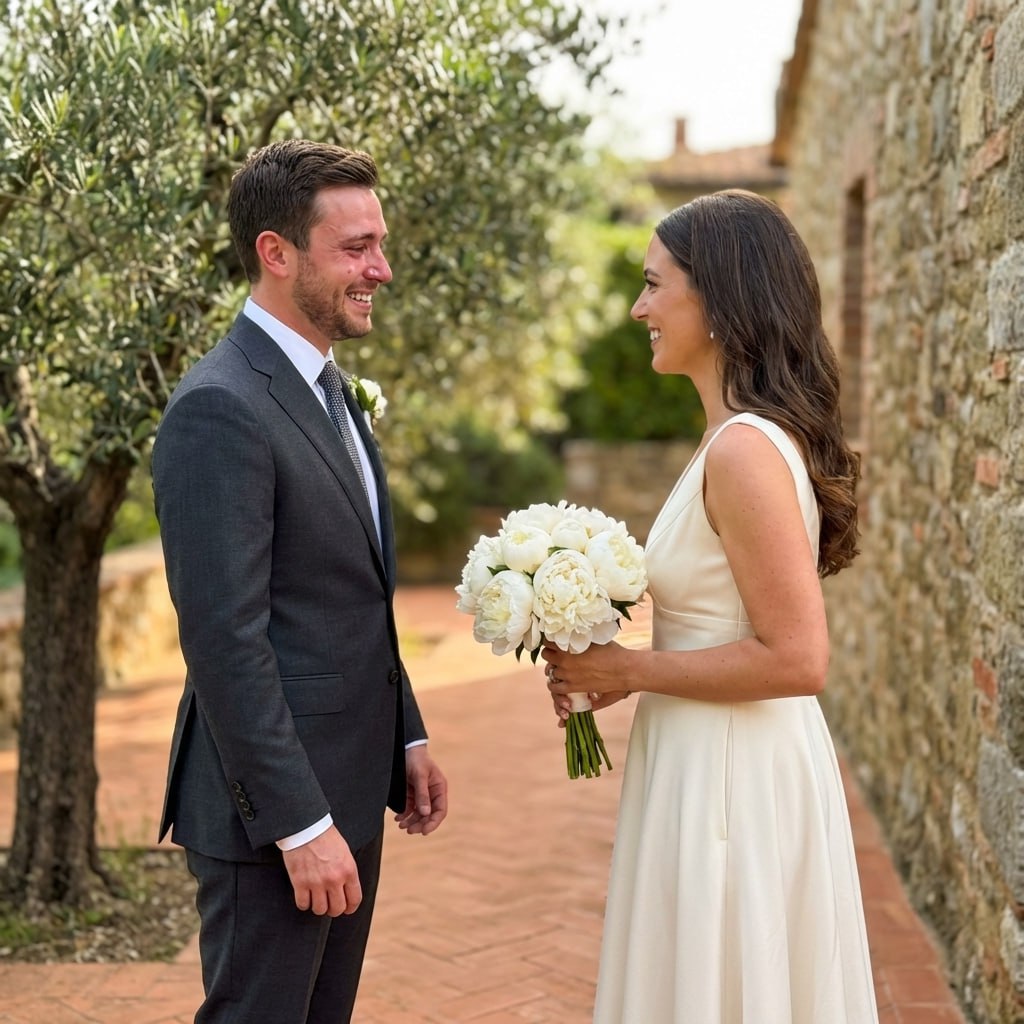
THE ALBUM
Emma & Jack
June 21, 2026
647 photos · 95 guests
SCAN TO TRY
pix.wedding/
your-wedding
Cultural expectations around sharing wedding photos as a guest
What is expected of you as a guest varies significantly depending on cultural background and family norms.
Physical prints (common in South Asian, East Asian, and older European families)
In many South Asian wedding traditions, particularly Indian and Pakistani families, printing and gifting physical photos is considered more personal and meaningful than a digital share. Sending a few 4x6 prints in a small card, or a photo book of wedding highlights, carries real sentimental weight. The same is true in many Japanese and Korean family contexts where physical items hold more permanence than digital files. If you are a close family member in these communities, a printed photo alongside a digital share is the gold standard.
Instant digital sharing (common in North American and Northern European contexts)
In most North American and Northern European wedding contexts, a Google Photos link or a QR album upload within a few days is the norm and the expectation. Physical prints are a bonus, not a baseline. The couple's photographer is handling the formal record; guest photos are a supplement. A shared album link sent via text or email within the week is universally appreciated and requires nothing from the couple beyond opening the link.
Group sharing via WhatsApp or family chat (common across Latin American, Middle Eastern, and African diaspora weddings)
Many Latin American, Middle Eastern, and African family wedding cultures have an existing group chat where photos fly immediately after and during the wedding. In these contexts, adding to the group chat is the expected move, not a separate message to the couple. The couple monitors the chat or has a family member who collects the best photos from it. If you are attending a wedding with this dynamic, post in the group and then also send a personal message to the couple with a folder link if you have a lot of photos.
Camera-free ceremonies (some mindfulness-focused or intimate weddings)
A small but growing number of couples request an unplugged ceremony: no phones or cameras during the vows. This is nearly always limited to the ceremony itself. During the reception, photography is generally welcome. If you attended an unplugged ceremony, you still likely have reception photos to share. Send those freely, and if you are unsure whether the couple wants any guest photos at all, a quick check-in message ("Would you like me to send over my reception photos?") takes 10 seconds and removes all ambiguity.
What would the couple actually want from me?
Before you send, these questions help you calibrate what the couple will genuinely value vs what might land as noise.
Am I close enough that candid personal photos will feel welcome, not intrusive?
If you are a close friend, family member, or in the wedding party, the answer is almost always yes. If you are a more distant acquaintance, stick to general reception shots rather than close-up portraits of the couple or their families.
Would the couple want all 200 photos or just the 15 best ones?
If the couple set up a QR album system: send all of them, the system handles organization. If you are sending a personal folder link: send all after a quick cull for misfires. Most couples prefer volume over curation because they can always find gems in a large batch but cannot recover shots that were never sent.
Did I capture something the professional photographer likely missed?
Think about the moments you were closest to. The getting-ready chaos at the hotel, a quiet conversation between the couple during dinner, an elderly relative watching the first dance. These are the gaps in professional coverage and exactly why guest photos are irreplaceable.
Is there a photo here that the couple would hang on their wall?
Not every wedding photo needs to be frame-worthy, but if you notice one that might be, flag it specifically in your message. Even a one-line "there is a shot near the middle of this album that I think you will want to print" makes it more likely the couple actually finds it instead of scrolling past it.
Is my method of sending creating more work for the couple?
The couple will be managing messages from dozens of guests. Sending 80 individual iMessage attachments, a Facebook album link that requires login, or a WeTransfer that expires in seven days all create tasks. A shared album link (Google Photos, Dropbox, or the couple's own QR album) that stays accessible indefinitely is the most considerate option.
Three vignettes: how guests sent photos and what happened
Priya and Marcus, rooftop venue in Austin, TX, Saturday in mid-September 2025
Priya and Marcus got married at a rooftop event space in downtown Austin on a Saturday in mid-September 2025, 118 guests. The couple had set up Pix Wedding QR codes on each table card. During cocktail hour, a guest named Elena, a college friend of Marcus who had flown in from Portland, noticed the couple standing below a string-light canopy talking to Priya's grandparents. She was on the mezzanine level, one floor above, and took a shot straight down at the four of them from about 15 feet up. She uploaded it through the QR card on the table next to her, added the caption "from up here," and went back to her drink. She did not think much of it.
Two days after the wedding, Priya messaged Elena directly. The overhead shot had become their favorite photo from the entire day. The hired photographer, who had been shooting the cocktail display on the far side of the roof at 5:52 PM when Elena took her shot, had nothing from that angle or that moment. Priya's grandparents are no longer local and had flown in from Chennai for the wedding. The photo of the four of them together, shot from above and completely unstaged, is now printed as a 12x16 on the couple's living room wall.
Elena's message when she uploaded was a single line through the QR caption field: "from up here." She did not send a separate text. The QR system meant no follow-up coordination was needed on either side.
What almost went wrong
Elena had 84 photos on her phone from the evening and almost sent them all via iMessage to the couple's group chat the next morning. She estimated it would have taken her about 40 minutes to batch-send them, and the couple would have received 84 separate notifications. Instead she uploaded the 31 best through the QR in one batch at the end of the night. Total time: under four minutes.
Lesson
The shot that matters most is often the one you took without thinking. Upload everything through the system the couple set up rather than pre-filtering to only the "good" ones. You cannot predict what will become their favorite.
Lina and Diego, converted barn in Hudson, NY, last weekend of June 2025
Lina and Diego married at a converted brick-and-timber barn about two miles outside Hudson, NY, on a Saturday at the end of June 2025. Guest count was 74. There was no QR photo system at the wedding. The couple had talked about setting one up and then ran out of time in the final week. After the wedding they were in Portugal for two weeks for their honeymoon.
Lina's aunt Renata, who had flown in from Sao Paulo, took 143 photos during the day on a Samsung Galaxy S24 Ultra. She had several strong shots: Lina laughing with her mother during the getting-ready chaos at the inn down the road, Diego's face when Lina appeared at the top of the barn's exterior stairs, and a wide shot of all 74 guests gathered outside for the sparkler exit at 10:20 PM. Renata kept meaning to send them. Weeks passed. She felt increasingly awkward about the delay.
At the five-month mark, a nephew's birthday reminded her of the wedding photos still sitting on her phone. She created a Google Photos shared album, uploaded all 143 photos in one batch (took about 12 minutes on her home WiFi), and sent Lina a WhatsApp message: "Lina, I am so sorry these are late. Here are all my photos from your wedding. I hope you can forgive the delay. There might be a few worth keeping." She included the Google Photos link.
Lina replied within 20 minutes. She and Diego had been building a printed photo book through Artifact Uprising for their first anniversary and had just placed a preliminary order. They paused the order and added six of Renata's photos, including the getting-ready shot with Lina's mother and the sparkler exit. The Artifact Uprising book cost them $189 and included 52 pages. Renata's six photos each appear at full bleed.
Renata also ordered 8 prints from Mpix at $0.39 each (4x6, matte finish), put them in a small card envelope with a handwritten note, and mailed them separately. Total cost for the physical send: $3.12 for prints plus $1.50 postage. The couple texted her a photo of the prints laid out on their coffee table.
What almost went wrong
Renata initially tried to send photos via WhatsApp directly, attaching them one by one. WhatsApp compresses images aggressively, reducing a 12 MP Samsung photo to roughly 2-3 MP. The couple would not have been able to print those at any usable size. She switched to the Google Photos shared album link, which preserved full resolution. Always use a link, not a direct attachment in a messaging app, if the couple might want to print.
Lesson
Five months late is not too late. Apologize briefly, do not over-explain, and send. Include a Google Photos or Dropbox link that keeps full resolution intact. If you feel especially awkward, a few physical prints in an envelope with a short note cuts through digital noise in a way no text message does.
Jess and Tomas, vineyard in Healdsburg, CA, Friday afternoon in October 2024
Jess and Tomas married at a working vineyard in Healdsburg, CA, on a Friday afternoon in October 2024, 53 guests. The ceremony was unplugged (the officiant made the announcement clearly twice), but the vineyard reception that followed was open season for cameras. The couple had a Pix Wedding QR code on the welcome sign at the entrance to the reception lawn but had not placed any QR cards on the tables, so a fair number of guests missed it.
A guest named Olivia, a former coworker of Tomas, had shot 67 photos on a Fujifilm X-T5 mirrorless camera and 22 more on her iPhone 15 Pro. The mirrorless shots were sharp and well-exposed; a few were genuinely better framing than anything the hired photographer had published in his sneak-peek gallery. She had both JPEG and RAW versions on a 64 GB card.
Olivia was unsure what format to send: RAW files are each 47 MB and most people cannot open them without software; full-resolution JPEGs are 8-12 MB each; compressed JPEGs are smaller but lose print quality. She also was not sure whether to send the iPhone photos separately or combine everything. She spent three days overthinking it and almost sent nothing.
What she eventually did, four days after the wedding: exported the 67 mirrorless shots as full-resolution JPEGs from Lightroom (no edits applied, just export at 100 percent quality), added the 22 iPhone photos, and put all 89 into a Dropbox shared folder. She sent Jess a text: "Hey, I brought my camera Friday and got some decent shots. Here is a Dropbox link with everything, full resolution, feel free to use them however you want. The Fujifilm ones are in the labeled subfolder." Message sent at 9:14 AM on Tuesday, three days post-wedding.
Jess replied within two hours. Three of Olivia's photos were used in the couple's wedding announcement on social media. One Fujifilm shot, a wide-angle of the vineyard rows with the full guest table in the foreground at golden hour around 5:30 PM, became the photo Tomas used for his LinkedIn profile change two weeks later. Jess told Olivia that their hired photographer had no golden-hour wide shots because he had stepped inside to set up for the dinner lighting at exactly that time.
What almost went wrong
Olivia initially exported the RAW files and tried to upload them to Google Drive. The combined upload was 3.1 GB and took 40 minutes on a slow connection before it errored out at 94 percent. She switched to exporting full-resolution JPEGs (total: 680 MB), which uploaded to Dropbox in under eight minutes. Do not send RAW files unless the couple specifically asks for them and you know they have software to open them. Full-resolution JPEG is the right default.
Lesson
Format paralysis is a real thing. When unsure, default to full-resolution JPEG, Dropbox or Google Drive link, and a two-sentence message. Do not wait for perfect. Four days is still early enough that the couple is still in the happy post-wedding window. RAW files, heavy editing, and multiple transfer attempts all extend the delay without meaningfully improving the outcome.
Before you hit send: a guest photo checklist
Five things to confirm before you share your photos with the couple.
Quick cull done. You removed obvious duplicates (three near-identical shots in a row), completely blurry frames, and accidental photos of the floor. You did not edit heavily or spend time color-correcting.
Method chosen. You are using one of: the couple's QR album, Google Photos shared link, iCloud shared album, Dropbox folder, or WeTransfer. Not a Facebook album. Not 80 individual iMessages.
Full resolution kept. You have not exported photos at reduced resolution to save upload time. Full-resolution originals are what the couple needs if they plan to print.
Link or upload stays accessible. If you used a link, it will not expire in seven days or require the couple to create an account to view it. Google Photos shared album links and Dropbox shared folder links work reliably long-term.
Short message written. You have two to three warm sentences drafted. You do not need a long note. The photos are the gift, not the essay.
Photo sharing terms guests often get confused about
QR photo album
A wedding-specific shared album linked to a QR code. Guests scan the code on their phone, which opens an upload page directly in the browser. No app download, no account creation. Photos land in the couple's album automatically.
Shared album (Google Photos)
A Google Photos album where you invite others via a link. Anyone with the link can add photos without having a Google account (though some features require one). Works well for small batches of photos sent directly to a couple.
Full resolution vs compressed
Full resolution means the original file size from your camera or phone, typically 3-12 MB per photo. Compressed means the platform has reduced the file size, usually by 50-80 percent. Always send full resolution when possible. A 4x6 print requires at least 6 megapixels to look sharp.
Unplugged ceremony
A ceremony where the couple asks guests not to use phones or cameras during the vows and ring exchange. Reception photography is almost always still welcome. If you attended an unplugged ceremony, check what the couple requested before uploading any ceremony shots.
Batch upload
Uploading multiple photos at once rather than one at a time. Google Photos, iCloud shared albums, and Pix Wedding all support selecting multiple photos and uploading in one action. Select all your wedding photos, tap share or upload, and the transfer runs in the background.
Guest photographer
Any wedding guest who takes photos, as distinct from the professional photographer. Guest photographers typically use smartphones, cover areas the pro cannot reach simultaneously, and capture candid moments rather than posed portraits. Their photos are an unstructured complement to the professional record.
Related guides
More on collecting, displaying, and preserving wedding photos from all angles.
Why guest photos often matter as much as the professional ones
We tracked photo deliveries across three weddings where couples kept a log. In each case, around 30 to 40 percent of the couples favorite photos after the fact were taken by guests, not the professional photographer. The pro gets the ceremony shots, the formal portraits, the first dance. Guests catch the side conversations, the grandparent watching the couple from across the room, the flower girl spinning during dinner.
Professional photographers follow a shot list. Guests follow instinct and proximity. Those two types of coverage are genuinely different and the couples who had both consistently said they felt like they had a complete record of the day. The ones who had only professional shots said there were "gaps."
- •Guests capture angles the photographer cannot be in two places for simultaneously
- •Phone cameras in 2026 produce near-professional quality in good lighting
- •Guest photos include candid reactions that a formal photographer rarely catches
- •The more contributors, the more complete the time coverage of the day
How to organize your photos before sending them to the couple
If you are sending more than 50 photos, a small amount of curation makes a real difference. Open your camera roll, filter to the date of the wedding, and quickly swipe through. Delete exact duplicates (burst shots), obvious misfires (fingers over the lens, completely blurred motion), and anything where you were clearly just testing focus. You do not need to do heavy editing.
Then decide: are you uploading through the couple's QR album system, or sending a separate batch? If through their album, just upload all the keepers at once. If sending separately, a Google Photos shared album link or a Dropbox folder link in a message is the clearest approach. Avoid Facebook albums because not everyone has an account and the couple will need to manually download.
What to do if the couple did not set up a photo collection system
A lot of couples forget to set up a guest photo collection system or assume guests will not share anyway. If you received no QR code or shared album link, you have a few options. Google Photos lets you create a shared album and generate a link in about 60 seconds. Send that link to the couple in a text or email with a note that your photos are in there.
If you want to make it really easy for the couple, upload directly to a Google Drive folder, share it with the couple's email address, and let them download at their own pace. The key is reducing friction on their end. Sending 80 individual photos as iMessage attachments technically works but creates a sorting nightmare for the couple after a week of getting hundreds of messages.
Explore more free wedding tools
Everything you need to make your wedding day stress-free and unforgettable.
QR Sticker Designer
Design custom print-ready stickers.
Hashtag Generator
Create unique wedding hashtags.
How to Collect Guest Photos
5 methods ranked by participation rate and ease.
Share Wedding Photos with Guests
Compare every sharing platform by ease and participation.
Best Way to Get Guest Photos
The single method with the highest participation rate.
How to Make a Shared Wedding Album
Step-by-step setup for every platform.
Alternative to Disposable Cameras
Better, cheaper options than disposable cameras.
Alternative to Wedding Photo Booth
5 cheaper alternatives to a $1,000+ photo booth rental.
Sending Photos to Newlyweds: FAQ
Straight answers to the questions people ask most about this topic.
If the couple used a QR code photo-sharing app like Pix Wedding, scanning the QR at the reception and uploading directly is the fastest method. The couple gets them instantly and no follow-up is needed. If there was no QR system, Google Photos shared albums let you batch-upload from your phone in under two minutes. iMessage photo dumps work but get buried in notifications fast. Email with a Google Drive or Dropbox link is best for large batches.
Within the first two weeks after the wedding is ideal. That is when the couple is still in the emotional high of the day and when your own photos are freshest. If you were a key guest (bridal party, family) and shot a lot, within 48 hours is even better. If you are sending prints, three to four weeks is fine. After the six-week mark, the couple has often received all the professional photos and the guest shots lose some of their novelty.
Send the unedited versions plus any that you have edited, not just the edited ones. Couples almost always prefer more photos over fewer, even if some are blurry or slightly dark. The couple or their photographer can apply light correction later. If you are sending 200+ photos, a quick cull to remove exact duplicates and obvious misfires (eyes closed, phone in front of face) is appreciated, but do not spend three hours editing before sharing.
Keep it short and warm. Something like: "Here are my photos from your wedding, hope there are some good ones in there. Wishing you both an amazing start to married life." You do not need to describe what is in every photo. If one or two photos are particularly special (the ceremony kiss from a great angle, a candid of the couple laughing) mention those specifically. A two to three sentence message is perfect.
Yes. Most couples assume guests will not bother sending photos and do not ask because it feels awkward to ask. The reality is that couples almost always want guest photos. Almost every couple we have spoken to who did not have a collection system said they later wished they had one. Send them. Worst case the couple has everything covered. Best case you captured something the photographer missed.
Through the QR or dedicated album link, without question. When you send photos through a shared album system like Pix Wedding, the couple gets all guest photos in one organized place, sorted by moment, with no inbox hunting required. When you text a batch of photos, the couple now has some photos in iMessage, some on a Google Drive someone else shared, some on Facebook, and needs to manually collect and organize everything. One upload point is better for everyone.