
How many photos at a wedding? The photographer's count, and the guests'
How many photos at a wedding comes down to two numbers. A photographer covering a full day of about 8 hours usually delivers 400 to 800 edited photos, and the guests who upload to a shared album add 149 more at the median wedding. Below: the photographer's count by hours and style, the guests' count from 203 real weddings, and why most guest photos never reach the couple.
How many photos are taken at an average wedding? Roughly 550 to 950 you can keep
A full-day photographer shoots 2,000 to 4,000 frames and delivers 400 to 800 edited photos in a full-coverage style, or 150 to 300 in a curated style, according to the Picstack guide to wedding photo delivery (updated August 2026). Across 203 weddings on Pix Wedding, guests who uploaded added 149 photos at the median wedding (197 on average). Add the two and a full-coverage wedding with a guest album ends up with roughly 550 to 950 photos worth keeping. That sum is illustrative, your contract and your guests decide the real one.
Every platform number here comes from our wedding guest photo upload statistics, which lists the method and limits. Want an estimate for your own day? The wedding photo calculator adds up photographer and guest photos from your details.
How many photos does a wedding photographer deliver for your hours?
Coverage length is the first thing that sets the photographer's count, and style is the second. Picstack splits it into two styles: curated photographers who deliver a tight edit, and full-coverage photographers who deliver the whole story of the day. The bars show each range on the same scale, up to 800 photos.
| Coverage | Curated | Full coverage | On a 0 to 800 scale |
|---|---|---|---|
| 2 hours | Curated: 50 to 100 | Full coverage: 100 to 200 | |
| 4 hours | Curated: 100 to 150 | Full coverage: 200 to 400 | |
| 6 hours | Curated: 125 to 200 | Full coverage: 300 to 600 | |
| 8 hours | Curated: 150 to 300 | Full coverage: 400 to 800 | |
| 10+ hours | Curated: 200 to 350 | Full coverage: 500 to 800 |
How many photos for an 8 hour wedding?
400 to 800 edited photos with a full-coverage photographer, 150 to 300 with a curated one. Past about 10 hours the full-coverage range stops growing much (500 to 800 in the table), because the late evening repeats the same dance floor. If a quote sits far outside these ranges, ask why. It may be a style choice, not a problem.
Four photographers, four honest ranges
There is no industry-wide survey with a clean average, so here are the numbers working photographers publish about their own deliveries. They cluster around 50 to 100 edited photos per hour, and all of them say style and the day itself move the total.
edited photos per hour shot, full-coverage style
Curated photographers deliver far fewer: 150 to 300 for the same 8-hour day.
Picstack, Alex Nastase, updated Aug 2026images per hour, 500 to 800 for a 7 to 8 hour day
Written by a photographer with 500+ weddings, who says he shoots 2,000 to 4,000+ raw frames a day.
Joshua Brown Photography, Nov 2024photos for up to 9 hours, 400 to 500+ for 6 hours
She delivers every photo that is not a duplicate, after more than 500 weddings.
Karen Julia Photography, checked Sept 2026photos for an 8-hour wedding, about 50 to 100 an hour
He says each photographer takes about 2,000 frames, and his contract promises 300 to 400 images for an 8-hour package.
Formed From Light, Chris Romans, Aug 2020He asked 100+ photographers how many photos they deliver
The Magic Wedding Photographer channel put the question to over 100 wedding photographers. The answers ran from 300 to more than 4,000 photos. The video walks through what is average, what may be too much, and how photographers pick their number. Useful before you compare quotes.
Magic Wedding Photographer on YouTube, May 2025Why you get a fraction of what the photographer shoots
Photographers shoot in bursts, bracket tricky light and repeat group shots until everyone has their eyes open. Culling removes the near-duplicates and misses, and editing turns what is left into a gallery. That is why the raw count and the delivered count are so far apart.
Not to scale. Ranges for an 8-hour day from Picstack and Joshua Brown Photography.
Style: curated or full coverage
The biggest swing. Picstack puts a curated 8-hour gallery at 150 to 300 photos and a full-coverage one at 400 to 800. Neither is better, they are different products.
A second shooter
Adds photos, though less than people expect, because much of what a second photographer shoots overlaps with the lead (Picstack).
Guest count and events
Karen Julia lists guest numbers, ceremony length, reception activities, weather, styling details and a busy dance floor as what moves her totals.
Photo and video from one person
If the same person is filming and shooting stills, time behind the camera is split. Ask how that changes the photo count before you book a hybrid package.
Worried about getting too many? See how many wedding photos is too many. Budgeting for the photographer? Try the wedding photographer cost calculator.
From elopement to a 10-hour day
Joshua Brown Photography publishes ranges by the kind of day, which maps closely onto hours of coverage. Karen Julia Photography lands in the same area: 200 to 300+ photos for up to 3 hours, 400 to 500+ for up to 6, and 600 to 700+ for up to 9.
Elopement
150 to 300edited photos
Intimate wedding
300 to 500edited photos
Full wedding
500 to 800edited photos
Extended coverage
700 to 1,000+edited photosSources: Joshua Brown Photography, November 2024 and Karen Julia Photography, both checked 27 September 2026.
How many photos do wedding guests take?
Far more than they share. Across 203 real weddings on Pix Wedding, the guests who uploaded added 26.3 photos each on average and 17.2 at the median. A quarter added fewer than 11, and one guest crossed 100. The average sits well above the median because a few very keen guests upload a lot.
What guests keep on their own phones is much higher, and nobody can count it. For scale, Photutorial puts the average American at about 20 photos on an ordinary day, and a wedding is not an ordinary day.
A few guests can fill the album
The wedding with the most uploaders in our data had 60 guests uploading and finished with 224 photos. The biggest album, 1,365 photos, came from just 3 guests. More uploaders did not always mean a bigger album, so the fastest way to a fuller one is to make sure the keenest photographers in the crowd know where to upload.
Sources: Pix Wedding guest photo upload statistics (203 weddings with at least 20 guest photos, guest uploads only, pulled 10 July 2026) and Photutorial, July 2026.
What a guest album looks like at the end of the night
Half the weddings in our dataset finished with 149 guest photos or fewer, half with more. A median wedding had 8 uploading guests (9.8 on average). The average album of 197 is higher than the median because a few very big ones pull it up. Plan for the median and treat anything above it as a bonus.
 Maya & TheoGuest album, 152 photos
 Aunt Rosa, 31
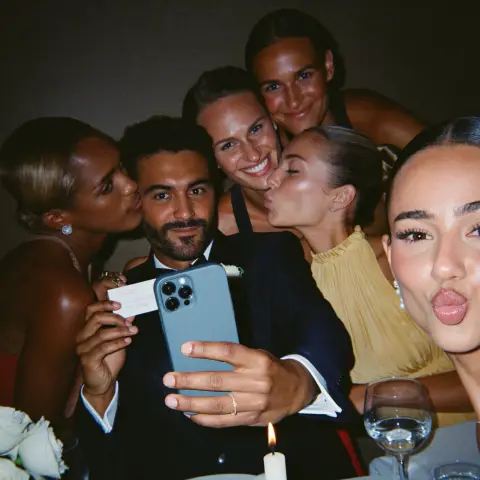 Table 4, 18
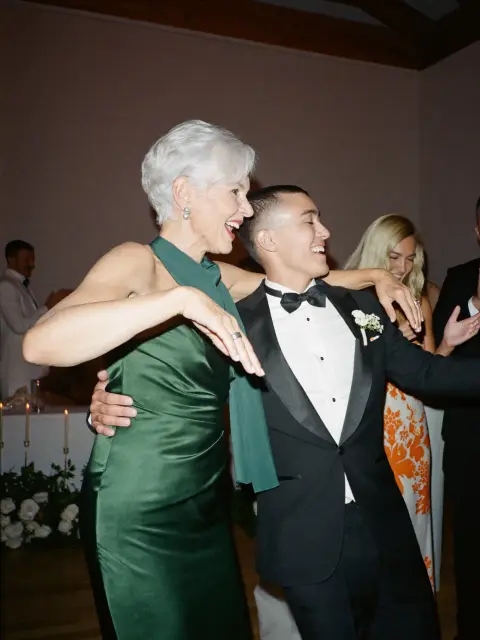 Jonah, 44
 Priya, 12
| Wedding size (by uploading guests) | Weddings | Average | Median |
|---|---|---|---|
| Small (under 30 uploading guests) | Weddings: 200 of 203 | Average photos: 193 | Median photos: 148 |
| Mid (30 to 79 uploading guests) | Weddings: 3 of 203 | Average photos: 451 | Median photos: 554 |
| Large (80+ uploading guests) | Weddings: 0 of 203 | Average photos: No data | Median photos: No data |
A 117-guest wedding
117 is the average US guest count in The Knot 2026 Real Weddings Study (10,474 couples married in 2025). If that wedding looks like our median album, expect roughly 8 guests to upload about 17 photos each, around 140 to 150 photos. We never see the headcount, so we cannot say how that shifts with a longer guest list.
Run your own numbers
The free wedding photo calculator estimates your total, photographer and guests together. The full method is on the guest photo statistics page.
The photos nobody was paid to take
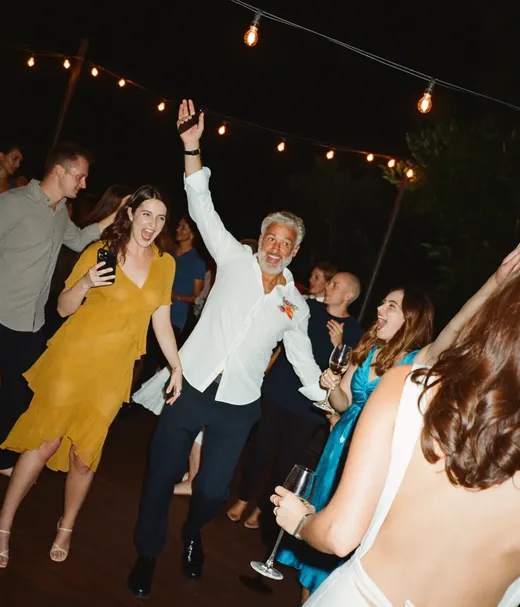
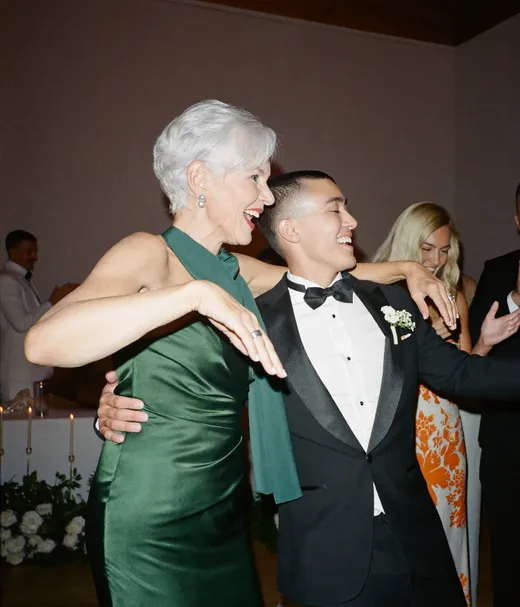
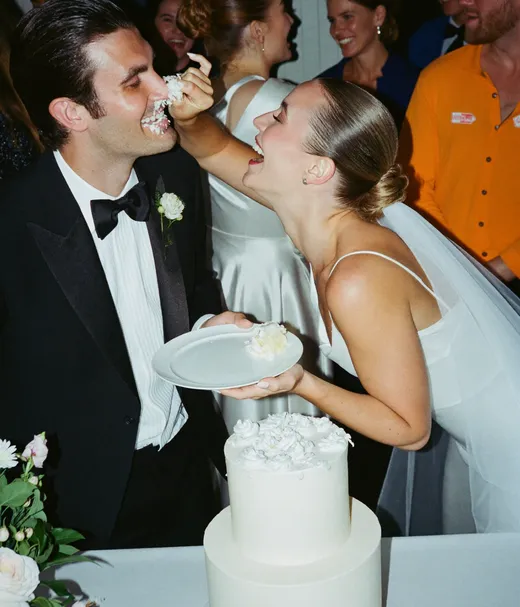
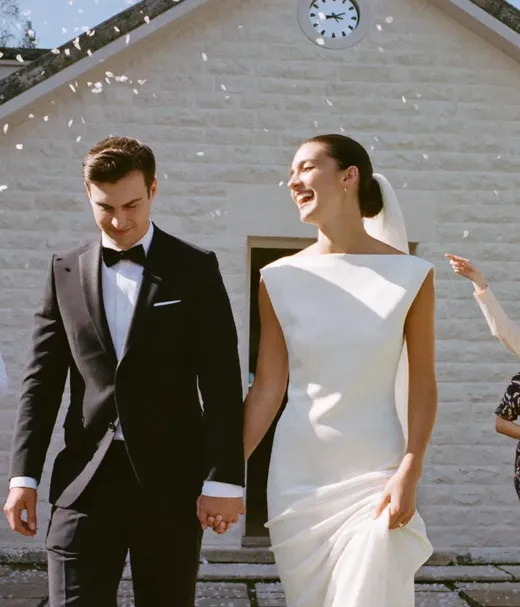
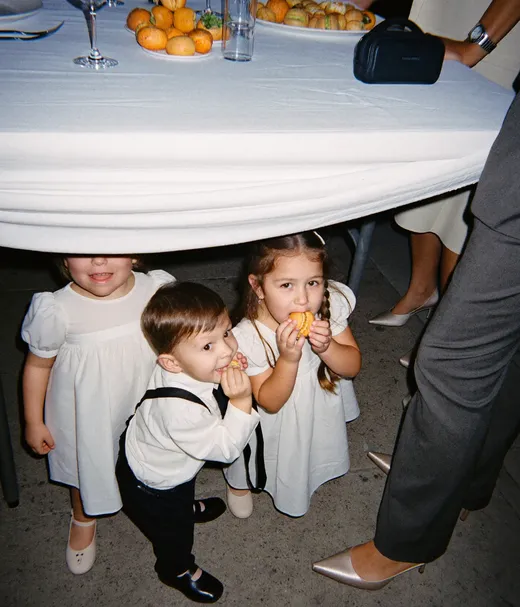
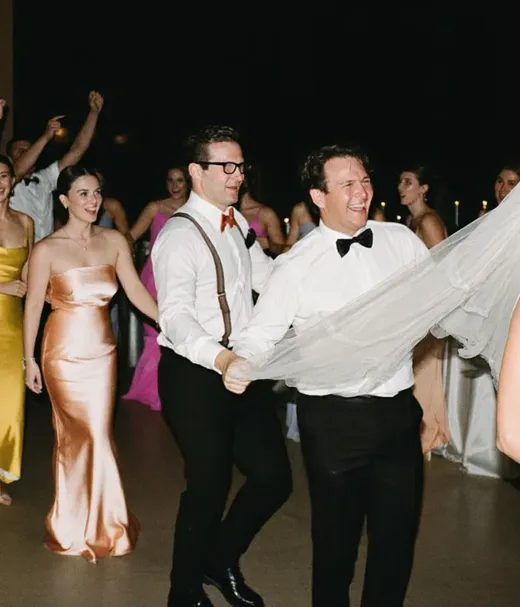
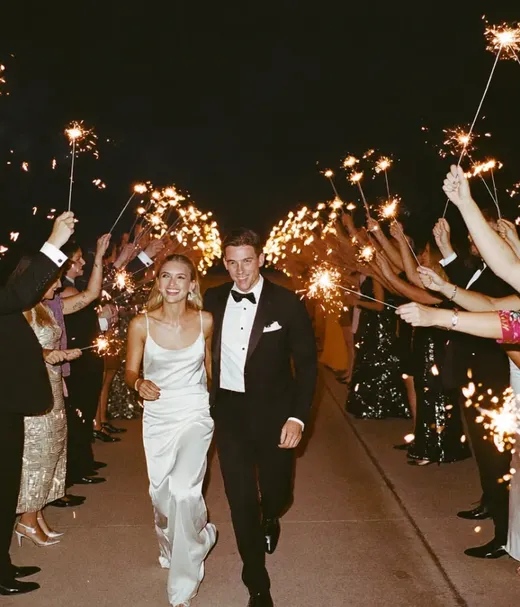
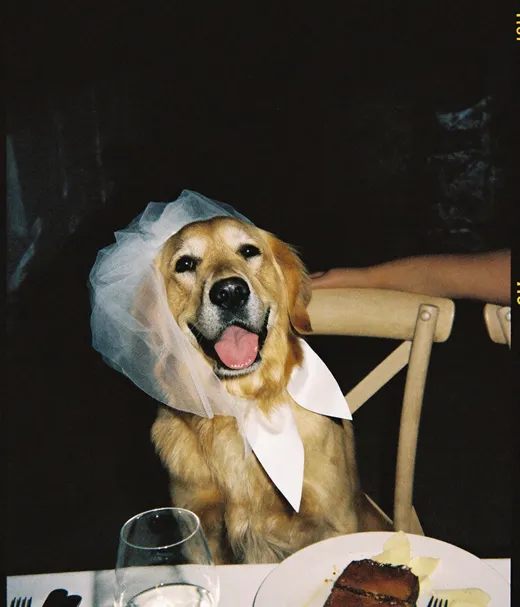
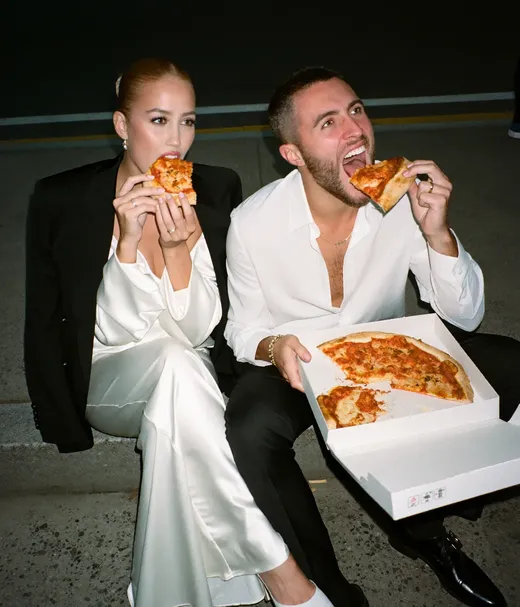
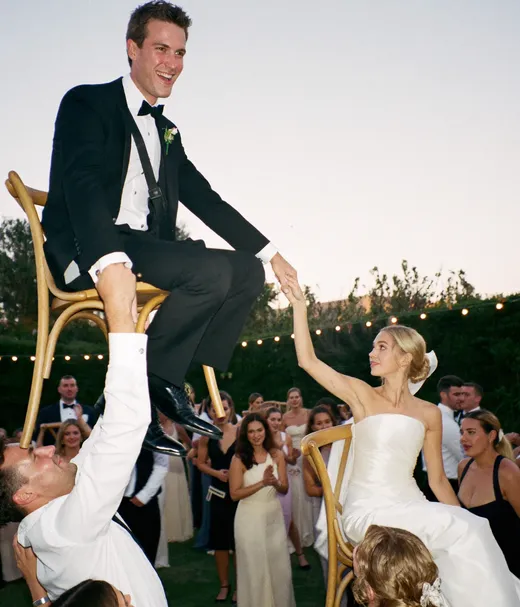
Guests shoot from inside the crowd: their table, their friends, the dance floor after the photographer has gone home. That is the part of the count a contract never covers.
Two albums of the same day
Guest photos do not replace a photographer and were never meant to. They fill the gaps a photographer cannot be in: the other side of the room, the table you never sat at, the moments after the photographer has packed up.
Usually the photographer's job
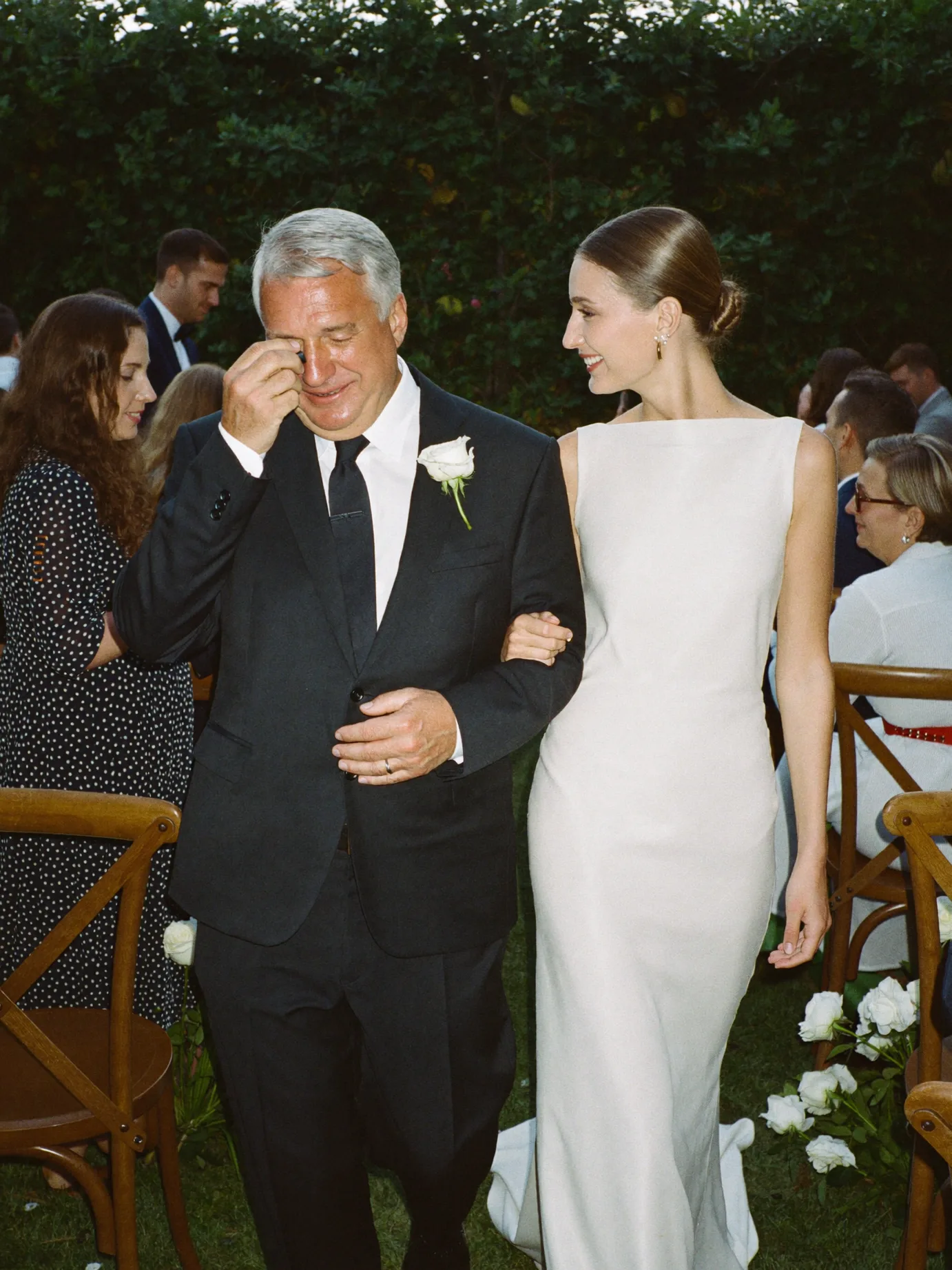
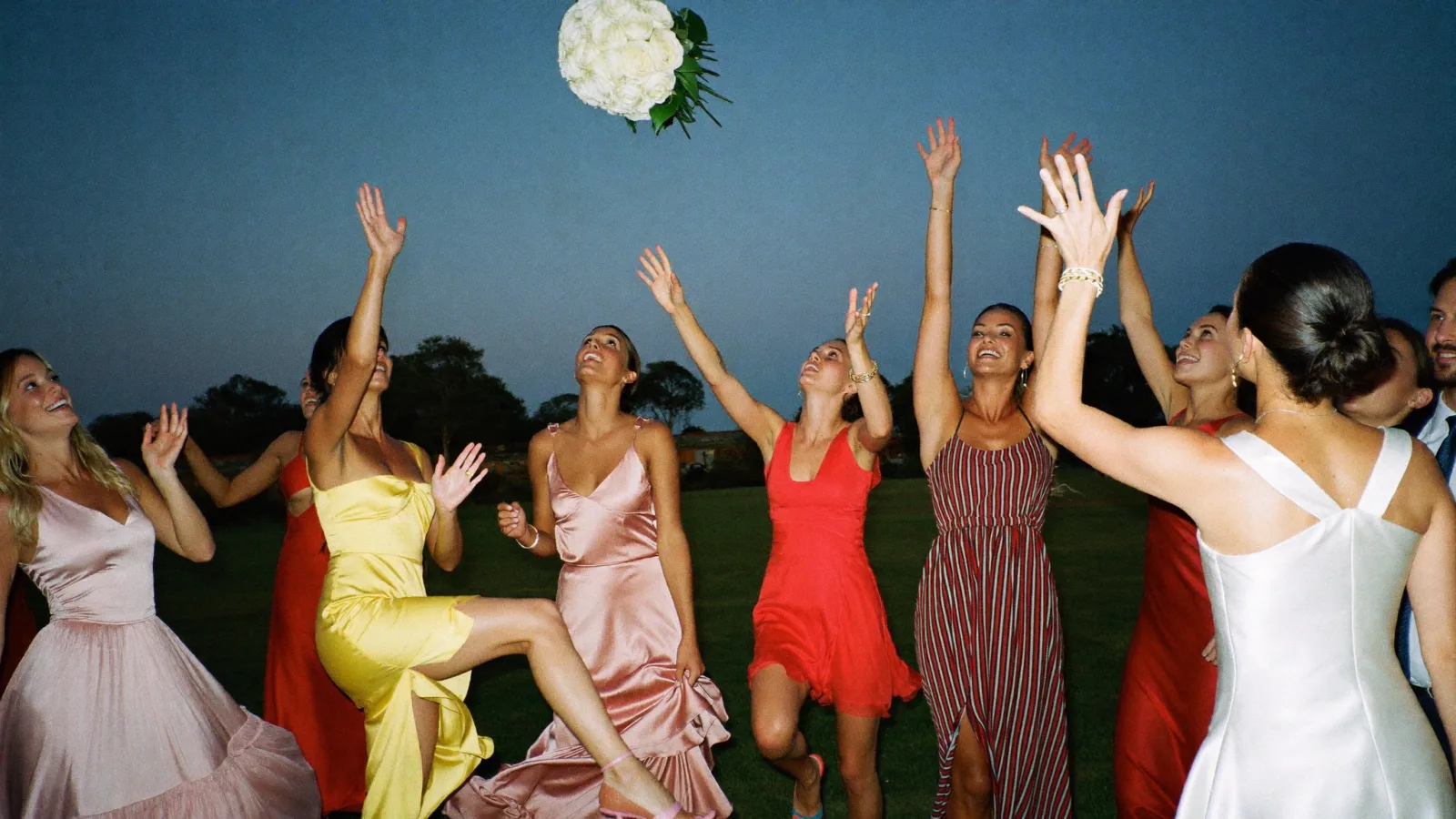
The aisle, the portraits, the big set pieces. Composed, edited, consistent.
Where guest phones shine
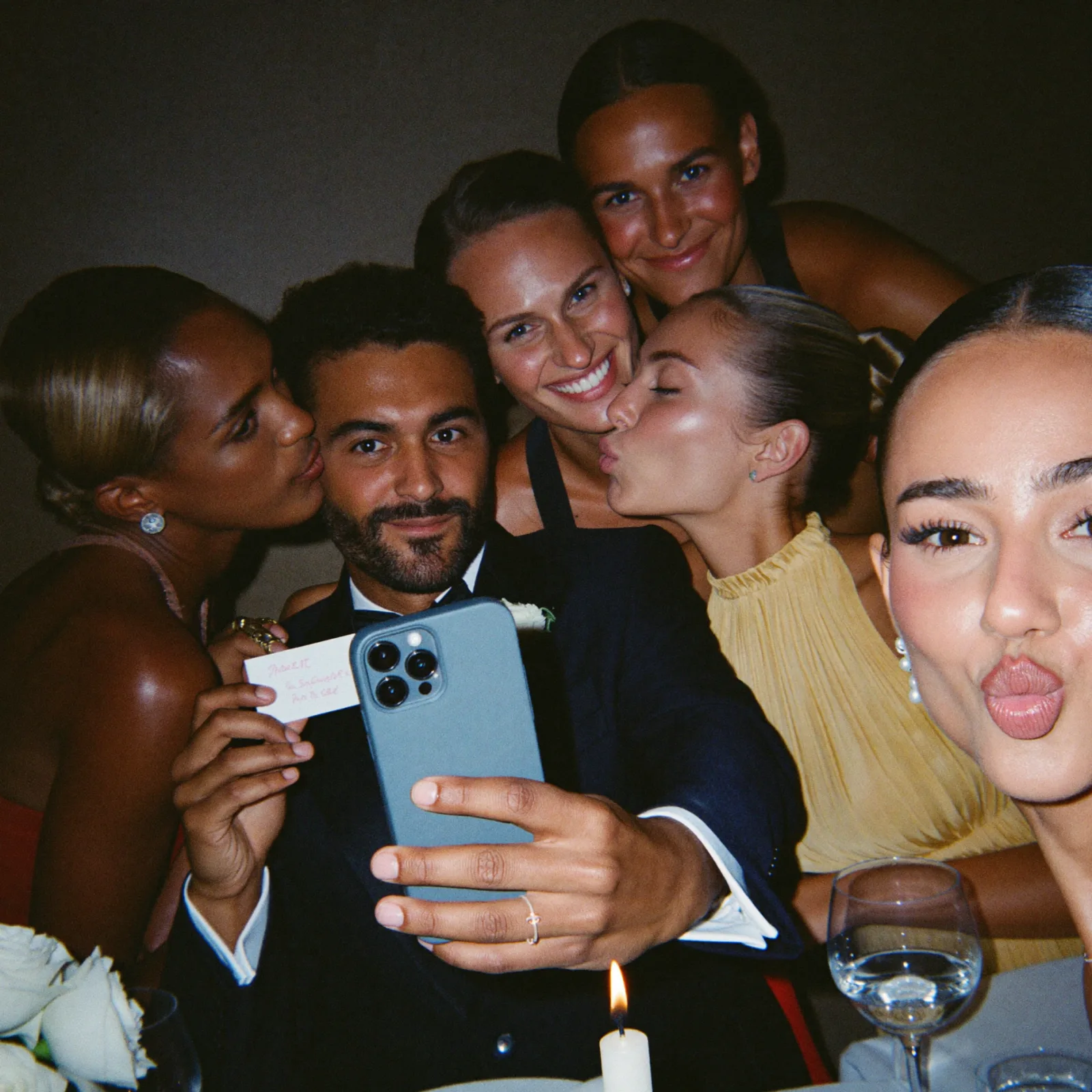
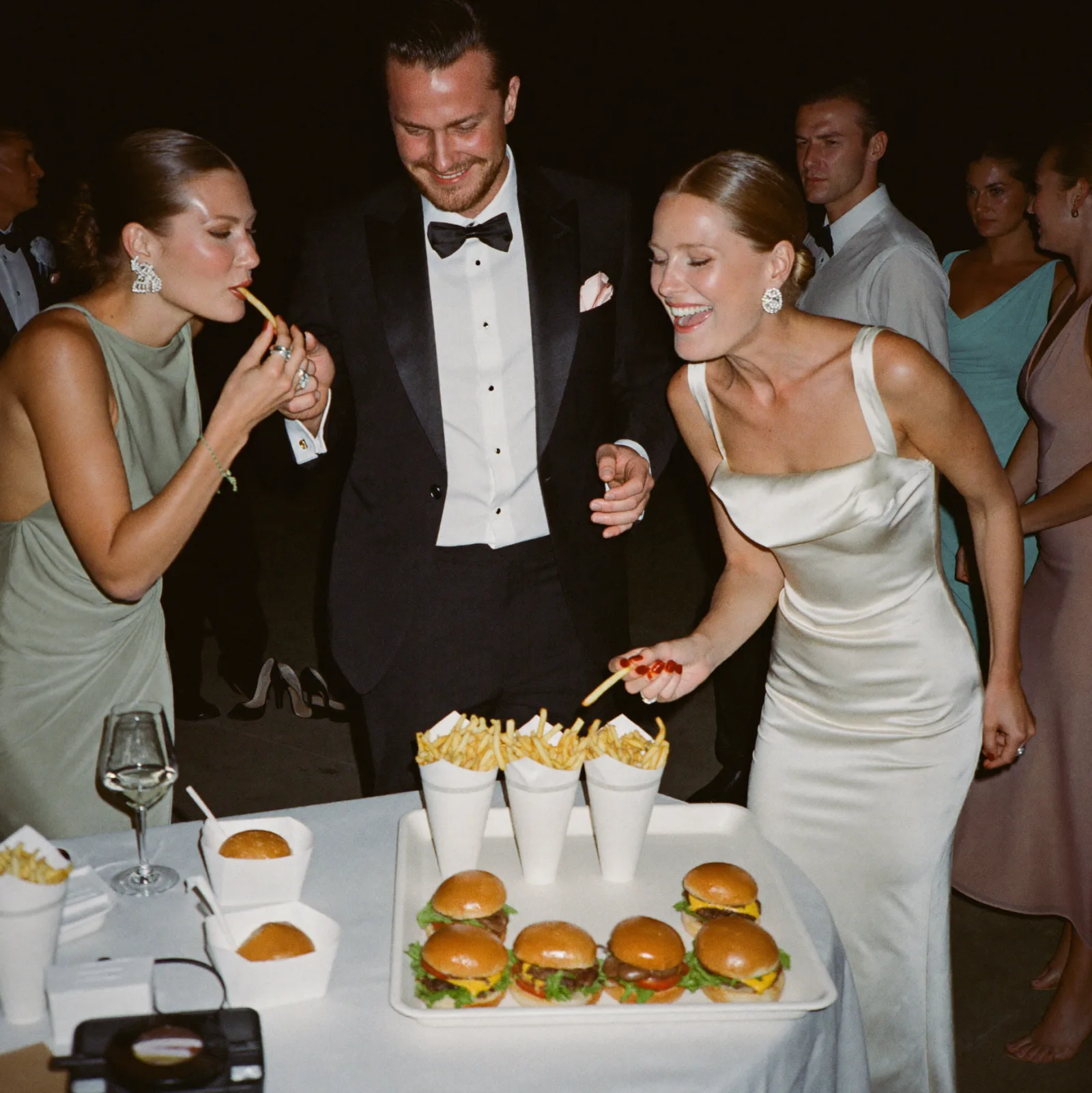
The selfies, the late snacks, the table you never sat at. Messy, candid, from inside the party.
| Compared | Guest photos | Professional photos |
|---|---|---|
| Who takes them | Guests: Friends and family, from inside the crowd | Photographer: One or two hired photographers |
| How many | Guests: 149 per wedding at the median, 197 on average (Pix Wedding data) | Photographer: About 400 to 800 edited for a full day, fewer with a curated style |
| What they catch | Guests: Reactions, tables, the dance floor, candid chaos | Photographer: Portraits, ceremony, details, composed moments |
| When you get them | Guests: Same night, if there is one place to upload | Photographer: After culling and editing |
| Quality | Guests: Phone quality, mixed lighting, some gems | Photographer: Edited, consistent, print-ready |
| What goes wrong | Guests: Photos never leave the phones | Photographer: Screens in the aisle if the ceremony is not unplugged |
When guest phones come out across the day: when do wedding guests take the most photos. Shots to brief your photographer on: the wedding photo shot list.
The total for a full day, photographer plus guests
Here is how the two counts stack for an 8-hour wedding with a full-coverage photographer and a guest album that lands on our median. It is an illustration built from the ranges above, not a promise.
What moves your total
A curated photographer brings the photographer share down to 150 to 300. A second shooter adds some. On the guest side, the biggest albums in our data came from a handful of keen guests, and without one shared album most guest photos never reach you at all, because they stay on the phones.
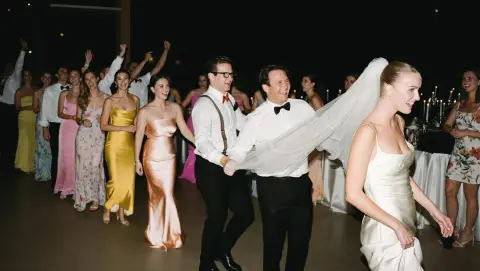 From Jonah
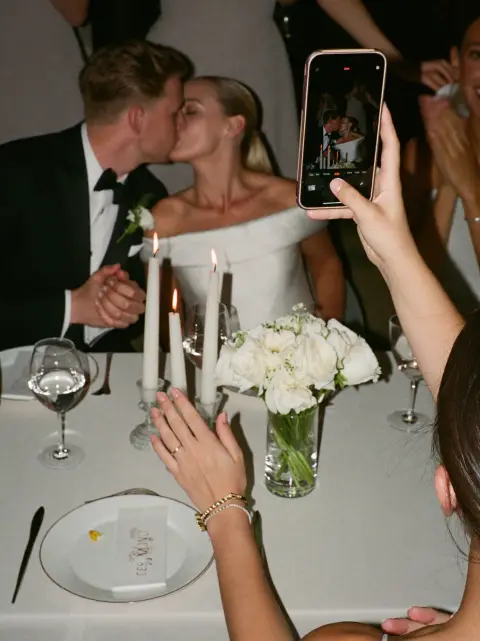 From Priya
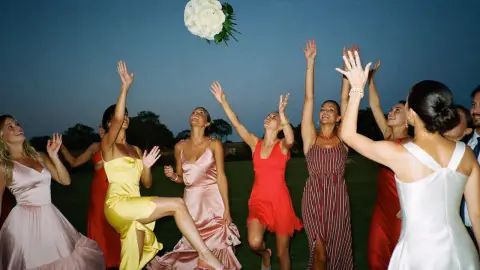 From Table 2
 From Aunt Rosa
Why most guest photos never reach the couple
Your photographer's photos arrive because you paid for them. Guest photos only arrive if someone makes it easy. Nearly every guest has a camera in their pocket, and the weak link is the trip from their phone to yours.
The camera roll
Most guest photos are taken for the guest. They sit between screenshots and receipts, and nobody scrolls back three months to send them on.
Group chats
Photos land in a family chat or a friends chat the couple is not in. Seen once, reacted to, buried under the next conversation.
Stories that expire
A story posted from the dance floor is gone the next day, and a private account means the couple may never have seen it.
"I'll send them later"
Later competes with the drive home, the work week and a full inbox. Without one place and one link, the promise runs out.
photos a day taken by the average American, and about 94% of photos are expected to come from smartphones in 2026.
Photutorial, July 2026guests at the average US wedding, from 10,474 couples who married in 2025. That is a lot of phones in one room.
The Knot 2026 Real Weddings Studyof Gen Z couples and 54% of millennial couples chose an unplugged ceremony. That cuts guest photos of the vows on purpose, and leaves the party untouched.
The Knot 2025 Real Weddings Study"Shared Albums upload a copy of your data. Downloaded content may not contain the same information as the original."
Thinking about phones in the aisle? Read is it rude to have an unplugged wedding.
Table 4
From the dance floor
Add the guests' photos to the count
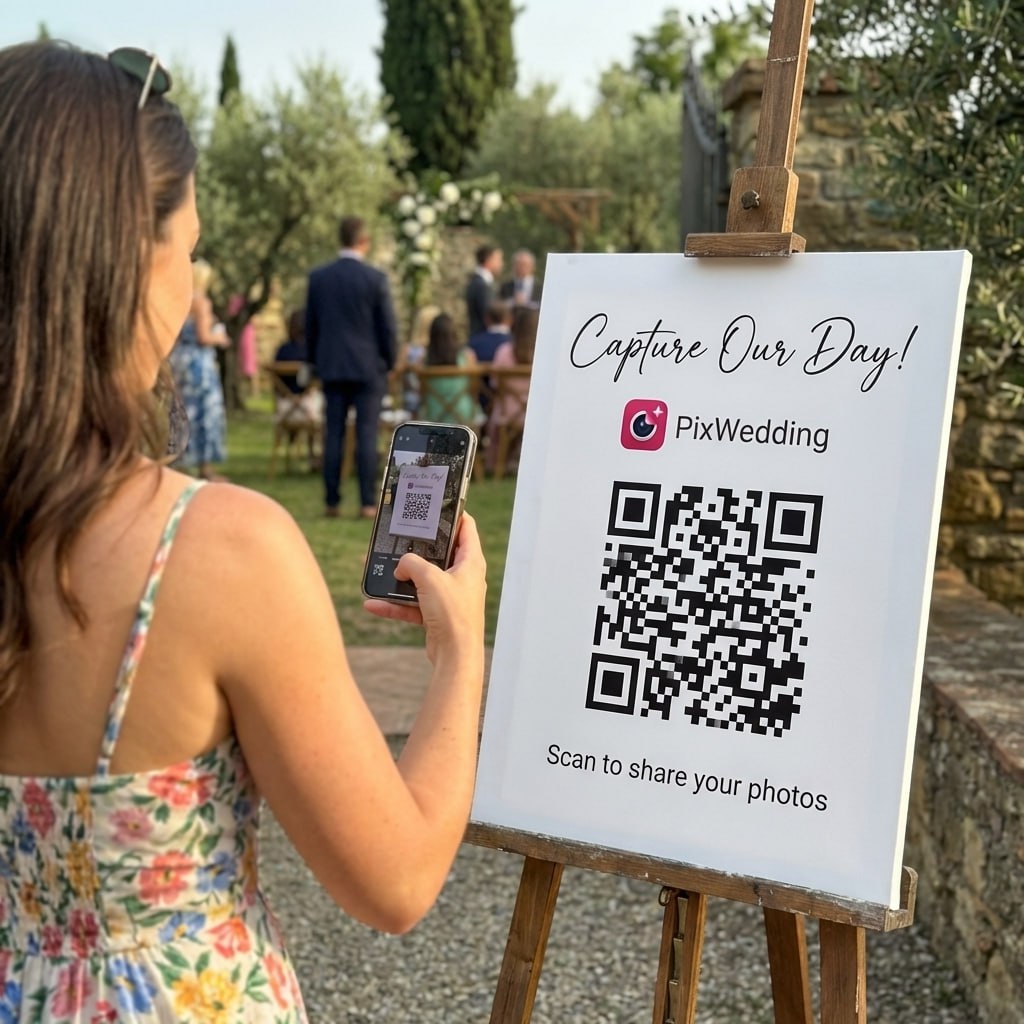
One QR code on the tables, one album, uploads straight from the phone browser. Your first 20 guest uploads are free, no card needed.
From Aunt Rosa
Scan to join the album
No app, no account
UPLOADING
Saving your moment
THE ALBUM
Maya & Theo
Example album
647 photos · 95 guests
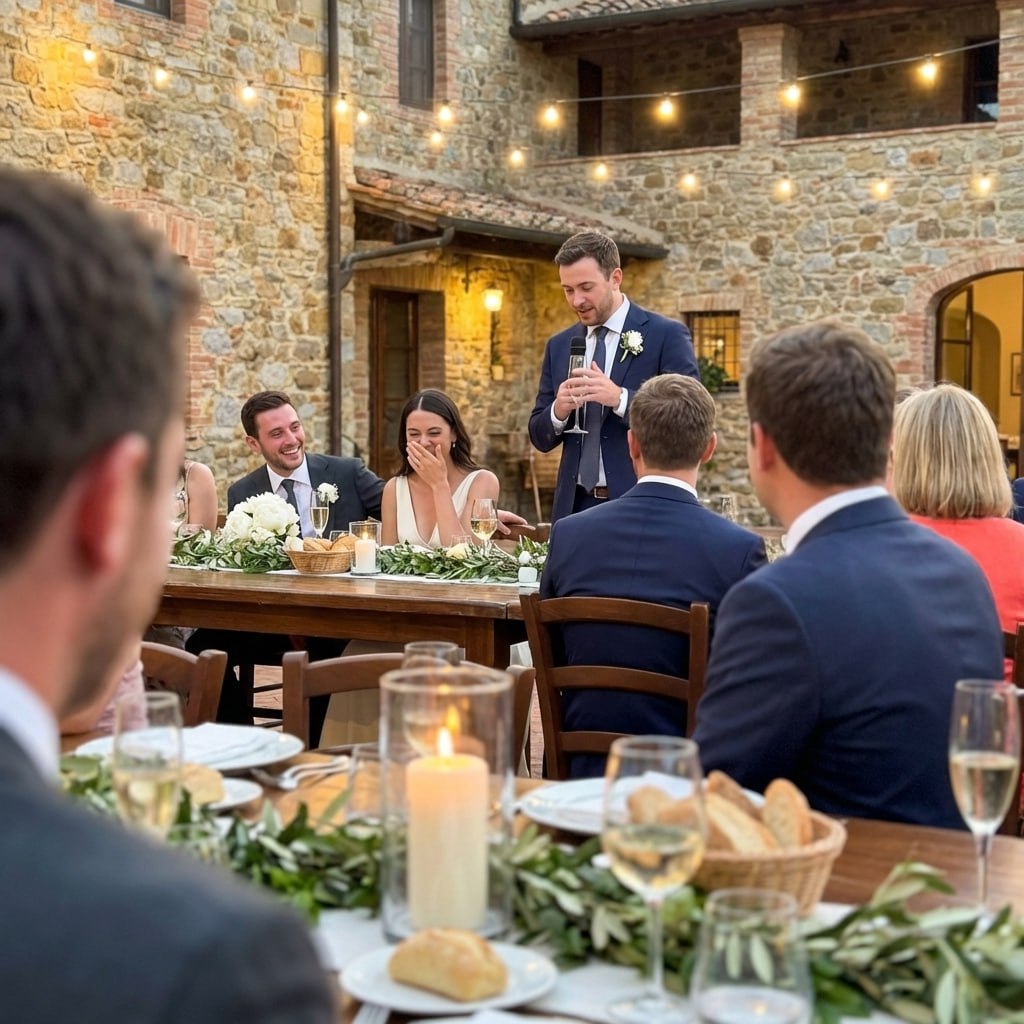
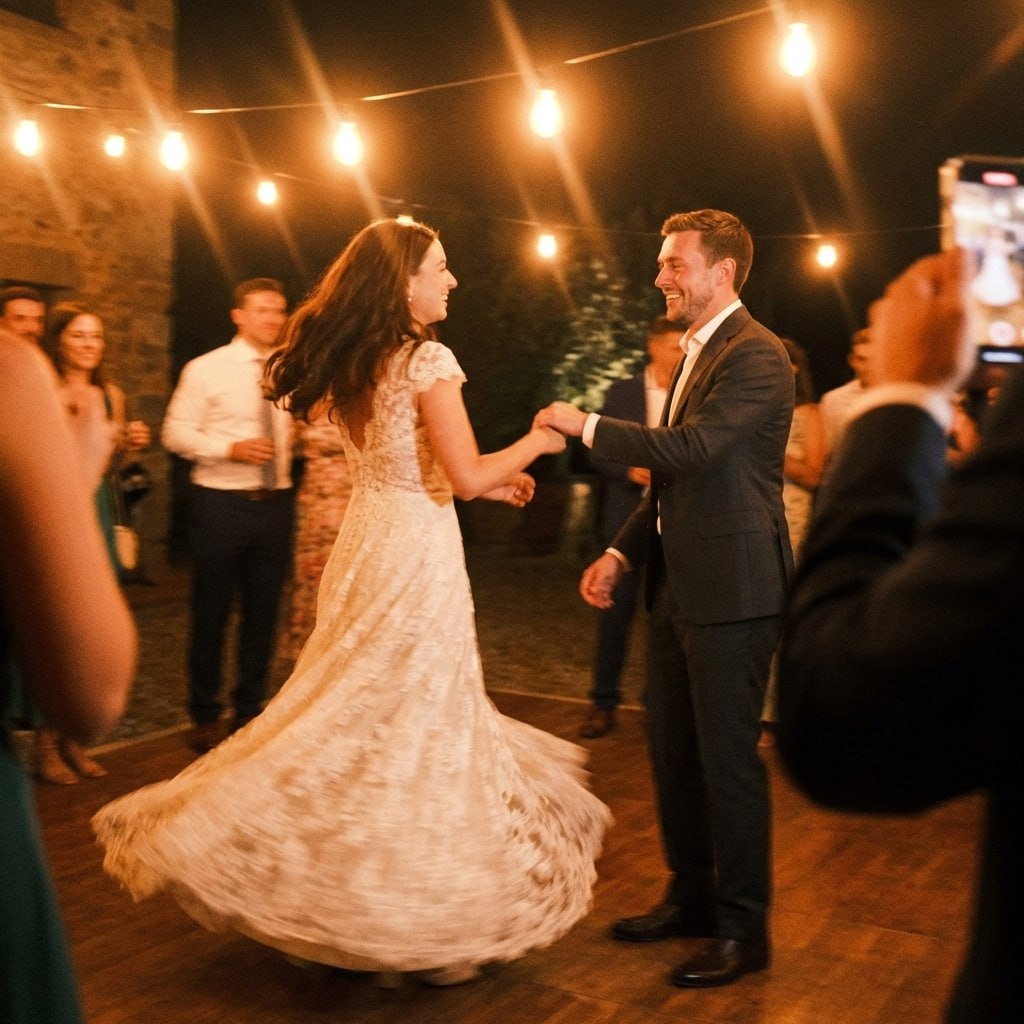
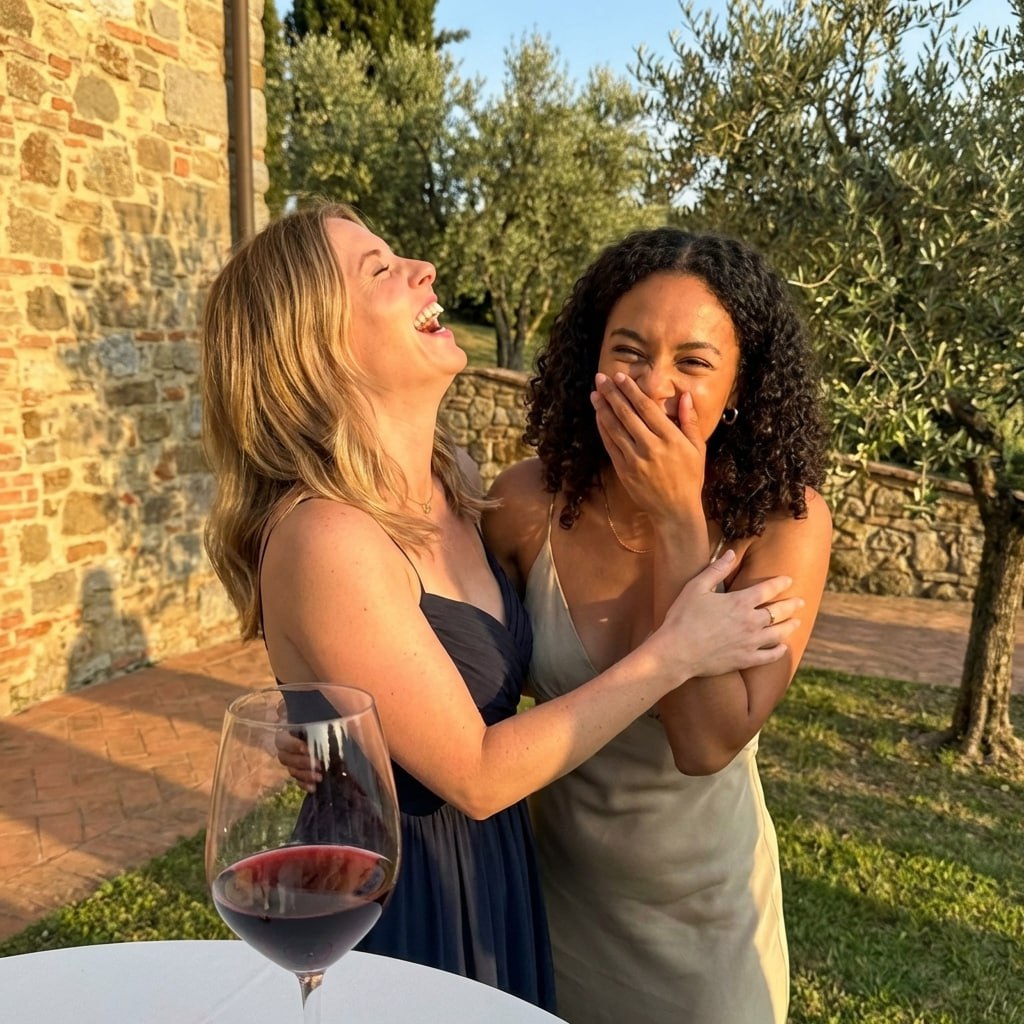
SCAN TO TRY
pix.wedding/
your-wedding
Scan. Upload.
Straight into your album.
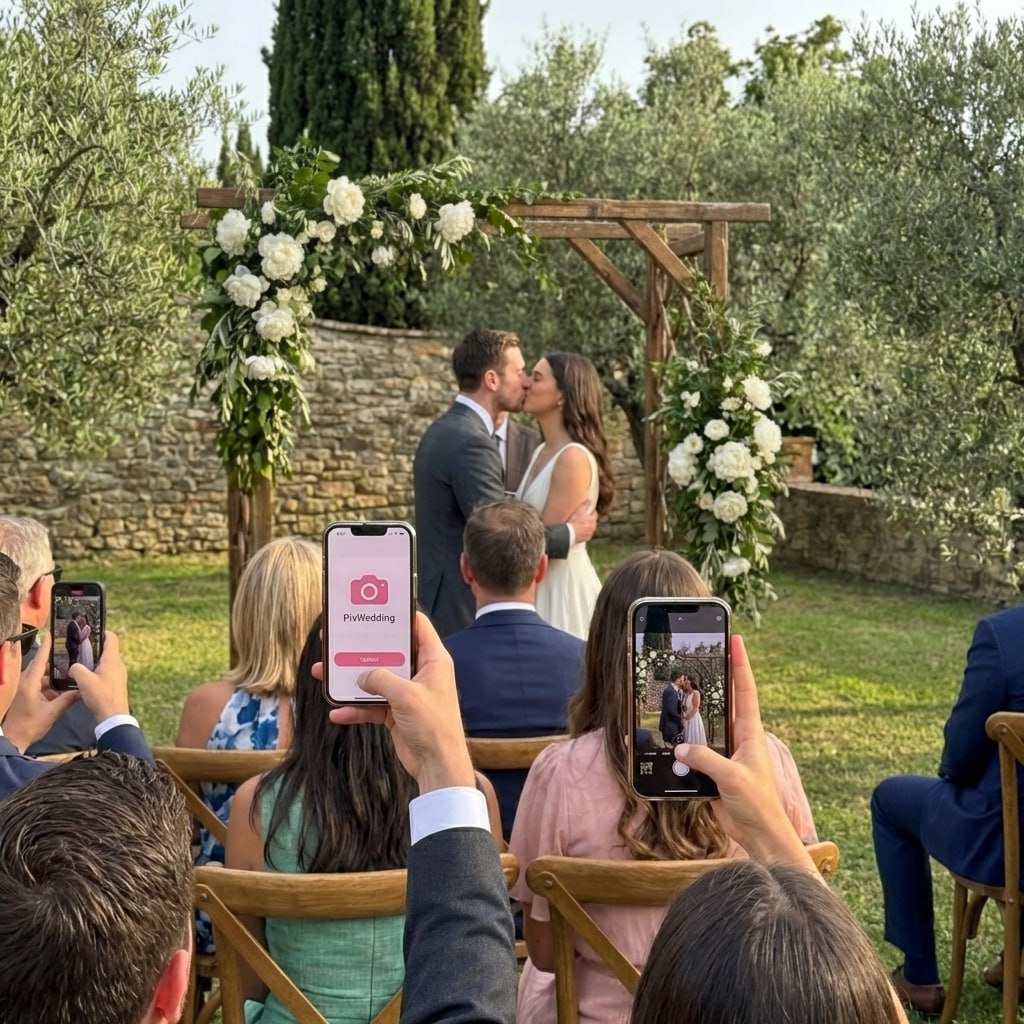
This is how a guest photo gets from a phone into your count with Pix Wedding: scan the QR code on the table, pick photos in the browser, and they land in your album. No app, no account.
GUEST ALBUM
Maya & Theo
Example album
Eight ways to get more of the photos taken at your wedding
The photographer's count is set before the day, in the contract. The guest count is decided on the night, by how easy you make it. None of this needs a big budget.
- Step 01
Get the photographer's range in writing
Ask for the usual number of edited photos for your hours of coverage and put the range in the contract, so nobody is surprised later.
- Step 02
Pick one album for everything
One album, one link, one QR code. Two hashtags and a shared drive split the photos and nobody knows where to look.
- Step 03
Make guest upload take seconds
Guests should scan and upload from the browser. Every extra step (an app, an account, a password) loses the half-interested guests.
- Step 04
Put the QR code where phones already are
Tables at dinner, the bar and the photo booth corner get scanned. A sign by the entrance mostly gets walked past.
- Step 05
Have the MC say it once
One sentence during dinner ("Scan the code on your table and drop in tonight's photos") reaches guests who never read signs.
- Step 06
Look after your keen guests
The heaviest uploaders add far more than everyone else. Make sure the cousin who always has a phone out knows where the album is.
- Step 07
Bring the photographer's gallery in too
On Pix Wedding's Standard plan and above, the photographer gets a private upload link, and their shots land in a separate photographer album inside the same gallery.
- Step 08
Send the link the morning after
One message with the album link the day after catches guests who meant to upload and forgot on the night.
The full playbook is in how to collect photos from wedding guests, and the free QR sticker designer makes the table sign. Paid Pix Wedding plans keep guest photos in original quality with a ZIP download of the whole album.
Questions to ask your photographer about the photo count
The ranges on this page are useful for a sanity check. The number that counts is the one your photographer commits to. These questions get it on paper.
How many edited photos do you usually deliver for the hours we are booking?
Is your style closer to a curated gallery or full coverage?
Do you deliver every non-duplicate frame, or a tighter edit?
What does a second shooter add, and is it worth it for our guest count?
If you also shoot video, how does that change the photo count?
Can we write the expected range into the contract?
Can we download everything in full resolution, and for how long?
Good signs
A range in writing, matched to your hours
A clear answer on curated or full coverage
Sample full galleries, not just highlights
Full-resolution downloads you keep
Worth a follow-up question
"You'll get lots" with no number attached
Only highlight reels, no full gallery to look at
A count far outside the ranges above with no reason given
A short gallery window with no download
More on wedding photo numbers
How many photos at a wedding: the essentials
If you only remember five things:
- A full-day photographer usually delivers 400 to 800 edited photos, or 150 to 300 with a curated style
- Most published ranges work out to about 50 to 100 edited photos per hour of coverage
- Photographers shoot 2,000 to 4,000 frames on a full day and deliver a fraction after culling
- Guests who upload add about 26 photos each, 149 per wedding at the median across 203 weddings
- Guest photos only reach you if there is one easy place to upload, asked for on the night
Where these numbers come from
Photographer numbers come from working photographers who publish their own delivery ranges (Picstack, Joshua Brown Photography, Karen Julia Photography, Formed From Light), each linked and checked on 27 September 2026. There is no large independent survey of delivery counts, so treat them as typical ranges, not an official average.
Guest numbers come from one published first-party dataset with a stated method: 203 weddings on Pix Wedding with at least 20 guest photos, guest uploads only, pulled on 10 July 2026. Nobody outside a guest's phone knows how many photos that guest took. What can be counted is what reached the couple, and that is the number worth planning around.
Explore more free wedding tools
Everything you need to make your wedding day stress-free and unforgettable.
QR Sticker Designer
Design custom print-ready stickers.
Photo Sharing QR
The best way to collect guest photos.
Hashtag Generator
Create unique wedding hashtags.
How to Collect Guest Photos
5 methods ranked by participation rate and ease.
Share Wedding Photos with Guests
Compare every sharing platform by ease and participation.
Best Way to Get Guest Photos
The single method with the highest participation rate.
How to Make a Shared Wedding Album
Step-by-step setup for every platform.
Alternative to Disposable Cameras
Better, cheaper options than disposable cameras.
Questions about how many photos are taken at a wedding
Short answers, with every number traced to a named source or our own dataset.
Two numbers make up the total. A professional photographer covering a full day of about 8 hours typically delivers 400 to 800 edited photos in a full-coverage style, or 150 to 300 in a curated style (Picstack, 2026), after shooting 2,000 to 4,000 raw frames. On top of that, guests who upload to a shared album add 149 photos at the median wedding and 197 on average, across 203 weddings on Pix Wedding. Guests take many more on their own phones, but nobody can count those.
Most published ranges sit around 50 to 100 edited photos per hour of coverage for full-coverage photographers. Picstack and Formed From Light both give 50 to 100 per hour, and Joshua Brown Photography gives 70 to 100. Curated photographers deliver fewer. The honest answer for your wedding is the range your photographer writes into the contract.
Far more than they share. In our dataset of 203 real weddings, the guests who uploaded added 26.3 photos each on average (median 17.2), and each wedding collected 197 guest photos on average, 149 at the median. What guests keep on their own phones is unknown and almost certainly higher: Photutorial puts the average American at about 20 photos on an ordinary day.
For a full 8-hour day, 400 edited photos sits at the low end of the full-coverage range (400 to 800) and above the curated range (150 to 300) that Picstack gives. For a 4 to 5 hour wedding it is a normal number. What matters more is whether the key moments and the people you care about are all in the gallery.
Usually not every raw frame. A photographer who shoots 2,000 to 4,000 frames culls duplicates, missed focus and closed eyes, then edits the rest. Some deliver every non-duplicate photo (Karen Julia says she does), others deliver a tighter edit. Ask before you book, and ask whether you can buy unedited frames if that matters to you.
In our dataset, 9.8 unique guests uploaded at least one photo per wedding on average, with a median of 8. A quarter of weddings had 5 or fewer uploaders and a quarter had 13 or more. We do not collect guest counts, so we never report this as a percentage of the guest list.
No. A second shooter reliably adds photos, but Picstack notes it adds less than photographers expect, because much of what the second photographer shoots overlaps with the lead. It pays off most for getting-ready coverage in two places and for big guest lists.
Not directly. The wedding with the most uploaders in our data (60 guests) collected 224 photos, while the biggest album (1,365 photos) came from just 3 guests. A few keen guests can outshoot a crowd.