
Does a Prenup Have to Be Signed Before Marriage? Or Can You Sign One After?
Short version: no state requires it, and yes, you can still sign something after the wedding, it is just called a postnup and it plays by its own rules. Here is the timing, the state notarization rules, and a checklist either way.
YOUR TIMELINE
90 days to go
Does a Prenup Have to Be Signed Before Marriage?
No. No state legally requires a prenup before marriage. If you sign nothing beforehand, your state's default marital property and divorce laws apply automatically. You can still sign a similar agreement after the wedding, called a postnuptial agreement, but postnups face closer court review in many states than prenups signed before the ceremony.
Prenup = before
Signed before the wedding ceremony, while you are still legally two unmarried people.
Miss the window, get a postnup
Married already and want an agreement? It is a postnup, a related but separate document.
Rules genuinely differ by state
Notarization, witnesses, and disclosure requirements are not the same everywhere. See the state table below.
This is not legal advice
General information only. Talk to a family law attorney about your specific state and situation.
Can a Prenup Be Signed After Marriage? Meet the postnup.
Not technically, no, because a prenup is defined by being signed before the wedding. But the answer most people want is yes: you can sign a similar agreement after the wedding, it is just a different document with a different name and, in several states, a different (stricter) legal test.
| Prenup | Postnup | |
|---|---|---|
| Signed | Any time before the wedding ceremony | Any time after the wedding, once already married |
| Legal starting point | Two people negotiating as separate legal parties | Two people already bound by marital fiduciary duties to each other |
| Court review | Reviewed for voluntariness, disclosure, and basic fairness | Reviewed for the same things, plus closer scrutiny in many states because the built-in leverage of an existing marriage |
| Governing framework | UPAA/UPMAA in most adopting states | Varies more by state; some treat it like a prenup, others apply stricter contract or fiduciary-duty rules |
| If nothing is signed | Default state marital property and divorce law applies | Same default rules keep applying until (or unless) a postnup is signed |
| Typical trigger | Upcoming wedding, one or both parties bringing in separate assets | A life change after the wedding: inheritance, a business, a near-miss with divorce, or simply finishing what never got signed in time |
Watch: 3 minutes
Prenup vs. postnup, in plain English
A short explainer covering how the two documents differ and the general process for putting either one together. From eForms on YouTube.
Deciding whether to get a prenup at all (not just when) is its own question, covered fully on should I sign a prenup.
The paperwork is one afternoon. The wedding photos last forever.
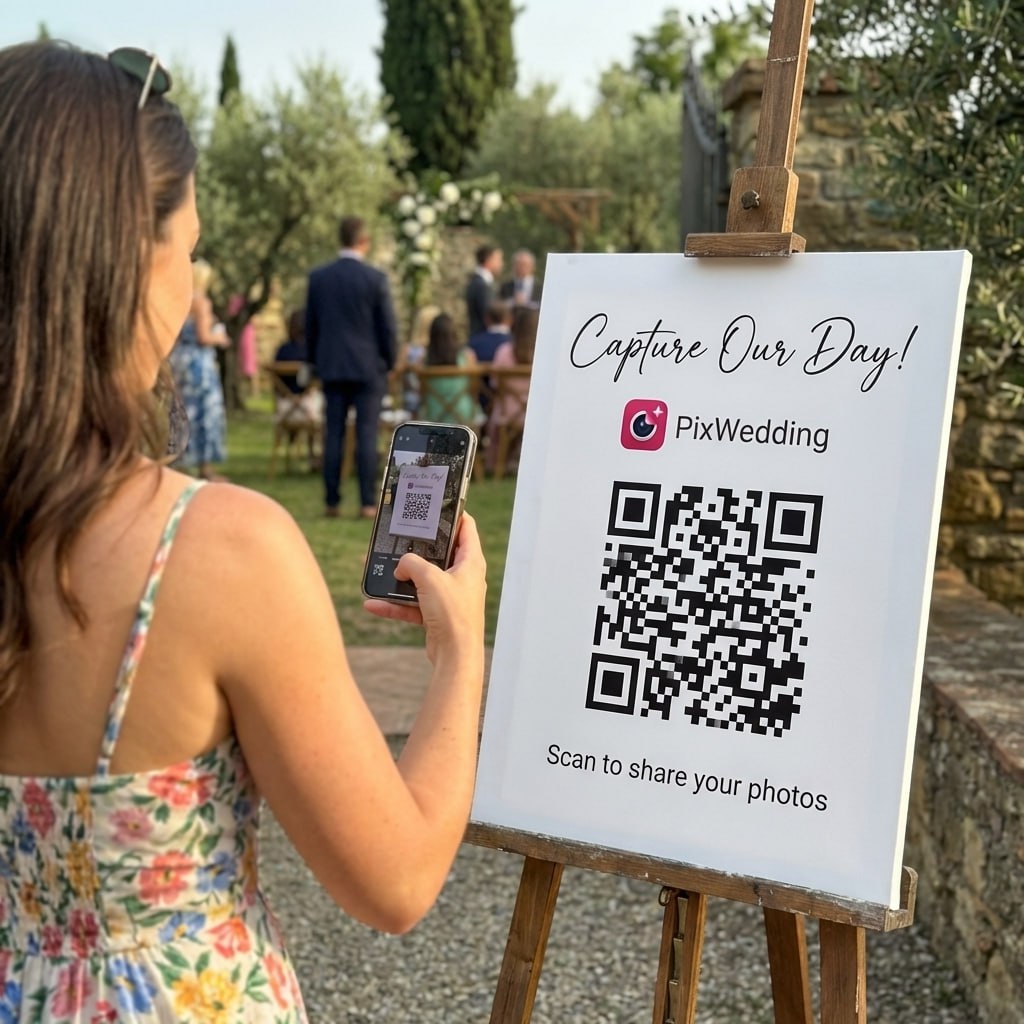
Guests scan a QR code, add their shots to one shared gallery, no app or account needed on their end.





Scan to join the album
No app, no account
UPLOADING
Saving your moment
THE ALBUM
Emma & Jack
June 21, 2026
647 photos · 95 guests








How Long Before the Wedding Should You Sign?
There is no single national deadline. What follows is the general working timeline family law attorneys describe, with California's one hard statutory number built in.
Raise it and start researching
Bring up the idea, and each of you starts looking for your own family law attorney. Two separate attorneys, not one attorney for both.
Hire counsel, exchange disclosure
Each side retains independent counsel and puts together a full financial disclosure schedule: assets, debts, income, and major property.
First draft
An attorney drafts the agreement using both disclosure schedules as the baseline for what is being kept separate or shared.
Review and negotiate
Each attorney reviews the draft with their own client and negotiates changes. This is the range family law attorneys generally consider the safest working window.
Finalize and sign
Language is locked and both parties sign. California's statutory 7-day minimum (Fam. Code §1615(c)) sits inside this window for every signer, with or without a lawyer.
High-pressure zone
Still legally possible in most states, but a rushed signature this close to the date is the timing pattern most often raised later if someone challenges the agreement.
Sourced to California Family Code §1615(c) for the 7-day statutory minimum, and to the Uniform Law Commission for the UPAA/UPMAA framework most other states follow instead of a fixed day count.
California's 7-Day Rule, and the UPAA/UPMAA Framework
Most states base their prenup law on one of two model laws from the Uniform Law Commission. A handful of states, California most notably, also layer on a specific statutory minimum for timing.
California Family Code §1615(c)
For agreements signed since 1 January 2020, a court treats a prenup as involuntary unless the person had at least 7 calendar days between first seeing the final agreement and signing it, whether or not they had a lawyer.
Read the statuteUPAA (1983)
The Uniform Premarital Agreement Act, the original model law most states adopted in some form to standardize prenup enforceability, disclosure, and voluntariness standards.
Uniform Law CommissionUPMAA (2012)
A newer update that a smaller number of states have adopted; it folds prenups and postnups into one shared framework rather than treating them as separate categories.
Uniform Law CommissionDoes a Prenup Have to Be Notarized?
It depends entirely on the state. These six were verified directly against the statute; if your state is not listed here, check with a local family law attorney rather than assuming either way.
| State | Notarization | Detail | Source |
|---|---|---|---|
| California | Not required by statute | Enforceability turns on the 7-day rule and independent counsel, not on notarization. | Cal. Fam. Code §1615 |
| New York | Required | Must be acknowledged before a notary in the same form required to record a deed. No witnesses required. | N.Y. DRL §236(B)(3) |
| Georgia | Required, doubles as a witness | Needs two witnesses; the notary taking the acknowledgment can count as one of the two. | Ga. Code §19-3-62 |
| Texas | Not required by statute | Must be in writing and signed by both parties; no notarization requirement in the text of the statute. | Tex. Fam. Code §4.002 |
| Florida | Not required, recommended | Enforceable without notarization under Florida's UPAA statute, but attorneys widely recommend it as extra proof of authenticity. | Fla. Stat. §61.079 |
| Illinois | Not required, recommended | Writing and both signatures are what the statute requires; notarization is standard best practice, not a legal requirement. | 750 ILCS 10 |
How Much Timing Risk Are You Carrying?
Pick how many days out from the wedding you are (or were, if you already signed) to see the general risk tier attorneys would place that timeline in. Not a legal prediction, just a plain-language read.
Some states set formal minimums inside this window (California requires at least 7 days between presenting the final agreement and signing, with or without a lawyer). Even where there is no fixed rule, a spouse can later argue they felt rushed.
This is general information, not legal advice, and it is not a prediction of how any specific court would rule. Timing is one factor among several (disclosure, independent counsel, and basic fairness matter too). Talk to a family law attorney in your state about your actual situation.
The Signing Process, Step by Step
Whether you are 6 months out or already cutting it close, this is the order the process happens in.
- 01
Draft the agreement
An attorney puts the terms you have discussed into a written agreement. Verbal agreements are not enforceable prenups in any state.
- 02
Exchange full financial disclosure
Both partners share a complete, honest schedule of assets, debts, income, and property. Hidden or incomplete disclosure is one of the most common reasons a prenup gets thrown out later.
- 03
Get independent counsel review
Each partner has their own attorney (not a shared one) review the draft and advise them separately. Some states, including California, require this for certain waivers to be enforceable.
- 04
Negotiate and finalize the language
Both sides go back and forth on the actual terms until the language is something both attorneys sign off on.
- 05
Sign with any required formalities
Sign in front of the witnesses your state requires, if any (Georgia requires two).
- 06
Notarize or acknowledge where required
States like New York require a notarized acknowledgment for the agreement to be valid; most states do not require this but recommend it anyway.
- 07
Store signed copies safely
Each attorney and each spouse keeps a signed original plus the disclosure schedules, in case the agreement is ever reviewed by a court years later.
The Document Checklist
Most delays come from missing paperwork, not disagreement over terms. Gather these before your first attorney meeting to move faster.
- Personal financial statement: full list of assets, debts, and income for each partner
- Two to three years of tax returns
- Bank and investment account statements
- Property deeds or mortgage statements for any real estate
- Retirement account statements (401k, IRA, pension)
- Business valuation, if either partner owns a business
- Proof each partner retained their own independent attorney
- Signed financial disclosure schedule, attached as an exhibit
- Valid government ID for both partners, for notarization or acknowledgment
- A calendar note for when the final draft was presented, in case timing is ever questioned
Common Timing Mistakes
None of these automatically void an agreement on their own, but they are the patterns attorneys most often point to when a prenup or postnup gets challenged later.
Signing the week of the wedding
The single most common pattern raised later when a prenup is challenged. It does not automatically invalidate the agreement, but it removes the cushion that shows nobody was rushed.
Sharing one attorney
One lawyer cannot independently represent both people in the same negotiation. Most states expect (and California's Fam. Code §1615 effectively requires for some waivers) separate counsel.
Incomplete financial disclosure
Leaving out a bank account, a business interest, or a debt is one of the fastest ways an agreement gets challenged, regardless of when it was signed.
Treating a verbal deal as binding
No state enforces a spoken prenup agreement. If it is not written and signed, it does not exist legally.
Skipping notarization where it is required
New York and Georgia both require a notarized or witnessed acknowledgment. Skip it there and the agreement can be unenforceable no matter how fair the terms are.
Assuming an old draft still counts
If terms changed after the last version an attorney reviewed, that review does not cover the final signed document.
Not keeping a copy of the disclosure schedule
The financial disclosure exhibit is often what a court looks at first if the agreement is challenged years later. Keep it with the signed agreement, not separately.
- Start the conversation months before the wedding, not weeks
- Get your own independent attorney, separate from your partner's
- Put every asset and debt on the disclosure schedule, even small ones
- Keep dated copies of every draft and the signed final version
- Present the final agreement for the first time days before the wedding
- Let one attorney draft for, or represent, both of you
- Leave out an account, a debt, or a business interest to save time
- Assume a verbal 'we agreed' will hold up without a signed document
Signatures done.
Now capture the day itself.
Guests scan a QR code and their photos land in one shared gallery in seconds, no app or login needed.
SHARED GALLERY
Mia & Tomas
Example album










First dance
You guys!!
Signatures done. Now plan the rest.
A free, printable wedding planning checklist, no account required to start.
From Mom
Scan to join the album
No app, no account
UPLOADING
Saving your moment
THE ALBUM
Mia & Tomas
Example checklist
647 photos · 95 guests
SCAN TO TRY
pix.wedding/
your-wedding
Why Postnups Face More Court Scrutiny
This is the real difference between prenups and postnups beyond just the wedding date. Marriage itself changes the legal relationship between the two people signing.
Marriage already changes the legal relationship
Once married, spouses generally owe each other fiduciary-style duties of fairness and disclosure that two unmarried partners negotiating a prenup do not yet owe each other.
Less presumption of equal bargaining power
A prenup is negotiated between two people who can each still walk away from the wedding. A postnup is negotiated between two people who are already married, which several states treat as inherently more pressured.
Some states require proof of fairness at signing AND enforcement
A handful of states review postnups for fairness both at the time they were signed and again if they are ever enforced in a divorce, a stricter standard than most states apply to prenups.
Disclosure gets checked harder
Because a postnup is easier to challenge, attorneys generally build a more thorough, better-documented disclosure record than they might for a prenup.
Turning an Unfinished Prenup into a Postnup
If the wedding happened before your agreement got finished, this is the general path from an abandoned prenup draft to a signed postnup.
- 01
Confirm the wedding already happened
Once you are married, any prenup that was never finished or signed legally becomes a postnup conversation, not a prenup one.
- 02
Revisit or rebuild the disclosure schedule
Update the financial disclosure to reflect your actual current finances, not just what was drafted before the wedding.
- 03
Get independent counsel again
Each spouse retains their own attorney for the postnup, even if you both used the same firm for the earlier prenup draft.
- 04
Draft under your state's postnup rules
The governing law is not automatically the same as prenup law in your state; ask your attorney which framework applies.
- 05
Sign, and satisfy any state formalities
Follow your state's witness and notarization rules just as carefully as you would have for a prenup.
Prenup, Postnup, and Divorce Costs
Family law fees vary widely by state, firm, and how complicated your finances are. These are typical ranges reported by family law attorneys, not fixed prices.
Prenup with attorneys
$2,000 to $6,000
Typical range reported by family law attorneys for a standard prenup with independent counsel on both sides. Complex assets or a business push this higher.
Postnup with attorneys
$2,500 to $8,000
Often runs higher than a prenup because of the extra disclosure and fairness documentation many states expect.
Contested divorce
$15,000 to $100,000+
What a fight over property division typically costs without any agreement in place, according to family law attorneys who handle contested cases.
Uncontested divorce
$1,500 to $8,000
Far cheaper when both sides already agree on the terms, which is exactly what a prenup or postnup is designed to make more likely.
Red Flags in a Rushed Signing
None of these automatically void an agreement, but any one of them is a reason to slow down and call your own attorney before you sign.
- The agreement was handed to you for the first time within days of the wedding
- One attorney is representing (or drafting for) both of you
- You are asked to sign without a real chance to review the disclosure schedule
- Anyone says 'just sign it, we'll fix the details later'
- You are told a verbal agreement or a text message is enough
- The agreement includes provisions about children or child support (unenforceable in every state)
- You feel like saying no to the agreement means calling off the wedding
Illustrative Examples
The names and details below are illustrative examples for explanation only, not real clients or real cases.
Mia's attorney sent the first draft five months out. Both sides went through two rounds of edits, signed six weeks before the wedding, and kept every disclosure document in a shared folder. When Mia's father later asked whether it would hold up, her attorney pointed to the timeline itself as one of the strongest pieces of evidence that nobody was rushed.
They agreed verbally to 'keep things separate' but never got to a written agreement before the wedding. Two years in, Daniel's small business took off, and they went back to an attorney to formalize what they had only talked about, this time as a postnup with its own disclosure and its own independent counsel.
Renata's mother pushed a prenup on both of them nine days before the wedding, using a template pulled offline. Alex signed without a lawyer. Family law attorneys would flag several issues here: no independent counsel, no real disclosure exchange, and a signing date inside the highest-risk window, any one of which could support a later challenge.
Deep-Dive Questions
What does 'adequate time to review' mean in a courtroom?
There is no single national number. California sets a 7-day statutory floor for agreements signed since 2020, whether or not the person has a lawyer (Fam. Code §1615(c)); most other states leave it to a judge's discretion, who will look at whether the person had a realistic chance to read, understand, and get advice on the agreement before signing, not just whether a fixed number of days passed.
If both partners genuinely want to sign quickly, is that still risky?
A mutual, unpressured, well-disclosed agreement signed on short notice is not automatically invalid. Courts look at the whole picture (disclosure, counsel, fairness of terms), and timing is one factor among several rather than an automatic disqualifier.
Does the clock start when the draft is finished or when you first hire the attorney?
For state rules like California's 7-day requirement, the clock runs from when the final agreement is presented for signature, not from whenever you first talked to a lawyer. Earlier conversations do not count toward the statutory window.
Can a court still throw out an otherwise fair agreement just because of the timeline?
Yes, in theory: an agreement that looks fair on paper can still be challenged as involuntary if the timing and pressure were severe enough, though courts weigh the full context rather than timing alone.
What should we keep after signing, in case this ever comes up again?
Signed originals for both spouses, the financial disclosure schedule each side signed, dated correspondence showing when drafts were exchanged, and proof each side had independent counsel. This is the record an attorney would want if the agreement is ever reviewed years later.
Glossary
Prenuptial agreement (prenup)
A written agreement between two people, signed before their wedding, covering how property and debt are handled during the marriage or in a divorce.
Postnuptial agreement (postnup)
The same kind of agreement, signed after the wedding, once the couple is already legally married.
UPAA
Uniform Premarital Agreement Act, a 1983 model law that most U.S. states have adopted in some form to standardize how prenups are treated.
UPMAA
Uniform Premarital and Marital Agreements Act, a 2012 update to the UPAA that a smaller number of states have adopted; it also covers postnups under one framework.
Independent counsel
Each spouse having their own separate attorney, rather than sharing one lawyer for both sides of the negotiation.
Financial disclosure schedule
A signed, detailed list of each partner's assets, debts, and income, usually attached to the agreement as an exhibit.
Voluntariness
The legal question of whether a party signed freely, without duress, undue pressure, or being denied a real chance to review the terms.
Duress
Signing under improper pressure severe enough that a court finds the signature was not truly voluntary; a high bar to prove, and rarely met by timing alone.
Unconscionability
A legal standard where an agreement's terms are so one-sided or unfair that a court will refuse to enforce them, regardless of when it was signed.
Acknowledgment (notarization)
A notary public confirming the signer's identity and that they signed willingly; required for prenups in some states, like New York, but not others.
Community property
A marital property system (used in states like California and Texas) where most property acquired during the marriage is owned equally by both spouses by default.
Equitable distribution
The marital property system used in most other states, where property is divided fairly (not necessarily equally) in a divorce, based on several factors.
Amendment
A later written change to an already-signed prenup or postnup, generally requiring the same formalities (writing, signatures, and often disclosure) as the original.
Related Guides
The short version, one more time
No state requires a prenup before marriage. If you sign nothing, your state's default marital property and divorce laws apply automatically, the same laws every married couple who never signed a private agreement already lives under.
If you want something similar after the wedding, that document is legally a postnuptial agreement, not a prenup, and it is reviewed under its own rules, which are stricter in several states than prenup rules are.
None of this is legal advice
Every fact on this page is checked against an official state statute with the year it was checked, but prenup and postnup law varies by state and changes over time. This page is general information, not legal advice for your specific situation. Talk to a family law attorney licensed in your state before you sign anything.
Explore more free wedding tools
Everything you need to make your wedding day stress-free and unforgettable.
QR Sticker Designer
Design custom print-ready stickers.
Hashtag Generator
Create unique wedding hashtags.
How to Collect Guest Photos
5 methods ranked by participation rate and ease.
Share Wedding Photos with Guests
Compare every sharing platform by ease and participation.
Best Way to Get Guest Photos
The single method with the highest participation rate.
How to Make a Shared Wedding Album
Step-by-step setup for every platform.
Alternative to Disposable Cameras
Better, cheaper options than disposable cameras.
Alternative to Wedding Photo Booth
5 cheaper alternatives to a $1,000+ photo booth rental.
Prenup and postnup timing FAQ
Straight answers to the questions people search before they sign anything.
Not technically. Once you are married, the same kind of agreement is legally called a postnuptial agreement instead of a prenup. It can cover similar ground (property, debt, what happens in a divorce), but many states review postnups more closely than prenups because the couple is already bound by marital duties to each other.
A prenup, by definition, is signed before the wedding. If you want a similar written agreement after the wedding, it is called a postnup, and it follows its own rules in most states, sometimes stricter ones than a prenup would face.
No state legally requires you to sign a prenup at all. If you never sign one before the wedding, you can still get a postnup afterward, or simply rely on your state's default marital property and divorce laws, which apply automatically whether or not you signed anything.
Family law attorneys generally recommend finishing the process at least 60 to 90 days before the wedding, which leaves room for drafting, full disclosure, and independent counsel review. California sets a hard statutory floor of at least 7 days between the final draft and signing for agreements signed since 2020, represented or not (Cal. Fam. Code §1615(c)); most states leave the exact number of days to a judge's discretion.
It depends on the state. New York requires a notarized acknowledgment (DRL §236(B)(3)). Georgia requires two witnesses, and the notary can count as one of them (Ga. Code §19-3-62). States like California, Texas, Florida, and Illinois do not require notarization by statute, though many attorneys recommend it anyway as extra proof the signature is genuine.
Only California has a specific statutory minimum: at least 7 calendar days between when the final agreement is presented and when it is signed, for agreements signed since 1 January 2020, whether or not that person has a lawyer. Most other states do not set an exact number of days, but courts in every state can still weigh a very last-minute signature as one factor if the agreement is later challenged.
Your marriage is simply governed by your state's default marital property and divorce laws, the same rules that apply to any married couple who never signed a private agreement. That is not a legal problem; it is just the built-in fallback every state already has.
It is possible, but a short timeline alone rarely invalidates an agreement by itself. Courts generally look at the full picture, timing, whether both sides had independent counsel, whether disclosure was complete, and whether the terms are basically fair, not just how many days passed before the wedding.
No. It is not automatically invalid, but it is the pattern most likely to be challenged later. If you are signing close to the wedding date, keeping clear records of independent counsel and full financial disclosure matters even more than usual.