
Digital Wedding Invitations with Online RSVP (2026 Guide)
Paper costs $800-3,000 for 100 guests and returns crumpled reply cards three weeks late. Digital does the same job in an afternoon, tracks every RSVP automatically, and saves a few trees. Here is exactly how to do it right.
Create Your Digital Invitation FreeThe short answer
Digital invitations with built-in RSVP tracking are the right choice for almost every 2026 wedding. They cost between $0 and $50 for 100 guests (versus $800-3,000 for paper), deliver instantly, automate reminders, and collect structured data like meal choices and dietary needs without a single stamped reply card. If you have elderly guests who are not comfortable with forms, send paper for them only and point the RSVP link on that card to the same online tracker everyone else uses.
Digital vs paper vs hybrid: 8-dimension comparison
This is the table most wedding blogs skip because it makes the answer obvious. Digital wins on almost every dimension that involves time, money, or data. Paper wins on tradition and tactile experience. Hybrid wins for mixed guest lists.
| Dimension | Digital | Paper | Hybrid |
|---|---|---|---|
| Cost per guest (100 guests) | $0 to $0.50 | $8 to $30 | $3 to $10 blended |
| RSVP tracking ease | Automatic, live dashboard | Manual, chasing non-responders | Digital responses auto-tracked; paper keyed in manually |
| Save-the-date integration | Same platform, one click | Separate print run, extra postage | Digital save-the-date, paper formal invite |
| Environmental cost | Minimal | Significant: paper, ink, transport | Reduced vs all-paper |
| Design control | Full: animation, color, photos, fonts | High but constrained by print | Full digital + print constraints on paper piece |
| Accessibility for elderly guests | Needs care: large text, simple URL, phone fallback | Universal, no device needed | Best of both: paper for those who need it |
| Photo integration | Engagement photos embedded, link to album | Printed photo adds cost per card | Photo on paper piece, full album link digitally |
| Delivery confirmation | Open tracking, bounce alerts | No confirmation unless certified mail | Digital confirmations; paper assumed delivered |
Cost estimates based on average US print vendor pricing in 2026 including envelopes, addressing, and postage. Digital cost assumes a mid-tier platform subscription.
Digital wedding invitations: honest pros and cons
Pros
- Cost: $0 to $50 for 100 guests versus $800-3,000 for a full paper suite. That gap funds a cake upgrade or a second photographer.
- Speed: design, review, and send in a single afternoon. No 4-6 week print lead time, no missed RSVP deadline because the proofs ran late.
- Live RSVP tracking: see headcount, meal selections, and dietary flags in real time. No more calling guests who never mailed back the reply card.
- Automated reminders: the platform nudges non-responders automatically so you do not have to be the nagging couple.
- Design flexibility: animated headers, embedded video, interactive maps, live links to your wedding website, all at no extra cost.
- Updates at zero cost: venue change or time tweak? Edit once and every guest sees the new version immediately.
- Eco credentials: no paper, no ink, no truck full of envelopes. Meaningful for couples who care about this.
- Delivery confirmation: see exactly who opened the email, who bounced, and who needs a follow-up via a different channel.
Cons
- Elderly guest friction: guests over 75 may struggle with digital forms. Plan a phone number fallback and consider printing for those individuals.
- Spam filters: mass invitation emails can land in the promotions tab or junk folder. Use a personalized send with the guest name in the subject line and whitelist your domain.
- Missing email addresses: you need a current email for every digital guest. Most couples are missing 10-15 percent of their list at first. Budget time to chase those down.
- Formal perception: a small minority of guests, typically over 65 or from very traditional backgrounds, may read a digital invite as less serious than paper. Hybrid solves this for those pockets.
- Platform dependence: if the invitation service goes down on the day you send, you are stuck. Pick a well-established platform with uptime history.
- No keepsake object: paper invitations get framed. A digital invite does not. If keepsake matters, order a small print run of the design separately, or print and frame it yourself.
RSVP system features: basic vs good vs great
Not all RSVP systems are equal. Here is what each tier actually handles, so you can match your platform choice to your wedding complexity.
| Feature | Basic | Good | Great |
|---|---|---|---|
| Meal selection | Yes/No only | Per-guest meal choice | Per-guest meal choice with notes field, auto-tallied for caterer |
| +1 tracking | Not supported | Allows additional guest name | Named +1 with own meal/dietary field, guest count auto-updates |
| Dietary requirements | Free text box | Checkbox list (vegan, GF, nut-free, etc.) | Checkboxes plus free text, flagged prominently in export for caterer |
| Song requests | Not supported | Single text field | Text field with Spotify search integration, auto-builds playlist |
| Photo upload pre-event | Not supported | Link to separate album | Inline upload in RSVP form, photos appear in wedding album automatically |
| Kid count | Not supported | Number field | Kid count with age ranges and meal options for children, seat count auto-adjusts |
Most free platforms land in the Basic to Good tier. Paid plans and purpose-built wedding platforms typically reach the Great tier. For weddings over 80 guests or with plated dinners, the Great tier saves hours of manual reconciliation.
When to go digital, paper, or hybrid
The right format depends on who is on your guest list, how formal the event is, and how much time you have. These three columns cover 95 percent of cases.
Go fully digital when...
- Your guest list skews under 60 and is comfortable with smartphones
- The wedding is casual, outdoor, destination, or non-traditional in format
- Budget is tight or you want to redirect print money to the experience
- You are sending last-minute (under 8 weeks out) and cannot wait for print
- You want live headcount tracking and automated follow-ups
- Your guest list is geographically dispersed and international postage is painful
Stick with paper when...
- The event is ultra-formal: black tie, ballroom, 200+ guests with assigned place cards
- A significant portion of guests are over 75 and rarely use email
- Family culture places strong meaning on physical correspondence
- You want the invitation to be a keepsake object the family keeps for decades
- The wedding stationery is an artistic piece (letterpress, foil, hand calligraphy)
- Budget is not a primary concern and the tactile experience is part of the brand
Use a hybrid when...
- Your guest list spans three or more generations with wildly different tech comfort
- Some guests have reliable email, others do not, and you know which are which
- You want a physical keepsake for close family but not for distant acquaintances
- The RSVP link on a printed card feeds the same digital tracker as email RSVPs
- You want paper for the ceremony program but digital for the initial invite
- You are managing a multi-event weekend and some events are casual, some formal
5 mistakes couples make with digital wedding invitations
1. Sending from a no-reply address and watching responses bounce into spam
Invitation emails sent from [email protected] land in the promotions tab for roughly 40 percent of Gmail users. Use a platform that lets you send from your own domain or a personalized address, and ask 5-10 guests to confirm receipt before you hit send to the full list.
2. Setting the RSVP deadline too close to the event
Caterers, florists, and venues need final headcount 2-3 weeks out. A 1-week RSVP deadline creates a traffic jam of last-minute changes and leaves you with no buffer for the stragglers who always respond late regardless of the date. Set the deadline 3-4 weeks before the wedding, not 1-2.
3. Building the RSVP form with too many questions
Every additional field drops completion rate by roughly 8 percent. A 10-question RSVP form loses about 60 percent of responses before submission. Stick to: name, attending yes/no, meal choice, dietary restrictions, and one optional extra (song request or a quick note). Everything else is curiosity, not necessity.
4. Ignoring elderly guests until two weeks before the wedding
If you know four relatives are not going to complete an online form, plan for that from day one. Print their invitations, include a QR code that goes to the same RSVP form, and add your cell number as a phone RSVP option. Do not discover this problem when you are chasing your great-aunt the week of the event.
5. Sending the invitation before the wedding website is live
Digital invitations naturally link to a wedding website for directions, accommodations, and registry. If the website is not ready when the invitation lands, guests follow a broken link and assume something is wrong. Build the website first, even if it has only three pages, then send the invitation.
The 9-step setup playbook: from design to RSVP analytics
This is the exact sequence. Follow it in order to avoid the late-night scrambles most couples describe when they share their experience.
- 1
Build the wedding website first
Your invitation links to the website for venue directions, accommodation blocks, and registry. Build at least a three-page skeleton (home, details, registry) before you send a single invitation. Platforms like Zola, Squarespace, and The Knot offer free templates that take under two hours to set up.
- 2
Choose a platform that handles both design and RSVP
Avoid duct-taping together a Canva design with a separate Google Form and a third tool for reminders. An all-in-one platform (Zola, Paperless Post, or Pix Wedding's invitation + RSVP combo) keeps every response in one dashboard and sends automatic confirmations to guests.
- 3
Design the invitation with your wording locked
Use the Pix Wedding Invitation Wording Generator at /wedding-invitation-generator to draft the formal language before you touch the design. Finalizing wording after design means revising the layout twice. Lock the words, then build the visual.
- 4
Build the RSVP form with exactly the fields you need
Include: full name, attending yes/no, meal choice (if plated dinner), dietary restrictions, and kid count (if children are invited). Add song requests if you want them. Stop there. Test the form yourself on mobile before sending.
- 5
Set your RSVP deadline and auto-reminder schedule
Deadline should be 3-4 weeks before the wedding. Set automated reminders at 2 weeks before the deadline and 3 days before the deadline. Do not set daily reminders; they generate unsubscribes. Two touchpoints are enough.
- 6
Segment your list: email, hybrid, or phone RSVP
Tag guests who get digital-only, guests who get a printed card with QR code, and guests who you plan to call directly. Elderly relatives who are not online get a printed card and your cell number. This segmentation takes 20 minutes and saves 3 hours of chasing later.
- 7
Send a test invitation to 5 guests across different devices
Ask them to open it on iPhone and Android, check the spam folder, click the RSVP link, and confirm the form submits correctly. Catch the broken links and rendering issues before 120 people see them.
- 8
Send save-the-dates 6-8 months out; formal invitations 6-8 weeks out
Digital save-the-dates go out on the same day you book the venue. You have no print lead time, so there is no excuse to wait. Formal invitations go 6-8 weeks before the date; destination wedding guests need 10-12 weeks for travel booking.
- 9
Monitor the RSVP dashboard and close the loop 48 hours after the deadline
Run a final list of non-responders, cross-reference against your segmented list, and personally contact the remaining holdouts. Export the final confirmed list with meal choices to a spreadsheet and send it to your caterer, venue coordinator, and seating chart tool on the same day. Use the Pix Wedding RSVP Tracker at /wedding-rsvp-tracker to do this in one export.

RSVP confirmed
Album linked
Invitation, RSVP, and album in one journey.
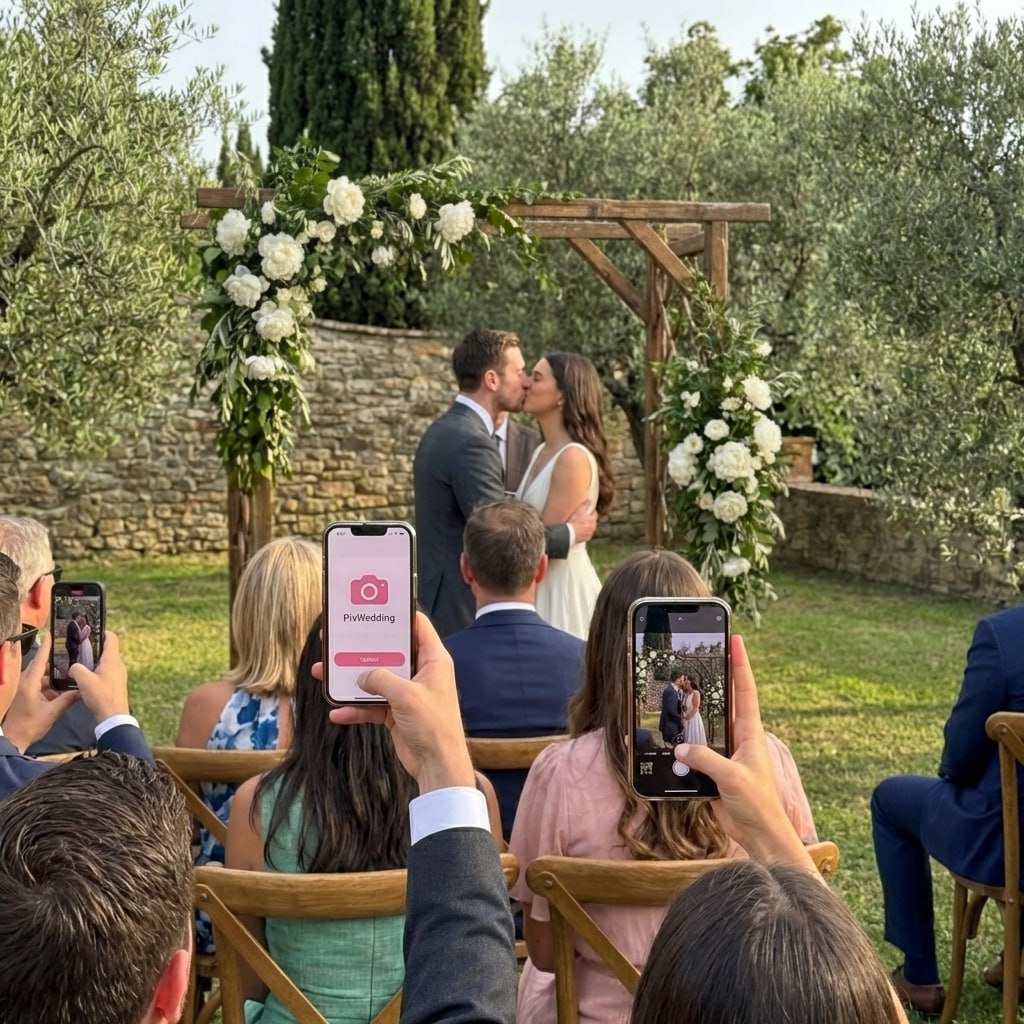
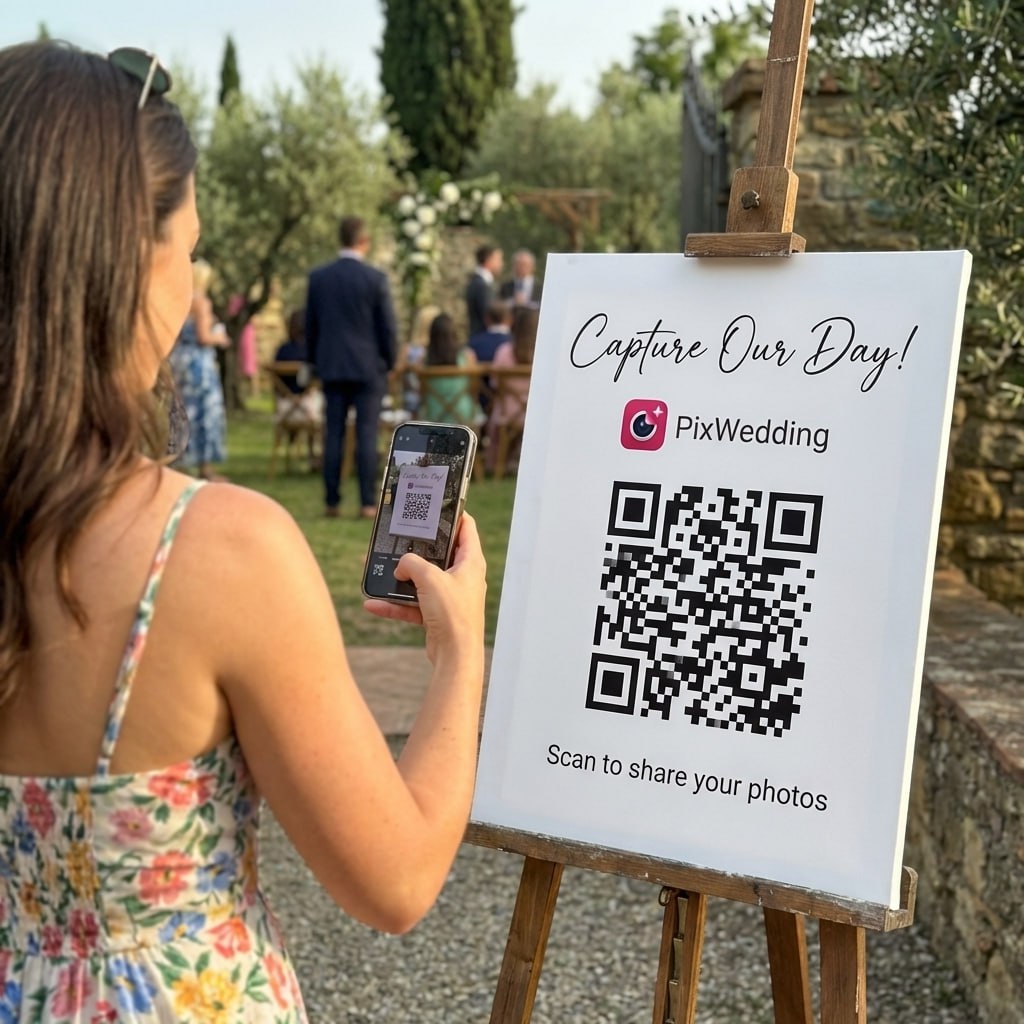
Pix Wedding pairs with your digital invite so the same QR code that confirms attendance also collects every guest photo of the night.
From Mom
Scan to join the album
No app, no account
UPLOADING
Saving your moment
THE ALBUM
Emma & Jack
June 21, 2026
647 photos · 95 guests





SCAN TO TRY
pix.wedding/
your-wedding
Real cost numbers: digital vs paper at 100 guests
Most couples underestimate paper cost because they price the invitation card and forget the six other line items. Here is the full picture.
Digital at 100 guests
- Platform subscription (mid-tier)$20-40
- Save-the-date send$0 (included)
- RSVP form and tracker$0 (included)
- Automated reminder emails$0 (included)
- Design tools and templates$0-10
- Total$20-50
Paper at 100 guests
- Invitation cards (design + print)$300-800
- Save-the-date cards$150-400
- Envelopes (inner + outer)$40-80
- Return address printing / calligraphy$50-200
- Postage (two-way, $0.73 x 200)$146
- Reply cards and postage$80-150
- Total$766-1,776+
The savings breakdown
Going fully digital saves the average couple $750-1,700 on invitation costs alone. At 150 guests, that gap widens to $1,100-2,500 or more. That is a flight for the honeymoon, a nicer caterer package, or a second photographer for the reception.
Making digital invitations work for elderly guests
The most common objection to going digital is the grandparent problem. It is a real problem. Here is how to solve it without printing 100 cards.
Print a card for 10-15 specific guests
Identify the guests who genuinely cannot navigate an RSVP form. Print a simple card with a large QR code and your phone number. The QR goes to the same digital RSVP page everyone else uses, so all responses land in one place.
Use a very short URL
A link like pix.wedding/smith2026 is memorizable and typeable. A 60-character platform URL is not. Most invitation platforms let you set a custom short URL. If yours does not, use a redirect via bit.ly or a custom domain.
No account required for RSVP
An RSVP form that asks guests to create an account before responding loses elderly guests immediately. The form should open, show fields, and accept responses with zero sign-up. This is non-negotiable for accessibility.
Phone RSVP as a stated option
Include your phone number on the invitation with the phrase: "Prefer to RSVP by phone? Call or text [number] by [date]." This gives elderly guests a dignified exit from the digital path without feeling singled out.
Large text and high contrast in the design
If elderly guests receive an email invitation, the design matters. Use at least 16px body text, high contrast between text and background, and a single large call-to-action button rather than a hyperlinked line of text buried in a paragraph.
Designate a family helper for tech questions
Ask one person in each elderly guest's immediate family to be the point of contact for RSVP help. A quick message saying "Aunt Rose, if you need help with the online RSVP just ask Jamie" removes the friction at the source without the couple being involved.
Related guides and tools
Everything that plugs into your digital invitation and RSVP setup.
Why digital invitations dominate 2026 weddings
Paper invitations have not disappeared, but they have become a premium add-on rather than the default. The combination of rising print costs (a full suite at 100 guests runs $800-3,000 once you add envelopes, calligraphy addressing, postage, and a reply card with its own stamp) and the expectation among guests under 50 that they can RSVP in under two minutes from their phone has pushed digital to the mainstream.
RSVP tracking is the decisive factor. Paper reply cards come back crumpled, unsigned, or not at all. Couples typically chase 20-30 percent of paper RSVP non-responders by phone. A digital RSVP form sends automated reminders, timestamps every response, and exports to a spreadsheet in one click. The administrative lift drops from hours to minutes.
- •Paper invitation suites at 100 guests average $800-3,000 including postage
- •Digital invitation platforms range from $0 to $50 for the same guest count
- •Automated RSVP reminders reduce no-response rates from 25% to under 8%
- •Digital RSVPs capture meal, dietary, and plus-one data in one structured form
- •Design turnaround is hours, not the 4-6 week print lead time
Building an RSVP system that actually works
The invitation is the wrapper. The RSVP system is the engine. Most couples spend 80 percent of their time on design and 20 percent on the form, and then wonder why they are manually texting guests the week before the wedding.
A solid RSVP setup collects the answer, timestamps it, sends an automatic confirmation email to the guest, and flags non-responders automatically 7 days before the deadline. You should not have to open a spreadsheet to know your current headcount at any point. Use a tracker that shows a live number. The Pix Wedding RSVP Tracker at /wedding-rsvp-tracker does exactly this, and it pairs with the invitation generator at /wedding-invitation-generator so the wording and the form are consistent.
Explore more free wedding tools
Everything you need to make your wedding day stress-free and unforgettable.
Seating Chart Planner
Plan your reception seating visually.
Guest List Manager
Track RSVPs and dietary needs.
Budget Allocator
Turn your total into a category-by-category plan.
Timeline Builder
Plan your entire wedding day.
Venues by State
Explore venues across all 50 states.
Countdown Timer
Count down the days to your big day.
Wedding Checklist
Month-by-month planning checklist.
Bachelorette Party Games
15+ games with rules, supplies, and timing.
Digital wedding invitations and online RSVP, answered
Straight answers to the questions people ask most about this topic.
Fully acceptable for the vast majority of weddings. The etiquette shifted decisively during 2020-2022 and has not snapped back. The one exception is ultra-formal black-tie affairs where printed correspondence remains the tradition. For every other style, digital is normal, expected, and often preferred by guests who dislike paper clutter.
Canva, Zola, and The Knot all offer free tiers with basic RSVP collection. Canva gives the most design control. Zola and The Knot bundle RSVP with a free wedding website. The trade-off on free plans is typically branding watermarks or limited guest counts. For most couples at 80-150 guests, a free or $20-40 plan covers everything needed.
Three things matter: a very short URL or printed QR code (not a 60-character link), a form that works without creating an account, and a phone number fallback on the invitation itself. Phrase it as 'RSVP online or call us directly at [number]' so older guests who are not comfortable with forms have a dignified alternative.
Yes, and this hybrid approach is increasingly common. Send digital to the 80 percent of your list that is comfortable with it, and print for elderly relatives, guests without reliable email, or anyone whose mailing address you have. The RSVP link on a printed card is identical to the digital version, so all responses land in the same tracker.
The same window as paper: save-the-dates 6-8 months out, formal invitations 6-8 weeks before the date. Digital actually lets you send the save-the-date faster since there is no print lead time. Set your RSVP deadline 3-4 weeks before the event to give caterers enough notice.
At minimum: attending yes/no, full name of each guest, meal choice if you have a plated dinner, and dietary restrictions. Useful extras include plus-one confirmation, song requests, and kid count. Avoid asking more than 6-8 questions or response rates drop noticeably. Meal selection and dietary needs are the highest-value fields after the headline yes/no.