
Applique Lace Wedding Dress Guide
What applique lace actually is, which silhouettes it suits, what it tends to cost, the questions to ask at your fitting, and how to care for it after the wedding.
Applique lace is individual lace motifs, usually floral, that are cut and sewn onto a base fabric such as tulle, satin or crepe, rather than woven as one continuous piece of fabric. It creates raised texture and dimension, lets a designer control exactly where detail sits on a gown, and reads as more sculptural and dramatic than a flat lace overlay.
Applique lace searches jumped 950% in 90 days
A 2026 wedding search trends analysis by 24fingers found applique lace was the fastest-rising dress-detail search of the past 90 days, alongside a cluster of other detail-driven searches.
The shared thread across all four is texture and detail, not minimalism. After several years of clean-line, minimal-embellishment gowns dominating bridal search, this data points to brides actively searching for dresses that look dressed rather than styled: raised lace, straps, print and volume, rather than plain silhouettes.
Applique lace vs. the other bridal lace types
Bridal salons use several lace names interchangeably, which makes shopping confusing. Here is how the main types actually differ, per The Knot's guide to wedding dress lace and standard bridal fabric terminology.
| Lace type | What it is | Best for |
|---|---|---|
| Applique lace | Individual motifs cut and sewn onto a base fabric, not continuous | Sculptural, dimensional looks with controlled placement |
| Chantilly lace | A lightweight, continuous mesh with fine floral patterns woven in | Soft, airy, romantic overlays and sleeves |
| Alencon lace | A structured French lace with motifs outlined by a raised cord | Heirloom-style gowns, pairs well with satin or mikado |
| Guipure lace | A bold lace with no visible mesh background, motifs joined by bars | High-impact looks without sparkle, photographs strongly |
Many gowns combine two of these. A common pairing is an Alencon or Chantilly lace bodice with applique motifs scattered down the skirt or trailing along a train edge, which is why the lace name on a single gown's tag can list more than one type.

First dance
You guys!!
Every guest will want a close-up of that lace
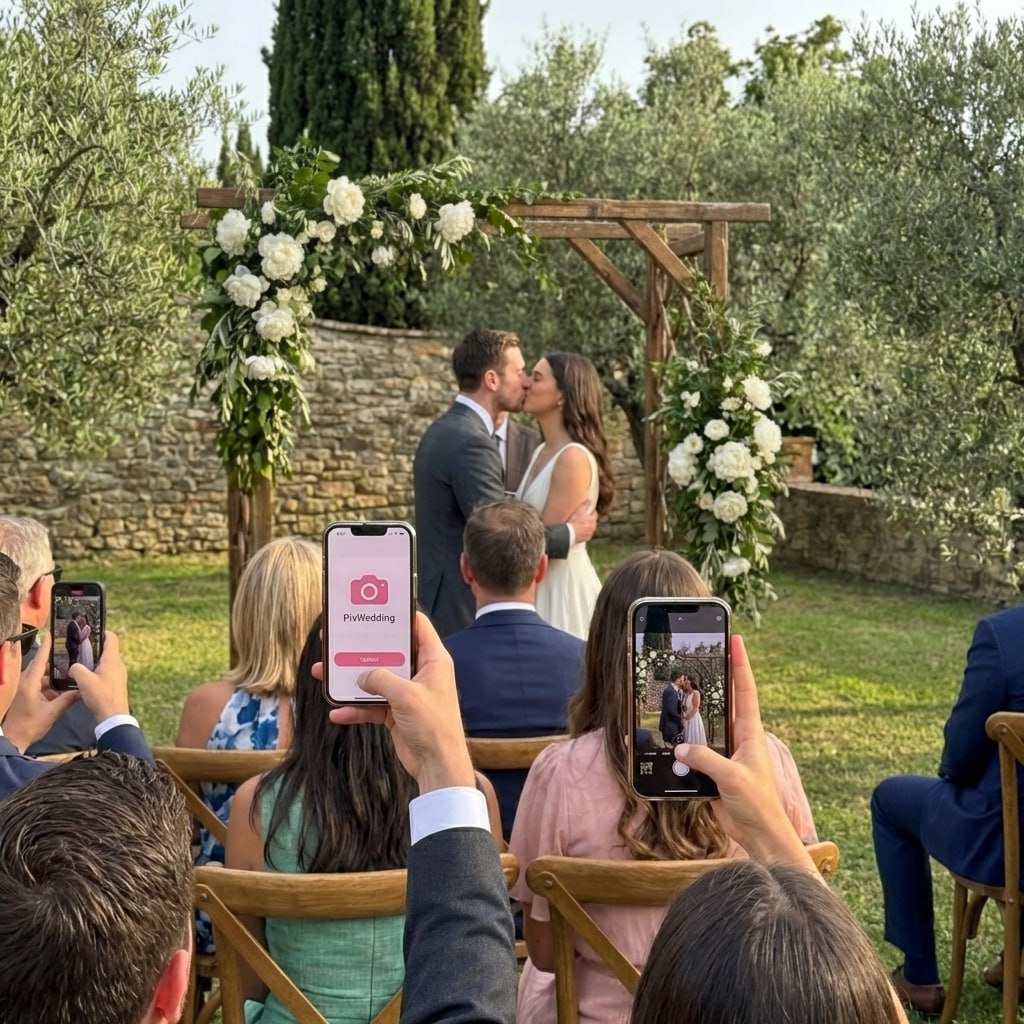
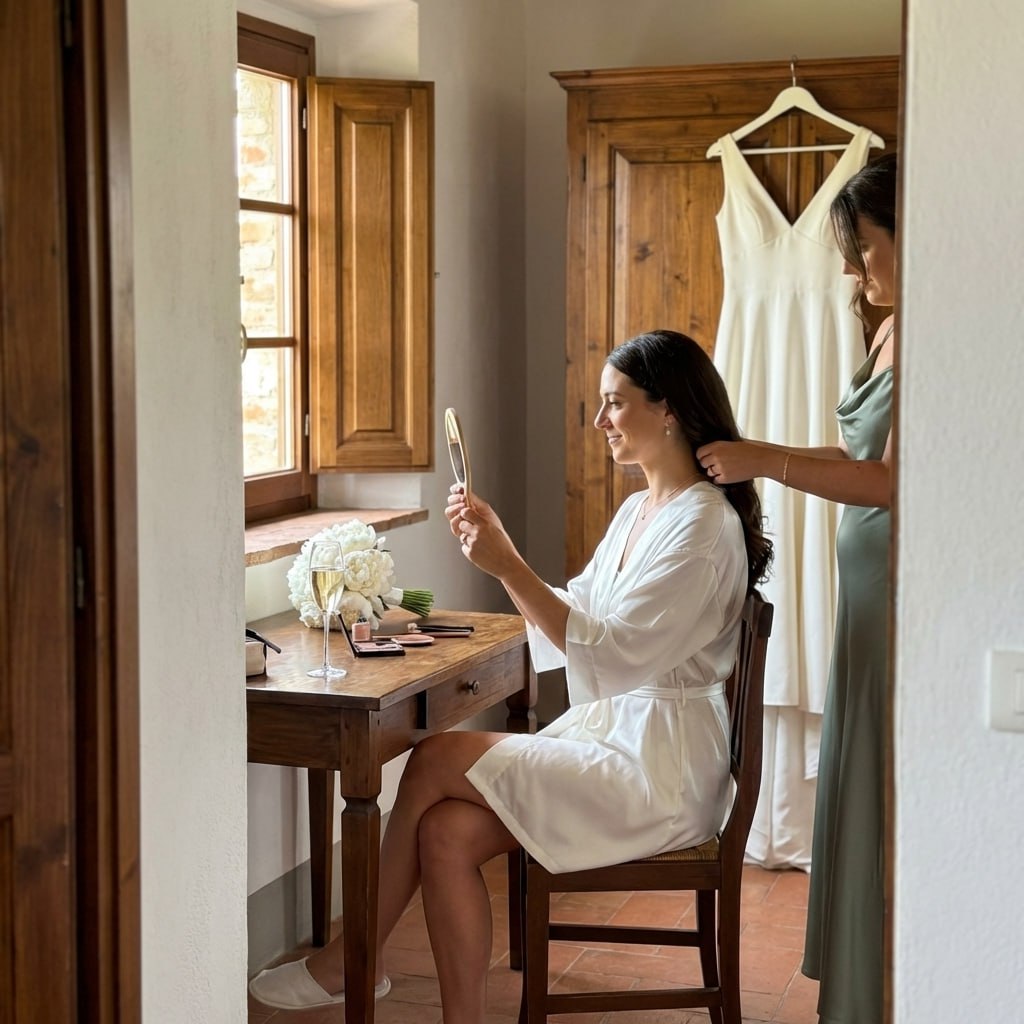
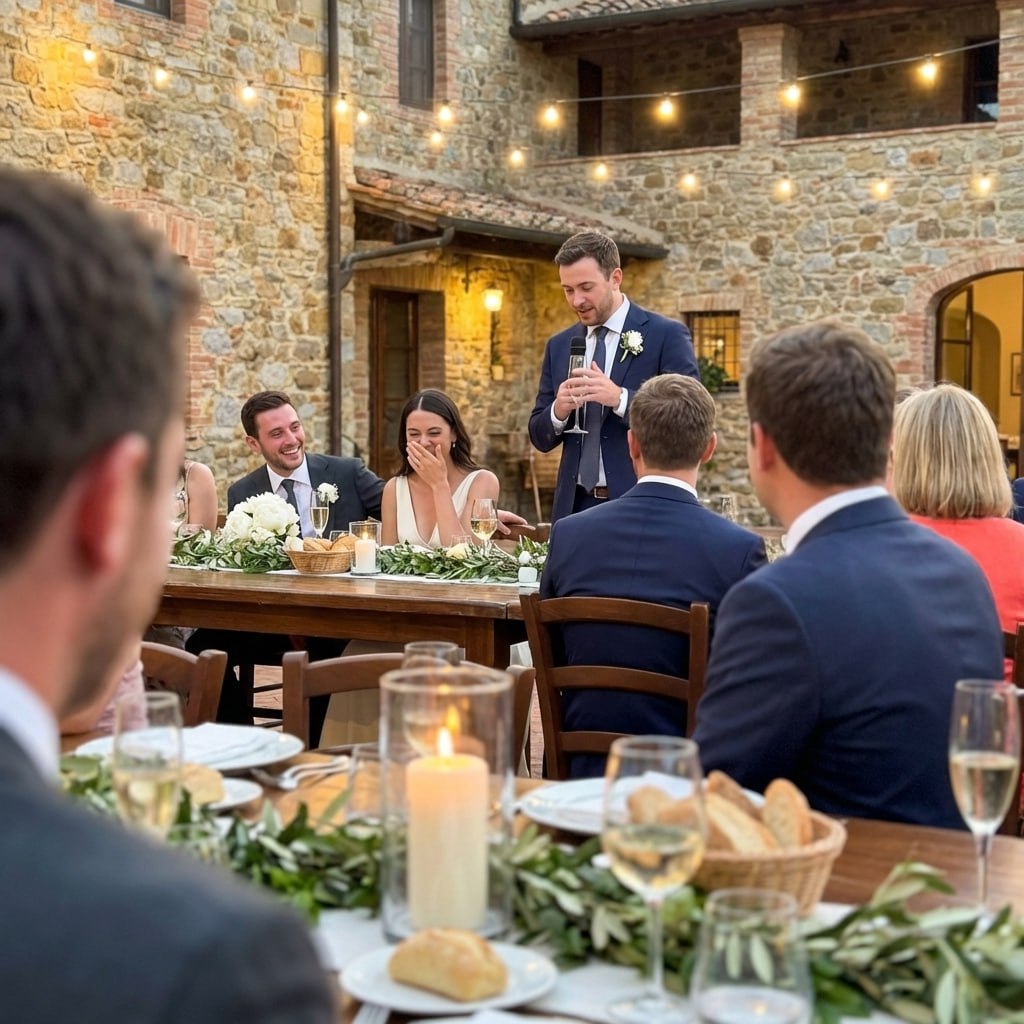
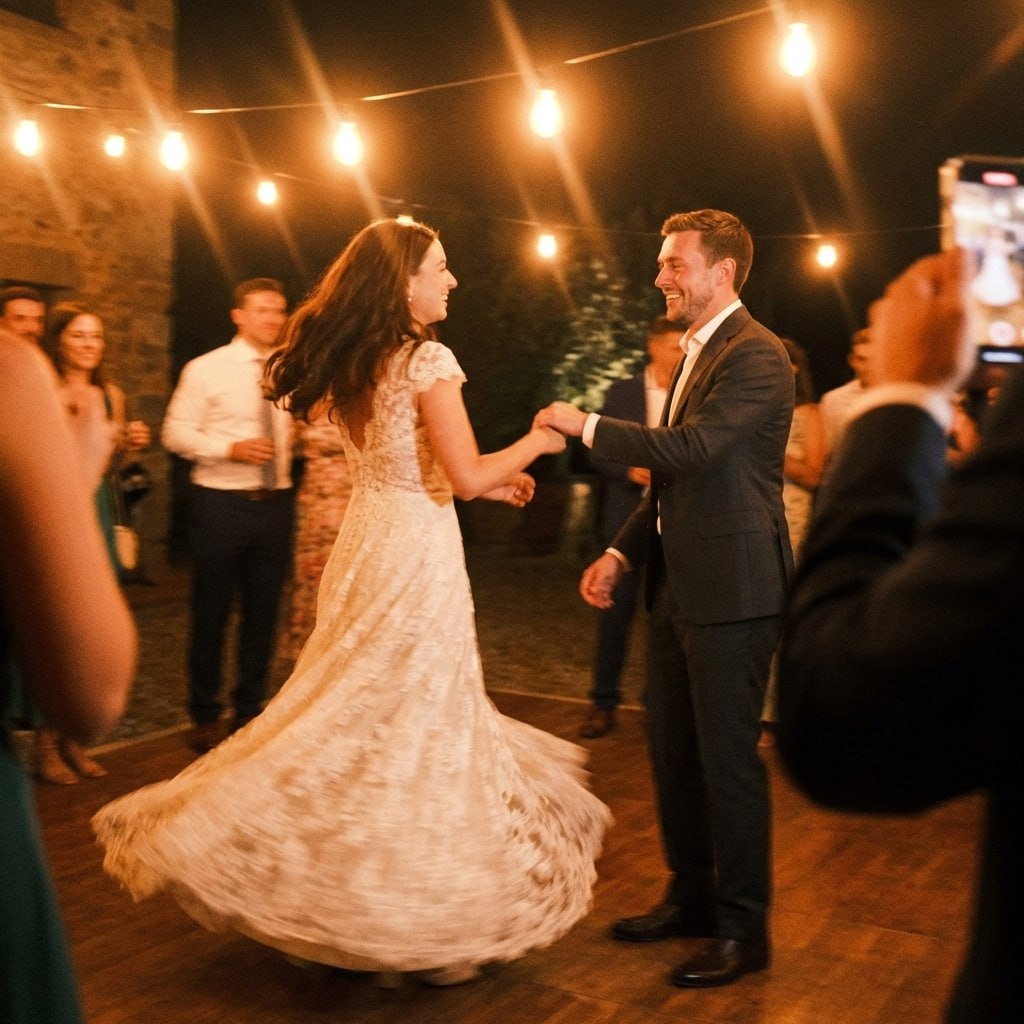
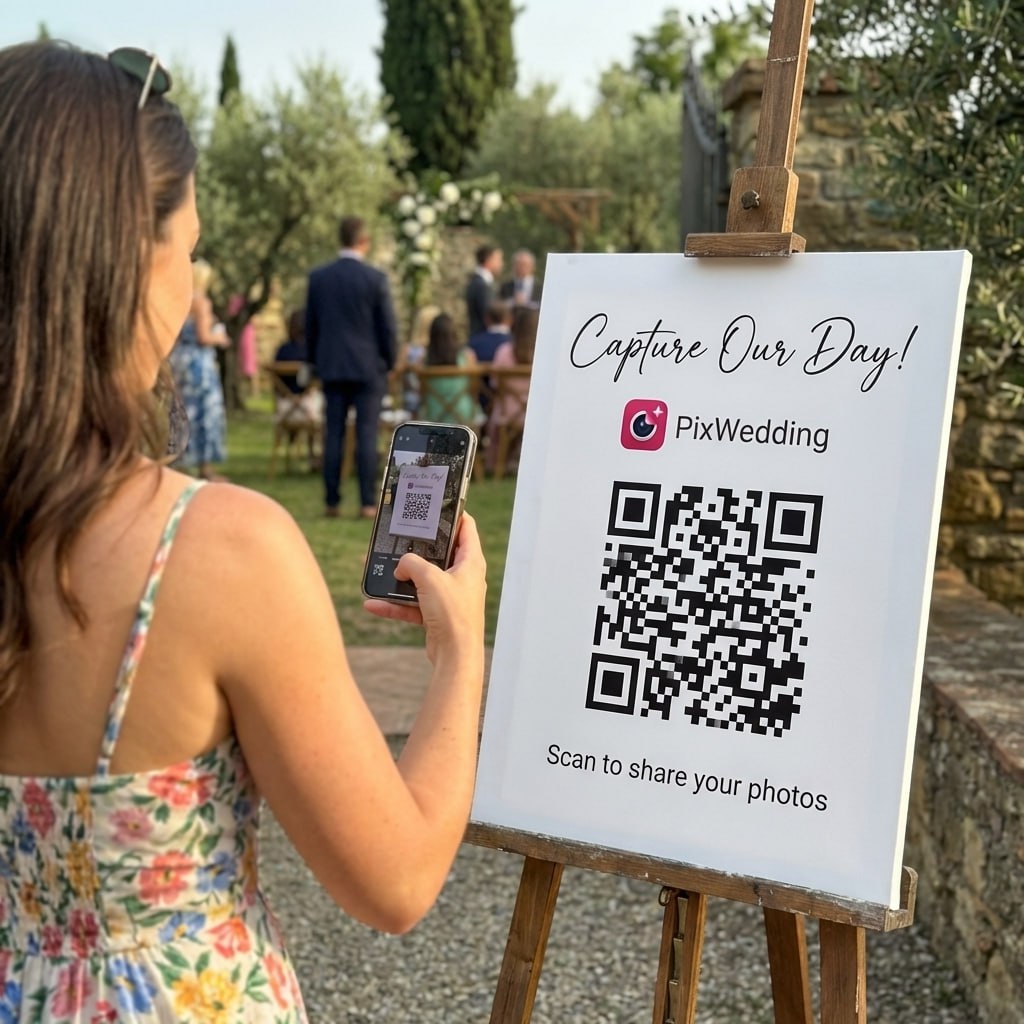
A QR code on your welcome sign collects every detail shot, from the appliqued train to the reception dance floor, in one shared album instead of scattered across phones.
From Mom
Scan to join the album
No app, no account
UPLOADING
Saving your moment
THE ALBUM
Emma & Jack
June 21, 2026
647 photos · 95 guests
SCAN TO TRY
pix.wedding/
your-wedding
Which silhouettes suit applique lace
Mermaid and fit-and-flare
Applique motifs follow the body's curve and catch light along every seam, which is why appliqued lace shows up most often on fitted silhouettes in bridal collections.
A-line
Applique concentrated on the bodice with motifs scattered lightly down the skirt keeps the silhouette from feeling heavy while still showing detail.
Ball gown
A dense appliqued bodice paired with a plain full skirt creates contrast between texture and volume, a common styling choice for larger, more formal weddings.
Sheath and column
Applique works well in a scattered, asymmetric placement here, since a fully dense pattern can visually shorten a narrow silhouette.
Where applique lace typically shows up on a gown
- Bodice and neckline, often the densest concentration of applique on a gown, drawing the eye upward for photos.
- Long sleeves or an illusion neckline, where applique creates the look of lace "floating" on sheer tulle.
- A trailing edge down the skirt or train, sometimes called a "lace vine" effect.
- A detachable overskirt or bolero with its own applique pattern, giving a bride two distinct looks in one dress.
- Veil edges, which many brides match to the gown's applique pattern for a cohesive look in photos.
Two verified examples of designers working with applique lace at very different points on the market: Pronovias runs an entire dedicated lace collection built around floral applique work, and Galia Lahav's couture line features hand-sewn 3D floral applique on several signature gowns. Both confirm applique lace is available across a wide budget range, not just at the top end.
What to expect on cost
There is no single reliable national average for "an applique lace dress" because pricing spans from mass-market to full couture. What is consistent is the direction of the effect.
Hand-placed applique work takes meaningfully more sewing time than a continuous lace panel, and gowns marketed as "hand-appliqued" typically sit toward the higher end of a designer's own range for that reason. The lace fabric cost is a smaller factor than the labor to place it precisely.
A gown with applique scattered lightly across a bodice will generally cost less than an identical silhouette covered edge to edge in dense applique, since density is roughly proportional to hours of hand work.
Resizing a gown with applique lace usually costs more than resizing a plain-fabric gown, because a seamstress has to work around or re-place lace motifs rather than simply taking in a seam.
A worked example (not a real couple, just a walk-through)
Say a bride is choosing between two A-line gowns from the same designer's collection. Gown A has an applique lace bodice with a plain crepe skirt. Gown B has the same applique lace continuing all the way down the skirt and onto a short train. In a case like this, expect Gown B to cost noticeably more, largely from the extra hours of hand placement on the skirt and train, not from a different lace fabric. If budget is tight, a common compromise is choosing Gown A's construction and asking a seamstress to add a lighter scattering of matching applique motifs down the skirt as a lower-cost alteration after purchase, rather than buying the fully appliqued version outright.
Questions to ask about applique lace at a fitting
- 1Is the applique hand-sewn or machine-sewn?
Hand-sewn applique generally holds up better to alterations and moves more naturally, but costs more.
- 2Can the applique motifs be moved or added during alterations?
Some designers allow a seamstress to shift lace placement during sizing; others do not, which matters if you gain or lose weight before the wedding.
- 3What is the realistic alteration timeline for this specific gown?
Appliqued gowns often need more fitting appointments than plain-fabric gowns, so confirm this before you set a purchase deadline.
- 4How should this dress be cleaned if something spills on the lace during the reception?
Applique needs specialist handling; a normal dry cleaner without bridal lace experience can damage it.
- 5Does the veil or accessories need to match the applique pattern, and can that be custom ordered?
Matching a veil's lace edge to the gown's applique is a common request but usually needs to be ordered separately and early.
Care and preservation
Per The Knot's guide to preserving your wedding dress, embellishments like beading, embroidery and applique must be cleaned and protected individually, which is exactly why an appliqued gown needs a service with specific lace experience.
Drop the gown off with your chosen cleaner or preservation service. Stains, especially from wine, cake or grass, are easiest to remove the less time they sit.
A typical timeline for full cleaning and preservation of an embellished gown, since appliqued and beaded details are handled individually rather than run through a standard wash cycle.
Store in acid-free materials, away from direct light and humidity. Ask specifically whether the preservation box is designed to accommodate raised applique without crushing it.
If applique lace is not quite right
All-over Chantilly lace
A softer, more uniform look without the raised texture, better suited to brides who want lace throughout without the visual weight of dense applique.
Beaded or crystal embellishment
Beadwork gives similar dimensional detail and photographs with more sparkle than lace, at a different cost and weight profile.
Alteration-added applique
Buy a plainer, lower-cost gown and have a seamstress add applique motifs to specific areas (sleeves, neckline, hem) as a lower-budget middle ground.
Pros and cons of choosing applique lace
Pros
- Dimensional texture: raised motifs catch light and photograph with more depth than a flat lace overlay.
- Controlled placement: designers can concentrate detail exactly where you want it, rather than a uniform pattern.
- Alteration flexibility: motifs can sometimes be added, removed or shifted more easily than resizing a continuous lace panel.
- Wide budget range: available from mass-market retailers through full couture, not exclusive to any one price tier.
Cons
- Costs more at the same density level: hand-placement labor adds up compared to continuous lace.
- Longer alteration timelines: seamstresses need extra time to work around motifs.
- Specialist cleaning required: not every dry cleaner is equipped to handle appliqued detail safely.
- Can feel heavy if overdone: dense applique across an entire gown can visually overwhelm a petite frame.
Common mistakes when choosing an applique lace dress
The lace name on a tag says little about cost. Density and hand-work are the real cost drivers, so compare gowns by those, not by the word "lace" alone.
Booking a gown without asking about appliqued alteration timelines can leave you scrambling close to the wedding date.
Raised applique can look very different in bright outdoor light versus dim reception lighting. Ask to see the fabric under both if possible.
A generic dry cleaner without bridal lace experience can flatten or damage applique motifs during cleaning.
More applique is not automatically better. A scattered, considered placement often reads as more elegant than edge-to-edge coverage.
Why lace has been a bridal staple for so long
Lace has been associated with bridal wear since well before mass production existed, largely because handmade lace was historically a luxury good and a visible sign of craftsmanship. Applique construction specifically became more accessible as machine lacemaking matured, letting designers combine the labor-intensive look of hand-placed motifs with production techniques that keep it available across a much wider range of budgets than pure hand-lace ever was.
More planning tools and guides
Watch how applique is actually applied to a gown
If you want to see the difference between all-over lace and applique technique explained by a working bridal atelier, this walkthrough is a clear side-by-side.
Source: Lace & Liberty, "How We Apply Lace to Your Wedding Dress | All-Over Lace vs. Appliqué Techniques."
Reading this page if you have not started dress shopping yet
If you are early in the process, the one thing worth doing before you set foot in a bridal salon is deciding how much texture you actually want. Applique lace is a texture decision as much as a style decision: it adds visual weight, catches light differently than a plain fabric, and photographs with more depth in both bright and low light. Bring a few reference photos of gowns you like so a consultant can tell you quickly whether the look is achievable in your budget range.
The search data behind this page (a 950% spike in applique lace searches over 90 days) suggests a lot of brides are arriving at salons this season already looking for this specific word, which is a good sign the industry is stocked for it right now rather than treating it as a rare special order.
Reading this page if you already picked a dress with applique lace
If you already said yes to a gown with applique detailing, the two things to prioritize next are fitting timeline and preservation planning. Appliqued gowns often take longer for alterations because the lace has to be worked around, not just resized, so confirm your alteration timeline with the salon early rather than assuming a standard eight-to-twelve-week window applies.
It is also worth deciding before the wedding, not after, where you will send the dress for cleaning and preservation, since appliqued and beaded gowns need a service with specific experience in that kind of detailing.
Explore more free wedding tools
Everything you need to make your wedding day stress-free and unforgettable.
Wedding Aesthetic Quiz
Find your 2026 wedding aesthetic in 12 questions.
AI Wedding Dress Generator
Design your dream gown and get an AI image prompt.
Wedding Monogram Maker
Design a custom monogram with your initials.
Photo Sharing QR
The best way to collect guest photos.
Wedding Checklist
Month-by-month planning checklist.
Cost Calculator
Compare wedding costs by city.
AI Vow Generator
Write "banger" vows in seconds.
AI Speech Pro
Banger toasts for Best Man & more.
Applique lace wedding dress FAQ
Straight answers to the questions people ask most about this topic.
Applique lace is individual lace motifs, usually floral, that are cut out and hand or machine sewn onto a base fabric like tulle, satin or crepe, rather than the lace being woven as one continuous piece. This creates raised texture and a layered, dimensional look, and it lets a designer place dense detail exactly where they want it (a neckline, a train edge) while keeping other areas of the gown plain.
Chantilly lace is a lightweight, continuous mesh fabric with fine floral patterns woven directly into it, used as an overlay or full-length layer. Applique lace is not a continuous fabric at all; it is separate motifs placed and stitched onto a base. A dress can combine both: a Chantilly lace bodice with applique lace motifs scattered down the skirt, for example.
It can be, mainly because of labor rather than material cost. Hand-placed applique work takes significantly more sewing time than a continuous lace panel, and gowns advertised as "hand-appliqued" or "hand-beaded applique" typically sit at the higher end of a designer's line for that reason. Cost varies enormously by designer and retailer, so always ask for the specific gown's price rather than assuming from the fabric name alone.
Fitted silhouettes (mermaid and fit-and-flare) show off applique lace especially well because the motifs follow the body's curve and catch light along the seams. Ball gowns and A-lines work too, usually with applique concentrated on the bodice and scattered lightly down the skirt rather than covering it entirely, which keeps the silhouette from feeling heavy.
Applique details need to be cleaned and protected individually, which is more delicate work than cleaning a plain fabric gown, so it is worth confirming your cleaner or preservation service has specific experience with appliqued or beaded lace before you commit. Start the process as soon as reasonably possible after the wedding since stains are easier to remove the less time they sit.
Yes, this is a common alteration. A seamstress can add applique lace motifs to sleeves, a neckline, a train edge or a plain bodice on an existing gown, which is a popular way to personalize a simpler, less expensive dress. Bring reference photos of the exact placement and density you want to your first fitting.