
Wedding RSVP: dedicated app vs Google Form vs paper vs wedding website
Four RSVP methods, real cost-per-guest numbers, and a direct answer for every guest list size. Find out which tool actually handles plus-ones, dietary flags, and late replies without extra work.
Track RSVPs FreeThe Short Answer
For most weddings in 2026 with 50 or more guests, a dedicated RSVP tool integrated with a wedding website is the best choice. It handles plus-ones, dietary capture, meal tallies, and real-time response tracking in one dashboard, without manual spreadsheet work. The time savings alone justify the $20-$120 platform cost.
Google Forms wins for budget couples with tech-comfortable guests under 80 people: it is free, connects to Google Sheets for automatic tallying, and works well when you have two hours to configure it properly. Paper RSVP cards pass exactly one test: guests over 65 without smartphones. For everyone else, paper adds cost and manual work without meaningful benefit. A dedicated RSVP app wins outright on integration because meal tallies, plus-ones, dietary data, and song requests all flow into a single exportable report.
4-Way RSVP Comparison Matrix
Row-by-row breakdown of every criterion that matters when choosing your RSVP system.
| Criterion | Dedicated App (Joy, Zola, The Knot) | Google Form (+ Google Sheets) | Paper Card (mail-out) | Wedding Website (bundled RSVP) |
|---|---|---|---|---|
| Setup time | 30-60 min | 1-2 hours | 2-4 hours (design + print order) | 15-45 min (if site already built) |
| Cost | $20-$120 flat | Free | $3-$6 per guest | $0-$200/year (bundled) |
| Plus-one handling | Built-in with name capture | Conditional section (manual setup) | Line on card (often no name) | Varies by platform |
| Dietary capture | Standard field, included | Custom field (you add it) | Line field (illegible risk) | Varies by platform |
| Meal export | One-click CSV export | Google Sheets (COUNTIF) | Manual transcription required | Platform-dependent |
| Song requests | Built-in on most platforms | Custom field (you add it) | Line field (impractical) | Rarely included |
| Mobile friendliness | Excellent (native mobile) | Good (responsive form) | N/A (physical) | Good to excellent |
| Elderly-guest friendliness | Fair (unfamiliar interface) | Fair (basic web form) | Excellent | Fair |
| Late RSVP handling | Stays open, auto-updates | Stays open, new row added | No late-arrival mechanism | Stays open, auto-updates |
| Reminder workflow | Automated sequences built-in | Manual or Zapier | None (manual phone calls) | Basic on some platforms |
| Tracking effort | Low (live dashboard) | Low (after Sheets setup) | High (manual data entry) | Low to medium |

RSVP tool agnostic
Works with any of them
One album for everyone, whatever RSVP tool you pick
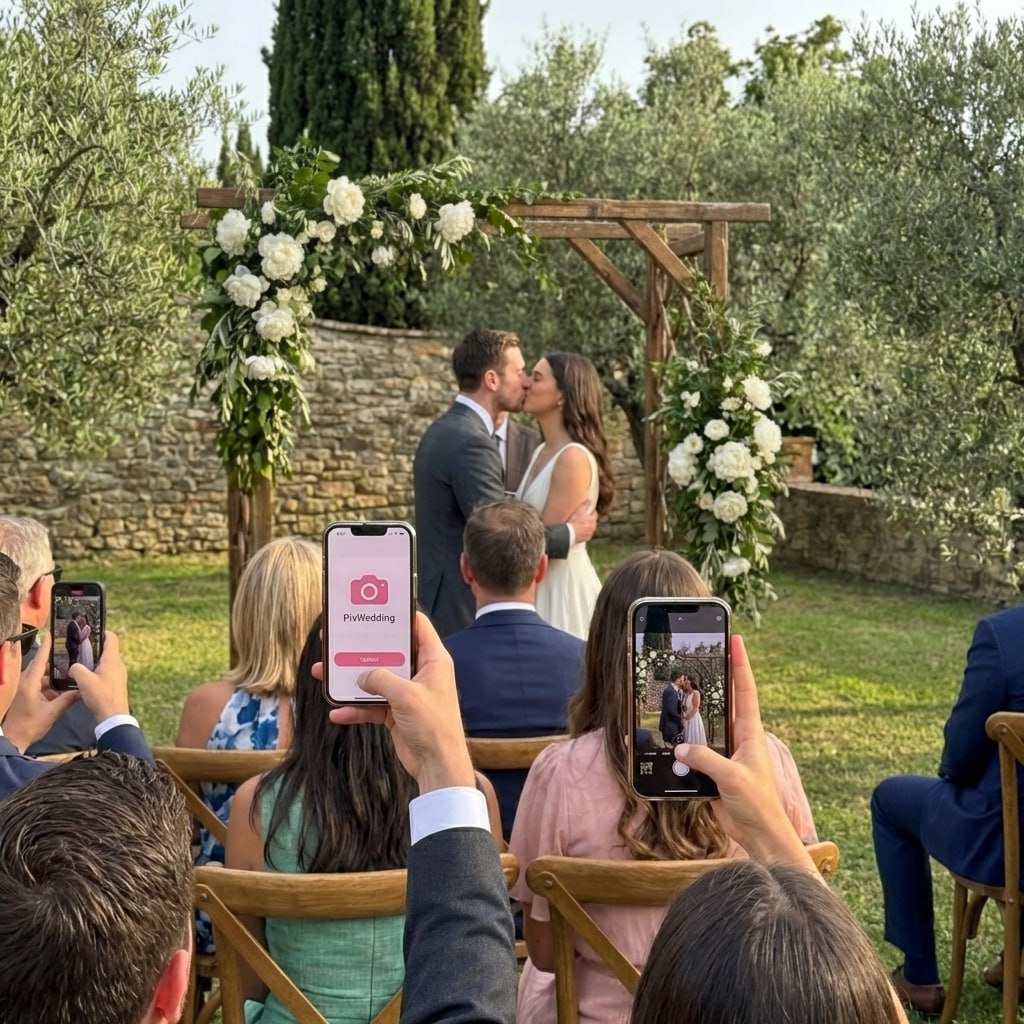
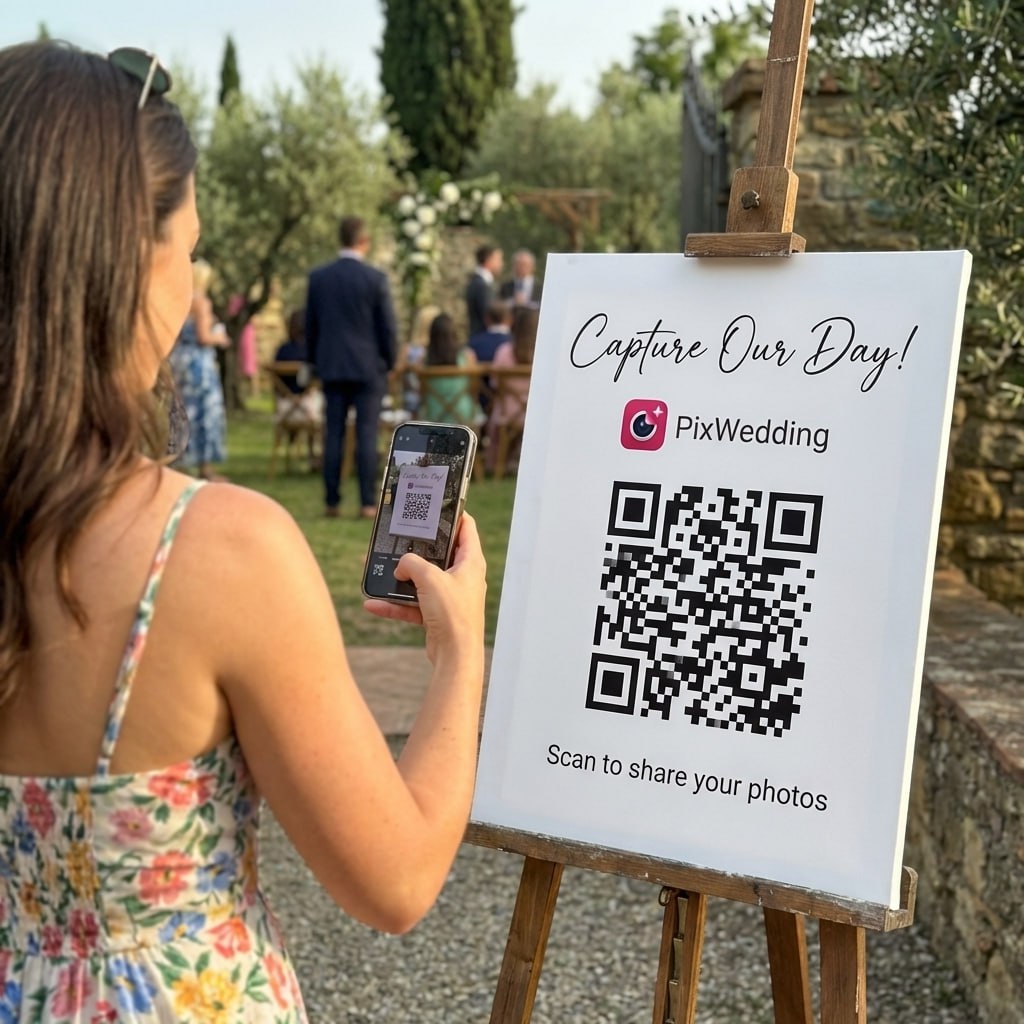
Pix Wedding works alongside any RSVP system. Share album QR with confirmed guests; no-shows still see the morning-after photos.
From the planner
Scan to join the album
No app, no account
UPLOADING
Saving your moment
THE ALBUM
Emma & Jack
June 21, 2026
647 photos · 95 guests






SCAN TO TRY
pix.wedding/
your-wedding
Cost-Per-Guest Math
Real numbers for a 100-guest wedding, using median 2026 pricing. The cost differences are significant.
Dedicated RSVP App
Joy offers a free tier for basic use. Zola and The Knot are free with website bundle. Paid tiers ($20-$120) unlock advanced exports, unlimited guests, and automation features. Cost does not scale with guest count on most platforms.
Google Form
Genuinely free. The cost is your setup time (1-2 hours for a well-configured form plus Sheets dashboard). If you use Zapier for automated confirmation emails, add $0-$20/month, though the free Zapier tier handles most wedding volumes.
Paper RSVP Cards
Breakdown: $0.60-$1.20 per card printing (Vistaprint/Minted), $0.73 outbound stamp, $0.73 return stamp, $0.50-$1.00 envelope and return envelope. Total per guest: $2.56-$3.66 at minimum. Add $0.50-$2 per guest for premium paper and design. Full mail-out for 100 guests runs $300-$600.
Wedding Website RSVP
Zola and The Knot offer free wedding websites with bundled RSVP. Squarespace Personal plan is $16/month ($192/year). Wix free tier includes basic RSVP. Minted wedding websites start at $15/month. If you are already paying for the site, RSVP is effectively free.
Setup Time Comparison
Time is a real cost. Here is how each method compares from initial setup through the last response.
| Method | Launch Time | Time per RSVP Processed | Reminder Workflow | Late-Reply Handling |
|---|---|---|---|---|
| Dedicated App | 30-60 min | 0 min (automatic) | Automated sequences (set once) | Auto-updates dashboard; no action needed |
| Google Form | 1-2 hours (includes Sheets setup) | 0 min (auto-adds to Sheet) | Manual email/text, or Zapier (30 min setup) | New row added automatically |
| Paper Cards (full mail-out) | 2-4 hours (design, print order, addressing) | 2-5 min (open, read, transcribe, file) | Phone calls only; no systematic option | Manual: requires receiving, transcribing |
| Wedding Website | 15-45 min (if site already exists) | 0 min (automatic) | Basic email on some platforms | Auto-updates dashboard on most platforms |
RSVP Adoption Rate by Guest Age Group
The method you choose should match your actual guest demographics. Here is what adoption looks like in practice.
Nearly all will complete a digital RSVP on a smartphone without friction. QR links work well for this group. Dedicated apps and Google Forms both perform equally. This group is also most likely to complete the form immediately rather than waiting.
Any digital method works. Optimize for speed: one-click links, mobile-first forms.
Very high digital adoption. Most have a smartphone and regularly use web forms for travel, work, and reservations. The 10% who have difficulty are typically not tech-averse but may be inconsistent about checking email. A text-message link outperforms email for this cohort.
Text-message RSVP links outperform email for 36-55 guests.
Meaningful variance in this group. About 60% will complete a mobile RSVP without issues. Another 30% may need a phone call or in-person nudge to complete the form, not because they cannot but because they are less likely to prioritize it. About 10% in this age range genuinely struggle with mobile forms and appreciate a paper alternative.
Have a phone number guests can call or text to RSVP verbally; this covers the 30-40% friction group.
The one age group where paper cards remain genuinely appropriate. Only about 40% of guests in this age range will complete a mobile digital form without help. Another 50% prefer paper or phone call. About 10% in this group will simply not RSVP at all regardless of method, and you will need to follow up personally with a family member who can confirm for them.
Mail paper cards to all guests you know to be in this age range. Call non-responders 1 week before deadline.
What this means for your RSVP choice
If your guest list is predominantly 18-55 (typical for couples marrying in their late 20s or 30s), a fully digital RSVP is appropriate and any digital method will work. If you have a meaningful number of guests over 65 (more than 10-15 people), plan for a hybrid: digital for the main list, paper for the older relatives.
The most common mistake couples make is designing the RSVP system for the 5% of guests who are elderly and inconveniencing the 95% who would have preferred a faster digital option. The reverse mistake is ignoring the elderly guests entirely and then having 8 grandparents who never RSVP at all.
Per-Tool Deep Dive
Detailed breakdown of each method including what it does well, where it falls short, and which couples it suits.
Dedicated RSVP App
Joy, Zola, The Knot, Riley & Grey, Greenvelope
What it does well
- Real-time response dashboard with live counts
- Built-in plus-one name capture with conditional fields
- Dietary restriction and meal choice columns auto-populated
- Automated reminder email/text sequences
- Exports directly to seating chart and caterer templates
- Song request and transportation fields included
Falls short on
- Costs $20-$120 depending on platform and guest count
- Requires guests to interact with an unfamiliar interface
- Some elderly guests will not complete it without help
Dedicated RSVP apps are the clear winner for weddings with 50 or more guests. The time you save on manual tracking, reminders, and data entry typically pays back the platform fee many times over. Joy offers the most generous free tier. Zola and The Knot tie the RSVP into a full wedding website. Riley and Grey is best for design-forward couples. Greenvelope is strongest for digital paper-simulation aesthetics. All five offer mobile-first forms that load fast on Android and iOS.
The differentiator between these platforms is usually the post-RSVP workflow: how the data exports, whether it integrates with your seating chart tool, and how much customization you have over the reminder sequence. If you already use one platform for your wedding website, using the same platform for RSVP eliminates one point of friction for guests.
Google Form
Free, connected to Google Sheets
What it does well
- Completely free, no account required for guests
- Google Sheets auto-tallies responses in real time
- COUNTIF formulas give instant meal and dietary counts
- Conditional logic sections handle plus-one name capture
- Zapier or Make can auto-send confirmation emails
- Infinitely customizable with Google Sheets formulas
Falls short on
- Forms look utilitarian; little visual branding control
- No native reminder workflow; must be manual or via Zapier
- No direct export to seating chart tools
- Requires Zapier setup for automated confirmation emails
Google Forms is a legitimate and underrated RSVP tool for couples who are comfortable with spreadsheets. The key setup step is connecting the form to a Google Sheet and building a summary dashboard: total yes count, total no count, meal choice breakdown, dietary flag list. This takes about 2 hours to configure properly but then runs automatically. Use the "required" field setting on every question to prevent blank submissions.
The one thing Google Forms cannot do natively is send an automated confirmation email to guests after they submit. For this, connect the Sheet to Zapier with a trigger on new row, sending a Gmail confirmation. This adds about 30 minutes of setup and costs nothing on the Zapier free tier for small wedding volumes. Do not skip the confirmation email; guests who submit and receive no response often re-submit, creating duplicates.
Paper RSVP Cards
Traditional mail-out with return envelope
What it does well
- Works for any guest regardless of tech comfort
- No login, no app, no device required
- Tangible and feels personally considered
- Some elderly guests genuinely prefer and expect it
Falls short on
- $3-$6 per guest all-in (printing, two-way postage, envelope)
- Requires manual transcription into your tracking system
- Responses arrive out of order over several weeks
- Illegible handwriting causes data errors
- No automatic reminder capability
- Return rate typically 60-75%; many guests simply do not mail them back
Paper RSVP cards are not obsolete, but their use case has narrowed significantly. In 2026, the only compelling reason to mail paper cards to your entire guest list is a wedding where the average guest age is genuinely high and digital access is limited. For most weddings, mailing paper to the full list spends $300-$600+ to collect data that will require manual entry, arrive over 4-6 weeks, and still leave 20-30% of guests who never mail it back.
If you do use paper cards, always include a stamped return envelope (guests who must supply their own stamp return cards at roughly half the rate of those with stamps included). Keep the form simple: a checkbox for yes/no, a line for plus-one name if applicable, a line for dietary restrictions, and the deadline date. Open-ended questions on paper cards produce unusable answers. Closed questions with specific options produce data you can actually use.
Wedding Website RSVP
Zola, Squarespace, Wix, Knot, Minted
What it does well
- Single destination for all wedding info and RSVP
- Bundled into website cost ($0-$200/year)
- Guests already on your website when they RSVP
- Design consistency with rest of your wedding brand
- Most platforms include basic dietary and plus-one fields
Falls short on
- RSVP feature quality varies widely by website builder
- Squarespace and Wix RSVP forms are more basic than dedicated apps
- Some platforms charge extra for advanced RSVP features
- May not export in a format caterers and venues prefer
Wedding website RSVP is the right choice when you are already paying for a wedding website platform that includes a capable RSVP feature. Zola includes one of the strongest bundled RSVP tools with meal choice fields, dietary capture, and a guest management dashboard at no additional cost. The Knot and Minted also include solid RSVP features in their website plans.
The case against wedding website RSVP is when the platform you chose for visual design has a weak RSVP module. Squarespace makes beautiful wedding websites but its RSVP form is basic: it captures name and attendance, but dietary, meal choice, and plus-one tracking require workarounds. In this case, embedding a linked Google Form or using a dedicated RSVP tool alongside your website is a better solution than fighting your platform's limitations.
The Hybrid Approach Most Couples Use
The approach that covers 95% of responses without full paper cost: use a dedicated app or wedding website RSVP as the primary channel for all guests, then mail paper cards specifically to the 5-10 elderly relatives who request them or who you know will not use a smartphone.
This hybrid eliminates the $300-$600 cost and 2-4 hours of setup for a full paper mail-out while still accommodating the guests who genuinely need paper. The incremental cost is minimal: 10 paper cards with printing and return postage runs under $30. Transcribing 10 paper responses takes about 15 minutes.
On the digital side, choose whichever primary tool best matches your guest count and tech comfort: dedicated app for 50+ guests with complex dietary and meal needs, Google Forms for smaller budget weddings, or your wedding website RSVP if it is already bundled into a platform you are using.
Digital primary (90-95% of guests)
- Dedicated RSVP app link sent by email and text
- QR code on wedding website for easy mobile access
- Automated reminder at mid-point and 3 days before deadline
- Live dashboard shows response rate in real time
Paper fallback (5-10 elderly relatives)
- Simple checkbox card: yes/no, plus-one name, dietary
- Stamped return envelope included
- Phone follow-up for non-responders 1 week before deadline
- Manual transcription into digital tracker (15 min total)
6 Worst RSVP Mistakes (and How to Avoid Them)
These mistakes show up repeatedly in wedding planning forums and add real stress in the final weeks.
- 1
Setting the deadline too late
Your RSVP deadline needs to be at least 30 days before your wedding. Most catering venues require a final headcount 14-21 days before the event, and you need buffer time to chase non-responders. A deadline one week before the wedding is not workable for any caterer.
- 2
Missing dietary restriction fields
Every RSVP form needs a dietary restriction field. Common restrictions include gluten-free, halal, kosher, vegan, vegetarian, nut allergy, shellfish allergy, and lactose intolerance. An open text field works, but a checkbox list with an "other" option produces cleaner data and a more inclusive experience for guests with common restrictions.
- 3
Using a yes/no/maybe format
"Maybe" is functionally useless. Guests who select maybe are almost never a yes on the day. Remove the maybe option and require a firm yes or no. If you are genuinely uncertain about a guest's attendance, call them personally before the RSVP deadline. Maybe responses just defer the work of getting a real answer.
- 4
No reminder sequence
Sending one RSVP request and waiting for responses produces a 50-60% response rate by the deadline. A two-reminder sequence (one at mid-point, one 3 days before deadline) produces 85-90% before the deadline. Schedule reminders at the same time you set up the RSVP form, not as an afterthought.
- 5
Unclear name and plus-one fields
A form field that just says "Name" produces entries like "The Johnsons" or "Sarah and Mike" with no individual name breakdown. Require separate fields for each guest name. For plus-ones, require the plus-one name explicitly. A seating chart built on "and guest" entries is unusable.
- 6
Open-ended questions on paper cards
Paper RSVP cards with lines like "Meal preference?" or "Any notes?" produce responses ranging from blank to a paragraph of handwritten information you cannot process. Stick to checkboxes and defined options on paper. Open fields belong on digital forms where you can handle the varied responses efficiently.
Essential RSVP Field Checklist
Include these fields on every RSVP form regardless of which tool you choose. Missing any of them creates follow-up work.
Full guest name
Required for seating chart; "the Smiths" is not usable. Each attendee needs a separate first and last name entry.
Plus-one name(s)
Require full name, not just "yes to plus-one." You need a name for the seating chart and place card.
Which events attending
If you have a rehearsal dinner, welcome party, or brunch, capture attendance per event separately.
Dietary restrictions
Required for caterers. Include common options as checkboxes: gluten-free, vegan, vegetarian, halal, kosher, nut allergy, shellfish allergy.
Song request
Optional but popular. Guests enjoy it; DJs appreciate having a pre-submitted list. One text field is enough.
Transportation
If you are providing shuttle service, capture who needs it and from where. Prevents last-minute capacity issues.
Accommodation
For destination or out-of-town weddings, a quick "are you staying at the hotel block?" field helps coordinate the room block.
Related Wedding Planning Guides
Why the RSVP Tool You Pick Affects Your Guest Experience
The RSVP process is often the first real interaction guests have with your wedding logistics. A clunky, confusing, or slow RSVP form creates friction before the event even starts. A smooth, mobile-friendly form that takes 60 seconds to complete creates a positive early touchpoint.
Beyond guest experience, your RSVP tool directly determines how much manual work you do in the months before the wedding. A dedicated app with automated reminders and a live dashboard can save couples 8-12 hours of spreadsheet management compared to paper or a basic form. That time adds up in the weeks when wedding planning is most intense.
The right tool also depends on your guest demographics. A wedding where 40% of guests are over 65 has fundamentally different RSVP needs than one where the average guest age is 31. Matching the tool to the audience is more important than picking the "best" tool in the abstract.
- •Dedicated apps save 8-12 hours of manual tracking vs paper or basic forms
- •Mobile-friendliness matters: over 80% of RSVPs are completed on a phone
- •Automated reminder sequences reduce the amount of personal chasing required
- •Plus-one name capture at RSVP stage prevents last-minute seating chart chaos
- •Dietary and meal choice capture at RSVP stage is required for most caterers
The Hybrid Approach Most Couples Should Use
The most practical approach for a modern mixed-age guest list is a digital primary channel with a paper fallback for elderly relatives. Set up a dedicated RSVP app or wedding website form as your main channel. Mail paper RSVP cards only to the guests (usually 5-15 people) who are over 65 or who you know will not use a smartphone. Transcribe paper responses into your digital tracker by hand.
This hybrid covers 95-98% of your guest list efficiently and eliminates the cost and complexity of mailing paper cards to the entire list. The incremental cost is low: 10 paper cards with printing and stamps costs under $30 total. The time investment is minor: transcribing 10 paper responses takes about 15 minutes.
Do not let the needs of 10 elderly relatives dictate the RSVP experience for 200 other guests. Design the system for the majority, then add a manual accommodation for the exception.
Connecting Your RSVP Data to the Rest of Your Planning
The value of a dedicated RSVP app is not just collecting responses; it is what you can do with the data afterward. Meal choice tallies flow to your caterer. Dietary flags go to the kitchen. Guest confirmations populate your seating chart. Song requests go to your DJ or band. Transportation confirmations go to the shuttle coordinator.
With Google Forms and Sheets, you can replicate some of this manually using COUNTIF formulas and filtered views. It takes more setup but works well for organized couples comfortable with spreadsheets. The key is designing the form fields to match exactly what your vendors need, not what seems natural to ask.
Paper RSVP cards break this data flow entirely. Every response requires manual transcription, which introduces errors and delays. If you choose paper, budget time for data entry and build in an error-checking step before submitting numbers to vendors.
Explore more free wedding tools
Everything you need to make your wedding day stress-free and unforgettable.
QR Sticker Designer
Design custom print-ready stickers.
Hashtag Generator
Create unique wedding hashtags.
How to Collect Guest Photos
5 methods ranked by participation rate and ease.
Share Wedding Photos with Guests
Compare every sharing platform by ease and participation.
Best Way to Get Guest Photos
The single method with the highest participation rate.
How to Make a Shared Wedding Album
Step-by-step setup for every platform.
Alternative to Disposable Cameras
Better, cheaper options than disposable cameras.
Alternative to Wedding Photo Booth
5 cheaper alternatives to a $1,000+ photo booth rental.
Wedding RSVP: Common Questions
Straight answers to the questions people ask most about this topic.
For weddings with 50 or more guests, a dedicated RSVP app (Joy, Zola, The Knot, Riley & Grey) wins because it handles plus-ones, dietary restrictions, meal choices, and song requests in one dashboard with real-time tracking. For budget weddings under 80 guests with tech-comfortable guests, Google Forms connected to Google Sheets is free and surprisingly capable. Wedding website RSVP (via Zola, Squarespace, or Wix) wins when it is already bundled into your website cost. Paper RSVP cards are only necessary for guests aged 65 and older who do not use smartphones.
For most guests, no. Paper RSVP cards cost $3-$6 per guest including printing, two-way postage (envelope to guest plus return stamp), and processing time. They also arrive out of order, include illegible handwriting, and require manual data entry. The one situation where paper cards still make sense is for elderly relatives (typically 65+) who do not own or comfortably use smartphones. The practical approach in 2026 is digital RSVP for the main guest list plus 5-10 paper cards mailed to elderly relatives who specifically request them.
Yes, Google Forms works well for wedding RSVPs and is completely free. Connect the form to a Google Sheet and use a COUNTIF formula to tally yes/no/meal choices automatically. For plus-ones, add a conditional section that appears only when the guest selects "yes" to bringing a guest. The main limitations are aesthetics (forms look utilitarian), no automatic reminder workflow, and no integration with guest list management tools. For budget couples with fewer than 80 guests and tech-comfortable friends, Google Forms is a legitimate and capable choice.
Dedicated RSVP apps handle plus-ones best: they show the invited-plus-one pairing, track who confirmed a plus-one, and capture the guest name so your seating chart has actual names rather than "Sarah + 1". On Google Forms, use a conditional logic section that appears when "Yes" is selected for bringing a guest. On paper cards, add a line that reads "Guest name (if applicable):" rather than the traditional open "and guest" notation. The most common RSVP mistake is an open plus-one field with no name requirement, which produces unusable seating data.
Set the RSVP deadline at least 30 days before your wedding date if you need a headcount for catering (most venues require final numbers 2-3 weeks out, so 30 days gives you 1-2 weeks of chasing). For very large weddings (200+) or venues requiring early headcounts, set the deadline 5-6 weeks out. Do not set the deadline the week of the wedding; caterers and venues cannot accommodate last-minute changes at that stage. Put the deadline prominently on your wedding website, on the RSVP form itself, and on any paper cards.
Send a first reminder 2 weeks before the RSVP deadline via the same channel as the invitation (email or text). Send a second reminder 3 days before the deadline. After the deadline passes, personally call or text the non-responders. Do not ask by text "are you coming?" instead say "I need to finalize numbers with the caterer by Friday and have you down as a yes unless you tell me otherwise." This reframes the conversation from a request to a default assumption, which produces faster responses. Budget for 5% no-shows among confirmed yeses at large weddings.