Things Guests Hate at Weddings: Real Survey Complaints and Fixes
Learn the things guests hate at weddings, from long gaps to surprise cash bars, backed by guest surveys, with a simple fix and a 20-question audit.
12 min readUpdated Sep 22, 2026Pix Wedding Team
The short version
Guests rarely complain about the flowers. They complain about things that cost them comfort, time or money: long gaps between the ceremony and the reception with nothing to do, being hungry while the bar is open, speeches that run past dinner, sitting with strangers, surprise costs like a cash bar nobody mentioned, and music too loud to talk over. In a WeddingWire survey of more than 900 guests, the top annoyances were drunk guests (27%), not knowing anyone (25%) and bad music (23%). Almost every one of these has a cheap fix if you plan the day from the guest's seat.
Two surveys give a decent picture once you strip out the clickbait. In the WeddingWire Guest Survey (900+ US adults, 2017), guests named the things that annoyed them at weddings: drunk guests (27%), not knowing anyone else (25%), bad music (23%), a far or inconvenient location (20%) and having to sit and mingle with strangers (19%).
A 2022 poll of 2,000 people in the UK by Steven Stone Jewellers, reported by HELLO!, asked a different question: what would stop you from going at all? Cost led by a mile (27.82% said they could not afford it), followed by a long commute (23.88%), a partner who was not invited (19.94%) and not knowing many other guests (17.20%). Put the two together and a pattern shows up. Guests forgive a plain venue. They do not forgive feeling stranded, broke or ignored.
Drunk guests (27%)
The most named annoyance in the WeddingWire survey. Usually a food and pacing problem more than a guest problem: open bar, long cocktail hour, dinner late.
Not knowing anyone (25%)
A plus-one, a colleague or a friend from one chapter of your life can spend five hours on the edge of every conversation. Seating and small icebreakers fix most of it.
Bad music (23%)
Not always bad songs. Often the volume: dinner music so loud that the table cannot talk, or a DJ reading the room wrong.
Far or awkward location (20%)
Distance, one-lane roads, no taxis at midnight. The guests who complain here are usually the ones who drove.
Sitting with strangers (19%)
Different from not knowing anyone. This is the table where one person knows nobody and nobody was told why they were put together.
The cost of attending
Top reason to decline in the UK poll. Travel, a hotel, an outfit and a gift add up fast, before the bar is even mentioned.
What guests notice in the same WeddingWire survey is just as useful: 64% paid attention to the food at the reception and 60% to the couple's outfits. Only 2% cared about escort cards and 9% about favors. So the budget question is easy. Spend on comfort, food and flow. Save on paper and trinkets.
Plan one day from a guest's seat
Take your draft wedding day timeline and walk it as a guest who arrives 20 minutes early, does not know your families and drove two hours. Where are they sitting, what are they eating and what are they waiting for at every step? Most complaints in this article show up in that walk-through before anyone else notices them.
2Before the Wedding: Costs, Dress Codes and Plus-Ones
Guests start forming an opinion long before the ceremony. The Knot Guest Study (1,000 US adults surveyed in October 2024) puts the average cost of attending a wedding at $610, rising to about $840 for guests who drive and $1,680 for guests who fly. A hometown wedding with no travel or hotel came in around $270. That money shapes how guests feel about everything that follows, including a cash bar or a two-hour gap.
What guests find stressful
A dress code like 'garden festive' with no explanation of what it means
A save-the-date that arrives six weeks before a destination wedding
No wedding website, so every question becomes a text to you or your mother
An invitation addressed to one person with no word on whether a partner is welcome
A hotel block that sold out before the invitations went out
Finding out on the day that the reception is 40 minutes from the ceremony
What fixes it
One line on the website that translates the dress code: 'jackets optional, no stilettos on the lawn'
Save-the-dates 8 to 12 months out for travel weddings, 6 to 8 for local ones
A single website page with times, addresses, parking, dress code and the bar situation
A hotel block booked before save-the-dates, with the cut-off date printed on the card
A timing line on the invitation: 'Reception to follow at the Barn, 15 minutes away'
Partners are a bigger issue than most couples expect. In the UK poll, almost 20% said a partner not being invited could stop them from attending. If your list forces no plus-ones, make the rule consistent and explain it early. A guest who knows the policy in March is fine. A guest who learns it from the seating chart is not.
3The Ceremony: Late Starts, Hard Chairs and Phones Everywhere
Ceremonies are short, so the complaints are about the edges: waiting, weather and sight lines. A 20-minute ceremony that starts 35 minutes late in full sun feels longer than an hour-long service in a cool church. Lengthy ceremonies showed up in the UK poll too, though far down the list at 6.73%. Guests mind the waiting more than the words.
The late start
Guests arrive 15 to 30 minutes early because the invitation told them to. Another 30 minutes of delay is an hour of standing. Build your hair and makeup schedule with a buffer so the start time holds.
Facing the sun
Check where the sun sits at your exact ceremony time a few weeks before, at the venue. Guests staring into it for 25 minutes will remember that more than your vows.
Not enough chairs
Standing is fine for 10 minutes and brutal for 40, especially for older guests and anyone in heels. Count chairs against the RSVP list plus a few spares.
The phone wall
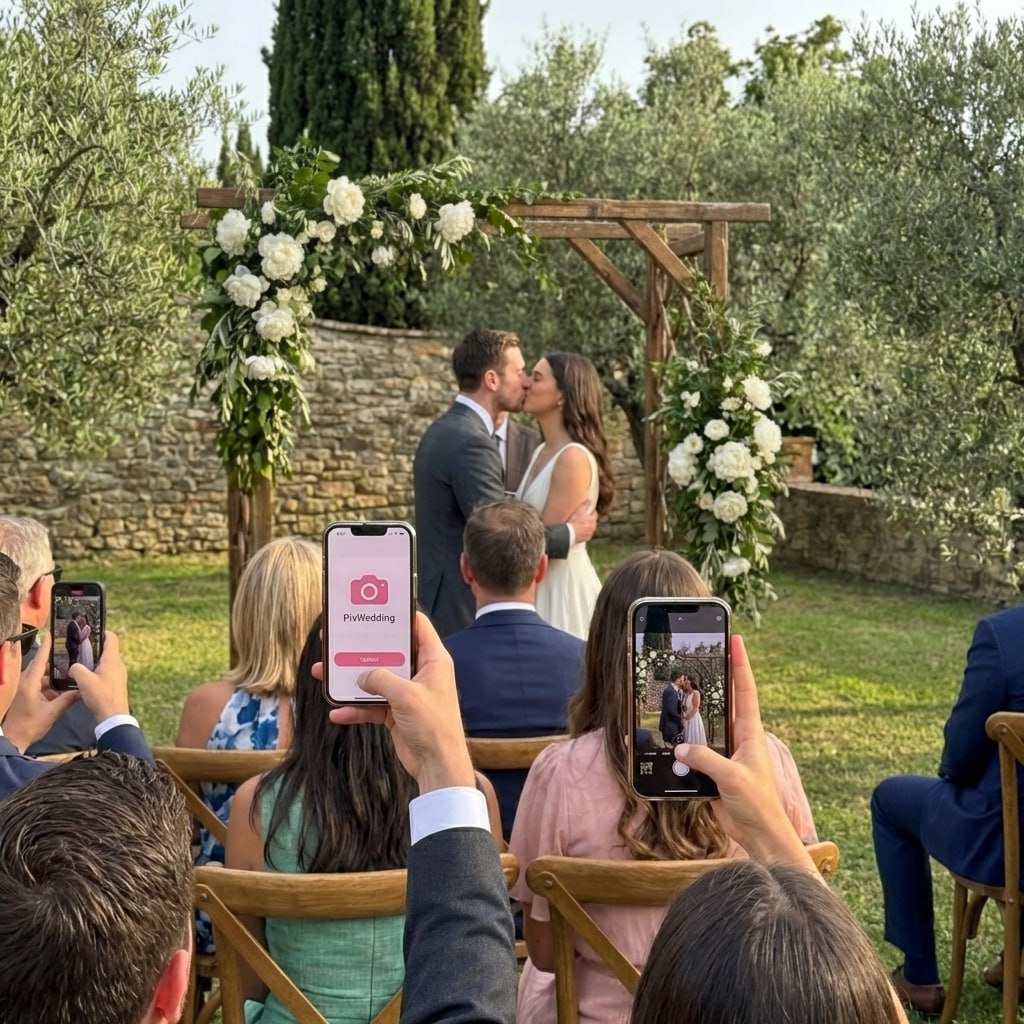
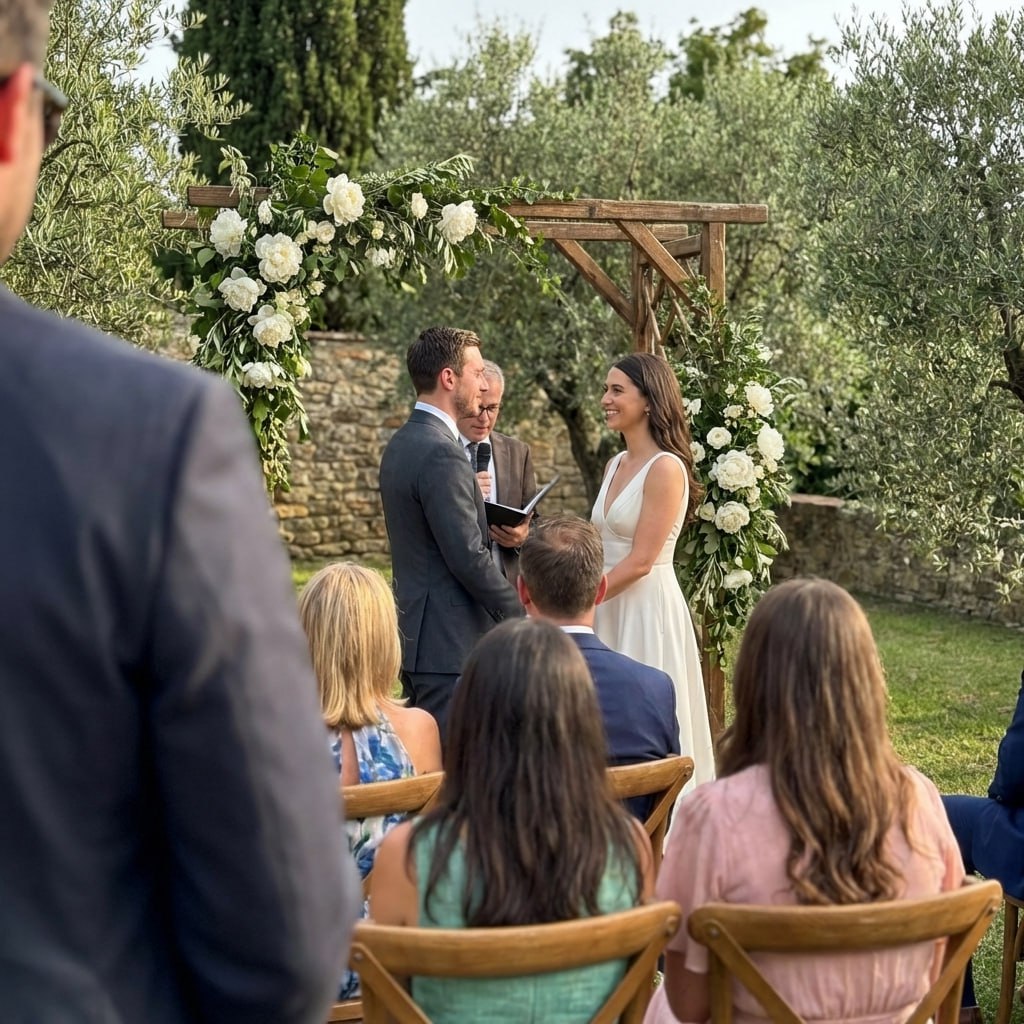
A dozen raised phones blocking the aisle bothers the guests behind them as much as it bothers your photographer. If you want an unplugged ceremony, say so out loud and give guests somewhere to share photos afterwards.
Grandma in the back row
Reserve the first rows for elderly relatives and anyone with mobility needs, and tell the ushers. Guests notice who got looked after.
No shade, no water
A water station and a basket of fans or programs that double as fans cost little and fix most summer complaints.
If you ask for an unplugged ceremony, the wording matters. Guests do not mind putting phones away. They mind being scolded, and they mind feeling that the only photos of the day will never reach them. Tell them what happens instead. Our guide on asking guests not to post on social media covers the posting side if that is your worry.
Before the processional
Welcome, everyone. Before we begin, the couple has one request.
They would love to see your faces today, not your phones.
Their photographer has the ceremony covered.
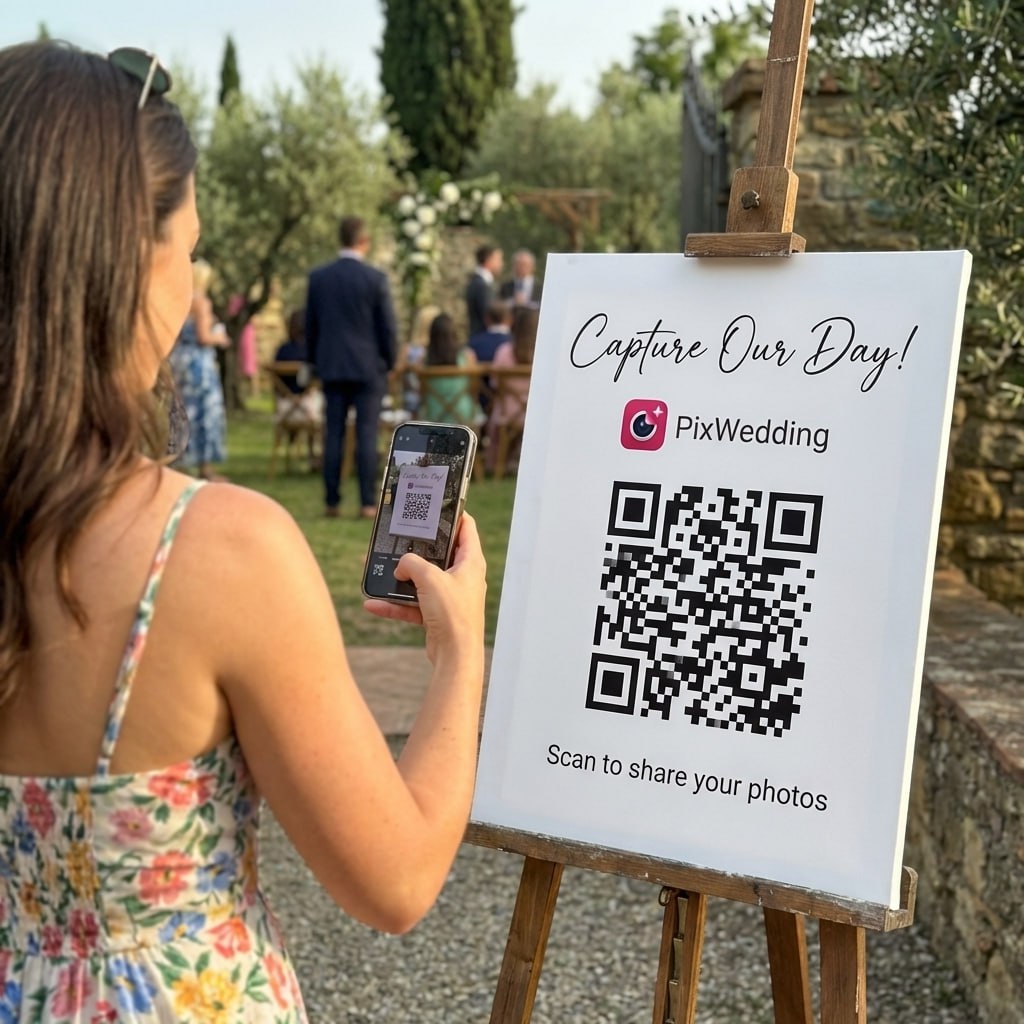
Once we are done, there is a QR code on every table for all the photos you take tonight.
Read by the officiant about two minutes before the start.
An unplugged ceremony
Welcome to our unplugged ceremony.
Please keep phones and cameras put away until we walk back down the aisle.
After that, snap everything and scan the QR code to share it with us.
A board or small sign where guests pick up programs.
First dance
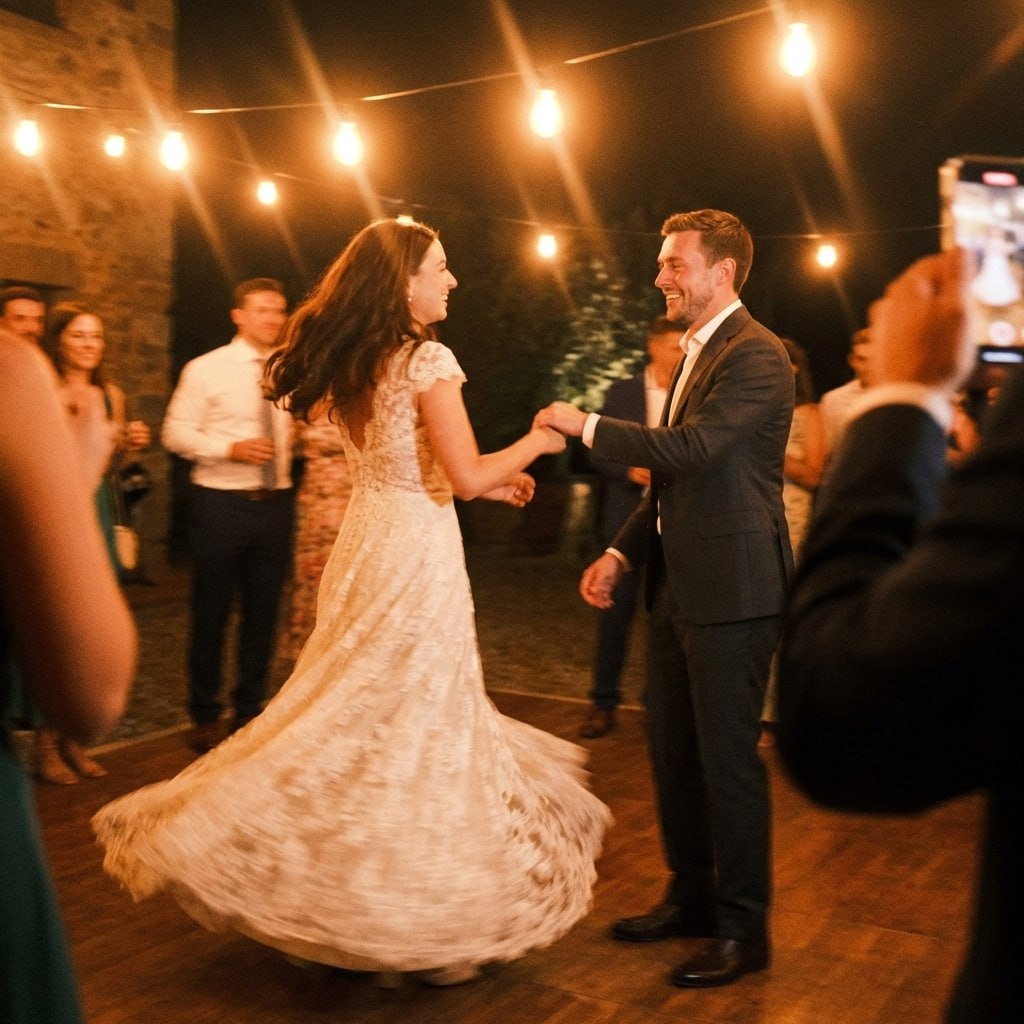
You guys!!
That QR code on every table, ready in minutes
Pix Wedding puts one QR code on your tables. Guests upload from the phone browser, no app, no account. Free for up to 20 guest uploads, no card. Need more than 20? Pay once, from $49, and every guest can upload without limits.
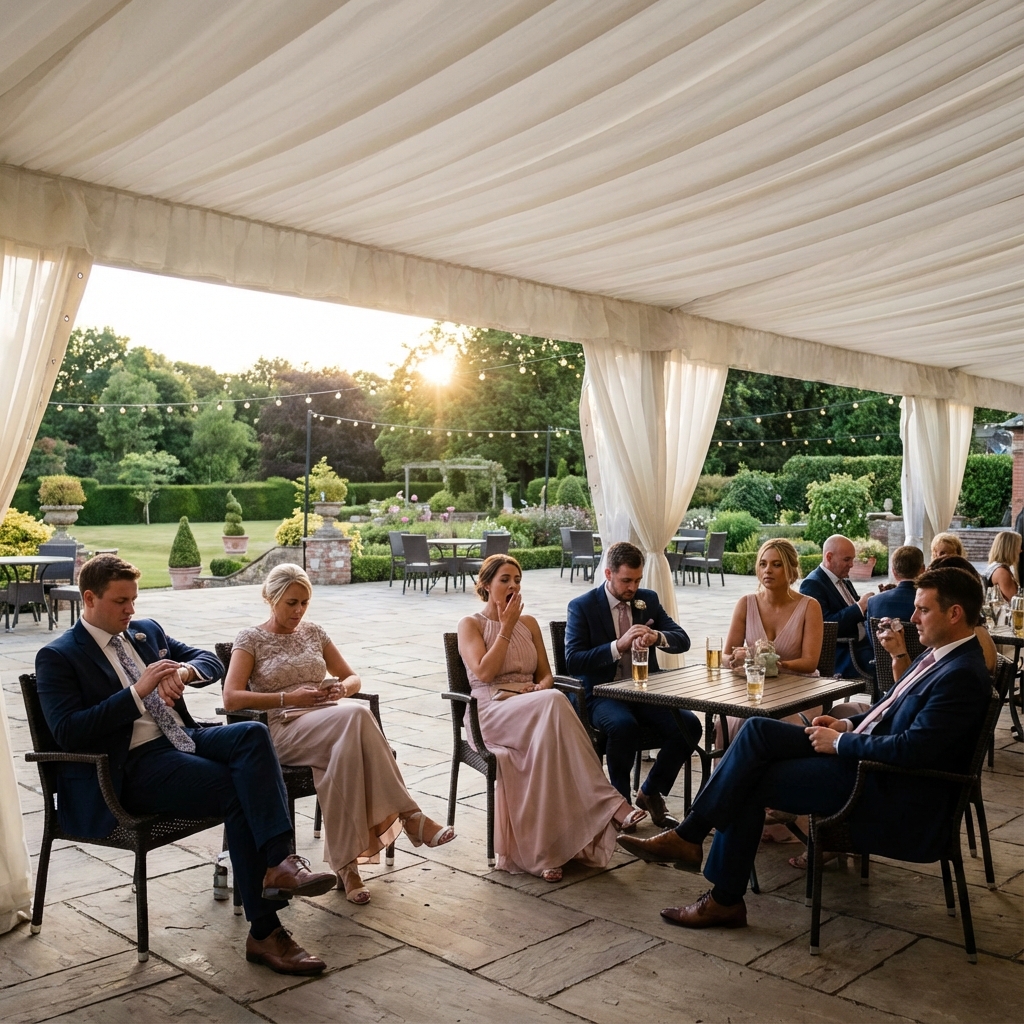
This is the complaint that shows up on almost every forum thread about guest pet peeves, including the WeddingWire community thread on moments guests secretly hate: long gaps where nothing is provided. The ceremony ends at 2 p.m., the reception opens at 6 p.m., and a hundred people in formal clothes have four hours and nowhere to be.
Etiquette guidance is consistent here. Emily Post treats any delay longer than 30 to 45 minutes as excessive unless the invitation gave a later reception time, and WeddingWire recommends keeping gaps to 60 to 90 minutes. Sometimes a gap is unavoidable, for example a church ceremony tied to a fixed service time and a venue that only opens in the evening. Then the job is to host it, not to hope guests find something to do.
Cocktail hour on site
Gap under 90 min
Best for: Most weddings where ceremony and reception share a venue.
No driving, no lost guests
Food and drinks start the moment the ceremony ends
Your photos can happen in parallel
Needs enough passed food so guests are not drinking on an empty stomach
Needs shade or heat depending on season
Put your family photo list in order so the couple can join for the last 20 minutes.
Hospitality room at the hotel
Gap of 2 to 4 hours
Best for: Travel weddings with a hotel block near the venue.
Guests can change shoes, charge phones and rest
Light snacks and coffee cost much less than a second cocktail hour
Out-of-town guests have a place to go
Costs a room rental and some catering
Guests without a car need a way there
Say it on the invitation or website so nobody books a lunch reservation in a panic.
A curated local list
Low budget
Best for: City weddings with cafes, museums or parks nearby.
Almost free to produce
Guests get a mini trip out of it
Works for any gap length
Guests scatter and some return late
Weak for older guests and families with kids
Keep it to five nearby, walkable spots and print it on a small card handed out after the ceremony.
One version of the gap annoys guests more than any other: when a small group is fed during the break and everyone else is sent away. If only immediate family can join a dinner between the ceremony and the party, keep it quiet, keep it short, and make sure the wider group has food waiting when they come back.
5Hungry Guests and Drink Surprises
Food is where guests pay the most attention: 64% of respondents in the WeddingWire survey said they noticed the food at the reception. The problem is rarely quality. It is timing. A 4 p.m. ceremony, a long cocktail hour with light bites, photos that overrun and a dinner that lands at 8:30 p.m. is a recipe for hungry, tipsy guests. Draft your courses with our wedding menu builder, then check the clock against them.
Food and drink fixes guests notice
A cash bar is fine. A surprise cash bar is not.
Guests on forums split on cash bars, but they agree on one thing: finding out at the bar is the problem. If the budget only covers beer and wine, or two drink tickets per guest, say so on the website and let guests plan. Many venues also take cards now, so mention that too. What guests read as rude is the feeling of being charged at a party they were invited to without warning.
6Speeches, Choreography and Other Captive-Audience Moments
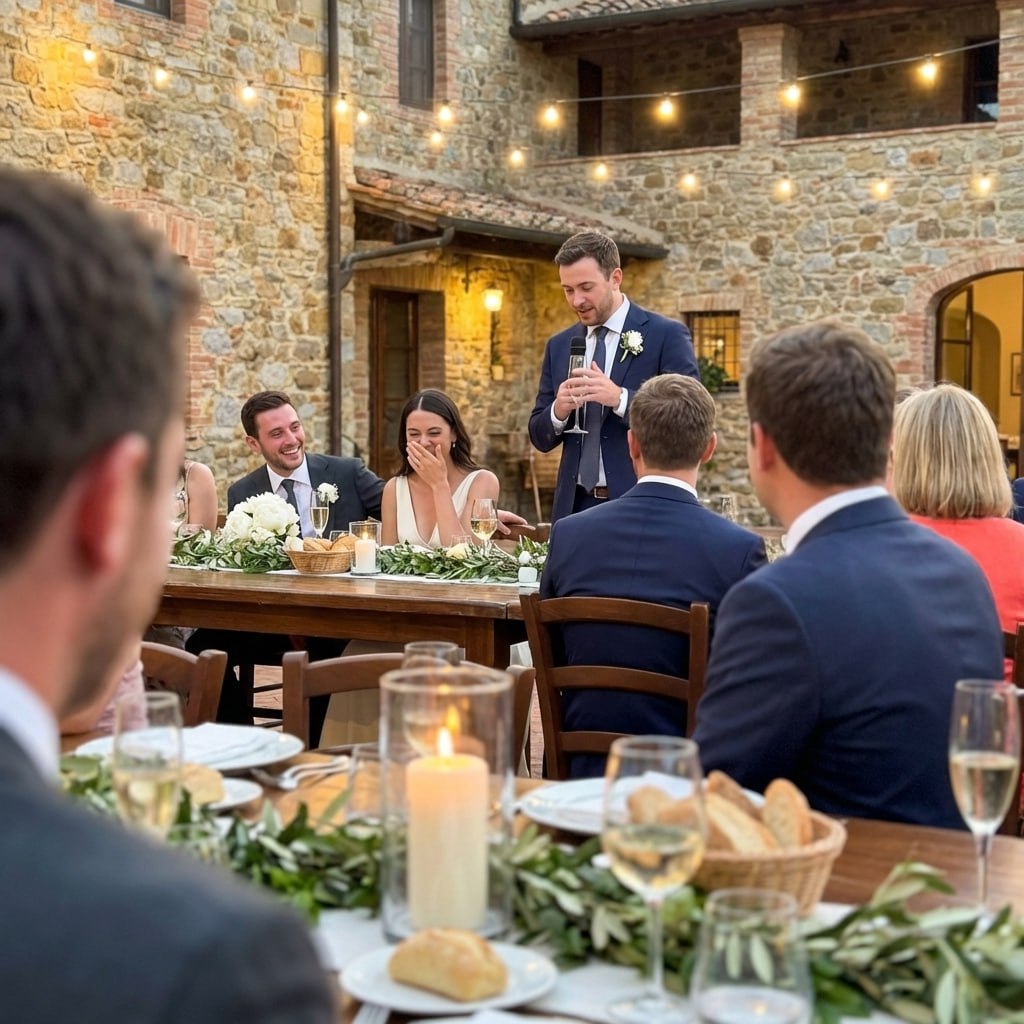
Long speeches are the single most mentioned complaint in the WeddingWire forum thread, just ahead of gaps. The guidance from WeddingWire is simple: keep each speech under five minutes and closer to three. The same thread calls out a related habit, using guests as a captive audience for choreographed entrances, long slideshows and games that last longer than the people playing them enjoy.
0:00First course is served
Speeches start once plates are down. Hungry guests stop listening fast.
0:05Welcome from a host
One parent or the couple, about two minutes: thanks for coming, a warm word for those who traveled.
0:08Maid of honor or best man
Three to five minutes each. One story, one compliment for the partner, one toast.
0:18One more speaker at most
A parent or a sibling. Two to four speakers in total keeps the block inside 20 minutes.
0:22The couple says thanks
Optional, under two minutes, and it signals the room that speeches are over.
Brief every speaker with the same three rules: a time limit, no stories that only two people understand, and nothing about exes. If someone is nervous or rambling in drafts, point them to our free AI wedding speech generator, which builds a structured three-minute draft from a few answers. And skip the open mic. A room that has been drinking for three hours does not need a microphone.
Keep every toast under three minutes
Send your speakers our free AI speech generator. It turns a few answers into a short, structured draft they can rehearse.
Wedding planner Jamie Wolfer walks through six things guests hate at weddings, from her side of the event. Watch it with your timeline open and see which of her six show up in your plan.
7Seating: Strangers, Singles Tables and the Speaker Wall
Not knowing anyone (25%) and sitting with strangers (19%) are two of the top five annoyances in the WeddingWire survey. Both are seating problems. The couple knows everyone, so it is easy to forget that your college roommate and your cousin's new boyfriend have never met a single person in the room.
Seat every guest next to at least one person they know, even if it breaks a tidy 'work table' plan
Mix a table deliberately: two couples who share a hobby, a talker next to a quiet guest, a host at every table where people are new
Skip the singles table unless the singles asked for it. Most guests read it as a label
Keep older guests away from the speakers and close to the restrooms
Put guests with young kids near an exit so a meltdown does not become a scene
Tell the officiant or DJ which tables have mostly strangers, and do a table round there first
8Photo Chores: Apps, Hashtags and 'Please Send Me Your Pictures'
Guests are glad to share photos. Over half of guests in the WeddingWire survey said they take photos on their phones at weddings. What they dislike is homework: download this app, create an account, join this group, remember the hashtag, then send everything by text on Monday. Each step loses people, and the guest who gives up feels a little guilty about it for weeks.
The numbers from our own data show how thin sharing is even when it is easy. Across real weddings on Pix Wedding, the median album got 149 guest photos from just 8 uploaders (full dataset). Every extra step you add cuts into that small group, so the collection method has to take seconds, not minutes.
Where guests give up
An app store download on venue wifi
A sign-up form with email confirmation
A hashtag that half the guests cannot spell and private accounts never show
A group chat that fills up with 400 messages
A request, days later, to 'send me whatever you took'
Bad music annoyed 23% of guests in the WeddingWire survey, and the forum thread adds the other half of the problem: volume. Guests who have not seen each other in years want to talk during dinner. Guests who came to dance want the floor to open before 10 p.m. A good DJ or band handles both if you brief them.
Dinner at talking volume
Ask for background levels during meals, so a table can hold one conversation without shouting.
Open the floor on a clear cue
Right after your first dance, have the DJ go straight to a song everyone knows, and ask your wedding party to be the first on the floor.
A do-play and a do-not-play list
Ten songs each, not fifty. Build it with our free wedding playlist builder and hand it over a month out.
Something for every generation
A few songs grandparents know early in the night keeps them in the room longer, and the kids love watching them dance.
10Drunk Guests, Late Nights and Getting Home
Drunk guests were the most named annoyance in the WeddingWire survey at 27%, and it connects to three things couples control: food timing, bar hours and transport. You cannot manage every uncle, but you can make heavy drinking less likely and getting home safe much easier.
End-of-night plan
11The Guest-Proof Audit: 20 Questions Before You Finalize
Run this list with your partner or your planner about six weeks out, when the timeline is close to final but vendors can still adjust. Every 'no' is a guest complaint waiting to happen.
Answer yes to each one
12What Guests Do Not Notice (Where You Can Save)
The same WeddingWire survey that listed the annoyances also showed how little some wedding details register. Escort cards mattered to 2% of guests, bathroom amenity baskets to 6%, favors to 9% and the bouquet or garter toss to 11%. That does not mean you should cut all of them. It means you can drop the ones you do not love without guilt, and move that money to food, shade, shuttles or a longer bar. For the other side of the same question, the moments guests do remember, read our unforgettable wedding tips.
Thirteen details guests will not remember
The flip side of the list above. Jamie Wolfer runs through 13 wedding details guests do not care about, which is useful when you are deciding where to cut. Pair it with the 20-question audit and you know what to keep.
If you want to add something guests do enjoy, keep it light and optional. A few low-pressure wedding games for guests at dinner, a photo prompt on each table or a slideshow of guest photos later in the night gives people a reason to talk to strangers without forcing anyone onto a stage.
The couples whose guests leave happy are rarely the ones with the biggest budget. They are the ones who fed people on time, told them what to expect, sat them next to a friend and let them go home safely. Everything else is decoration.
FAQ
Frequently Asked Questions
What do wedding guests complain about the most?
In a WeddingWire survey of more than 900 guests, the top annoyances were drunk guests (27%), not knowing anyone (25%), bad music (23%), an inconvenient location (20%) and sitting with strangers (19%). On forums, long speeches and long gaps between the ceremony and the reception come up most often.
How long is too long between the ceremony and the reception?
Emily Post treats a delay of more than 30 to 45 minutes as excessive unless the invitation lists a later reception time, and WeddingWire recommends keeping gaps to 60 to 90 minutes. If a longer gap is unavoidable, host it with a hospitality room, snacks or a clear list of things to do nearby.
How do we tell guests the bar is not fully hosted?
Put it on your wedding website before the day, in one plain line, for example: beer, wine and soft drinks are on us, and cocktails can be bought at the bar. Guests mind finding out at the bar far more than the setup itself. Say whether the bar takes cards, and keep water and a few non-alcoholic drinks free all night.
How long should wedding speeches be?
WeddingWire recommends keeping each speech under five minutes and aiming for about three. Two to four speakers in total keeps the speech block around 20 minutes, ideally with food already on the tables.
What wedding details do guests not care about?
In the WeddingWire guest survey, only 2% cared about escort cards, 6% about bathroom amenity baskets, 9% about favors and 11% about the bouquet or garter toss. Food, comfort and time with friends mattered far more.
How can guests share wedding photos without downloading an app?
Use one QR code that opens a shared album in the phone browser. With Pix Wedding, guests scan the code, pick photos from their camera roll and upload without an account. The free plan covers up to 20 guest uploads and paid plans are a one-time payment from $49.
 wedding