How Many People to Invite to a Wedding: Averages, Costs and Cuts
Discover how many people to invite to a wedding: the 117 average guest count, cost per guest math, a budget formula, size tiers and how to cut the list.
9 min readUpdated Sep 22, 2026Pix Wedding Team
The short answer
The average US wedding had 117 guests in 2025, according to The Knot 2026 Real Weddings Study of 10,474 couples, at about $292 per guest. The right number for you is whichever is smallest of three limits: what your budget covers at your real cost per guest, your venue's comfortable capacity, and the people you would be upset not to see. Invite a little above your target, since some invitees always decline, and keep a short B-list for the gaps.
The most cited number comes from The Knot's annual survey. Its 2026 edition, based on 10,474 US couples who married in 2025, reports an average guest count of 117 and an average spend of $292 per guest (press release). The Knot puts the average total cost at $34,200. Multiply 117 by $292 and you get $34,164, which shows how tightly guest count and budget are tied: per-guest spend times headcount lands almost exactly on the average total.
An average is a reference point, not a target. It blends 30-person courthouse dinners with 300-person family weddings. Use it to sanity-check your own plan: if your budget is well below $34,200 and you want 150 people, something has to give, whether that is the menu, the venue, the day of the week or the list.
117 guests
Average reported attendance in the 2026 Real Weddings Study, which covered weddings held in 2025.
$292 per guest
The average spend per guest in the same study, up $8 from the year before.
13 vendors
The average number of vendors couples hired. Many of them (catering, rentals, bar) price by the head.
89% booked a venue
Venue capacity is a hard ceiling for most couples, so your list starts there.
2A Formula: Work Backward From Budget and Venue
Most couples start with names and end up over budget. Flip it. Start with the two numbers that do not bend, then fill the list.
Set your total budget and subtract the costs that do not scale with guests: attire, rings, photographer, officiant, music. What remains is your per-guest pool
Get quotes for the per-head items (food, drinks, rentals, cake, stationery) and add them up to find your real cost per guest
Divide the pool by that cost. That is your budget ceiling for attending guests
Ask your venue for its comfortable seated capacity, not the fire code maximum. Paperlust suggests treating the safe capacity as the ceiling and holding back roughly 10% as a buffer (guide)
Take the smaller of the two ceilings. That is your target headcount
Add a margin for invitees who will decline, and that gives you the number of invitations
The formula in one line
Target headcount = the smaller of (per-guest budget pool divided by cost per guest) and (venue comfortable capacity). Invitations = target headcount plus a margin for declines. Plug your own numbers into the free wedding cost calculator to see where your budget lands.
Price your guest list in two minutes
Our free wedding cost calculator shows how your total moves as you add or remove guests.
Using The Knot's average of $292 per guest, here is how headcount alone moves the per-head part of a budget. These figures are illustrative: your caterer, city and bar package set your real number, and some costs (a band, a photographer) stay the same whether you have 60 guests or 160.
Illustrative per-head totals at $292
50 guests: 50 x $292 = $14,600
80 guests: 80 x $292 = $23,360
117 guests: 117 x $292 = $34,164
150 guests: 150 x $292 = $43,800
200 guests: 200 x $292 = $58,400
What that means in practice
Every 10 guests adds about $2,920 at this rate
Cutting one table of 8 saves about $2,336
Going from 150 to 117 guests frees about $9,636
A couple plus their partner costs two seats, not one
Kids' meals and vendor meals are often cheaper, so ask for those rates
Paperlust's guest list guide gives a wider per-head range of $150 to $300 once catering, bar, rentals, stationery and favors are combined (source). If your quotes land near the low end, a bigger list is affordable. If you are in an expensive city or want a full open bar, expect to be at or above The Knot's average.
4Pick Your Wedding Size
Size changes more than the budget. It changes how much time you get with each guest, which venues work and how the evening feels. There is no official definition of a micro or large wedding, so treat these bands as rough labels.
Micro
Under about 50
Best for: Couples who want long conversations with everyone.
You can spend real time with each guest
Restaurants, homes and small venues open up
Per-guest spend can go up without the total exploding
Hard cuts to extended family and friends
Some relatives may feel left out
Tell people early and explain the size; most take it well.
Small
About 50 to 100
Best for: Close family plus the friends you see regularly.
Still personal
Enough people for a full dance floor
Plus-ones and coworkers are usually the first cut
A sweet spot for many budgets under the national average.
Average
About 100 to 150
Best for: Couples with big families or two friend circles.
Close to the national norm, so vendor packages fit
Room for extended family
You will greet most guests for only a minute or two
Near The Knot's average of 117.
Large
150 and up
Best for: Cultures and families where everyone comes.
Nobody important is left off
A big party energy
Venue options shrink
Costs rise fast at $292 a head
Budget for a planner or a day-of coordinator.
5What Your Guest Count Means for Photos
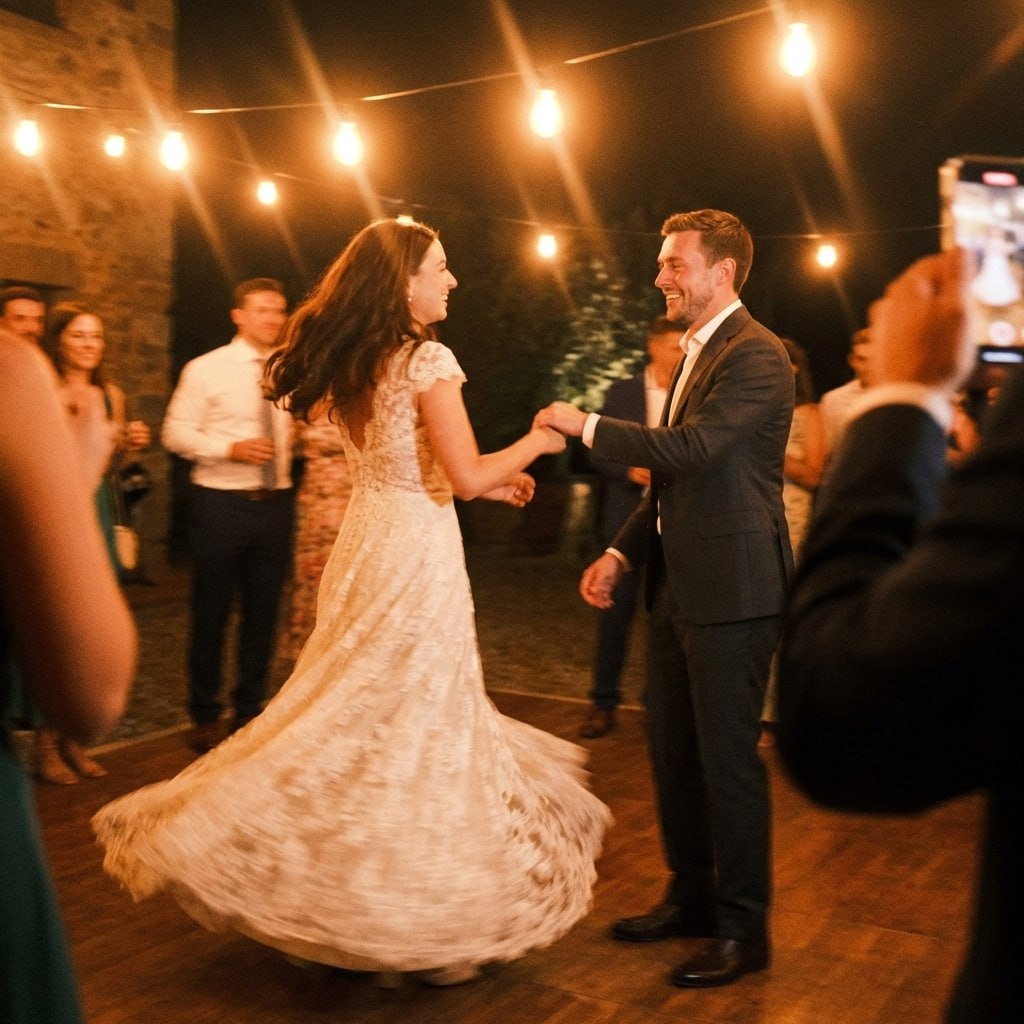
More guests means more phones, but not as many photos as you would think. In our own dataset of guest uploads, the median wedding collected 149 guest photos from 8 uploaders, and the average was 197 photos from 9.8 uploaders. Even at a big wedding, a handful of guests do most of the shooting, and whatever they take tends to stay in their camera rolls unless you make sharing easy.
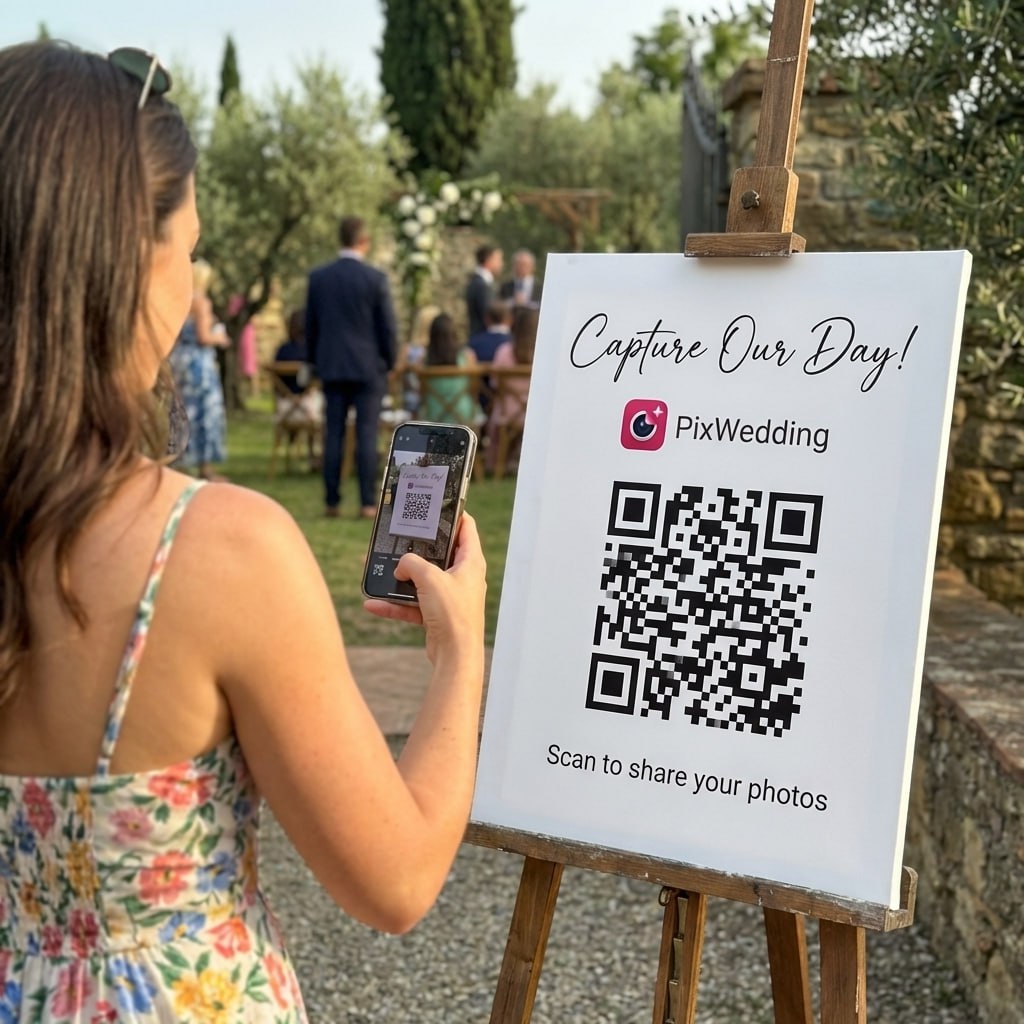
That is why the collection method matters more than the headcount. A single QR code on each table, which opens an upload page in the phone browser, reaches the guests who never download apps. Try it on your own phone with the demo upload page, or compare options in our guide to collecting photos from wedding guests.
First dance
You guys!!
However many you invite, get their photos
Pix Wedding gives you one QR code for the whole guest list. Guests upload from the browser, no app and no account. Free for 20 guest uploads with no card, or pay once from $49 for unlimited photos and videos.
6How Many Extra Invitations to Send for the Guests Who Decline
Not everyone you invite will come, and the gap is biggest for travel weddings. Going to a wedding costs guests real money: The Knot's guest study puts the average at $610 per wedding, about $840 for guests who drive and about $1,680 for guests who fly. In a 2022 UK poll of 2,000 people reported by HELLO!, the top reasons for declining were not being able to afford it (27.82%) and a long commute (23.88%), ahead of a partner not being invited (19.94%).
Local weddings with mostly nearby guests see the highest acceptance
Destination and overseas weddings see far more declines, sometimes a large share of the list
Weekday and holiday-weekend dates lose guests to work and family plans
Guests with young kids decline more often at adults-only weddings
Older relatives may decline long trips even when they want to come
The practical move is to invite a little past your target and let declines bring you back to it. Detailed attendance rates for local and destination weddings live in our guide to estimating your final guest count; here you only need the multiplier. As an illustrative example only: if you expect about 85% of a local list to come and your target is 100 guests, you would send around 118 invitations (118 x 0.85 = 100.3).
7The Ring Method: Who Makes the List
Write names in rings, starting from the people you cannot imagine the day without, and stop adding rings when you hit your number.
Ring 1: parents, siblings, grandparents and the wedding party
Ring 2: aunts, uncles, first cousins and your closest friends
Ring 3: friends you see or talk to regularly, and their partners
Ring 4: parents' close friends and family friends you know well
Ring 5: coworkers you are friends with outside work, neighbors, old friends you still keep in touch with
Ring 6: everyone else, which usually becomes the B-list
Quick tests for a borderline name
The first two tests come straight from Paperlust's cutting advice, which suggests starting with distant family, plus-ones for guests you barely know and people you feel obligated to invite. If a name fails three or more of these, it belongs on the B-list or off the list.
8Plus-Ones, Kids and Coworkers
These three groups decide whether a list lands at 110 or 160. Pick a rule for each and apply it evenly, because guests compare notes.
Common rules that hold up
Plus-ones for married, engaged and long-term partners (Paperlust uses one year as the line)
A plus-one for any guest who would not know anyone else
Kids: all children welcome, or an adults-only wedding, with no exceptions beyond your own family
Coworkers: only those you see socially outside work
Your parents get a fixed number of their own invites, agreed early
Rules that cause trouble
Plus-ones for some single friends but not others
Inviting the kids of one cousin and not another
Inviting half a team at work
Adding names after invitations go out without checking capacity
A B-list lets you fill seats as declines come in, as long as the B-list guests never feel like a second round. Paperlust's timing advice (guest list and RSVP deadlines) gives a workable schedule.
10 to 12 weeksDestination invitations
Travel weddings need extra notice and an RSVP deadline about 5 to 6 weeks before.
6 to 8 weeksA-list invitations
Standard timing for a local wedding. Include a specific reply-by date.
By 6 weeksLast B-list invitations
Send B-list invitations as early declines arrive, and no later than about 6 weeks out, so they do not look like fillers.
3 to 4 weeksRSVP deadline
Wait 2 to 3 days after the deadline, then follow up personally with anyone silent.
7 to 14 daysFinal count to the venue
Most caterers need the final headcount in this window. After two follow-ups with no reply, count the guest as a no.
Track every invitation, reply and meal choice in one place. The free wedding guest list manager handles A-list and B-list names, and the RSVP tracker shows who still owes you an answer.
Keep A-list and B-list straight
Sort every name, household and reply in our free guest list manager.
Almost every couple cuts at some point. The goal is to cut by rule, not by person, so nobody can take it personally.
Cutting order that keeps the peace
Eight ways a planner trims a guest list
Wedding planner Jamie Wolfer shares eight ways to cut a guest list. Watch it when your first draft is over your target and you need a system instead of a painful name-by-name debate.
Parents who are paying often expect a say, and parents who are not paying often want one anyway. Settle the numbers early with a fixed allocation instead of arguing name by name. A common approach is to split the list three ways between the couple and each family, but any split works if it is agreed before invitations are designed.
Setting a parent allocation
We are so grateful for your help with the wedding.
Our venue and budget work for about 110 guests in total.
We have saved 25 of those spots for your friends and family.
Could you send us your 25 names by the end of the month?
Swap in your own numbers; the point is a clear cap and a date.
Holding the line kindly
We would love to invite everyone, and we have looked hard at it.
Each extra guest adds close to $300, and we are already at our limit.
If a spot opens up from a decline, your names are first on our B-list.
Keeps the door open without promising anything.
12Final Guest Count Checklist
Before you order invitations
The right guest count is the one that lets you afford the day you want and still talk to the people who came. For many couples that number sits near the 117 average. For others it is 40 or 200. Build it from your budget and your venue, fill it from the inside out, and the list will feel right when you look around the room.
FAQ
Frequently Asked Questions
What is the average number of guests at a wedding?
The Knot 2026 Real Weddings Study, which surveyed 10,474 US couples married in 2025, reports an average of 117 guests and an average spend of $292 per guest.
How many people should I invite to my wedding?
Take the smaller of two limits: your per-guest budget divided by your real cost per guest, and your venue's comfortable seated capacity. Then invite slightly more than that target to allow for declines, and keep a ranked B-list.
How much does each wedding guest cost?
The Knot's 2026 study puts the average at $292 per guest. At that rate, every 10 guests adds about $2,920. Your real figure depends on your caterer, bar package and city.
How many invited guests usually decline?
It depends on travel. Local weddings see the highest acceptance, while destination weddings see many more declines. Cost is the top reason: The Knot estimates guests spend about $610 on average to attend, and about $1,680 when they fly.
When should I send B-list invitations?
Send them as early declines come in and no later than about 6 weeks before the wedding, so B-list guests have the same time to plan as everyone else.
How do I cut my wedding guest list without offending people?
Cut by rule rather than by person: limit plus-ones to established couples, go adults-only, drop work-only relationships and friends you have not spoken to in two years, and give each parent a fixed number of invites.
 wedding