
How long should wedding cocktail hour last? One hour, give or take fifteen
Plan on 60 minutes. Drop to 45 if your portraits are done before the ceremony and everything happens at one venue. Stretch to 90 only when guests have to travel or the room needs a long flip, and feed people properly if you do. Past 90 minutes most guests get restless, and even the sources that allow two hours say not to go further.
How long is a wedding cocktail hour? 60 minutes, 90 at most
Wedding Spot puts it plainly: your cocktail hour should be one hour long. Some couples go to 45 minutes, and some stretch toward two hours to cover travel between venues or a long photo list. Planners watch the guests more than the clock, and Nora Sheils told Green Wedding Shoes the restless point comes at about 45 minutes. So 60 minutes is the number to plan around, and every minute past it needs a reason.
This page covers one slot of the day. For the whole day from getting ready to send off, use the wedding day timeline templates, or build your own in the free wedding timeline builder.
What happens, minute by minute, on both sides of the room
Cocktail hour runs two schedules at once. Guests are drinking and mingling, and the couple is usually somewhere else doing portraits. This plan assumes no first look, ceremony and reception at one venue, and photo blocks sized to WeddingWire's photography timeline. It is an example, so shift the minutes to your day.
| Minute | Guests | Couple |
|---|---|---|
| 0:00 | Guests: Ceremony ends. Guests walk over and a drink is handed to them on arrival. | Couple: Recessional, a few quiet minutes together. |
| 0:05 | Guests: Bar opens, passed bites start. Escort cards and the guestbook are out. | Couple: Family formals begin. Close family only, about 30 minutes. |
| 0:15 | Guests: Peak mingling. The music is on, the photo sign on the bar gets its first scans. | Couple: Still on family photos. A named helper calls each group in. |
| 0:35 | Guests: Second round of passed bites. Lawn games or the booth pick up. | Couple: Wedding party photos, about 30 minutes if the list is tight. |
| 0:45 | Guests: The restless point. Last pass of food, staff start pointing to the doors. | Couple: Wrap portraits. Couple portraits move to golden hour. |
| 0:55 | Guests: Announcement, guests find their seats in the reception. | Couple: Line up with the wedding party for the entrance. |
| 1:00 | Guests: Everyone seated. | Couple: Grand entrance, dinner starts. |
Portrait blocks from WeddingWire, The Ultimate Wedding Photography Timeline (Kim Forrest, Dec 2021). Want every slot of the day on one page? See the minute by minute wedding day example.
Six weddings, six different cocktail hours
The length comes from logistics, not taste. Two things set most of it: whether your portraits are already done, and whether guests have to go anywhere. Find the row that looks like your day.
First look done, same venue
Most portraits happened before the ceremony, so the hour only covers the drink and the room change. You can join your guests.
No first look, same venue
Family and wedding party photos take about an hour between them. Keep the lists short and move couple portraits to later.
Ceremony and reception at different venues
Travel eats part of the hour. Wedding Spot notes some couples stretch toward two hours for this.
Same room for ceremony and dinner (room flip)
The flip sets the minimum. Ask your venue how long their team needs, then add a small buffer.
Big guest list, 150 or more
Lines at the bar and the entrance take time. Add bartenders and passed bites before you add minutes.
Small wedding, around 50 or fewer
Fewer people to greet and shorter photo lists. A long hour with a small crowd feels empty.
The photo list is the real clock
WeddingWire's photography timeline budgets about 30 minutes for wedding party portraits, about 30 minutes for family portraits with close family only, and 45 minutes to an hour for the couple. Where those blocks land decides whether cocktail hour is a party you attend or a gap your guests wait through.
With a first look
WeddingWire notes a first look lets you enjoy your cocktail hour with your guests.
Without a first look
Try to fit couple portraits in too and you are at 90 minutes or more. That is where cocktail hours go wrong.
Even Zola gives two different answers
Search this question and you will find one hour, an hour and a half, and two hours, sometimes from the same publisher. The split is about whose day the writer is protecting. Articles written around the couple's photo schedule want more time. Articles written around the guests want less. Both are right about their side.
“Your cocktail hour should be one hour long.”
Two hours is acceptable for travel or photos, but they would not go further.
Wedding Spot, Dec 2022“For most newlywed couples, somewhere between an hour and a half and two hours is the ideal amount of time.”
Written from the couple's photo schedule: one hour is typically not long enough.
Zola, Emily Forrest, updated Feb 2024“Your guests will start to feel restless as soon as you exceed an hour.”
Written from the guest's side. Tip 10 is literally Make It an Hour (Max).
Zola, Audra Jones, updated Feb 2024“After about 45 minutes or so, guests begin to get restless and are ready for a transition.”
A planner's view on when the energy turns.
Nora Sheils, Bridal Bliss, Green Wedding Shoes, Oct 2021“I would say anything more than an hour and a half is too long, and that's still pushing it.”
A quick explainer on cocktail hour length and food
The Wedding Course puts the usual range at 45 minutes to an hour and a half, then covers what a shorter cocktail hour looks like, specialty stations, and how long to keep serving hors d'oeuvres. Short enough to watch before you talk to your caterer.
The Wedding Course on YouTube, Aug 2017When guests start watching the door
Put the quotes on one line and you get a clear shape. The first 45 minutes take care of themselves. After that, every extra minute has to be paid for with food, seats or something to do.
Sources: Nora Sheils via Green Wedding Shoes for the 45 minute mark, WeddingWire forum for the 60 and 90 minute notes (“Anything over an hour and the apps need to be heavy and constant”).
How much to serve in one hour
Hungry guests make an hour feel like two. Here are the rates caterers and planners publish, turned into numbers for common guest counts. The 117 row is the average guest count in The Knot 2026 Real Weddings Study.
| Guests | Passed bites | Drinks in 60 min | Bartenders (min to rec.) |
|---|---|---|---|
| 50 | Passed bites: 150 to 250 | Drinks in 60 min: about 100 | Bartenders: 1 to 2 |
| 117 (US average) | Passed bites: 351 to 585 | Drinks in 60 min: about 234 | Bartenders: 3 to 5 |
| 150 | Passed bites: 450 to 750 | Drinks in 60 min: about 300 | Bartenders: 3 to 6 |
| 200 | Passed bites: 600 to 1,000 | Drinks in 60 min: about 400 | Bartenders: 4 to 8 |
Our arithmetic from the rates above, rounded up, for a 60 minute cocktail hour with dinner after. A 90 minute hour needs about half as many drinks again and heavier food. Guest count average from The Knot 2026 Real Weddings Study (10,474 couples married in 2025). Confirm final numbers with your caterer and bar service.
Guests shoot cocktail hour, you keep it
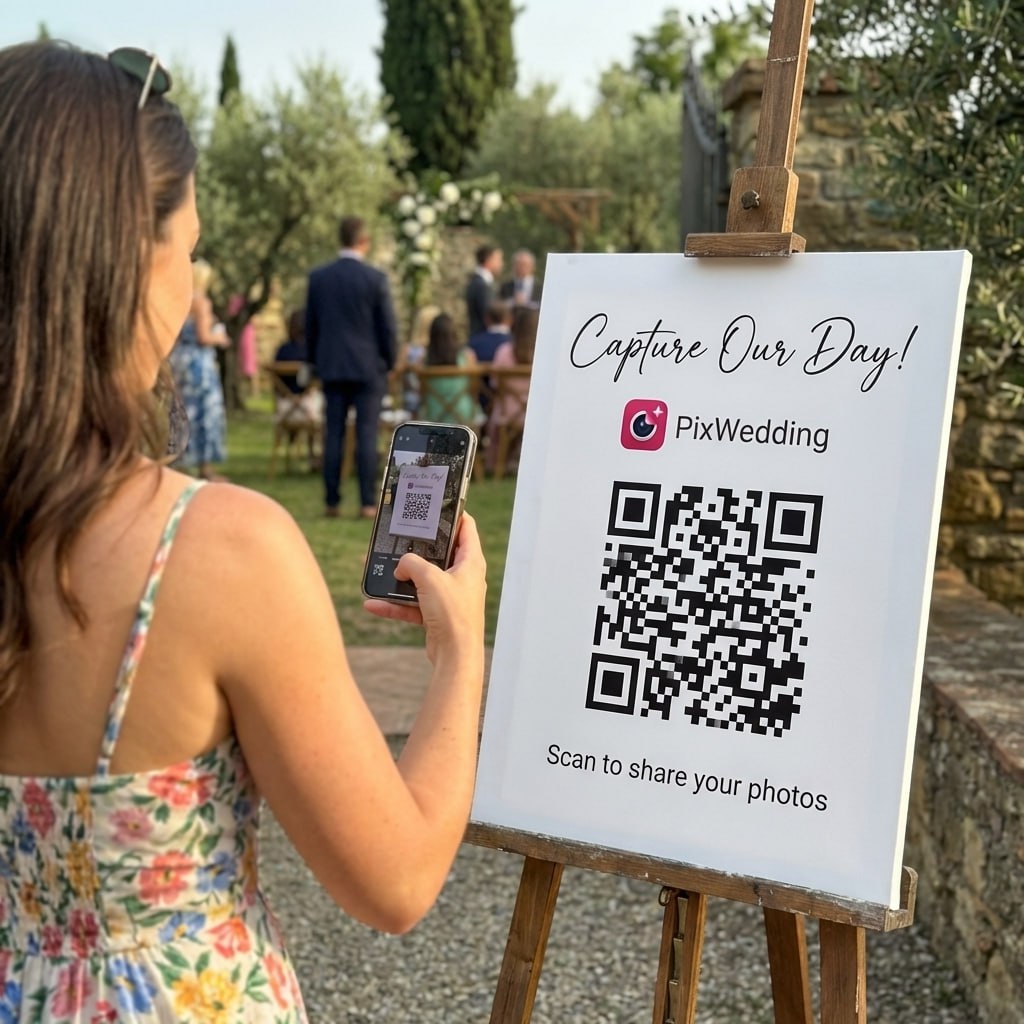
A QR code on the bar or the escort card table lets guests drop their photos into one album while you are off taking portraits.
Scan to join the album
No app, no account
UPLOADING
Saving your moment
THE ALBUM
Emma & Jack
June 21, 2026
647 photos · 95 guests
Give people something to do besides wait
A short cocktail hour with a few things going on beats a long one with nothing. These come from the planners and caterers Green Wedding Shoes interviewed, plus one of ours.
Drinks on arrival
Karen Collins of KMC Weddings has servers pass signature cocktails, beer and wine as guests arrive, so nobody starts the hour in a bar line.
Passed bites over stations
Michelle's Catering warns that with a larger guest count, food stations pretty much guarantee long lines. Passed trays reach people where they stand.
Live or roaming music
An acoustic set or a roaming musician gives the room a pulse without killing conversation.
Lawn games
Cornhole or giant jenga for outdoor venues. Good for guests who do not know many people.
Guestbook station
People have time and a free hand now. By dinner they will not.
Something to watch
A caricature artist, a floral crown bar or a mixologist. Pick one, the hour is short.
A photo booth
Gives groups a reason to gather, and gives you portraits of guests you would never pose.
A QR photo sign
One sign at the bar so guests can send the candids they are already taking. More on that below.
Ideas and quotes from Green Wedding Shoes, “Wedding Cocktail Hour Ideas” (Jen Campbell, Oct 2021). More games in our wedding reception games guide.
Cocktail hour is the best party you never see
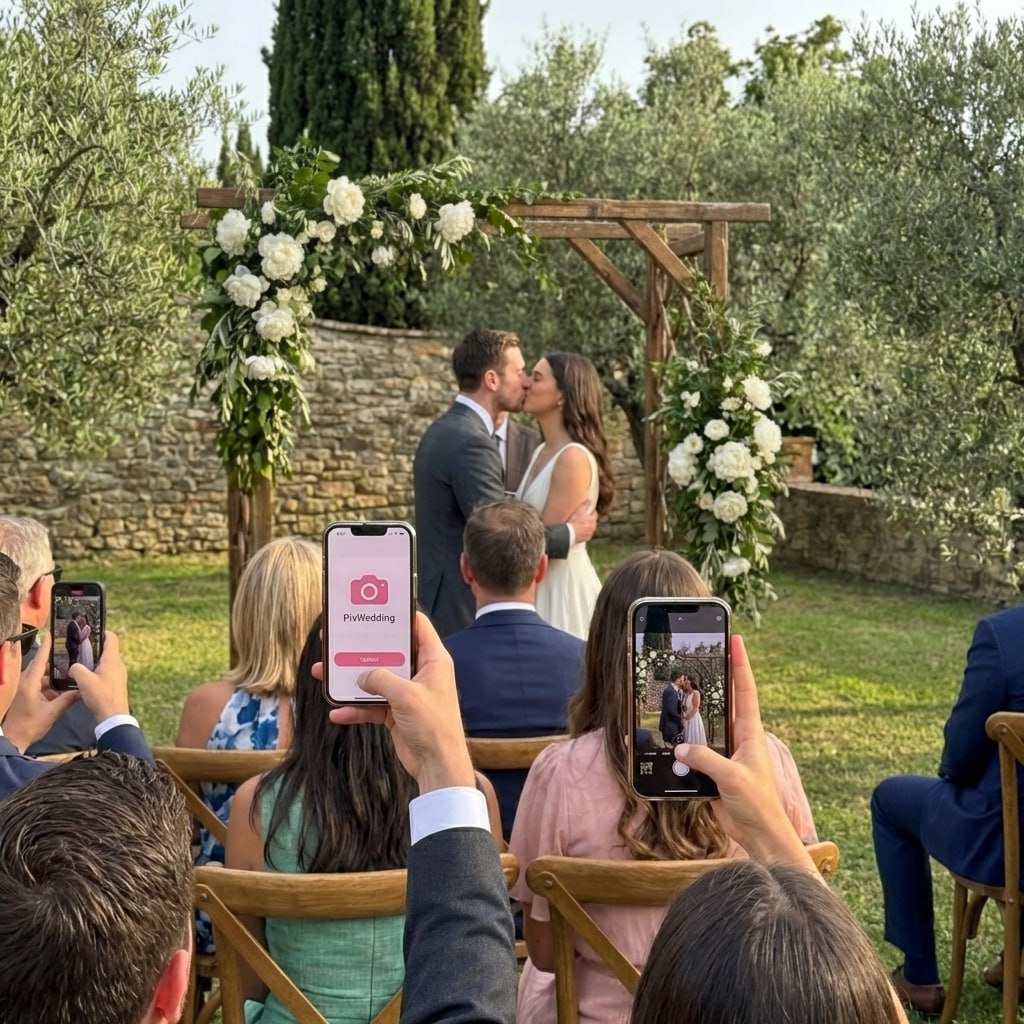
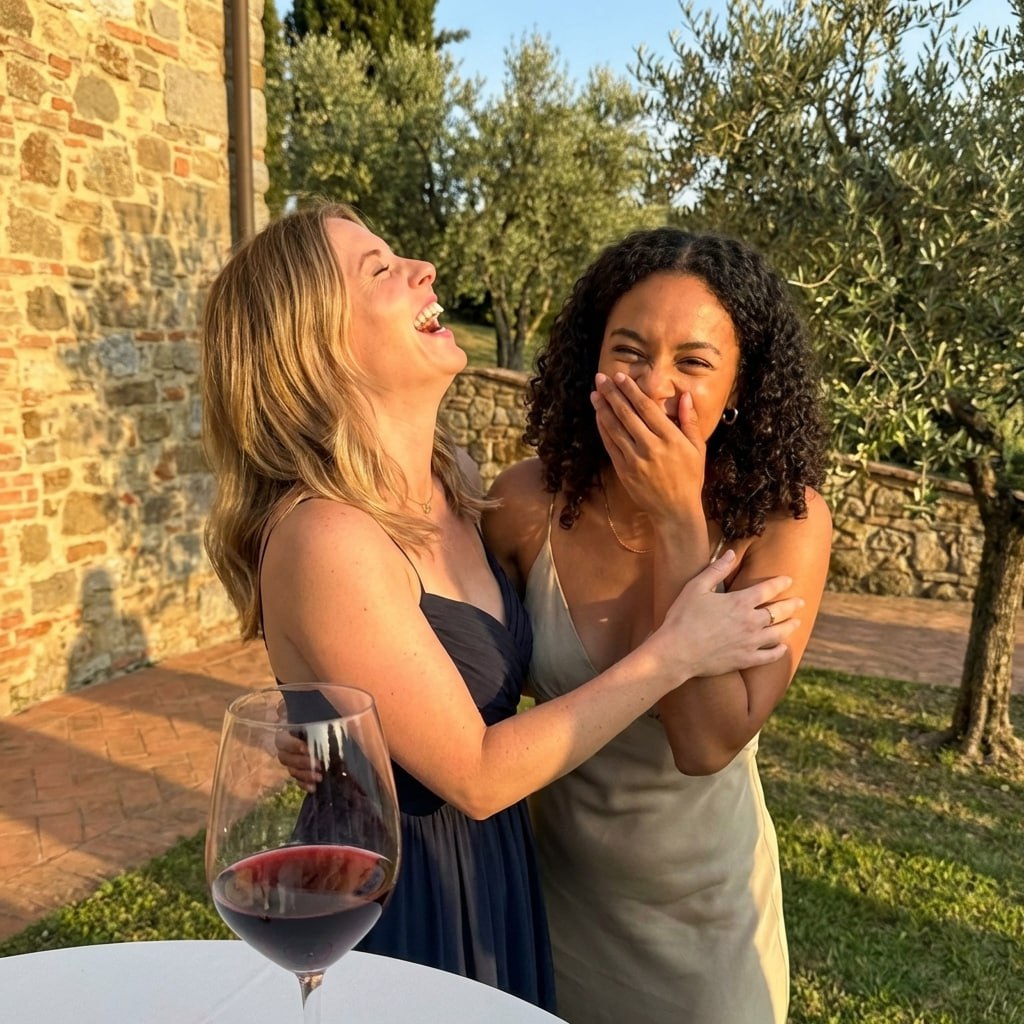
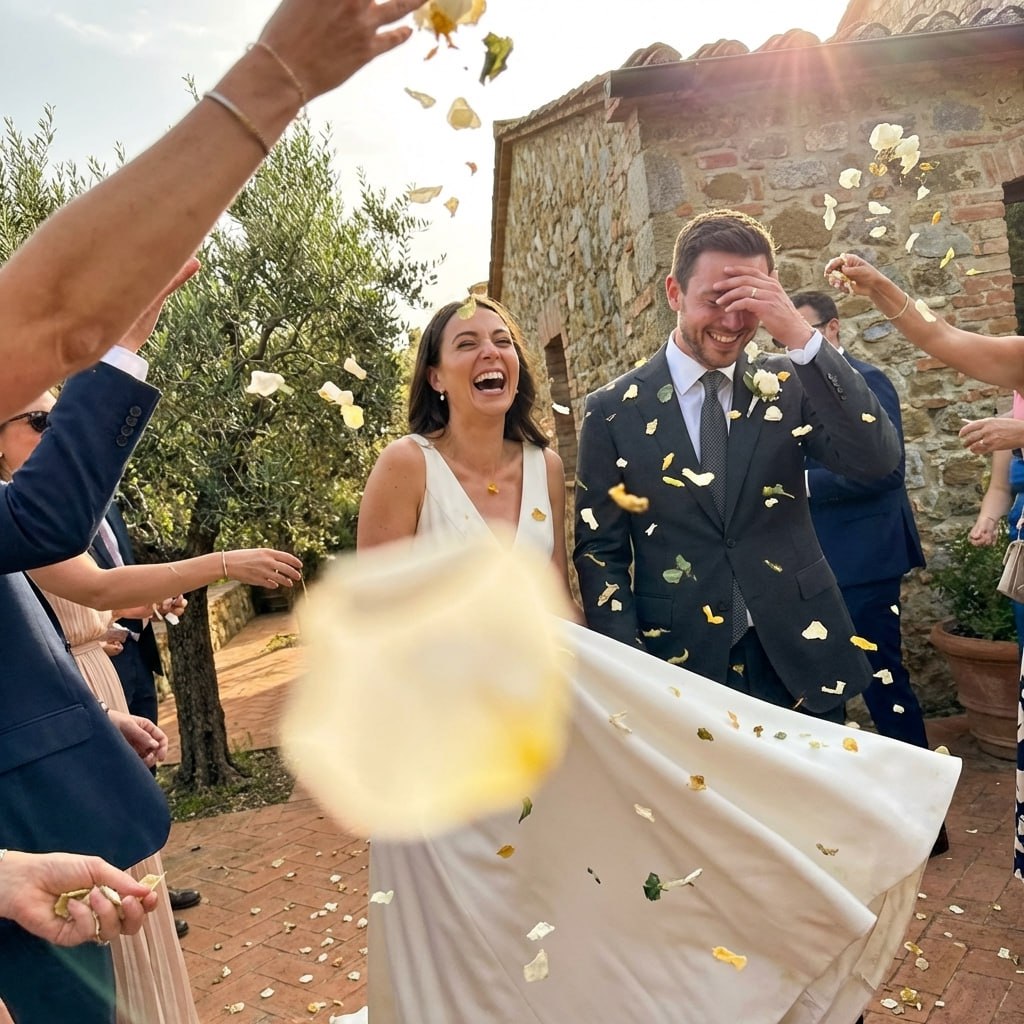
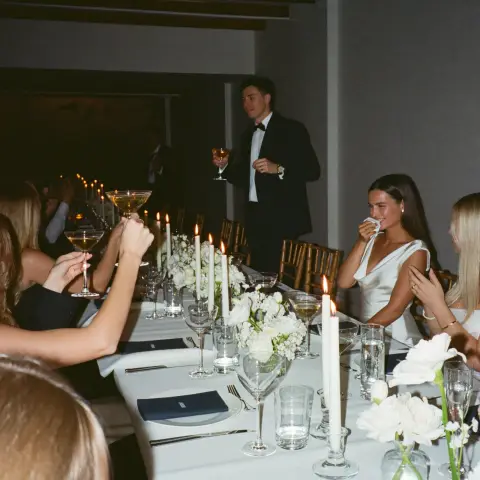
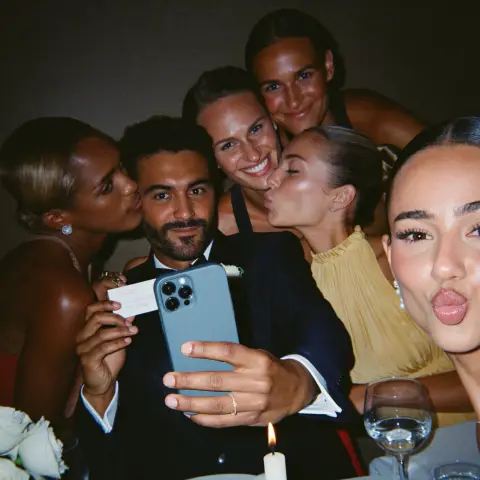
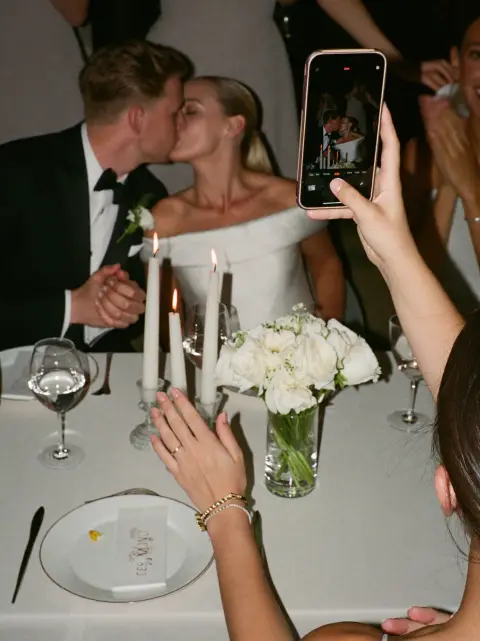
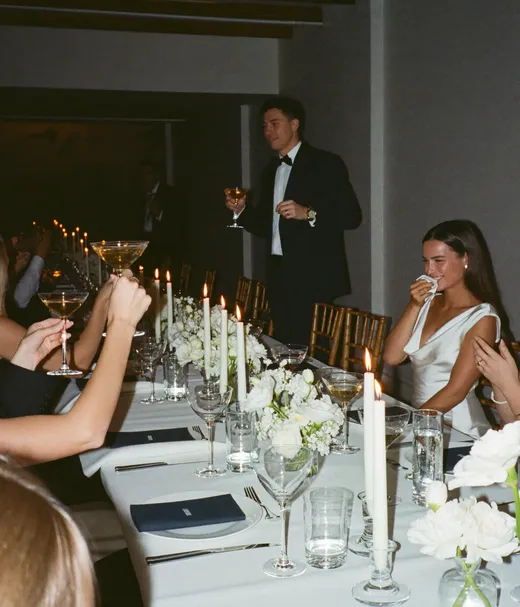
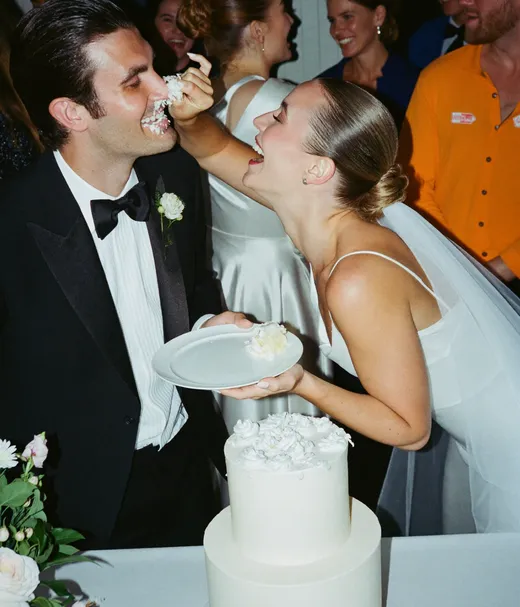
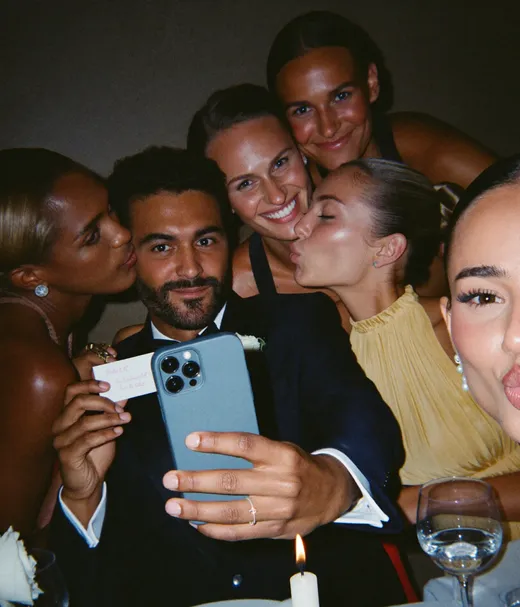
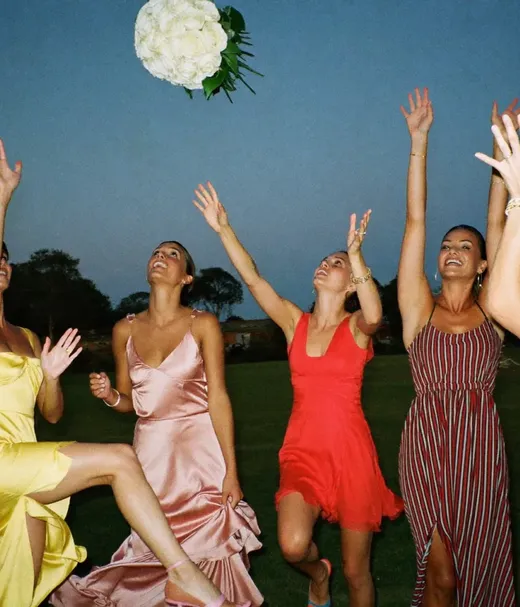
Without a first look, you spend most of cocktail hour in portraits. Meanwhile your guests are relaxed, dressed up, holding a drink and taking photos of each other. Those pictures usually stay on their phones.
The fix is one sign at the bar and on the cocktail tables. Guests scan the QR code, pick photos in their phone browser, and they land in one shared album. No app and no account. It is the one part of the day where the photo sign does the most work, because guests have a free hand and nothing scheduled.
Put the sign where people stand still: the bar, the escort card table, the high tops.
Ask the DJ or your planner to mention it once, early in the hour.
Look through the album at dinner and see the party you missed.
With Pix Wedding the first 20 guest uploads are free with no card, and paid plans start at $49 one time. Wording and placement ideas: QR code for wedding pictures.
 Maya & TheoCocktail hour, while we were away
 From Jonah
 From Priya
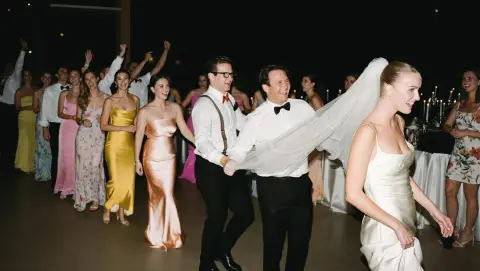 From Table 2
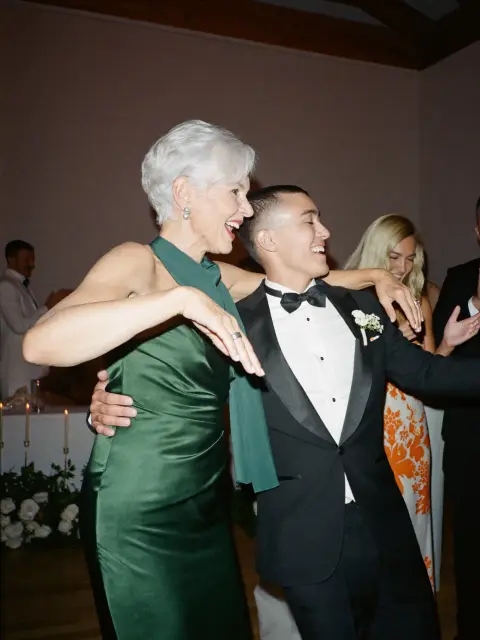 From Aunt Rosa
At the bar
While you were in portraits
Catch the cocktail hour you spent in portraits
One QR sign at the bar, one album, uploads straight from the phone browser. Your first 20 guest uploads are free, no card needed.
From Aunt Rosa
Scan to join the album
No app, no account
UPLOADING
Saving your moment
THE ALBUM
Maya & Theo
Example album
647 photos · 95 guests
SCAN TO TRY
pix.wedding/
your-wedding
Scan at the bar.
Land in your album.
This is how a cocktail hour photo gets from a guest's phone to you with Pix Wedding: scan the QR sign, pick photos in the browser, and they appear in your album. No app, no account.
GUEST ALBUM
Maya & Theo
Example album
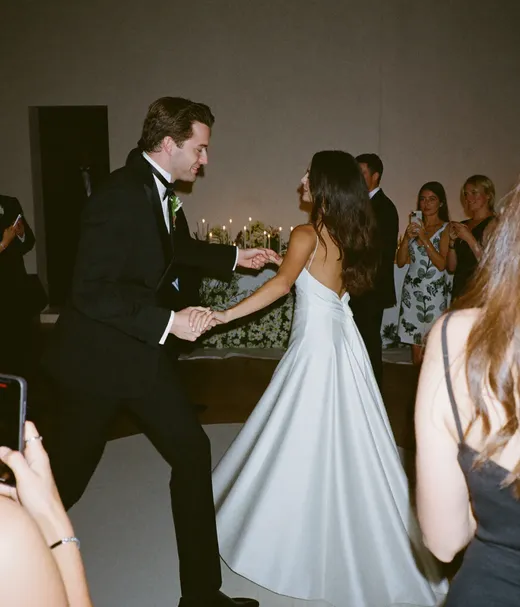
Six ways to keep an hour from becoming two
Most long cocktail hours are photo lists that grew on the day. Fix the list and the hour mostly fixes itself.
- Step 1
Write the family photo list before the day
Names, groupings, order. WeddingWire's timeline budgets about 30 minutes for close family only. Every extra combination costs a minute or two.
- Step 2
Name one person to wrangle groups
A cousin or a groomsman who knows the family. The photographer should never have to shout for Uncle Dave.
- Step 3
Set a 45 minute cue
Your planner or venue lead checks in at 0:45. If portraits are still going, they send the next round of food and tell the DJ to hold.
- Step 4
Feed people before you apologize
If you run past an hour, a fresh round of passed bites buys more goodwill than any announcement.
- Step 5
Open the reception room early
Let guests find seats and water while you finish. Sitting down resets the clock in their heads.
- Step 6
Move couple portraits to golden hour
Ten to fifteen minutes during dinner or after the toasts gives better light and shortens cocktail hour.
Signs it is time to move everyone in
Your planner watches for these. If you do not have one, give the list to the venue lead or the DJ.
Time to move
Guests asking staff when dinner starts
People sitting on anything they can find
A crowd forming by the reception doors
The bar line is gone and nobody is ordering
Older guests and kids flagging first
Avoid
Closing the bar to hurry people inside
Food stations only, with a big guest list
No seating at all for a 60 minute stand
Adding photo groups on the day
Letting it run with no one watching the clock
What comes right after?
Usually the grand entrance, then dinner or the first dance. The reception entrance order and the order of a wedding reception pick up exactly where this page stops.
Plan the rest of the day around it
How long should wedding cocktail hour last: the essentials
If you only remember five things:
- Plan 60 minutes. It is the most common recommendation and fits a family and wedding party photo list
- Go to 45 minutes when portraits are done before the ceremony and everything is at one venue
- Stretch toward 90 only for travel or a long room flip, and serve heavier food if you do
- Guests start getting restless at about 45 minutes, so the second half needs food, seats and something to do
- Plan 3 to 5 passed bites per person and about two drinks per person for the hour
Where these numbers come from
Length recommendations come from Wedding Spot, two Zola articles, planner Nora Sheils via Green Wedding Shoes, and a WeddingWire forum thread where couples compared their own cocktail hours. Photo blocks come from WeddingWire's photography timeline. Food and bar rates come from caterer Jim Wharton via Here Comes The Guide and from Monica Browne Weddings. Every source is linked above and was checked on 27 September 2026.
There is no national survey that measures cocktail hour length, so treat these as working rules from people who plan weddings, not an official average. The minute by minute plan and the guest count table are our own worked examples built from those rates.
Explore more free wedding tools
Everything you need to make your wedding day stress-free and unforgettable.
Seating Chart Planner
Plan your reception seating visually.
Guest List Manager
Track RSVPs and dietary needs.
Budget Allocator
Turn your total into a category-by-category plan.
Timeline Builder
Plan your entire wedding day.
Venues by State
Explore venues across all 50 states.
Countdown Timer
Count down the days to your big day.
Wedding Checklist
Month-by-month planning checklist.
Bachelorette Party Games
15+ games with rules, supplies, and timing.
Questions about how long cocktail hour should last
Short answers, each traced to a named source linked on this page.
Yes, if you did a first look and the ceremony and reception are at the same venue. The hour then only covers drinks and the room change. Planner Nora Sheils told Green Wedding Shoes that after about 45 minutes guests begin to get restless. Without a first look, 45 minutes is usually too short for family and wedding party photos.
For most weddings, yes. Wedding Spot calls two hours acceptable but does not recommend going beyond it, and couples on the WeddingWire forum mostly say anything past an hour and a half is too long. If travel forces a long gap, treat it like a meal: heavy, constant food and seats for older guests.
When a full meal follows, caterer Jim Wharton (New York Food Company, via Here Comes The Guide) plans 3 to 5 bites per person. When the appetizers replace the meal, he suggests 12 to 15 bites per person. For 117 guests, the US average in The Knot 2026 Real Weddings Study, that is about 350 to 585 bites before dinner.
Monica Browne Weddings (2025) gives one bartender per 50 guests as the minimum and one per 25 guests as the recommended ratio, and plans on about two drinks per person per hour. Cocktail hour is the busiest stretch for the bar, so staff for it, not for the quieter dinner hour.
With a first look, often yes. WeddingWire's photography timeline points out that doing portraits before the ceremony lets you enjoy cocktail hour with your guests. Without one, most couples spend the bulk of it on family and wedding party photos and arrive for the grand entrance.
Guests move from the ceremony, get a drink, eat passed bites and mingle while the reception room is set or flipped. The couple and family usually do formal portraits. It is also when guests take lots of relaxed photos, so it is a good time to put out a QR photo sign so those pictures reach you.