

















What Percentage of Wedding Guests Actually Attend?
Across US weddings, about 75-85% of invited guests actually attend, with the modern average sitting near 80%. Of those who RSVP yes, another 5-10% do not show up on the day due to last-minute illness, travel issues, or conflicts.
Destination weddings drop dramatically: expect 50-60% attendance, sometimes as low as 35% for international trips. The strongest predictors are travel distance, day of week (Saturday beats Friday beats Sunday), and whether plus-ones were extended.
The Numbers, Sourced
What we consistently see across multiple industry studies points to the same ballpark figures. Here is what the data actually says.
The Two-Stage Shrinkage Problem
Most couples focus only on who RSVPs. The real picture has two attrition stages, and missing either one leaves you with a miscalibrated headcount.
Stage 1: RSVP Declines
Roughly 15-25% of invitees will RSVP no before the wedding. This is normal. Work conflicts, prior commitments, budget, and health are all common reasons. You lose this group at the invitation stage.
Stage 2: No-Shows After Yes
Of everyone who confirms attendance, 5-10% will still not appear on the day. Illness, travel disruptions, or a family emergency are the main culprits. This is the gap between RSVP yes and the actual chair count.
Net Result
Stack both stages together and the cumulative final attendance lands at roughly 75% of everyone you invited -- sometimes a bit higher for tight-knit local guest lists, sometimes lower for destination events.
Example: You invite 200 people. Stage 1 removes 40 (20%) who RSVP no, leaving 160 confirmed. Stage 2 removes 12 more (8% of 160) who simply do not show. Your actual wedding has 148 seated guests -- 74% of your original invite list, even though 80% RSVP'd yes.
Attendance Prediction by Invite Count
Use these ranges for local weekend weddings. The three risk profiles reflect whether your guest list skews older and local (conservative) or younger with more out-of-towners (ambitious).
Ranges assume a local Saturday wedding. Adjust down 10-15% for Friday or Sunday, and down 20-30%+ for destination events.
What Kills Attendance Rates
These factors consistently reduce the final guest count. Rank them by impact before finalizing your date, venue, and invite policy.
What Boosts Attendance
Flip the script. These choices consistently push attendance toward the top of the 75-85% range or even beyond for a well-planned local wedding.
Saturday in peak season (May, June, September, October)
Venue within 30 minutes of where most guests live
Negotiated hotel room block at a discounted group rate
Kids welcome (removes childcare barrier for families)
Shuttle or transportation provided from hotels to venue
Plus-ones extended to all adult guests
Decision Framework: How Many to Invite
Work backwards from your target seated count. Divide by the attendance rate that matches your situation to find the right invite list size.
Conservative (72%)
Use if: many out-of-town guests, Sunday or Friday date, winter wedding, or several older guests who travel cautiously.
Want 100 guests? Invite 139.
Normal (80%) -- Recommended
Use if: Saturday date, mostly local guests, peak season (May, June, September, October), reasonable plus-one policy.
Want 100 guests? Invite 125.
Ambitious (87%)
Use if: almost all guests live locally, tight-knit community, venue is a family property, or most guests are close family.
Want 100 guests? Invite 115.
For destination weddings: use a separate multiplier
Divide your target by 0.50 for a domestic destination wedding (flight required) or by 0.40 for an international event. If you want 60 guests at a beach resort abroad, plan to invite 150 and accept that 90 people will genuinely not be able to make the trip. This is not a failure -- it is the nature of destination events.
Destination Wedding Attendance: A Realistic Picture
Destination weddings carry a fundamentally different attendance calculus. According to Paradise Weddings, the average attendance rate for a domestic destination event (requiring a flight) sits at 35-60%. For international destinations, the lower end of that range -- or below -- is more realistic.
The couples who navigate destination weddings best treat the low attendance rate as a design feature, not a disappointment. A 40-person wedding in Tuscany with your closest 40 friends tends to produce more presence and emotion in photographs and in the room than a 150-person local ballroom wedding. If your caterer, planner, and photographer all know to plan for 40-60% of your invite list, the day runs smoothly.
What to Do With Empty Seats
Last-minute cancellations are inevitable. How you handle them determines whether they cause operational chaos or pass unnoticed.
The goal is not to fill every seat -- it is to make the room feel warm and intentional regardless of who shows. What we consistently see is that a small buffer in catering, a flexible table layout plan, and one proactive reconfirm call eliminates 90% of day-of stress from no-shows.
Build a 5-8% catering buffer into your final count -- tell your caterer to prep for confirmed plus 8%
Day-before reconfirm: send a short text to out-of-town guests to catch last-minute cancellations before you lock the seating chart
Have a table reshuffle plan ready: consolidate empty seats at fewer tables rather than spreading gaps across the room
Brief your planner or a trusted family member to handle same-day seating adjustments without involving you
An empty chair in a wedding photo is not a tragedy -- it rarely appears in the shots your photographer chooses to deliver
If a table drops below half-full, move those guests to another table and repurpose the space for gifts or a card display
Related Wedding Planning Tools
Free tools to help you plan every part of your guest list

First dance
You guys!!
Stop Guessing Your Guest Count
Track every RSVP in one place, see your confirmed headcount in real time, and share your wedding photos with everyone who shows up.

From Mom
ALBUM
Emma & Jack
June 14, 2026
634 photos · 94 guests


Why Wedding Guest Attendance Rates Matter for Planning
Every vendor contract you sign -- catering, seating, favors, transportation -- is priced per head. Overestimating by 30 guests can cost thousands of dollars in waste. Underestimating means running out of food or chairs on the most photographed day of your life. The attendance rate is therefore the single most financially consequential number in your entire wedding budget.
What we consistently see is that couples send invitations and then either assume everyone is coming or panic that no one will show up. Neither instinct is calibrated correctly. The data from The Knot, RSVPify, and Zola converges on a clear middle ground: plan for 75-85% of your invite list for a local event, and revise down sharply for anything requiring a flight.
- •Catering final counts are typically locked 48-72 hours before the event
- •Venues price capacity tiers, so knowing your real count avoids paying for a larger room
- •Transportation and shuttle runs are sized to final attendance, not invites
- •Seating chart work is fastest when you know who is actually coming
- •Favors and welcome bags ordered in bulk can be trimmed once RSVPs close
How to Use RSVP Data to Refine Your Headcount Estimate
The moment RSVPs start returning, you have live data. Track them in a spreadsheet or a dedicated tool and watch the yes-rate week by week. The Knot data shows most responses arrive in two waves: immediately after invites go out (enthusiastic guests) and in the final week before the deadline (everyone else). If your mid-point yes-rate is running below 75%, you may want to follow up proactively.
Cross-reference yes RSVPs with travel distance. Guests flying in have a higher last-minute cancellation probability than guests driving 20 minutes. Flag any yes from a guest who lives more than four hours away and consider a quick check-in call two weeks before the wedding. The gap between RSVP yes and the actual chair count is most pronounced in that travel-dependent segment.
- •Send invites 8-10 weeks out (6 weeks minimum for local, 12 for destination)
- •Set the RSVP deadline 3-4 weeks before the wedding to allow for follow-ups
- •Follow up with non-responders via text, not email, one week before the deadline
- •Reconfirm with out-of-town yeses two weeks before the date
- •Share your final count with caterer, florist, and venue at the same time
The Invite List Math: Working Backwards from Your Target Headcount
Rather than inviting everyone you know and hoping for the best, work the numbers in reverse. Decide your ideal seated count, then divide by the appropriate attendance rate for your wedding type. For a local Saturday wedding in peak season, divide by 0.82. For a Friday or Sunday event, divide by 0.75. For a destination event, divide by 0.50.
This approach also forces a useful conversation with your partner about who genuinely matters most. Couples who work backwards from 80 or 100 guests present often find they can trim the invite list significantly -- which reduces cost, tightens the room feel, and improves the quality of the day. Fewer people in a well-sized venue always photographs better than a sparse crowd in an oversized ballroom.
Explore more free wedding tools
Everything you need to make your wedding day stress-free and unforgettable.
Seating Chart Planner
Plan your reception seating visually.
Guest List Manager
Track RSVPs and dietary needs.
Timeline Builder
Plan your entire wedding day.
Venues by State
Explore venues across all 50 states.
Countdown Timer
Count down the days to your big day.
Wedding Checklist
Month-by-month planning checklist.
Alternative to Wedding Guest Book
15 creative alternatives guests actually enjoy.
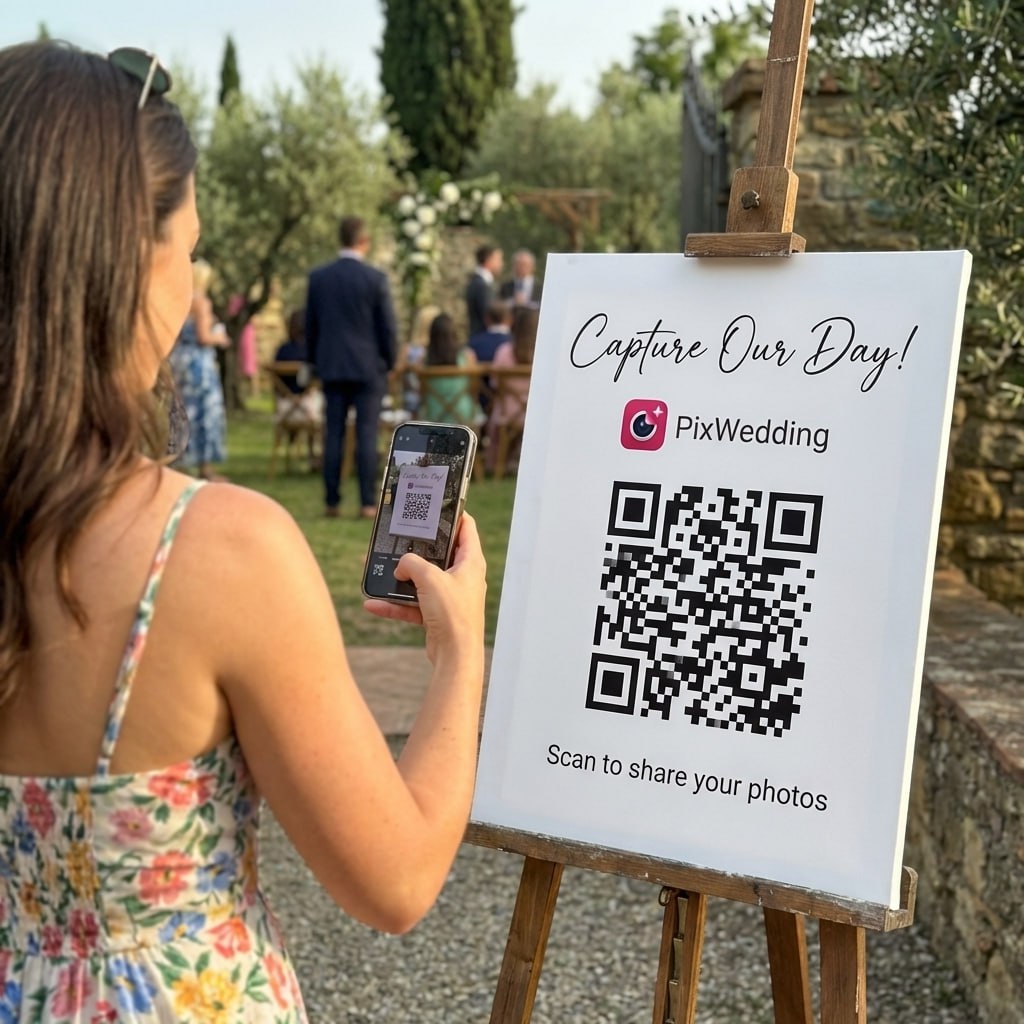
Photo Sharing QR
The best way to collect guest photos.
Wedding Guest Attendance: Frequently Asked Questions
Everything you need to know about our free tools and how they help your wedding day.
For a local wedding where most guests live within an hour of the venue, you can expect roughly 83-88% of invited guests to RSVP yes and about 75-85% to actually show up on the day. The gap between those two numbers is the no-show rate -- typically 5-10% of yeses cancel or simply do not appear.
Destination weddings see dramatically lower attendance. According to Paradise Weddings data, expect 35-60% of invited guests to attend a destination event. For international travel, that figure can fall to 35% or even lower. Many couples find this feature, not a bug -- smaller, more intimate gatherings with people who genuinely committed.
Industry data consistently shows 5-10% of guests who RSVP yes will not attend on the day. For a wedding of 150 confirmed guests, that is 8-15 empty seats. The most common reasons are last-minute illness, travel disruption, or a family emergency. This is normal and expected -- build it into your catering count.
Yes, with a clear multiplier. Divide your target attendance by 0.80 to get a safe invite count. If you want 100 guests present, invite 125. For a destination wedding, divide by 0.50 and invite 200 to expect 100. The risk of over-inviting is cost if attendance runs high, so set a catering range with your caterer rather than a fixed number.
Offering plus-ones to all adult guests typically lifts attendance by 5-15% because guests are more comfortable traveling with a partner. Restricting plus-ones (couples-only, or none for single guests) can reduce overall headcount by a similar margin, as solo guests are more likely to decline long-distance invitations.
Give your caterer a final count 48 hours before the wedding and factor in a 5-8% buffer on top of RSVPs. Call or text unconfirmed guests the day before. Work with your planner on a table reshuffle plan so any empty seats are consolidated rather than scattered. Most caterers expect some attrition and can flex final portions by up to 10%.