
Wedding Venue Capacity Calculator
Enter your venue dimensions and layout style to find out exactly how many guests will fit comfortably.
Plan your venue capacity
Enter your space and layout, get your guest count in seconds.
Venue Dimensions
Layout Style
Additional Space Needs
Enter your venue dimensions above to see capacity results
Common Venue Sizes
Not sure about your venue size? Here are typical square footages for popular wedding venue types. Click any to auto-fill the calculator.
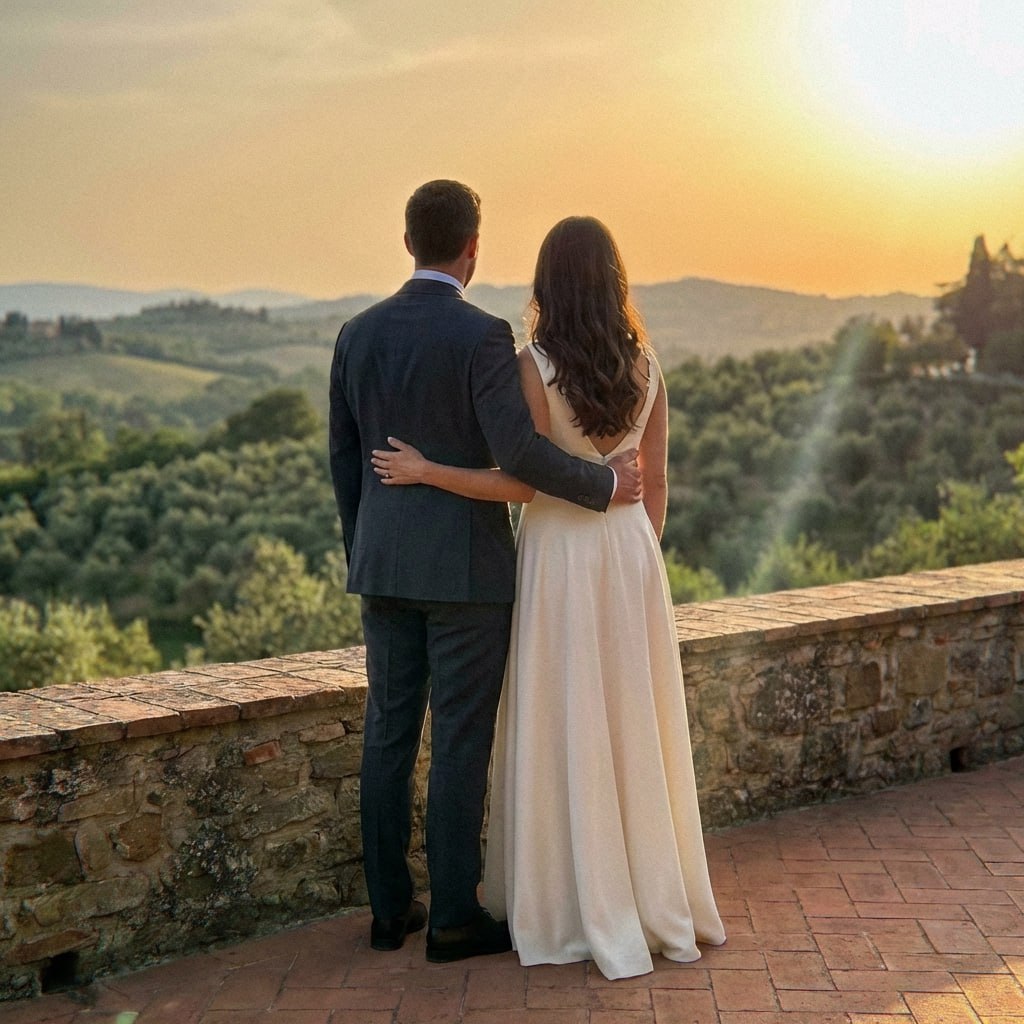
First dance
You guys!!
Found a venue that fits? Now catch every photo taken in it
Every guest phone becomes a camera. Free to start, 20 guest uploads, no card.
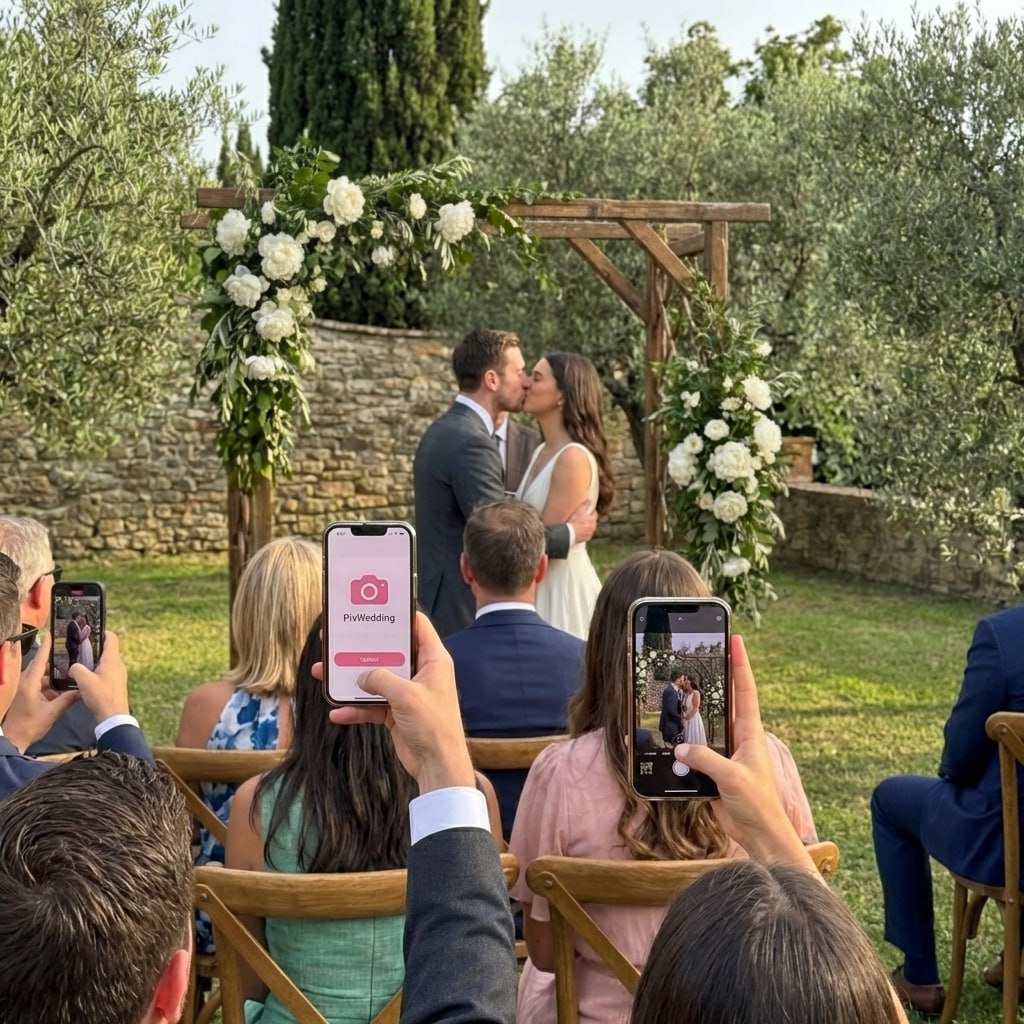
From Mom
Scan to join the album
No app, no account
UPLOADING
Saving your moment
THE ALBUM
Emma & Jack
June 21, 2026
647 photos · 95 guests
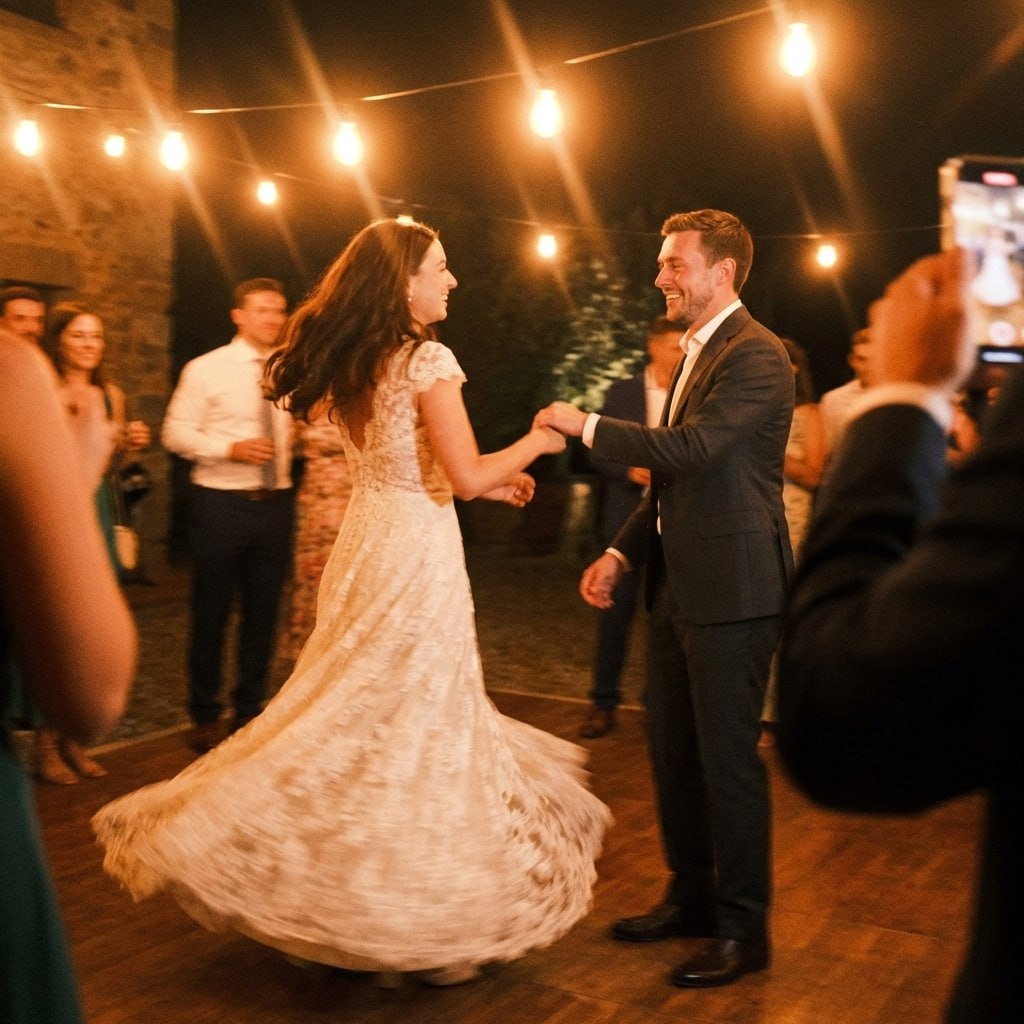

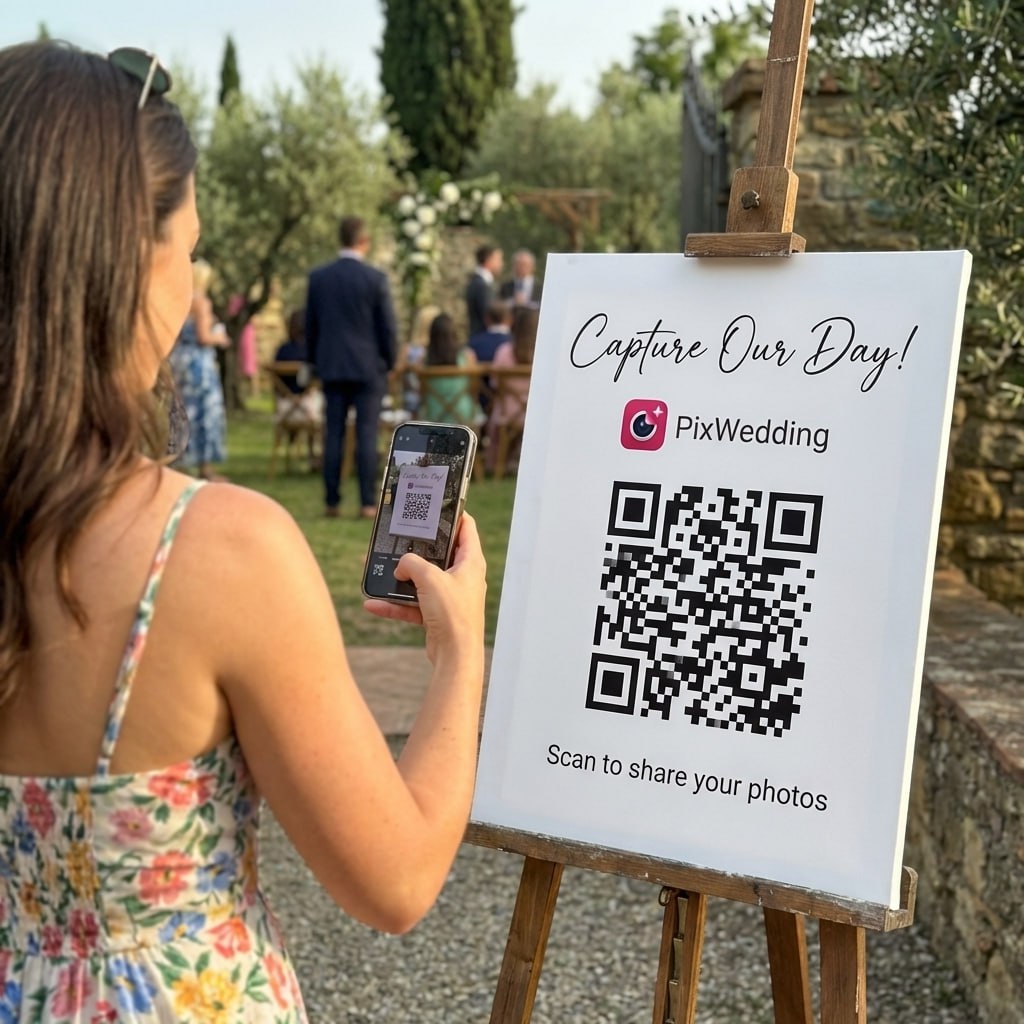

SCAN TO TRY
pix.wedding/
your-wedding
Room Size to Guest Count
These counts assume the full square footage listed is usable event space, with no separate area carved out yet for a dance floor, stage, bar, or buffet line.
| Room Size | Banquet (round tables) | Theater (rows) | Cocktail (standing) |
|---|---|---|---|
| 1,000 sq ft | ~90 guests | ~145 guests | ~165 guests |
| 1,500 sq ft | ~135 guests | ~215 guests | ~250 guests |
| 2,000 sq ft | ~180 guests | ~285 guests | ~335 guests |
| 3,000 sq ft | ~275 guests | ~430 guests | ~500 guests |
| 5,000 sq ft | ~455 guests | ~715 guests | ~835 guests |
| 7,500 sq ft | ~680 guests | ~1,070 guests | ~1,250 guests |
| 10,000 sq ft | ~910 guests | ~1,430 guests | ~1,665 guests |
Counts use standard event space planning density factors: about 11 square feet per guest for a seated banquet with round tables, about 7 square feet per guest for theater-style rows, and about 6 square feet per guest for a standing cocktail reception, based on the space planning guidelines from Social Tables. A dance floor, band, DJ booth, or buffet line will lower the real seated or standing count below these figures.
How Much Space Your Guest Count Needs
Working the other direction: here is the usable floor space needed for common wedding guest counts, before adding room for a dance floor, stage, or catering stations.
| Guests | Banquet (round tables) | Theater (rows) | Cocktail (standing) |
|---|---|---|---|
| 50 guests | ~550 sq ft | ~350 sq ft | ~300 sq ft |
| 100 guests | ~1,100 sq ft | ~700 sq ft | ~600 sq ft |
| 150 guests | ~1,650 sq ft | ~1,050 sq ft | ~900 sq ft |
| 200 guests | ~2,200 sq ft | ~1,400 sq ft | ~1,200 sq ft |
| 300 guests | ~3,300 sq ft | ~2,100 sq ft | ~1,800 sq ft |
Same density factors as above (about 11 sq ft per banquet guest, 7 sq ft per theater guest, 6 sq ft per cocktail guest), rounded to the nearest 50 square feet. Ask your venue coordinator for the usable event floor square footage, not the total building size, since kitchens, restrooms, and storage do not count.
How to Calculate Wedding Venue Capacity
Choosing the right venue size is one of the most important decisions in wedding planning. Too small and your guests feel cramped. Too large and the room feels empty and impersonal. The key is matching your guest count to the available square footage while accounting for different layout needs like tables, a dance floor, and vendor stations.
The general rule of thumb is that seated dinner events with round tables need about 15 square feet per guest. Banquet-style long tables are more space-efficient at around 12 square feet per person. Cocktail receptions with standing room need roughly 8 square feet per guest, while ceremony-only setups with rows of chairs can fit guests into about 7 square feet each. These numbers include aisle space and room to move comfortably.
- •Round tables with 8-10 guests each are the most popular reception layout but require the most space per person.
- •Banquet-style long tables create a communal dining feel and save roughly 20% of floor space compared to round tables.
- •Cocktail receptions nearly double your venue capacity compared to seated dinners.
- •Always reserve extra space for a dance floor, DJ setup, bar, buffet stations, and walkways between areas.
- •Ask your venue for the exact square footage of the usable event space, not just the total building size.
Venue Sizing Tips for a Comfortable Wedding
Even after calculating your maximum capacity, experienced wedding planners recommend using only about 80% of that number for a comfortable experience. This buffer accounts for walkways, wheelchair accessibility, coat racks, gift tables, and the natural flow of guests moving between areas during the reception.
If your venue feels borderline for your guest count, consider creative solutions. A cocktail hour in a separate area while the main room is flipped from ceremony to reception can help. Outdoor spaces for part of the evening free up indoor square footage. And choosing banquet tables instead of round tables can gain you 15-20 extra seats in the same room.
- •Target 80% of maximum capacity for a comfortable guest experience with room to breathe.
- •Factor in vendor space needs like DJ booths, bar setups, and buffet stations before finalizing your guest list.
- •Consider flow between areas so guests can move naturally from cocktails to dinner to dancing.
- •Check venue fire codes and legal occupancy limits, which may be lower than your calculated capacity.
- •Visit the venue during a similar event if possible to get a real sense of how the space feels when full.
Venue Capacity FAQ
Everything you need to know about our free tools and how they help your wedding day.
A 5,000 square foot venue fits about 455 guests at a seated banquet with round tables, 715 guests theater-style in rows, or up to 835 guests at a standing cocktail reception. These figures assume the full 5,000 square feet is usable event space. A dance floor, live band, buffet line, or bar setup will lower the real capacity, so budget 10-20% less if your event includes those elements.
For 100 guests at a seated banquet with round tables, plan for roughly 1,000 to 1,200 square feet of usable floor space, based on the standard 10-12 square feet per person guideline. That covers tables, chairs, and walkways, but not a dance floor, DJ booth, or buffet stations, which typically add another 200 to 400 square feet.
Most planners use about 10-12 square feet per guest for seated round-table dinners, 6-8 square feet for theater-style rows, and around 6 square feet for a standing cocktail reception. These figures cover the table, chair, and immediate walking room around each guest, not extras like a dance floor, stage, or bar.
A 2,000 square foot venue holds about 180 guests at a seated banquet with round tables, 285 guests theater-style in rows, or up to 335 guests standing at a cocktail reception. Subtract space for a bar, buffet, or dance floor before finalizing your guest count, since those areas are not part of the seating math.
A 10,000 square foot venue seats roughly 910 guests banquet-style at round tables, 1,430 guests in theater rows, or fits around 1,665 guests for a standing cocktail event. Venues this size still need dedicated space carved out for a dance floor, stage, catering lines, and restrooms before you lock in a guest count.
150 wedding guests need about 1,650 square feet for a seated banquet with round tables, 1,050 square feet for theater-style seating, or roughly 900 square feet for a standing cocktail hour. Add extra square footage on top of that for a dance floor, DJ area, and buffet or bar stations.
Explore more free wedding tools
Everything you need to make your wedding day stress-free and unforgettable.
Seating Chart Planner
Plan your reception seating visually.
Guest List Manager
Track RSVPs and dietary needs.
Budget Allocator
Turn your total into a category-by-category plan.
Timeline Builder
Plan your entire wedding day.
Countdown Timer
Count down the days to your big day.
Wedding Checklist
Month-by-month planning checklist.
Bachelorette Party Games
15+ games with rules, supplies, and timing.
Alternative to Wedding Guest Book
15 creative alternatives guests actually enjoy.