
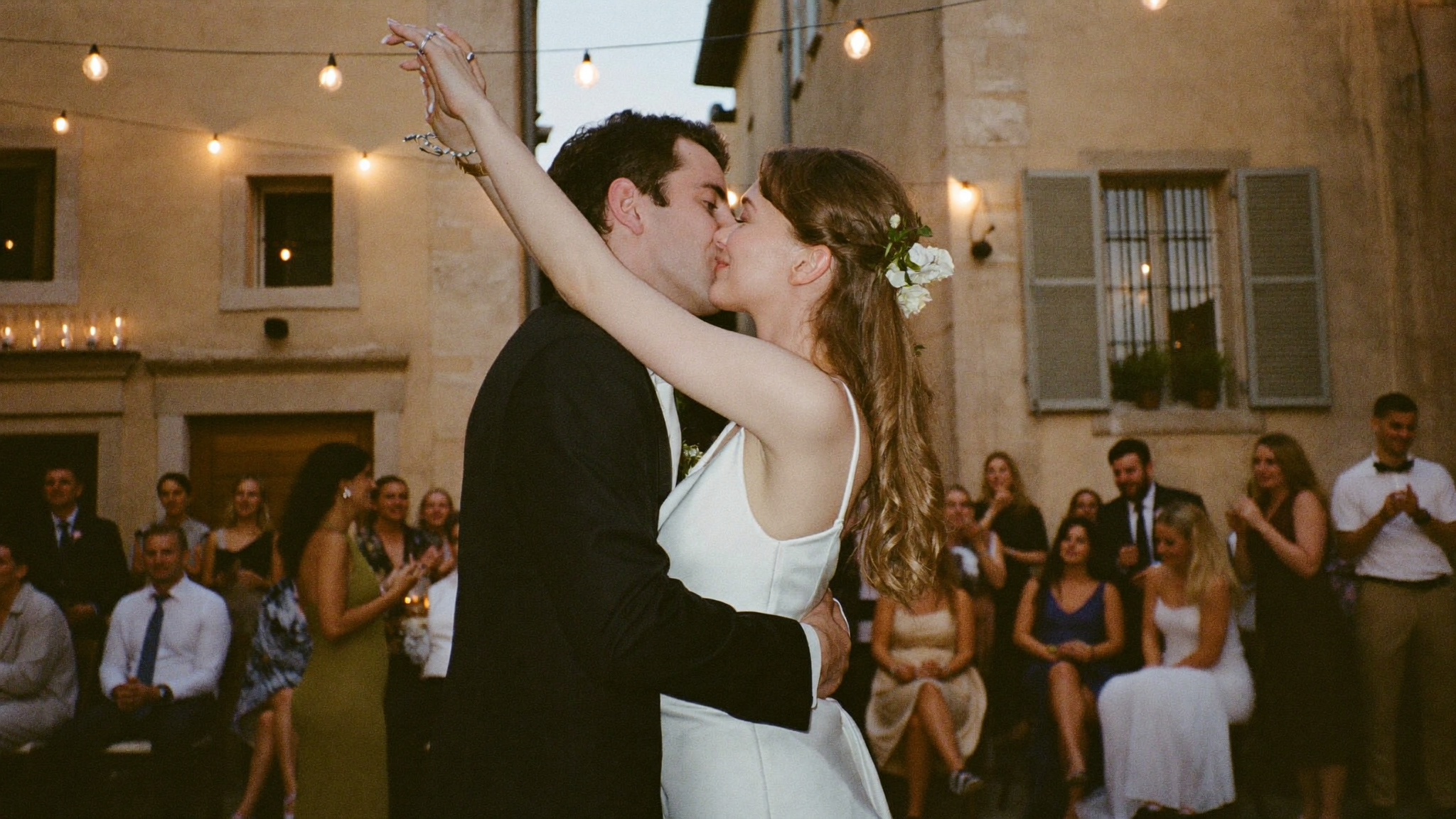
We have helped more than 280 weddings get their photos collected. Across all of them, the conversations we have once the day is over are not random. They cluster. Two camps, almost without exception, and the line between them is sharper than we expected.
What surprised us is what does not separate them. It is not the dress. It is not the venue. It is not the budget. It is not even the photographer. We have seen couples spend twelve thousand dollars on a wedding and end up in the camp that reaches for the album every Sunday. We have seen couples spend a hundred and eighty thousand dollars on a wedding and end up in the camp that barely looks at it after the first month.
The variable is something else, and it is small enough that most couples miss it during planning. So we wrote it down. This is the pattern, as plainly as we can put it.
How we noticed the pattern
We should be clear about what this observation is and is not. It is not a formal study, and we are not going to dress it up as one. It started as a courtesy habit: a member of the team following up with couples a few months after their wedding, mostly to see how the album had held up and whether anything had broken. Somewhere in the first few dozen of those conversations, the same question kept producing the same shape of answer.
The question was simple: how often do you actually look at your wedding photos now? Not "are you happy with them," which almost everyone answers yes to out of politeness, but the more concrete version, the one that is harder to fudge. Once we noticed the split, we started asking it more deliberately, and it kept holding. Not every single time, but consistently enough that it stopped feeling like coincidence and started feeling like a pattern worth writing down.
We are not claiming a sample size or a percentage here, because we have not run this as a controlled survey and it would be dishonest to present it that way. What we can say is that the split showed up often enough, across couples with very different budgets, guest counts, and venues, that budget stopped being a plausible explanation. Something else was doing the work, and once we started looking for it, it was not hard to find.
We have also written about the underlying mechanics elsewhere: why a single photographer can only realistically cover a fraction of the day, and the specific regrets that keep showing up when guest photos never make it back. This piece is about the decision that determines which side of that gap a couple lands on.
The two kinds of couples
Six months out from a wedding, we sometimes follow up and ask one simple question: how often do you look at your wedding photos? The answers cluster into two camps almost without exception.
"All the time. We made a book. The kids look through it. There is a photo a guest took of my grandfather laughing that lives on the kitchen counter."
"Honestly, not as much as we thought. The professional gallery is on the shelf. We looked at it the first month. After that, life moved on."
The two groups are not budget twins, not even close. Both have a photographer. Both have a gallery. The difference is not the gallery itself. It is what surrounds it.
We want to be specific about what these composites represent, because we take the fabrication question seriously. Group A and Group B are not two named couples. They are patterns we have watched repeat across the weddings we have helped capture, written as representative voices rather than as a single testimonial. The split itself, and the decision behind it, is the real observation. The quotes are illustrative of that pattern, not a transcript of one conversation.
We also want to be clear that Group B is not a group of couples who did something wrong. Nobody sits down during engagement and decides to under-collect their own wedding photos. It is closer to an oversight than a choice, one small line item that never made it onto a checklist next to florist deposits and final headcounts. That is exactly why it is worth naming directly instead of leaving it implicit.
Why it works this way
You do not actually relive your wedding through the photographer's gallery. You relive it through everyone's photos.
This is the part we did not notice at first. A photographer can cover roughly six percent of a wedding day, the framed parts: the first kiss, the vows, the formal portraits, the cake. The other ninety-four percent is happening everywhere else. The candid shot a cousin takes during the first dance. The conversation a friend catches at the bar. The photo your aunt takes of your father wiping his eyes during the toast. That version of your wedding does not exist in the gallery. It exists on dozens of separate guest phones.
Whether you ever see it again is determined by one small decision.
Couples try to close this gap in a few predictable ways, and most of them do not hold up under a busy wedding day. A wedding hashtag depends on guests remembering it, using it correctly, and posting publicly rather than privately, three things that rarely all happen at once. Disposable cameras depend on someone collecting and developing rolls of film that are frequently blurry or unused. Asking guests to text photos "whenever" depends on two hundred separate people independently following through on a vague request weeks after the moment has passed. We go through each of these in more detail, including why they fail in slightly different ways, in a separate piece on the wedding photo solutions that quietly do not work.
If you want to see exactly what that decision looks like in practice, here is how the private album fills up.
What actually separates Group A from Group B
Once we stopped looking at budget and started looking at process, five patterns showed up again and again. None of them are complicated. All of them are easy to skip in the last busy weeks before a wedding.
- Group A decided before the wedding, not after. The QR card was printed and placed on tables weeks in advance. Group B, when they thought about it at all, thought about it the week of, when there was no time left to set anything up.
- Group A removed the friction. No app to download, no account to create, no group chat to dig through later. Guests used the camera already open on their phone. Group B relied on guests remembering to act on their own, later, unprompted.
- Group A made sharing the default, not a favor. A card on every table is a visible invitation. Asking guests to "send them after" the wedding puts the burden entirely on someone who is tired, traveling home, and has forgotten by Monday.
- Group A got the photos while they still meant something. The album filled out within a day or two of the wedding, while the day was still fresh. Group B, when photos did trickle in, often got them weeks later, arriving as scattered, low-quality afterthoughts.
- Group A built one place to look. Group B never built any place at all. A single private album is something you open on a Sunday afternoon. Photos spread across six different guests' camera rolls are not something anyone opens, because there is no "it" to open.
The timeline of the decision
The couples who end up in Group A do not make this decision the morning of the wedding. They make it during final planning, roughly four to eight weeks out, at the same point they are confirming table counts and finalizing the seating chart with the venue.
That timing matters more than it looks like it should. Four to eight weeks out is early enough to order printed cards and get them into the reception layout without adding stress. It is also early enough to mention it once, casually, in a rehearsal dinner toast or a welcome sign, so guests already understand what the card on their table is for before the reception starts.
Group B's version of this decision, when it happens at all, tends to happen the week of the wedding or not until afterward, when someone asks "did anyone get that video of the speeches?" and the honest answer is: maybe, on someone's phone, somewhere. By then there is no printed card to order and no easy way to ask two hundred guests to send photos to one place. The window for making sharing the default, instead of a favor, has already closed.
The tightest version of this we have seen worked with about ten days of lead time, which was enough to design and print cards and get them onto tables. It is possible to do this closer to the wedding than four to eight weeks. It is just harder, and it leaves less room for anything to go sideways with the printing or delivery.
What "a place to send photos" concretely means
This phrase gets used a lot in wedding planning, so it is worth being specific about what it does and does not mean, because the vague version of it is exactly what causes Group B.
It does not mean a hashtag. Guests forget hashtags, and even when they remember, the photos land buried in a public feed rather than somewhere the couple controls. It does not mean "text me later," because "later" competes with a hundred other things once the wedding is over. It does not mean a disposable camera on the table, because most of those rolls come back blurry, flash-blasted, or never developed at all.
What it does mean, concretely, is a single link or QR code that a guest can act on in under ten seconds, using the camera they already have open, without creating an account or downloading anything. The photo goes straight into one private album the couple owns. No sorting through six people's camera rolls after the fact. No group chat archaeology. One place, and everyone who wants to contribute already knows where it is because it was sitting on their table.
It also, quietly, means privacy. The album is not public. It is not searchable. It is not posted to a feed where a stranger could stumble across it. Guests are contributing to something the couple controls, which matters more than it sounds like it should, especially for the photos guests take of other guests, kids included, that nobody wants floating around the open internet.
And it means the photos arrive in their original quality rather than the compressed, re-shared, re-compressed version that circulates through group chats and social apps. A photo texted three times loses detail every time it changes hands. A photo uploaded once, directly, keeps the resolution it was taken at.
A few terms, defined
Because this topic gets talked about loosely across wedding planning forums, it is worth being precise about a few terms we use in this piece and elsewhere in the Journal.
Guest photo album. A single, private collection where every photo taken by every guest lands in one place, distinct from the professional photographer's gallery. This is the thing Group A has and Group B does not.
Wedding QR card. A small printed card, typically placed on each reception table or near the entrance, with a scannable code that takes a guest directly to the upload page for the album. No app required.
The morning-after gap. The difference in what a couple wakes up to the day after the wedding, depending on whether guest photos were already flowing into one place overnight or whether they are scattered and unprompted.
The 6 percent. Our shorthand, explained at length in a separate piece on photographer coverage, for the rough share of a wedding day a single hired photographer can realistically be present for, given that a wedding unfolds across multiple rooms and conversations at once.
Setting it up without overthinking it
Couples sometimes assume this decision requires more planning effort than it actually does, which is part of why it gets pushed to the bottom of the list. In practice, it is one of the lighter items on a wedding planning checklist, not one of the heavier ones.
The sequence that tends to work: decide on the album during final planning, around the same week you are confirming the seating chart. Order or design the printed cards, which takes a browser and a few minutes if you are using a service built for it, or an evening if you are designing your own in a document editor. Place one card per table during setup, the same pass where centerpieces and place cards go out. Mention it once, briefly, during a toast or on a welcome sign, so guests understand what it is for before they have had a drink or two.
That is the entire setup. There is no ongoing maintenance during the reception. Photos accumulate on their own, in the background, while the couple is doing everything else a wedding day requires of them. The work happens once, weeks in advance, not on the day itself.
What guests actually think of it
Some couples hesitate here because they worry a printed card feels like homework for their guests, one more thing to manage on a night meant for celebrating. In practice, the reaction tends to run the opposite way. Guests already have their phones out all night. A card that gives those photos somewhere useful to go is closer to a convenience than an obligation, since it replaces the awkward "should I send this to them?" question with an obvious answer.
It also removes a specific kind of guilt that shows up after a lot of weddings: a guest who took a great photo, meant to send it, and then never did, not out of carelessness but because there was no clear place for it to go and the moment to send it quietly passed. A card on the table answers the question before it gets asked, at the exact moment the guest is holding the phone that has the photo on it.
The guests who do not want to participate simply do not scan the code, and nothing is lost by having offered it. The ones who do participate tend to do so more than once over the course of the night, which is where most of the volume in Group A's albums actually comes from.
The cost of doing nothing
It is worth naming plainly what Group B actually loses, because "we did not get around to it" undersells what is at stake. It is not just a handful of missing photos. It is the version of the wedding that existed everywhere except the photographer's lens: the reactions during the vows from people who were not facing the altar, the exact moment a grandparent teared up during a toast from three tables back, the candid group shot someone took right before the dancing started that nobody thought to ask for.
None of that is retrievable later in any reliable way. A couple can ask around months afterward, and sometimes gets lucky. More often, the photos exist on a guest's phone, get buried under newer photos, and eventually get lost entirely when that phone is replaced. The window during which those photos are easy to collect is short, measured in days after the wedding, not months.
This is the actual cost of the decision going unmade: not a bad wedding, not a wasted budget, just a quieter, thinner record of a day that everyone in the room experienced far more fully than any single camera could capture.
The decision
The decision is this: do guests have a place to send their photos before the wedding has even begun?
In Group A, almost always, the answer is yes. There is a small printed card on every table with a QR code on it. Guests scan with the camera they already have open, upload from their browser, and the photos arrive in one private album the couple controls. There is no app to download. No login.
With this in place, most guests who want to share a photo end up sharing several. By the morning after, the album fills out with the candids the couple never posed for: the aunt with the camera, the friend who caught a conversation, the moment a parent looked away and wiped their eyes.
In Group B, there is no such place. Guests took the photos. They meant to send them. They did not, or they did, in scattered fragments, three weeks late, into a group chat that lost them within a day.
That is the entire difference.
The morning-after difference
The clearest way we have found to explain this is to describe the morning after, because that is where the two groups actually feel different, not just look different on paper.
Even couples who booked the exact same photographer package can land in different groups here, which is what convinced us early on that photography spend was not the variable to chase. The variable is what happens to everyone else's phone.
In Group A, the morning after looks like this: the couple wakes up, still half in the wedding fog, and opens their phone to a notification that the album grew overnight. Guests uploaded on the drive home, or before bed, or the next morning over coffee. There is a photo neither of them posed for and did not know existed, a candid moment from a room they were not even in for most of the night. It becomes the one they screenshot and send to their mother.
In Group B, the morning after looks quieter. There is a thank-you-note list to start, a dress to send to preservation, and a professional gallery that will not arrive for another four to six weeks. There is no notification, because there was never a place for one to come from. If guest photos show up at all, they trickle in individually, days or weeks apart, and by then the couple has often stopped checking.
Neither couple did anything wrong on the wedding day itself. The difference was set weeks earlier, in a five-minute decision most planning checklists never mention.
A longer arc: what happens over the following year
The morning after is where the split first becomes visible, but it is not where it ends. The gap between the two groups tends to widen over the following year, in ways that are easy to predict once you know what to look for.
At one week out, Group A has usually finished thank-you notes with the help of the album, cross-checking who gave what gift against the candid table shots that show name cards and seating. Group B is still waiting on the professional gallery, writing thank-you notes from memory and a handful of phone photos they took themselves.
At one month out, Group A's album has mostly stopped growing, but it has been shared, downloaded, and in some cases already turned into a printed book or a slideshow for parents who could not travel. Group B has received the professional gallery, looked through it once carefully, and set it aside. The guest photos that existed never consolidated into anything, so there is nothing new to revisit.
At six months out, the difference stops being about photos and starts being about habit. Group A already has a place they return to: the album lives on a phone home screen, gets reopened during a slow evening, gets shown to a new friend who asks how the wedding went. Group B has a folder or a link they have not opened since the first week, because there was never a reason built in to open it again.
At the one-year anniversary, the couples we hear from in Group A are the ones sending us a note that they revisited the album together. The couples in Group B, when we hear from them at all, are usually asking whether it is too late to track down guest photos from a wedding that happened a year ago. Sometimes it is not too late. Often, by then, phones have been replaced and the photos are gone.
Where this decision matters less
In the interest of not overselling this, there are wedding formats where the gap between Group A and Group B is genuinely smaller, and we would rather say so than pretend the pattern is universal.
Very small weddings and elopements, where the guest count is under twenty and often under ten, naturally close a lot of this gap on their own. With so few people in the room, a single photographer or even a friend with a good phone camera can realistically cover a much larger share of the day, closer to the whole thing than the six percent we describe for a typical hundred-plus guest wedding. The "everyone else's phone" problem shrinks because there is no "everyone else."
Weddings with a dedicated second shooter or a videographer running alongside the primary photographer also close part of the gap, though not all of it. Two professional cameras still cannot be in every room at once, and the candid, unplanned moments a guest happens to catch are a different category of photo than anything a hired professional produces, however good they are.
We say this because the honest version of this piece only works if we are honest about when it applies less, not just when it applies. For most weddings with a normal-sized guest list, the pattern holds. For the smallest and most heavily staffed ones, it holds less.
A quick gut-check before your wedding
If you are not sure which group you are headed toward, a handful of honest questions during planning tends to surface the answer faster than debating it in the abstract.
Ask yourselves: if a guest took a great candid photo tonight, do they actually know where to send it, right now, without asking anyone? Is there one place that photo would land, or would it live wherever that guest happens to keep their camera roll? If the answer is "we have not really decided," that is usually the clearest sign that the decision described in this piece has not been made yet, even if every other part of the wedding is fully planned.
A second question worth asking: whose job is it to collect guest photos after the wedding, and when would that happen? If the honest answer is "no one's, probably sometime after the honeymoon," that is the version of the plan that tends to quietly not happen at all. The couples we see in Group A never had to ask this question, because the collecting was already happening automatically, table by table, over the course of the night itself.
Questions couples ask
A handful of the same questions come up whenever couples are deciding whether this is worth setting up. Here are direct answers to the ones we hear most.
What is the "one decision" this article keeps referring to?
Whether guests have a place to send their photos before the wedding even starts. Couples who set that up ahead of time, usually a QR code on every table, end up with a private album full of candid guest photos. Couples who do not tend to end up with only the professional gallery.
Is Group A just couples who spent more on photography?
No. We have watched modest-budget weddings land firmly in Group A and lavish, well-photographed weddings land in Group B. Budget was not the pattern we found. What guests were given to do with their own photos was the pattern.
Why do guest photos matter if we already have a professional photographer?
A photographer covers a narrow, planned slice of the day: the ceremony, the portraits, the formal moments. Everything else, the candid reactions, the side conversations, the in-between seconds, happens off camera and only exists if a guest happened to catch it on their own phone.
What if we just ask guests to text us their photos after the wedding?
Most couples try this and most couples get back a fraction of what was actually taken. Photos scatter across group chats, get compressed, or simply never get sent once the honeymoon starts and the intention fades.
Does this decision need to happen right before the wedding?
No, and that is part of why it gets missed. It works best when it is decided during final planning, four to eight weeks out, so the printed cards can be ordered and placed on tables well before the first guest arrives.
Do we have to use pix.wedding to do this?
No. The point of this piece is the decision itself, not the brand behind it. You can build your own QR link, use a different platform, or set up a shared folder. What matters is that guests have somewhere obvious to send photos before the day begins.
The honest version
You should know who is writing this. We make pix.wedding. We have a clear interest in you choosing the QR card thing, because that is what we sell. We are not pretending otherwise.
We are writing this anyway because the pattern is consistent enough across the couples we have watched use the platform that we would rather you knew before than after. If you take the idea and use a different platform, or print your own QR setup, or write your own private album link, that is also fine. The point of the piece is the decision, not the brand. It is the small printed card on every table, four to eight weeks before the wedding, that separates the two groups.
We will also say plainly where our own version has limits, because pretending otherwise would undercut the whole point of this section. At venues with genuinely poor cell signal and no wifi, uploads can lag until a guest steps outside or gets home, which is a real friction point we would rather name than hide. And for the small number of guests, usually older relatives, who do not carry a smartphone at all, no QR-based system reaches them. Someone else in the family typically ends up snapping a photo of their printed pictures or asking them directly, which is a manual workaround, not a solved problem.
None of that changes the core pattern. It just means the decision is not a perfect fix, only a much better default than leaving it to chance, which is what most couples do without ever deciding to.
We would rather a couple read this, decide the idea is right, and build their own version of it with a shared drive and a printed sign, than read it, agree with none of it, and end up in Group B anyway because nothing ever got decided. The decision matters more than which company ends up hosting the album.
If you are still weighing your options, we would rather point you toward more of the reasoning than push you straight to checkout. We wrote separately about the specific photo couples end up searching for months later, and a rundown of the guest-photo workarounds that sound reasonable but quietly fail. Our general guide to collecting photos from wedding guests covers the mechanics in more depth than we can fit here, and our QR code for wedding pictures page walks through the printed-card setup step by step. If you want to compare platforms before deciding, our comparison of wedding photo sharing apps is unbiased about which ones fit different weddings.
If you want the version we built, it is below. If you do not, we hope you find another one. Either way, do not be the couple who meant to.
One decision, made weeks in advance, is the whole difference between the two groups.