
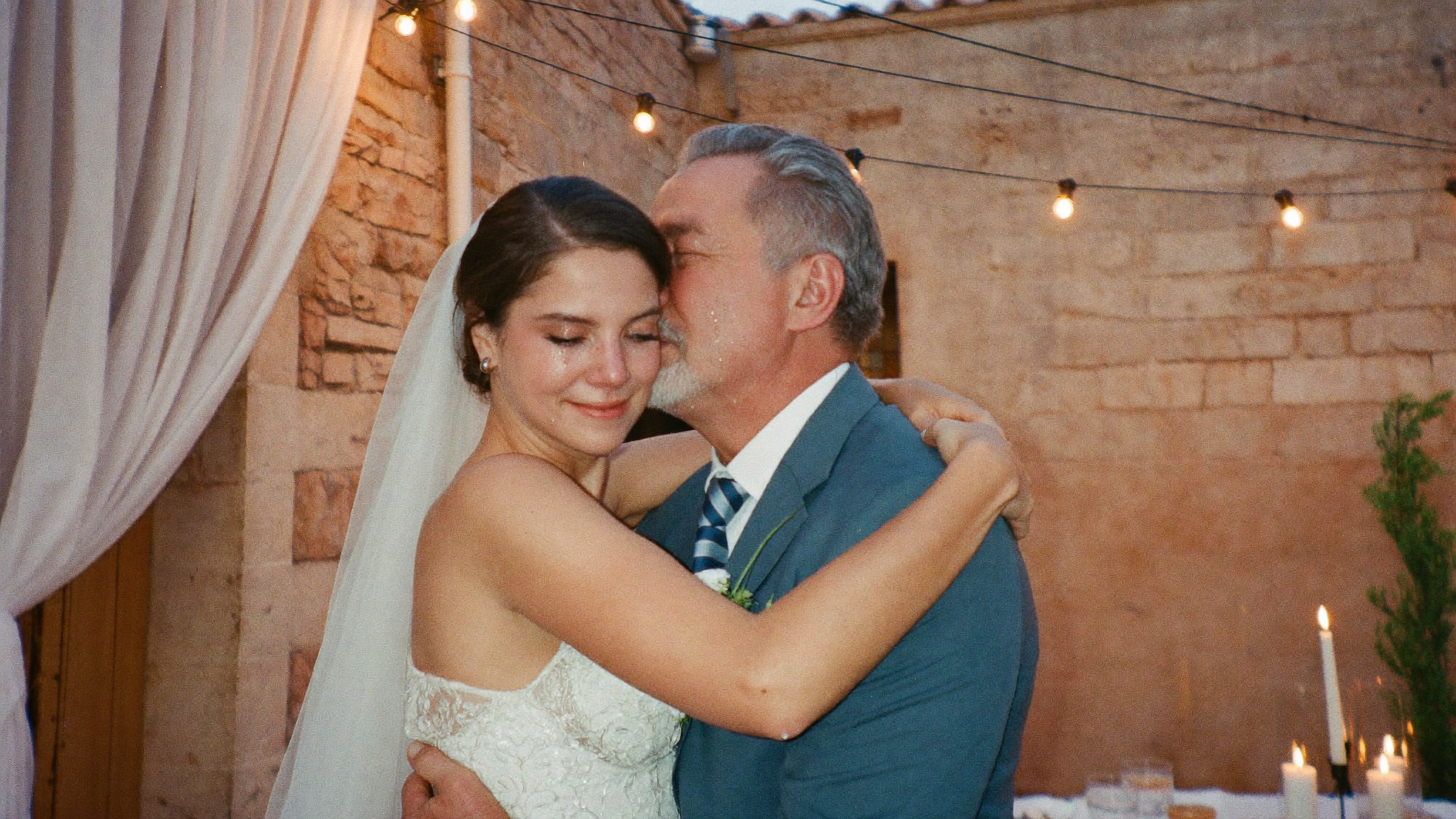
Ask a married couple what they would change about their wedding and you expect to hear about the dress, the seating plan, the band. Sometimes you do. But there is another answer that comes up far more often, and it is quieter, because it only arrives months later, when the day is long over and they reach for a photo that was never taken. It is almost always about the photos. And underneath all eight regrets below sits the same root cause. So let us walk through them.
Photographers are excellent at what they are hired to do, and the gap that follows is not a failure on their part. A typical contract books eight to ten hours, covers getting ready through the first hour of the reception, and follows a shot list built around portraits and formalities. Everything outside that scope, which on most wedding days is most of the day, is covered by nobody unless someone plans for it in advance. We wrote more about what a photographer's coverage actually adds up to if you want the fuller math behind it.
Here are the eight regrets that come up most, roughly in the order couples say they remember them.
Your dad's face, in none of the photos.
There is a moment, usually during the toast or the first dance, when your father quietly takes it in. His face does something unguarded that you have rarely seen before. It happens once, and it is over in less than a second. Almost every couple who names this regret says the same thing afterward: it exists somewhere, caught by accident on a guest's phone, but it is not in the photographer's gallery, and nobody thought to ask for it.
The grandparents, mid-story.
Grandparents at weddings tend to do one of two things. They sit, and they tell stories you will never hear again in quite the same way. The photographer is usually staging portraits or following the bridal party during exactly this window. Nobody is at the table where your grandfather is leaning toward his great-grandchild, saying something you would frame forever if you had known it was happening.
Midnight, after the photographer has left.
Most photography packages end around ten or eleven in the evening, sometimes earlier. The wedding does not. The dance floor at midnight, the after-party at the bar, the long table outside in the courtyard at one in the morning: this stretch of the night lives on guests' phones and almost nowhere else. It is also, almost always, the part couples say they most want back.
Want to skip ahead to the fix? See what couples without the regret used.
The kids, off in their own wedding.
Children at weddings run their own parallel event. They trail the bride around the room. They steal bites of cake before it is cut. They fall asleep mid-song in a folding chair. The flower girl carries the bouquet around for an hour after the ceremony ends. None of it is on a shot list, so none of it is in the gallery, and almost all of it only exists because someone happened to be standing nearby with a phone out.
The hashtag almost nobody used.
Wedding hashtags look like a system. In practice, only a small share of guests ever post under it, and the ones who do scatter photos across public feeds where they are buried within a day or two. By the time the honeymoon is over, the hashtag is effectively dead, and finding the photos through it is no easier than it was the morning after.
The disposable cameras.
Disposable cameras feel charming right up until the lab hands back the prints. A meaningful share of the shots never get developed at all. The ones that do come back mostly blurry, flash-blasted, or half a thumb, with only a handful of usable frames per camera. By the time you have paid for a dozen of them and waited two weeks for the scans, the math stops making sense, and the photos still mostly do not turn out.
Your partner's face, the second it changes.
This is the regret almost every couple names first if you ask carefully enough. During the vows, or the first look, or the toast, your partner's face does something it has never quite done before. Whoever happens to catch it, catches it once. It is almost never the photographer, who is usually positioned for you rather than for them, and it is almost always a guest sitting or standing nearby. If that guest's photo never makes it to you, the moment is simply gone.
The album that is empty the morning after.
The wedding ends, and you leave for the honeymoon assuming the photos will follow. You open your phone the next morning expecting a flood. There is almost nothing, maybe a handful from the wedding party. The wave you pictured never arrives, and it does not arrive the following week either. You spend the next two months chasing photos out of group chats and camera rolls, and what eventually comes back is a fraction of what was actually taken that day.
The regret behind all of them
Eight different regrets, one root cause. Almost every one of them comes back to the same problem: the moment you most wanted was happening somewhere your photographer was not, and the person who did catch it had no place to send it. Without one shared destination for guest photos, those moments stay scattered across dozens of separate phones, most of which you will never see. We have written about the small decision that separates the couples who see those photos from the couples who don't, and it comes down to exactly this.
Why this happens on almost every wedding day
None of this is anyone's fault, exactly. It is a structural gap between what a photographer is hired to capture and what actually happens across twelve hours with a hundred and fifty people in the room.
- The contract has an end time. Most packages cover eight to ten hours. The wedding, the after-party, and the breakfast the next morning do not stop when the contract does.
- One camera cannot be in two rooms. While your photographer follows the bridal party, your grandfather is telling a story at a table on the other side of the room.
- Guests do not interrupt. Almost nobody hands a stranger their phone mid-toast, so the photo stays exactly where it was taken, on one device.
- Group chats decay within days. Photos sent to a single thread on the wedding night get buried under new messages within a week.
- Hashtags depend on public posting. Most guests never post at all, and the ones who do scatter photos across feeds you don't control, which is one of several fixes that sound better than they perform.
- Nobody owns the follow-up. No single person is responsible for chasing forty guests for their camera rolls two weeks after the honeymoon ends.
- Phones fill up mid-reception. Guests who did take great photos sometimes delete them before they leave the venue, just to make room for more.
- Nothing is asked for at the moment it would work best. The best time to prompt a guest for a photo is the second after they take it, not three weeks later in a group text.
None of these gaps are solved by trying harder on the night. They are solved by removing the need to remember anything at all, which is the entire point of putting the collection point in front of every guest before the first course is served.
Four fixes couples try, and what actually happens
Most couples do not skip this on purpose. They pick one of a handful of familiar fixes, assume it is handling the problem, and find out months later that it was not. Here is what each one actually delivers.
The group text thread.
Someone in the wedding party starts a thread the week of the wedding and asks everyone to drop their photos in. It works for the six or seven people who were already going to send photos anyway. Everyone else forgets within a day, the thread gets buried under logistics messages, and nobody goes back to check it once the honeymoon starts.
Verdict: catches a fraction of what guests actually took, and only from the most organized guests in the room.
The wedding hashtag.
A cute hashtag on the welcome sign feels like a system, and it photographs well on the stationery. The problem is that it depends on guests choosing to post publicly, remembering the exact spelling, and doing it before they forget. Most never do, and the photos that do land under it are scattered across public feeds rather than gathered anywhere you control.
Verdict: looks organized, performs like no system at all.
Disposable cameras on the tables.
These photograph beautifully in the flat-lay shots wedding accounts post before the big day. In practice, guests are unfamiliar with manual film cameras, flash range is short, and a meaningful share of frames come back blurry, dark, or overexposed. Add the cost of developing a dozen or more cameras and the two-week wait for scans, and what you get back rarely matches what you spent.
Verdict: charming as a keepsake, unreliable as a collection method.
One QR code, one private album.
A code on every table, a link that opens straight to an upload page, no app and no account. Guests use it in the moment, right after they take the photo, because it takes less effort than opening a texting app and finding the right thread. The photos land in a single private album the couple controls, visible the next morning instead of trickling in over weeks.
Verdict: the only one of the four that removes the two things guests actually forget: remembering, and following through.
This is not a replacement for your photographer
None of this argues against hiring a great photographer. The posed portraits, the ceremony coverage, the golden-hour shots on the lawn, that work is exactly what a professional is trained to deliver, and it is worth paying for.
The gap this closes is different. It is the coverage that happens outside contracted hours, in rooms your photographer is not in, at angles a hired professional would never think to shoot from. A great photographer and a shared guest album are not competing for the same moments. They are covering two different halves of the same day.
One documents the day you planned. The other catches the day that actually happened.
How guests actually experience scanning the code
From a guest's side, the entire interaction takes less time than opening a texting app and finding the right thread. They notice the card on the table, usually somewhere between the appetizer and the toasts, and open their phone's camera to scan it out of habit more than obligation.
The link opens to an upload page in their browser. There is no account to create and no app to download, so there is no moment where a guest gives up halfway through. They select the photos already sitting in their camera roll from ten minutes earlier, upload them, and go back to the conversation they were having. The whole thing takes under a minute.
The lower the effort, the higher the number of guests who actually follow through.
Where else to put the QR code
The table card is the highest-traffic spot, but it is not the only one worth using.
- The welcome sign or guest book table. Guests see it on the way in, before they have taken a single photo, which primes them to remember it later.
- The bar or dessert table. High-traffic spots where guests naturally have their phones out already.
- The favor or place card. Something guests take home, so the code is still findable days later for anyone who forgot on the night.
- A slide on the welcome screen, if there is one. A quick mention at the start of the reception does more than a card most guests will not notice until later.
- The thank-you card. A second, smaller push after the wedding catches the handful of guests who still have unshared photos on their phone.
- The wedding website, if you have one. A link alongside the RSVP details reaches guests before they even arrive.
What this costs compared to what it prevents
A private guest album built around a QR code starts at $59, one time, with no subscription. Compare that against a stack of disposable cameras, where the cost of film and developing across a dozen or more cameras adds up quickly, and a meaningful share of what comes back is unusable.
The more useful comparison is not against other collection methods. It is against the cost of doing nothing: the two months spent chasing photos out of group chats, the moments that never surface because nobody thought to ask the right guest, and the eight regrets at the top of this page, most of which cost nothing to prevent and everything to notice you missed.
One line item on the budget, next to the flowers and the favors, quietly prevents the one regret couples name most.
A note on privacy
A private album is not the same thing as a public hashtag feed. Nothing uploaded to it is visible outside the couple's control, nothing publishes to social media automatically, and guests are not creating public accounts or posts to participate.
For a lot of couples, that distinction matters as much as the convenience does. A shared album can hold photos from the dressing room, the ceremony, and the after-party without any of it appearing in a public feed unless the couple chooses to share it themselves.
Private by default is the entire point, not an afterthought.
Signs you already have this regret and do not know it yet
A few quiet signals tend to show up before couples name the regret outright.
- You still have not opened the group chat from the wedding. If it has been sitting unread for weeks, the photos in it are effectively lost.
- You remember a moment nobody photographed for you. If you can describe a specific look on someone's face but cannot find it anywhere, it likely exists on a guest's phone you never asked.
- Your gallery from the photographer feels thinner than the day felt. A twelve-hour day rarely fits into an eight-hour contract, and the difference is exactly where these regrets live.
- You keep meaning to ask a specific guest for their photos. Every week that passes makes it less likely those photos ever get to you.
- You have started saying "at least we have the professional photos." That sentence is usually the moment the regret becomes permanent instead of temporary.
Recap: the eight regrets, at a glance
If you are skimming, here is the entire list in one place, alongside the single fix that prevents all of them.
- 1. Your dad's face, uncaught. The unguarded reaction during the toast or first dance.
- 2. The grandparents, mid-story. Conversations at the table nobody was filming.
- 3. Midnight, after the photographer left. The stretch of the night with no official coverage.
- 4. The kids, in their own parallel wedding. The unscripted moments off the shot list.
- 5. The hashtag almost nobody used. Photos scattered across public feeds instead of gathered.
- 6. The disposable cameras. More cost than usable photos, most of the time.
- 7. Your partner's face, the second it changed. Caught once, by a guest, or not at all.
- 8. The empty album the morning after. The flood of photos that never actually arrives.
One QR code, one private album, before the wedding starts. That is the fix for all eight.
What that one place looks like
A QR code on every table. Guests scan it with their phone camera, no app required. The link opens straight to an upload page in their browser, they select their photos, and that is the entire interaction. The photos land in one private album that only the two of you control. You wake up the next morning to every photo from every guest, at full resolution, sorted and ready to look through. If your partner's face changed at some point during the day and someone caught it, it is in there. We go deeper on how the mechanics work in our guide to setting up a QR code for wedding pictures.
This is the same idea behind most wedding photo sharing platforms, simplified down to the one thing that actually matters: getting every guest's photos into your hands without asking them to remember an app, a hashtag, or a link days after the fact. Wedding photo sharing done this way removes the single point of failure behind all eight regrets above.
You only plan this once
This is a one-time decision, made four to eight weeks before the wedding, that prevents all eight regrets above. It costs less than the flowers. It takes about five minutes to set up. And the difference between the couples who do it and the couples who do not shows up the morning after, on the screen they reach for first. If you want the fuller walkthrough, including what to put on the table cards and when to send the reminder, we cover it step by step in how to collect wedding photos from your guests.
The four-to-eight-week timeline
This is not a project. It fits inside a single afternoon, spread across a few short steps in the weeks leading up to the wedding.
Eight weeks out: set up the album.
Create the private album and generate the QR code. This is the five-minute part. There is nothing to design and nothing to approve, since the code links straight to an upload page.
Four to six weeks out: order the table cards.
Print the QR code onto small table cards or add it to the place settings. This is the only step with real lead time, since it depends on your stationery or print turnaround, not on the album itself.
The week of: brief whoever is setting tables.
Make sure a card lands on every table, not just the ones near the head table. Coverage matters more than design here. A card at every seat means a scan is always within arm's reach.
The morning after: open the album.
This is the step every other fix on this page fails to deliver. Instead of chasing threads and feeds for weeks, you open one album and the photos from the night before are already there, sorted and at full resolution.
An illustrative morning after
The following is an illustrative composite, not a specific couple, meant to show how the timeline above plays out in practice.
A couple sets up their album eight weeks before the wedding and does not think about it again until the cards go on the tables the week of. The reception runs late, the dance floor stays full past midnight, and by the time the couple leaves for the hotel neither of them has looked at a phone in hours. The next morning, instead of opening a group chat with three replies in it, they open the album and scroll through photos taken by people they barely spoke to that night: a cousin's video of the speeches, a friend's photo of the grandparents laughing at the same table nobody else was near, a shot of the two of them mid-dance that neither of them knew was taken.
Nobody had to be asked twice. The card was already on the table.
A few terms worth knowing
A short glossary for anyone comparing options before deciding what to put on the tables.
- Guest photo drop. Any method, digital or physical, where wedding guests hand over the photos they personally took during the event.
- Hashtag scatter. The pattern where photos tagged to a wedding hashtag spread across separate public feeds instead of gathering in one place.
- Camera roll chase. The weeks-long process of texting or emailing individual guests after the wedding, asking them to send photos they said they would send.
- Private album. A photo collection that only the couple can view, manage, and download from, as opposed to a public feed or shared folder anyone can browse.
- Passive participation. Any collection method that does not require guests to remember an app, a hashtag, or a task, because the prompt is already in front of them.
- Coverage gap. The stretch of the wedding day, usually after contracted hours end, when no photographer is present and guest photos become the only record.
Common pitfalls when setting this up
The setup itself is simple, but a handful of small mistakes are enough to quietly cut participation.
- Only one card, at one table. A single QR code near the entrance gets scanned once or twice. A card at every table gets scanned all night.
- Setting it up the morning of. Rushing the album creation the day before leaves no time to check that the code actually opens the right link.
- Forgetting to mention it. A card on the table works better when the officiant, the DJ, or the emcee mentions it once during the reception.
- Choosing a method with an app requirement. Any extra step, a download, a sign-up, a login, measurably lowers how many guests bother.
- Treating it as optional for the after-party. The after-party and the midnight stretch are exactly where photographer coverage already ended, so this is where a shared album matters most.
Questions couples ask
Is this really the couples' fault, or the photographer's?
Neither. It is a structural gap. A typical contract books eight to ten hours, but once you count getting ready and the after-party, most weddings run twelve or more, and no single photographer can be in two rooms at once.
Can't we just ask guests to text us their photos?
You can, and a few will, but chasing photos out of dozens of individual text threads days after the wedding is where good intentions quietly die. Most photos never get sent, simply because nobody remembers to send them.
What about a wedding hashtag?
Hashtags rely on guests choosing to post publicly and tagging it correctly, and only a small share ever do. The photos that do get posted scatter across public feeds instead of landing in one place you actually control.
Do disposable cameras solve this?
They solve a different problem: nostalgia, not completion. A meaningful share of the shots come back blurry, dark, or half a thumb, and you are limited to whatever a handful of cameras can hold across the room.
How far before the wedding should we set this up?
Four to eight weeks is plenty. Setting up a QR code and a private album takes about five minutes. The only part that needs lead time is printing the table cards.
Is a shared photo album actually private?
Yes, when it is a dedicated private album rather than a public hashtag feed. Only the couple controls who can view or download it, and nothing publishes to social media unless someone deliberately shares it.
A two-minute decision checklist
If you are deciding whether to bother with this at all, run through the list below. Most couples who check three or more of these boxes end up naming at least one of the eight regrets.
- Your photographer's contract ends before the reception does. That gap is where most of these regrets live.
- You are inviting grandparents or older relatives. They rarely post to social media, so their photos only reach you if there is somewhere easy to send them.
- Your guest list is larger than fifty people. Above that number, you cannot realistically track who took what on their own phone.
- You want candid photos, not just posed ones. Candids happen when nobody is being directed, which is exactly when a photographer is usually elsewhere.
- You do not want to spend weeks chasing photos after the honeymoon. If that sounds exhausting before it has even happened, it is worth solving in advance.
The bottom line
Eight regrets, one root cause, and a fix that takes less time to set up than picking the flowers. Most couples do not skip this on purpose. They assume the photographer has it covered, or that a hashtag will do the work, and find out months later that neither one did.
The couples who do not carry any of the eight regrets above almost always did one specific thing differently: they put a single collection point in front of every guest, before the first course was served, and let it run itself for the rest of the night.
Nobody looks back at their wedding photos and wishes there had been fewer of them. The regret, when it shows up, is always about the ones that were taken and never reached the couple, not about the ones that were never taken at all. That distinction is the entire reason this fix works: the photos already exist on someone's phone, all a QR code does is give them somewhere to go.
You only plan a wedding once. This is the one decision worth making on purpose.